Quick Info
Curated Experiences
Hiking in Termessos Ancient City
Perge, Aspendos, Side and Waterfall Full-Day Tour
Antalya Jeep Safari and Ancient City Combo Tour
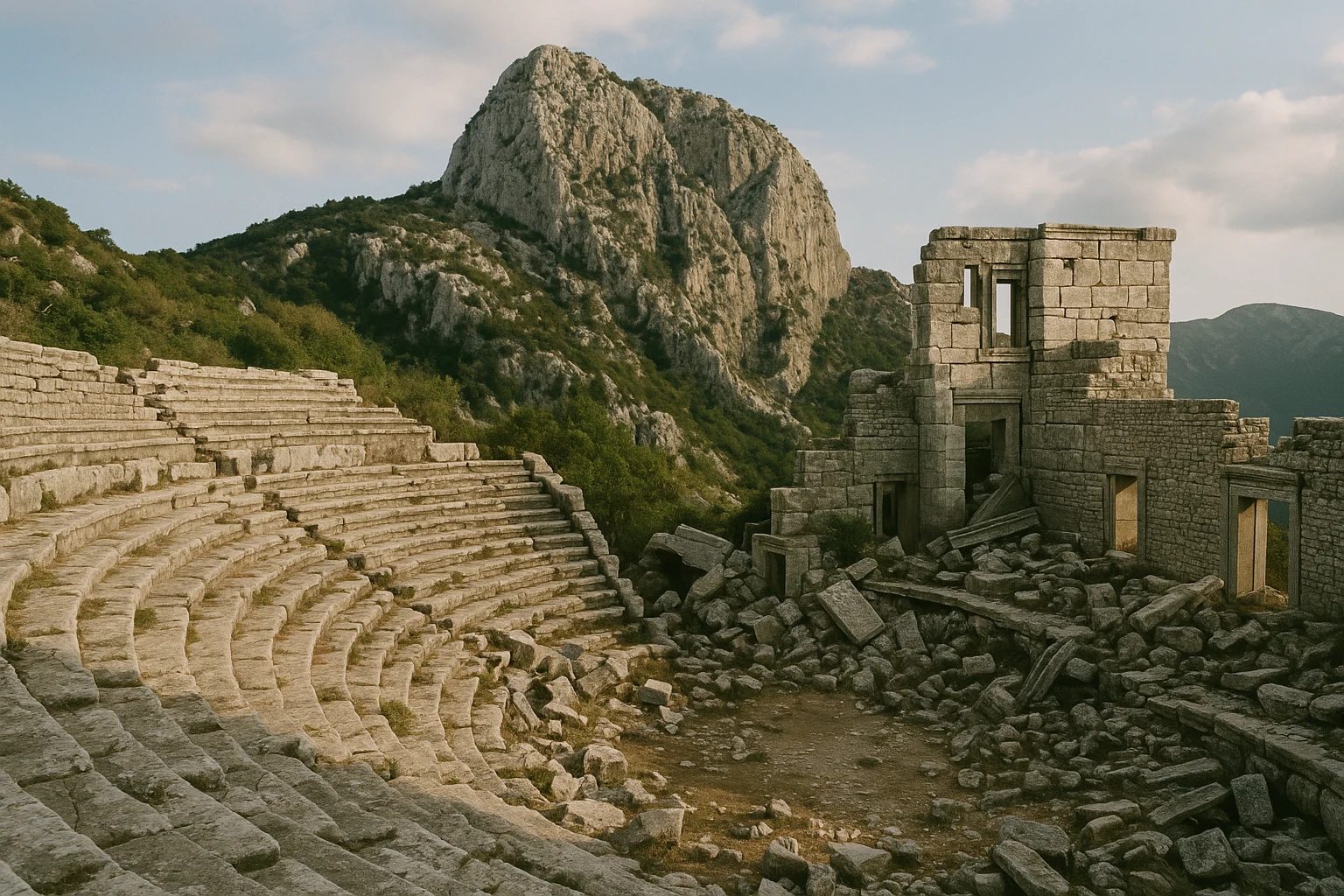
You feel Termessos before you properly see it. This Termessos Turkey travel guide starts where every visit starts: the road bends through Gulluk Dagi National Park, pine shadows sweep over broken limestone, and then the mountain opens into terraces where an ancient city seems to have chosen altitude over comfort on purpose. In southern Turkey, most famous ruins unfold on plains, coasts, or river basins. Termessos, Turkey does the opposite. It rises high in the Taurus foothills, defended by steep ravines, with a theater that hangs over a horizon of ridges rather than sea. The effect is immediate: this is not an imperial showpiece built for easy processions. It is a mountain stronghold, stubborn and self-possessed, and that character survives in every stair, gate, and tomb.
That is why the site leaves such a strong imprint. You do not simply stroll between monuments; you climb through layers of adaptation where civic life, military strategy, religion, and local identity were all shaped by slope and stone. At Ancient Travels, we recommend Termessos as one of the most rewarding archaeological half-days from Antalya for travelers who want more than postcard ruins. This guide covers the city’s history across Pisidian, Hellenistic, Roman, and Byzantine eras; the key monuments you should prioritize; practical access and ticket planning; the best seasons and timing; and how to combine Termessos with nearby classics like Perge and Aspendos.
History: The Unconquered Mountain City
Pisidian origins and highland identity (c. 5th century BCE-c. 333 BCE)
Termessos emerged as a Pisidian mountain city whose first advantage was terrain. Built on elevated benches above difficult approaches, it commanded interior routes linking coastal Pamphylia with upland Anatolia while remaining hard to subdue. Classical sources portray the Termessians as fiercely independent, and the setting supports that reputation: narrow passes, exposed rock, and limited access points created natural choke points long before formal fortification walls were expanded. Early urban organization focused on defensible circulation and secure water storage rather than monumental axial planning. What you see today as scattered masonry was once a coherent strategy in stone, with civic identity tied directly to autonomy and mountain geography.
Alexander and the failed siege (333 BCE)
Termessos enters wider Mediterranean history during Alexander the Great’s Anatolian campaign. After taking cities along easier corridors, Alexander approached the mountain city but judged direct assault prohibitively costly. Ancient narratives emphasize both the steep approach and strong local resistance. Whether interpreted as strategic pragmatism or tactical frustration, his withdrawal became central to Termessian memory: the city was never fully taken by the most famous conqueror of the era. This episode mattered beyond symbolism. In a period when many communities were incorporated by force or rapid negotiation, Termessos demonstrated how topography could function as diplomacy by other means. Its reputation as “unconquered” helped frame later relationships with Hellenistic and Roman powers.
Civic growth under Hellenistic and Roman influence (3rd century BCE-3rd century CE)
Over subsequent centuries, Termessos expanded and monumentalized without losing its highland logic. Under shifting Hellenistic kingdoms and then Rome’s regional order, the city developed agoras, stoas, gymnasium zones, necropoleis, and an impressive theater integrated into a natural slope. Roman influence appears strongly in architectural language and inscriptions, yet local traditions remained visible in funerary forms and urban placement. Rather than a rigid gridded colony, Termessos reads as negotiated urbanism: imported forms adapted to difficult ground. Its economic life likely drew on pastoral networks, timber, and control of transit routes between coast and interior. The city could participate in imperial systems while preserving an unusually distinct civic personality.
Late antiquity, Byzantine continuity, and decline (4th-13th centuries CE)
In late antiquity, Termessos adapted again as regional power structures shifted and Christian Byzantine institutions spread across southern Anatolia. Some earlier civic spaces were repurposed; ecclesiastical use appears in parts of the urban footprint, and habitation continued in modified patterns rather than ending abruptly. But mountain resilience had limits. Earthquakes, changing trade patterns, demographic contraction, and evolving political geographies reduced the viability of a large high-altitude settlement. By the medieval period, urban intensity had declined significantly, and many monumental zones fell into partial ruin. Even so, the city’s dispersed survival across terraces preserved an unusually legible map of long-duration adaptation.
Modern rediscovery and archaeological protection (19th century-present)
European travelers in the 19th century documented Termessos as a dramatic ruin landscape, often emphasizing its theater and tomb monuments against mountain views. Systematic archaeological study developed gradually, constrained by access and vegetation, but inscriptions and architectural remains confirmed the site’s significance for Pisidian and Roman provincial history. Today Termessos sits within a national-park environment that protects both ruins and ecology, creating a dual conservation challenge: stabilize masonry while respecting mountain habitat and wildfire risk. For visitors, that management model is part of the experience. You are walking a protected archaeological city that is still fundamentally a living mountain landscape.
The Key Monuments: What to See at Termessos
The mountain theater
The theater is Termessos at its purest. Built into a steep natural slope rather than imposed on flat ground, it captures the Roman-era appetite for performance while preserving the city’s defensive DNA. From the seating tiers, your eye runs past the stage zone directly into deep ridgelines of the Taurus foothills, a visual axis few theaters in the Mediterranean can match. Structural remains suggest a substantial cavea and engineered retaining systems adapted to unstable mountain geology. Even in ruin, the acoustical bowl remains readable, and stone seating rows still communicate scale.
Historically, this space anchored civic display: festivals, announcements, and performances that translated urban belonging into shared spectacle. Yet unlike coastal theaters framed by harbors, Termessos’s backdrop is exposure and altitude. Photography is best in early morning when side-light picks out seating geometry and haze is minimal in the valleys below.
The upper and lower agoras
Termessos preserves multiple market and gathering terraces, often described as upper and lower agoras. Their importance is less about surviving ornament and more about urban function under topographic constraint. Instead of one expansive rectangular forum, the city distributed exchange spaces across level pockets, linking them with stairs and sloped connectors. Column bases, paving fragments, and retaining walls reveal how commercial life was woven into circulation routes rather than separated from them.
Inscriptions found in and around these civic zones point to local magistrates, benefactors, and guild activity, indicating that mountain isolation did not prevent institutional sophistication. The agoras also help orient your visit: they mark the transition between ceremonial monuments and everyday urban systems. If you want to understand how people actually moved, traded, and governed here, spend time reading wall alignments and elevation shifts rather than only chasing panoramic viewpoints.
The heroic tombs and necropolis monuments
Few features express Termessian identity as powerfully as its tomb architecture. Necropolis zones around the city include sarcophagi, rock-cut forms, and monumentally framed graves that project status through position as much as sculpture. Some tomb facades occupy commanding points overlooking approach routes, turning remembrance into a public statement of lineage and civic rank. The style repertoire reflects both regional Pisidian preferences and wider Greco-Roman funerary language.
These monuments also preserve social history. Inscriptions record names, offices, family ties, and legal warnings against disturbance, giving direct evidence of local elite culture and legal consciousness. Walking among them, you see a community investing heavily in memory and territorial belonging. Surfaces can be uneven and slippery under pine needles, so deliberate pacing matters. Late-afternoon light often gives the clearest relief on carved details.
The gymnasium and colonnaded urban spine
Near central terraces, remains associated with a gymnasium complex and adjoining colonnaded passages show how Termessos participated in the educational and civic ideals of the Hellenistic-Roman world. In most ancient cities, the gymnasium was more than athletics: it was a social institution tied to training, rhetoric, and elite formation. Here, architecture had to be terraced aggressively, producing a fragmented but intelligible sequence of halls, open courts, and support walls.
The colonnaded stretches connecting these zones acted as weather buffers, meeting places, and processional links between civic nodes. You can still trace movement logic in surviving foundations: where crowds narrowed, where stairs opened into platforms, where public life concentrated. This part of the site rewards slow observation. Instead of dramatic single monuments, it offers the anatomy of an ancient mountain city functioning day to day.
Cisterns, gates, and defensive topography
Termessos could not exist without water management and controlled access. Cistern remains, channels, and catchment adaptations appear across the site, reflecting sustained investment in storage for dry periods and siege resilience. In a setting where springs were not always immediately available at every terrace, hydraulic planning was existential infrastructure. Likewise, gate sectors and fortified edges reveal an urban perimeter designed to exploit cliffs, bottlenecks, and elevation rather than relying purely on continuous massive walls.
This systems layer is easy to miss if you only chase iconic photos, but it explains why Termessos mattered strategically for centuries. The city survived because it coordinated movement, water, and visibility across hard terrain better than many wealthier lowland rivals. For photographers, the best broad composition often comes from slightly above the main circulation paths, where wall lines and drops show how tightly defense and daily life were integrated.
Getting There: Transportation and Access
Termessos is close to Antalya in straight-line terms but logistically more complex than coastal sites because final access is through mountain roads and on-foot approaches.
From Antalya city center
From central Antalya, the drive to the national-park approach road is usually 35-50 minutes depending on traffic, then additional time for internal access and walking.
- Taxi or private transfer: Typically 1,000-1,800 TRY ($31-56 USD) one way depending on season, booking method, and wait-time agreement.
- Organized day tour: Commonly 2,000-3,500 TRY ($62-109 USD) per person when bundled with guide and transport; prices vary by inclusions.
- Rental car: Around 1,200-2,500 TRY ($37-78 USD) per day for a standard vehicle, plus fuel and parking; most flexible option for timing.
- Public transport + taxi split: Regional buses may stop near the highway junction, then taxi onward; workable but less predictable for return.
From Antalya Airport (AYT)
If you land and go directly, airport transfers can save a city-center detour, but prearranged pickup is strongly recommended.
- Airport taxi: Roughly 1,200-2,000 TRY ($37-62 USD) depending on queue pricing, luggage, and traffic.
- Prebooked transfer: Usually 1,300-2,200 TRY ($40-68 USD), with clearer pickup reliability.
- Rental car from airport: Best for same-day flexibility if you also plan Perge, Aspendos, or coastal stops.
Admission and hours
Termessos generally operates daytime entry with seasonal variations, and mountain light drops quickly compared with lowland Antalya. Expect an archaeological-site entrance charge in TRY (often in the low hundreds of lira range) and possible additional park or parking fees depending on current administration. A safe planning estimate is 150-300 TRY ($5-9 USD) total per person for basic entry-related costs, but always verify current rates before departure.
Carry cash as backup even if card terminals appear available at some gates in the Antalya region. In summer, aim to start early because exposed climbs become strenuous by late morning. In cooler months, mid-morning to early afternoon gives stable footing and good visibility without peak heat.
When to Visit: Seasonal Considerations
Spring (March-May)
Spring is often the ideal window for most travelers. Daytime temperatures commonly range around 14-24°C (57-75°F), with greener slopes and clearer air after winter rains. Trails are more comfortable for longer loops to upper monuments, and crowds are moderate compared with midsummer coast traffic. Start early for softer light and quieter paths near the theater.
Summer (June-August)
Summer can be strikingly beautiful but physically demanding. Temperatures frequently rise to 28-36°C (82-97°F), and reflected heat from stone increases effort on climbs. Crowds are higher across Antalya day-trip circuits, though Termessos still feels less congested than beach-adjacent attractions. If visiting in summer, arrive at opening time, carry extra water, and avoid pushing to remote sectors during midday heat.
Autumn (September-November)
Autumn is the second excellent season, with many days around 16-28°C (61-82°F) and generally stable visibility across the mountain basin. Crowds ease after peak coastal holidays, making the main monuments feel calmer. Early autumn can still be warm at noon, so a morning-focused itinerary remains smart. Photographers often prefer this season for crisp relief on limestone surfaces.
Winter (December-February)
Winter brings cooler air, occasional rain, and fewer visitors. Typical daytime conditions sit around 6-16°C (43-61°F), though wind can make exposed terraces feel colder. Wet stone and pine litter may create slippery footing, so traction matters more than speed. The upside is atmosphere: low crowds, dramatic cloud movement, and a sense of solitude that fits Termessos perfectly.
Combining Termessos with Antalya and Nearby Ruins
The most efficient combined day starts by reaching Termessos early, ideally arriving at the trail approach by 8:00 AM in warm months or 9:00 AM in cooler seasons. Spend the first two to three hours on the theater, agora terraces, and primary necropolis zones while temperatures are still reasonable and views remain clear. By 11:30 AM, begin descending and transition back toward Antalya’s western edge for lunch, where neighborhood lokantas near Konyaalti routes offer quick grilled dishes and soups without heavy detours.
If you want a full archaeology day, continue by private car toward Perge in the early afternoon, reaching the site around 1:30 PM to focus on colonnaded streets and stadium remains in lower heat than late morning peak. From there, a final push to Aspendos by 4:00 PM gives you late-day light on one of the best-preserved Roman theaters in the world. This sequence is ambitious but realistic with your own vehicle or a tightly managed private tour, and it creates a compelling narrative arc: mountain autonomy at Termessos, urban Roman planning at Perge, and imperial spectacle at Aspendos.
If you prefer a lighter pace, keep Termessos as a half-day anchor and return to Antalya for an old-town evening in Kaleici. Arriving by 5:30 PM leaves time for the harbor walls at golden hour and dinner in restored Ottoman-era houses. That shorter rhythm still gives you the emotional core of the region: dramatic topography, deep time, and a modern city that continues to live among ancient routes.
Why Termessos Matters
Termessos matters because it challenges a common idea about ancient greatness: that the biggest empires always imposed the most lasting form. Here, endurance came from locality. A mountain community in southern Anatolia absorbed Hellenistic and Roman culture, traded with wider worlds, and built sophisticated civic spaces, yet never surrendered the defining logic of its terrain. Even the monuments most associated with empire were reinterpreted through slope, scarcity, and defense.
For a traveler, that produces a rare historical sensation. You are not reading one triumphant chapter preserved in marble; you are reading a long negotiation between ambition and landscape. The theater’s view, the agoras on stepped terraces, the tombs set into commanding rock, the cistern systems hidden in plain sight all say the same thing: place shapes power. Visit Termessos, and you leave with more than photographs of ruins. You leave with a sharper sense of how cities survive when they build with the mountain, not against it.
Quick Facts
| Attribute | Details |
|---|---|
| Location | Gulluk Dagi National Park, Antalya Province, Turkey |
| Ancient Name | Termessos |
| UNESCO Status | Not currently inscribed as a UNESCO World Heritage Site |
| Established | c. 5th century BCE mountain city |
| Distance from nearest hub | About 35 km from Antalya (45-70 minutes depending on road and traffic) |
| Entry Fee | Typically around 150-300 TRY ($5-9 USD), check latest local rates |
| Hours | Daytime entry; seasonal closing times vary |
| Best Time | Spring and autumn mornings |
| Suggested Stay | 3-5 hours on site |
Explore More Turkey
- Perge: Grand colonnaded streets, baths, and one of Pamphylia’s most legible Roman city plans.
- Aspendos: The iconic Roman theater near Antalya, still astonishing for scale and preservation.
- Phaselis: A Lycian-Roman harbor city where ruins meet pine forest and Mediterranean coves.
- Olympos: Atmospheric ruins in a river valley near the coast, ideal for combining archaeology with nature.
Plan your wider route with our Turkey Ancient Sites Guide. For practical trip design, read our guide to building an Antalya archaeology day loop.
Frequently Asked Questions
How much time should I plan for Termessos?
Plan 3-5 hours on site, depending on how many upper monuments and tomb clusters you want to reach on foot. The uphill approach from the parking area and uneven paths add time, so this is not a quick stop. If you like photography or archaeology, a half-day feels ideal.
Is Termessos hard to visit physically?
Termessos is one of Turkey's most physically demanding major ruins because you walk steep, rocky trails at altitude. Most visitors can manage the lower and central monuments with sturdy shoes and water, but upper terraces and remote tombs require stronger mobility. Summer heat increases difficulty significantly.
How do I get to Termessos from Antalya without a car?
The most practical no-car option is an organized tour or private transfer from Antalya, because public transit typically drops you at the highway and not at the internal park road. Taxis can work one-way, but return pickup is less reliable without arranging a driver in advance. If you want schedule certainty, book round-trip transport.
What is the entry fee and are cards accepted?
Termessos usually charges a modest archaeological-site entrance fee in Turkish lira, with occasional separate national-park or parking charges depending on current local rules. Policies can change seasonally, so carry cash even if card payments are sometimes available at major gates in the region. Always verify latest pricing before departure from Antalya.
What are the highlights at Termessos?
The iconic mountain theater is the headline, but the colonnaded streets, agoras, cistern systems, heroic tomb monuments, and eagle-nest views over Gulluk Dagi are equally memorable. The site's identity comes from its defensive topography as much as from any single structure. Termessos feels like a city carved into the mountain itself.
What is the best season for visiting Termessos?
Spring and autumn are usually best, with cooler hiking temperatures and clearer mountain visibility. Summer can be very hot by late morning, while winter may bring slick stone surfaces after rain. Early starts in any season give better light and safer footing.
Nearby Ancient Sites
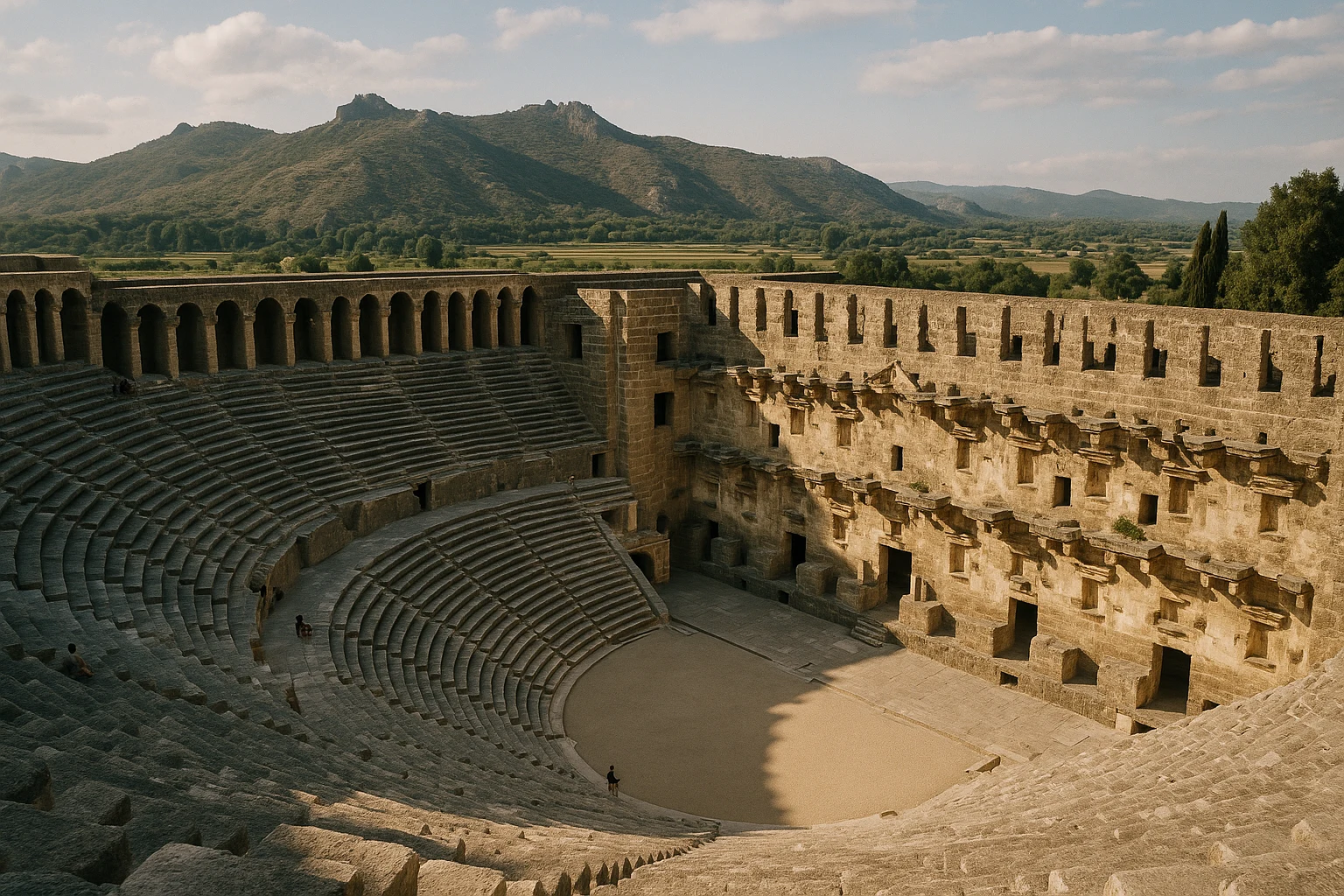
Aspendos Turkey Guide 2026: Roman Theatre & Pamphylian Aqueduct
Pamphylian-Greek-Roman-Byzantine-SeljukPlan your Aspendos visit in Turkey with practical tips on tickets, transport from Antalya, and what ...
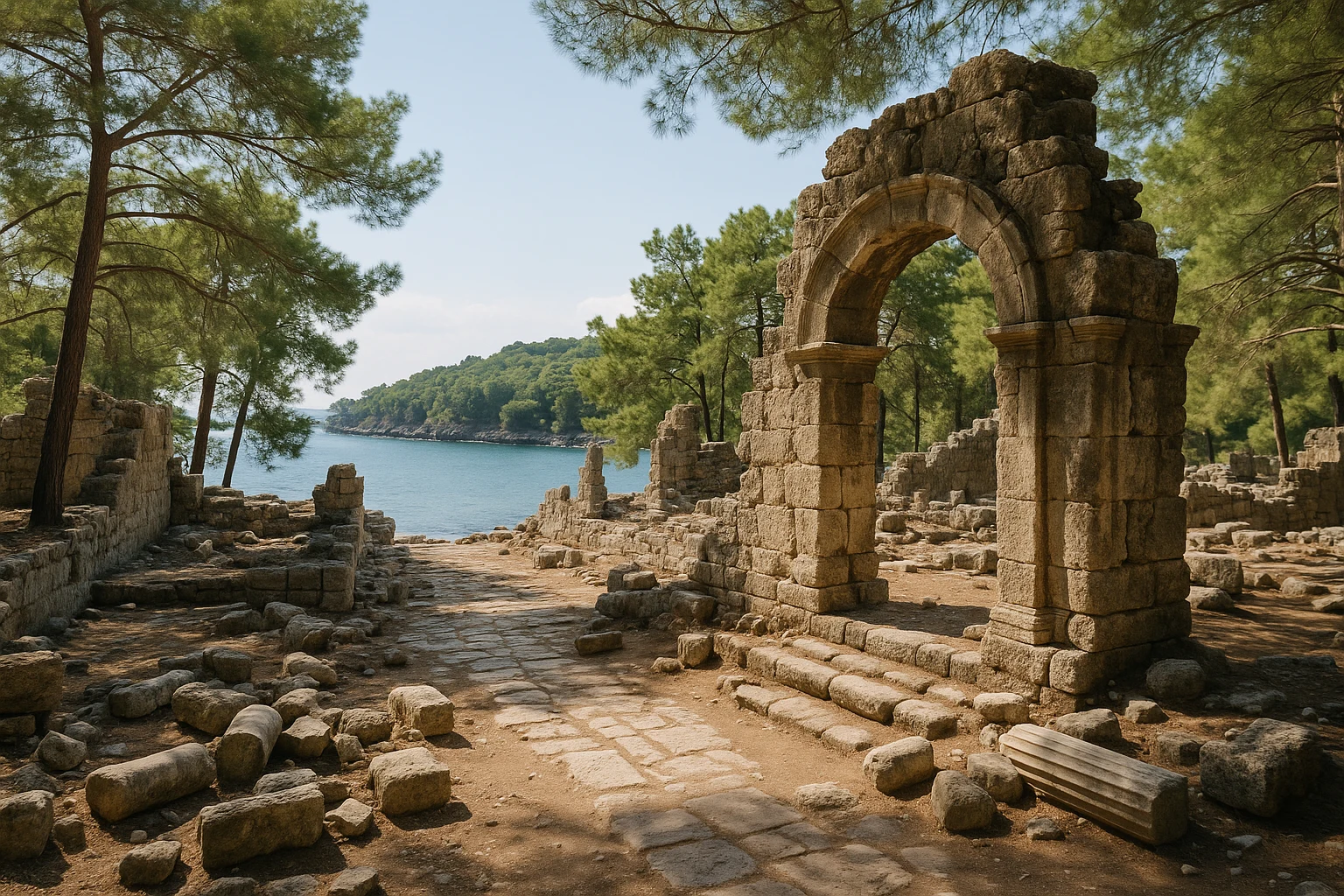
Phaselis Turkey Guide 2026: Harbor Ruins & Lycian-Roman Streets
Lycian-Greek-Roman-ByzantinePlan your Phaselis, Turkey visit with harbor ruins, aqueducts, and beach access, plus transport, tic...