Quick Info
At a glance
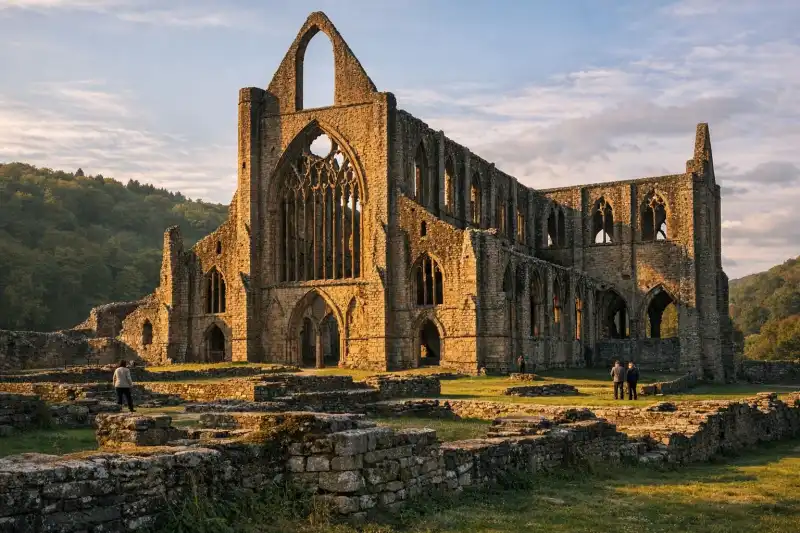
Tintern Abbey in the United Kingdom rises from the Wye Valley with a kind of quiet drama that makes even first-time visitors feel they have seen it before. Perhaps that is because its pointed arches and roofless nave have become one of Britain’s most recognizable historic silhouettes, or because the abbey seems to embody a whole idea of romantic ruins in the landscape. Surrounded by wooded hills and the winding River Wye, the site sits in a setting so harmonious that the stone remains and the valley appear inseparable, as if the architecture had grown naturally from the green slopes around it.
Yet Tintern Abbey is more than a beautiful ruin. It was once a working Cistercian monastery, part of a disciplined religious network that spread across medieval Europe and shaped local economies as much as spiritual life. Monks prayed here, farmed here, managed lands here, and built a community whose influence reached beyond the cloister walls. Later, after the upheavals of the 16th century, the abbey was dissolved, stripped, and left open to weather and time. What survives today is not merely a fragment, but an extraordinarily eloquent survival: a place where history, architecture, faith, and landscape still meet. Visiting Tintern Abbey means stepping into centuries of change while standing in one of the most atmospheric heritage sites in Wales.
History
Foundation in the 12th century
Tintern Abbey was founded in 1131, making it the first Cistercian foundation in Wales and only the second in Britain. Its patron was Walter de Clare, a powerful Marcher lord whose family held lands in this contested border region between Norman influence and Welsh principalities. The new abbey was established for monks from L’Aumône in France, part of the expanding Cistercian order that emphasized austerity, manual labor, self-sufficiency, and withdrawal from worldly distraction.
The location was ideal for Cistercian ambitions. The Wye Valley offered water, woodland, grazing land, and relative seclusion. Though Tintern was not remote in the absolute sense, it was sheltered enough to support the monastic life the order valued. The early monastery would have been much simpler than the great ruins seen today, built in the restrained spirit associated with early Cistercian design. Its community developed gradually, gathering lands and rights that allowed it to sustain both spiritual practice and practical administration.
Growth and prosperity in the medieval period
Like many monastic houses, Tintern Abbey became more substantial over the 12th and 13th centuries. Donations of land and rents from patrons strengthened its position, while its agricultural activity expanded. The Cistercians were known for efficient estate management, often working lands through lay brothers as well as hired labor. At Tintern, the monks developed granges and made productive use of river and valley resources.
The abbey seen today largely dates from a major rebuilding campaign in the 13th century, especially between about 1269 and 1301. This was the period when Tintern acquired its magnificent Gothic church, with soaring pointed windows, elegant tracery, and the elevated proportions that still astonish visitors. Although the Cistercians began with a preference for simplicity, by this period many Cistercian houses had embraced the architectural language of High Gothic, while still maintaining a disciplined plan.
This rebuilding reflected confidence and resources. Tintern was not among the richest monasteries in Britain, but it was prosperous enough to create a church of remarkable refinement. The abbey precinct included not only the church but the cloister, chapter house, dormitory, refectory, kitchens, and service structures that supported monastic routine. Everything was arranged to serve the rhythm of prayer, study, sleep, and labor.
Decline and dissolution
The later Middle Ages brought challenges familiar to religious houses across Britain. Political instability in the borderlands, changing economic patterns, and periodic hardship affected monastic communities. Even so, Tintern endured into the 16th century. Its end came not through local collapse, but through royal policy.
In 1536, during the Dissolution of the Monasteries under Henry VIII, Tintern Abbey was surrendered to the Crown. The suppression of monasteries across England and Wales transformed religious, social, and economic life. At the time of its dissolution, Tintern’s community was relatively small. Once the monks departed, the buildings lost their original purpose. Valuable materials, especially lead from the roofs and reusable stone, were stripped away. Without roofing and maintenance, the abbey became vulnerable to rapid decay.
This process was both practical and symbolic. The ruin visible now was not created in a single dramatic act, but through dismantling, weathering, and centuries of exposure. Yet the removal of the roof also produced the open-sky church that later generations found so moving.
Rediscovery and Romantic fame
By the 18th century, attitudes toward medieval ruins had changed. What earlier generations might have seen as a broken and obsolete structure came to be admired as picturesque. Tintern Abbey, with its ivy, great windows, and dramatic valley setting, became a celebrated destination for travelers on the Wye Tour, one of Britain’s earliest forms of scenic tourism.
Artists and writers helped transform Tintern into an icon. J. M. W. Turner depicted it, and the area entered the literary imagination through associations with William Wordsworth, whose poem inspired by the surrounding landscape became one of the defining texts of British Romanticism. Although the poem is not a direct architectural meditation on the abbey itself, Tintern’s name became inseparable from ideas of memory, nature, time, and reflection.
Preservation in the modern era
In the 19th and 20th centuries, efforts were made to stabilize and conserve the ruins. Rather than rebuilding the abbey, custodians focused on preserving its surviving medieval fabric. Today, Tintern Abbey is managed as a major historic monument and remains one of Wales’s most visited heritage sites. Its significance lies not only in its age, but in the unusual completeness of its ground plan and the visual power of its church walls, windows, and crossing. It stands as both a medieval monastic site and a masterpiece of ruin aesthetics.
Key Features
The first and most arresting feature of Tintern Abbey is the west front and great church interior, or what remains of it. Even without its roof, the church retains an extraordinary verticality. Visitors entering the main space immediately understand why the abbey has become so famous: the pointed arches pull the eye upward, while the immense east and west windows frame the sky itself. The lack of glazing and roofing does not diminish the architecture. If anything, it reveals the engineering and grace of the stonework more clearly, exposing ribs, arches, and openings as pure structure.
The Gothic detail is especially compelling. Window tracery, lancet forms, clustered columns, and surviving moldings show the sophistication of the 13th-century rebuilding. There is elegance here, but not extravagance. Tintern’s church still communicates the monastic ideal of order, proportion, and disciplined beauty. Light changes the entire character of the space by the hour: morning can make the stone feel cool and austere, while late afternoon often gives it a warmer, almost theatrical glow.
Beyond the church, the monastic layout begins to emerge. The cloister was the heart of daily movement, linking the principal buildings of the abbey. Though less visually dramatic than the nave, this area is essential for understanding how the monastery functioned. The cloister garth, surrounded by covered walks in its working life, would have structured the monks’ routine. From here they moved between prayer, meetings, meals, and rest according to the strict timetable of monastic observance.
The chapter house area is another important feature because it represents governance and community. This was where monks gathered daily to hear a chapter of the Rule of Saint Benedict, discuss business, confess faults, and receive instructions. In many monasteries, the chapter house was one of the most symbolically important spaces after the church, and Tintern’s surviving remains help visitors imagine this institutional side of monastic life.
The domestic buildings are quieter in effect but deeply revealing. The refectory reminds us that communal eating was formal and regulated, often accompanied by reading. The dormitory above ground-floor rooms shows how the abbey accommodated collective sleeping arrangements while keeping close access to the church for night offices. Kitchens, warming areas, and service spaces suggest how much labor underpinned the appearance of spiritual withdrawal. Monastic life was never only contemplative; it depended on systems, supplies, repairs, and management.
One of Tintern Abbey’s greatest strengths is how it sits in the landscape. Many ruins are impressive in themselves, but Tintern gains much of its power from context. The wooded sides of the Wye Valley form a natural amphitheater around the site. The abbey’s grey stone contrasts with dense greenery, and the relationship between architecture and environment feels unusually complete. This is one reason the site had such influence on painters and tourists. It does not appear isolated from nature, nor overwhelmed by it, but somehow completed by it.
Interpretive displays and visitor facilities help modern travelers understand what they are seeing, but the monument still rewards unhurried looking more than rapid box-ticking. Stand in the nave long enough and the building begins to reveal different scales at once: the grand scale of medieval ambition, the human scale of daily devotion, and the vast temporal scale of ruin. Birds cross through window openings where stained glass once filtered light. Grass grows where processions once passed. At Tintern, loss is part of the experience, but so is continuity.
Getting There
Tintern Abbey is in Monmouthshire, southeast Wales, near the English border, and the easiest base for many visitors is Chepstow. If you are driving, the route from Chepstow takes about 15 to 20 minutes via the A466 through the Wye Valley. From Bristol, the journey is typically around 45 minutes to 1 hour depending on traffic, while Cardiff usually takes about 1 hour to 1 hour 15 minutes. Parking is available in Tintern, though charges and arrangements can vary by season.
Public transport is possible, though less straightforward than driving. The nearest major rail station is Chepstow, with services from Cardiff, Newport, and connections from Bristol. Standard off-peak rail fares can range from about £6 to £15 depending on route and booking time. From Chepstow station, local buses toward Tintern operate on selected routes, but schedules are limited and should be checked in advance. Bus fares are usually modest, often around £3 to £6 each way.
Another option is to take a taxi from Chepstow, which generally costs about £20 to £30 one way depending on the day and time. Visitors staying in Cardiff or Bristol may find a guided day tour the simplest solution, especially if they want to combine Tintern Abbey with other Wye Valley viewpoints. Organized tours vary widely in price, but many begin around £50 to £100 per person depending on inclusions.
Cycling is also popular in the Wye Valley, particularly for travelers combining scenic routes with heritage stops, though the valley roads can be narrow in places.
When to Visit
Spring and early summer are among the best times to visit Tintern Abbey. From April to June, the Wye Valley is fresh and green, wildflowers begin to appear, and the surrounding woods create a vivid backdrop for the stone ruins. Temperatures are usually comfortable for walking, and daylight is long enough to combine the abbey with nearby village stops or valley viewpoints. This period offers a strong balance between good weather and manageable visitor numbers.
Summer brings the warmest conditions and the fullest tourism season. July and August are ideal if you want the best chance of dry weather and longer opening hours, but this is also when the site can feel busiest, especially on weekends and school holidays. Arriving early in the day usually gives a quieter experience and better opportunities for photography before the central nave fills with visitors.
Autumn is a particularly rewarding season for travelers who enjoy atmosphere. The wooded hills around Tintern turn gold, rust, and deep green, adding richness to the abbey’s already dramatic setting. September and October often provide mild weather with fewer crowds than midsummer. For many visitors, this is the most visually satisfying time of year.
Winter visits can be striking, especially on crisp clear days when the bare trees reveal more of the valley contours. The site is quieter, but weather can be cold, wet, and occasionally windy. Shorter opening hours may apply, and the mood is more austere than lush. Still, if you want a contemplative experience and do not mind dressing for the conditions, winter can make the ruins feel especially powerful and solitary.
| Quick Facts | Details |
|---|---|
| Location | Tintern, Monmouthshire, Wales, United Kingdom |
| Founded | 1131 CE |
| Historic Order | Cistercian |
| Architectural Style | Medieval Gothic with monastic planning |
| Best Known For | Roofless abbey church and scenic Wye Valley setting |
| Nearest Town | Chepstow |
| Typical Visit Length | 1 to 2 hours |
| Managed By | Cadw |
| Best Seasons | Spring and autumn |
| Access Notes | Ticketed heritage site with seasonal opening variations |
Tintern Abbey remains one of those rare places that can satisfy very different kinds of travelers at once. Architectural enthusiasts find an exceptional Gothic ruin. History lovers encounter a vivid story of monastic expansion, royal dissolution, and changing cultural values. Landscape seekers discover a site whose beauty depends as much on valley, trees, and light as on stone. And even casual visitors, arriving with only a rough idea of what the abbey is, often leave with the sense that they have experienced something unusually complete.
That completeness is the paradox of Tintern. It is a ruin, visibly incomplete in the most literal way, yet it feels whole as an experience. The missing roof opens the church to the sky. The absent monastic community makes the surviving plan easier to imagine. The centuries of weathering have not erased the site’s identity; they have sharpened it. Tintern Abbey is not only a relic of medieval Wales, but also a monument to the afterlife of historic places. It has been a monastery, a dismantled property, a picturesque destination, a national treasure, and a source of artistic inspiration. Few sites in the United Kingdom carry so many layers so gracefully.
Guided tours: worth it?
A guide can be genuinely useful at Tintern Abbey, especially if you want help with transport, timing, tickets, or understanding a large site without losing half the day to logistics.
Best for
- Travelers who want transport, timing, or entry logistics handled
- Short visits where a planned route saves time
When to go self-guided
Go independently if you already have transport and tickets sorted, enjoy moving at your own pace, and are comfortable checking the latest official rules before you arrive.
What I’d avoid
Skip paid tours that bundle unrelated stops you do not actually want. The best option should either save meaningful planning time or add historical context you would miss on your own.
Tintern Abbey and Wye Valley Tours
Useful when: you want to compare guided formats before deciding
South Wales Day Trips Including Tintern Abbey
Useful when: transport or pickup logistics matter
Wales Heritage Tours from Cardiff
Useful when: transport or pickup logistics matter
Some tour links are affiliate links, which may earn Ancient Travel a small commission at no extra cost to you. I try to surface options that make practical sense for the site—not just anything bookable.
Frequently Asked Questions
What is Tintern Abbey?
Tintern Abbey is the roofless ruin of a medieval Cistercian monastery in Monmouthshire, Wales, in the United Kingdom. It is one of the most famous monastic ruins in Britain.
Do you need to buy tickets to enter Tintern Abbey?
Yes, entry is generally ticketed through Cadw, though pricing and opening arrangements can change seasonally. Check the official Cadw website before visiting.
How long should I spend at Tintern Abbey?
Most visitors spend 1 to 2 hours exploring the church, cloister area, exhibits, and grounds. Allow longer if you also plan to walk around Tintern village or the Wye Valley.
Is Tintern Abbey suitable for families?
Yes, families often enjoy the open spaces and dramatic architecture. As with many historic ruins, children should be supervised around uneven surfaces and stonework.
Can you visit Tintern Abbey without a car?
Yes, but it is easier with planning. Visitors commonly reach Chepstow or Monmouth by rail and bus connections, or join a guided day tour from Cardiff or Bristol.
Why is Tintern Abbey famous?
Tintern Abbey is famous for its exceptionally picturesque Gothic ruins, its role in the history of the Cistercian order, and its influence on Romantic art and literature, especially through William Wordsworth.
Nearby Ancient Sites
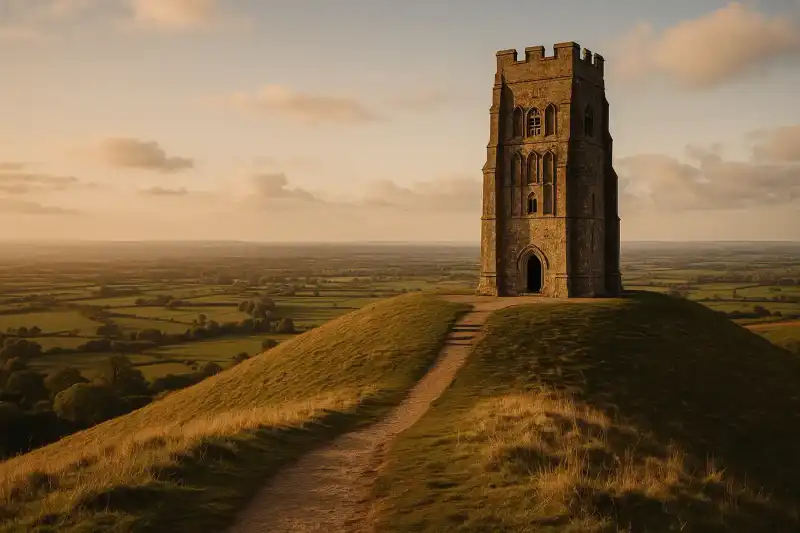
Glastonbury Tor Travel Guide 2026: Best Walk Times, History, and Visit Planning
Early Medieval EnglandPlan a smarter visit to Glastonbury Tor with practical climb timing, weather tips, and context on wh...
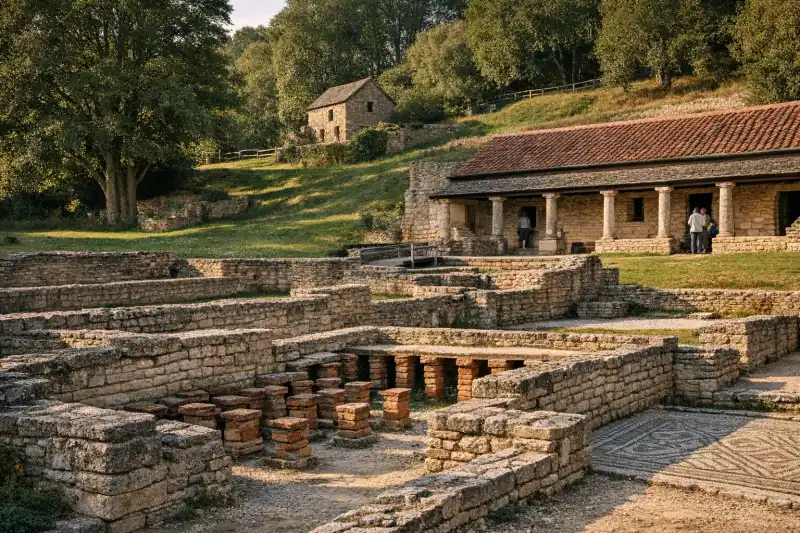
Chedworth Roman Villa
RomanExplore Chedworth Roman Villa, a remarkably preserved Roman countryside estate in the United Kingdom...
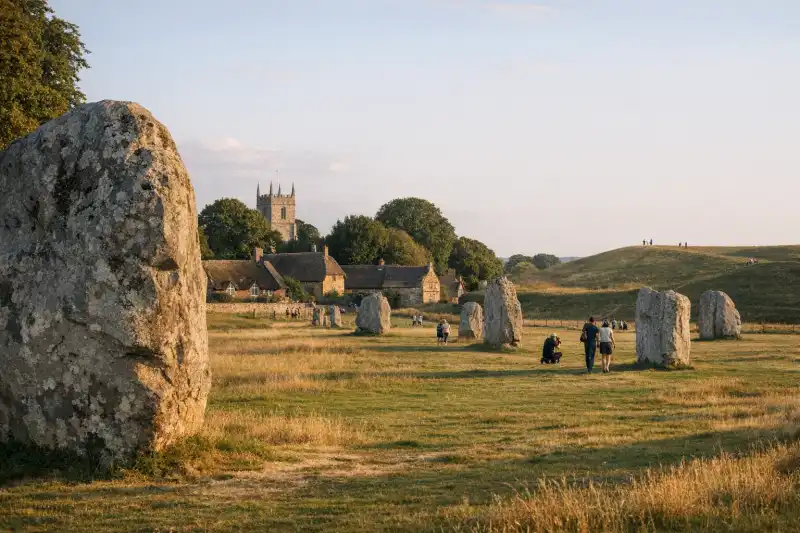
Avebury
Neolithic BritainExplore Avebury in the United Kingdom, a vast prehistoric stone circle and ritual landscape in the h...