Quick Info
At a glance
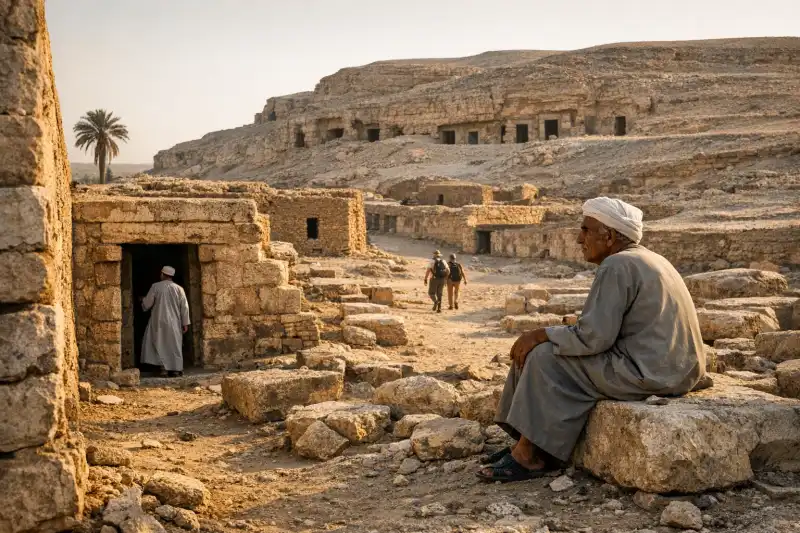
Tuna el-Gebel in Egypt feels, at first glance, like a quiet edge of desert where the land has almost forgotten how much history it holds. West of the Nile in Minya Governorate, this sprawling necropolis once served the nearby sacred city of Hermopolis, and today it offers one of Middle Egypt’s most compelling encounters with the afterlife beliefs, artistic styles, and religious complexity of the ancient world. Unlike Egypt’s more famous royal cemeteries, Tuna el-Gebel does not overwhelm with scale alone. Its appeal lies in the way it layers traditions: pharaonic ritual, Greek influence, Roman-era burial customs, animal cults, and deeply Egyptian ideas about eternity.
Walking through the site, you move between open desert, ruined enclosures, shaft tombs, underground galleries, and decorated monuments that reveal how long this necropolis remained important. There are places here that feel intimate rather than monumental, especially inside painted chambers where color and line still communicate a family’s hopes for remembrance. The tomb of Petosiris, the vast catacombs of sacred ibises and baboons, and the elegant tomb associated with Isadora give Tuna el-Gebel a personality distinct from almost any other Egyptian site. For travelers willing to go beyond the classic Cairo-Luxor-Aswan route, it is a destination that rewards curiosity with nuance, atmosphere, and a rare sense of discovery.
History
Origins as the Necropolis of Hermopolis
Tuna el-Gebel developed as the burial ground for Hermopolis Magna, one of ancient Egypt’s most important religious centers. Hermopolis, known in Egyptian as Khmun and located in the fertile Nile Valley nearby, was associated especially with Thoth, the god of wisdom, writing, the moon, and sacred knowledge. Because Thoth was often linked with the ibis and the baboon, Tuna el-Gebel eventually became a major place of burial for these animals, which were offered as votive gifts by worshippers.
The necropolis was active for many centuries, but its strongest development began in the Late Period, when Egyptian religion saw renewed emphasis on temple cults, pilgrimage, and sacred animal worship. During this time, visitors to temples could dedicate mummified animals to a god as an act of devotion, and necropolises like Tuna el-Gebel expanded to accommodate these offerings on an enormous scale. The dry desert edge west of Hermopolis was an ideal setting, both practically and symbolically, for such burials.
Late Period Religious Expansion
By the first millennium BCE, Tuna el-Gebel had become much more than a simple cemetery. It formed part of a wider sacred landscape tied closely to temple life in Hermopolis. Priests, embalmers, animal keepers, and artisans likely worked in systems that supported the breeding, mummification, and burial of sacred creatures. Underground galleries were cut to hold countless ibis and baboon mummies, expressing the enormous popularity of the cult of Thoth.
This period also saw elite human burials at the site. The necropolis served important local officials and priestly families who wanted to be laid to rest near the god they served. Their monuments show how Egyptian funerary traditions remained deeply rooted even during times of political change, foreign rule, and cultural exchange. In other words, Tuna el-Gebel was not static; it was a living religious landscape responding to new conditions while preserving old beliefs.
Ptolemaic Influence and Cultural Blending
After Alexander the Great’s conquest and the establishment of the Ptolemaic dynasty, Egypt entered a new political era. Greek rulers governed the country, yet they relied heavily on Egyptian temple institutions and religious traditions. Tuna el-Gebel reflects this blend particularly well. Egyptian burial customs continued, but art and architecture increasingly reveal Hellenistic influences in style, proportion, and ornament.
The most famous expression of this cultural fusion is the tomb of Petosiris, usually dated to the late fourth or early third century BCE. Petosiris was a high priest of Thoth, and his tomb combines strongly Egyptian religious themes with artistic details that show awareness of Greek forms. Scenes of offerings, craftsmanship, and funerary ritual appear alongside decorative choices that feel more cosmopolitan than older Egyptian tomb art. Rather than replacing Egyptian identity, these influences demonstrate how local elites could move comfortably between traditions.
The tomb of Isadora, from a later date, also belongs to this broad world of mixed cultural expression. Isadora, according to later tradition, was a young woman whose story of love and tragic death became attached to the site. Whether approached as history, legend, or both, her burial monument illustrates how Tuna el-Gebel continued to evolve in the Hellenistic and Roman eras.
Roman Period Continuity and Decline
Under Roman rule, Tuna el-Gebel remained active, though the nature of burial and religious practice continued to change. Egypt’s temples still functioned for centuries, and sacred animal cults persisted. Tomb architecture, inscriptions, and decorative programs from this era show a population that was increasingly multilingual and culturally diverse, yet still invested in local sacred geography.
Over time, however, shifts in religion, administration, and economy altered the necropolis’s role. As traditional temple life declined in late antiquity, Tuna el-Gebel gradually lost the religious infrastructure that had sustained it. The desert preserved much, but abandonment also meant exposure to looting and collapse. Walls fell, shafts filled, and underground networks became difficult to access.
Rediscovery and Archaeology
Modern archaeological work transformed Tuna el-Gebel from an obscure ruin into a site of major scholarly importance. Excavations revealed catacombs filled with animal mummies, monumental tombs, inscriptions, statuary, and evidence for centuries of ritual practice. Researchers have used the site to understand not only burial customs but also economy, pilgrimage, priesthood, and the interaction between Egyptian and Greco-Roman traditions.
Today, Tuna el-Gebel remains especially valuable because it offers a different perspective on ancient Egypt. It is not primarily royal, and it is not dominated by one brief historical moment. Instead, it reveals continuity across long spans of time and shows how ordinary devotion, local priestly power, and cultural adaptation shaped the ancient landscape just as decisively as kings and empires did.
Key Features
The defining feature of Tuna el-Gebel is its role as a necropolis linked to Thoth, and nowhere is that more powerfully expressed than in the animal catacombs. These underground galleries once housed immense numbers of mummified ibises and baboons, animals considered sacred to the god. Even when visitors cannot experience every buried chamber directly, the knowledge of what lies beneath the desert changes the way the site feels. It becomes less a scattering of ruins than a vast devotional machine, built to process offerings and preserve communication between worshippers and the divine. The scale of these cult burials is one of the most striking aspects of Tuna el-Gebel and helps explain the site’s long religious importance.
The tomb of Petosiris is often the highlight for travelers with an interest in art and religion. Built for a high priest of Thoth, it stands as one of the most refined non-royal funerary monuments in Egypt. Its architecture recalls an Egyptian temple in miniature, with a façade, columned elements, and decorated chambers that express rank and piety. Inside, the scenes are especially compelling because they combine familiar Egyptian themes with unusual liveliness and stylistic variety. Artisans at work, offering bearers, ritual actions, and agricultural imagery all appear with a precision that makes the tomb feel deeply human. The monument speaks not only of death but of ordered life, profession, and community.
Another memorable structure is the tomb of Isadora, whose white limestone form stands apart visually from many other remains on the site. Its association with a young woman said to have died tragically while crossing the Nile has given it an enduring emotional aura. The story, preserved through local tradition and later retelling, may blur the line between documented biography and legend, but that ambiguity is part of its power. The monument itself reflects the Greco-Roman world of Middle Egypt, where elite identity could be shaped by more than one cultural inheritance. For visitors, Isadora’s tomb often becomes a point where archaeology and storytelling meet.
Scattered across Tuna el-Gebel are additional tombs, chapels, boundary walls, and ruined structures that reward slow looking. Some remains are fragmentary, but together they create a sense of a once-organized funerary landscape. There are traces of processional movement, ritual enclosure, and carefully planned burial zones. The necropolis was not a random accumulation of graves; it was a sacred environment managed over generations. This becomes clearer as you move through the site and notice how monuments relate to open desert, to ancient routes, and to one another.
The desert setting itself is one of Tuna el-Gebel’s key features. The transition from the cultivated Nile Valley to the pale, dry cemetery land is dramatic and meaningful. Ancient Egyptians associated the western desert with death and rebirth, and Tuna el-Gebel makes that symbolism visible. The space feels open and exposed, but also deliberately chosen. Light, silence, wind, and distance all contribute to the site’s atmosphere. In a country where major monuments often sit amid crowds, Tuna el-Gebel can feel unusually contemplative.
For archaeologically minded travelers, the site’s importance also lies in what it reveals about religious economy. The animal catacombs suggest organized breeding, transport, mummification, and sale of votive offerings. Human tombs nearby show how priestly and elite families embedded themselves in this sacred system. In effect, Tuna el-Gebel was both a cemetery and a center of ritual production. This complexity distinguishes it from sites focused purely on kingship or monumental temple construction.
Finally, Tuna el-Gebel’s relative lack of mass tourism is itself a feature. Visitors often experience the monuments with more time, more quiet, and fewer barriers between themselves and the landscape. That does not mean it is undeveloped in every respect, but it does mean the encounter can feel more direct. For many travelers, especially those returning to Egypt after seeing the classics, Tuna el-Gebel offers the rare pleasure of encountering a major ancient site that still feels somewhat under the radar.
Getting There
Tuna el-Gebel is most easily reached from Minya or Mallawi in Middle Egypt. The nearest practical base for many visitors is Mallawi, which lies in the Nile Valley east of the site. From Mallawi, a taxi or arranged driver to Tuna el-Gebel usually takes around 45 to 60 minutes depending on road conditions and the exact route. Expect a return taxi fare in the rough range of EGP 500 to 1,000 if negotiated locally, though prices vary with season, waiting time, and your bargaining skills. Hiring a car and driver for a full day covering Tuna el-Gebel and nearby sites such as Hermopolis or Beni Hassan may cost more but is often the most efficient option.
From Minya city, the drive generally takes around 1.5 to 2 hours. A private car for the day often costs approximately EGP 1,500 to 3,000 depending on vehicle type and whether a guide is included. Travelers coming from Cairo should plan for a long day if attempting a return trip, as road travel can take 4 to 5 hours each way. For that reason, an overnight stay in Minya is usually more comfortable.
Rail connections from Cairo to Minya or Mallawi are useful for independent travelers. Train fares can range from roughly EGP 100 to 300 or more depending on service class and booking method. Once in Minya or Mallawi, local transport to the site is limited, so a taxi or hotel-arranged driver is the best choice. Organized tours are less common than in Luxor or Aswan, but some operators do offer custom archaeology-focused itineraries in Minya Governorate.
When to Visit
The best time to visit Tuna el-Gebel is from October to April, when temperatures in Middle Egypt are milder and walking around the exposed desert site is far more comfortable. Winter days are generally the most pleasant, often bringing clear skies and manageable warmth, especially in the morning and early afternoon. This season is ideal if you want time to explore the tombs without feeling rushed by the heat.
Spring can also be rewarding, particularly in March and early April, when the light is beautiful and the countryside in the Nile Valley still has some seasonal freshness. However, spring may also bring dust and occasional khamsin winds, which can make visibility poorer and add discomfort. If you travel at this time, check local weather forecasts and plan flexibility into your schedule.
Summer, from roughly May through September, is much more challenging. Daytime temperatures can become intense, and Tuna el-Gebel offers little natural shade. If summer travel is unavoidable, arrive as early as possible, bring more water than you think you need, and limit time in direct sun. A dawn or early morning visit is far preferable to midday.
In general, aim for morning visits year-round. The lower sun improves the atmosphere of the desert setting, photography is easier, and the site feels quieter and less exhausting. Pairing Tuna el-Gebel with another nearby stop is possible, but avoid packing the day too tightly. This is a place best appreciated at an unhurried pace.
| Quick Facts | Details |
|---|---|
| Location | Minya Governorate, Middle Egypt |
| Ancient Role | Necropolis of Hermopolis Magna |
| Main Deity Association | Thoth |
| Best-Known Monuments | Tomb of Petosiris, Tomb of Isadora, animal catacombs |
| Main Periods | Late Period, Ptolemaic, Roman |
| Nearest Base | Mallawi or Minya |
| Typical Visit Length | 2 to 3 hours |
| Best Season | October to April |
| Terrain | Desert site with uneven and sandy ground |
| Ideal For | Archaeology lovers, history travelers, repeat visitors to Egypt |
Guided tours: worth it?
Self-guided works here, but a guide can add real value if you want the ruins explained as a living place rather than just a sequence of monuments.
Best for
- First-time visitors who want context, not just photos
- Short visits where a planned route saves time
When to go self-guided
Go independently if you prefer setting your own pace, reading as you go, and checking official hours or ticket rules directly before you arrive.
What I’d avoid
Skip paid tours that bundle unrelated stops you do not actually want. The best option should either save meaningful planning time or add historical context you would miss on your own.
Tuna el-Gebel tours
Useful when: you want to compare guided formats before deciding
Minya archaeological sites tours
Useful when: you want to compare guided formats before deciding
Amarna and Tuna el-Gebel tours
Useful when: you want to compare guided formats before deciding
Some tour links are affiliate links, which may earn Ancient Travel a small commission at no extra cost to you. I try to surface options that make practical sense for the site—not just anything bookable.
Frequently Asked Questions
What is Tuna el-Gebel known for?
Tuna el-Gebel is best known as the necropolis of ancient Hermopolis, with catacombs for sacred ibises and baboons, the painted tomb of Petosiris, and later Greco-Roman burials.
Where is Tuna el-Gebel located?
Tuna el-Gebel is in Minya Governorate in Middle Egypt, west of the Nile Valley near Mallawi and the ancient city of Hermopolis.
How do you get to Tuna el-Gebel?
Most visitors reach Tuna el-Gebel by private car or arranged tour from Minya, Mallawi, or Cairo. Public transport options are limited, so a driver is usually the easiest choice.
How much time do you need at Tuna el-Gebel?
Allow at least 2 to 3 hours to see the main monuments comfortably, and longer if you also plan to visit nearby Hermopolis or other sites in Minya Governorate.
Is Tuna el-Gebel suitable for casual travelers?
Yes, but it especially appeals to travelers interested in archaeology, ancient religion, and less-visited Egyptian sites. Facilities are more limited than at major destinations like Luxor or Giza.
What should you wear when visiting Tuna el-Gebel?
Wear light, modest clothing, sturdy shoes, and sun protection. The site is exposed, hot for much of the year, and walking surfaces can be sandy or uneven.
Nearby Ancient Sites
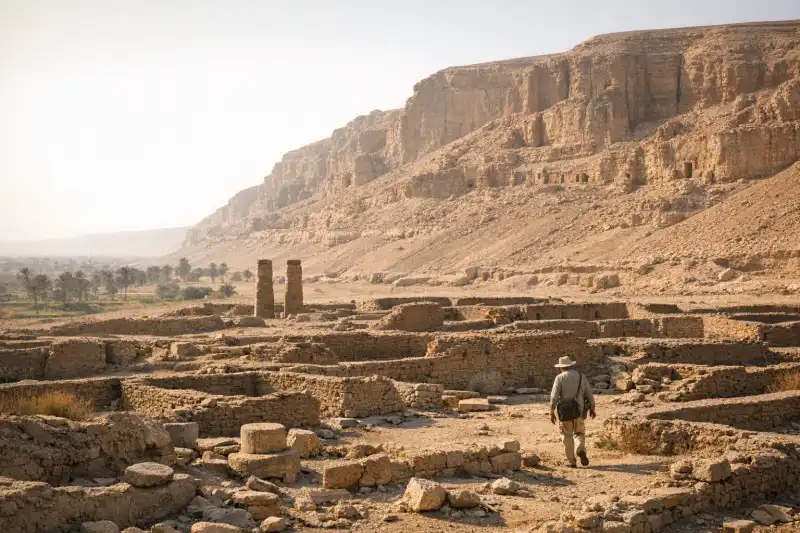
Amarna
Ancient EgyptianExplore Amarna in Egypt, Akhenaten’s short-lived royal capital, known for boundary stelae, desert to...
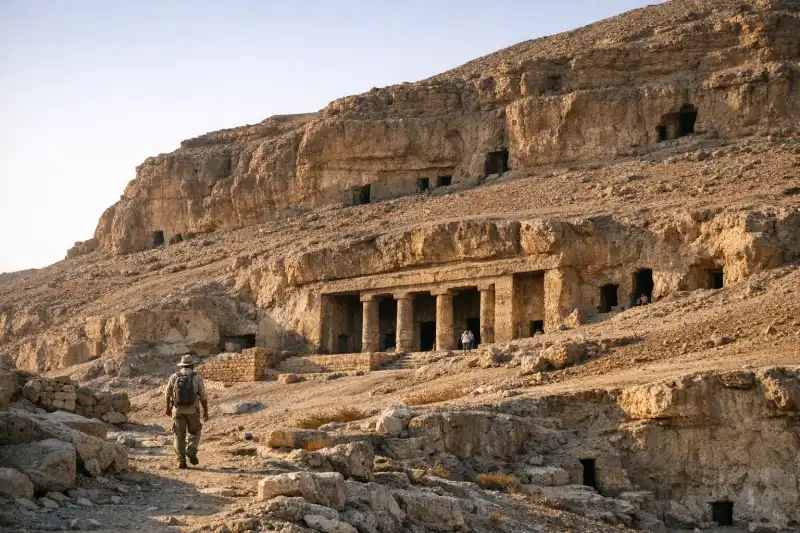
Beni Hassan Tombs
Ancient EgyptianRock-cut Middle Kingdom tombs in Egypt famed for vivid wall paintings, provincial elite burials, and...
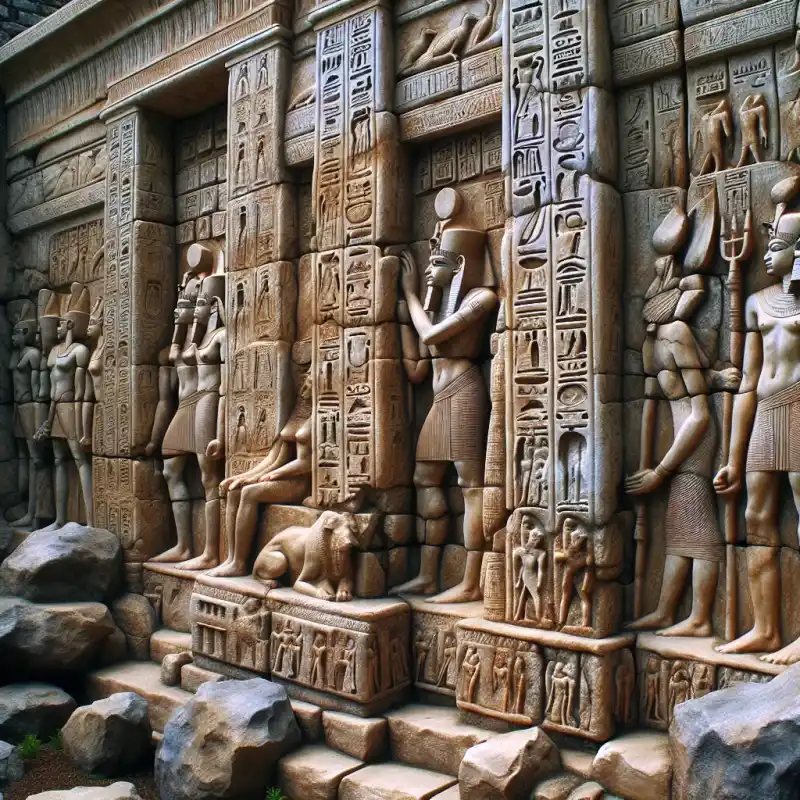
Abydos Temple Egypt Guide 2026: Temple of Seti I & King List
New Kingdom-PtolemaicAbydos Temple near Luxor: magnificent Temple of Seti I with war reliefs, ancient king list, and vibr...