Quick Info
At a glance
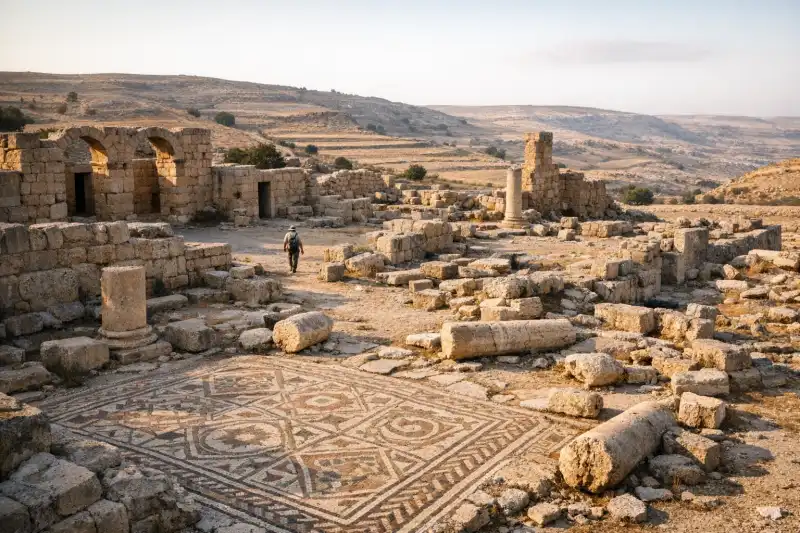
Umm Al-Walid in Jordan is one of those archaeological places that does not rely on monumental fame to leave a lasting impression. Instead, its appeal comes from something quieter: the sense of standing inside the remains of an ordinary yet important settlement that once formed part of the dense human landscape of central Jordan. In a region better known for headline sites such as Petra, Jerash, or the mosaics of Madaba, Umm Al-Walid offers a more intimate encounter with the past. Here, low walls, church remains, scattered stone blocks, and traces of domestic architecture reveal how rural and semi-rural communities lived through the Byzantine and early Islamic centuries.
The site sits within the broad uplands south of Amman, where the terrain opens into rolling plains and cultivated land. This setting helps explain its historical role. Settlements like Umm Al-Walid were tied to agriculture, regional trade, religious life, and the shifting administrative systems of empires. Visiting today, you are not walking through a single dramatic monument but through layers of settlement history embedded in the landscape itself. That is part of the reward. The stones invite close attention, and the silence encourages imagination. For travelers interested in archaeology beyond the obvious highlights, Umm Al-Walid is a valuable stop: modest in scale, rich in context, and deeply connected to the story of late antique Jordan.
History
Early settlement and regional context
The area around Umm Al-Walid was inhabited because it offered the essential conditions for long-term settlement in Jordan’s highland belt: cultivable land, access to routes linking the interior with larger towns, and a climate more favorable to agriculture than the harsher desert farther east. While the most visible remains at the site belong mainly to the Byzantine and early Islamic periods, the region itself had seen human occupation for far longer. Central Jordan was never an empty frontier. It was a connected zone where villages, farms, estates, and fortified points formed a network that supported larger urban centers.
By late antiquity, this broader landscape had become especially important. The cities of the Decapolis, religious centers associated with biblical traditions, and administrative hubs under Roman and Byzantine rule all relied on productive rural communities. Umm Al-Walid appears to have been one such settlement: not a grand metropolis, but a place whose fields, buildings, and local institutions contributed to the prosperity of the surrounding region. Its location within what is now Madaba Governorate places it in an area known for church building, mosaic production, and active village life in the centuries before and after the 6th century.
Byzantine flourishing
Umm Al-Walid seems to have reached its greatest visibility during the Byzantine period, roughly from the 4th to 7th centuries CE. This was a time when Christianity was deeply shaping the built environment of Jordan. Across the region, churches were constructed not only in major towns but also in villages and agricultural settlements. At Umm Al-Walid, the remains suggest a community with enough stability and resources to invest in religious architecture as well as domestic and possibly communal structures.
The Byzantine centuries in Jordan were marked by both imperial integration and local expression. Stone-built houses, churches, cisterns, courtyards, and agricultural installations defined many settlements. Umm Al-Walid fits into this pattern. The presence of church remains is particularly significant because it indicates the site was more than a scattering of farm buildings. It belonged to a Christian landscape in which religious institutions organized ritual life, local prestige, and probably some aspects of economic administration as well.
This period also saw the expansion of road links and pilgrimage routes throughout the Levant. Although Umm Al-Walid was not itself a famous pilgrimage destination, it existed within a world of movement. Goods, people, and ideas circulated between Amman, Madaba, the Jordan Valley, and lands beyond. The community likely benefited from this connectedness while still retaining a rural character.
Transition to early Islamic rule
The 7th century brought major political change as the Byzantine provinces of the Levant came under Islamic rule. One of the most important facts about archaeology in Jordan is that this transition did not always produce abrupt abandonment. In many places, settlement continued, and older building traditions remained in use. Umm Al-Walid appears to belong to this pattern of continuity as much as change.
Under the Umayyads and later early Islamic administrations, many communities in Jordan adapted rather than disappeared. Churches might continue in use for a time, domestic structures were modified, and local economies adjusted to new political realities. Archaeologically, these transitions can be subtle. Reused stones, altered floor levels, changed room functions, and shifting pottery assemblages all tell the story. At Umm Al-Walid, the remains are valuable because they reflect this lived transition at the village level.
Jordan during the early Islamic period was not a historical backwater. It was part of an empire centered at first in nearby Damascus, and the region saw investment in roads, estates, and desert complexes. Yet rural settlements also had to respond to changing trade patterns, taxation, climate pressures, and occasional seismic events. Communities like Umm Al-Walid were resilient, but not permanent in the same form forever.
Decline, abandonment, and rediscovery
Like many ancient settlements in Jordan, Umm Al-Walid eventually declined as a continuously occupied center. The reasons were probably multiple rather than singular. Economic shifts may have redirected activity elsewhere; environmental stress could have affected agricultural productivity; and earthquakes, a recurrent force in the Levant, often damaged settlements and religious buildings. Over time, once-inhabited structures collapsed, were robbed for stone, or faded into the contours of the land.
Modern archaeological attention has helped reframe the site’s importance. Rather than seeing it as merely a ruined village, scholars and visitors increasingly understand places like Umm Al-Walid as key evidence for everyday life in late antique and early Islamic Jordan. Large cities tell one part of the story; rural sites tell another. At Umm Al-Walid, the surviving architecture helps reconstruct patterns of worship, housing, local economy, and adaptation across centuries of political transformation.
Today the site remains relatively under-visited, which gives it a different atmosphere from Jordan’s flagship destinations. Its rediscovery is therefore not just academic. For travelers willing to look closely, Umm Al-Walid reveals how history was lived at the local level, in stone walls, village churches, and the enduring geography of the plateau.
Key Features
What makes Umm Al-Walid memorable is not a single iconic monument but the coherence of the settlement remains. The site rewards slow exploration. As you move across the ruins, the plan of a once-functioning community begins to emerge from what first appears to be a scatter of stone. Low walls trace rooms and courtyards; broken architectural fragments suggest former entrances, partitions, and communal spaces. The effect is subtle but powerful. You begin to read the site not as rubble, but as a village.
One of the most important features is the church architecture associated with the Byzantine occupation. Even where only partial remains survive, these structures help anchor the site’s historical identity. Churches in Jordan’s late antique villages were often central to community life, and at Umm Al-Walid their presence indicates a settlement with organization, resources, and ties to the broader Christian culture of the region. Depending on preservation and visibility at the time of your visit, you may notice foundation lines, apsidal elements, carved stones, or floor zones that distinguish ecclesiastical space from more ordinary domestic architecture.
The domestic remains are just as revealing. Houses in settlements like this were often arranged around practical needs: shelter, storage, food preparation, and access to outdoor work areas. At Umm Al-Walid, the surviving walls give a sense of compact but purposeful planning. These were not monumental residences; they were structures designed for daily life, shaped by climate, family organization, and local building traditions. Stone, abundant in Jordan, was the natural material, and its durability is one reason the site still communicates so much despite centuries of decay.
Another notable feature is the relationship between the ruins and the landscape. Umm Al-Walid is best understood as a settlement embedded in an agricultural environment. The surrounding plateau helps explain why people chose to live here. Broad views, arable land, and proximity to regional routes all mattered. When you stand among the remains, you can see that the site is not isolated in historical terms. It belonged to a productive countryside that linked villages to towns and towns to empires.
Surface detail can also be rewarding. Even when major standing architecture is limited, sites like Umm Al-Walid often preserve small clues: worked stones, column fragments, lintels, paving traces, and changes in ground level that mark old walls or collapsed rooms. For photography, the textures are especially appealing in low-angle light. The color of the stone shifts through the day, and the surrounding open country creates a strong contrast between built remains and natural horizon.
There is also an interpretive feature that cannot be measured in masonry alone: the site’s relative quiet. Because Umm Al-Walid is not a major tourist stop, the experience often feels personal and contemplative. You can examine construction details, walk slowly without crowds, and imagine the rhythms of settlement life more easily than at busier attractions. For travelers interested in archaeology as a lived environment rather than a checklist of famous monuments, this calm is a genuine strength.
Finally, Umm Al-Walid’s greatest feature may be its representativeness. Jordan’s history was sustained not only by capitals, temples, and pilgrimage centers, but by smaller communities such as this one. The site offers a tangible window into how the Byzantine and early Islamic countryside functioned. It is a place where architecture, religion, agriculture, and adaptation all meet in one modest but meaningful landscape.
Getting There
Umm Al-Walid is most easily reached by road from Amman or Madaba. From central Amman, the drive typically takes around 45 minutes to 1 hour, depending on traffic and your exact route. From Madaba, travel time is usually shorter, often around 30 to 40 minutes. Because public transport to smaller archaeological sites in Jordan can be irregular or indirect, the most practical option for most visitors is a rental car, taxi, or private driver.
If you rent a car in Amman, expect daily rates from about 25 to 45 JOD for a basic vehicle, not including fuel. Roads in this part of Jordan are generally manageable, though signage to lesser-known sites may be limited, so offline maps are helpful. A taxi from Amman to the area can cost roughly 20 to 35 JOD one way, depending on negotiation, time of day, and whether the driver waits for you. Hiring a private driver for a half-day or full-day excursion that includes Umm Al-Walid and other nearby sites such as Madaba or Mount Nebo often ranges from 50 to 90 JOD.
Budget travelers can try service taxis or buses toward Madaba or the surrounding region, but this usually requires local knowledge and flexibility. Fares on shared transport are inexpensive, often just a few dinars, yet the final approach to the site may still involve a taxi. If you are not comfortable navigating transport connections in Arabic or waiting for infrequent services, independent public transit is not the easiest choice.
Bring water, sun protection, and sturdy shoes, as facilities at the site may be minimal or absent.
When to Visit
The best times to visit Umm Al-Walid are spring and autumn, when central Jordan’s weather is at its most comfortable. From March to May, the surrounding landscape is often greener than at other times of year, and daytime temperatures are pleasant for walking among exposed ruins. This is an especially attractive season for photographers, since the softer light and seasonal color contrast nicely with the pale stone remains.
Autumn, particularly from late September through November, is another excellent window. Summer heat has eased, skies are often clear, and conditions are favorable for combining Umm Al-Walid with other outdoor sites in the region. If you plan a day trip from Amman or Madaba, autumn can offer the best balance between visibility, comfort, and lighter seasonal haze.
Summer visits are certainly possible, but midday temperatures can become intense, especially in open areas with little shade. If you go between June and August, arrive early in the morning or later in the afternoon and carry more water than you think you need. A hat and sunscreen are essential. Winter can be quiet and atmospheric, with cooler temperatures that suit walking, but weather can be changeable. Rain, wind, and occasional cold snaps may make the terrain less pleasant, even if the site itself remains accessible.
In terms of time of day, morning is usually best. The light is good, the temperature is milder, and the site feels especially peaceful before the day warms up. Late afternoon can also be rewarding for photographs and atmosphere.
| Quick Facts | Details |
|---|---|
| Location | Madaba Governorate, Jordan |
| Historical periods | Byzantine and early Islamic |
| Best for | Archaeology enthusiasts, quiet cultural visits, regional history |
| Nearest major city | Amman |
| Nearby base | Madaba |
| Typical visit length | 45 minutes to 1.5 hours |
| Best seasons | Spring and autumn |
| Access | Best by rental car, taxi, or private driver |
| Site character | Rural settlement ruins with church and domestic remains |
| What to bring | Water, sun protection, sturdy walking shoes |
Guided tours: worth it?
Most travelers can visit Umm Al-Walid independently. Compare a tour only if you want a tighter history-focused visit, easier logistics, or a guide who can answer questions on the spot.
Best for
- Short visits where a planned route saves time
When to go self-guided
Go independently if you prefer setting your own pace, reading as you go, and checking official hours or ticket rules directly before you arrive.
What I’d avoid
Skip paid tours that bundle unrelated stops you do not actually want. The best option should either save meaningful planning time or add historical context you would miss on your own.
Madaba and Mount Nebo Day Tours
Useful when: you want to compare guided formats before deciding
Amman to Madaba Private Tours
Useful when: you want flexible timing or a private guide
Jordan Archaeology and Mosaic Tours
Useful when: you want to compare guided formats before deciding
Some tour links are affiliate links, which may earn Ancient Travel a small commission at no extra cost to you. I try to surface options that make practical sense for the site—not just anything bookable.
Frequently Asked Questions
What is Umm Al-Walid known for?
Umm Al-Walid is known for its archaeological remains from the Byzantine and early Islamic periods, including church remains, domestic structures, and traces of a rural settlement in central Jordan.
Where is Umm Al-Walid located?
Umm Al-Walid is located in Jordan's Madaba Governorate, southeast of Amman, in the highland zone associated with several important ancient and late antique settlements.
Can you visit Umm Al-Walid independently?
Yes, many travelers visit independently by car from Amman or Madaba, though roads and on-site interpretation can be limited, so a driver or guide can be helpful.
How much time should I spend at Umm Al-Walid?
Most visitors spend 45 minutes to 1.5 hours exploring Umm Al-Walid, depending on their interest in archaeology, photography, and the surrounding landscape.
Is Umm Al-Walid suitable for families?
It can suit families who enjoy quiet historical places, but there are few visitor facilities, so bring water, sun protection, and sturdy footwear.
What should I combine with a visit to Umm Al-Walid?
Umm Al-Walid is often paired with Madaba, Mount Nebo, Amman, or other archaeological sites in central Jordan for a fuller day of historical exploration.
Nearby Ancient Sites
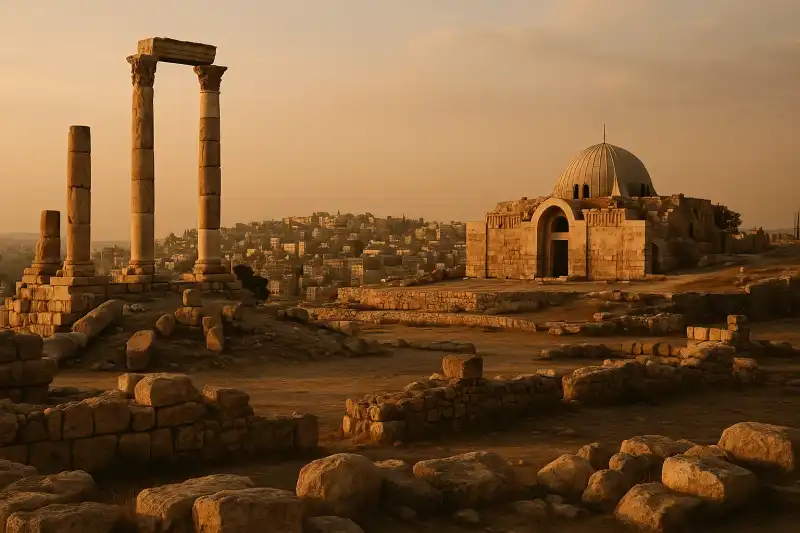
Amman Citadel Jordan Guide 2026: Temple of Hercules & Ancient Rabbah
Ammonite-Roman-UmayyadExplore Jordan's ancient citadel overlooking modern Amman. Discover the Temple of Hercules, Umayyad ...
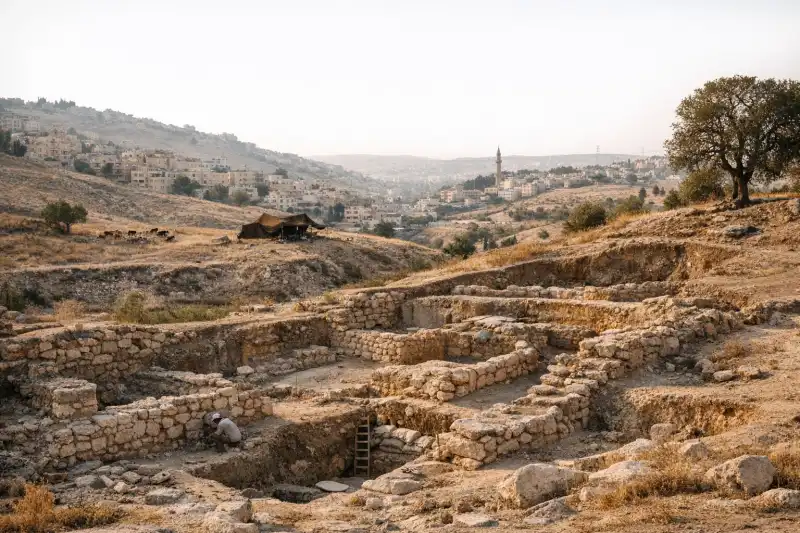
Ain Ghazal
Pre-Pottery Neolithic communities of the LevantDiscover Ain Ghazal, Jordan’s remarkable Neolithic settlement famed for its ancient plaster statues ...
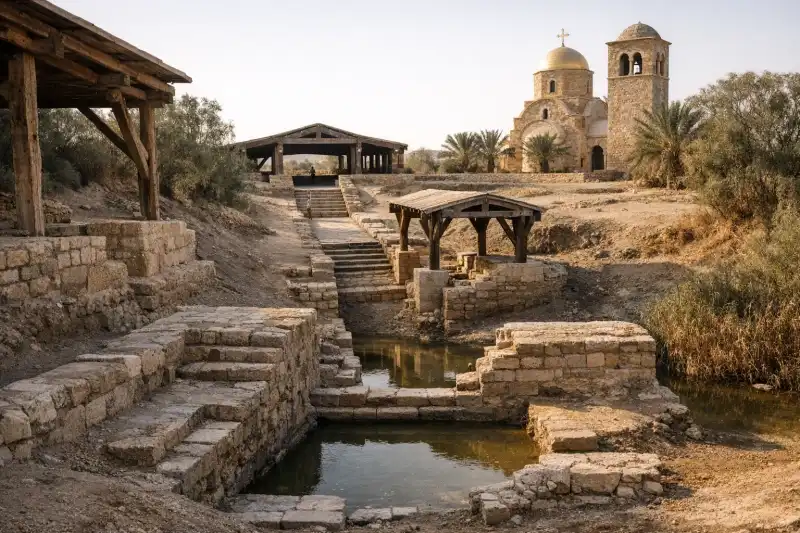
Bethany Beyond the Jordan
Bethany Beyond the Jordan in Jordan is an archaeological and religiously significant site believed t...
Deir Alla
Canaanite, Israelite-era, and regional Levantine culturesExplore Deir Alla in Jordan, an important Jordan Valley archaeological mound linked to Bronze and Ir...