Quick Info
Curated Experiences
Wudang Mountains Full-Day Temple Tour from Shiyan
Wudang Mountains Taoist Temple Hiking Experience
Wudang Kung Fu and Sacred Mountain Culture Tour
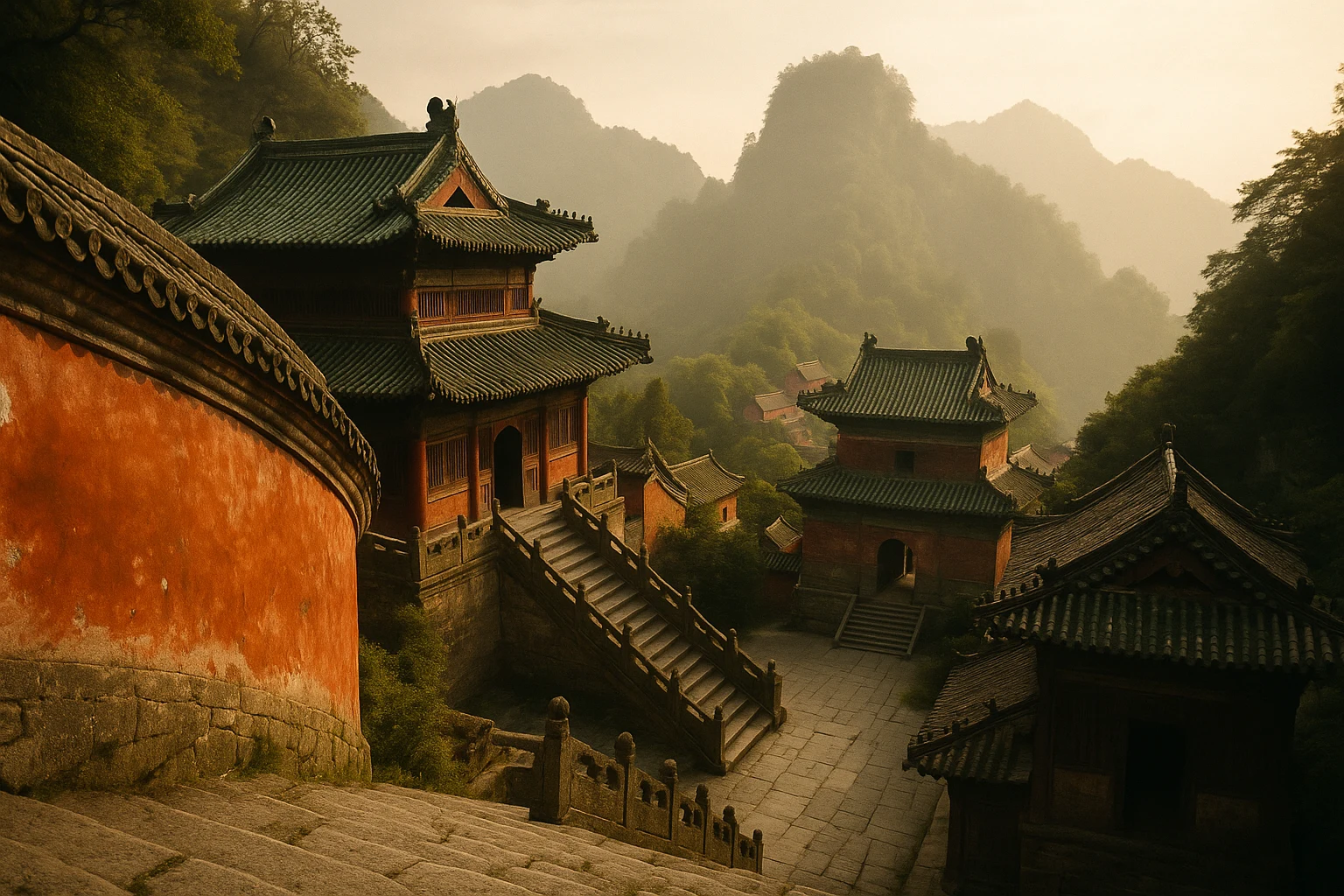
Rising through curtains of pine-scented mist above Hubei Province in central China, the Wudang Mountains have drawn Taoist pilgrims, monks, and martial artists for more than a thousand years. The mountains themselves — a forested range of seventy-two peaks and thirty-six cliff faces — seem fashioned by nature for contemplation: narrow stone paths wind between ancient pavilions, incense smoke drifts across granite ledges, and somewhere below the clouds the concerns of the ordinary world recede entirely. These are the Wudang Mountains Temples, one of the most sacred Taoist sites in China and, since 1994, a UNESCO World Heritage Site of exceptional importance.
The complex encompasses hundreds of ancient structures — palaces, temples, ceremonial gateways, and sacrificial altars — distributed across roughly 312 square kilometres of mountain terrain. Many date to the Ming Dynasty, when the Yongle Emperor channelled the resources of the entire empire into constructing a spiritual capital on these peaks. The result is an architectural ensemble unlike anything else in China: an interconnected sacred landscape where buildings appear to grow from the rock itself, their yellow-tiled roofs and red lacquered walls harmonising with pine forests and cascading waterfalls rather than imposing upon them.
Wudang is also the cradle of an entire tradition of internal martial arts. The styles collectively known as Wudang Wushu — including the globally practised Tai Chi — were refined here across centuries, embedded in a philosophy that treats cultivation of body, breath, and mind as inseparable from spiritual practice. Visitors who arrive expecting only ancient stonework tend to leave with something harder to define: a quality of stillness that the mountains extend freely to anyone willing to walk slowly enough to receive it.
History
Early Taoist Roots
The mountains’ sacred status predates the great Ming building campaigns by several centuries. Taoist hermits were recorded in the Wudang range as early as the Eastern Han Dynasty (25–220 CE), drawn by the peaks’ reputation as a dwelling place of Xuantian Shangdi — the Supreme Emperor of the Dark Heaven, also known as the True Warrior or Zhenwu — a powerful Taoist deity associated with the north, with water, and with cosmic order. Small shrines and meditation retreats multiplied steadily through the Tang Dynasty (618–907 CE), and by the Song Dynasty (960–1279 CE), the mountains had accumulated sufficient religious gravity that emperors occasionally dispatched officials to commission repairs and expansions. These were still scattered, modest structures, however — nothing approaching the sacred imperial capital that would eventually rise here.
The Yuan Dynasty Foundation
The Yuan Dynasty (1271–1368 CE) saw the first significant architectural expansion at Wudang. The Mongol emperors, though primarily Buddhist in personal practice, recognised the political value of patronising all of China’s major religious traditions, and Taoist communities at Wudang benefited from sustained imperial attention. Several temples were rebuilt on a more substantial scale during this period, and the mountain’s hierarchical organisation of religious life — with a senior abbot overseeing a network of subordinate temples and hermitages — began to take the form it would retain through the Ming period and beyond. The Yuan emperors also formalised state sacrifices to Zhenwu at Wudang, cementing the mountain’s role within the official cosmology of Chinese imperial rule.
The Ming Dynasty Golden Age
The transformation of Wudang from an important Taoist site into a national sacred complex of the first order began with the Yongle Emperor (r. 1403–1424 CE), one of the most prodigious builders in Chinese history — the same ruler who constructed the Forbidden City in Beijing and dispatched Zheng He’s fleets across the Indian Ocean. Yongle believed that the deity Zhenwu had protected him during the protracted civil war by which he seized the throne from his nephew, and he commissioned an act of gratitude on a monumental scale: the complete reconstruction and vastly expanded founding of an imperial sanctuary at Wudang.
Between 1412 and 1423 CE, more than 300,000 workers — soldiers, specialist craftsmen, and conscripted labourers drawn from across the empire — were deployed across the mountains. Thirty-three architectural complexes were constructed during this single campaign, including nine full palaces, nine observatories, and dozens of temples and pavilions, connected by a network of stone-paved pilgrimage paths totalling over 140 kilometres. Materials were sourced nationally: timber from Sichuan, stone from local quarries, and gilded copper fittings manufactured in workshops near the capital before being transported hundreds of kilometres overland. Yongle also granted Wudang the honorific title “Grand Mountain of Great Peace,” elevating it explicitly to the status of a state sacred site ranking alongside the ancient Five Sacred Mountains of China.
Subsequent Ming emperors continued the project. The Xuande, Tianshun, and Jiajing reigns each added structures and funded major restorations, and the complex reached its architectural peak during the mid-to-late sixteenth century, with some contemporary records placing the total number of individual structures at over twenty thousand.
Decline and Modern Preservation
The fall of the Ming Dynasty in 1644 and the transition to Qing rule brought reduced imperial patronage, though monastic life at Wudang continued without interruption across the dynastic change. More damaging were the conflicts of the nineteenth and early twentieth centuries — the Taiping Rebellion and the Sino-Japanese War both touched the region — and the Cultural Revolution of the 1960s and 1970s, when religious sites across China were targeted for destruction or repurposed. Many of Wudang’s buildings were damaged or demolished outright during this period, and monastic communities were forcibly dispersed. The surviving complex — fifty-three major ancient buildings and numerous stone bridges, wells, and carved inscriptions — was protected by UNESCO designation in 1994, which accelerated state-funded restoration efforts and brought the site to international attention for the first time.
Key Features
The Golden Hall
Crowning the summit of Tianzhufeng — the Pillar of Heaven, the highest peak in the range at 1,612 metres — the Golden Hall (Jin Dian) is the most celebrated single structure at Wudang. Cast entirely from gilded copper alloy in imperial workshops near Beijing in 1416 and transported piece by piece to the mountaintop during the Yongle construction campaign, the hall measures just 5.8 metres wide and 4.2 metres deep yet achieves a grandeur that belies those dimensions. Every element — the roof tiles, the ridge ornaments, the columns, the latticed windows — is cast bronze, and the entire structure is bolted together without a single wooden joint or iron nail. Inside, a gilded statue of Zhenwu sits enthroned in full imperial regalia, flanked by attendant figures rendered with extraordinary metalwork precision.
The hall has survived more than six centuries of summit weather without significant deterioration, a fact attributed partly to the electrical storms that regularly strike the peak and are said to clean and season the copper over time — a claim that mingles physics with Taoist legend in a characteristically Wudang fashion. Reaching the hall requires either a cable-car ascent followed by a stiff climb up stone staircases, or a full-day hike from the lower mountain on the ancient paved paths. Both approaches deliver the arrival to a terrace of cloud and silence that feels appropriately climactic.
Zixiao Palace
The largest and best-preserved of Wudang’s palaces, Zixiao — Purple Cloud Palace — was constructed in 1413 at the direct order of the Yongle Emperor and dedicated to Zhenwu in his manifestation as the Purple Cloud deity. The complex spreads across a broad mountain terrace surrounded by centuries-old cypress trees, its main ceremonial halls, side pavilions, and formal gateways arranged along a strict north-south axis that deliberately mirrors the cosmological layout of the Forbidden City in Beijing. The main hall’s interior retains original Ming-era painted timber beams and Taoist iconographic murals in exceptional condition, protected from the worst weather by the surrounding forest canopy.
Crucially, Zixiao remains an active place of worship rather than a museum exhibit. Monks in grey and dark-blue robes move between the halls at dawn and dusk to conduct ritual observances, and the smell of freshly lit incense drifts through the halls throughout the day. The contrast between the human scale of daily monastic routine and the imperial ambition of the architecture — acres of paving stone, monumental gateways, halls designed to receive the emperor himself — is one of the most affecting experiences Wudang offers.
Nanyan Temple
Clinging to a near-vertical cliff face at around 1,000 metres altitude on the southern slopes of the range, Nanyan — South Cliff Temple — is perhaps the most dramatically situated complex in the entire mountain system. The main hall is partially carved into the living rock, with the cliff face forming part of its rear wall, and a series of side chambers and votive niches extend further into the stone. A carved stone dragon’s head projects from a narrow ledge beside the main hall, its open mouth positioned over a sheer drop of several hundred metres; Taoist tradition holds that pilgrims who can place sticks of incense in the dragon’s mouth while balanced on the ledge will receive particular blessings from Zhenwu. Most visitors are content to observe. The approach to the temple along paths cut into the cliff face, with iron handrails and steps worn smooth by centuries of pilgrim feet, offers some of the most physically exhilarating walking anywhere in China.
The Ancient Pilgrimage Paths
Connecting the major temples across the range is a network of stone-paved paths constructed largely during the Ming Dynasty and maintained by monastic communities ever since. Surviving sections total over 60 kilometres and are themselves protected as part of the World Heritage Site designation. Walking these routes is not merely the business of getting from one temple to another: the paths pass through old-growth pine and cypress forest, cross arched stone bridges over mountain streams, and open intermittently onto views of vertical cliff faces draped in cloud. Roadside shrines, carved stone tablets, and small rest pavilions appear at regular intervals, maintaining the experience of a continuous sacred journey rather than a tourist circuit. Walking the full pilgrim route from the mountain gate to the summit and back over two days remains one of the most distinctive long-distance walking experiences in central China.
Getting There
Wudang Mountains lie in Shiyan prefecture in northwestern Hubei Province, roughly 400 kilometres west-northwest of Wuhan. The primary gateway is Shiyan City, which has direct high-speed rail connections from Wuhan (approximately 1.5–2 hours, ¥80–120 second class) and regular train service from Xi’an (approximately 4–5 hours on standard trains). Some direct services also run from Chengdu. From Shiyan’s North Railway Station, intercity buses depart regularly for Wudangshan Town at the mountain base (approximately one hour, ¥15). Taxis charge around ¥80–120 for the same journey and are considerably more convenient for travellers with luggage or arriving after the last bus.
Within the scenic area, an internal shuttle bus network connects the main entrance with key temples and cable-car stations; this service is included in some combined ticket packages. Cable cars serve the upper mountain and summit zone; a single-direction journey costs approximately ¥50–80. For those intending to walk the ancient paved paths to the summit, sturdy footwear with good ankle support is essential — the trails are well-maintained but involve substantial elevation gain and occasional iron-railed staircases cut into cliff faces. Accommodation is available both in Wudangshan Town and in guesthouses within the scenic area itself; staying inside the area allows early-morning temple access before day-tour groups arrive from Shiyan, and gives visitors a chance to witness the evening ritual observances at Zixiao Palace.
When to Visit
Spring, from March through May, is widely regarded as the finest season at Wudang Mountains. Peak temperatures range from around 10°C to 22°C on the upper slopes, wildflowers bloom along the forest paths, and the mountain mists that define the landscape’s visual character are most dramatic during the early morning hours. The spring festival of Zhenwu’s birthday falls on the third day of the third lunar month — typically in late March or April — and draws large numbers of pilgrims from across central China, adding a layer of living religious practice that enriches any visit. Accommodation must be booked well in advance for the festival period.
Autumn, from September through November, rivals spring in appeal. The deciduous trees mixed among the dominant pine and cypress forest turn amber and deep red, the air becomes clear and cool, and the humidity that characterises summer in central China has dissipated. October’s National Golden Week holiday (1–7 October) brings the largest domestic crowds of the year; visiting in mid-September or early November avoids most of that congestion while still enjoying the best autumn conditions.
Summer, from June through August, is lush and atmospheric but can be uncomfortably hot and humid at the mountain base. Afternoon thunderstorms are frequent and can temporarily close the upper paths. Summer mornings can be spectacular, with cloud seas filling the valleys below the upper temples before the day’s heat disperses them. Winter visits, from December through February, bring quiet, occasional snow, and a meditative emptiness that appeals to serious travellers. Summit temperatures can drop to -10°C or below, and ice periodically closes the steeper staircases; warm layering and microspikes or crampons are advisable for any winter visit to the upper mountain.
Combining Your Visit
Wudang Mountains pair naturally with other sacred and historic sites across central and western China. Travellers arriving by rail from the east will pass through or near Wuhan, Hubei’s capital, which is home to the ancient Yellow Crane Tower and the excellent Hubei Provincial Museum — where some of the finest bronzeware from the Warring States period is displayed, a striking counterpoint to Wudang’s Taoist bronzes. Xi’an to the northwest, accessible by direct train in four to five hours, offers the Terracotta Warriors and the Tang Dynasty city walls, along with access to Mount Huashan — another Taoist sacred mountain with its own extraordinary cliff temples — approximately 90 minutes by high-speed rail from Xi’an.
Travellers extending south and west into Sichuan can reach the Leshan Giant Buddha in around four to five hours by rail, and the Dujiangyan Irrigation System and Qingcheng Mountain in a further hour beyond Chengdu. The thematic thread linking these sites is strong: all represent the intersection of Chinese religious practice, imperial ambition, and landscape — a combination that nowhere reaches quite the intensity it achieves in the misty peaks above Hubei.
Quick Facts
| Detail | Information |
|---|---|
| Location | Shiyan, Hubei Province, China |
| Coordinates | 32.40°N, 111.00°E |
| UNESCO Designation | 1994 — Ancient Building Complex in the Wudang Mountains |
| Highest Peak | Tianzhufeng (Pillar of Heaven), 1,612 m |
| Primary Dynasty | Ming Dynasty, 1368–1644 CE |
| Main Religion | Taoism (Zhenwu cult) |
| Entry Fee | ~¥238 combined ticket; cable car extra ~¥50–80 |
| Best Season | Spring (March–May) or Autumn (September–November) |
| Nearest City | Shiyan, Hubei (~1 hour by bus from railway station) |
| Martial Arts Tradition | Wudang Wushu (Tai Chi, Bagua Zhang, Xingyi Quan) |
Frequently Asked Questions
Is Wudang Mountains a UNESCO World Heritage Site?
Yes. The Ancient Building Complex in the Wudang Mountains was inscribed on the UNESCO World Heritage List in 1994, recognised for its outstanding Taoist architecture spanning the Yuan, Ming, and Qing dynasties. The designation covers 53 major ancient buildings and dozens of stone bridges, wells, and inscriptions distributed across the mountain range.
How do I get to Wudang Mountains from major Chinese cities?
The nearest transport hub is Shiyan City in Hubei Province. High-speed trains connect Wuhan to Shiyan in approximately 1.5–2 hours (¥80–120 second class). From Shiyan's main railway station, intercity buses reach the mountain base in around one hour (¥15). Taxis and private cars charge ¥80–120 and are more practical for groups. Direct trains also run from Xi'an in roughly 4–5 hours.
What is the best time of year to visit Wudang Mountains?
Spring (March–May) and autumn (September–November) are the most rewarding seasons. Spring brings mild temperatures, wildflowers, and dramatic morning mists; autumn offers crisp air and vivid foliage. Summer is lush but hot and humid with frequent afternoon thunderstorms. Winter is quiet and sometimes snowbound, with temperatures at the summit dropping to -10°C — beautiful but demanding.
What is Wudang martial arts and can visitors learn it?
Wudang martial arts (Wudang Wushu) is a tradition of internal kung fu styles — including Tai Chi, Bagua Zhang, and Xingyi Quan — developed and refined at these mountains over centuries. Unlike the external, power-focused Shaolin styles, Wudang emphasises softness, flow, and the cultivation of internal energy (qi). Several schools within the scenic area offer short demonstration classes and introductory sessions for visitors.
How long should I spend at Wudang Mountains?
Allow at least two full days: the first for the lower temples including Zixiao Palace and Nanyan Temple, the second for the ascent to Golden Hall at the summit. Three to four days is better if you want to walk the ancient pilgrimage paths at a contemplative pace, explore lesser-visited temples, or attend early-morning and evening rituals at the active monasteries.
What does the entrance ticket cost and what does it include?
A combined scenic area ticket currently costs around ¥238 and covers access to the main temple zones. Cable-car rides to the summit area cost an additional ¥50–80 per journey. Some individual temple halls charge a small supplementary fee. Prices are subject to change; check the official Wudang Mountain Scenic Area website for current rates before your visit.
Nearby Ancient Sites
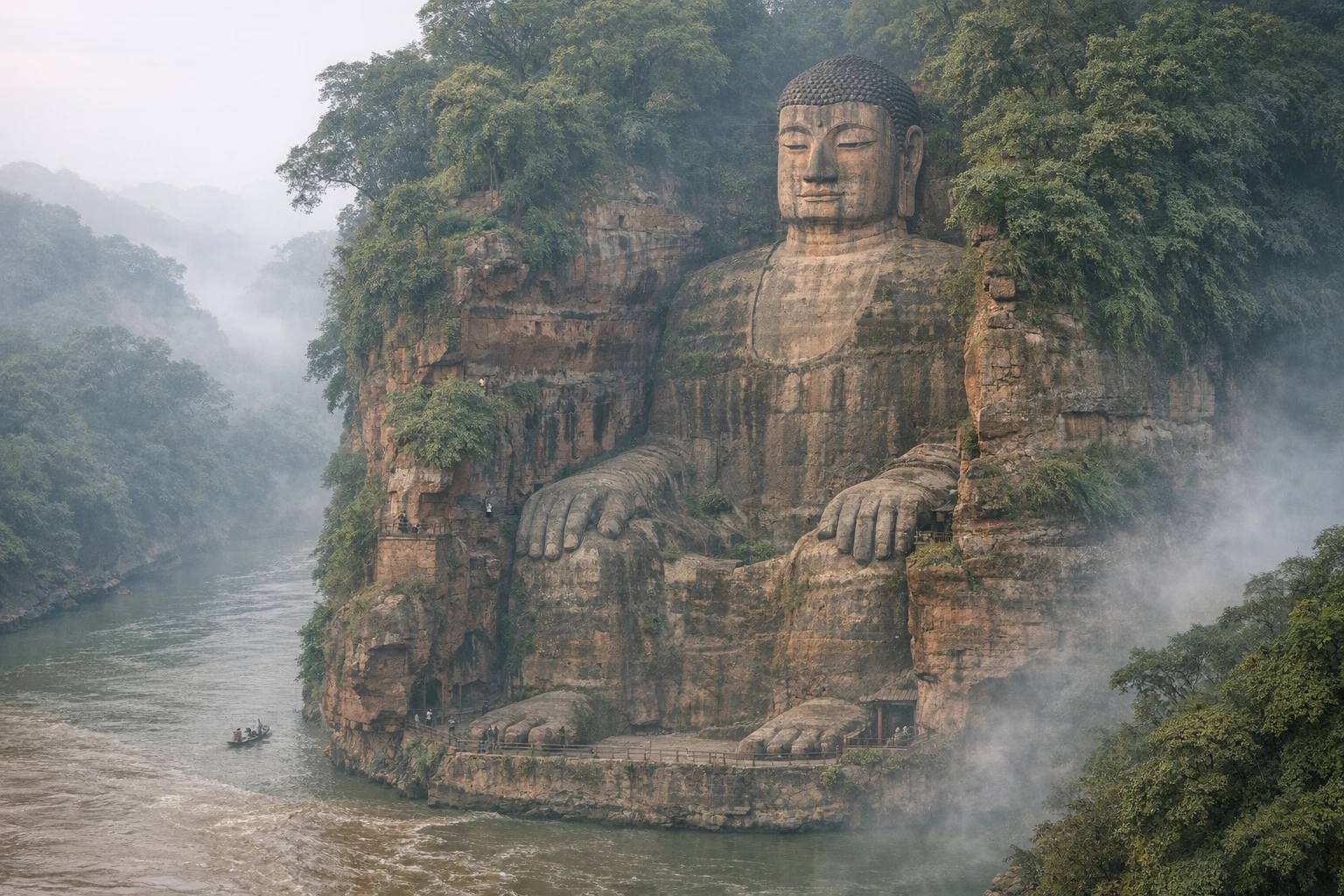
Leshan Giant Buddha
Tang Dynasty ChinaThe world's tallest pre-modern stone Buddha, carved into a clifftop in Sichuan, China, overlooking t...
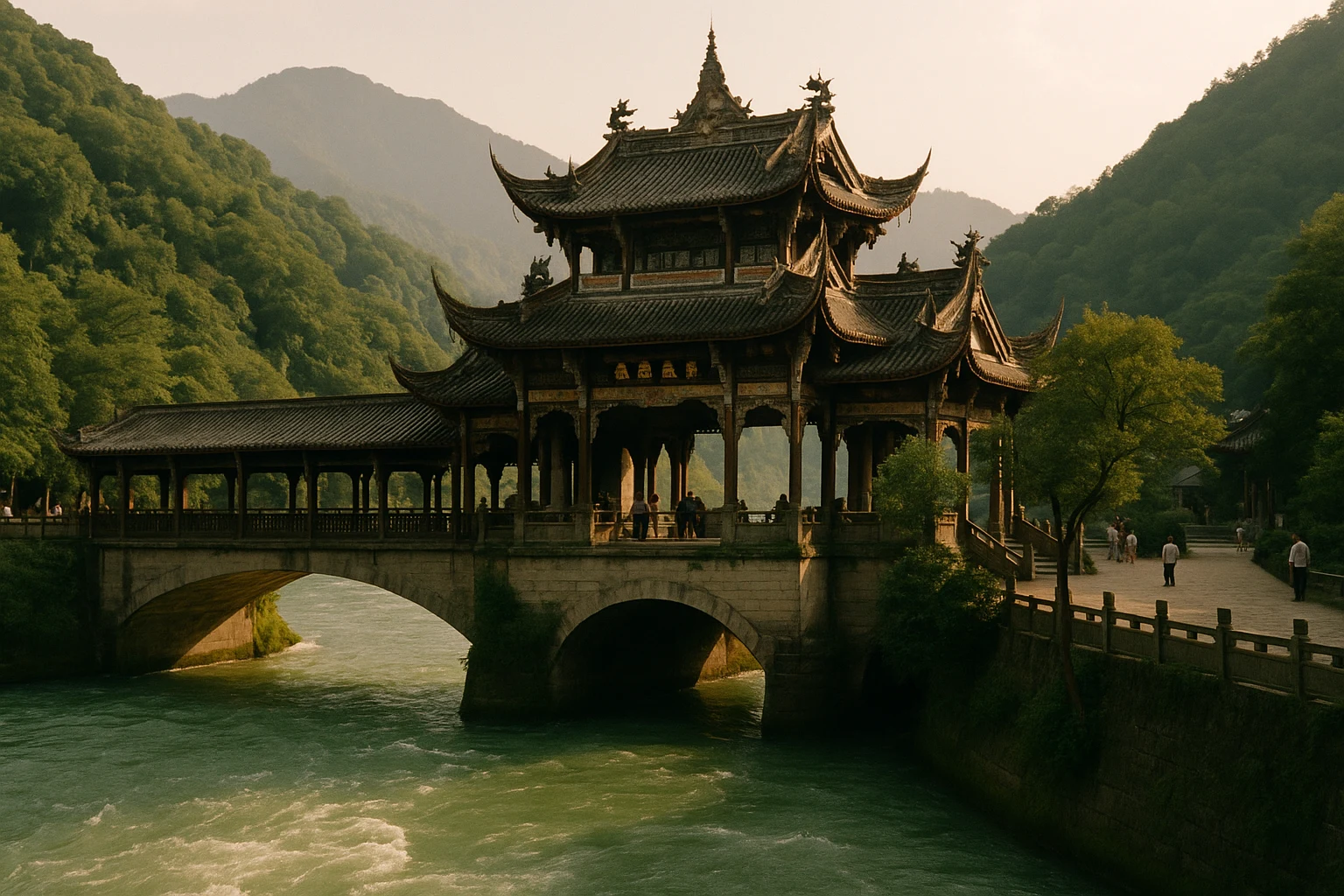
Dujiangyan Irrigation System
Explore Dujiangyan, the world's oldest functioning irrigation system, built in 256 BCE by engineer L...
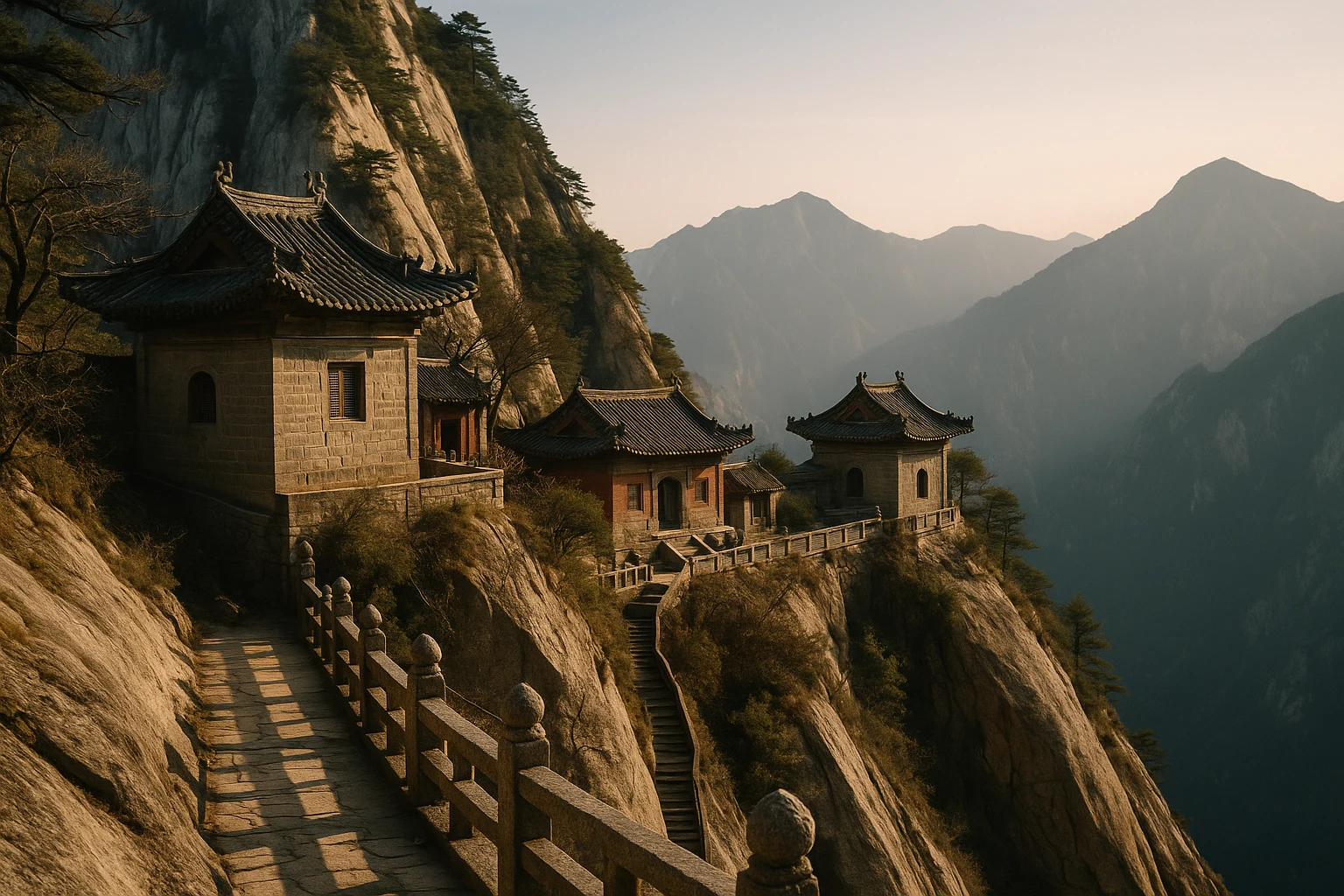
Mount Huashan Ancient Temples
Discover the sacred Daoist temples clinging to the sheer granite cliffs of Mount Huashan, one of Chi...
Forbidden City China Travel Guide 2026: Imperial Palace of Beijing
Chinese ImperialExplore the Forbidden City, China's imperial palace for 500 years. Discover the Hall of Supreme Harm...