Quick Info
Curated Experiences
Discover Lycian Civilization: Tlos, Xanthos and Patara Tour
Private Xanthos Letoon and Patara Day Tour from Fethiye
Lycian Heritage Small-Group Tour: Tlos, Letoon, Xanthos
Xanthos Letoon Turkey travel guide pages often separate these UNESCO-listed places as if they were two unrelated stops, but on the ground they read like a single historical sentence with two clauses: power and devotion. Xanthos, set on a commanding rise above the Xanthos Valley, was the political heart of Lycia, where elites built monuments that declared memory, rank, and resistance. Letoon, a short distance away on lower ground near sacred water, was the religious heart, where ritual and civic identity met under the protection of Leto, Artemis, and Apollo. You can feel the contrast in minutes: one site speaks in stone mass and defensive position, the other in sanctuary geometry and ceremonial calm.
What makes this pair exceptional in Turkey is not just the age of the ruins, but the completeness of the cultural system they reveal. You are not looking at random survivor monuments. You are walking through the machinery of a civilization that balanced federation, local dynasties, external empires, and sacred legitimacy across centuries. At Ancient Travels, we recommend visiting Xanthos and Letoon together even if your schedule is tight, because each site explains the other. This guide covers their historical arc, the core monuments to prioritize, practical transport and admission details, seasonal strategy, and how to combine the visit with nearby Lycian sites in a realistic day.
History: The Political and Sacred Core of Lycia
Early Lycian foundations (c. 8th century BCE-6th century BCE)
By the early first millennium BCE, Xanthos had emerged as one of the strongest urban centers in Lycia, controlling an inland-coastal corridor that connected agricultural zones to maritime trade routes. Local power developed through aristocratic lineages, fortified high ground, and funerary architecture that advertised status in a distinctly Lycian visual language. The nearby sanctuary area that would become Letoon was already tied to sacred water and regional cult practices. In this phase, Lycian identity was not provincial or derivative; it was actively being built through local institutions, inscriptions, and ritual landscapes that predated full imperial incorporation.
Persian era and regional autonomy (6th century BCE-4th century BCE)
After Achaemenid expansion into Anatolia, Lycian cities including Xanthos entered the Persian imperial orbit, but local governance persisted with meaningful autonomy. Rather than disappearing into a single imperial template, the region adapted taxation, military obligations, and elite diplomacy to local realities. Xanthos became both participant and negotiator in this order. Inscriptions and tomb programs from the broader Lycian world suggest an elite class deeply engaged with outside power but determined to preserve local forms of legitimacy. Letoon’s sanctuary role likely intensified in this period, as religious continuity helped anchor civic authority amid political pressure.
Hellenistic transitions and civic reshaping (4th century BCE-1st century BCE)
Alexander’s campaigns and the fragmented successor kingdoms transformed Anatolia, and Lycia became part of a competitive Hellenistic frontier where alliances shifted quickly. Xanthos absorbed Greek urban and artistic influence while retaining Lycian political memory, visible in mixed architectural vocabularies and multilingual inscription habits. Letoon developed as a formalized sanctuary with stronger monumental framing, reflecting both regional devotion and broader Mediterranean temple culture. This was not cultural replacement so much as layered adaptation. Xanthos and Letoon together show how local systems survived by translating themselves into the language of larger powers without surrendering core identity.
Roman period and imperial integration (1st century BCE-4th century CE)
Under Rome, both sites were woven into a stable provincial network of roads, taxation, and legal administration. Xanthos retained prestige as a major urban center, with theater construction and civic redesign signaling long-term investment. Letoon’s temple complex and ceremonial spaces continued functioning as religious and political theater, where ritual practice reinforced social order. Roman rule brought infrastructure and administrative coherence, but it did not erase Lycian memory. Instead, imperial frameworks amplified existing regional hierarchies while preserving enough local distinctiveness for Xanthos and Letoon to remain recognizable as specifically Lycian institutions within a Roman world.
Byzantine continuity, decline, and modern archaeology (4th century CE-present)
In late antiquity and Byzantine centuries, settlement patterns shifted and regional priorities changed, yet the sites did not vanish abruptly. Christianization and changing trade dynamics altered the ritual and civic roles of both places over time, while environmental and economic pressures reduced urban intensity. European travelers documented the ruins in the 18th and 19th centuries, and later archaeological campaigns clarified chronology, inscriptions, and site planning. Modern work has focused on conservation, stratigraphic interpretation, and reconnecting monument fragments with their historical context. Today’s visitor experience reflects decades of Turkish and international scholarship, and both sites remain active research landscapes rather than static relics.
The Key Monuments: What to See at Xanthos Letoon
The theater at Xanthos
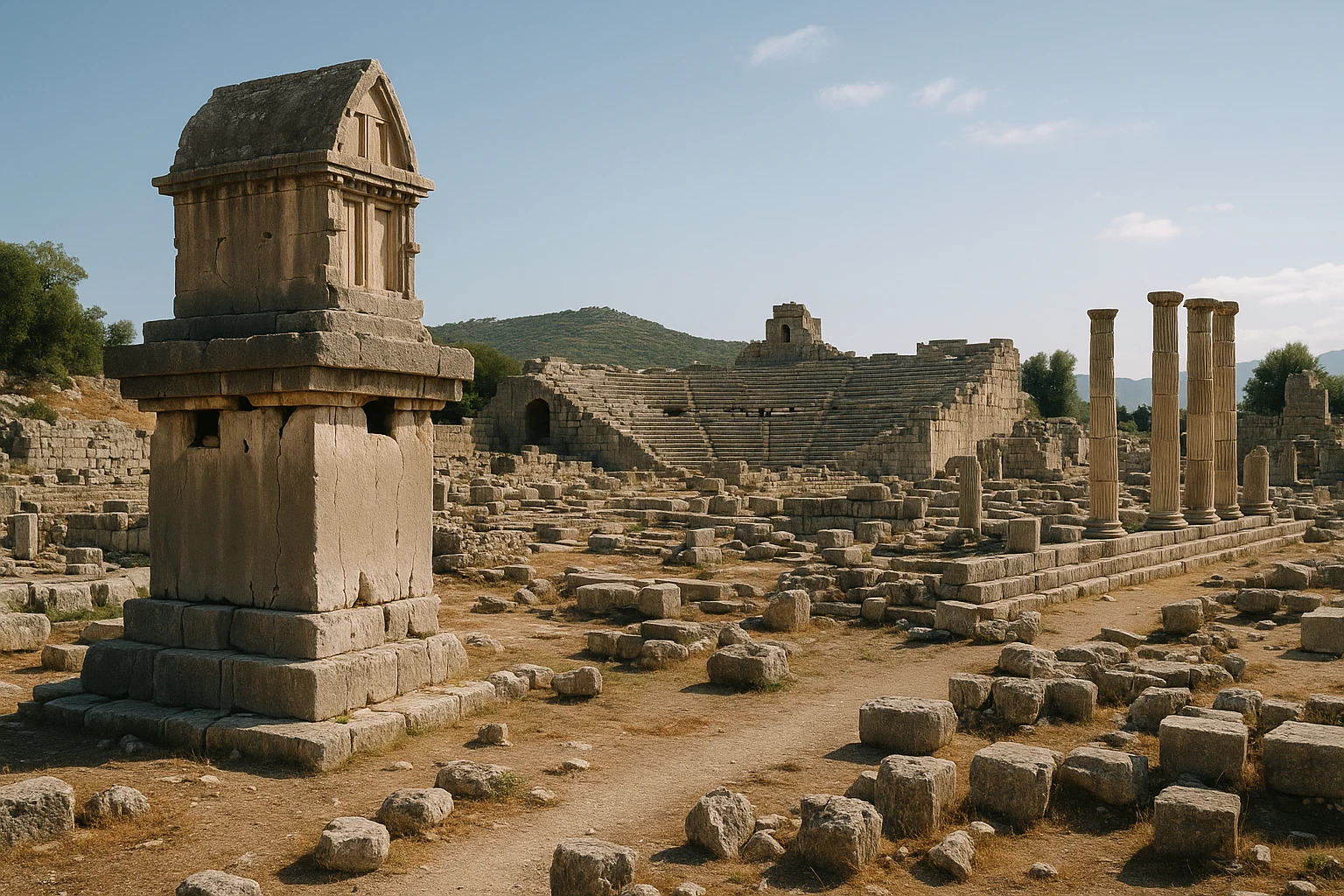
The Roman theater of Xanthos is the clearest expression of the city’s public scale. Built and modified across centuries, it uses the hillside effectively, combining engineered seating with long views over surrounding terrain. Even with partial preservation, the cavea, stage-area remains, and circulation logic reveal a venue designed for large audiences and civic spectacle. This was not merely entertainment infrastructure; theaters in provincial centers also served as political and ceremonial arenas where imperial messaging and local identity were performed together.
Stand near the lower seating first, then climb gradually for a full read of the site’s topography. Morning side light often gives the best stone texture and shadow definition for photographs.
The Lycian acropolis and defensive core
Xanthos rises from an elevated position for good reason. The acropolis zone combines strategic visibility, defensive value, and symbolic authority, helping explain why the city remained central in Lycian memory. Structural remains here are fragmentary, but the urban logic is still legible: elevated command points, clustered civic architecture, and terrain-aware planning suited to a polity that expected conflict as well as ceremony. Walking this area makes the political geography tangible. You can see how power at Xanthos depended on being both connected to valley routes and physically difficult to dominate.
For visitors, this section rewards slower pacing. Pause at elevation breaks and read the ruin field as a designed system rather than isolated walls.
Harpy Tomb tradition and funerary monuments
Xanthos is internationally known for its pillar tomb tradition, especially the monument often called the Harpy Tomb, whose sculptural program became central to modern understanding of Lycian elite funerary language. While originals and fragments are now distributed across museums and site contexts, the surviving setting still communicates the key point: Lycian tomb architecture projected lineage, status, and cosmological meaning directly into the civic landscape. These were not peripheral graves tucked away from urban life. They were statements in stone, visible declarations of continuity and authority.
Bring a medium focal-length lens if you want to isolate carving details and weathered profiles without losing environmental context.
The inscribed pillar and epigraphic legacy
Xanthos also matters because of its inscriptions, including the famous Xanthian inscription tradition that preserves crucial linguistic and historical data about Lycia. The so-called inscribed pillar complex is academically important not because it is visually grand, but because it carries political memory in text: dynastic narratives, identity claims, and formal declarations that let historians reconstruct local governance and interaction with larger empires. For travelers, this is where the site shifts from scenic ruin to documentary archive. You are standing in one of the places where Anatolian history speaks in its own voice.
If you enjoy ancient writing systems, arrive with a little background reading; context transforms this stop from abstract stone to direct conversation with the past.
The sanctuary temples at Letoon
At Letoon, the core monuments are the temples associated with Leto, Artemis, and Apollo, arranged in a sanctuary plan shaped by ritual movement and sacred water. The setting feels distinct from Xanthos immediately: flatter, quieter, and oriented toward ceremonial approach rather than defensive power. Architectural remains reveal multiple construction and rebuilding phases, reflecting changing patronage from Lycian through Hellenistic and Roman periods. This sanctuary likely served both religious devotion and diplomatic symbolism, where communities could perform shared identity under divine patronage.
The best visual strategy is wide framing early or late in the day, when low light makes foundations, column drums, and surrounding vegetation read with more depth.
Sacred spring context and the ritual landscape
Letoon is not just a temple cluster; it is a water-linked ritual environment. The sacred spring area and associated lowland setting explain why this place endured across political transitions. Sanctuaries tied to water often combine practical ecology with mythic authority, and Letoon appears to have done both. Even in ruin, the relationship between temple footprints, open space, and hydrology is key to understanding the site. Here, ritual was spatially choreographed: procession, offering, and communal gathering all depended on movement through a carefully organized sacred terrain.
Treat this final section as more than a quick add-on. Ten extra minutes of stillness at Letoon often becomes the moment travelers remember most clearly.
Getting There: Transportation and Access
Xanthos and Letoon are easiest to visit by road, and the most practical strategy is to treat Kınık and the surrounding valley roads as your navigation anchor.
From Kaş
Kaş is a common base for independent travelers and photographers. The drive to Xanthos is usually direct via the D400 and local connectors, with Letoon added in the same loop.
- Taxi: Convenient door-to-site option, generally 950-1500 TRY ($30-47 USD) one way depending on season and negotiation, around 40-60 minutes.
- Dolmuş/minibus: Budget route via Kalkan and Kınık with transfer needs; roughly 70-120 TRY ($2-4 USD) total, usually 60-90 minutes plus local connection.
- Rental car: Best flexibility for pairing Xanthos, Letoon, and Patara in one day; roads are generally straightforward and parking is usually manageable.
From Fethiye
Fethiye works well for day trips and guided heritage circuits that include multiple Lycian sites in one route.
- Intercity bus + local transfer: Frequent direction toward Kalkan/Kaş corridor, then onward to Kınık area; often 100-170 TRY ($3-5 USD), about 1-1.5 hours plus transfer time.
- Guided day tour: Good for first-time visitors who want historical interpretation and logistics bundled.
- Private transfer/rental car: Fastest for families or tight schedules; typically around 1-1.25 hours each way depending on stops.
Admission and Hours
Ticketing policies can change, so verify current rates on official channels before departure, but as a practical planning range expect combined or separate site entry costs totaling roughly 15-22 EUR equivalent in TRY (about 525-770 TRY, $16-24 USD). If you are visiting several major archaeological places in Turkey within a week, Museum Pass options may reduce total cost.
Opening schedules are usually longer in summer and shorter in winter, with last entry often closing earlier than the posted final hour. Card payment is frequently available, but keep cash as backup. For comfort, archaeology-first pacing, and cleaner photos, start near opening time or visit in late afternoon.
When to Visit: Seasonal Considerations
Spring (March-May)
Spring is the most balanced season for Xanthos and Letoon. Typical daytime temperatures range from 16-26°C (61-79°F), with greener landscapes and lower heat stress on exposed walkways. Crowds are moderate, and you can comfortably visit both sites in one circuit without feeling rushed. Light morning layers are useful for early starts.
Summer (June-August)
Summer brings clear skies and long daylight but also intense midday exposure. Expect 30-38°C (86-100°F), and sometimes higher in still-air conditions. Crowd pressure rises with regional beach tourism, though these sites are often calmer than major coastal resort stops. Prioritize early entry, hydration, hats, and planned breaks between monument clusters.
Autumn (September-November)
Autumn is excellent for travelers who want warm weather with less fatigue. Early autumn often sits around 22-32°C (72-90°F), cooling steadily later. Crowd levels ease after peak holiday periods, and photo conditions are often superb. This is the strongest alternative to spring for full-site exploration and combined itineraries.
Winter (December-February)
Winter is quieter and atmospheric, with temperatures commonly around 10-18°C (50-64°F). Rain and wind can move in quickly, so waterproof layers and good footwear matter. Service frequency in nearby seasonal towns may be reduced, but the archaeological experience is often more contemplative and uncrowded.
Combining Xanthos Letoon with the Lycian Coast
The most rewarding day plan treats Xanthos and Letoon as the core narrative, then adds one nearby site as a thematic extension. Start at Xanthos by 8:30 AM, when light is low and the acropolis circuit is still cool. Spend roughly 90 minutes moving from theater to tomb zones and inscription points, then transition by 10:15 AM to Letoon for the sanctuary sequence. Letoon usually needs 60-75 minutes for a thoughtful visit, longer if you like architectural photography or epigraphy.
By 12:00 PM, you have two strong options. If you want a politics-to-port storyline, continue to Patara (about 20-30 minutes by car) and spend early afternoon in the theater, granary, and harbor street areas. If you prefer a slower day, head toward Kalkan for lunch and coastal views, then return to Letoon’s lowland setting in later light for calmer photography. Either version works; the key is not overloading transfers.
A practical rhythm for most travelers is archaeology in the cool hours, meal break around 1:30 PM, and one final site or viewpoint by 4:00 PM. Total duration for the full combined day is usually 7-8 hours including driving and lunch. If your schedule is tighter, Xanthos and Letoon alone still justify a half-day. They give you the rare chance to see how a civilization organized authority in one place and sanctified it in another, all within a compact regional radius.
Practical Information
What to bring
- Sun protection: Hat, sunscreen, and sunglasses are essential; exposure is high on both sites.
- Water: At least 1 liter per person in mild months and 1.5-2 liters in summer.
- Footwear: Grippy, closed shoes for uneven stone and occasional loose gravel.
- Cash and card: Carry both for admission and local stops.
- Offline navigation: Download maps in advance because valley signal can vary.
Dress code and etiquette
There is no strict ritual dress code at either site today, but respectful travel norms still apply. Practical, breathable clothing is best, especially if you continue into village areas afterward. Avoid climbing on sensitive monument remains, respect barriers, and keep drone use aligned with local rules and heritage restrictions.
Accessibility
Accessibility is partial rather than complete. Some areas are relatively open and easy to approach, while elevated or fragmented zones involve uneven paths and slope changes. Visitors with limited mobility can still enjoy key viewpoints and major architectural remains, but full coverage may require selective routing or assistance.
Why Xanthos Letoon Matters
Xanthos and Letoon matter because they preserve the two forces every civilization must reconcile: who has authority, and why that authority is believed. At Xanthos, power is public, elevated, and inscribed in stone through tombs, theater, and political memory. At Letoon, legitimacy is ritualized in sanctuary space, where water, temple form, and shared devotion stabilize a wider social order. Seen together, they reveal Lycia not as a footnote between larger empires, but as a culture with its own institutional intelligence.
For modern travelers, this pairing does something rare. It moves beyond the postcard monument and shows governance, faith, and identity as interlocking systems across time. You leave with more than photos of ruins. You leave with a clearer sense of how communities survive pressure: by adapting forms, preserving memory, and keeping sacred meaning close to civic life. In late afternoon light, with valley wind moving through broken columns, Xanthos and Letoon feel less like remnants and more like a still-readable blueprint of human continuity.
Quick Facts
| Attribute | Details |
|---|---|
| Location | Kınık valley area, Antalya Province, Turkey |
| Ancient Name | Xanthos (Arñna) and Letoon |
| UNESCO Status | UNESCO World Heritage Site (Xanthos-Letoon), inscribed 1988 |
| Established | c. 8th century BCE Lycian urban center |
| Distance from nearest hub | ~42 km from Kaş (about 45-60 minutes by road) |
| Entry Fee | Common planning range 525-770 TRY ($16-24 USD), verify latest rates |
| Hours | Longer summer hours, shorter winter hours; last entry usually before closing |
| Best Time | Spring and autumn mornings |
| Suggested Stay | 3-4 hours for both sites (5+ hours with deeper exploration) |
Explore More Turkey
- Patara: Lycian federal history, Roman monuments, and coastal landscape in one expansive site.
- Myra: Rock-cut tomb facades and a major Roman theater near Demre.
- Kekova: Sunken-city coastline and maritime heritage best seen by boat and shore viewpoints.
Plan your wider route with our Turkey ancient sites hub. For seasonal logistics, read our guide to visiting archaeological sites in summer heat.
Frequently Asked Questions
How much time should I plan for Xanthos and Letoon?
Plan 3-4 hours to see both sites without rushing, including the theater and tomb zones at Xanthos plus the temples and sacred spring area at Letoon. If you enjoy inscriptions, architecture, or photography, 5 hours feels better. Many travelers pair both sites with Patara in one full day.
What is the best time of day to visit Xanthos Letoon?
Early morning is best for cooler walking conditions and softer light on relief carvings and tomb facades. Late afternoon can also be beautiful, especially for broad landscape views from Xanthos. Midday is workable in spring and autumn but can be harsh in summer because shade is limited.
Do I need a pass for Xanthos and Letoon, or can I buy normal tickets?
You can usually buy standard tickets on-site in Turkish lira, and that is sufficient for most visitors. If you are visiting several major archaeological places in one trip, the Turkey Museum Pass may offer better value. Carry both card and some cash for flexibility.
How do I get to Xanthos and Letoon from Kaş or Fethiye?
From Kaş, the simplest route is taxi or rental car via the D400 and local roads toward Kınık, usually around 40-60 minutes. From Fethiye, travel time is commonly 1-1.5 hours by road depending on stops. Organized day tours are widely available from both directions.
What are the main highlights at Xanthos and Letoon?
At Xanthos, highlights include the theater, acropolis remains, pillar tomb tradition, and long inscription record linked to Lycian identity. At Letoon, the key monuments are the sanctuary temples and sacred water context that anchored regional ritual life. Together they show political and religious sides of the same civilization.
Is Xanthos Letoon suitable for first-time visitors to Turkish archaeological sites?
Yes, especially if you want a less crowded but historically rich experience. Paths are generally manageable, signage has improved, and distances between major features are reasonable. Bring water, sun protection, and sturdy shoes for uneven ground.
Nearby Ancient Sites
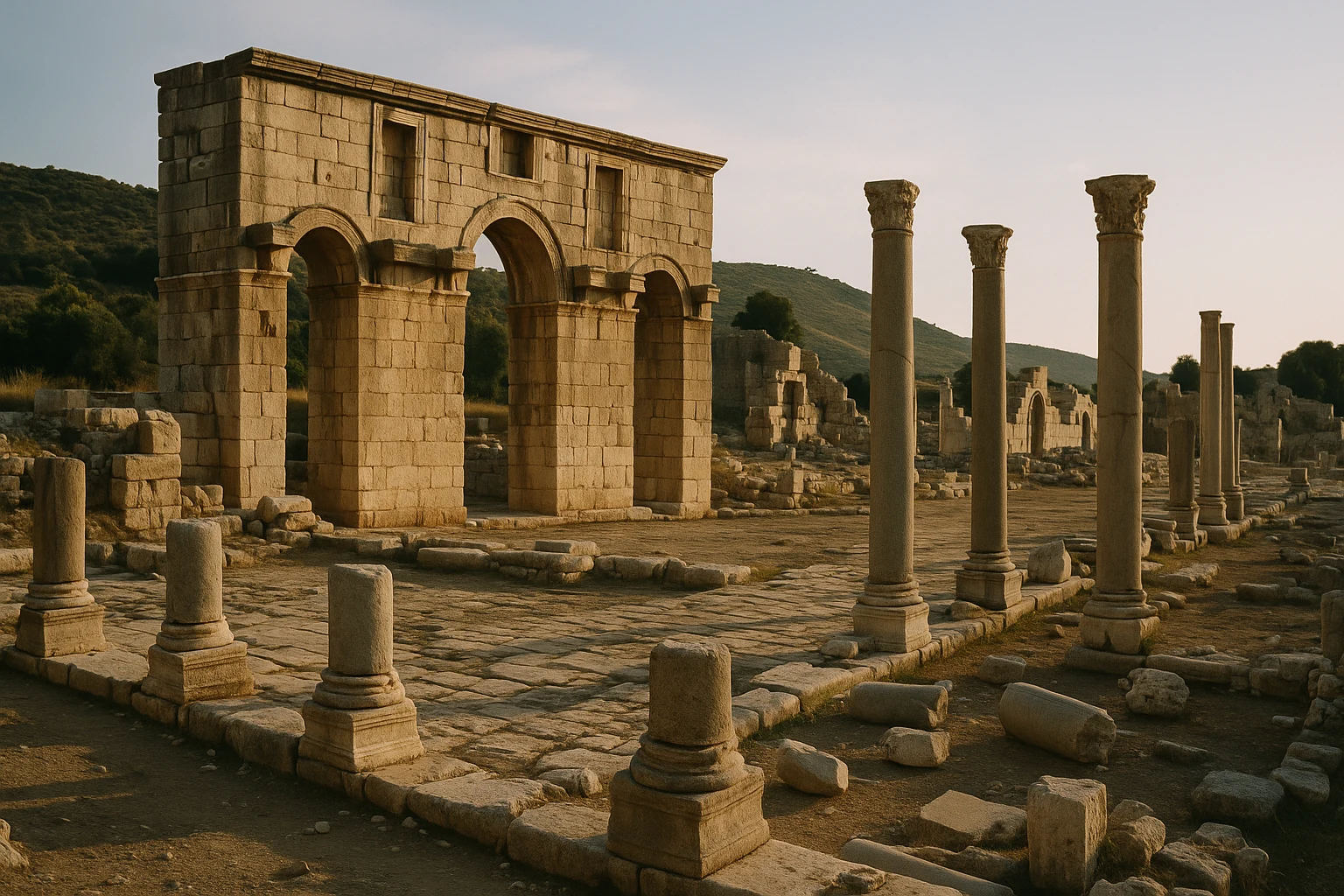
Patara Turkey Guide 2026: Lycian Capital & Roman Granary
Lycian-Hellenistic-Roman-ByzantinePlan your Patara, Turkey visit: explore Lycian and Roman ruins, climb the theater, and pair the site...
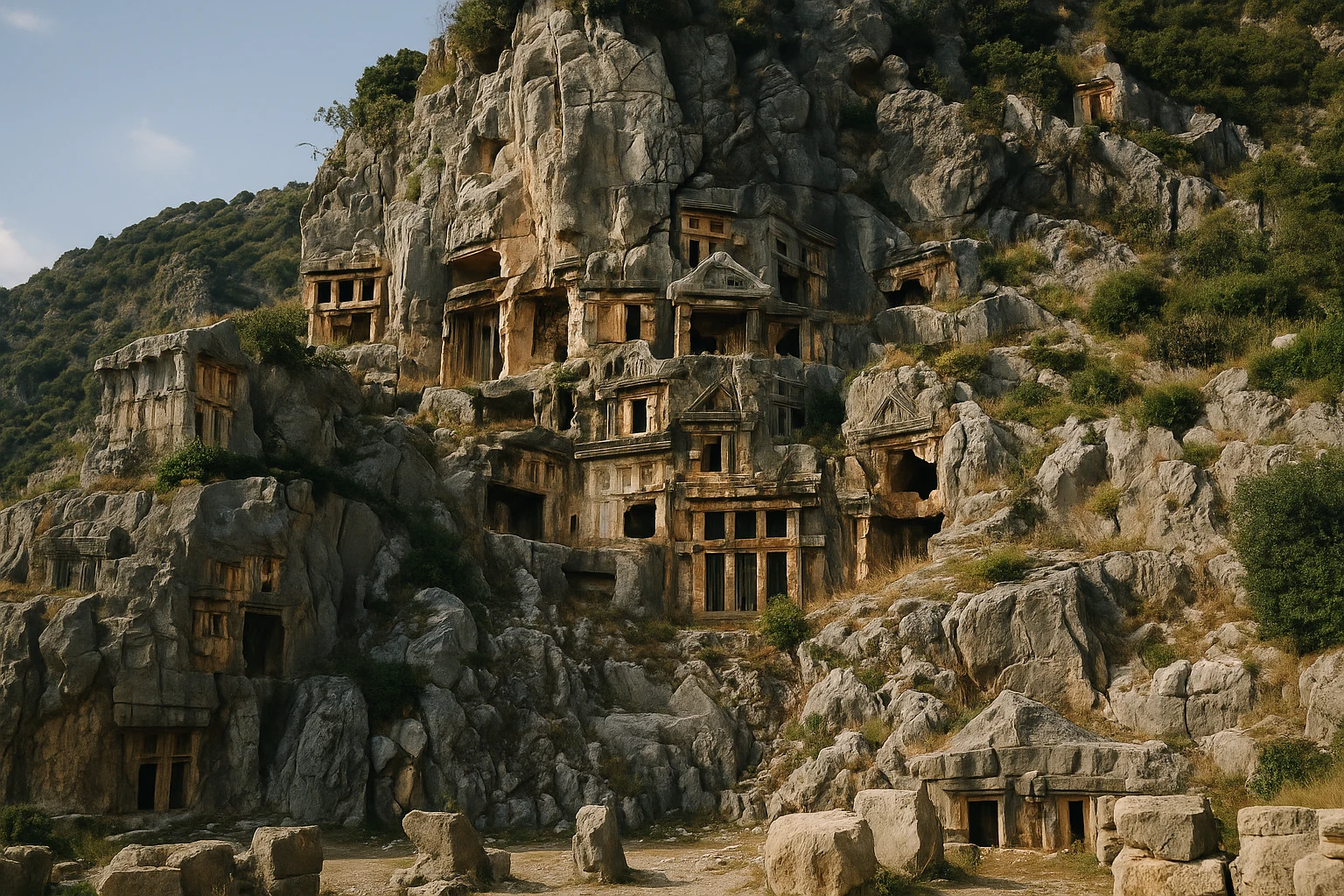
Myra Turkey Guide 2026: Lycian Tombs & Roman Theatre
Lycian-Roman-ByzantinePlan your Myra, Turkey visit with rock-cut Lycian tombs, a Roman theatre, tickets, hours, and transp...
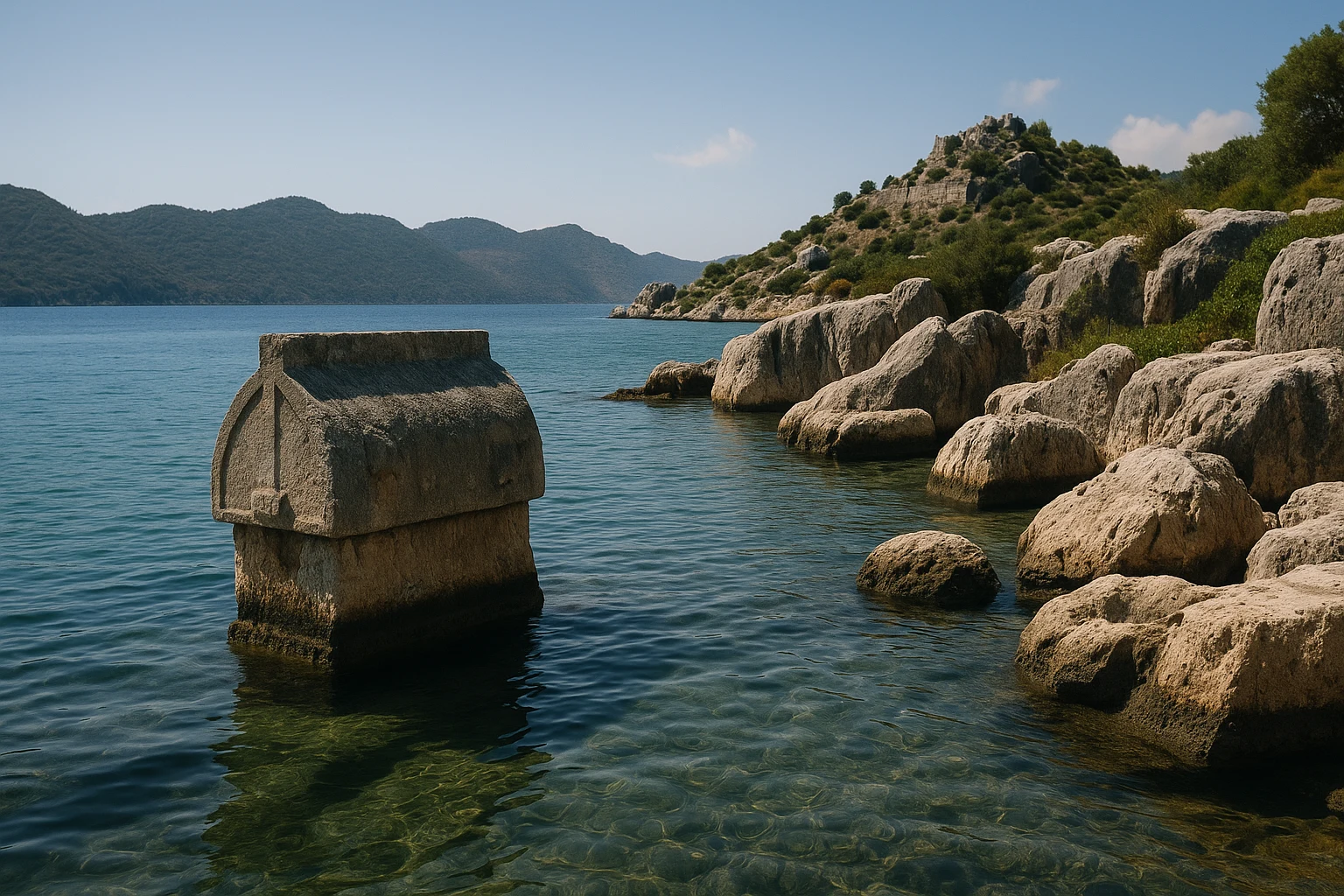
Kekova Turkey Guide 2026: Sunken City & Simena Castle
Lycian-Roman-Byzantine-OttomanPlan a full-day Kekova, Turkey visit with Sunken City boat routes, Simena Castle, transport from Kaş...