Quick Info
Curated Experiences
Yakushiji Temple & Nara's Sacred Sites Guided Tour
Nara Full-Day Tour from Kyoto with Temples and Deer Park
Nara UNESCO Heritage Temples and Shrines Walking Tour
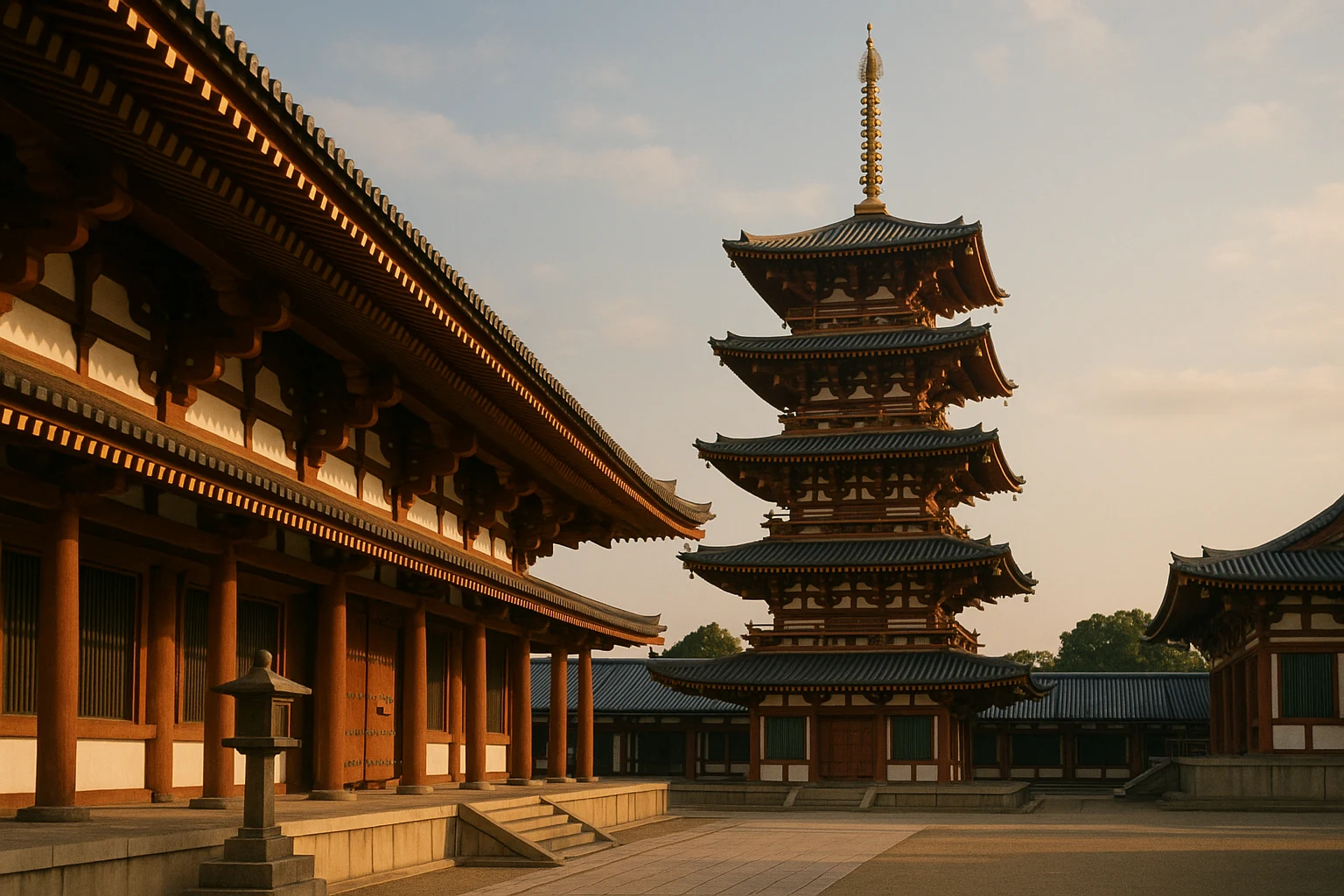
Standing in the south of Nara city, Yakushiji Temple has watched thirteen centuries of Japanese history unfold around its ancient stones and timbers. Founded in 680 AD on the orders of Emperor Tenmu, who prayed here for the recovery of his ailing consort, the temple was one of the most ambitious religious commissions of its era and remains one of Japan’s most important surviving expressions of Hakuho-period Buddhist artistry. The site’s silhouette — dominated by a three-story pagoda that somehow conjures the impression of six floors through the elegant rhythm of its alternating lean-to roofs — is among the most recognisable in all of Japan. Yakushiji is not simply a monument preserved for tourism; it is a living Hosso-sect temple where monks study, pray, and conduct ceremonies much as their predecessors did when Japan’s imperial court was first being assembled at Nara. Inscribed as part of the UNESCO World Heritage Site “Historic Monuments of Ancient Nara” in 1998, it offers visitors something increasingly rare in Japan’s heritage circuit: a place of genuine spiritual depth that has not been overwhelmed by its own fame.
History
Imperial Origins and the Healing Vow
Yakushiji Temple owes its very existence to illness and imperial devotion. In 680 AD, Emperor Tenmu — architect of the early Japanese imperial state — vowed to build a major temple dedicated to Yakushi Nyorai, the Buddha of healing and medicine, if his beloved consort Jito recovered from a serious sickness. She did recover, and Tenmu ordered the construction of the temple at Fujiwara-kyo, the imperial capital of the time located south of present-day Nara. Work proceeded slowly through the political turbulence that followed Tenmu’s death in 686, and it was Empress Jito herself who oversaw much of the early construction and finally witnessed the completion of the principal buildings around 697 AD.
Relocation to Nara
When the imperial court moved to a new capital at Heijo-kyo — modern Nara — in 710 AD, Yakushiji faced a fate common to major state temples of the era: relocation. The transfer was not a simple logistics exercise. Buddhist doctrine and imperial politics were deeply entwined, and the positioning of a great healing-Buddha temple within the new capital carried immense symbolic weight. Reconstruction at the Nara site was largely complete by around 730 AD, and the temple as built during this period represented the apex of Tenpyo-era craftsmanship. At its height, the Nara temple complex included a pair of magnificent pagodas, a central Kondo (main hall), a large lecture hall, monks’ quarters, and a formal south gate — a symmetrical layout that echoed the grand Tang Chinese temple plans that Japanese architects had studied closely.
Centuries of Loss and Reconstruction
Yakushiji’s subsequent history is largely one of fires, wars, and painstaking recovery. Most of the original Nara Period structures were destroyed during the civil conflicts of the Warring States period (late 15th–16th centuries). By the Edo Period, only the East Pagoda remained of the original ensemble. The temple limped along in diminished form for nearly three hundred years, its once-grand precinct reduced to a fraction of its intended scale. The dramatic reversal came in the twentieth century under the leadership of the monk Kouun Takada, who in the 1970s launched an extraordinary reconstruction campaign that would span decades. Takada’s ambition was nothing less than restoring the entire Nara Period complex using traditional materials and techniques. The West Pagoda was completed in 1981, the Kondo in 1976, and further buildings have been added incrementally since. The project, funded partly through temple-wide calligraphy campaigns in which visiting worshippers paid for sutras to be copied, is still technically ongoing, making Yakushiji one of the few UNESCO sites in the world where a medieval reconstruction effort continues actively in the twenty-first century.
The Hosso Sect and Intellectual Heritage
Yakushiji is the headquarters of the Hosso sect of Japanese Buddhism, one of the six classical Nara Buddhist schools that flourished in the 8th century. The Hosso tradition — imported from Tang China and associated with the scholar-monk Xuanzang, who brought Buddhist texts from India to China — is notably philosophical, emphasizing rigorous study of consciousness and perception. This intellectual heritage remains visible at the temple today: the Genjo Sanzoin sub-complex on the northern edge of the precinct is dedicated to Xuanzang’s memory and holds a bone relic of the Chinese monk, gifted by the Chinese government in 1981.
Key Features
The East Pagoda: Frozen Music in Cypress and Bronze
The East Pagoda (Toto) is Japan’s jewel, full stop. Dating to the early eighth century — precise estimates cluster around 730 AD, though some scholars argue for construction closer to the original 7th-century Fujiwara-kyo phase — it is one of a tiny handful of wooden structures anywhere in the world that have stood continuously for over thirteen hundred years. Rising to 33.6 metres, it achieves its most celebrated visual effect through what architects call mokoshi: small subsidiary lean-to roofs attached between each of the three main stories. The mokoshi do not add height, but they add rhythm. Viewed from below, the pagoda seems to breathe — its layers alternating between bold and delicate, solid and airy, in a syncopated cadence that the Meiji-era scholar Toru Haga memorably called “frozen music.” The bronze finial crowning the pagoda, known as the suien (water flame), is itself a masterpiece of Hakuho metalwork; its writhing flame forms, cast in the 7th or early 8th century, are visible even from the precinct’s south gate. The East Pagoda underwent a comprehensive multi-year restoration that was completed in 2020, returning its timbers and bronze elements to a state of structural integrity while preserving the deep ochre patina that centuries of weathering have applied.
The West Pagoda and the Symmetry of Intention
The reconstructed West Pagoda (Saito), completed in 1981, gives modern visitors a vivid sense of what the original Nara Period complex must have looked like when both towers rose simultaneously above the southern Yamato plain. Unlike the East Pagoda’s dark, aged dignity, the West Pagoda gleams with the vivid vermilion lacquer and white plaster of a newly completed Tang-influenced structure. Standing beside its ancient twin, it offers an almost accidental lesson in Japanese aesthetics: the contrast between them — one worn to quietness by time, the other bright with intention — is more eloquent than either would be alone. Some visitors initially prefer the old pagoda, but prolonged time in the precinct tends to reveal the value of having both.
The Yakushi Triad in the Kondo
The reconstructed main hall (Kondo) houses the temple’s spiritual centerpiece: the Yakushi Triad, a set of three large bronze figures cast in the early Nara Period, around 718 AD. The central figure of Yakushi Nyorai — the healing Buddha — sits on a rectangular pedestal whose four sides are carved in low relief with images of the Twelve Heavenly Generals, each associated with one of the vows Yakushi took for the benefit of sentient beings. To his left and right stand the Bodhisattvas Nikko (sunlight) and Gakko (moonlight), each over three metres tall and possessed of a supple, almost liquid elegance that sets them apart from the more rigid iconography of contemporaneous Buddhist sculpture. The figures bear visible evidence of the fires that periodically swept the complex: the Yakushi figure was at some point separated from its original halo, and Gakko’s halo is a later addition. Yet the core castings survived, and art historians regard them among the finest examples of Buddhist sculpture anywhere in East Asia.
The Genjo Sanzoin Complex
On the northern edge of the precinct, the Genjo Sanzoin was established in 1991 to honor the Chinese monk Xuanzang, whose 17-year journey from Tang China to India and back brought a vast corpus of Buddhist sutras to East Asia. The complex includes a main hall (Garan) housing a statue of Xuanzang and a reliquary containing one of the monk’s bone fragments, presented to Yakushiji by the Xuanzang Memorial Hall in Xi’an. For visitors interested in the Silk Road dimensions of Buddhism’s spread across Asia, this sub-complex adds a surprisingly continental perspective to what might otherwise seem like a purely Japanese site. A finely painted mural of Xuanzang’s journey decorates the interior, and the formal garden around the complex is particularly serene in autumn.
Getting There
Yakushiji Temple sits in southwestern Nara, just south of the Yamato-Saidaiji area, and is straightforwardly accessible by rail from both Kyoto and Osaka.
From Kyoto: The Kintetsu Kyoto Line runs directly from Kyoto Station (Kintetsu platforms, underground level) to Nishinokyo Station in approximately 35 minutes. Fares are around ¥640 one way. Nishinokyo Station exits directly onto the path leading to Yakushiji’s south gate — a walk of under two minutes. The same line also stops at Yamato-Saidaiji for connections to Nara’s central sites.
From Osaka: Take the Kintetsu Osaka Line or Osaka Namba Line toward Yamato-Saidaiji, then transfer to the Kintetsu Kyoto Line toward Kyoto and exit at Nishinokyo. Total journey from Osaka-Namba is approximately 50–60 minutes, with fares around ¥900.
From central Nara (Kintetsu Nara Station): Transfer at Yamato-Saidaiji Station to the Kintetsu Kyoto Line — just two stops to Nishinokyo, about 10 minutes in total.
By bus or taxi: Nara City Loop Bus services reach the Yakushiji-mae stop seasonally. From Kintetsu Nara Station, a taxi costs approximately ¥2,000–¥2,500. Cycling is an excellent option: Nishinokyo Station is connected by a pleasant flat cycle path to Todai-ji and Kasuga Taisha, allowing visitors to tour the full ancient-capital circuit in a single day.
Combined day trip: Yakushiji pairs naturally with Toshodai-ji Temple, a seven-minute walk north, which shares the same Nishinokyo Station. Both are included on standard Nara temple itineraries and can be covered comfortably in a half-day.
When to Visit
Yakushiji is open year-round and rewards visits in every season, though the character of each visit changes substantially with the weather.
Spring (late March–early April) brings cherry blossoms that frame the East Pagoda dramatically, particularly in the inner precinct garden. This is the most photogenic season but also the most crowded, with Nara’s famous deer park drawing large numbers to the city simultaneously. Arriving at Yakushiji before 9:00 AM is strongly advised during peak bloom weekends.
Early summer (May–June) offers lush green foliage with far thinner crowds. Wisteria blooms in the precinct during mid-May. June can be rainy, but overcast light is exceptionally flattering to the East Pagoda’s dark timbers and bronze suien.
Autumn (mid-November) is arguably the finest time to visit. Maple and ginkgo foliage turns the precinct into a landscape of amber and crimson, and the lower-angle light of autumn afternoons falls beautifully across both pagodas. Crowds are present but generally less intense than at Kyoto’s famous autumn spots.
Winter (December–February) sees the fewest visitors and occasional light snowfall that transforms the precinct into something otherworldly. The temple is fully operational through winter; monks conduct their regular ceremonies regardless of weather, and the absence of crowds allows extended quiet time with the sculptures in the Kondo.
Time of day: Mornings are best across all seasons. The East Pagoda faces east, and early light catches its bronze finial and carved timbers in ways that afternoon flat light cannot replicate.
| Quick Facts | |
|---|---|
| Founded | 680 AD (by Emperor Tenmu) |
| Religion | Buddhism (Hosso sect) |
| UNESCO Status | Historic Monuments of Ancient Nara (1998) |
| Key Structure | East Pagoda (Toto), c. 730 AD |
| Location | Nishinokyo, Nara City, Nara Prefecture, Japan |
| Nearest Station | Nishinokyo (Kintetsu Kyoto Line) |
| Opening Hours | 8:30 AM – 5:00 PM daily |
| Admission | ¥1,100 adults / ¥600 children |
| UNESCO ID | Component of #870 |
Yakushiji Temple rewards a different kind of attention than many of Japan’s more celebrated heritage sites. It is not intimate in scale — the precinct is large, the pagodas are imposing, the bronze sculptures are monumental. But it asks for patience rather than spectacle, and returns something richer than spectacle in exchange. The East Pagoda, standing alone while everything else that was built around it fell and was rebuilt and fell again, carries the weight of thirteen centuries not as a burden but as a kind of dignity. To stand before it on a quiet morning, while monks chant somewhere in the inner halls and Nara’s rooftops stretch away to the deer park in the east, is to be briefly in the presence of what Japanese civilization was reaching for at the very moment it was inventing itself.
Frequently Asked Questions
How old is Yakushiji Temple?
Yakushiji Temple was founded in 680 AD by Emperor Tenmu, making it over 1,300 years old. The East Pagoda, the sole surviving original structure, dates to the early eighth century and is one of the oldest wooden buildings in Japan.
Is Yakushiji Temple a UNESCO World Heritage Site?
Yes. Yakushiji Temple is one of eight components of the Historic Monuments of Ancient Nara, inscribed on the UNESCO World Heritage List in 1998.
What is the best way to reach Yakushiji Temple from Kyoto?
Take the Kintetsu Kyoto Line from Kyoto Station to Nishinokyo Station (about 35 minutes, ¥640). The temple is a two-minute walk from the station exit. From central Nara, the ride is roughly 10 minutes.
What are the opening hours and admission fee for Yakushiji Temple?
The temple grounds are open daily from 8:30 AM to 5:00 PM (last entry 4:30 PM). General admission is ¥1,100 for adults and ¥600 for children, which covers the main precinct including the Kondo, both pagodas, and the Genjo Sanzoin complex.
What is special about the East Pagoda at Yakushiji?
The East Pagoda (Toto) is considered one of Japan's greatest architectural achievements. Although it appears to have six stories from outside due to alternating 'mokoshi' (lean-to roofs), it actually has only three true stories. Its asymmetric rhythmic beauty led the Meiji-era poet Toru Haga to famously describe it as 'frozen music.'
Can you see the temple's famous Buddhist sculptures up close?
Yes. The Yakushi Triad — the central healing Buddha flanked by the Bodhisattvas Nikko and Gakko — is displayed in the reconstructed Kondo (main hall) and is viewable year-round. Several Nara Period bronzes of outstanding quality are also exhibited in the on-site Toin Dojo gallery.
Is Yakushiji Temple crowded?
Compared to Nara's famous deer park and Todai-ji, Yakushiji receives far fewer visitors and offers a more contemplative atmosphere. Spring cherry blossoms (late March–early April) and autumn foliage (mid-November) bring the largest crowds; weekday mornings are the quietest.
Nearby Ancient Sites
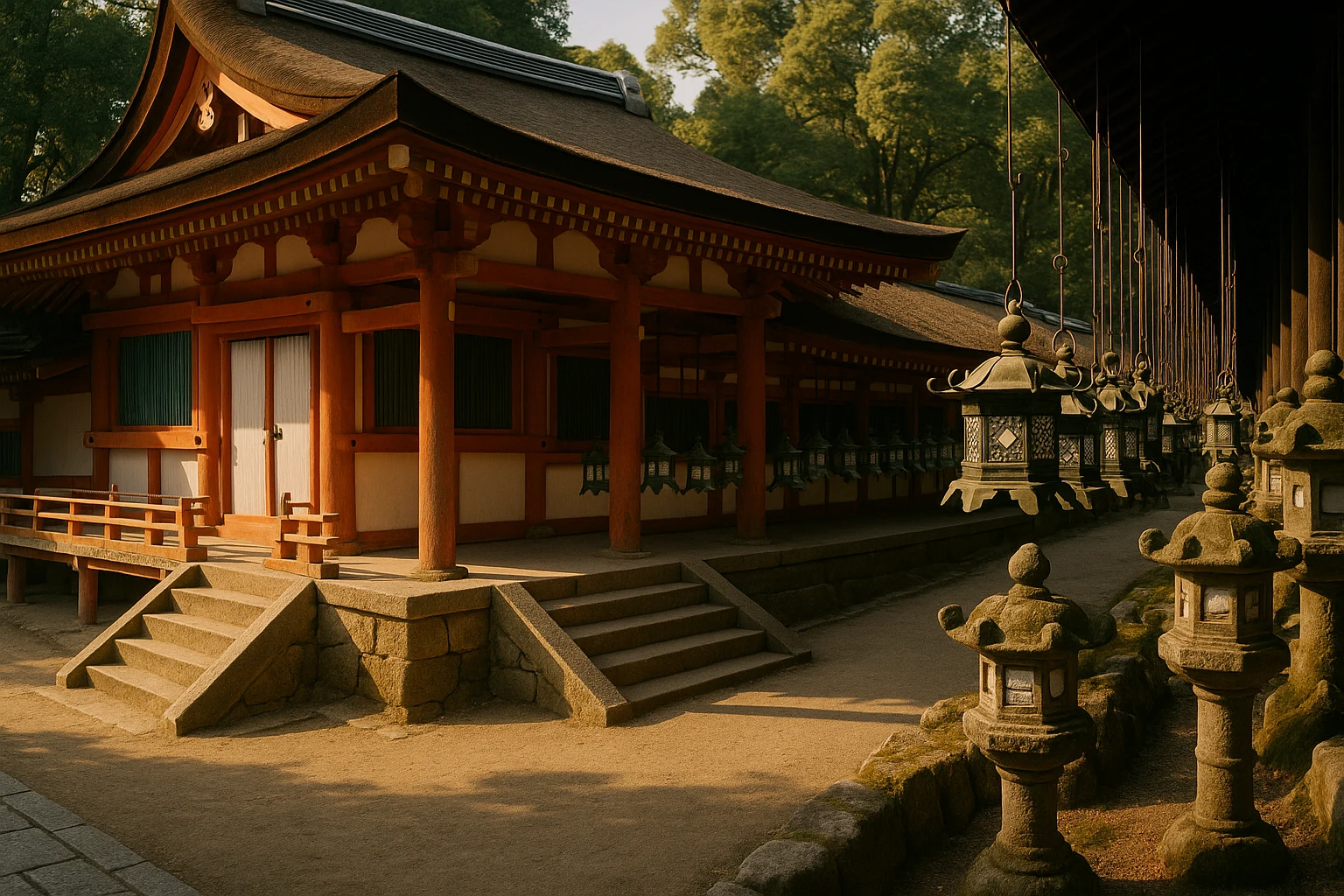
Kasuga Taisha Shrine
JapaneseSacred Shinto shrine in Nara, Japan, renowned for thousands of bronze and stone lanterns and UNESCO ...
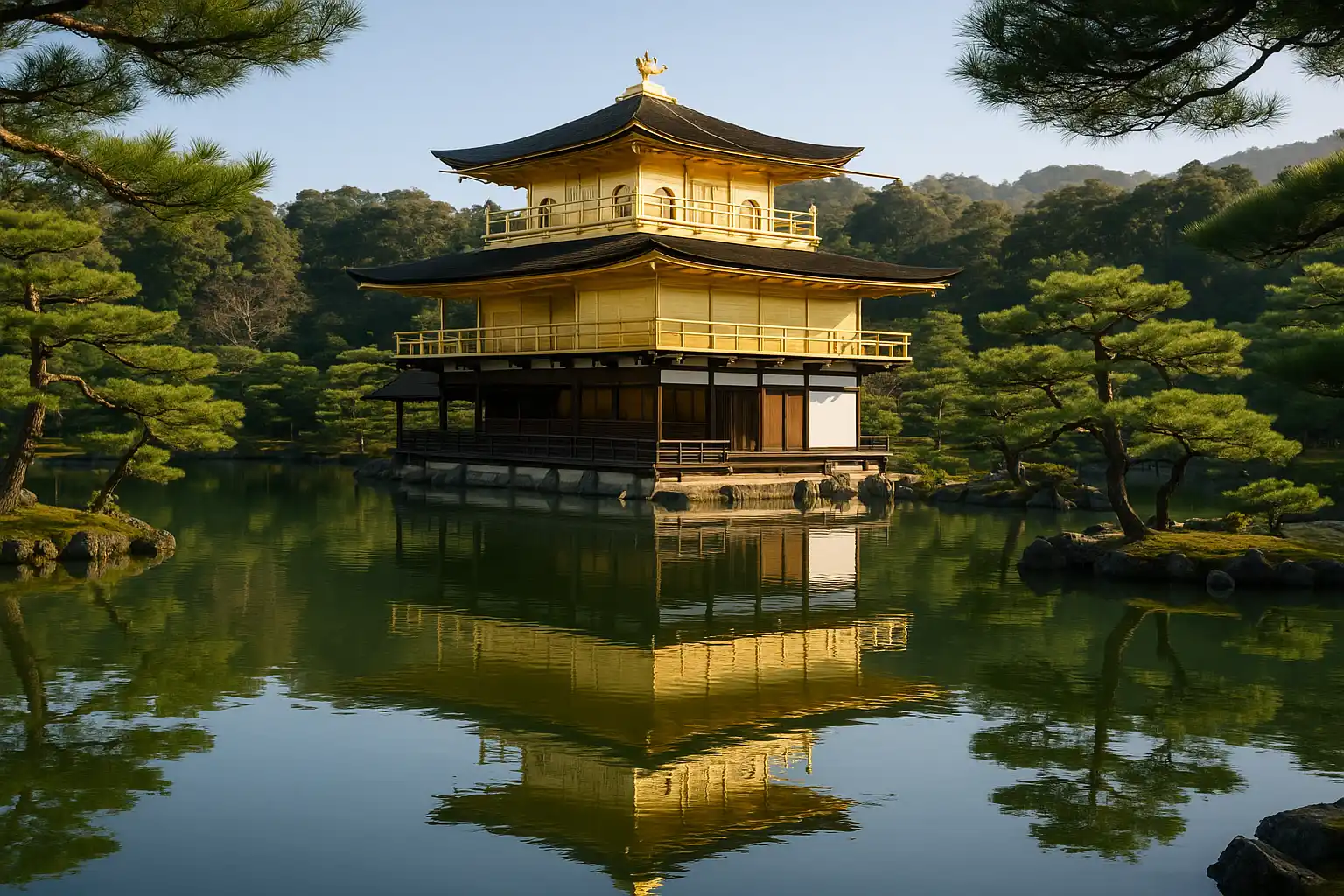
Kinkakuji Temple Japan Travel Guide 2026: Kyoto's Golden Pavilion
Japanese Zen BuddhistVisit Kinkakuji, the Golden Pavilion, Kyoto's most iconic Zen temple. Discover the gold-leaf covered...
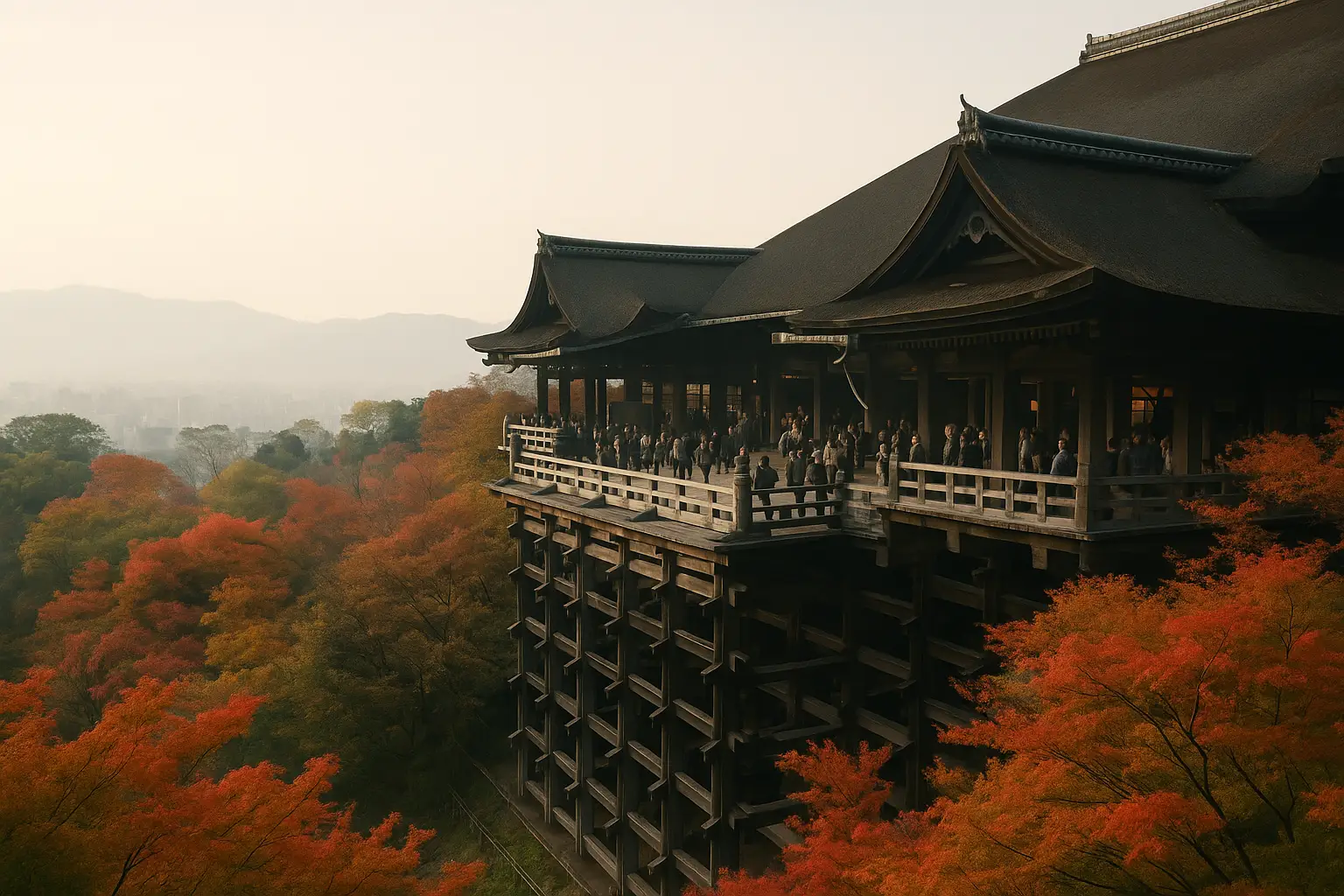
Kiyomizudera Temple Japan Travel Guide 2026: Kyoto's Wooden Stage
Japanese Buddhist (Kita-Hosso)Visit Kiyomizudera, the Pure Water Temple with its famous wooden stage overlooking Kyoto. Explore th...
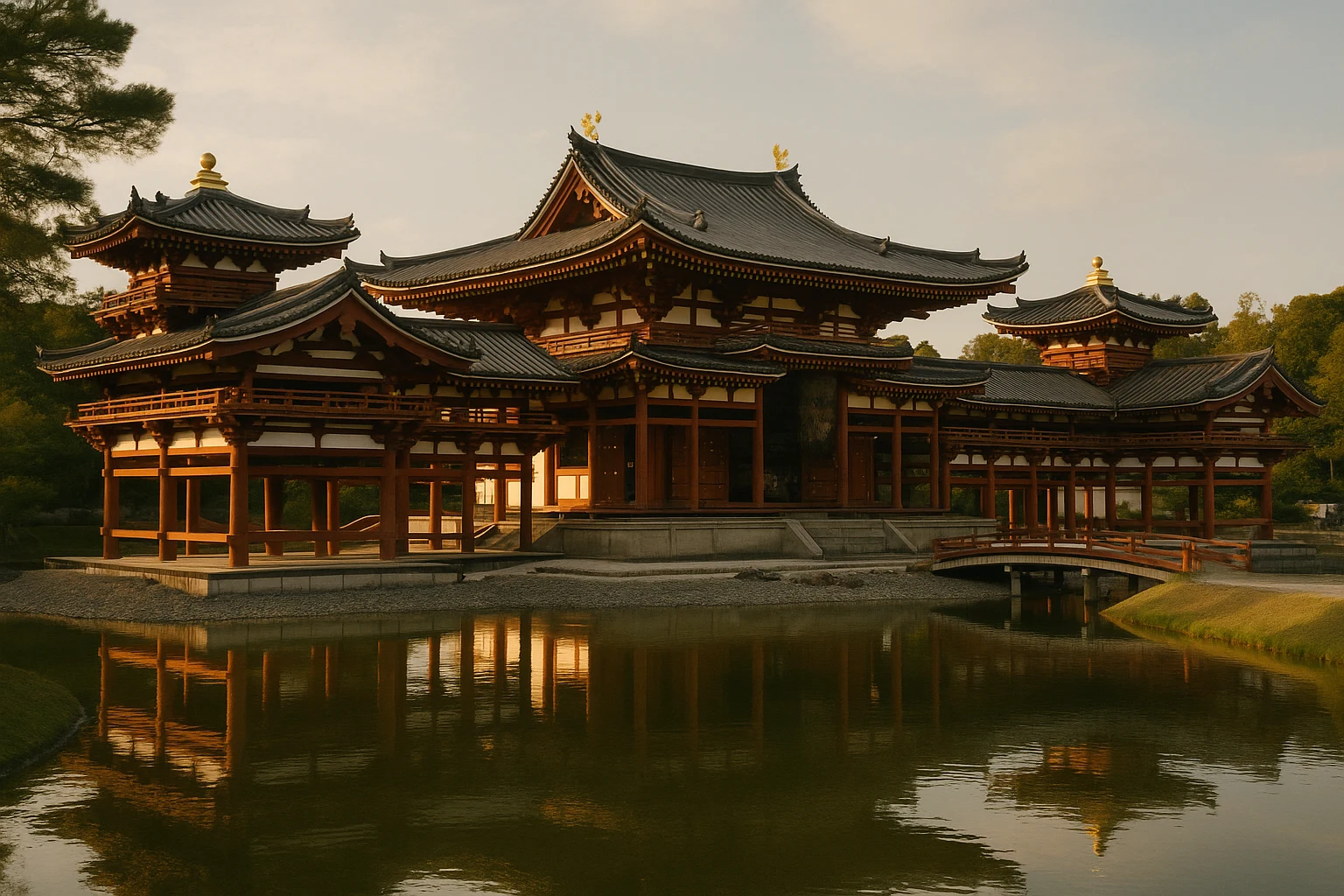
Byodoin Temple
Heian JapanA UNESCO-listed Heian-era masterpiece in Uji, Japan, renowned for its iconic Phoenix Hall reflected ...
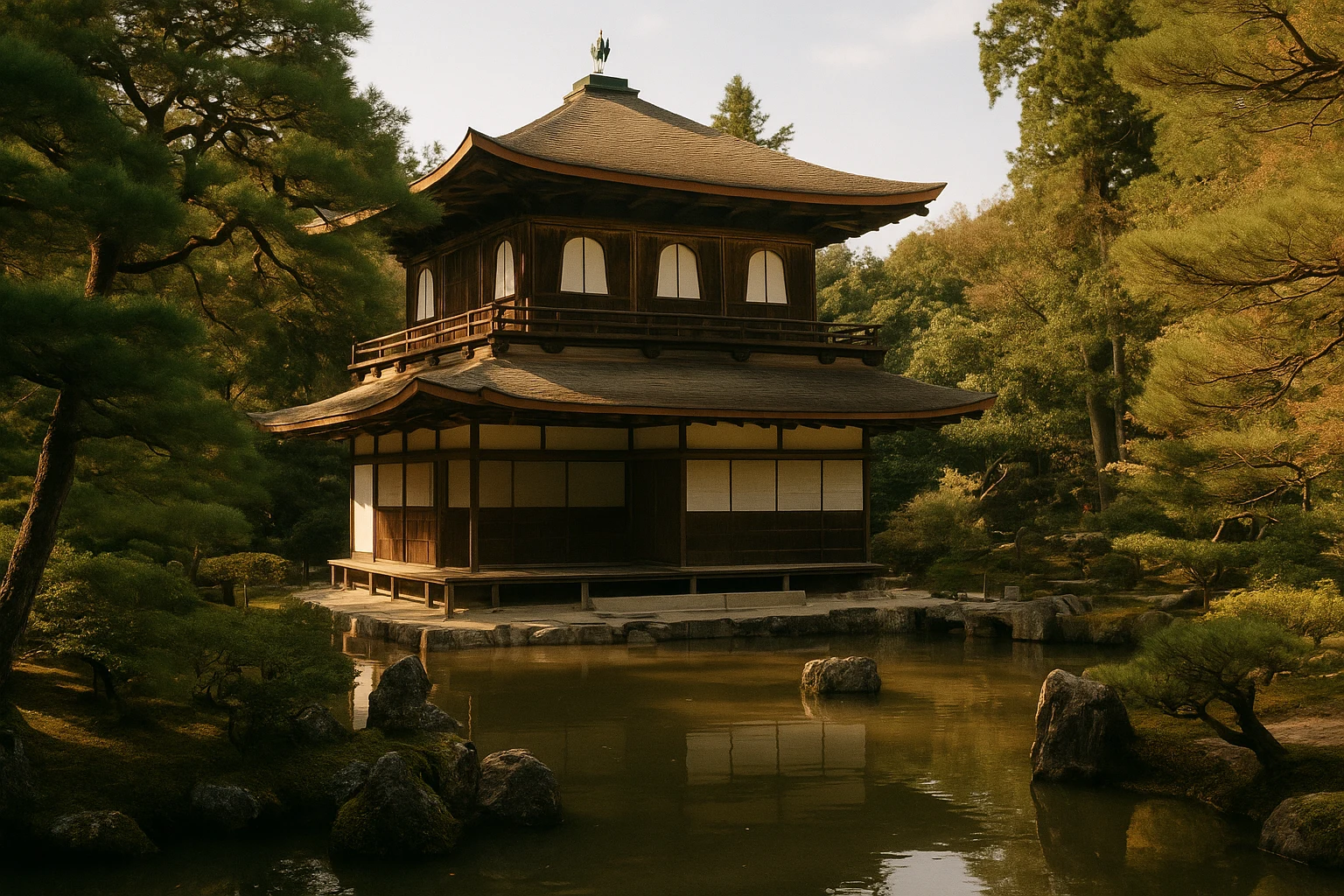
Ginkakuji Temple: Kyoto's Silver Pavilion and the Art of Wabi
Explore Ginkakuji Temple in Kyoto, Japan — the Silver Pavilion, sand gardens, and Ashikaga Yoshimasa...