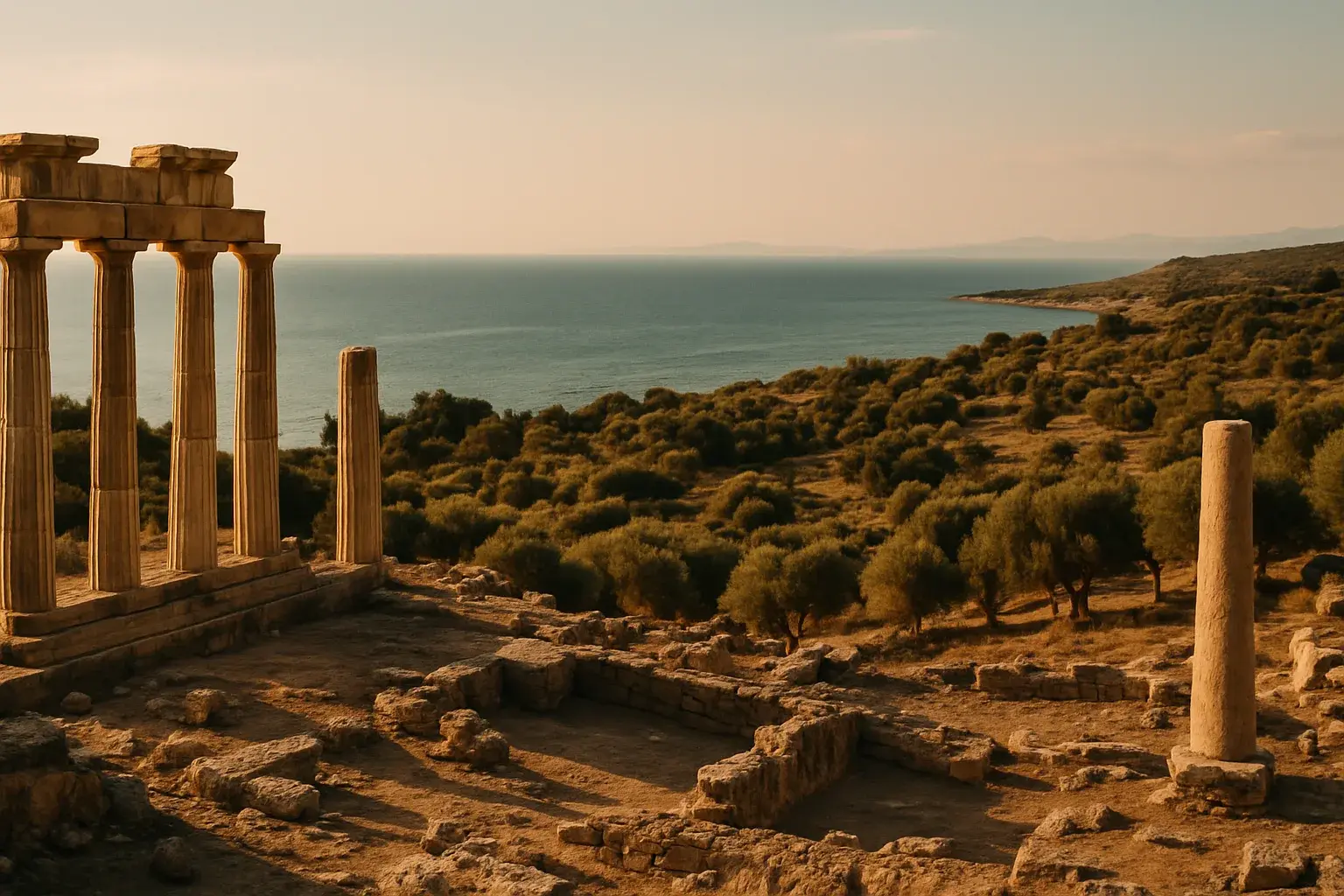
Greece is the cradle of Western civilization, and walking through its ancient sites is like stepping into the foundations of democracy, philosophy, theater, and art. From the marble temples of the Acropolis to the mystical oracle at Delphi, from the Mycenaean strongholds of the Peloponnese to the Minoan palaces of Crete, this 10-day itinerary offers a comprehensive journey through millennia of human achievement.
This is not a rushed checklist tour—it’s a thoughtfully paced route that gives you time to contemplate, photograph, and truly absorb these extraordinary places. Whether you’re a first-time visitor to Greece or returning to dig deeper, this itinerary balances must-see classics with hidden corners missed by tour buses.
Itinerary Overview: Your Journey Through Classical Greece
This route follows the classic clockwise archaeological circuit: Athens → Delphi → Peloponnese → Olympia → Crete. This direction optimizes ferry and flight connections to Crete while minimizing backtracking. You’ll spend 2-3 nights in each major base, allowing day trips to nearby sites without daily hotel changes.
The Route at a Glance:
- Days 1-3: Athens (Acropolis, Ancient Agora, National Archaeological Museum)
- Day 4: Delphi (Sanctuary of Apollo, archaeological museum)
- Days 5-6: Peloponnese (Corinth, Mycenae, Epidaurus, Nafplio base)
- Day 7: Olympia (Sanctuary of Zeus, archaeological museum)
- Days 8-9: Crete (Knossos, Heraklion Museum, Phaistos or Malia)
- Day 10: Return and reflection
Days 1-3: Athens — The Acropolis and Ancient City Center
Day 1: The Acropolis and Acropolis Museum
Morning: Acropolis Ascent
Start your Greek archaeological journey where Western civilization itself began—the Acropolis of Athens. Arrive at opening time (8:00 AM) to beat the heat and crowds. The climb up the Sacred Way builds anticipation as the Parthenon gradually reveals itself above.
Spend at least three hours exploring the citadel. Don’t rush past the Propylaia (the monumental gateway), the elegant Erechtheion with its famous Caryatid porch, and the compact but exquisite Temple of Athena Nike. The Parthenon itself, even in its ruined state, remains one of architecture’s supreme achievements—Doric order perfection on a colossal scale.
Insider tip: The southeastern corner offers the best photo angles of the Parthenon with morning light.
Afternoon: Acropolis Museum
After lunch in the pedestrianized Makrigianni neighborhood, spend the afternoon at the spectacular Acropolis Museum. This modern architectural marvel houses the sculptures and friezes from the Acropolis buildings, displayed at eye level as they were originally intended. The top-floor Parthenon Gallery is rotated to align with the ancient temple above—the glass walls create a dialogue between ancient and modern Athens.
Evening: Plaka and Reflection
Dine in the Plaka district beneath the illuminated Acropolis. The floodlit Parthenon visible above the rooftops creates one of travel’s most memorable evening views.
Day 2: Ancient Agora, Roman Forum, and Hadrian’s Library
Morning: Ancient Agora of Athens
The Agora was Athens’ civic heart—the marketplace, meeting place, and center of daily life for ancient Athenians. It’s often overlooked by rushed tourists, which makes it a more contemplative experience than the crowded Acropolis.
Key highlights include:
- Temple of Hephaestus: The best-preserved ancient Greek temple in the world
- Stoa of Attalos: Reconstructed in the 1950s, now housing the Agora Museum
- Prison of Socrates: Where the philosopher was held before his execution
- Odeon of Agrippa: A concert hall with impressive statuary bases
Afternoon: Roman Forum and Hadrian’s Library
Walk through the Roman Forum (Forum of Caesar and Augustus), featuring the octagonal Tower of the Winds and the Gate of Athena Archegetis. Continue to Hadrian’s Library, a massive complex built by the Roman emperor in AD 132 that once held thousands of scrolls. The remaining walls and reconstructed facade evoke the scale of Roman building projects.
Evening: Consider an evening performance at the Odeon of Herodes Atticus (summer only), a stone Roman theater on the south slope of the Acropolis that still hosts concerts and plays.
Day 3: Kerameikos, National Archaeological Museum, Evening Stroll
Morning: Kerameikos
Begin your final Athens day at Kerameikos, the ancient cemetery and pottery district northwest of the Agora. This peaceful site with its funerary monuments and Sacred Gate offers a quieter, more intimate experience than the major attractions. The Kerameikos Museum displays exquisite grave stelae that bring ancient Athenians vividly to life.
Afternoon: National Archaeological Museum
No trip to Greece is complete without visiting the National Archaeological Museum, one of the world’s greatest collections of ancient art. Budget at least three hours here. Essential highlights include:
- Mask of Agamemnon: The beaten gold funeral mask from Mycenae
- Artemision Bronze: A stunning 5th-century BCE bronze statue of Zeus or Poseidon
- Antikythera Mechanism: The world’s oldest known analog computer
- Cycladic figurines: Abstract marble figures that influenced modern artists
Evening: Take a sunset walk to Philopappos Hill for panoramic views over Athens and a perfect farewell to the city.
Day 4: Delphi — The Navel of the Ancient World
Getting There
Delphi sits on the slopes of Mount Parnassus, about two and a half hours northwest of Athens by bus. KTEL buses depart from Liossion Bus Station several times daily (book in advance in summer). If you’re renting a car, the drive offers spectacular mountain scenery.
Morning: Sanctuary of Apollo and Theater
The ancients called Delphi the “omphalos”—the navel of the world—and standing here, you understand why. The site cascades down Mount Parnassus in dramatic terraces, with the Temple of Apollo dominating the center. For over a thousand years, kings, generals, and ordinary Greeks journeyed here to consult the Pythia, the priestess who channeled Apollo’s prophecies.
The Sacred Way winds upward past treasuries built by city-states to house their offerings, the remains of the Apollo Temple where the oracle sat above a fissure in the earth, and the well-preserved ancient theater with its spectacular mountain backdrop. Pause at the Castalian Spring, where visitors purified themselves before consulting the oracle.
Afternoon: Delphi Museum and Stadium
The Delphi Archaeological Museum ranks among Greece’s finest. Don’t miss:
- The Charioteer: A haunting bronze statue with inlaid glass eyes
- The Naxian Sphinx: A winged lion with a woman’s head
- The Omphalos: A carved stone marking the “center of the world”
After museum visiting, hike up to the ancient stadium, the best-preserved in Greece, which hosted the Pythian Games.
Evening
Stay overnight in nearby Arachova (charming mountain village) for better dining options, or in Delphi town for proximity.
Days 5-6: The Peloponnese — Mycenae, Epidaurus, and Corinth
This section works best with a rental car, though public buses connect the major sites to Athens (with longer travel times).
Day 5: Corinth Canal, Ancient Corinth, Mycenae, Nafplio
Morning: Corinth Canal and Ancient Corinth
Depart Delphi early for the dramatic Corinth Canal, which cuts through solid rock to connect the Aegean and Ionian seas. Stop at the canal viewpoint, then proceed to Ancient Corinth.
Ancient Corinth was one of Greece’s wealthiest and most cosmopolitan cities. The Temple of Apollo (with its distinctive monolithic columns) rises on a hill above the Roman-era forum. Visit the Bema, where St. Paul preached to the Corinthians, and explore the extensive ruins with Acrocorinth fortress towering above.
Afternoon: Mycenae
The citadel of Mycenae guards the entrance to the Argolid plain with legendary authority. This was the kingdom of Agamemnon, leader of the Greeks in the Trojan War. Pass through the monumental Lion Gate—the oldest monumental sculpture in Europe—and climb to the palace hill for sweeping views.
Don’t miss:
- The Lion Gate: The iconic entrance with relief-carved lions
- Grave Circle A: The royal cemetery where the “Mask of Agamemnon” was found
- The Treasury of Atreus: A spectacular beehive-shaped tholos tomb
Evening: Nafplio
Overnight in Nafplio, Greece’s most charming town. This Venetian-era port was Greece’s first modern capital and offers excellent restaurants, romantic alleys, and three Venetian fortresses to explore.
Day 6: Epidaurus and Return Options
Morning: Theater of Epidaurus
The theater at Epidaurus is the crown jewel of Greek theater architecture. Built in the 4th century BCE, it seats up to 14,000 spectators with acoustics so perfect you can hear a whisper on stage from the top row. Stand in the center and test it yourself—the phenomenon still amazes acoustical engineers.
The adjacent sanctuary of Asclepius, god of medicine, includes the remains of healing temples and dormitories where patients awaited divine cures through dream incubation.
Afternoon: Options
Return to Athens (2 hours by car or bus) or continue to Tiryns, another impressive Mycenaean fortress near Nafplio. If time permits, visit the Palamidi Fortress above Nafplio before departing.
Day 7: Olympia — Birthplace of the Games
Getting There
Olympia lies in the western Peloponnese, about 3.5 hours by car from Athens or Nafplio. Public transport requires connecting through Tripoli or Patras—consider this a day best done by rental car or organized tour.
Exploring the Sanctuary
The ancient sanctuary of Olympia was never a city—it’s function was exclusively religious and athletic. Here, the Olympic Games were held every four years from 776 BCE to 393 CE, drawing athletes and spectators from across the Greek world.
Walk the processional path to the Temple of Zeus, which once housed the monumental gold and ivory statue of Zeus—one of the Seven Wonders of the Ancient World. Little remains of the temple itself, but scattered columns and foundations evoke its original grandeur.
Other key sites include:
- The Temple of Hera: The oldest monumental temple in Greece
- The stadium: Where up to 45,000 spectators watched footraces
- The palaestra and gymnasium: Training facilities for athletes
- The workshop of Pheidias: Where the great sculptor created the Zeus statue
The Museums of Olympia
Two museums demand attention:
- Archaeological Museum of Olympia: Outstanding collection including the famous Hermes of Praxiteles and sculptures from the Temple of Zeus
- Museum of the History of the Olympic Games: Traces the ancient games’ history and legacy
Days 8-9: Crete — Knossos and Minoan Civilization
Getting There
Fly from Athens to Heraklion (1 hour, inexpensive with advance booking) or take an overnight ferry from Piraeus (more romantic, less efficient).
Day 8: Knossos and Heraklion Archaeological Museum
Morning: Palace of Knossos
The Palace of Knossos is Europe’s oldest city—over 4,000 years old—and the center of Minoan civilization, Europe’s first advanced culture. Arthur Evans’ controversial reconstructions (painted columns, imagined frescoes) make Knossos unlike any other ancient site. Whether you love or hate the restoration approach, the complexity of the palace maze—storerooms, throne rooms, royal apartments, workshops—reveals an astonishingly sophisticated society.
Highlights include:
- The Throne Room: With its famous griffin fresco
- The Grand Staircase: Leading to the upper levels
- The Queen’s Megaron: Containing the controversial “Dolphin Fresco”
- The Great Courtyard: Where bull-leaping ceremonies may have occurred
Afternoon: Heraklion Archaeological Museum
Spend the afternoon at the Heraklion Archaeological Museum, perhaps the world’s finest collection of Minoan art. Unmissable exhibits include:
- The Phaistos Disc: An undeciphered clay disc with spiral script
- The Prince of the Lilies: A restored fresco of a figure in a lily crown
- Bull-leaping frescoes: Depicting acrobatic vaults over charging bulls
- The Snake Goddess figurines: Elegant statuettes in painted clay
Evening: Dine in Heraklion’s old town or waterfront area.
Day 9: Phaistos, Gortyn, or Beach Restoration
Option A: Phaistos
For a less reconstructed, more atmospheric Minoan experience, visit the Palace of Phaistos south of Heraklion. Set on a hilltop with views across the Mesara plain to the sea, Phaistos offers a more authentic encounter with Bronze Age architecture. The site includes the famous Phaistos Disc found here in 1908.
Option B: Gortyn
Gortyn (Gortys) preserves the longest ancient Greek inscription ever discovered—the Gortyn Code, a 5th-century BCE legal code carved on an odeum wall. The site also includes a basilica church, Roman praetorium, and monumental plane tree reputed to be where Zeus seduced Europa.
Option C: If you’re “ancient-sited out,” spend the day recovering on a nearby beach—Matala, with its cliffside Roman caves, is a good compromise between archaeology and relaxation.
Evening: Consider departing Crete with an evening flight or overnight ferry back to Athens, or extend your stay with nights in Chania, Crete’s most beautiful city.
Day 10: Return Through Modern Eyes — Synthesis and Reflection
Your final day involves travel back to Athens (or departing from Crete). Use transit time to reflect on the extraordinary scope of what you’ve witnessed:
- Mycenaean warrior-kings buried with gold masks
- Athenian democracy debating on the Pnyx
- Athletes competing for olive wreaths at Olympia
- Minoan priestesses dancing with sacred snakes
These weren’t just stones and foundations—they were centers of belief, power, and daily life that shaped the trajectory of Western civilization. The echoes of that world still resonate in modern democracy, theater, art, and philosophy.
Consider spending your final evening at a traditional Greek taverna, toasting the ancients who, somehow, across millennia, still have so much to teach us.
Practical Planning: Transport, Tickets, and Accommodations
Transportation Comparison
| Method | Cost | Flexibility | Best For |
|---|---|---|---|
| Rental car | €40-70/day | High | Peloponnese exploration, families |
| KTEL buses | €15-40/trip | Medium | Budget travelers, Athens-Delphi |
| Organized tours | €80-150/day | Low | First-time visitors, convenience |
| Domestic flight (Athens-Crete) | €50-120 | N/A | Time-limited travelers |
Ticket and Pass Strategy
The combined Acropolis ticket (€30) includes the Acropolis, Ancient Agora, Roman Forum, Hadrian’s Library, Kerameikos, and Temple of Olympian Zeus. It’s valid for five days and pays for itself if visiting three or more sites.
Individual site fees:
- Acropolis alone: €20
- Delphi: €12 (€6 for arch. site, €6 for museum)
- Mycenae: €12
- Epidaurus: €12
- Olympia: €12 (€6 for arch. site, €6 for museum)
- Knossos: €15
Total individual tickets: ~€95. The combined Athens pass plus individual day trips is most economical.
Accommodation Recommendations
- Athens: Plaka, Koukaki, or Makrigianni neighborhoods (walking distance to Acropolis)
- Nafplio: Old town boutique hotels for atmosphere
- Delphi: Arachova for charm, Delphi town for proximity
- Crete: Heraklion near Knossos or Chania for extended stays
Extending Your Journey
If you have additional time, consider:
- Meteora: Monasteries perched on rock pinnacles (2 days from Athens)
- Santorini: Akrotiri, the “Pompeii of the Aegean” Bronze Age site
- Rhodes: Medieval Old Town and ancient Kamiros
- Northern Greece: Vergina (royal tombs of Macedon) and Philippi
Greece contains more extraordinary archaeological sites than most countries have tourist attractions. Ten days gives you the highlights; a lifetime barely scratches the surface.