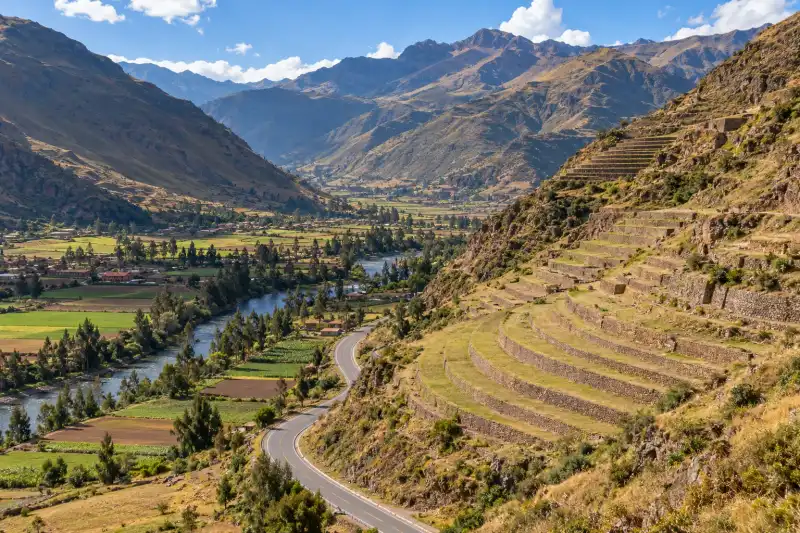
Peru’s highlands reward deliberate pacing. A trip that looks compact on a map may combine a long international arrival, an internal connection, winding mountain roads, and sleeping elevations that feel very different from sea level. Treat the first part of the trip as an arrival and observation period, not an archaeological endurance test.
This guide is about Peru-wide highland planning: how to sequence the country’s southern highlands before deciding on a specific Sacred Valley stay, trek, or transport mode. For the fortresses and rail connection near Machu Picchu, start with Ollantaytambo. For the citadel’s circuit choices, use our Machu Picchu guide.
Build an arrival buffer
Flights, luggage delays, and changing weather can turn a same-day connection into a brittle plan. If you arrive in Cusco, make the first afternoon intentionally small: transfer, settle in, eat and drink normally, and walk only as comfortably as you can. Avoid scheduling a demanding hike, a long excursion, or a non-refundable transfer immediately after landing.
The CDC notes that travelers going above 8,000 feet may be at risk of altitude illness. Fitness does not remove that risk. The practical response is itinerary design: add spare time, choose an easy first night, and avoid making a missed connection force you to rush uphill the next morning.
Choose a base by function
| Base | Best use | Planning caution |
|---|---|---|
| Cusco | Museums, Sacsayhuamán, city history, flight access | Keep early days light and do not equate an easy walk with full acclimatization. |
| Sacred Valley | A lower-elevation option for valley sites and rail logistics | It is not risk-free altitude terrain; use it for a slower transition, not a guarantee. |
| Ollantaytambo | Fortress visit and rail departure point | Confirm rail departure station, luggage rules, and your own transfer time with the operator. |
| Aguas Calientes | Machu Picchu approach | Coordinate it with your exact official route, date, and entry time. |
A common low-friction sequence is Cusco arrival, a slower day around the city, then a move into the Sacred Valley before the rail leg. It is a framework, not medical advice. If a headache, nausea, unusual fatigue, or dizziness is developing at altitude, do not use a pre-booked itinerary as a reason to continue upward.
Know the warning signs and decision points
Acute mountain sickness can involve headache with symptoms such as nausea, fatigue, dizziness, or poor sleep. Stop ascending when symptoms appear. If symptoms worsen while you remain at the same elevation, descend and seek urgent medical assessment. Serious signs including shortness of breath at rest, confusion, difficulty walking normally, or persistent worsening symptoms demand urgent care and descent rather than a wait-and-see approach.
Make an emergency plan before leaving the city: save the accommodation address, keep travel insurance contacts accessible, and know how your group can separate if one person needs to remain lower. People with heart, lung, sleep-breathing, pregnancy, or other relevant health concerns should get individualized pre-travel advice from a clinician familiar with high-altitude travel.
Plan archaeology days around energy, not just distance
In Cusco, Sacsayhuamán can be treated as a flexible half-day rather than the first stop in a relentless circuit. In the valley, Pisac and Moray are different visits with separate road and walking demands. Keep one of them optional instead of stacking every site around a train departure.
For Machu Picchu, admission is route-specific. The official route, date, and entry time should shape your lodging and rail plan, not the other way around. Check the official Machu Picchu portal close to booking; this guide does not represent live availability.
Before you leave home
- Discuss your proposed elevations and trekking plans with a clinician if you have relevant medical history.
- Buy insurance that covers the activities and possible evacuation you are actually planning.
- Keep flexible time before any high pass or trek.
- Download confirmation documents and operator contact details for when connectivity is poor.
- Use the official operator or authority for current entry rules, closures, rail conditions, and ticket inventory.
A humane highlands plan has slack. That slack is not wasted time. It is what lets you enjoy the stonework, museums, and mountain landscape without turning a preventable health problem into a forced march.