Quick route summary
This 5-day ancient Pakistan route starts in Karachi, moves into Sindh for Mohenjo-daro, then flies north to Islamabad for two days around Taxila. It is a two-site itinerary by design. That may look sparse on paper, but the distances are real and the history is dense enough to deserve breathing room.
Use Karachi, Larkana, and Islamabad as the practical bases. The route style is country-wide but focused: one Indus Valley city, one Gandharan landscape, and enough buffer time to avoid turning the trip into an airport endurance test. The pace is active, not punishing, if you accept that Pakistan’s ancient sites are not arranged for tidy sightseeing loops.
Who this itinerary is for
This itinerary is for travelers who care about archaeology more than checking off cities. It works well if you want to connect two very different ancient worlds: the baked-brick urbanism of the Indus Valley and the Buddhist, Greek-influenced, Persian-connected culture of ancient Gandhara.
It is not ideal if you want a casual first Pakistan trip with lots of food, bazaars, mountain scenery, and relaxed wandering. Those belong on a different route. This plan asks you to use flights, drivers, and a little patience so the sites get the time they need.
Route at a glance
- Day 1: Overnight in Karachi. Arrive, recover, and confirm transport toward Sindh for Mohenjo-daro.
- Day 2: Overnight in Larkana. Travel to Mohenjo-daro and spend the main site day with a driver.
- Day 3: Overnight in Islamabad. Use the morning as Mohenjo-daro buffer time, then fly north.
- Day 4: Overnight in Islamabad. Visit Taxila, starting with the museum and the most practical ruin stops.
- Day 5: Overnight in Islamabad. Return to Taxila for a second, slower pass before finishing the trip.
Practical logistics before you go
The best bases are Karachi for arrival, Larkana for Mohenjo-daro, and Islamabad for Taxila. Karachi gives you the strongest flight options. Larkana or a nearby base keeps Mohenjo-daro from becoming a brutal day trip. Islamabad is the obvious base for Taxila because the drive is manageable and the city has better hotels and services.
Transit is the main challenge. Mohenjo-daro sits in Sindh, far from Islamabad and the Punjab sites. Expect to combine domestic flights with private drivers, and keep a weather or schedule buffer in the plan. If a flight connection changes, Day 3 is the pressure valve.
Guided help makes sense at both major stops. At Mohenjo-daro, a guide can turn low walls and baked brick into a readable city. At Taxila, a guide or knowledgeable driver helps because the museum, monasteries, stupas, and settlement remains sit across multiple locations. Tickets, opening hours, and access conditions can shift, so confirm locally before committing to a long drive.
Heat matters, especially in Sindh. Start early, carry water, and do not plan heroic afternoon walking at Mohenjo-daro. The ruins are open and exposed. Taxila is usually easier on the body, but its spread-out layout can still eat up time if your transport is casual.
Day 1: Karachi arrival and positioning for Sindh
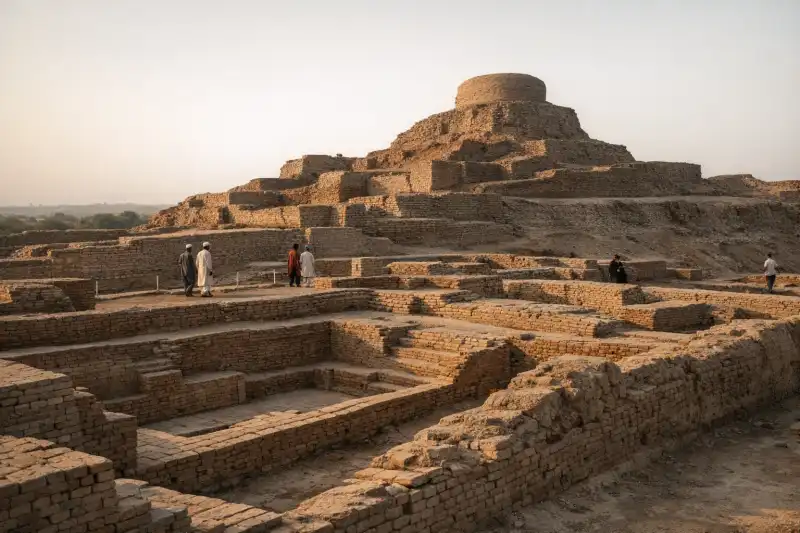
Use Day 1 as a setup day, not a sightseeing marathon. Arrive in Karachi, get your bearings, and confirm the next leg toward Mohenjo-daro. If your flight arrives early, you can add a museum or a short city walk, but keep the real goal simple: make tomorrow’s Sindh transfer clean.
This is where the itinerary becomes honest about Pakistan’s scale. Mohenjo-daro is one of South Asia’s great archaeological sites, but it is not sitting beside a major international airport with a neat shuttle counter. You need a flight, a road transfer, or a driver plan that has already been checked.
The historical payoff is worth that care. Mohenjo-daro flourished around the third millennium BCE, long before Taxila’s Gandharan monasteries. Its story is not about kings with named monuments. It is about drains, baked bricks, wells, street grids, and civic order on a scale that still feels faintly unnerving.
Sleep in Karachi if the onward timing works best from there. If you have already arranged an evening move toward Larkana, take it only if it does not compromise rest. Tomorrow is better with a clear head.
Day 2: Mohenjo-daro and the Indus city grid
This is the main Mohenjo-daro day. Start early and use a local driver. The site rewards slow looking, but the heat and exposure punish slow logistics. Bring water, sun protection, and a willingness to stare at brickwork until the city starts to make sense.
At Mohenjo-daro, the famous “Great Bath” gets attention for good reason. Its brick tank, waterproofing, and surrounding rooms suggest a public or ritual use that mattered enough to build carefully. But do not make it the whole visit. The site’s quieter power is urban: streets set at right angles, standardized bricks, wells in domestic areas, and drainage systems that make daily life feel strangely close.
One useful detail to hold in mind: Mohenjo-daro did not leave us a readable royal propaganda program like Egypt or Assyria. The Indus script remains undeciphered, so the city has to be read through layout, craft, trade, and infrastructure. That gives the ruins a different mood. They are less shouty than imperial monuments, but they are not simple.
Overnight near Larkana or the best workable local base your transport plan supports. Do not rush back across long distances tonight unless your schedule absolutely requires it. The site deserves a full day and a quiet evening afterward.
Day 3: Second look at Mohenjo-daro, then fly north
Keep this day flexible. If Day 2 ran smoothly, use the morning for a second, shorter look at Mohenjo-daro or for the local museum context if available. A second pass helps because the site can feel abstract at first. On the first visit, you learn the plan. On the second, the wells, lanes, platforms, and drainage start speaking to each other.
If travel disruption ate into Day 2, this morning saves the route. That is why the itinerary does not try to force another major Sindh site here. Overpacking would make the ancient history worse, not better.
Move north in the afternoon or evening as flight schedules allow. In practice, this may mean routing through Karachi, Sukkur, or another workable connection before reaching Islamabad. Check current flight patterns before locking hotels. Pakistan rewards flexible planning more than rigid map logic.
The historical shift is sharp. You leave a Bronze Age Indus city whose writing we still cannot read and head toward Taxila, where later layers bring Achaemenid influence, Hellenistic echoes after Alexander’s campaigns, Buddhist monasteries, and Kushan-period art into the same regional frame. That contrast is the whole reason this 5-day route works.
Day 4: Taxila Museum and the Gandharan monasteries
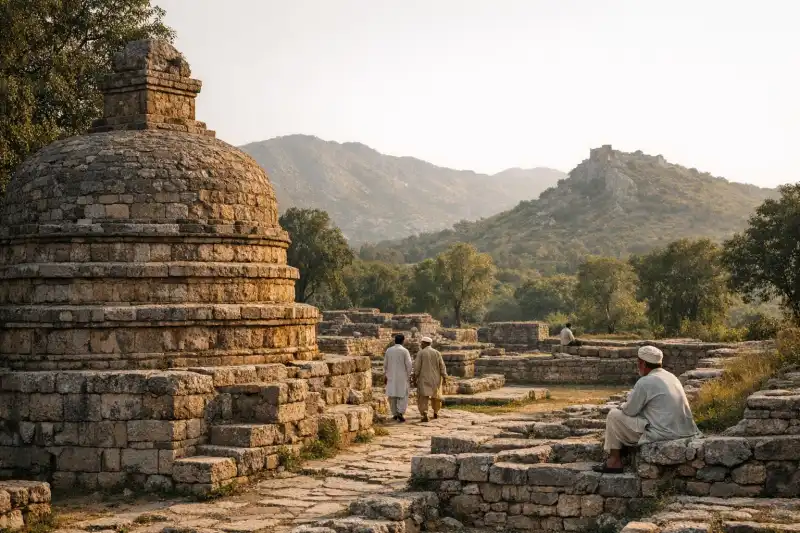
Base in Islamabad and drive to Taxila with a guide or a driver who understands the spread of the sites. Start with the Taxila Museum if it is open. The sculpture helps you read the ruins afterward, especially the Gandharan Buddhas, relief panels, stucco heads, and monastery objects that can otherwise feel detached from their original settings.
Taxila is not one ruin. It is a landscape of settlement mounds, religious sites, and monastic complexes tied to a strategic corridor between South Asia, Central Asia, and the Iranian world. The area mattered under the Achaemenids, appears in the orbit of Alexander’s eastern campaigns, and later became a major Buddhist and Gandharan center under Indo-Greek, Scythian, Parthian, and Kushan-era powers.
Do not try to see every named stop in one breathless sweep. Pick a sensible cluster after the museum and spend time there. The pleasure of Taxila comes from seeing how urban life, trade routes, and Buddhist institutions sat near each other rather than from racing between stones.
Return to Islamabad before the day gets ragged. Traffic and site spacing can make a “short” day longer than expected. Keep dinner easy and save one more Taxila pass for tomorrow.
Day 5: Taxila’s hill sites and a slower Islamabad finish
Use the final day for the parts of Taxila you did not do justice to yesterday. If Day 4 focused on the museum and the easiest ruins, today can lean into a monastery, stupa site, or settlement area that needs more walking and a calmer pace.
Taxila’s history is wonderfully untidy. That is the appeal. Greek artistic habits did not simply arrive and take over. Buddhist patronage, local workshops, trade wealth, and imperial changes all shaped the visual language of Gandhara. A carved robe fold, a Corinthian-looking detail, or a narrative relief can carry several worlds at once without becoming a neat fusion story.
This is also a good day to be honest about fatigue. If the heat, traffic, or previous transfers have caught up with you, do a shorter Taxila loop and return to Islamabad early. A half-day with attention is better than a full day spent collecting names you will forget.
End in Islamabad. It is the cleanest departure base and gives you a softer landing after a route that crossed a lot of distance for only two archaeological anchors. That restraint is the point. Mohenjo-daro and Taxila are both big enough to resist being treated as side trips.
The historical thread: cities, crossings, and the long argument over connection
This route links two ancient Pakistans that do not collapse into one easy story. Mohenjo-daro belongs to the Indus Valley world of the third millennium BCE, where urban planning, craft production, trade, drainage, and standardized building practices created a city without the kind of readable royal monuments travelers may expect.
Taxila belongs to a later and more connected frontier zone. It sat near routes that carried armies, merchants, monks, artists, and political ideas between South Asia, Iran, Central Asia, and the wider Hellenistic world. The result was not a simple “East meets West” postcard. It was a working landscape where Buddhism, trade, and power kept changing the local material culture.
Together, the sites make a useful correction to any one-note idea of ancient South Asia. Pakistan’s ancient history is not just one civilization or one religious tradition. It includes planned Bronze Age cities, imperial crossroads, Buddhist scholastic landscapes, and art shaped by movement across mountains and plains.
Transportation notes
Do not treat this as a road-trip itinerary unless you have a special reason and a lot more time. Karachi to Mohenjo-daro and onward to Islamabad is too spread out for casual driving in five days. Use domestic flights where possible, then hire drivers for the site days.
For Mohenjo-daro, arrange transport before arrival in Sindh. A local driver matters more than a fancy vehicle. The distances around the site and the heat make improvising uncomfortable.
For Taxila, self-driving is possible for some travelers, but a driver or guide is usually the better call. The ruins are scattered, signs and access can vary, and the museum-first sequence works best when someone can plan the order sensibly.
Build slack into Day 3. If the flight north shifts, you do not want to lose your only Taxila day. The itinerary intentionally gives Taxila two days so one delayed transfer does not wreck the second half of the trip.
Optional add-ons and swaps
If you have more time in Sindh, add another night near Mohenjo-daro and give Mohenjo-daro a slower second day. Remove the Day 3 rush north and fly to Islamabad the following day instead. This is the best swap for travelers who care most about the Indus Valley.
If you have more time in Islamabad, add a third Taxila day focused on the Taxila sites you skipped or on museum study before revisiting the ruins. Remove the Day 5 early finish and accept a later, more tiring end to the route.
If you need to cut the itinerary to four days, keep one full Mohenjo-daro day and one full Taxila day. The painful cut is the second Taxila day, but it is the easiest to remove if flights line up. Do not cut the Sindh buffer unless your domestic travel is already locked and reliable.
Shorter and longer itinerary options
For a shorter version, treat this as a 4-day specialist route: arrive in Karachi, visit Mohenjo-daro, fly north, then spend one long day at Taxila from Islamabad. It works, but it leaves almost no protection against transport delays.
For a longer version, make it seven days by adding one more night in Sindh and one more night in Islamabad. That gives Mohenjo-daro and Taxila the slower pace they deserve, with less pressure on domestic flights.
There are no closely related Ancient Travel route pages published for Pakistan yet. When a broader ancient Pakistan itinerary exists, it should link here as the focused Mohenjo-daro and Taxila version.
Related ancient sites
FAQ
The most common planning questions for this route are answered below.