Quick route summary
This 7-day route starts in Istanbul and ends in Izmir, using western Turkey as one long ancient-sites corridor. The main bases are Çanakkale for Troy, Bergama for Pergamon, Selçuk or Kusadasi for Ephesus, and Izmir for the final connection after Aphrodisias. The route also links Priene, Miletus, and Didyma into one very good Aegean day.
The pace is busy, but it has a clear shape. You move from Bronze Age Troy and Homeric memory to Hellenistic royal ambition, then into the Greek and Roman cities of Ionia and Caria. Do not add Cappadocia, Antalya, or Göbekli Tepe to these same seven days. Turkey is large, and ancient sites are not improved by seeing them through a car window.
Who this itinerary is for
This itinerary is for travelers who want a route built around archaeology, ancient cities, and coastal Anatolia rather than a general Turkey highlights trip. It works best if you are comfortable changing bases, starting early, and using a rental car, driver, or small guided tours for the less connected site clusters.
It is not ideal if you want a slow Istanbul stay, beach time every afternoon, or a route that avoids long transfer days. You can soften the plan, but the core experience depends on moving down the Aegean coast and accepting that some of the best sites sit away from easy public transport.
Route at a glance
- Day 1: Overnight in Çanakkale. Travel from Istanbul to Çanakkale and visit Troy if your arrival timing works.
- Day 2: Overnight in Bergama. Visit Assos on the northern Aegean, then continue south toward Pergamon’s modern town.
- Day 3: Overnight in Bergama. Spend the day with Pergamon’s acropolis, theater, sanctuary zones, and lower-city remains.
- Day 4: Overnight in Selçuk. Drive or transfer south with a stop at Sardis, then settle near Ephesus.
- Day 5: Overnight in Selçuk. Visit Ephesus early, with time for the Library of Celsus, Terrace Houses, theater, and marble streets.
- Day 6: Overnight in Kusadasi. Use a driver, car, or tour for Priene, Miletus, and Didyma.
- Day 7: Overnight in Izmir. Make the inland trip to Aphrodisias, then return toward Izmir or continue to Denizli.
Practical logistics before you go
This route is easiest with a rental car from Çanakkale or Izmir, but you do not need to drive in Istanbul. Start by leaving Istanbul on a bus, transfer, or organized Troy day route, then pick up a car once you are outside the city if that feels more comfortable. If you dislike driving abroad, use private transfers for the scattered days and keep train or bus legs for the bigger city-to-city moves.
The best bases are Çanakkale, Bergama, Selçuk or Kusadasi, and Izmir. Selçuk is better for an early Ephesus start. Kusadasi has more hotel and tour infrastructure. Bergama is worth sleeping in because Pergamon is not a quick roadside stop.
Guides make the most sense at Troy, Pergamon, Ephesus, and the Priene, Miletus, Didyma day. The archaeology is layered, and signage alone will not always explain why one broken wall matters more than another. At Ephesus, a guide also helps you avoid wandering the site in the same flow as cruise groups.
Heat matters from late spring into early autumn. Priene, Miletus, Didyma, and Aphrodisias can feel very exposed. Carry water, use a hat, and avoid stacking big evening plans after long site days. This itinerary intentionally skips Lycia, Antalya, central Anatolia, and eastern Turkey because adding them would turn a strong Aegean route into a blur.
Day 1: Istanbul to Çanakkale and Troy
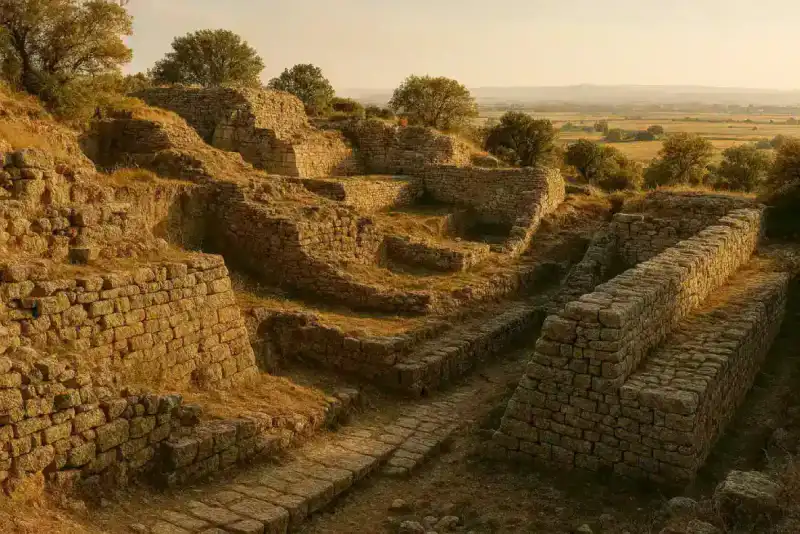
Leave Istanbul early for Çanakkale. The transfer is long enough that you should not pretend this is a light day. If you arrive with enough daylight and energy, continue to Troy. If not, sleep in Çanakkale and move Troy to the next morning, cutting Assos or shortening Day 2.
Troy is not a single ruined city waiting neatly under the Trojan Horse story. It is a mound of many settlements, with Bronze Age walls, later Greek and Roman rebuilding, and a modern visitor route that asks you to think in layers. The Homeric connection gives the site its fame, but the archaeology is more interesting when you stop trying to make every stone match a scene from the Iliad.
A Troy day trip from Istanbul or Çanakkale can make sense if you want transport handled on the first day. The tradeoff is pace. Independent travelers should check ferry, bus, and road timing carefully before committing to a same-day Istanbul departure and Troy visit.
Stay overnight in Çanakkale. It is the practical base here, and it keeps you from turning the first day into a punishing transit stunt.
Day 2: Assos and the northern Aegean
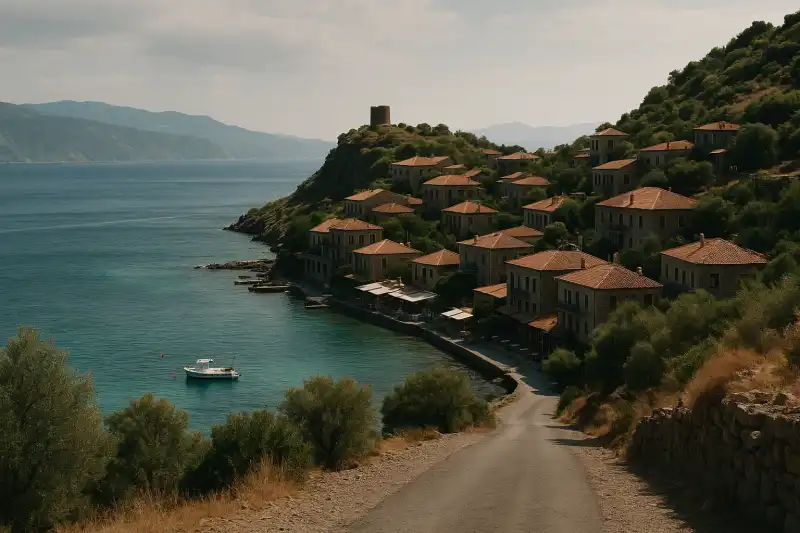
Use the morning for Assos if you have a car or driver. The acropolis sits high above the coast, with the Temple of Athena looking out over the Aegean. Aristotle lived in Assos for a period in the 4th century BCE, which is the kind of detail that makes the site feel less like a scenic ruin and more like part of the intellectual traffic of the Greek world.
Assos is a good counterpoint to Troy. Troy is layered, debated, and myth-heavy. Assos is clearer on the ground: hilltop sanctuary, defensive position, views, and a small city whose geography explains why people cared about it. Give the site enough time to climb, look, and breathe. The best part is not just the temple silhouette.
If you had to postpone Troy from Day 1, visit Troy this morning and skip Assos. That is the cleanest swap. Do not try to force both if you started late, because the afternoon drive to Bergama still matters.
Continue south to Bergama for the night. Staying here instead of pushing onward to Izmir lets you give Pergamon the attention it deserves on Day 3.
Day 3: Pergamon acropolis and lower city
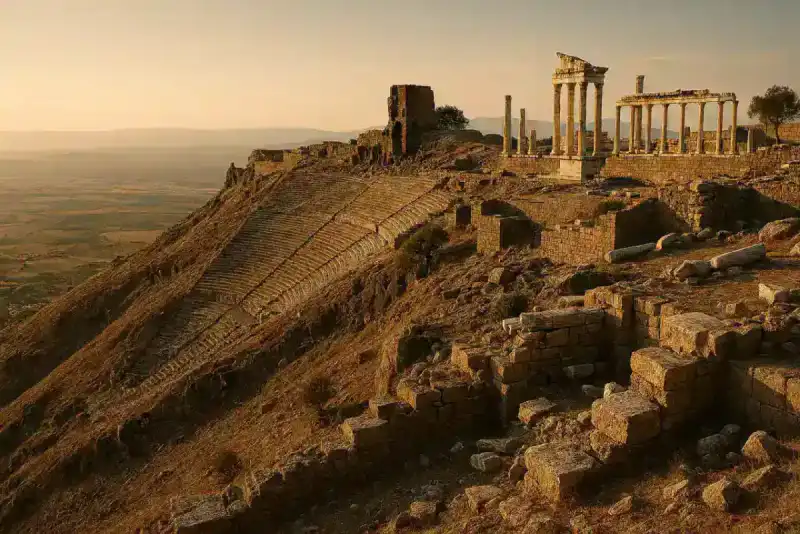
Spend the day with Pergamon. Start with the acropolis if weather is hot. The hilltop theater drops sharply down the slope, the sanctuary zones command the landscape, and the city’s position tells you almost immediately why the Attalid kings invested in architecture at this scale.
Pergamon was a Hellenistic royal capital, not just another ancient city with a nice view. Its library was famous enough in antiquity to be compared with Alexandria, and the city became a center of scholarship, royal display, and medical cult. The Great Altar itself is in Berlin now, but the empty space on the acropolis still helps you understand the ambition behind it.
Do not spend the entire day on the hill and leave. Pergamon also has important lower-city remains, including the Asklepieion area associated with healing, ritual, and medicine. Galen, one of the most influential physicians of the Roman world, was born in Pergamon in the 2nd century CE. The stones are quiet now, but the city’s intellectual confidence was not subtle.
Logistically, Bergama is a place where taxis, a guide, or a car make the day easier. The sites are not all lined up in one flat pedestrian route. Stay a second night in Bergama unless you strongly prefer pushing south after dinner.
Day 4: Sardis and arrival in Selçuk
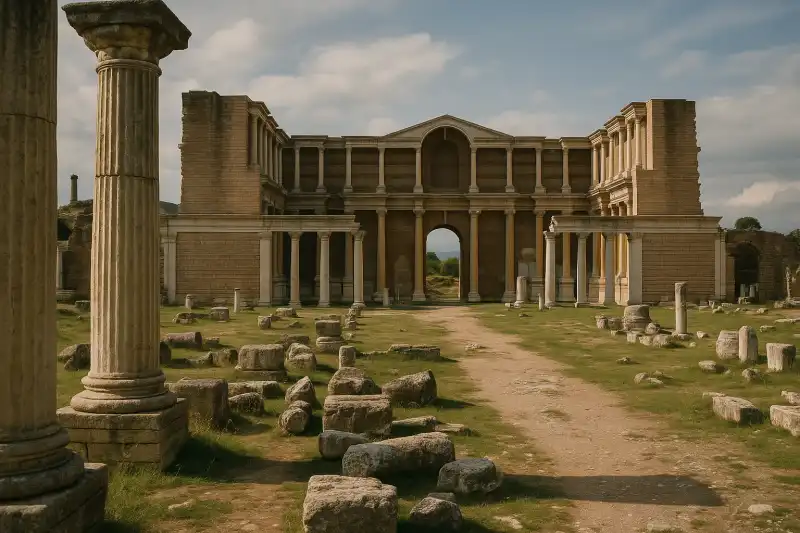
Drive or arrange a transfer south toward Selçuk, stopping at Sardis. This is the day that keeps the itinerary from becoming only a coastal Greek and Roman route. Sardis was the capital of Lydia, associated with King Croesus and the wealth that made his name a proverb. It later sat on the Persian Royal Road and became a Roman city with a very different public face.
Focus on the Temple of Artemis, the Roman gymnasium and bath complex, and the synagogue area if open and practical during your visit. Sardis is good at showing how Anatolian, Persian, Greek, Jewish, and Roman histories can occupy the same landscape without fitting into one simple label.
This is a transfer day, so keep your ambition under control. If you are using public transport, Sardis becomes harder and may need to be replaced with a direct move to Selçuk. With a driver or rental car, it is a rewarding stop that breaks the journey.
Arrive in Selçuk for the night. Choose Selçuk if Ephesus is the priority, Kusadasi if you want more hotels and evening options. For this route, Selçuk has the edge because tomorrow should start early.
Day 5: Ephesus and the Terrace Houses
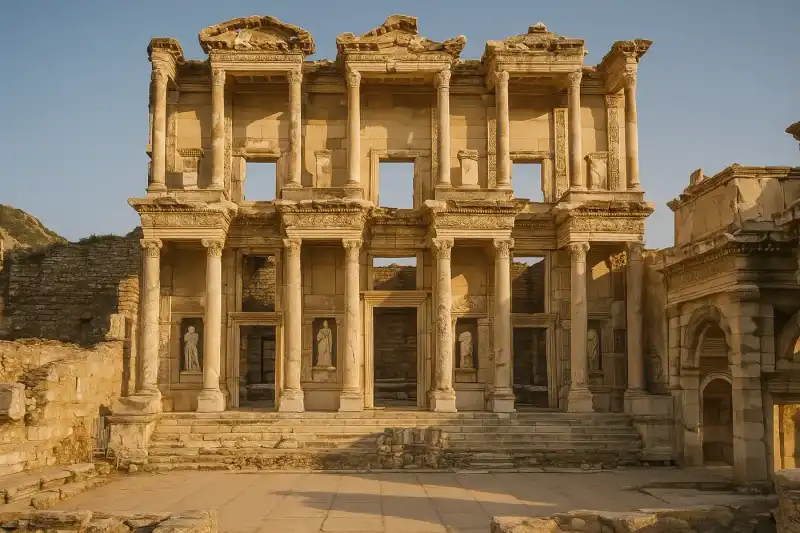
Start early at Ephesus. This is the site most likely to be crowded, especially when cruise ships are in port. Entering early is not a luxury. It changes the day. Give yourself time for the Library of Celsus, Curetes Street, the theater, the civic spaces, and the Terrace Houses if they are open and fit your ticket plan.
A guided Ephesus and Terrace Houses tour is worth considering because the city can otherwise become a sequence of famous photo stops. A guide can connect street levels, elite houses, inscriptions, water systems, and the Roman city plan before the crowds flatten the experience.
Ephesus was Greek, Hellenistic, Roman, and early Christian in layers, but the visible city is especially powerful as a Roman urban experience. The Library of Celsus was a tomb monument as well as a library facade, built for the Roman senator Tiberius Julius Celsus Polemaeanus in the 2nd century CE. That is a perfect Ephesus detail: public learning, family status, and urban theater all in one building.
Stay in Selçuk another night or move to Kusadasi after the visit. Do not add Priene, Miletus, and Didyma today. That turns the best site of the route into a race.
Day 6: Priene, Miletus, and Didyma
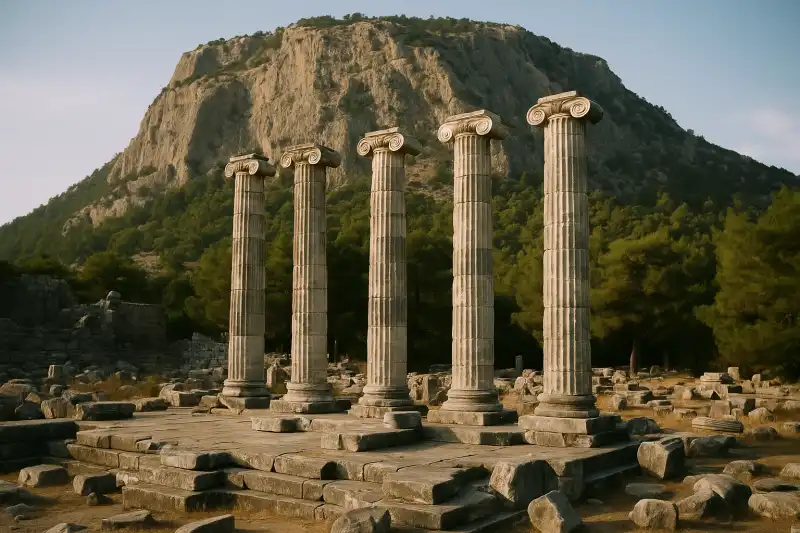
This is the classic south-of-Ephesus ancient-sites day, and it works best with a car, driver, or small tour. A Priene, Miletus, and Didyma day tour solves a real problem: the three sites belong together historically, but the transport links can eat the day if you are improvising.
Start with Priene, a compact city set against the slopes of Mount Mycale. Its grid plan is often linked with Hippodamian urban planning, and the site is unusually legible because the streets, houses, theater, and Temple of Athena sit within a clear city frame. It is a good place to think about how a planned Greek city actually sat on difficult terrain.
Continue to Miletus. Ancient Miletus was once a major Ionian city with colonies, philosophers, and maritime reach, though the coastline has shifted so much that the old harbor logic is not obvious at first glance. The theater is the attention-grabber today, but the real historical point is that this was once a city facing the sea and a wide Greek world.
End at Didyma, where the Temple of Apollo is massive, unfinished, and wonderfully strange at human scale. The oracle sanctuary was connected to Miletus by a sacred way, and the temple’s huge columns and open-air inner court make it feel less like a normal temple visit and more like architecture built around expectation.
Overnight in Kusadasi or return to Selçuk. This is a long day in the sun, so keep dinner simple.
Day 7: Aphrodisias and the inland finish
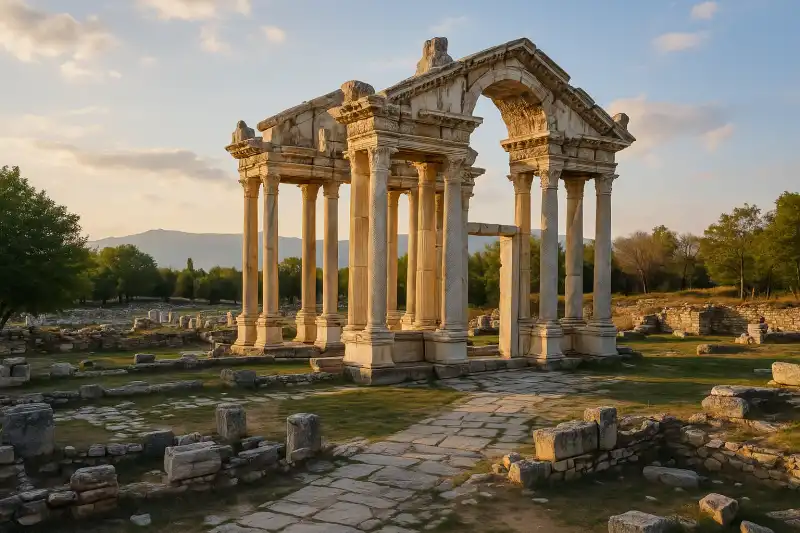
Make Aphrodisias your final major site. It sits inland, so the day needs planning. From Selçuk, Kusadasi, or Izmir, a driver or rental car is the cleanest option. Public transport is possible in some forms, but it usually adds enough friction that you should not count on a relaxed visit.
Aphrodisias is worth the effort because it feels different from the coastal cities. The city was associated with Aphrodite and became famous for marble sculpture, helped by nearby quarries and a strong local workshop tradition. The museum is not an optional afterthought here. It is part of the site’s argument.
Do not miss the stadium if it is accessible during your visit. It is one of the most memorable ancient stadium spaces in Turkey, and it gives the city a very different rhythm from Ephesus or Pergamon. The Sebasteion reliefs are another reason to slow down. They show imperial imagery, myth, and local craftsmanship meeting in marble, which is exactly the kind of thing western Anatolia did so well under Rome.
After the visit, return to Izmir for the night or continue toward Denizli if you are adding Pamukkale and Hierapolis. If you are flying out of Izmir, build in buffer time. Aphrodisias is too good to experience while watching the clock.
The historical thread: cities between myth, kings, and Rome
This route works because western Anatolia was never just the edge of someone else’s story. Troy pulls you into Bronze Age settlement and later Greek memory. Pergamon shows Hellenistic kings turning a hilltop city into a statement of learning and power. Ephesus, Priene, Miletus, and Didyma show Ionian city life, sanctuaries, harbors, grids, theaters, and sacred roads. Aphrodisias brings the story inland, where a local cult and marble workshops flourished under Roman rule.
The route also corrects a common travel shortcut. Ancient Turkey is not one period. It is a stack of Anatolian, Greek, Persian, Hellenistic, Roman, Jewish, and early Christian histories that overlap unevenly. The best days on this itinerary are the ones where that overlap is visible in stone, street plans, sanctuaries, and the awkward logistics of moving between them.
Transportation notes
Do not drive in central Istanbul if you can avoid it. Leave the city by bus, transfer, ferry-linked route, or organized trip, then use a rental car or driver once you are in western Turkey. The Aegean sites are much easier with road flexibility.
Public transport can work between major towns such as Istanbul, Çanakkale, Bergama, Izmir, Selçuk, and Kusadasi, but it is weaker for site clusters like Assos, Sardis, Priene, Miletus, Didyma, and Aphrodisias. If you use buses and trains, plan fewer stops and accept more taxis.
Bergama, Selçuk, and Kusadasi save time because they put you near the archaeology instead of forcing long day trips from Izmir. Izmir is useful for flights and final logistics, but it is not the best base for every site on this route.
Do not compress Troy, Pergamon, and Ephesus into three consecutive day trips from one base. The map may tempt you. The road time will not be kind.
Optional add-ons and swaps
If you want a thermal and Roman-city add-on, continue to Pamukkale and Hierapolis after Aphrodisias. Remove Assos or Sardis if you need to keep the trip at seven days. This swap makes the end of the route more inland and easier if you are flying onward from Denizli.
If you want more Carian coast, add Halicarnassus Bodrum after the Priene, Miletus, and Didyma day. Cut Aphrodisias or extend the trip by one night. The Mausoleum remains are fragmentary, so this is better for travelers already heading toward Bodrum.
If you like quieter temple sites, add Euromos or Magnesia as a swap into the Ephesus region. Remove Sardis or shorten the Assos day. Both reward travelers who enjoy less crowded ruins and do not need every stop to be famous.
If you are tempted by Lycia, save it for a separate trip. Xanthos and Letoon, Patara, and Myra belong to a different route with different bases.
Shorter and longer itinerary options
For a shorter route, use a 5-day Aegean plan: Troy, Pergamon, Ephesus, then Priene, Miletus, and Didyma. Cut Sardis, Assos, and Aphrodisias. It is less rounded, but it keeps the strongest north-to-south line.
For a compact Ephesus-region trip, a 3-day version can base in Selçuk or Kusadasi and cover Ephesus, Priene, Miletus, and Didyma with one extra site such as Magnesia if transport works.
For a longer trip, build toward a 10-day ancient Turkey route by adding Lycia or central Anatolia. That is where sites like Hattusa, Çatalhöyük, Göbekli Tepe, and Karahan Tepe start to make sense, but they should not be bolted onto this 7-day Aegean route casually.
Related ancient sites
- Troy
- Assos
- Pergamon
- Sardis
- Ephesus
- Priene
- Miletus
- Didyma
- Aphrodisias
- Pamukkale
- Hierapolis
- Halicarnassus Bodrum
- Magnesia
- Euromos
FAQ
The most common planning questions for this route are answered below.