Quick Info
Curated Experiences
Athens Ancient Agora and Acropolis Guided Tour
The Ancient Agora of Athens is the site where classical democracy, philosophy, and commerce actually happened - not on a sacred hilltop, but on open civic ground where citizens argued, traded, and shaped policy in real time. If the Acropolis is what Athens built to impress the gods, the Agora is where Athenians built a society.
Why the Ancient Agora Matters
The Acropolis tells you what Athens revered. The Agora tells you how Athens worked. This was the operating center of the city-state: law courts, market stalls, public assembly points, and the administrative buildings that kept Athenian democracy running for over three centuries.
Socrates walked these paths and debated here openly. Jury trials were held steps from merchant stalls. Political ostracism votes - the process by which citizens could exile a dangerous leader - were cast in the same space where potters sold their wares. That layering of civic, commercial, and intellectual life is exactly what makes the Agora compelling. It resists the urge to separate ancient life into neat categories because the Athenians themselves never did.
For travelers building an Athens itinerary around real historical depth, the Agora is not secondary to the Acropolis. It is the other half of the story, and arguably the half that matters more for understanding why Athens changed the world.
Historical Context
The Agora took shape in the 6th century BCE as Athens transitioned from aristocratic rule to the radical experiment of direct democracy. Under the reforms of Cleisthenes around 508 BCE, the site became the physical infrastructure of citizen governance. The Bouleuterion (council house) hosted the 500-member legislative body. The Tholos served as the round-the-clock headquarters for the executive committee. Courts processed hundreds of cases annually using systems of allotment and secret ballot that were sophisticated by any era’s standards.
During the 5th century BCE, the Agora reached its peak as the nerve center of Periclean Athens. Philosophers including Socrates, and later the Stoics (who took their name from the stoas lining this very space), used the open colonnades as informal classrooms. The Panathenaic Way, the city’s main processional road, cut directly through the site, linking sacred ritual to everyday civic life.
The Agora survived the Roman period with significant additions, including the Odeon of Agrippa and various renovations to existing structures. It continued functioning well into late antiquity before declining in the 6th century CE. Excavation by the American School of Classical Studies began in the 1930s and continues today, making this one of the most thoroughly documented archaeological sites in the Mediterranean.
What to Prioritize Onsite
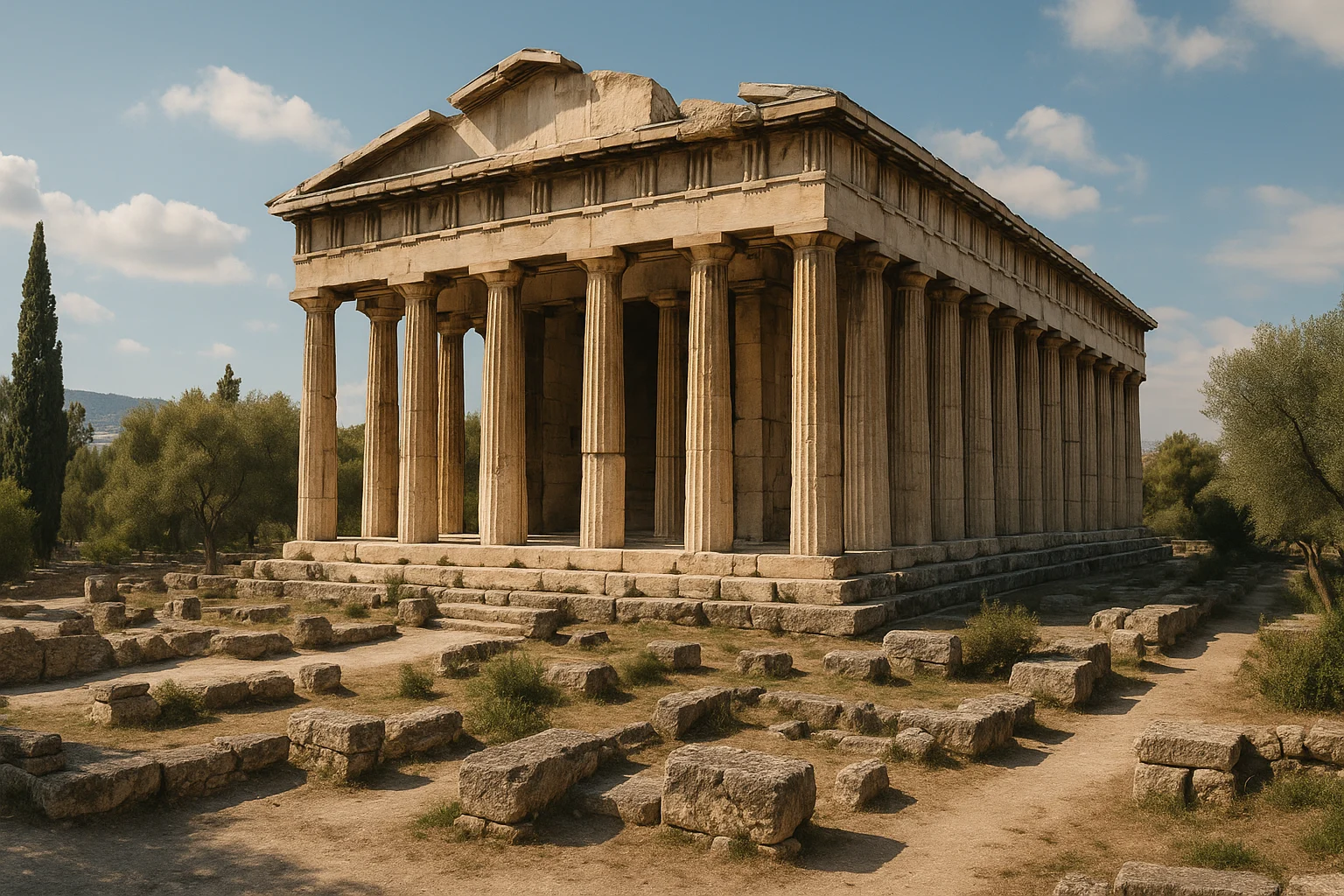
Temple of Hephaestus
The best-preserved classical Greek temple in existence, and it is not close. The Doric colonnade is nearly intact, the roof structure still holds, and the overall proportions give you a clearer sense of what a 5th-century BCE temple actually looked like than anything on the Acropolis can. Built around 450 BCE and dedicated to the god of metalworking and craftsmanship, it sits on the western hill overlooking the Agora floor. Use it as your orientation anchor before exploring the rest of the site. The surrounding garden, planted with species mentioned in ancient texts, adds quiet context.
Stoa of Attalos and the Agora Museum
The reconstructed Stoa of Attalos, originally a gift from King Attalos II of Pergamon in the 2nd century BCE, now houses the Agora Museum. This is not a collection you rush through. Pottery shards (ostraka) inscribed with the names of politicians targeted for exile make ostracism viscerally real. Bronze ballots from jury trials, standard weights and measures from the market, and everyday objects from shops and homes ground the site in lived experience. The museum turns scattered foundations into legible history. Do not skip it.
The Civic Spine
Walk the main path from the Stoa through the heart of the Agora to understand the site as a connected system rather than a scattering of isolated ruins. The sequence of council house, mint, fountain house, law courts, and commercial buildings reveals how tightly governance, economy, and daily life were integrated. Interpretive signs along the route are generally good, but having already visited the museum makes them far more meaningful.
The Altar of the Twelve Gods
Near the northern edge, this partially excavated altar once served as the central milestone of Athens - the point from which all distances in Attica were measured. It functioned as a sanctuary of refuge, meaning anyone who reached it could claim protection. Only a small portion is visible, but its symbolic importance to the ancient city was enormous.
Practical Visit Strategy
Best timing: Early morning or the final two hours before closing. The site is largely open ground with limited shade, so midday visits in summer are punishing. Morning gives you cooler temperatures and thinner crowds. Late afternoon light improves photography, especially inside the Stoa colonnade.
Duration: Plan for 2 hours minimum. With full museum time and careful reading of the site, 2.5 to 3 hours is realistic and worthwhile.
Crowds: Midday in peak season (June through September) brings the heaviest foot traffic, especially when cruise ship groups arrive. The Agora is generally less crowded than the Acropolis at any hour, but the difference is most dramatic early and late in the day.
What to bring: Sturdy, closed-toe shoes are important - paths are uneven stone and packed earth with exposed roots in some areas. Carry water (at least a liter per person in warm months) and sun protection. A hat is more useful here than at most Athens sites because of the open exposure.
Tickets: The Agora is included in the multi-site Athens combo ticket, which also covers the Acropolis, Roman Agora, Kerameikos, Temple of Olympian Zeus, and Hadrian’s Library. If you are visiting more than two of these sites, the combo ticket saves money and avoids repeat queuing. Confirm current pricing and hours before your visit, as both shift seasonally.
Pacing with the Acropolis: If combining both in a single day, take a genuine break between them. A meal in the Plaka or Monastiraki neighborhood, which sits between the two sites, resets your energy. Doing the Agora first and the Acropolis second puts the civic context before the sacred, which many visitors find makes the Acropolis more meaningful.
Route Pairing and Nearby Sites
The Agora pairs naturally with the Acropolis for a complete picture of Athens as both sacred precinct and civic machine. Together they form the essential core of any Athens visit, and walking between them takes under fifteen minutes through the Plaka district.
The nearby Kerameikos cemetery and potters’ quarter extends the civic story into how Athenians honored their dead and organized craft production. It is quieter and less visited than either the Agora or Acropolis, and rewards those with time.
Beyond Athens, extend south to the Peloponnese to visit Olympia for the Panhellenic athletic and religious tradition that connected Greek city-states, or head to Ancient Corinth for a contrasting look at how Athens’ commercial rival organized its own political and economic identity. Both are feasible as day trips from Athens, though an overnight stay near either site is more comfortable and allows for unhurried exploration.
Final Take
The Ancient Agora does not compete with the Acropolis for drama or skyline views. It offers something different and equally valuable: a ground-level understanding of how one of history’s most influential societies actually organized itself day to day. The ruins here are lower, quieter, and demand more imagination. But give the Agora unhurried time, read the museum carefully, and walk the civic spine end to end - and it will reshape how you see every other site in Athens.
Quick Facts
| Attribute | Details |
|---|---|
| Location | Athens, Attica, Greece |
| Country | Greece |
| Region | Attica |
| Civilization | Classical Greek |
| Historical Period | 6th century BCE - 6th century CE |
| Established | c. 6th century BCE |
| UNESCO Status | Part of the broader Athens archaeological zone |
| Best Season | March - May, September - November |
| Coordinates | 37.9755, 23.7225 |
Frequently Asked Questions
How long should I spend at the Ancient Agora?
Most travelers spend 1.5 to 2.5 hours, especially if including the Stoa museum galleries.
Is the Ancient Agora included in Athens combo tickets?
It is often included in multi-site archaeology ticket options, but always confirm current policy before your visit.
Can I do the Acropolis and Ancient Agora in one day?
Yes. This is one of the most common and efficient one-day archaeology pairings in Athens.
Nearby Ancient Sites
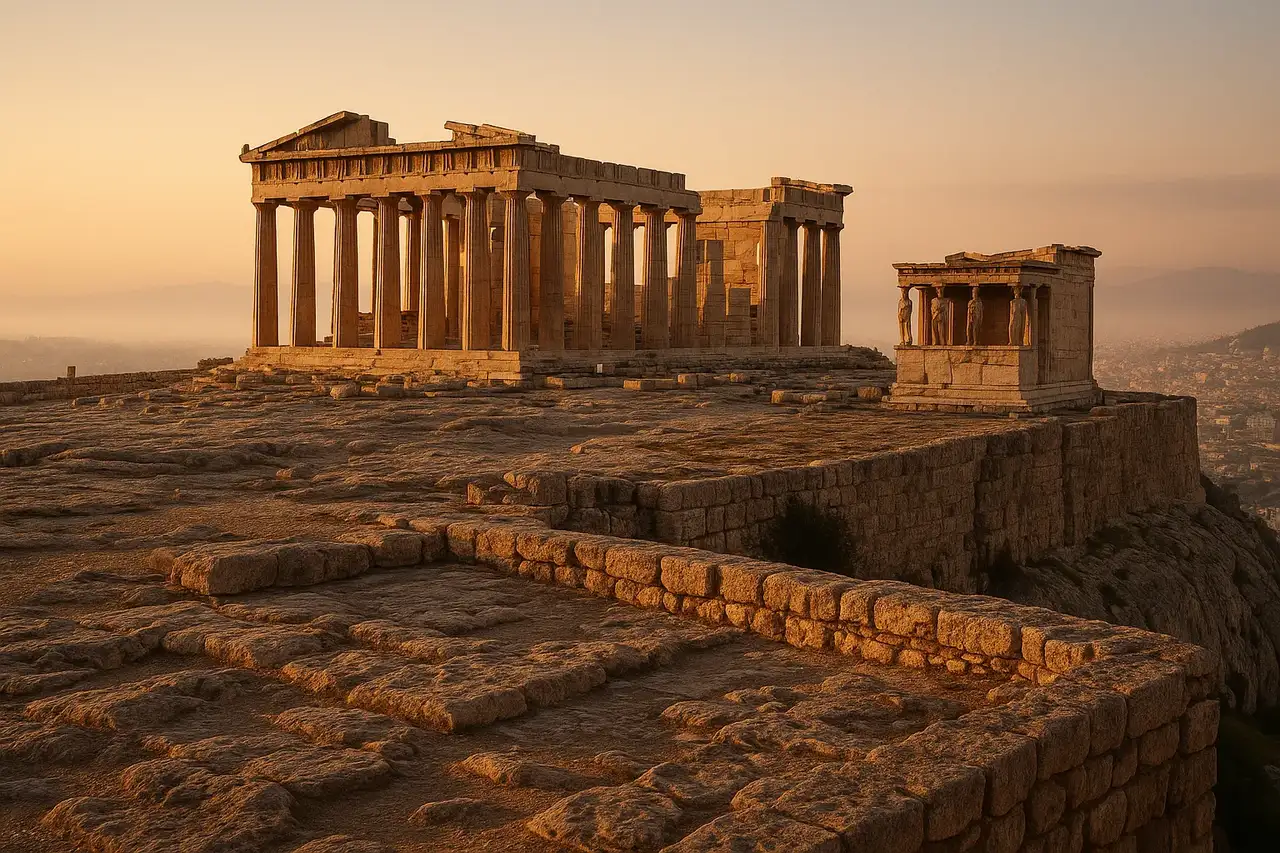
Acropolis Travel Guide 2026: Parthenon, Tickets, and Best Time
Ancient GreecePlan an efficient Acropolis visit with practical ticket timing, key monuments, and museum pairing ti...
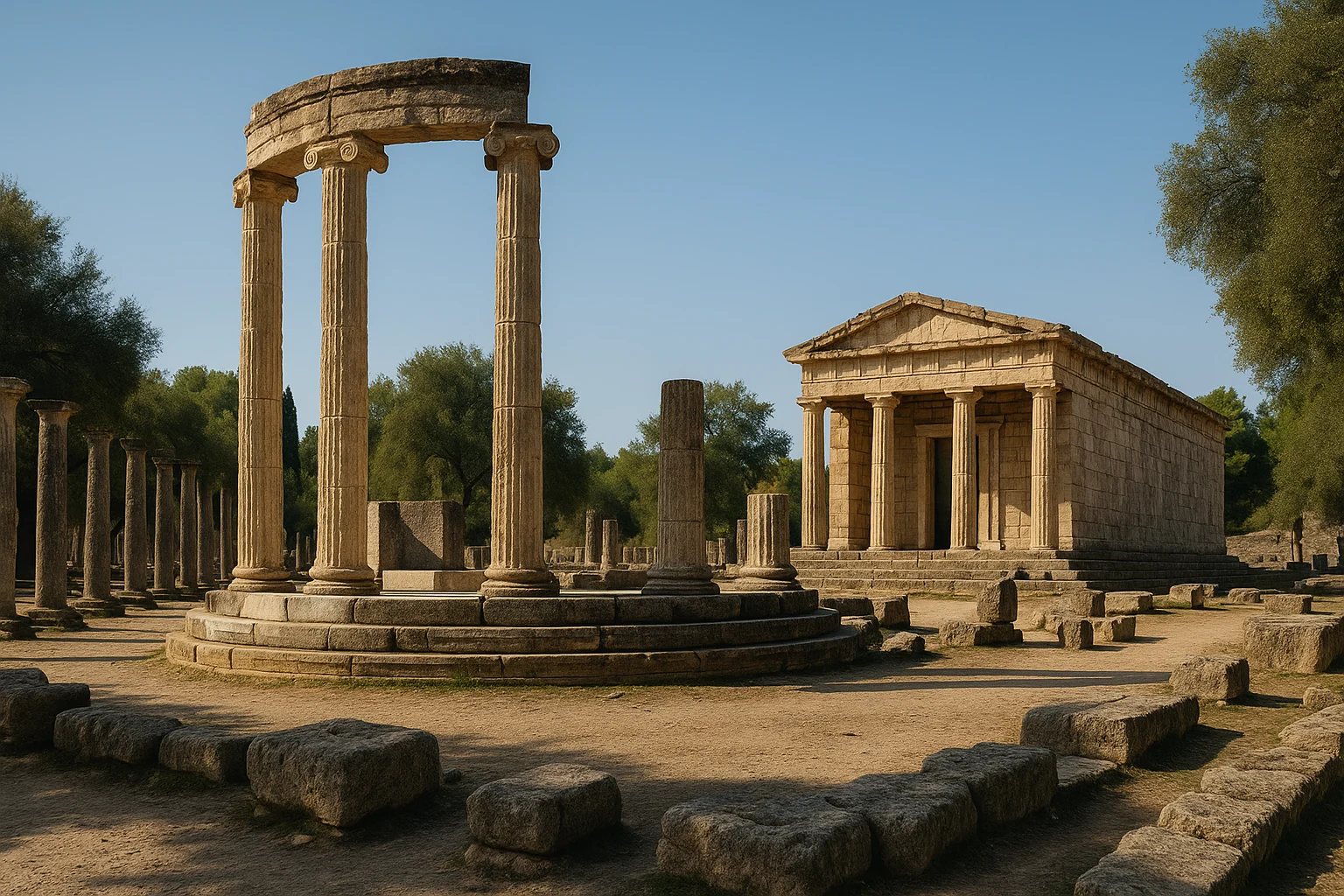
Olympia Travel Guide 2026: Archaeological Site, Museum, and Visit Plan
Classical GreekPlan a better Olympia visit with practical timing, key monument priorities, and realistic route plan...
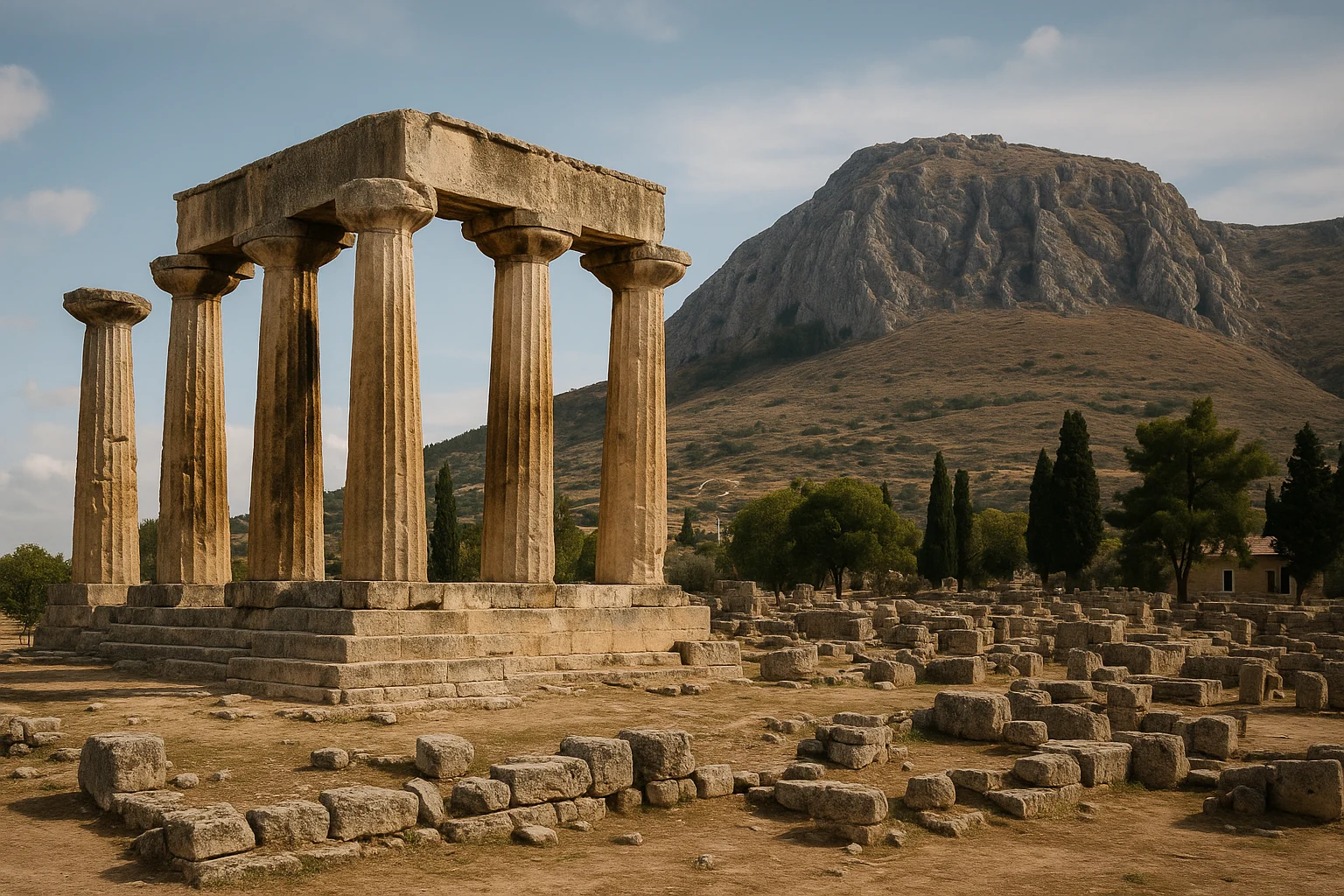
Ancient Corinth Travel Guide 2026: Ruins, Museum, and Visit Strategy
Classical GreekPlan a focused Ancient Corinth visit with practical timing, monument priorities, and route context f...