Quick Info
Curated Experiences
Arch of Constantine & Colosseum Arena Floor Tour
Imperial Fora & Constantine Arch Walk
Ancient Rome Express: Colosseum, Forum & Arch
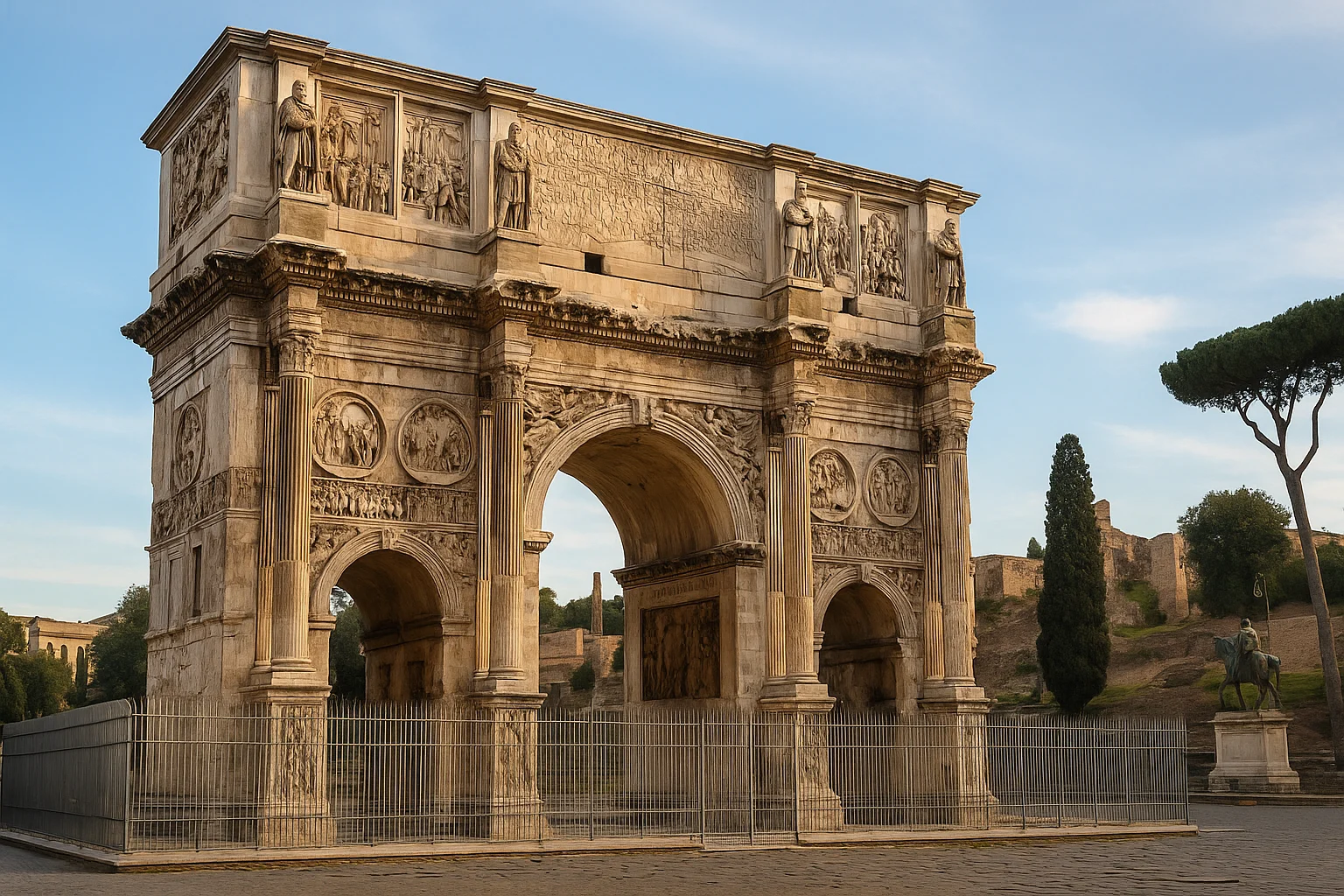
The Arch of Constantine is one of those Rome monuments people pass in thirty seconds and regret later. It sits beside the Colosseum, so it often gets treated like background scenery. In reality, it is one of the most politically loaded monuments in the city: a stone press release announcing a new emperor, a new era, and a carefully edited version of Roman legitimacy.
Built after Constantine defeated Maxentius at the Battle of the Milvian Bridge in 312 CE, the arch was dedicated in 315 CE. At nearly 25 meters high, it is the largest surviving triumphal arch in Rome. But size is only half the story. Its sculpture program is famously assembled from older imperial monuments—what scholars call spolia—creating a visual argument that Constantine stood in the line of Rome’s greatest rulers.
If you’re visiting the Colosseum, Roman Forum, or Palatine Hill, this monument is not a detour. It is one of the best places in Rome to see how art, propaganda, and urban planning worked together.
Why the Arch Matters
Most Roman ruins tell long, layered stories. The Arch of Constantine tells a very specific one.
- It celebrates a civil-war victory as if it were a universal triumph.
- It links Constantine to earlier “golden age” emperors through reused sculpture.
- It marks a turning point between classical imperial imagery and late-antique style.
In practical terms, the monument also anchors one of the busiest archaeological crossroads in Rome: Colosseum to one side, Palatine and Forum routes to the other. You can use it as both a historical stop and a wayfinding landmark.
A Quick Historical Timeline
312 CE: Battle of the Milvian Bridge
Constantine defeats rival emperor Maxentius outside Rome. Ancient sources tie this victory to Constantine’s famous vision before battle, later central to Christian imperial narratives.
313 CE: Consolidation of power
Constantine and Licinius issue policies associated with religious toleration (commonly connected to the Edict of Milan). Constantine’s regime begins crafting a new public image.
315 CE: Arch dedicated
The Roman Senate and people dedicate the arch in Constantine’s honor for “liberating” the city and restoring order.
Later centuries
The arch survives because of location, durable construction, and periodic restoration. It was never forgotten at the level of Rome’s major landmarks, even as surrounding urban fabric changed dramatically.
What to Look For (So It Doesn’t Blur Into “Old Stone”)
1) The three-bay structure
Like other imperial arches, it has a large central passage flanked by two smaller ones. Step back toward the Colosseum side to appreciate symmetry and scale.
2) The reused reliefs (spolia)
Several major sculptural elements were taken from monuments of earlier emperors, especially Trajan, Hadrian, and Marcus Aurelius. This was not random recycling. It was ideological curation.
The message: Constantine belongs with Rome’s greatest rulers.
3) Stylistic contrast
Some relief panels are classically naturalistic, while others are flatter and more frontal—an important visual clue to the artistic transition of late antiquity.
4) The inscription
The attic inscription praises Constantine for saving the state “by divine inspiration” and “greatness of mind.” The wording is intentionally broad, allowing multiple religious and political readings.
5) Position in ceremonial space
This is not just a standalone sculpture. It is placed on a triumphal route node near the Colosseum valley, shaping how visitors and processions perceived imperial Rome.
Understanding Spolia Without the Jargon
You’ll hear guides call the arch a “patchwork.” That’s true materially, but incomplete historically.
Reusing earlier imperial art did at least three things at once:
- Legitimacy transfer: It borrowed prestige from respected emperors.
- Narrative control: It framed Constantine as restorer rather than disruptor.
- Visual efficiency: It provided high-status sculpture quickly for a politically urgent monument.
So yes, it is reuse—but strategic reuse, not budget reuse.
Best Viewing Angles and Photo Strategy
Colosseum-facing angle (classic postcard)
Stand southwest of the arch with the Colosseum offset behind it. This gives immediate context and scale.
Forum/Palatine approach (best for detail)
As you approach from the Forum side, crowd pressure drops slightly and you can spend more time reading relief zones.
Morning light
Early to mid-morning usually gives cleaner relief contrast on one façade and fewer harsh shadows.
Golden hour
Late afternoon can produce beautiful warm tones with the Colosseum area skyline, though crowds are usually heavier.
Practical tip
If you want unobstructed shots, do a quick first pass, continue your route, then return briefly at a lower-traffic moment. This area’s flow changes hour by hour.
How to Fit It Into an Efficient Ancient Rome Route
If you are doing the standard ancient-Rome loop:
- Start with Colosseum timed entry.
- Exit toward the arch and spend 10–20 focused minutes.
- Continue into Forum + Palatine.
- Circle back for a second look if lighting is better later.
If your time is very limited, even 8–10 minutes at the arch is worthwhile—provided you know what to look for.
Visiting Logistics (2026 Basics)
- Tickets: No separate entry ticket required for the arch itself.
- Access: Public outdoor monument in pedestrianized archaeological zone.
- Time needed: 10–25 minutes standalone; longer if combining with deep Colosseum/Forum context.
- Crowds: Constant. It is one of Rome’s most trafficked open-air monument nodes.
- Security barriers/events: Configurations can shift during special events; follow posted pathways.
Because policies and crowd controls can change seasonally, always check official Colosseum Archaeological Park updates before arrival.
Common Mistakes to Avoid
- Skipping it because “it’s outside.” Exterior monuments can carry the strongest political messages.
- Only taking one quick photo. Move around the monument to see different relief programs.
- Ignoring the inscription. It is a key to the monument’s intended meaning.
- Not connecting it to your Forum visit. The arch reads best as part of a broader imperial landscape.
Is It Worth a Dedicated Stop?
Yes, especially if you care about Roman history beyond bucket-list checkmarks. The arch is compact, visually rich, and conceptually dense: victory propaganda, artistic transition, imperial branding, and urban theater all in one structure.
If you are casual about archaeology, it is still worth pausing for the location alone. Few places in Rome place so many historical layers in one frame: Colosseum, Palatine slope, triumphal monument, and modern city flow.
Quick Facts
| Detail | Info |
|---|---|
| Location | Between the Colosseum and the Palatine side of the Forum, Rome |
| Date dedicated | 315 CE |
| Built to commemorate | Constantine’s victory over Maxentius (312 CE) |
| Height | About 25 m (82 ft) |
| Entry fee | None (exterior public monument) |
| Time needed | 10-25 minutes |
| Best photo windows | Early morning or golden hour |
Nearby Sites to Pair
The Arch of Constantine is small enough to miss and important enough not to. Give it a focused look, read it as political architecture, and it becomes one of the sharpest history lessons in Rome’s ancient core.
Quick Facts
| Attribute | Details |
|---|---|
| Location | Rome, Lazio, Italy |
| Country | Italy |
| Region | Lazio |
| Civilization | Roman Empire |
| Historical Period | 312 CE |
| Established | 315 CE |
| Coordinates | 41.8896, 12.4852 |
Frequently Asked Questions
Is there entry fee for Arch of Constantine?
No fee, exterior viewing only. Best from Forum side.
Best photo time for Arch?
Golden hour, Colosseum backdrop. Avoid midday shadows.
What do spolia mean on the arch?
Reused sculptures from earlier emperors, linking Constantine to Rome's respected earlier rulers.
How tall is the Arch of Constantine?
About 25 meters high, making it Rome's largest surviving triumphal arch.
Can you walk under the arch?
Yes, the monument stands in a public pedestrian zone between the Colosseum and Palatine side of the Forum.
Nearby Ancient Sites
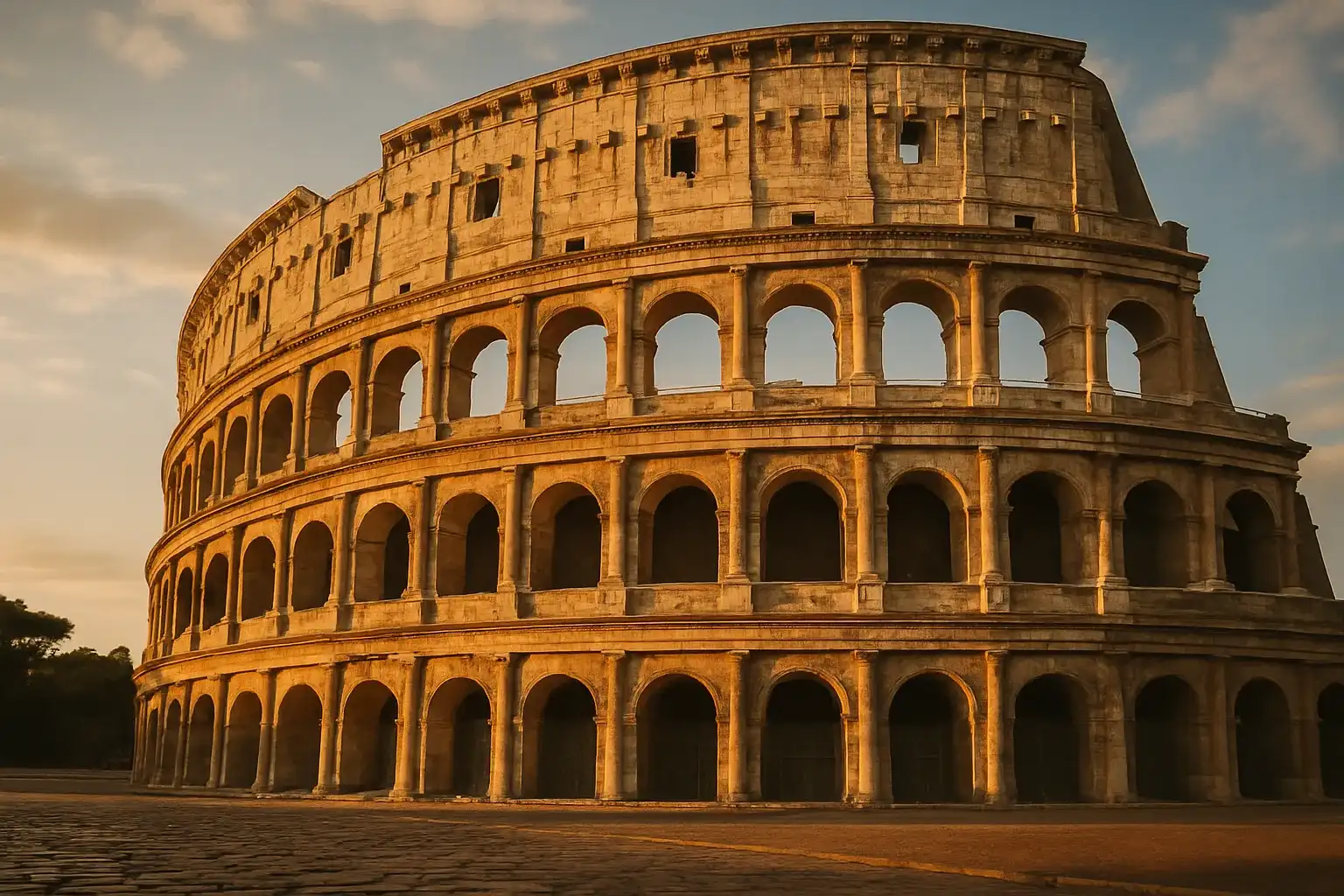
Colosseum Rome: Complete 2026 Guide to Arena Floor, Tickets, and Timing
Roman EmpirePlan the perfect Colosseum visit with timed-entry strategy, Arena Floor and underground access tips,...
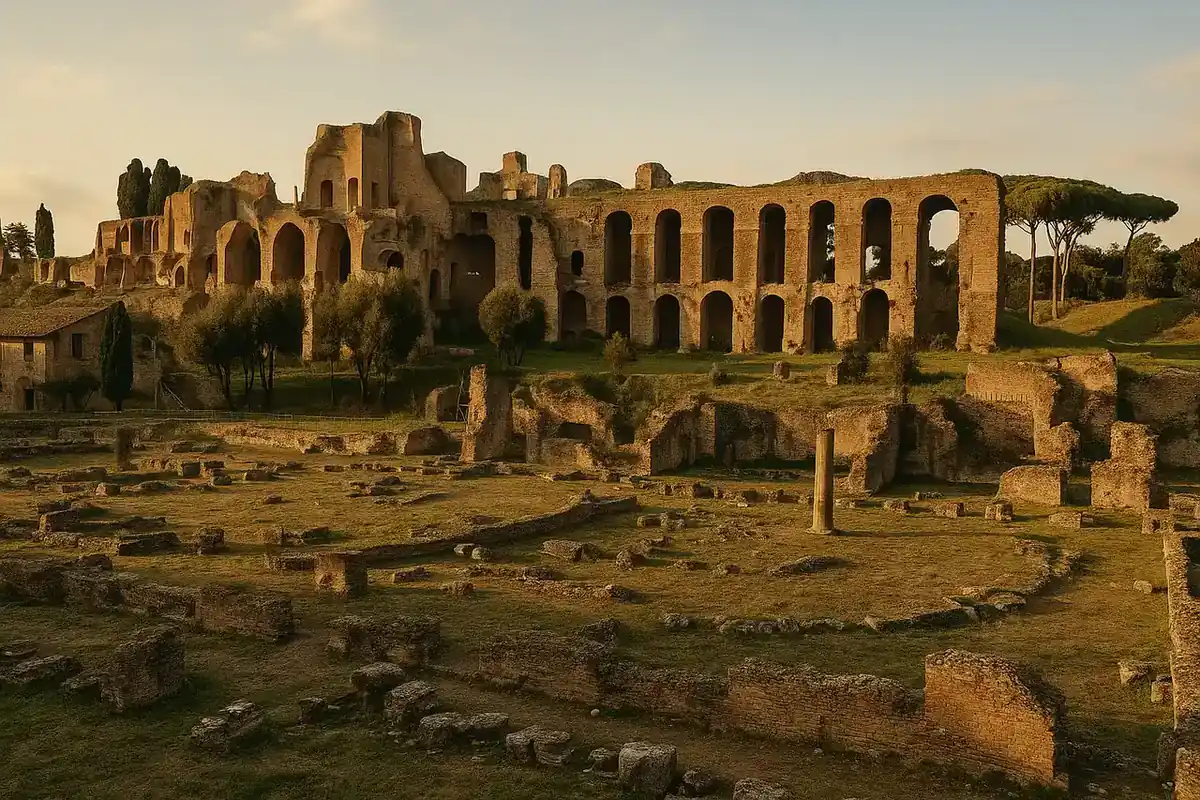
Palatine Hill Rome: Emperors' Palaces & Birthplace of Rome Guide
Roman EmpireExplore Palatine Hill, Rome's oldest neighborhood and imperial palace complex. Complete 2026 guide t...
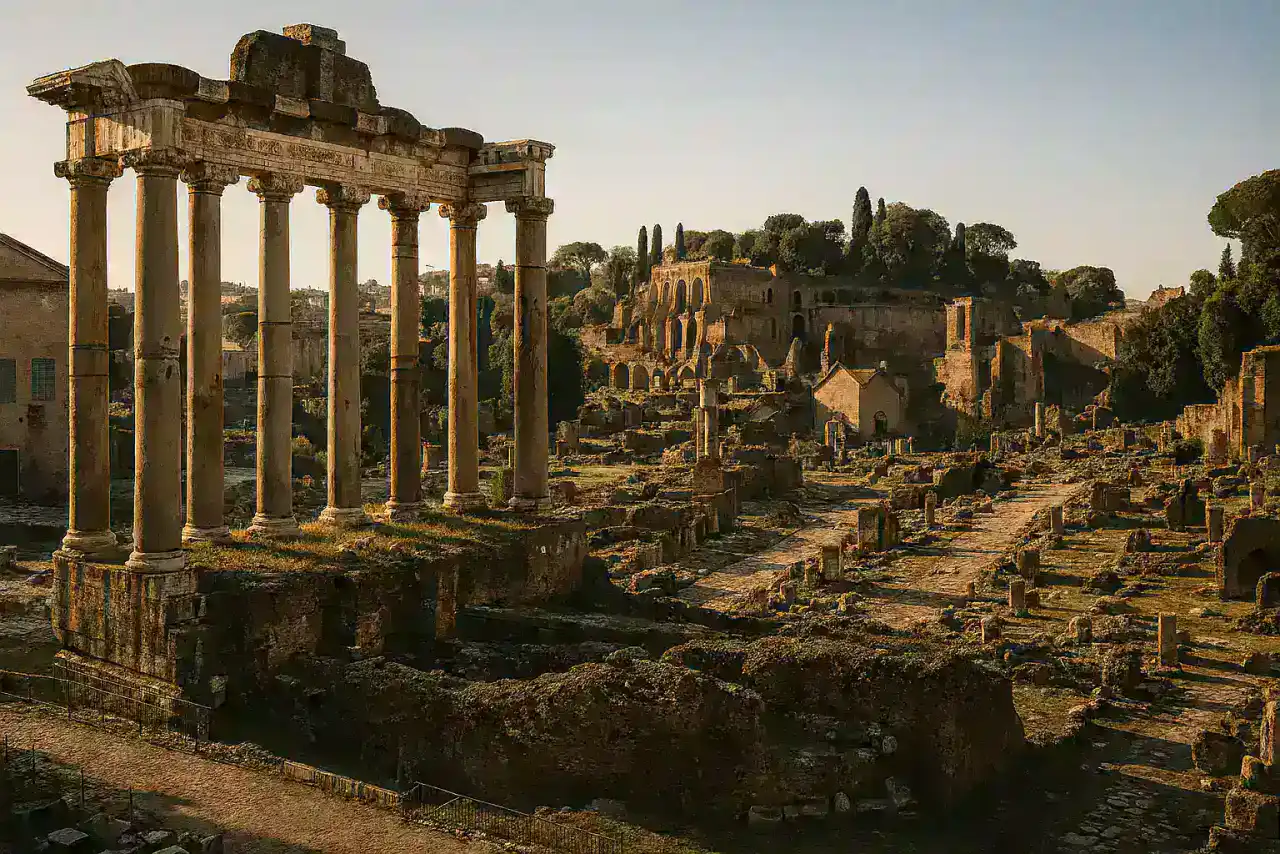
Roman Forum Rome: Heart of Ancient Republic Guide
Roman Republic/EmpireNavigate the Roman Forum's temples, basilicas, triumphal arches. Complete layout, highlights, Palati...
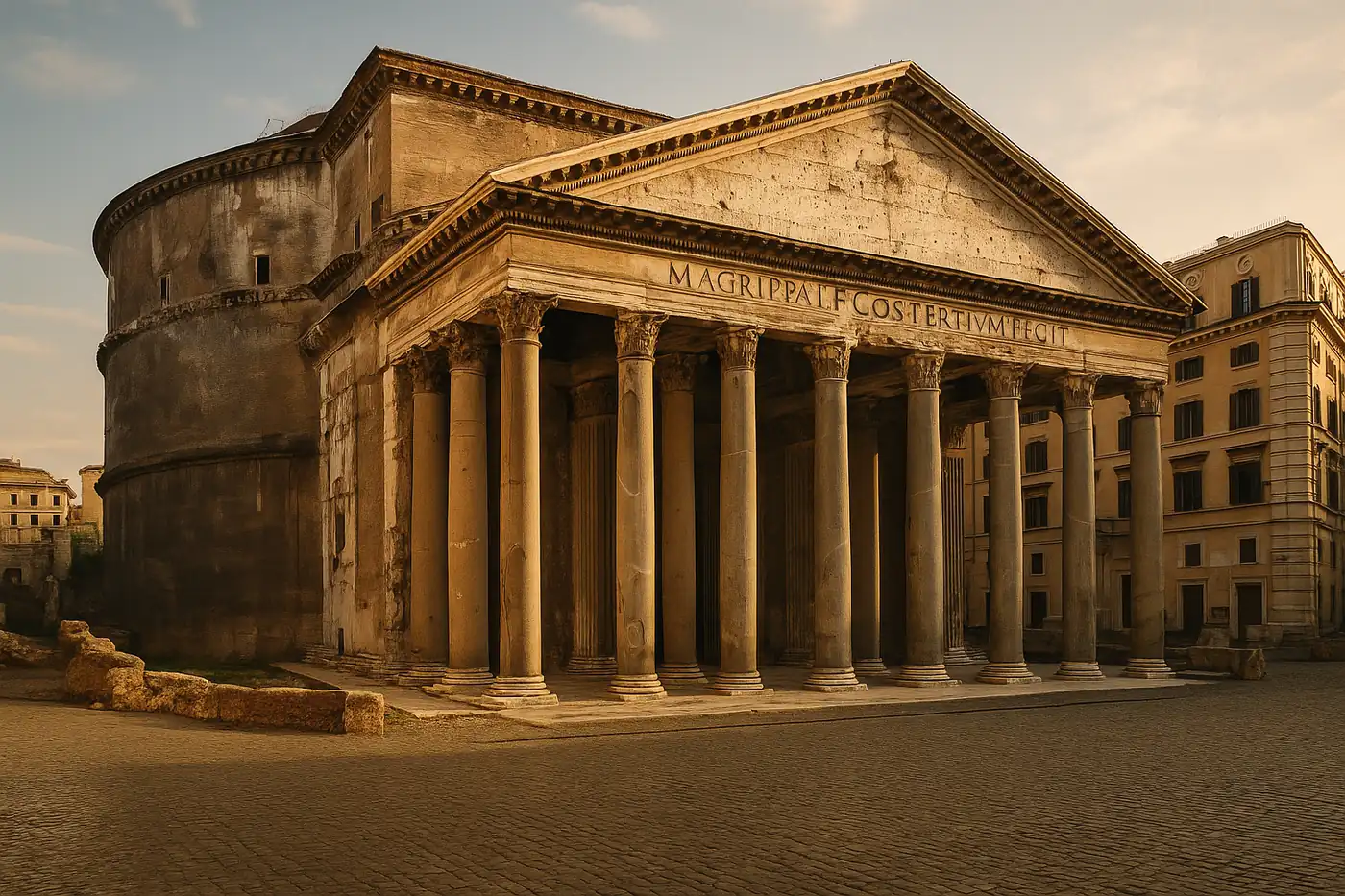
Pantheon Rome: Ultimate Guide to Rome's Best-Preserved Ancient Temple
Roman EmpireMaster your Pantheon visit with history, dome engineering secrets, visiting tips, skip-the-line opti...