Quick Info
Curated Experiences
Perge, Aspendos and Side Full-Day Tour from Antalya
Ancient City Tour to Perge, Aspendos, Side and Waterfall
Private Perge Aspendos Side Tour from Antalya
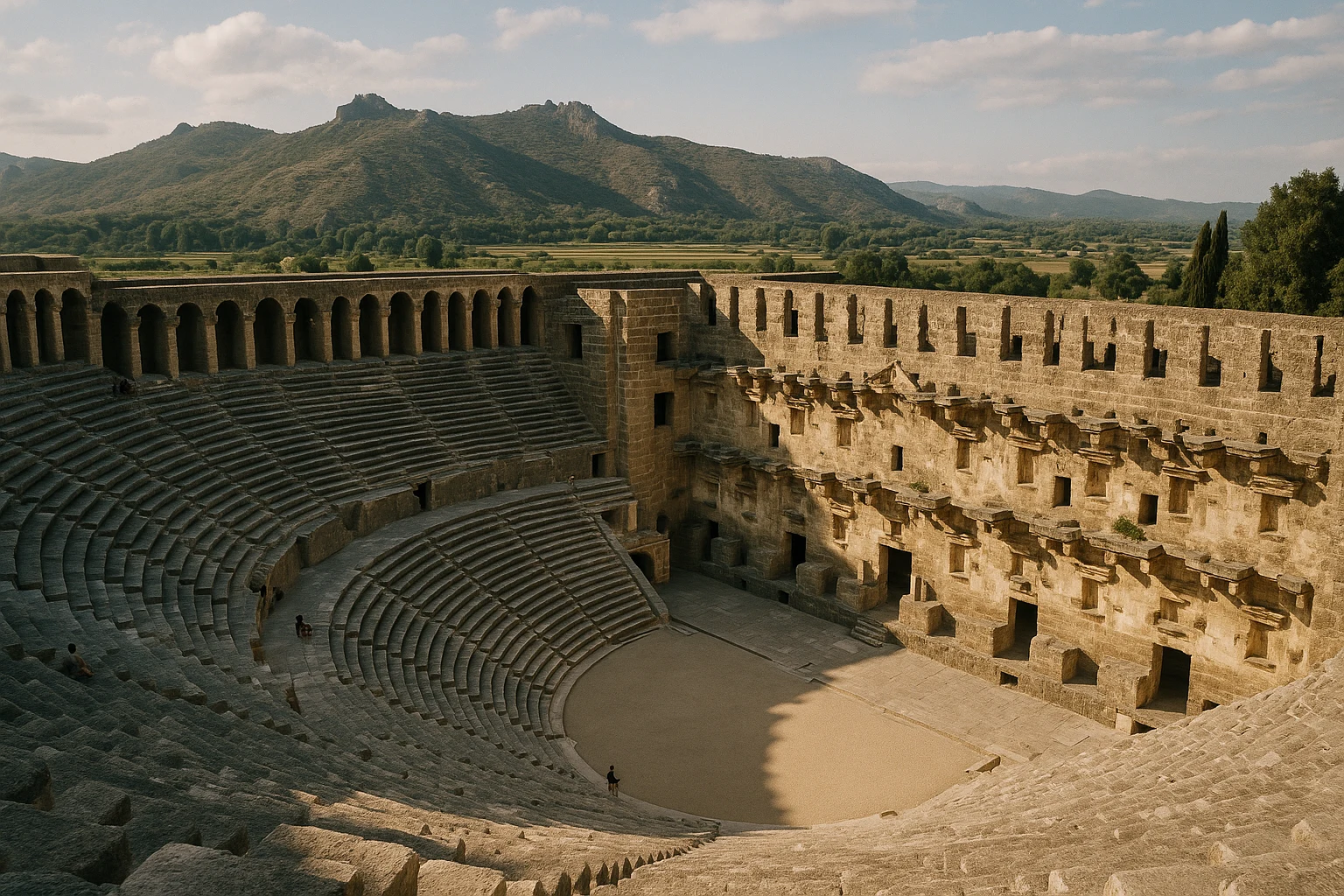
There is a moment inside Aspendos in Turkey when modern travel noise simply drops away. You climb the stone seating, turn toward the stage, and realize you are looking at a Roman theatre that still feels complete rather than fragmentary. The arches still hold. The monumental façade still rises in layered symmetry. The proportions still do what Roman imperial architecture was designed to do: make a citizen, pilgrim, merchant, or visitor feel the scale of organized power translated into stone. Few ruins in the Mediterranean deliver that sensation with such immediacy.
Aspendos is often treated as a quick stop on a day tour from Antalya, but it deserves more than a photo pause. This was one of the great cities of Pamphylia, enriched by river trade, tied to regional grain networks, and remade under Roman administration into an urban center with advanced water engineering and public architecture that rivaled much larger provincial capitals. The theatre is the obvious star, yet the long aqueduct lines and surviving towers outside the main entrance reveal a second, equally compelling story: how ancient cities survived heat, drought cycles, and population pressure through infrastructure that was both practical and monumental. This guide covers that full picture, from history and architecture to tickets, transport, and the best way to pair Aspendos with nearby Perge and Side.
History: A River City Becoming an Imperial Stage
Early Pamphylian foundations (c. 10th century BCE-4th century BCE)
Aspendos began as a settlement in the fertile plain east of modern Antalya, in a zone where coastal and inland trade routes crossed near the Eurymedon River (today’s Köprüçay). Ancient sources and archaeology indicate a mixed cultural environment from the start, with Pamphylian and Anatolian influences blending with incoming Greek-speaking communities. The city’s prosperity was tied to agriculture and river access rather than a dramatic hilltop position, and that practical geography shaped its long-term success. By the Classical period, Aspendos was minting coins and operating as a recognized regional power with enough economic weight to negotiate, resist, or adapt to larger empires.
Hellenistic transitions after Alexander (4th century BCE-1st century BCE)
Following Alexander’s campaigns in Anatolia, Aspendos entered the turbulent Hellenistic political world of competing successor kingdoms. Control shifted, alliances changed, and local elites navigated larger power struggles with characteristic pragmatism. Urban institutions became increasingly Hellenized, but the city preserved a distinct local identity visible in inscriptions and coinage traditions. This period laid groundwork for later monumental building by integrating Aspendos into wider Mediterranean commerce. As with many Pamphylian cities, the real urban transformation arrived not under one dramatic conqueror, but through gradual administrative and economic integration over generations.
Roman prosperity and monumental building (1st century BCE-3rd century CE)
Under Roman rule, Aspendos reached its architectural and economic peak. The celebrated theatre was built in the 2nd century CE, traditionally associated with the architect Zenon, during the reign of Marcus Aurelius. Its preserved inscription links civic patronage, local pride, and imperial culture in exactly the way Roman provincial cities advertised their status. Around the same era, expanded water infrastructure and public buildings reflected sustained investment rather than one-off prestige projects. The city’s position near major east-west movement corridors made it a reliable node for goods, taxation, and official travel, ensuring resources for maintenance and further construction.
Late antiquity, Byzantine adaptation, and Seljuk reuse (4th century CE-13th century CE)
As imperial structures shifted in late antiquity, Aspendos did what durable cities do: it adapted. Christian communities reshaped civic life; some classical structures were repurposed, others fell into selective disuse. The theatre, however, remained valuable because it was structurally robust and strategically useful. In the Seljuk period, rulers repaired portions of it and used the building for caravan-era functions, a major reason it survived better than most Roman theatres. This phase is crucial to understanding Aspendos today: what visitors experience is not a single frozen Roman moment, but a building repeatedly maintained by different civilizations that each recognized its value.
Modern archaeology and preservation (19th century-present)
European travelers documented Aspendos in the 19th century, but systematic study and conservation accelerated in the 20th century under Turkish archaeological authorities. Research moved beyond romantic sketches of the theatre to broader urban analysis, including road networks, water systems, and settlement patterns. Conservation now balances access with protection, especially around high-traffic seating and stage zones. Modern festival use has sparked debate among historians and preservation specialists, yet it has also kept global attention on the site’s extraordinary condition. Aspendos remains one of the clearest demonstrations that archaeological monuments can be both studied and lived with, if management is careful.
The Key Monuments: What to See at Aspendos
The Roman theatre
The theatre is Aspendos’s defining monument and one of the best-preserved anywhere in the former Roman Empire. Built into a natural slope but heavily engineered with vaulting and retaining walls, it originally seated roughly 12,000 to 15,000 spectators. What sets it apart is the survival of the scaenae frons (stage building): multiple stories of arches, niches, and decorative framing that are usually lost at other sites. Here, the architectural dialogue between audience seating and stage remains legible in full, which makes the space feel functional rather than ruinous.
Look for the inscription naming Zenon and for the geometry of circulation passages that allowed large crowds to move efficiently. Acoustically, the theatre still performs remarkably well; even quiet speech carries when the venue is less crowded. For photography, climb the upper cavea and frame the stage with the Taurus foothills beyond, especially in late-afternoon side light when relief details become more visible.
The stage building interior and service corridors
Many visitors focus on the grand exterior and miss the internal complexity behind the stage façade. Passageways, vaulted service rooms, and access corridors reveal how Roman production logistics worked: scenery movement, performer entry, and crowd management were planned with military precision. These spaces also show later repairs, including masonry differences associated with post-Roman reuse.
Architecturally, the interior proves that Roman theatres were not just artistic venues but high-performance civic machines. The layered construction techniques, from heavy stone blocks to lighter upper courses, illustrate how engineers balanced load, durability, and cost. If you’re interested in ancient construction, spend extra time reading wall joints and repair seams; they tell a longer story than the polished front view.
The aqueduct and pressure towers
A short distance from the theatre are the remains of Aspendos’s monumental water system, arguably the site’s most underrated feature. Long arcades and elevated channels fed water into the city, while surviving pressure towers indicate advanced hydraulic planning. These towers likely helped regulate flow across uneven terrain and maintain sufficient distribution pressure, a sophisticated solution in a hot Mediterranean environment.
The aqueduct remains are fragmentary compared with the theatre, but they transform how you interpret the city. Entertainment architecture may signal civic ambition; water architecture signals survival. The best approach is to view both on the same visit so you can read Aspendos as a complete urban organism rather than a single iconic monument.
The acropolis hill and basilica remains
Above the theatre zone, the higher settlement area preserves traces of later occupation, including basilica-like structures and administrative fragments from late antique and medieval phases. Standing remains are modest, but the location clarifies urban hierarchy: ceremonial and entertainment zones below, strategic oversight and institutional space above.
This area is also where you feel landscape context most clearly. The river plain, mountain backdrop, and route corridor explain why Aspendos prospered for centuries despite political change. Bring sturdy shoes; surfaces are uneven, with loose stone and less formal pathways than at the theatre.
Bridges and the broader Aspendos landscape
In the wider area, historic bridge remains linked Aspendos’s territory across waterways and seasonal routes. While not all are inside the ticketed core, they belong to the same infrastructure story as the aqueduct: mobility, supply, and control. If you are self-driving, ask locally about accessible bridge viewpoints and combine them with the main site in one half-day loop.
For many travelers, this broader landscape is where Aspendos becomes memorable. You move from admiring a preserved theatre to understanding a functioning ancient region shaped by engineering, agriculture, and logistics.
Getting There: Transportation and Access
Aspendos is straightforward to reach from Antalya and the surrounding coast, with multiple options depending on how much flexibility you want.
From Antalya city center
Most visitors travel from Antalya, about 45 km west of the site. Roads are generally good, and route signage toward Serik/Aspendos is clear.
- Taxi: 1,200-2,000 TRY ($35-60 USD) one way depending on season, pickup point, and negotiation; travel time 45-60 minutes.
- Public bus + short taxi: Intercity or regional buses toward Serik are frequent; from Serik, take a local taxi to Aspendos. Combined cost usually 180-350 TRY ($5-11 USD), but timing is less predictable.
- Rental car: Usually the easiest independent option for combining Aspendos with Perge or Side in one day; parking is available near the entrance.
From Side or Manavgat
If you’re staying in Side, Aspendos is a practical half-day outing and often easier than traveling from Antalya.
- Taxi: 700-1,300 TRY ($20-40 USD), about 35-45 minutes each way.
- Dolmuş + taxi: Shared minibus routes connect Side/Manavgat with regional hubs; final leg usually requires taxi. Costs vary by season but remain budget-friendly.
- Organized day tour: Many hotel pickups include Aspendos as part of the Perge-Side circuit, reducing transfer friction.
From Antalya Airport
Arrivals can visit Aspendos directly before checking into coastal hotels east of Antalya.
- Private transfer: 1,500-2,500 TRY ($45-75 USD), roughly 50-70 minutes depending on traffic.
- Rental car from airport: Good option if continuing to Belek, Side, or Alanya after the visit.
- Tour pickup: Some operators coordinate airport-nearby pickup with advance booking.
Admission and hours
Admission pricing and opening windows can change by season, so verify current rates on official Turkish museum channels before travel. In recent seasons, entry has generally been in the mid-range for major Turkish archaeological sites, with card payment often accepted but cash still useful for small services nearby. Summer hours are longer, while winter closes earlier. Aim for opening time or late afternoon to avoid peak heat and tour-bus concentration.
Practical Information
Bring sun protection, especially from May through September, because shaded areas are limited once you move beyond entrance zones. Carry at least one liter of water per person and wear shoes with solid grip; steps in the theatre can be steep and worn smooth. Light layers help in shoulder seasons when mornings are cool but afternoons warm quickly.
Aspendos is generally easy to navigate for fit visitors, but full accessibility is limited by ancient stair gradients and uneven stone surfaces. If mobility is a concern, you can still enjoy strong views from lower sections without climbing to upper tiers. For photographers, the best light usually falls in the first two hours after opening and again near sunset, when contrast softens and architectural detail reads better.
When to Visit: Seasonal Considerations
Spring (March-May)
Spring is the ideal season for most travelers. Temperatures usually sit around 16-28°C (61-82°F), landscapes are greener, and long visits are comfortable. Crowd levels rise during holidays but remain manageable outside peak weekends. Morning visits in spring offer crisp visibility and softer color in stone details.
Summer (June-August)
Summer brings intense heat, often 30-38°C (86-100°F), with midday stone surfaces radiating additional warmth. Crowds are highest because coastal tourism peaks, and organized tours arrive in clusters. Visit as early as possible, wear a hat, and avoid prolonged midday climbs in upper seating sections.
Autumn (September-November)
Autumn is another excellent window, with temperatures around 18-31°C (64-88°F) in early fall, cooling later in the season. Sea-holiday crowds start thinning, but daylight remains generous for combined itineraries. Late afternoon in autumn is particularly good for theatre photography and aqueduct walks.
Winter (December-February)
Winter is quiet and atmospheric, typically 10-18°C (50-64°F) with occasional rain. Crowd levels are low, making it easy to explore at your own pace. Bring a light waterproof layer and check reduced seasonal hours. If weather is stable, winter can be the most contemplative time to experience the site.
Combining Aspendos with Antalya Province Highlights
The most efficient day plan begins in Perge by 8:30 AM, when temperatures are still mild and the long colonnaded street is in good early light. Spend roughly two hours there, then drive east toward Aspendos for a late-morning or midday slot around 11:30 AM-12:00 PM. If you’re self-driving, break for lunch near Serik before entering the theatre zone, because on-site food options are limited and basic.
At Aspendos, allow at least 90 minutes for the theatre and an additional 30-45 minutes if you want to include aqueduct remains with context rather than a drive-by. By 3:30 PM, continue to Side and use the final daylight for the harbor, old town streets, and the Temple of Apollo at sunset. This sequence gives you three distinct urban experiences in one day: Perge’s broad Roman street plan, Aspendos’s theatrical monumentality, and Side’s sea-edge temple atmosphere.
If you prefer a slower rhythm, reverse the emphasis: dedicate a half day to Aspendos (including aqueduct exploration and upper settlement traces), then pair only one additional site. Aspendos plus Side works especially well for travelers who want both archaeology and coastal evening dining. Aspendos plus Perge is better for architecture-first visitors focused on Roman civic design. In either case, plan total active sightseeing time of 8-10 hours including transfers.
Why Aspendos Matters
Aspendos matters because it preserves something rare in ancient travel: continuity of function made visible. You don’t just see ruins; you see a civic machine that still explains itself. The theatre still gathers people. The water system still communicates necessity and intelligence. The stones still show successive repairs by communities separated by language, religion, and empire, yet united by a practical decision to preserve what worked.
In a region full of extraordinary sites, Aspendos offers a different kind of grandeur. It is less about romantic collapse and more about durable design. Standing at the top of the cavea, with the stage below and the Pamphylian plain beyond, you can read two thousand years of technical confidence in a single glance. That is why Aspendos belongs on any serious journey through Turkey’s ancient world: not merely as a stop between bigger names, but as one of the clearest conversations between antiquity and the present.
Quick Facts
| Attribute | Details |
|---|---|
| Location | Near Serik, Antalya Province, Turkey |
| Ancient Name | Aspendos (Pamphylia) |
| UNESCO Status | On Turkey’s UNESCO Tentative List |
| Established | c. 10th century BCE settlement |
| Distance from nearest hub | ~45 km from Antalya (45-60 min by road) |
| Entry Fee | Variable seasonal pricing (check official site before visit) |
| Hours | Longer summer hours; shorter winter hours |
| Best Time | Spring and autumn; early morning or late afternoon |
| Suggested Stay | 2-3 hours (half day with aqueduct and surroundings) |
| Known For | Exceptionally preserved Roman theatre and aqueduct engineering |
Explore More Turkey
- Perge: Walk one of Anatolia’s most complete Roman street plans and monumental gate complexes.
- Side: Combine temple columns at the sea with a major Roman theatre and museum.
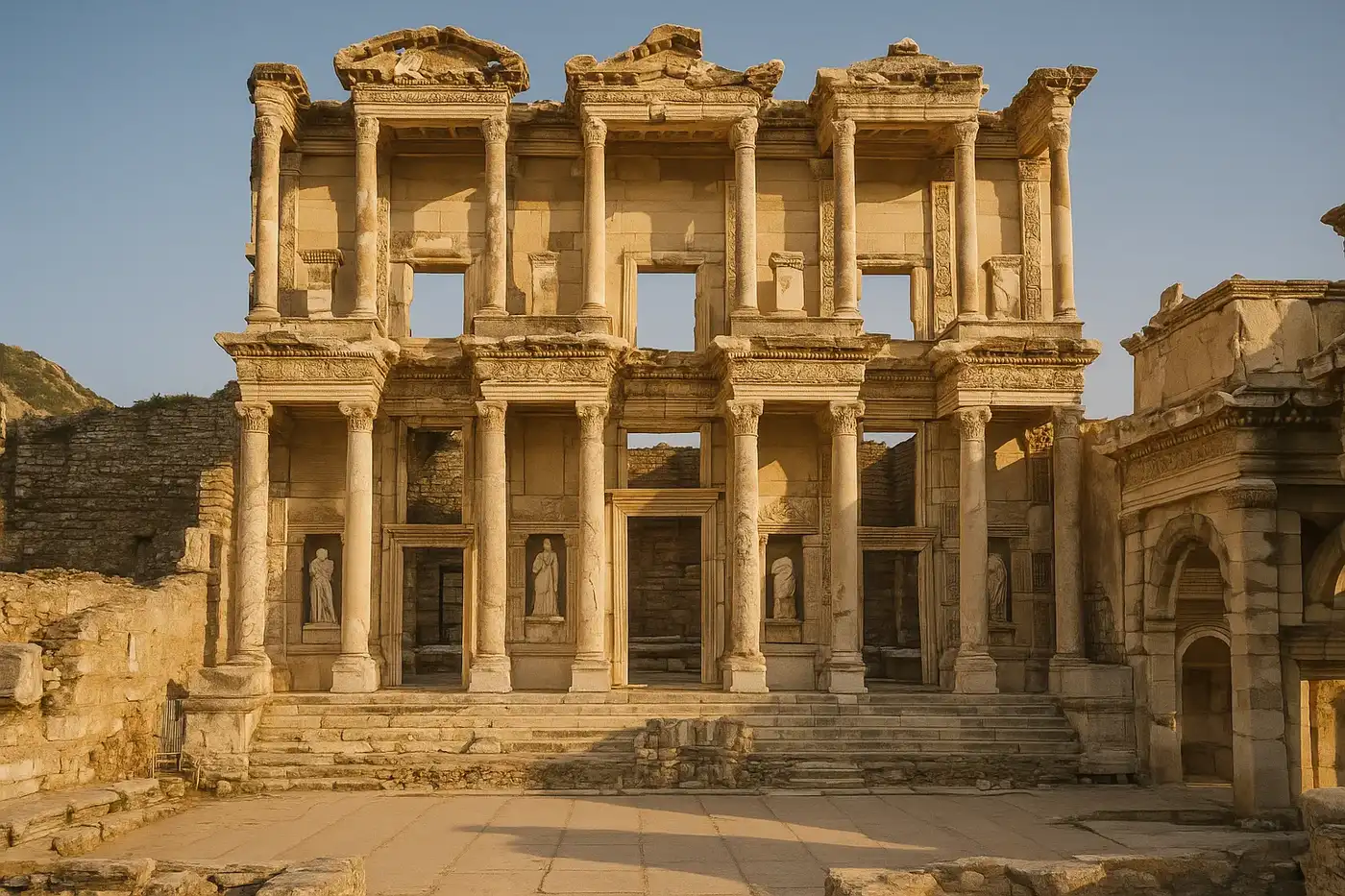
- Ephesus: Experience the grandest urban Roman ruins in western Turkey.
Plan your full route with our Turkey Ancient Sites Guide. For efficient regional planning, see our guide to how to combine classical sites around Antalya.
Frequently Asked Questions
How much time should I plan for Aspendos?
Plan 2-3 hours if you want to see both the theatre and the aqueduct remains without rushing. If you're joining a combined Perge-Aspendos-Side day tour, expect 60-90 minutes on site, which is enough for highlights but not for a deep architectural visit.
Is Aspendos worth visiting if I've already seen other Roman theatres?
Yes. Aspendos is exceptional because the stage building (scaenae frons) survives at near full height, which is extremely rare in the Roman world. Even visitors familiar with theatres in Italy, Greece, or Jordan usually rank Aspendos among the most intact and acoustically impressive.
How do I get from Antalya to Aspendos without a tour?
The simplest independent route is rental car or taxi (about 45-60 minutes each way depending on traffic). Public transport is possible via buses toward Serik, then a short taxi ride to the site, but schedules can be inconsistent and return transport is less convenient.
Do concerts still happen in the Aspendos theatre?
Yes, performances are periodically held, especially during the Aspendos International Opera and Ballet Festival. Event schedules vary by year; if you want to attend, check official Antalya cultural listings and book ahead because evening performances can sell out quickly.
When is the best time of day to visit Aspendos?
Early morning and late afternoon are best for both comfort and photography. Midday sun can be intense from June through September, with minimal shade in exposed areas around the theatre and upper seating.
Can I combine Aspendos with Perge and Side in one day?
Absolutely, and this is the most popular itinerary in Antalya Province. Start at Perge in the morning, visit Aspendos before or after lunch, and end in Side for sunset at the Temple of Apollo.