Quick Info
At a glance
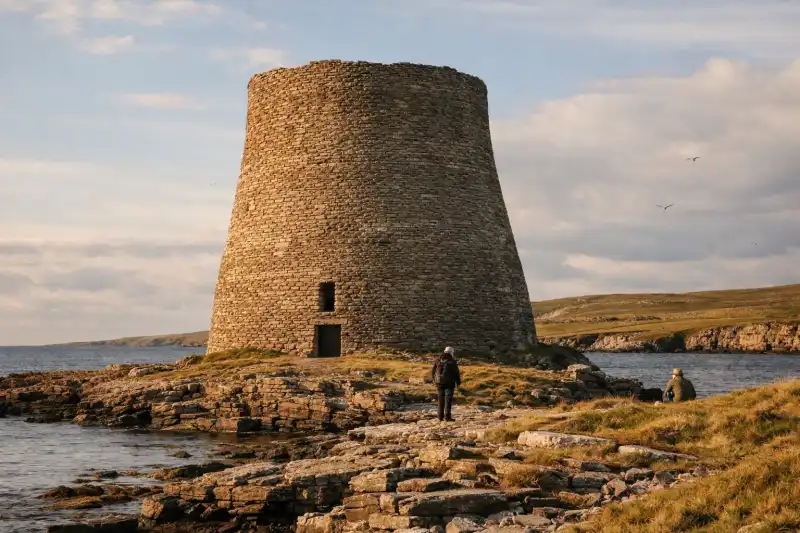
Broch of Mousa in the United Kingdom stands on a small, windswept island off the southeast coast of Shetland, and few ancient places feel so immediately dramatic. Long before you reach its doorway, the tower appears against the sky like a dark stone cylinder lifted from another age, solitary yet astonishingly intact. The sea flashes around the island, seabirds wheel overhead, and the silence is broken mostly by wind, waves, and the calls of nesting birds. In that spare northern landscape, the broch feels less like a ruin and more like a survivor.
Part of the site’s power comes from its isolation. Mousa is not a place encountered by accident; it is reached with intention, by road, boat, and a walk across open ground. That effort sharpens the experience. Visitors do not merely arrive at an archaeological monument; they approach a structure that has stood for roughly two millennia on an island with little shelter and fierce weather. The result is unforgettable. Broch of Mousa is often described as the best-preserved broch in Scotland, but that label, while true, is still inadequate. It is not just a fine example of Iron Age engineering. It is a monument that lets you feel the scale, ambition, and practical intelligence of a society that built in stone and knew how to build for endurance.
History
Iron Age Origins
The Broch of Mousa was built in the later Iron Age, most likely sometime between the 1st century BC and the 1st century AD, though exact dating remains debated. Brochs are a distinctive kind of drystone tower found mainly in northern and western Scotland, especially in Shetland, Orkney, Caithness, and the Hebrides. Their precise purpose has long been discussed by archaeologists. Some interpret them primarily as elite farmsteads or symbols of status, while others emphasize their defensive qualities. In the case of Mousa, the truth may include both. Its thick walls, elevated entrance, and commanding form suggest security mattered, but its size and craftsmanship also point to prestige.
What makes Mousa exceptional is its preservation. Many brochs survive only as foundations or low walls, leaving visitors to imagine their original height. Mousa still rises to about 13 meters, making it the tallest standing broch in existence. Because the structure remains so complete, it has become central to modern understanding of how brochs were built and used. The tower’s double-skinned wall, internal galleries, and spiraling stair within the wall thickness are all visible evidence of sophisticated Iron Age construction.
Norse References and Early Medieval Memory
By the early medieval period, long after its original builders were gone, the broch was still prominent enough to enter local tradition and Norse storytelling. Mousa appears in the Orkneyinga Saga and Egils Saga, texts that connect the tower with episodes involving flight, refuge, and pursuit. While saga narratives are literary works rather than straightforward historical records, their references are important because they show the broch remained usable and memorable many centuries after it was built.
One saga account tells of a couple taking refuge in the strong tower on Mousa, implying that even in the Norse period the broch was known for its secure construction. This suggests a long afterlife for the monument. It may not have functioned continuously in the same way as in the Iron Age, but it endured as a recognized place of shelter and significance. Few prehistoric towers in Britain can claim such a clear presence in medieval written tradition.
Antiquarian Interest and Early Study
From the 18th and 19th centuries onward, antiquarians and early scholars began documenting prehistoric remains across Scotland, and Mousa quickly attracted attention. Travelers were struck by how much of the tower still stood. Drawings, descriptions, and later surveys helped establish the broch as one of the most important ancient monuments in the British Isles. In an era when many sites were altered, robbed for stone, or neglected, Mousa’s remote location may have contributed to its survival.
As archaeology developed into a more rigorous discipline, the broch became increasingly valuable as a reference point. Scholars could compare ruined brochs elsewhere with Mousa’s standing walls to reconstruct original forms and building methods. Even where excavation on the island remained limited compared with some other major sites, the structure itself provided rare architectural evidence.
Modern Conservation and Interpretation
Today Broch of Mousa is protected as a scheduled ancient monument and managed as one of Scotland’s most significant prehistoric sites. Conservation has focused on balancing access with preservation, especially given the fragility of ancient masonry in a marine environment. Weather, salt, and birdlife all shape the challenges of management. The island is also important for wildlife, including storm petrels that nest within crevices of the broch and surrounding stonework.
Modern interpretation places Mousa within a broader Iron Age landscape rather than treating it as an isolated curiosity. The tower reflects social organization, control of resources, and skilled engineering in northern Scotland during a formative period of regional identity and exchange. Yet for all the scholarly analysis, the broch remains compelling on a simple human level. It was built by people who understood stone, weather, and the value of a secure home. Across two thousand years, that practical intelligence is still legible in every course of masonry.
Key Features
The most striking feature of Broch of Mousa is its extraordinary height and completeness. Standing close to it, you see not a collapsed shell but a near-whole tower, broad at the base and tapering slightly upward. The walls are immensely thick, formed by two concentric faces of drystone masonry with a hollow space between them. This cavity is not empty waste; it contains passages, chambers, and the stair that curls upward inside the wall. The design made the building strong, stable, and more sophisticated than a simple solid tower.
The entrance passage immediately conveys the monument’s defensive and architectural intelligence. It is low, narrow, and deliberately controlled. Anyone entering would have done so one by one, easy to monitor from inside. Yet the effect is not only defensive. There is a theatrical quality to the transition from the open island landscape into the dim, cool interior of the tower. The outside world falls away, replaced by stone, shadow, and the sense of being enclosed within one of prehistoric Europe’s most remarkable structures.
Inside, the broch’s central court is open to the sky. Light pours down from above, illuminating the curving inner wall and emphasizing the building’s cylindrical form. Looking up from the floor, visitors can appreciate the precision of the masonry and the sheer ambition of the design. The stones are laid without mortar, relying on weight, balance, and careful placement. That such a structure has survived Atlantic weather for so long is one of the strongest arguments for the skill of its builders.
Another essential feature is the intramural stair. The staircase, set within the thickness of the wall, rises in a spiral and once gave access to upper levels or timber platforms. While not all internal arrangements survive, the staircase proves the broch was conceived as a multi-level building. This would have increased both usable space and symbolic power. A tall tower visible from afar would have projected authority across land and sea. On an island like Mousa, where the horizon is open and the weather dramatic, that visual statement must have been especially strong.
The galleries within the wall are equally important. These horizontal spaces lighten the structure, distribute weight, and create a complex internal anatomy unlike that of ordinary roundhouses. For modern visitors, they also make the broch intellectually exciting. It is not simply a ruin to admire from outside; it is a puzzle of engineering that can be read in section and plan. Mousa helps explain how brochs worked because the evidence is still there, not guessed at from fragments.
Setting also counts as one of the site’s defining features. The island of Mousa is low, grassy, and surrounded by water, with little to distract from the tower itself. This isolation sharpens the monument’s silhouette and preserves a sense of ancient remoteness. The journey across the island allows visitors to experience the broch in stages: first as a distant dark form, then as a towering object in the landscape, and finally as an inhabited-feeling interior. Few sites offer such a powerful sequence of approach.
Wildlife adds another layer. Mousa is famous for seabirds, especially in summer, and the broch is associated with one of Britain’s best-known storm petrel colonies. Depending on the season and time of day, you may notice birds skimming low over the ground or hear calls emerging from the stonework. This does not reduce the monument’s historical importance; instead, it reminds visitors that ancient places continue to be part of living ecosystems. The broch is both archaeological landmark and habitat, a rare combination that deepens the experience of visiting.
Getting There
Reaching Broch of Mousa requires some planning, but that is part of its appeal. Most visitors begin in Lerwick, Shetland’s main town, or elsewhere on the mainland. From Lerwick, driving to the departure point at Sandwick typically takes around 30 minutes. If you do not have a car, local buses may serve nearby areas, but schedules can be limited, so a taxi is often more practical. A taxi from Lerwick to Sandwick may cost roughly £35 to £50 each way depending on timing and operator.
From Sandwick, the final crossing to Mousa is by seasonal boat service or pre-booked local operator, usually running in the warmer months when sea conditions are more favorable. Return fares commonly fall around £25 to £35 per adult, though prices vary and advance booking is wise. Weather can affect sailings, sometimes at short notice, so always confirm before traveling.
After landing on Mousa, you will walk to the broch. The route is not technically difficult, but the ground can be uneven, boggy, and exposed. Good waterproof footwear is strongly recommended, along with layers and rain protection even in summer. Allow around 20 to 30 minutes for the walk each way, depending on conditions and pace.
For travelers coming from mainland Scotland, reaching Shetland itself usually involves either a flight to Sumburgh Airport or the overnight ferry from Aberdeen to Lerwick. Flights can range widely in price, often from £120 to £250 return when booked in advance, while ferry costs depend on accommodation choice and vehicle transport. Because Broch of Mousa is a weather-dependent excursion, it is smartest to build some flexibility into your Shetland itinerary rather than leaving the visit to a final, fixed day.
When to Visit
The best time to visit Broch of Mousa is generally from late May through August, when daylight is long, boat services are more frequent, and the island’s wildlife is especially active. Summer in Shetland brings the greatest chance of a smooth crossing and a comfortable walk, though “comfortable” is relative in such a northern maritime climate. Even on bright days, wind can be strong and temperatures cool, so proper clothing remains essential.
June and July are especially rewarding if you want to combine archaeology with natural history. This is the season when the island feels most alive, with seabirds all around and the landscape glowing under Shetland’s famously extended daylight. The long hours make day trips easier and give you more margin if transport times shift. However, these are also the busiest months, so boat spaces may need to be reserved well in advance.
Spring and early autumn can be excellent for travelers who prefer quieter conditions. May and September sometimes offer beautiful clear days and softer light for photography, but weather becomes more unpredictable and crossings may be fewer. Rain, mist, and wind can transform the visit quickly, so flexibility is important.
Winter is generally not ideal for most travelers. Short daylight, rougher seas, and reduced services make access much more difficult. If your main goal is to experience the broch rather than simply glimpse it from afar, the practical window is the main visitor season. Whenever you go, aim for a dry forecast, bring waterproof layers, and treat weather updates as seriously as transport bookings. On Mousa, climate is not background information; it is part of the journey.
| Quick Facts | Details |
|---|---|
| Site name | Broch of Mousa |
| Location | Mousa, Shetland, United Kingdom |
| Type | Iron Age broch tower |
| Date | c. 100 BC to AD 100 |
| Cultural context | Iron Age Scotland |
| Best known for | Best-preserved and tallest surviving broch in Scotland |
| Height | Approximately 13 meters |
| Nearest main town | Lerwick |
| Access | Seasonal boat crossing plus walk on the island |
| Best season | Late spring to summer |
Guided tours: worth it?
A guide can be genuinely useful at Broch of Mousa, especially if you want help with transport, timing, tickets, or understanding a large site without losing half the day to logistics.
Best for
- Travelers who want transport, timing, or entry logistics handled
- Short visits where a planned route saves time
When to go self-guided
Go independently if you already have transport and tickets sorted, enjoy moving at your own pace, and are comfortable checking the latest official rules before you arrive.
What I’d avoid
Skip paid tours that bundle unrelated stops you do not actually want. The best option should either save meaningful planning time or add historical context you would miss on your own.
Shetland archaeology and history tours
Useful when: you want to compare guided formats before deciding
Shetland Islands private day tours
Useful when: you want flexible timing or a private guide
Scotland ancient sites tours
Useful when: you want to compare guided formats before deciding
Some tour links are affiliate links, which may earn Ancient Travel a small commission at no extra cost to you. I try to surface options that make practical sense for the site—not just anything bookable.
Frequently Asked Questions
What is the Broch of Mousa?
The Broch of Mousa is a remarkably well-preserved Iron Age stone tower on the island of Mousa in Shetland, Scotland. It is considered the finest surviving broch in the world.
How do you get to the Broch of Mousa?
Visitors usually travel from mainland Shetland to the ferry point at Sandwick, then take a seasonal boat crossing to the island of Mousa. The final approach is on foot across the island.
Can you go inside the Broch of Mousa?
Access policies can change, but visitors are generally able to walk around and, when conditions and conservation rules allow, enter parts of the tower. Always follow current guidance from local authorities.
When is the best time to visit Broch of Mousa?
Late spring through summer offers the easiest access, milder weather, and longer daylight hours. These months are also popular for birdlife, including storm petrels nesting in the broch.
How long should you allow for a visit?
Allow at least half a day including transport, the boat crossing, and the walk to the broch. Many visitors spend longer enjoying the island scenery and wildlife.
Is Broch of Mousa suitable for children?
Yes, older children with an interest in history and outdoor walking often enjoy it, but the trip involves a boat crossing, uneven ground, and exposed weather, so families should plan carefully.
Nearby Ancient Sites
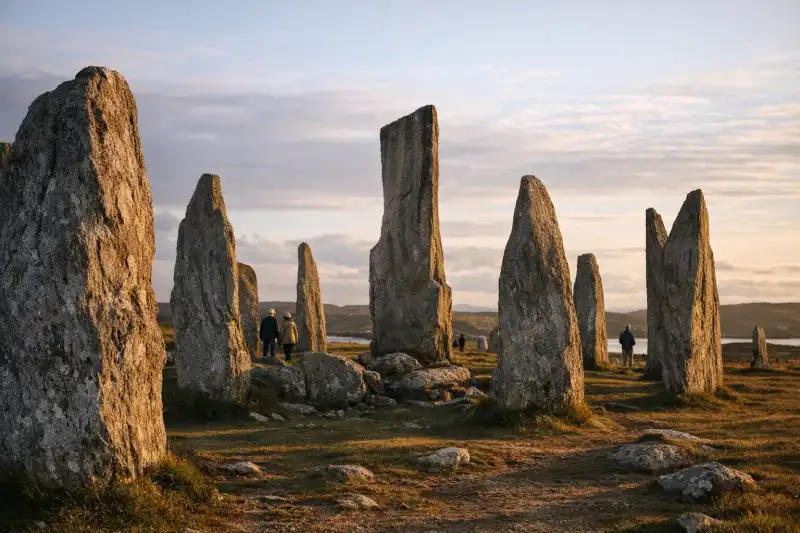
Callanish Stones
Neolithic communities of the Outer HebridesExplore the Callanish Stones, a dramatic Neolithic stone circle in the United Kingdom's Outer Hebrid...
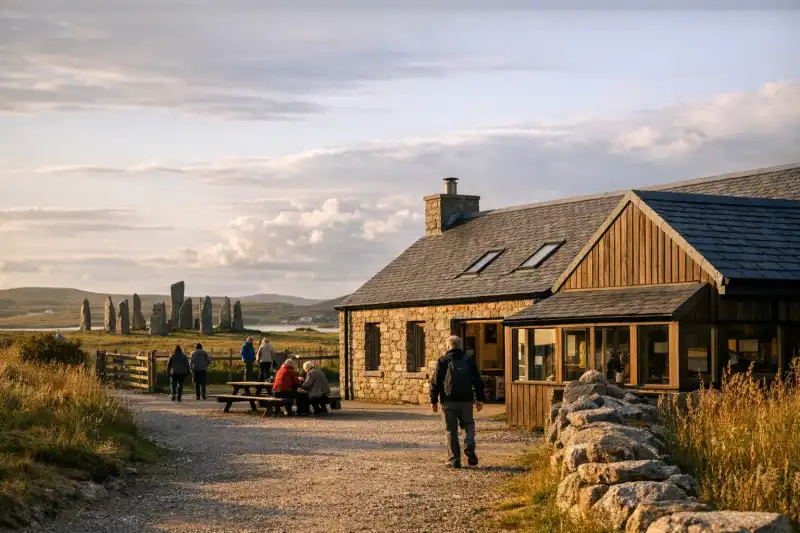
Calanais Visitor Centre
Neolithic ScotlandGateway to the famous Calanais standing stones on the Isle of Lewis in the United Kingdom.
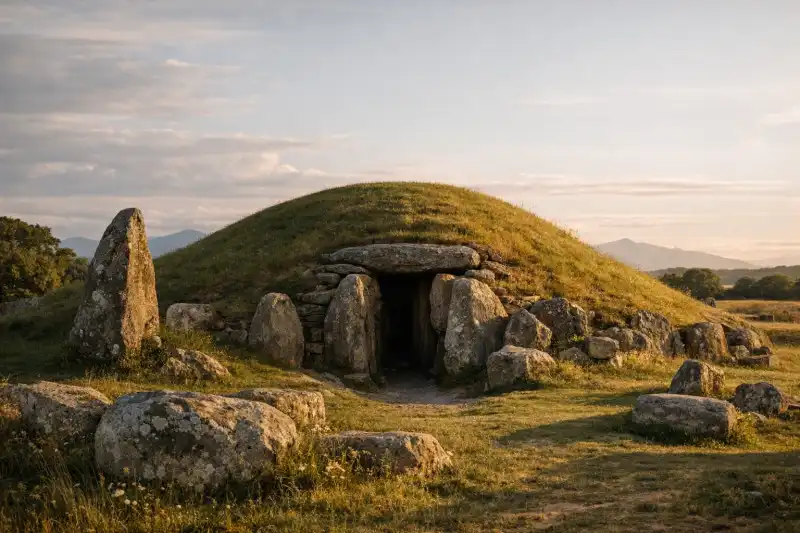
Bryn Celli Ddu
Neolithic BritainAtmospheric Neolithic burial chamber and henge on Anglesey, United Kingdom, famed for ritual alignme...