Quick Info
At a glance
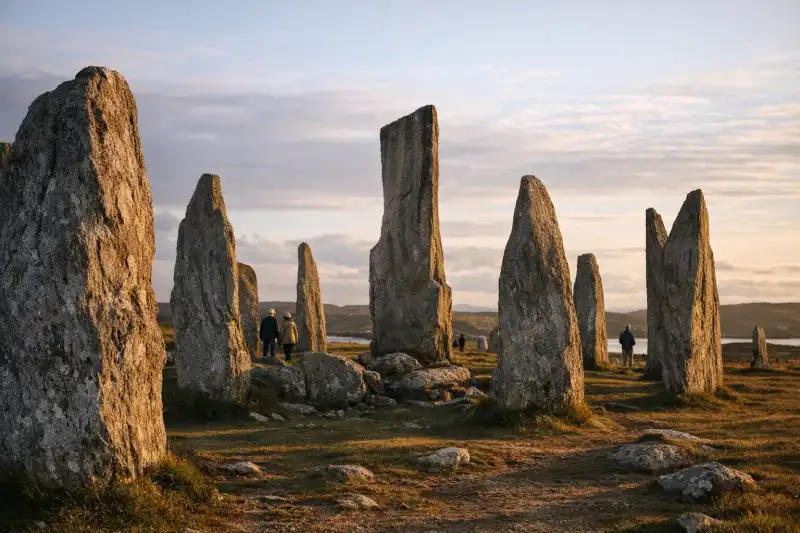
Callanish Stones in the United Kingdom rise from the peat-dark landscape of the Isle of Lewis with a kind of quiet authority that photographs never fully capture. Long before you reach the monument, the setting prepares you for it: low hills, restless Atlantic light, patches of loch water reflecting the sky, and a sense of distance from the modern world. Then the stones appear, weathered and pale against the moor, arranged not as a neat ring alone but as a wider ceremonial design stretching into the land. Their forms are severe and elemental, yet their placement feels intentional in a way that still invites speculation.
Few prehistoric places combine atmosphere and archaeological importance quite like this one. The Callanish complex is among the most remarkable megalithic landscapes in Europe, not only for the famous central circle but also for the avenues, rows, and nearby subsidiary monuments scattered across the surrounding area. Visitors often arrive expecting a single stone circle and leave realizing they have encountered a ceremonial landscape shaped over centuries. The monument’s remoteness is part of its power. On Lewis, sky and stone seem to belong to the same ancient story, one written before recorded history and preserved by local memory, folklore, and careful archaeological work. Whether you come for prehistory, photography, mythology, or simply the experience of standing in a place that has endured for five millennia, Callanish rewards a slower kind of travel.
History
Neolithic beginnings
The origins of the Callanish Stones lie in the Late Neolithic, around 3000 BCE, when farming communities in the Outer Hebrides began shaping the landscape with monumental intent. The main site, often referred to as Callanish I, was not built all at once in a single effort but appears to have developed over time. Archaeological evidence suggests that the circle, the radiating stone alignments, and the central chambered tomb belong to a ceremonial tradition that linked burial, gathering, and cosmological observation. At least some of the stones may have been chosen for their size, form, and local symbolism as much as for structural function.
The builders lived in a world already transformed by agriculture, animal husbandry, and the spread of communal ritual architecture. Across Britain and Ireland, people were constructing chambered cairns, cursus monuments, henges, and stone circles. In the Outer Hebrides, Callanish emerged as one of the most ambitious expressions of this wider megalithic culture. The placement of the stones on elevated ground overlooking lochs and distant hills suggests that the monument was designed to interact with both horizon and sky.
Ceremonial use and Bronze Age changes
By the centuries after its construction, Callanish likely remained a place of repeated ritual activity. Excavations have indicated that the central area contained a chambered tomb inserted into or associated with the existing circle, showing that the site evolved rather than stood frozen in one form. This continued use into the early Bronze Age hints that later communities recognized the monument’s power and adapted it to their own beliefs.
Some archaeologists have explored possible astronomical alignments at Callanish, particularly involving lunar cycles and horizon events. While interpretations vary, there is broad agreement that the monument’s design was not random. Its avenues and alignments seem intended to frame movement through the landscape and perhaps to mark events in the heavens. Even if certainty remains elusive, the persistence of ceremonial use suggests that the stones held communal significance across generations.
Over time, however, the social systems that created these monuments changed. New burial practices, metalworking, and shifting settlement patterns transformed prehistoric life in Atlantic Scotland. Callanish was not dismantled, but its role likely altered as memory and ritual tradition evolved.
Burial beneath the peat
As centuries passed, the monument gradually became less visible in a changing environment. Peat accumulated over parts of the site, and some stones were partly buried. This process was not unique to Callanish; many prehistoric sites across northern Britain disappeared into agricultural land, marsh, or moor. Yet here the peat helped preserve traces of the monument’s long history while also obscuring it.
The survival of the stones in local tradition was critical. Even when scholarly understanding was limited, the monument remained embedded in the cultural landscape of Lewis. Folklore connected the stones to petrified giants or legendary figures, reflecting a common pattern in Britain where megaliths acquired stories that explained their uncanny presence. These tales did not reveal the site’s true age, but they preserved its importance.
Antiquarian interest and excavation
From the 17th and 18th centuries onward, antiquarians began recording Callanish. Early descriptions recognized that it was an exceptional prehistoric monument, though interpretations were often colored by biblical or druidic ideas fashionable at the time. In the 19th century, the monument gained wider attention as scholars attempted to classify Britain’s megalithic remains more systematically.
A major turning point came in the 1850s, when peat was cleared from around the stones, revealing more of the original layout. This work transformed understanding of the site by showing that the visible circle was part of a larger arrangement. Further archaeological investigations in the 20th century helped establish the monument’s Neolithic date and clarified the sequence of construction and later modification.
Callanish today
Today, Callanish is managed as one of Scotland’s most significant prehistoric sites. It is protected both for its archaeology and for its landscape setting, which remains unusually evocative. Modern visitors benefit from research that has moved beyond romantic speculation while still acknowledging the mysteries that make the monument compelling. Callanish is now understood not as an isolated ring of stones but as the centerpiece of a broader ritual landscape that includes multiple nearby stone settings.
Its continued appeal lies partly in this dual identity. It is at once a rigorously studied archaeological site and a place where atmosphere still matters. Standing among the stones, visitors are not simply looking at ancient engineering. They are encountering a monument that has shaped memory, story, and scholarship for thousands of years.
Key Features
The most striking feature of the Callanish Stones is the main arrangement itself: a stone circle with a tall central monolith and avenues or rows radiating outward in a rough cruciform pattern. Unlike the more geometrically enclosed feel of some circles elsewhere in Britain, Callanish feels open to the surrounding moor. The stones are set in a way that extends the monument into the wider landscape rather than containing it. Their varied heights add to this effect. Some rise dramatically above head height, while others create lines that guide the eye outward toward hills and water.
The circle consists of thirteen stones around a central monolith, though the impression on arrival is less of counting and more of orientation. The alignment stretching north from the circle is especially memorable. This avenue creates a ceremonial approach that feels processional even now, suggesting movement, gathering, and perhaps repeated ritual use. To the south, east, and west, other rows or arms contribute to the monument’s distinctive plan. This design gives Callanish a complexity that distinguishes it from simpler stone circles and helps explain why archaeologists see it as the focus of a ceremonial network.
At the heart of the monument lies a chambered tomb inserted into or associated with the circle. Though less visually dramatic than the standing stones, this burial feature is crucial to understanding the site. It demonstrates that Callanish was not only a place of assembly or observation but also connected to the dead. Such blending of ceremonial, commemorative, and cosmological roles is common in prehistoric monuments, and here it adds depth to the experience. What appears at first glance to be a monument for looking outward to sky and horizon was also tied to ancestry and burial.
The stones themselves deserve close attention. Composed of local Lewisian gneiss, they have a tough, banded texture shaped by immense geological time. Their weathered surfaces seem almost sculptural, especially in low light or after rain. Depending on the season, they can appear silver, pale brown, or nearly black against the moor. This interplay of stone and weather is one reason Callanish is so beloved by photographers. Sunrise and sunset can be magnificent, but even a grey Hebridean day enhances the monument’s gravity.
Another key feature is the broader Callanish landscape. The main site is only the beginning. Nearby monuments, often identified as Callanish II, III, and beyond, show that this was not a lone structure but part of a clustered sacred geography. For visitors with time and transport, exploring these outlying settings adds immensely to the experience. They are smaller and less visited, yet they reveal how the main stones sat within a larger ritual system. The distribution of these monuments across ridges and near lochs suggests careful placement within a meaningful topography.
The setting contributes as much as the architecture. From the stones, views open across Loch Roag and the surrounding uplands, while changing cloud cover constantly alters the mood. There are few intrusive modern elements, allowing a rare sense of continuity between monument and environment. This is not a site crowded by urban development or heavily framed by later buildings. Its relative isolation helps preserve the emotional force of arrival.
Visitors should also note the interpretive value of the nearby visitor centre area, when open, as it provides context that can make the stones more legible. Learning about excavation, chronology, and landscape archaeology before or after walking the site helps transform Callanish from a scenic stop into a richer encounter with Neolithic Britain. Even so, one of the monument’s greatest strengths is that it works on multiple levels. A scholar can study alignment and sequence here; a first-time traveler can simply stand among the stones and feel the weight of time.
Getting There
Reaching the Callanish Stones requires a little planning, but that journey is part of the experience. The site is on the Isle of Lewis in the Outer Hebrides, about 16 miles (26 km) west of Stornoway, the island’s main town. Most travelers arrive on Lewis either by plane or ferry. Flights from Glasgow, Edinburgh, Inverness, or Aberdeen to Stornoway are the fastest option, with one-way fares often starting around £80 to £180 depending on season and booking time. The Caledonian MacBrayne ferry from Ullapool to Stornoway is slower but scenic; foot passenger fares are commonly around £11 to £15 each way, while taking a car costs significantly more.
From Stornoway, the easiest way to reach Callanish is by rental car. Daily car hire rates often begin around £45 to £80, though summer prices can rise. Driving takes roughly 30 to 40 minutes via the A858 and local roads. The route is straightforward and passes through classic Lewis scenery, including moorland and loch-dotted landscapes. Parking availability and arrangements can vary depending on current visitor facilities, so it is worth checking ahead.
Public transport is possible but limited. Local buses connect Stornoway with west-side communities, and some services stop within walking distance of Callanish, but schedules may be infrequent, especially on weekends or in winter. Single fares are usually modest, often in the £4 to £8 range depending on route. Taxis from Stornoway offer more flexibility but can cost around £35 to £55 one way.
If you want to explore multiple prehistoric sites around Lewis, consider hiring a local guide or joining a day tour if available. This can be cost-effective when split between travelers and saves the challenge of matching buses to remote attractions.
When to Visit
Callanish can be visited year-round, but the best season depends on what you want from the experience. Late spring through early autumn, roughly May to September, offers the most comfortable conditions for most travelers. Days are long, roads are easier to navigate, and the landscape is at its greenest. Summer brings extended daylight that can make evening visits especially rewarding, with low-angled light emphasizing the textures of the stones. This is also the easiest time to combine the site with nearby monuments and island sightseeing.
The trade-off is that summer can be busier, especially during school holidays, and accommodation in Stornoway or western Lewis should be booked early. Midges may also appear in calmer, warmer conditions, so insect repellent can be useful. Even in summer, weather changes quickly, and windproof layers are essential.
Spring and early autumn are excellent shoulder seasons. In April, May, September, and early October, you often get fewer visitors, dramatic skies, and enough daylight for unhurried exploration. Photographers frequently prefer these months because shifting cloud and lower sun create atmosphere without the harsher contrasts of midsummer noon.
Winter has a stark beauty that suits the monument’s character. Storm light, empty roads, and the austere moor can make for a memorable visit. However, conditions are more demanding. Heavy wind, rain, or icy patches may affect access and comfort, while transport schedules and local services can be reduced. If visiting in winter, aim for midday light and build flexibility into your itinerary.
Whenever you go, the best practical advice is simple: check the weather, wear waterproof boots, and allow time to linger. Callanish is a place that benefits from patience. The stones seem to change as cloud, rain, and sunlight move across them.
| Quick Facts | Details |
|---|---|
| Location | Isle of Lewis, Outer Hebrides, Scotland, United Kingdom |
| Type | Neolithic stone circle and ceremonial complex |
| Date | c. 3000 BCE |
| Main Material | Lewisian gneiss |
| Nearest Town | Stornoway |
| Best For | Prehistory, landscape archaeology, photography |
| Typical Visit Length | 45 minutes to 2 hours |
| Access | Usually open-air access to the monument; check local facility hours seasonally |
| Best Season | Late spring to early autumn |
| Notable Feature | Stone circle with radiating rows and a central monolith |
Guided tours: worth it?
Most travelers can visit Callanish Stones independently. Compare a tour only if you want a tighter history-focused visit, easier logistics, or a guide who can answer questions on the spot.
Best for
- Short visits where a planned route saves time
When to go self-guided
Go independently if you prefer setting your own pace, reading as you go, and checking official hours or ticket rules directly before you arrive.
What I’d avoid
Skip paid tours that bundle unrelated stops you do not actually want. The best option should either save meaningful planning time or add historical context you would miss on your own.
Callanish Stones Tours
Useful when: you want to compare guided formats before deciding
Isle of Lewis Ancient Sites Tours
Useful when: you want to compare guided formats before deciding
Outer Hebrides History Tours
Useful when: you want to compare guided formats before deciding
Some tour links are affiliate links, which may earn Ancient Travel a small commission at no extra cost to you. I try to surface options that make practical sense for the site—not just anything bookable.
Frequently Asked Questions
Where are the Callanish Stones located?
The Callanish Stones are on the west coast of the Isle of Lewis in the Outer Hebrides, Scotland, in the United Kingdom.
Do you need a ticket to visit the Callanish Stones?
Access to the stones themselves is generally free, though visitor centre exhibitions, parking arrangements, or nearby facilities may have seasonal fees or closures.
How much time should I allow for a visit?
Most visitors spend 45 minutes to 1.5 hours at the main circle, with longer if combining nearby satellite monuments and the visitor centre.
Can you visit the Callanish Stones year-round?
Yes, the site can be visited throughout the year, but weather in the Outer Hebrides can be severe, and local facilities may have limited winter hours.
Are the Callanish Stones older than Stonehenge?
The main Callanish monument dates to around 3000 BCE, making it broadly contemporary with some early phases of Stonehenge and older than later Stonehenge constructions.
Is the site suitable for families?
Yes, families can enjoy the site, but paths may be uneven or boggy in wet weather, so sturdy footwear and close supervision of children are recommended.
Nearby Ancient Sites
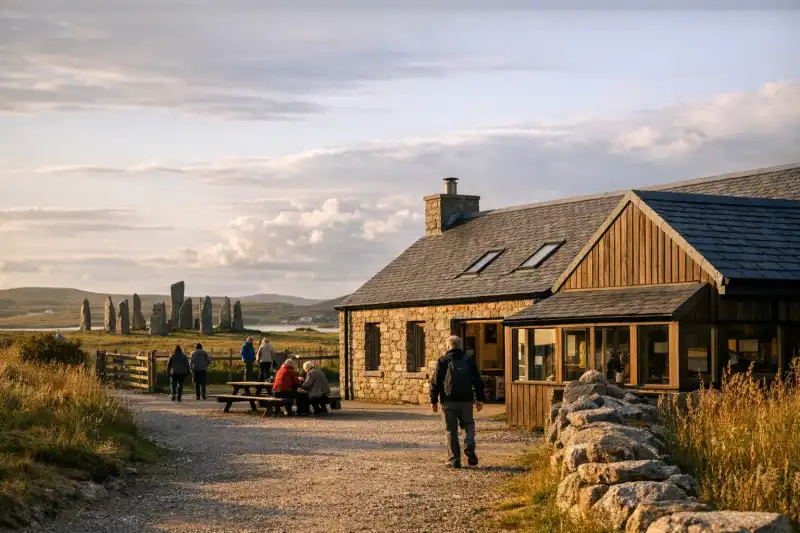
Calanais Visitor Centre
Neolithic ScotlandGateway to the famous Calanais standing stones on the Isle of Lewis in the United Kingdom.
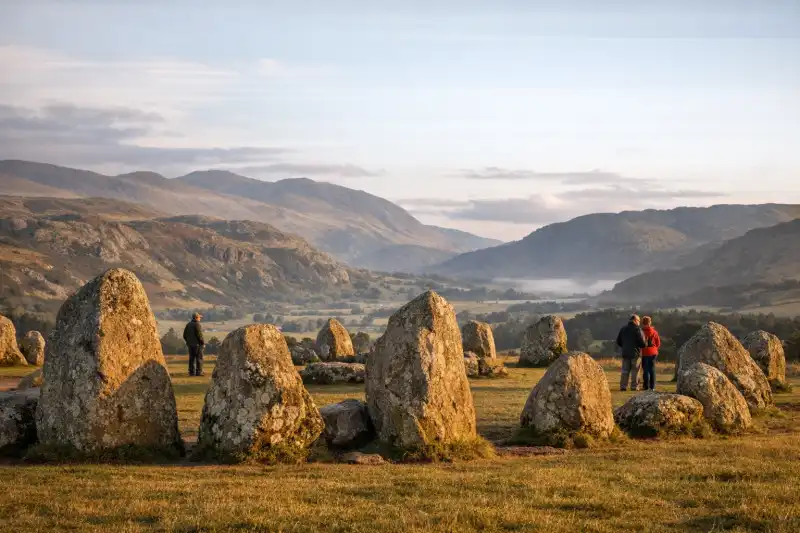
Castlerigg Stone Circle
Neolithic BritainAncient stone circle near Keswick in the United Kingdom, famed for dramatic mountain views and one o...
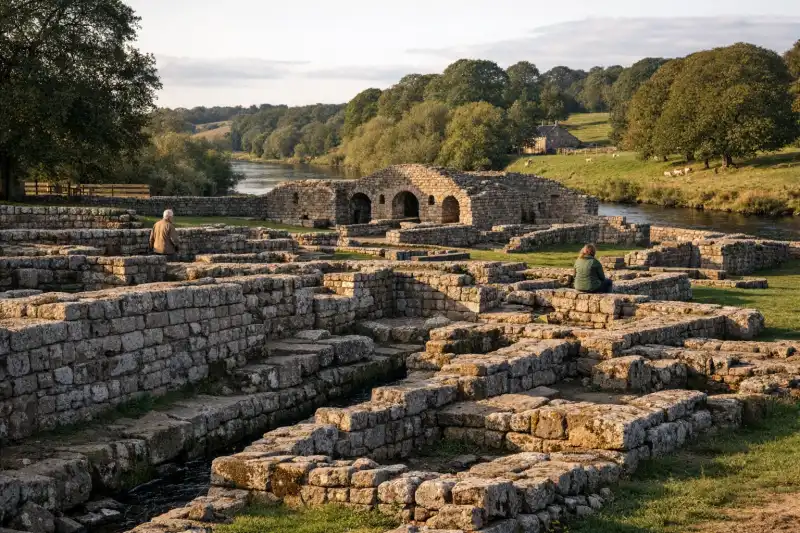
Chesters Roman Fort
RomanExplore Chesters Roman Fort in the United Kingdom, a well-preserved cavalry fort on Hadrian’s Wall w...