Quick Info
At a glance
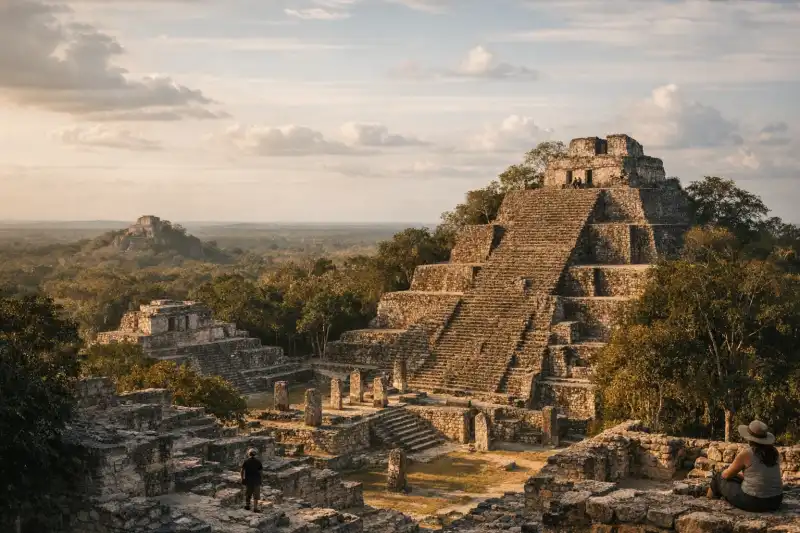
Calakmul, Mexico, rises from the forests of Campeche with a kind of quiet grandeur that feels very different from the country’s more famous archaeological destinations. Reaching it requires intention: long roads, a deep green biosphere reserve, and a sense that you are traveling not only across distance but also back into the world of the ancient Maya. That remoteness is part of its power. Here, the trees seem to guard the remains of one of the greatest cities of the Classic Maya era, and the first sight of massive pyramids lifting above the canopy can feel almost unreal.
Unlike sites framed by modern towns or tourist boulevards, Calakmul still belongs partly to the jungle. Howler monkeys call from the branches, ocellated turkeys cross the paths, and the heat hangs over the stone plazas in waves. The city once rivaled Tikal for regional dominance and stood at the center of a far-reaching political network. Today, it offers a different kind of prestige: fewer crowds, wider silence, and a remarkable sense of scale. Its great structures are not packed tightly together for easy viewing. Instead, they unfold gradually through the forest, encouraging visitors to imagine the city as a living landscape rather than a collection of isolated monuments. For travelers interested in the ancient Maya, Calakmul is one of Mexico’s most rewarding destinations: monumental, atmospheric, and still deeply connected to the environment that helped shape its history.
History
Early settlement and the rise of a Maya center
Calakmul’s history stretches back to the Middle and Late Preclassic periods, with occupation beginning around the 6th century BCE and possibly earlier in the surrounding region. The fertile bajos, seasonal wetlands, and forest resources of this part of the Yucatán Peninsula supported the growth of communities that gradually developed into a major urban center. By the Late Preclassic, Calakmul was already becoming a place of ceremonial and political importance, with monumental construction projects signaling the rise of a powerful ruling elite.
Its ancient name is often linked to the Kaanul, or Snake Kingdom, one of the most influential dynasties in the Maya world. While scholars continue to refine the details of how the dynasty moved and ruled across the region, Calakmul became strongly associated with the Snake kings and with an ambitious strategy of alliance-making and political expansion. This was not a city that grew in isolation. From an early stage, it was plugged into larger networks of trade, diplomacy, and competition.
Calakmul at its peak
Between the 6th and 7th centuries CE, Calakmul reached the height of its power. This was the age in which it emerged as one of the great superpowers of the Maya lowlands. Its rulers cultivated ties with numerous subordinate or allied cities, extending influence across a broad swath of present-day southern Mexico, Guatemala, and Belize. In inscriptions and dynastic records from across the Maya world, Calakmul appears as a major player in the political struggles of the era.
Its most famous rivalry was with Tikal, the powerful city to the south in what is now Guatemala. The contest between these two centers shaped Classic Maya geopolitics for generations. Calakmul often pursued indirect methods of domination, supporting allies and undermining Tikal through a web of strategic relationships. One of its most celebrated rulers, Yuknoom Ch’een II, known as Yuknoom the Great, presided over a period of exceptional prestige in the 7th century CE. Under his rule and that of his successors, Calakmul likely reached its largest population and greatest monumental development.
This was a city of enormous scale. The urban core and broader settlement zone included thousands of structures, causeways, reservoirs, plazas, palaces, and pyramids. Water management was essential in an area without permanent rivers, and Calakmul’s engineered systems helped sustain a large population through seasonal cycles. The city’s architecture and carved monuments reflected a sophisticated court culture in which kingship, ritual, astronomy, and warfare all played central roles.
Decline in the Late Classic
Calakmul’s dominance did not last forever. In 695 CE, Tikal achieved a decisive victory over Calakmul, a turning point often seen as a major blow to the Snake Kingdom’s prestige. The political landscape of the Maya lowlands was constantly shifting, and defeats could weaken alliances that had taken generations to build. Although Calakmul continued to exist and remained important after this setback, its ability to command the region seems to have diminished.
During the 8th century CE, the city still produced monuments and maintained elite activity, but signs of broader instability appeared across the Maya world. Rivalries intensified, trade patterns changed, and environmental pressures may have compounded social stress. Like many large lowland Maya cities, Calakmul eventually experienced demographic decline and reduced monumental construction. By the Terminal Classic period, many of the systems that had sustained its political and ceremonial life were weakening.
Abandonment, rediscovery, and modern preservation
Over time, Calakmul was largely reclaimed by the forest. Unlike some sites that remained close to continuously occupied settlements, it disappeared from broader public awareness for centuries. Local knowledge persisted, but the city’s monumental scale was not widely documented until the 20th century. In the 1930s, biologist Cyrus Lundell reported the site more formally, and archaeological work expanded in later decades.
Modern research has revealed just how significant Calakmul was. Excavations, mapping, and epigraphic study have transformed understanding of Maya political history, especially the role of the Snake Kingdom. The site is now recognized as both an archaeological treasure and part of a major natural preserve. UNESCO has acknowledged this dual importance by inscribing the Ancient Maya City and Protected Tropical Forests of Calakmul as a World Heritage property. Today, preservation efforts aim to protect not only the ruins but also the surrounding ecosystem that gives Calakmul so much of its unique character.
Key Features
Calakmul’s most striking feature is its scale. This was one of the largest Maya cities ever built, and even a partial visit gives a sense of urban immensity. The archaeological zone accessible to travelers contains broad plazas, elevated causeways, residential mounds, temple platforms, and imposing pyramids spread across a forested landscape. Rather than presenting itself all at once, the site reveals its grandeur gradually. You walk beneath trees, pass low stone remains, and then suddenly emerge before a huge structure that dominates the clearing.
Among the most memorable monuments are Structures I and II, the great pyramids for which Calakmul is especially known. Structure II is one of the tallest Maya buildings in Mexico, a massive pyramid whose summit has long offered extraordinary views over the rainforest canopy when open to visitors. From above, the forest appears almost endless, and the tops of other ancient buildings can sometimes be seen rising like islands from the green. It is one of the rare places in the Maya world where the relationship between city and jungle becomes instantly visible from a single vantage point.
Structure I, though somewhat less massive, is also an impressive ceremonial pyramid. Together, these buildings frame the monumental heart of Calakmul and help visitors grasp the city’s ceremonial importance. Nearby plazas and platforms suggest the spaces where public rituals, dynastic performances, and elite gatherings once took place. Even where carving has weathered or architectural details have softened, the basic urban drama remains legible.
Another essential feature of Calakmul is its stelae. The site is famous for having a large number of carved stone monuments, many erected to commemorate rulers, ritual events, and political achievements. Some are heavily eroded due to the humid climate, but they remain crucial to understanding the city’s dynastic history. These monuments connect Calakmul to the wider world of Maya writing and royal propaganda, reminding visitors that this was not only a place of architecture but also a center of literacy, memory, and political messaging.
The surrounding environment is inseparable from the archaeological experience. Calakmul sits within the Calakmul Biosphere Reserve, one of the most important protected tropical forest areas in Mexico. Wildlife sightings are common enough to become part of the visit rather than a bonus. Spider monkeys, howler monkeys, deer, wild turkeys, and a remarkable variety of birds can appear along the access road or near the ruins. The reserve is also habitat for more elusive species including jaguars and pumas, though these are rarely seen. This ecological richness gives Calakmul a different feel from more urbanized heritage sites. The journey through the reserve prepares you to see the ruins not as isolated remnants but as part of a living landscape.
Calakmul’s infrastructure for water storage is another key, if less immediately visible, feature. Because the region lacks surface rivers, ancient residents depended on reservoirs and engineered water systems. These were essential to supporting a large population and sustaining agriculture and ritual life through the dry season. Understanding this hidden hydraulic landscape adds depth to a visit. The city’s survival was not simply a matter of political power or monumental ambition; it depended on careful environmental adaptation.
There is also an interpretive richness in Calakmul that appeals to visitors who enjoy archaeology beyond postcard views. Paths link different architectural groups, and the uneven distribution of structures helps communicate how Maya cities functioned as dispersed urban environments. Instead of a dense stone center surrounded by emptiness, Calakmul extended outward in a patterned but complex settlement zone. The site rewards slow walking, observation, and imagination. It is not just about seeing a famous pyramid. It is about sensing how an ancient metropolis occupied the forest around you.
Getting There
Reaching Calakmul takes more planning than visiting many other ancient sites in Mexico, but that is part of what keeps the experience special. The usual gateway is Xpujil, a small town in Campeche on Federal Highway 186. From Xpujil, the entrance turnoff to the Calakmul Biosphere Reserve is roughly 60 kilometers away, followed by an access road of about another 60 kilometers through the forest to the archaeological zone. In practice, the drive from Xpujil to the ruins usually takes 2 to 2.5 hours each way.
If you are driving, renting a car from Campeche, Chetumal, Mérida, or even Cancún can be the easiest option for flexibility. Fuel up in Xpujil, since services are limited inside the reserve. Shared transport is less predictable than at major tourist destinations, but local taxis and private drivers from Xpujil can arrange round-trip visits. Expect private transport to vary widely by season and negotiation, but a day trip by taxi or driver may cost roughly MXN 1,500 to 3,500 or more depending on vehicle size and waiting time.
Some travelers arrive by ADO or regional bus to Xpujil from Campeche, Bacalar, Chetumal, or Mérida, then overnight locally before visiting the site. Bus fares to Xpujil often range from about MXN 300 to 800 depending on route length and class. Guided tours, when available from Campeche or nearby towns, can simplify logistics and may include transport, site interpretation, and reserve fees. Bring cash for entry and incidental costs, as card payment options may be limited. Because distances are long and the reserve opens and closes on a schedule, it is wise to start early.
When to Visit
The best time to visit Calakmul is generally during the dry season, from about November to April, when roads are more reliable, trails are less muddy, and heat can be slightly easier to manage. Even then, midday temperatures can feel intense, especially on exposed stairways and plazas. Starting early in the morning gives you cooler conditions, softer light, and a better chance of seeing wildlife along the access road and around the ruins.
The rainy season, usually from May to October, transforms the forest into an even more lush and dramatic environment. This can be a beautiful time to experience the reserve, with vivid greenery and a stronger sense of tropical abundance. However, heavy rains may complicate travel, make paths slippery, and increase humidity significantly. Mosquitoes are also more active in wetter months, so insect repellent becomes especially important.
For many visitors, the shoulder months of November, February, and March offer a good balance of manageable weather and relatively smooth road conditions. Holiday periods can bring more domestic travelers, but Calakmul is seldom crowded compared with better-known Maya sites. Whatever the season, aim to avoid the hottest part of the day by entering early, carrying plenty of water, and pacing yourself. Because the site is so expansive and remote, weather matters more here than at heavily serviced destinations. A well-timed visit can make the difference between a demanding outing and an unforgettable one.
| Quick Facts | Details |
|---|---|
| Location | Calakmul Biosphere Reserve, Campeche, Mexico |
| Civilization | Maya |
| Main period | Preclassic to Late Classic |
| Founded | c. 6th century BCE |
| UNESCO status | Part of the Ancient Maya City and Protected Tropical Forests of Calakmul |
| Nearest town | Xpujil |
| Famous for | Snake Kingdom, giant pyramids, forest setting, wildlife |
| Best visit length | Half day to full day |
| Typical access | By road via Xpujil and the reserve entrance |
| Travel style | Best for independent travelers, history enthusiasts, and nature lovers |
Calakmul is not the easiest Maya site to visit, and that is exactly why it leaves such a strong impression. It asks for time, patience, and curiosity, then rewards all three. Few places in Mexico combine monumental archaeology and intact tropical forest so completely. The result is a destination where history does not feel detached from the landscape. Instead, the city and the jungle seem to speak to each other across the centuries.
For travelers willing to go beyond the standard route, Calakmul offers one of the deepest encounters with the ancient Maya anywhere in the Americas. Its towering temples, dynastic history, and immense silence create an experience that lingers long after the journey back to Xpujil. More than a ruin in the forest, Calakmul is the memory of a superpower still rising above the trees.
Guided tours: worth it?
Self-guided works here, but a guide can add real value if you want the ruins explained as a living place rather than just a sequence of monuments.
Best for
- First-time visitors who want context, not just photos
- Short visits where a planned route saves time
When to go self-guided
Go independently if you prefer setting your own pace, reading as you go, and checking official hours or ticket rules directly before you arrive.
What I’d avoid
Skip paid tours that bundle unrelated stops you do not actually want. The best option should either save meaningful planning time or add historical context you would miss on your own.
Calakmul tours
Useful when: you want to compare guided formats before deciding
Calakmul from Campeche
Useful when: transport or pickup logistics matter
Calakmul from Xpujil
Useful when: transport or pickup logistics matter
Some tour links are affiliate links, which may earn Ancient Travel a small commission at no extra cost to you. I try to surface options that make practical sense for the site—not just anything bookable.
Frequently Asked Questions
Where is Calakmul located?
Calakmul is in the state of Campeche in southeastern Mexico, inside the Calakmul Biosphere Reserve near the border with Guatemala.
How do you get to Calakmul?
Most visitors reach Calakmul by road from Xpujil, taking the highway turnoff and then a long access road through the reserve to the archaeological zone.
Is Calakmul worth visiting?
Yes. Calakmul is one of the largest and most impressive Maya cities, and its remote jungle setting makes it very different from more heavily visited sites.
How much time do you need at Calakmul?
Plan at least half a day at the site, and a full day is better if you want time for the museum, viewpoints, and a slower walk through the forested ruins.
Can you climb the pyramids at Calakmul?
Access rules can change, but some structures have at times allowed climbing. Always follow current site regulations and posted safety guidance when you visit.
What should I bring to Calakmul?
Bring water, sun protection, insect repellent, sturdy shoes, cash for fees, and snacks, since services are limited once you enter the reserve.
Nearby Ancient Sites
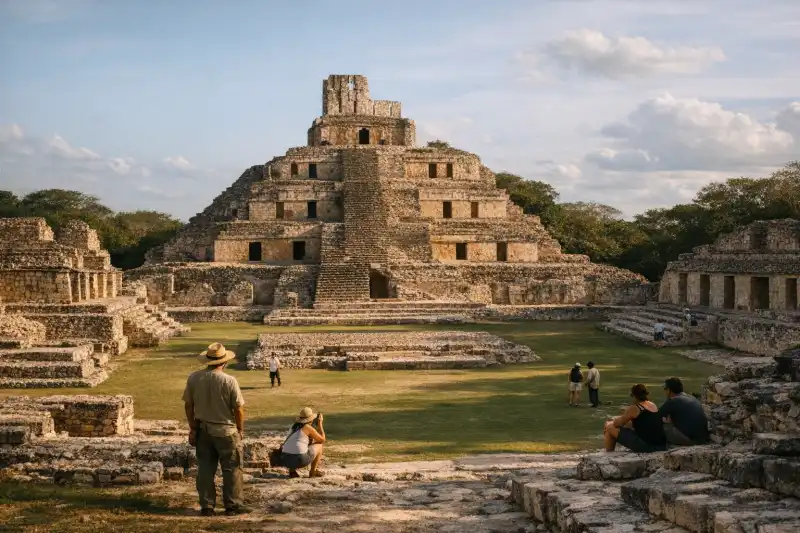
Edzná
MayaExplore Edzná, a striking ancient Maya city in Campeche, Mexico, known for its grand plazas, elevate...
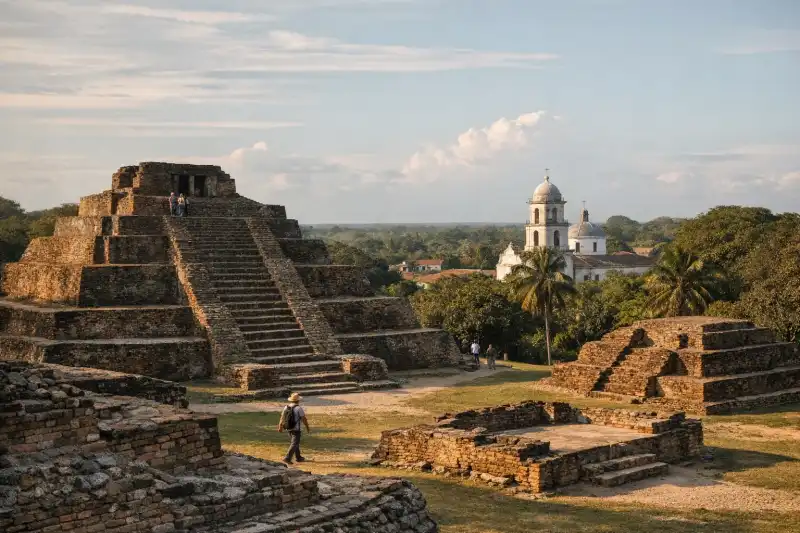
Comalcalco
MayaExplore Comalcalco, Mexico's distinctive Maya city built with brick, carved stucco, and rich Gulf Co...
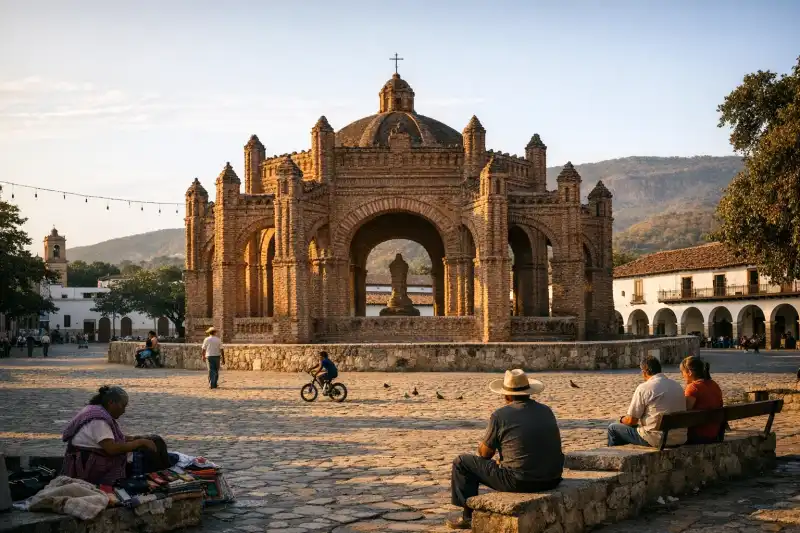
Chiapa de Corzo
Zoque and earlier Mesoamerican culturesExplore Chiapa de Corzo, Mexico, a major early Mesoamerican site beside the Grijalva River in Chiapa...