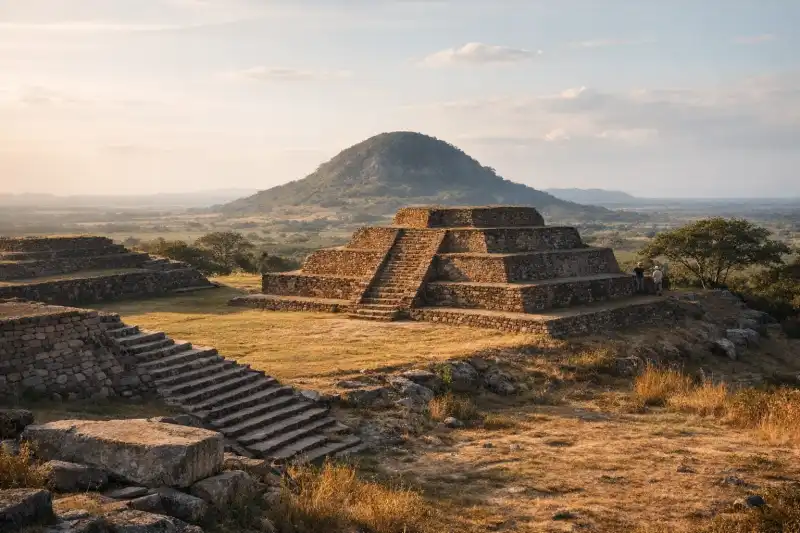
Quick Info
At a glance
Cerro de las Mesas in Mexico sits quietly in the green lowlands of Veracruz, far from the theatrical fame of the country’s biggest archaeological destinations, yet it rewards travelers with something rarer: a sense of discovery. In the humid plains of the Papaloapan Basin, where rivers shape the land and thick vegetation softens the edges of old ceremonial spaces, this ancient center once connected communities, beliefs, and trade networks across the Gulf Coast. Today, the site feels subdued rather than monumental, but that is part of its appeal. Instead of arriving to towering pyramids and crowds, visitors encounter earthen platforms, traces of ceremonial planning, and a landscape that still hints at the rhythms of ancient settlement.
For anyone interested in the longer story of Mesoamerica, Cerro de las Mesas is important because it bridges eras. It preserves evidence from the centuries after the great Olmec centers had faded and before later regional powers reshaped the Gulf Coast. Archaeologists have found monuments, offerings, and ceramics here that reveal a place deeply engaged with broader cultural currents while maintaining its own local identity. Visiting is less about checking off a famous landmark and more about standing in a place where Mexico’s ancient past unfolded over many generations. The atmosphere is rural, the history layered, and the experience especially rewarding for travelers who value context over spectacle.
History
Early settlement and regional roots
Cerro de las Mesas developed in one of the most historically rich regions of ancient Mexico. Veracruz had already been home to major ceremonial centers long before this site reached prominence. The Gulf Coast lowlands nurtured some of Mesoamerica’s earliest complex societies, and the legacy of Olmec interaction remained visible in settlement patterns, trade, and religious symbolism. By around the Late Formative period, communities in the lower Papaloapan Basin were taking advantage of fertile floodplains, river transport routes, and access to exchange networks linking the Gulf Coast with central and southern Mesoamerica.
The earliest occupation at Cerro de las Mesas likely began around 600 BCE, though the site became especially important later. Its location was strategic rather than dramatic. Instead of occupying a defensible mountain peak, it sat within an economically productive landscape shaped by waterways and agricultural opportunity. Settlements in this region could flourish by controlling movement, exchange, and ritual authority. Archaeological evidence suggests that the area developed gradually, building on older local traditions while participating in larger transformations happening across Mesoamerica.
Rise during the Epi-Olmec era
Cerro de las Mesas became particularly significant during the period often called Epi-Olmec, roughly from the final centuries BCE into the early centuries CE. This era followed the decline of the great Olmec centers such as San Lorenzo and La Venta and saw new political and ceremonial centers emerge across Veracruz. Rather than representing a cultural collapse, the transition reflects adaptation and continuity. Cerro de las Mesas appears to have been one of the places where these new regional expressions took shape.
During this time, the site likely functioned as a ceremonial and administrative center for surrounding communities. The construction of mounds and plazas suggests planned public space, and the discovery of carved monuments points to elite ritual activity. Some finds from the wider region are associated with the development of writing, calendrical notation, and evolving iconography in Gulf Coast societies, and Cerro de las Mesas belongs to this intellectually dynamic world. Even when direct inscriptions are limited, the material culture indicates a society participating in complex forms of authority and symbolism.
Its name, which means “Hill of the Tables” or “Hill of the Plateaus,” refers to the flat-topped rises that characterize the area. These elevated spaces likely influenced how the settlement was organized and how ceremonial architecture interacted with the surrounding terrain.
Peak occupation in the Classic period
The site reached its height during the Classic period, especially between about 300 and 600 CE. This was a time when many Mesoamerican centers intensified long-distance interaction, and Cerro de las Mesas seems to have prospered within these networks. Excavations uncovered rich offerings and a substantial quantity of ceramics, some local and some reflecting wider stylistic influences. The material record suggests social differentiation, ceremonial investment, and ties with neighboring regions.
Archaeologists have long noted the importance of ceramic assemblages from Cerro de las Mesas. Burial offerings and ritual deposits reveal not only craftsmanship but also patterns of belief and prestige. Figurines, vessels, and ceremonial objects indicate that the site was integrated into a broad cultural conversation extending across the Gulf Coast and into highland and southern zones. Rather than being isolated, it was an active participant in exchange and symbolic life.
Monuments from the site also show that public display mattered. Stone sculptures and carved stelae served as markers of power, memory, and sacred order. Although the site does not preserve the same imposing stone architecture as some better-known centers, its artifacts reveal a society with strong ceremonial traditions and regional standing.
Transformation and decline
Like many ancient Mesoamerican centers, Cerro de las Mesas did not vanish overnight. Its importance shifted over time. From around the Late Classic into the Postclassic period, patterns of settlement and power in Veracruz changed, with new centers rising and trade routes evolving. Environmental pressures, political reorganization, and the gradual redirection of influence likely all contributed to the site’s decline.
Occupation appears to have continued in some form for centuries, but the site eventually lost the central role it once held. Earth-and-stone constructions eroded, vegetation reclaimed the ceremonial spaces, and the memory of the ancient center became embedded in the landscape itself.
Modern archaeological work in the twentieth century brought Cerro de las Mesas back into scholarly view. Excavations drew attention to its importance for understanding Veracruz chronology, Gulf Coast art, and the transition from Olmec legacies to later regional cultures. Today, even if it remains less famous than other Mexican ruins, it is recognized as a key site for tracing the long and interconnected history of eastern Mesoamerica.
Key Features
What makes Cerro de las Mesas compelling is not a single iconic pyramid but the combination of landscape, architecture, and archaeological richness. The site is defined by low mounds and raised platforms that once framed plazas and ceremonial areas. These earthen forms may seem modest at first glance, especially to travelers expecting dramatic vertical construction, yet they reveal a carefully organized settlement. Their arrangement points to public planning, communal ritual, and the presence of elites who shaped sacred and political space.
The surrounding environment is part of the site’s character. Veracruz’s tropical lowlands create a setting where ancient architecture often appears softened by grass, shrubs, and seasonal moisture. This gives Cerro de las Mesas a different visual impact from dry highland ruins. Instead of stark outlines against a desert sky, the site feels absorbed into living terrain. For visitors, this can make the experience more atmospheric and more dependent on imagination. The land itself becomes evidence, carrying the imprint of old construction beneath its green surface.
Another major feature is the site’s archaeological importance as a source of objects rather than surviving standing architecture alone. Cerro de las Mesas has yielded notable ceramics, figurines, jade items, and ritual offerings. Many of these finds are now studied in museums and academic collections, but their significance remains tied to the place where they were discovered. They show that this was a ceremonial center with access to valued goods and skilled artisans. The ceramics are especially important because they help scholars establish chronology and understand changing Gulf Coast styles over time.
Stone monuments and sculptural remains also distinguish the site. Although not all are visible in situ today, Cerro de las Mesas is associated with carved stelae and sculptures that reflect local authority and sacred symbolism. Such monuments often served multiple purposes: they commemorated rulers or ritual acts, marked calendrical significance, and translated belief into durable public form. Their presence confirms that the site was more than a village with ceremonial mounds; it was a place where power was displayed and remembered.
The broader settlement context is another key feature. Cerro de las Mesas did not exist in isolation but as part of a network of Gulf Coast communities. Its location in the Papaloapan Basin suggests ties to riverine movement, agriculture, and exchange. Travelers who look beyond the visible structures can appreciate how the site functioned in relation to fertile land, nearby settlements, and communication corridors linking Veracruz to other parts of Mesoamerica.
Finally, one of the site’s greatest strengths for modern visitors is its relative quiet. Because it is less commercialized than major archaeological parks, the experience can feel more reflective. You are not only observing ancient remains but also engaging with the layered process of archaeological interpretation. Cerro de las Mesas invites questions: how much of the original ceremonial center lies beneath the earth, how did local rulers express identity after the Olmec era, and how did this community connect to the wider world? For historically minded travelers, that sense of partial revelation is part of the site’s enduring fascination.
Getting There
Cerro de las Mesas is usually reached from Veracruz state’s larger transport hubs, with Veracruz City serving as the most practical base for many travelers. From Veracruz City, the journey by car generally takes around 2.5 to 3.5 hours depending on road conditions and your exact route. A rental car is the easiest option, with daily rental rates often starting around MXN 700 to 1,400 before insurance, while fuel for a round trip may add roughly MXN 500 to 900.
Public transport is possible but less direct. Travelers can take an ADO or regional bus toward towns in southern Veracruz, then continue by local taxi or colectivo toward the area near the site. Intercity bus fares from Veracruz City often range from about MXN 250 to 500 one way depending on class and route. The final taxi segment can vary widely, but budgeting MXN 150 to 400 each way is sensible for shorter local transfers. If you are not confident with connections, arranging a driver for the day can be worthwhile; private transport from Veracruz or nearby towns may cost approximately MXN 2,500 to 5,000 depending on vehicle and itinerary.
Road access can be affected by weather, especially in the rainy season, so check local conditions before departing. Bring cash, as card acceptance is unreliable in smaller communities. Because site facilities may be limited, carry water, snacks, insect repellent, and sun protection. If you plan to combine Cerro de las Mesas with other heritage stops in Veracruz, starting early is the best way to avoid midday heat and leave time for slower rural travel.
When to Visit
The best time to visit Cerro de las Mesas is generally during the drier season, from November through April. These months usually bring more manageable humidity, firmer ground, and clearer conditions for walking around the site. Daytime temperatures are still warm, often ranging from about 24°C to 32°C, but the experience is usually more comfortable than in the wettest part of the year. Mornings are especially pleasant and also offer softer light for photography.
From May to October, the rainy season can make travel more unpredictable. Showers may be brief, but heavy rain can leave paths muddy and increase insects significantly. Humidity rises, vegetation thickens, and road conditions in rural areas may worsen. That said, the landscape is at its greenest during this period, which can make the setting feel lush and dramatic. If you visit in summer, carry waterproof protection for bags and wear shoes that can handle wet ground.
If your priority is easier logistics and comfort, aim for late autumn or winter. If your priority is atmosphere and green scenery, the early rainy season can be appealing, provided you prepare well. Weekdays are often quieter than weekends, and arriving early helps avoid both heat and any afternoon weather shifts. Because this is not one of Mexico’s most heavily developed archaeological attractions, seasonal planning matters more than at larger sites with extensive infrastructure. A little preparation can make the difference between a rushed stop and a rewarding, unhurried visit.
| Quick Facts | Details |
|---|---|
| Location | Veracruz, Mexico |
| Cultural affiliation | Epi-Olmec and Classic Veracruz traditions |
| Main period of importance | c. 300 BCE to 600 CE, with longer occupation |
| Setting | Papaloapan Basin lowlands |
| Best base | Veracruz City or towns in southern Veracruz |
| Typical visit length | 1.5 to 3 hours |
| Best season | November to April |
| Access style | Best reached by car or pre-arranged transport |
| Why it matters | Key Gulf Coast site linking post-Olmec and Classic-era developments |
Cerro de las Mesas is a destination for travelers who enjoy archaeology as a process of reading landscapes rather than simply admiring monuments. It may not offer the instantly recognizable silhouette of Mexico’s most photographed ruins, but it provides something deeper: a chance to encounter a site that helps explain how Gulf Coast societies evolved over many centuries. In its mounds, sculptures, and artifact record, the ancient center preserves a story of continuity, experimentation, and connection. For visitors willing to look closely, this quiet corner of Veracruz opens onto one of the most important long-term cultural histories in Mesoamerica.
Guided tours: worth it?
Most travelers can visit Cerro de las Mesas independently. Compare a tour only if you want a tighter history-focused visit, easier logistics, or a guide who can answer questions on the spot.
Best for
- Short visits where a planned route saves time
When to go self-guided
Go independently if you prefer setting your own pace, reading as you go, and checking official hours or ticket rules directly before you arrive.
What I’d avoid
Skip paid tours that bundle unrelated stops you do not actually want. The best option should either save meaningful planning time or add historical context you would miss on your own.
Veracruz Archaeology Tours
Useful when: you want to compare guided formats before deciding
Veracruz City Day Tours
Useful when: you want to compare guided formats before deciding
Papaloapan Basin Cultural Tours
Useful when: you want to compare guided formats before deciding
Some tour links are affiliate links, which may earn Ancient Travel a small commission at no extra cost to you. I try to surface options that make practical sense for the site—not just anything bookable.
Frequently Asked Questions
Where is Cerro de las Mesas located?
Cerro de las Mesas is in the state of Veracruz, Mexico, in the lower Papaloapan Basin near the modern town of Tres Zapotes and within reach of Veracruz City by road.
What is Cerro de las Mesas known for?
The site is known for its long occupation, Gulf Coast ceremonial architecture, carved monuments, and rich archaeological finds including ceramics and offerings that show connections across Mesoamerica.
Can you visit Cerro de las Mesas independently?
Yes, most travelers visit independently by car or arranged transport, though conditions can vary and it is wise to confirm local access and guidance before setting out.
How much time should I plan for a visit?
Allow around 1.5 to 3 hours on site, plus travel time, depending on your interest in archaeology and whether you combine it with other Veracruz heritage stops.
What is the best time of year to visit Cerro de las Mesas?
The driest and most comfortable months are generally from November to April, when temperatures are warm but rain and muddy ground are usually less disruptive.
Are there facilities at Cerro de las Mesas?
Facilities are limited compared with major Mexican archaeological parks, so bring water, sun protection, cash for local transport needs, and check current conditions in advance.
Nearby Ancient Sites
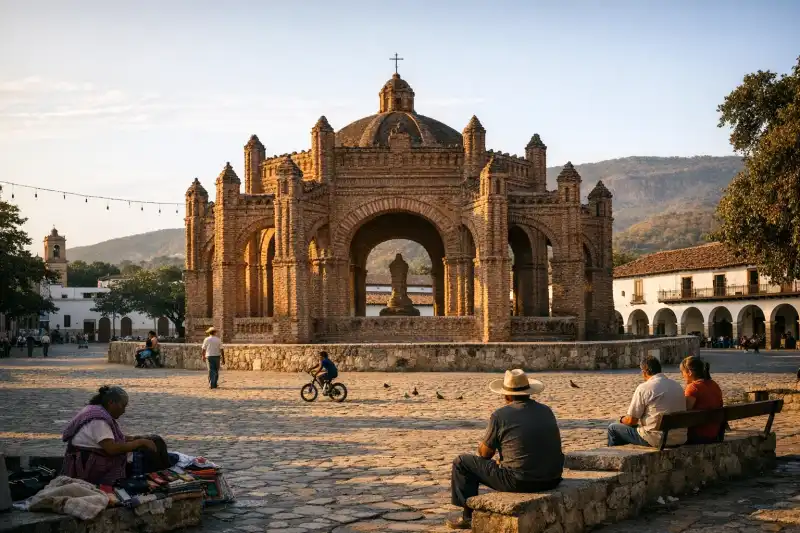
Chiapa de Corzo
Zoque and earlier Mesoamerican culturesExplore Chiapa de Corzo, Mexico, a major early Mesoamerican site beside the Grijalva River in Chiapa...
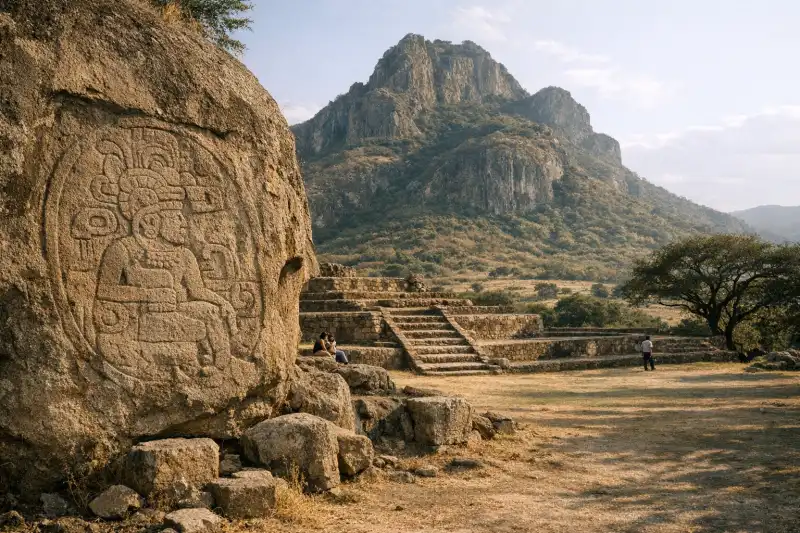
Chalcatzingo
Preclassic Mesoamerican / Olmec-influencedChalcatzingo is a striking Olmec-era ceremonial site in Mexico known for carved reliefs, mountain sc...
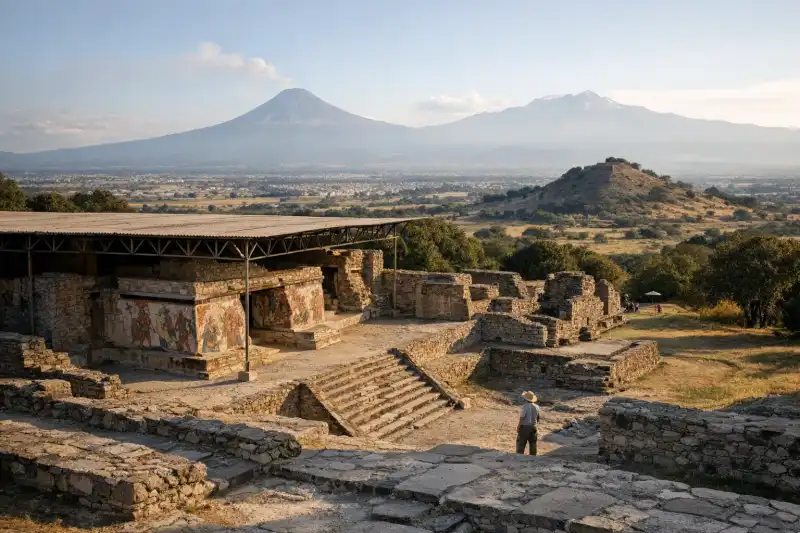
Cacaxtla
Olmeca-Xicalanca and broader Epiclassic Mesoamerican traditionsExplore Cacaxtla in Mexico, a hilltop archaeological site famed for vivid murals and Epiclassic hist...