Quick Info
At a glance
Chalcatzingo, in Mexico, is one of those ancient places that feels both intimate and monumental at the same time. Set in the fertile valleys of Morelos and watched over by steep, memorable hills, the site does not overwhelm visitors with gigantic pyramids or sprawling avenues. Instead, it reveals its significance gradually: in carefully shaped terraces, in plazas that once hosted ritual and community life, and above all in the carved stone monuments that connect Chalcatzingo to the wider story of early Mesoamerica. The landscape is a major part of the experience. Rising behind the settlement, the mountain forms appear so dramatic and so symbolically charged that it is easy to understand why ancient inhabitants treated this place as special.
For travelers interested in the earliest chapters of Mexican history, Chalcatzingo offers something unusually valuable. It is one of the most important Formative-period sites in central Mexico and one of the clearest examples of interaction between local societies and the artistic and religious world often associated with the Olmec. That connection can be seen in the style of several relief carvings, but the site is not merely an outpost of another culture. Chalcatzingo had its own identity, shaped by local traditions, agricultural wealth, and a ceremonial setting deeply tied to the surrounding hills. Visiting today means walking through a place where religion, trade, landscape, and artistic innovation came together long before the rise of the better-known Classic and Postclassic civilizations of Mexico.
History
Early settlement and the rise of the community
The valley around Chalcatzingo was occupied long before the site reached its peak. Its setting was highly favorable for early agricultural communities: reliable water, arable land, and natural routes linking the highlands, Gulf Coast, and southern regions. By the Early Formative period, small farming settlements had already appeared in the wider area. As these communities grew more complex, Chalcatzingo emerged as a focal point, probably because of both its productive environment and the sacred power ancient people attached to the nearby hills.
By roughly the second millennium BCE, the site was beginning to develop into something more than a village. Archaeologists have identified evidence of planned construction, ceremonial activity, and a degree of social organization beyond what would be expected in a simple rural settlement. The inhabitants reshaped the land into terraces and formal spaces, indicating coordinated labor and an emerging elite or ritual leadership class. This was the era in which many parts of Mesoamerica were undergoing profound change, with permanent villages expanding, long-distance exchange intensifying, and social hierarchies becoming more visible.
Contact with the Olmec world
Chalcatzingo is most famous for the period when it seems to have participated in the broader cultural sphere linked to the Olmec, the influential civilization centered on the Gulf Coast during the Formative era. Between about 700 and 500 BCE, the site reached its greatest florescence. During this time, artisans at Chalcatzingo produced—or commissioned—stone reliefs whose iconography strongly recalls Gulf Coast Olmec art: supernatural beings, elite figures, stylized jaguar imagery, and motifs related to rain, caves, and rulership.
This does not necessarily mean Chalcatzingo was politically controlled by an Olmec capital. More likely, it was part of an exchange network through which ideas, prestige goods, and religious symbols circulated among different regions. Chalcatzingo’s leaders may have adopted elements of Olmec visual language because those forms carried status and sacred authority. At the same time, the reliefs are deeply anchored in the local landscape. Several appear to reference mountain caves, clouds, fertility, and seasonal rains, all of which would have mattered enormously in an agricultural society.
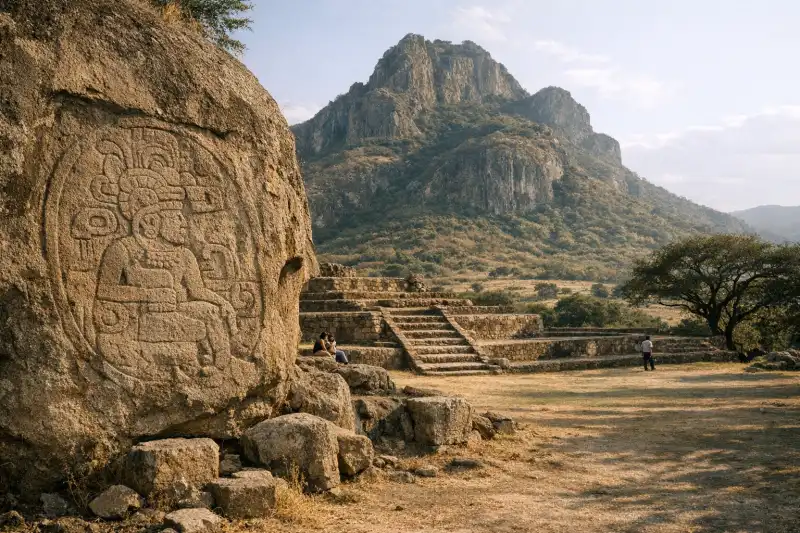
The best-known monument, often called El Rey, shows a seated figure within a cave-like niche, surrounded by curling motifs widely interpreted as clouds, speech scrolls, wind, or rain. Whether this image depicts a ruler, deity, shaman, or a combination of roles remains debated, but its placement and symbolism leave little doubt that Chalcatzingo’s ceremonial identity was tied to the mountain behind it. Rather than copying foreign models mechanically, the site’s artists transformed a pan-regional style into something that served local ritual life.
Peak ceremonial importance
At its height, Chalcatzingo included public plazas, platforms, terraces, elite residences, and ritual spaces integrated into the lower slopes and open valley floor. The settlement may have hosted several thousand inhabitants in its broader community, though estimates vary. What is clear is that it was one of the major centers of central Mexico during the Middle Formative period.
Ceremonial architecture and carved monuments suggest a society in which political authority and sacred performance were closely linked. Public spaces likely hosted gatherings tied to agricultural cycles, ancestor veneration, and displays of leadership. The surrounding hills were not simply scenery; they formed part of the ritual geography. In Mesoamerican thought, mountains often symbolized sources of water, fertility, and cosmic power. Chalcatzingo’s planners appear to have made that symbolism visible in stone.
Decline and rediscovery
After about 500 BCE, Chalcatzingo declined in importance. The reasons are not fully certain. Shifting trade routes, changing political relationships, environmental stress, or transformations in regional power may all have contributed. As newer centers rose elsewhere in central Mexico, Chalcatzingo lost the prominence it had once held. The settlement did not become a famous imperial capital in later centuries, which may be one reason it remained comparatively little known outside specialist circles for so long.
Modern archaeological interest brought the site back into wider attention during the 20th century. Excavations clarified the layout of terraces and plazas, while the carved monuments established Chalcatzingo as one of the most important places for studying early Mesoamerican symbolism outside the Gulf Coast heartland. Today it stands as crucial evidence that Formative-era Mexico was already interconnected, experimental, and culturally sophisticated. For historians and visitors alike, Chalcatzingo helps bridge the gap between small early farming villages and the grand urban civilizations that would later define ancient Mexico.
Key Features
What makes Chalcatzingo memorable is the way archaeology and landscape seem inseparable. The first feature most visitors notice is the dramatic natural setting. Two prominent hills rise behind the site, creating a visual backdrop unlike the flat settings of many ceremonial centers. These formations likely shaped the spiritual identity of the settlement from the beginning. Ancient builders positioned terraces, plazas, and monuments in ways that seem to converse with the mountain, as if architecture were extending the sacred topography rather than replacing it.
The carved stone reliefs are the site’s greatest artistic treasure. These monuments, many cut directly into large boulders or rock faces, are the reason Chalcatzingo occupies such an important place in discussions of early Mesoamerican art. The most famous relief, commonly known as Monument 1 or El Rey, is especially compelling in person. The seated figure appears sheltered within a niche that resembles a cave or mountain opening, a powerful symbol in Mesoamerican cosmology. Flowing motifs around the figure suggest rain, wind, or speech, and the image as a whole evokes rulership fused with sacred mediation. Even for visitors without specialist knowledge, the monument feels ceremonial and purposeful.
Other carvings include feline imagery, processional scenes, and supernatural subjects that hint at mythological narratives now largely lost. Some depict human figures in dynamic movement or interaction, suggesting ritual action rather than simple portraiture. Together they reveal a society that invested heavily in visual symbolism. The reliefs are not numerous on the scale of later Maya sculpture, but they are unusually important because of their age and because they preserve ideas from a formative stage in Mesoamerican religion and authority.
The architectural remains of Chalcatzingo are more subtle than the carvings but no less significant. The site includes platforms, terraces, and open plazas arranged over a broad area. Rather than one towering central pyramid, visitors encounter a carefully organized ceremonial landscape. This layout encourages a slower kind of exploration. As you move through the site, elevation changes create shifting views of the valley and mountains, which may well have been part of the intended ancient experience.
Residential areas and elite compounds identified by archaeologists also add depth to the visit. They show that Chalcatzingo was not simply a ritual stage set but a lived community with social distinctions and organized planning. The settlement’s inhabitants cultivated nearby fields, managed exchange connections, and participated in ceremonies that reinforced status and shared belief. Seeing the remains of these areas helps place the famous reliefs within an everyday social world.
One of the understated pleasures of Chalcatzingo is that it often feels quieter than Mexico’s most famous archaeological zones. That quiet allows visitors to pay attention to textures: the shape of the terraces, the volcanic stone underfoot, the changing light on the hillside, and the relationship between carved monument and natural outcrop. The site’s scale makes it approachable, but its symbolism makes it intellectually rich. It is a place where the earliest ceremonial traditions of Mesoamerica can still be sensed in the physical arrangement of land, art, and open sky.
If a local museum or interpretive area is open during your visit, it is worth spending time there. Smaller site museums in Mexico often provide helpful context, including maps, chronology, and reproductions or explanations of key monuments. At Chalcatzingo, that added interpretation can be especially useful because much of the site’s significance lies in iconography and ritual landscape rather than in monumental architecture alone. Understanding what you are looking at transforms the visit from a walk among ancient ruins into an encounter with one of the foundational sacred geographies of ancient central Mexico.
Getting There
Chalcatzingo is most easily reached by road, and a rental car is generally the simplest option. From Mexico City, the drive usually takes around 2.5 to 3.5 hours depending on traffic and your route. Tolls on major highways can add roughly MXN 250 to 500 each way, and fuel costs vary with vehicle type and current prices. From Cuernavaca, the trip is shorter, often around 1.5 to 2 hours. Driving gives you flexibility, which is helpful because public transport to smaller archaeological sites in Morelos can involve multiple connections.
If you prefer buses, start by taking a long-distance bus from Mexico City to Cuautla or Cuernavaca. A one-way ticket from Mexico City to Cuautla often falls in the MXN 180 to 350 range, depending on the service class and departure point. From Cuautla, you may need a regional bus, colectivo, or taxi toward Jantetelco and then onward to the archaeological zone. Local taxi fares from nearby towns can vary, but budgeting MXN 150 to 400 for the final leg is sensible depending on distance and whether you negotiate a round trip with waiting time.
Organized tours are less common than for larger sites, but private drivers or custom archaeology day trips from Mexico City or Cuernavaca may be available. These typically cost more, yet they can be worthwhile if you want a smoother visit with local context and no transport logistics. Whatever method you choose, check opening days and hours in advance, bring cash for smaller local services, and carry water since amenities around the site may be limited compared with major tourist destinations.
When to Visit
The best time to visit Chalcatzingo is usually during the dry season, roughly from November to April. During these months, roads are generally easier to navigate, walking paths are less muddy, and the site’s relief carvings are easier to appreciate in clear light. Temperatures can still be warm, especially around midday, but mornings are often very pleasant for exploring. If you want the most comfortable experience, arrive early when the valley is cooler and the sun is lower.
The hotter months of late spring can make a midday visit tiring, particularly because shade may be limited across parts of the archaeological area. If you travel in March, April, or May, bring a hat, sunscreen, and more water than you think you will need. Heat tends to be the main challenge rather than crowds, since Chalcatzingo remains comparatively peaceful even in busier travel periods.
The rainy season, typically from May or June into October, brings greener scenery and a more dramatic mountain backdrop. For photographers, this can be rewarding: clouds gathering around the hills can make the site’s sacred landscape feel especially vivid. The trade-off is that afternoon showers are common, trails may be slippery, and transport can be slightly less predictable on rural roads. If visiting in the rainy season, morning is the safest bet.
Weekdays are often preferable if you want a quieter atmosphere, though Chalcatzingo is not usually overcrowded even on weekends. If your interests are historical and contemplative rather than checklist-driven, the site rewards unhurried travel. Give yourself enough time for changing weather, slow observation, and moments simply spent looking from terrace to hill, where much of Chalcatzingo’s enduring power still resides.
| Quick Facts | Details |
|---|---|
| Location | Morelos, Mexico, near Jantetelco |
| Cultural significance | Major Formative-period ceremonial center with Olmec-influenced art |
| Best known for | Rock reliefs, sacred mountain setting, early Mesoamerican ritual landscape |
| Peak occupation | c. 700-500 BCE |
| Ideal visit length | 2-3 hours |
| Best season | Dry season, November to April |
| Nearest useful city | Cuautla |
| Access | Best by car; possible by bus plus taxi/collectivo |
| Terrain | Uneven paths, terraces, exposed sun |
| Recommended to bring | Water, sun protection, sturdy walking shoes |
Guided tours: worth it?
A guide can be genuinely useful at Chalcatzingo, especially if you want help with transport, timing, tickets, or understanding a large site without losing half the day to logistics.
Best for
- Travelers who want transport, timing, or entry logistics handled
- Short visits where a planned route saves time
When to go self-guided
Go independently if you already have transport and tickets sorted, enjoy moving at your own pace, and are comfortable checking the latest official rules before you arrive.
What I’d avoid
Skip paid tours that bundle unrelated stops you do not actually want. The best option should either save meaningful planning time or add historical context you would miss on your own.
Chalcatzingo and Morelos archaeology tours
Useful when: you want to compare guided formats before deciding
Day trips from Mexico City to Chalcatzingo
Useful when: transport or pickup logistics matter
Cuernavaca and ancient sites tours
Useful when: you want to compare guided formats before deciding
Some tour links are affiliate links, which may earn Ancient Travel a small commission at no extra cost to you. I try to surface options that make practical sense for the site—not just anything bookable.
Frequently Asked Questions
Where is Chalcatzingo located?
Chalcatzingo is in the state of Morelos, Mexico, near the modern town of Jantetelco and roughly southeast of Cuernavaca.
What is Chalcatzingo known for?
The site is best known for its Olmec-style rock carvings, early ceremonial architecture, and its dramatic setting beneath distinctive hills.
How much time do you need to visit Chalcatzingo?
Most visitors can explore the main terraces, monuments, and small museum area in 2 to 3 hours, though archaeology enthusiasts may want longer.
Can you visit Chalcatzingo on a day trip from Mexico City?
Yes. Chalcatzingo can be visited as a long day trip from Mexico City, especially by rental car or organized tour.
Is Chalcatzingo suitable for casual visitors?
Yes, but expect some walking on uneven ground and exposure to sun and heat. Comfortable shoes, water, and sun protection are recommended.
Why is Chalcatzingo important in Mesoamerican history?
Chalcatzingo provides evidence of interaction between central Mexican communities and the Gulf Coast Olmec world during the Formative period, making it key to understanding early Mesoamerican religion and art.
Nearby Ancient Sites
Cacaxtla
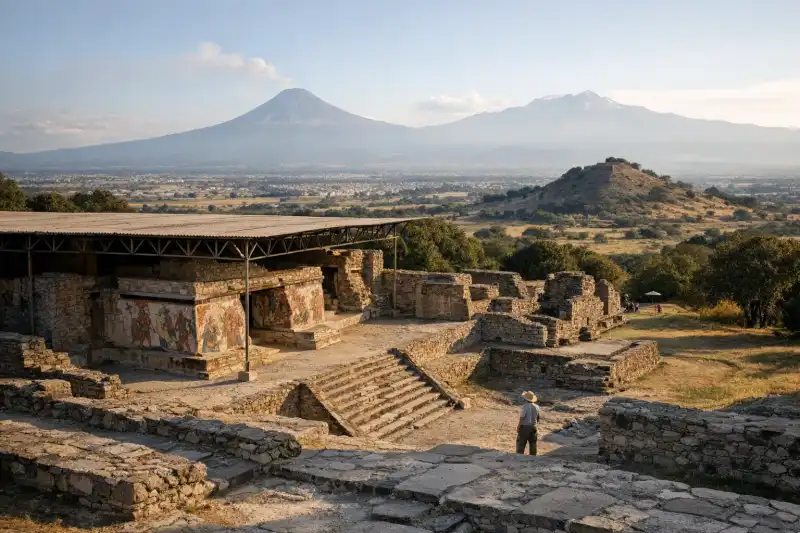
Olmeca-Xicalanca and broader Epiclassic Mesoamerican traditionsExplore Cacaxtla in Mexico, a hilltop archaeological site famed for vivid murals and Epiclassic hist...
Cantona
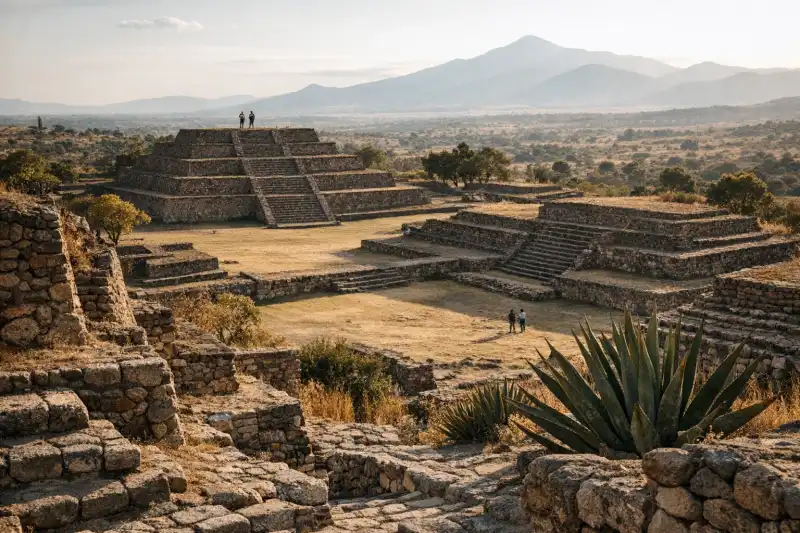
MesoamericanExplore Cantona, a vast fortified archaeological city in Puebla, Mexico, known for its stone roads, ...
Chiapa de Corzo
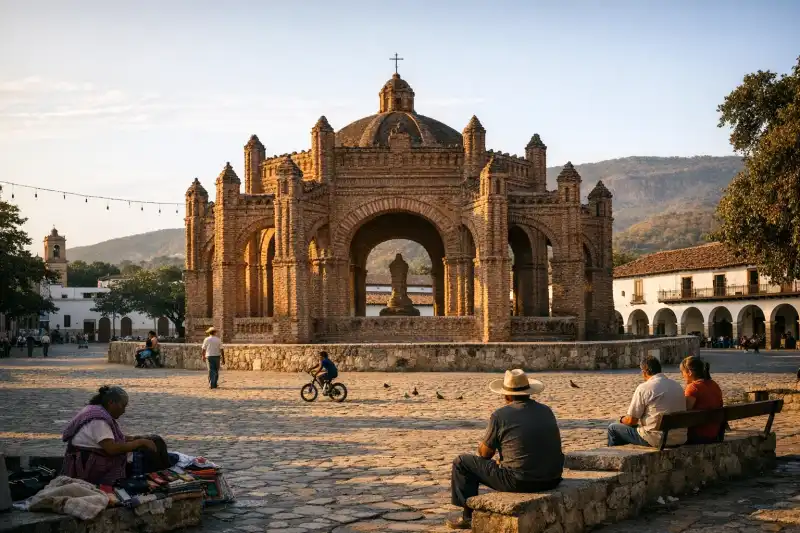
Zoque and earlier Mesoamerican culturesExplore Chiapa de Corzo, Mexico, a major early Mesoamerican site beside the Grijalva River in Chiapa...