Quick Info
Curated Experiences
Full Day Tour: Huacas del Sol y de la Luna, Chan Chan & Huanchaco
Chan Chan Private Tour from Trujillo with Expert Guide
Trujillo City Tour plus Chan Chan Half Day
Five kilometers from the Pacific Ocean on Peru’s northern coast, Chan Chan sprawls across 20 square kilometers of coastal desert as the largest pre-Columbian city ever built in the Americas. The Chimu Empire’s capital from around 900 CE until its conquest by the Incas in 1470, Chan Chan was not a single monument but an entire metropolitan landscape: nine immense royal palace compounds (ciudadelas), each a self-contained citadel of administrative halls, ceremonial courtyards, royal tombs, and reservoir gardens, surrounded by a vast web of workshops, residential quarters, and storehouses that housed and sustained a population estimated at 40,000 to 100,000 people.
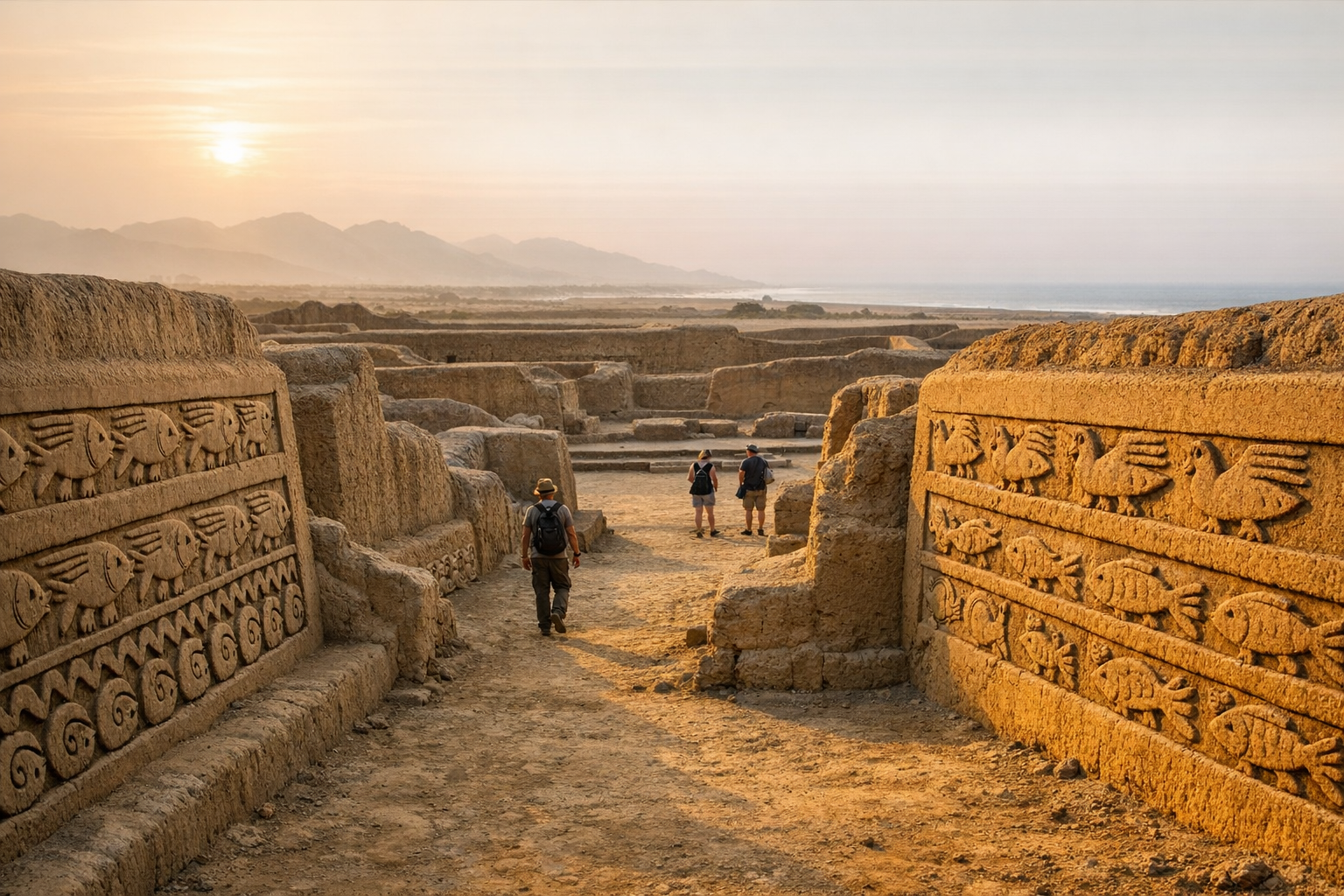
What survives today — eroded, protected, and still yielding archaeological secrets — communicates the ambition and organizational sophistication of a civilization largely overshadowed by the later Inca Empire that absorbed it. The Tschudi Royal Compound, the only ciudadela open to the general public, offers a glimpse of this world through its towering mud-brick walls, its intricate friezes of fish, pelicans, and geometric patterns covering entire facades, and its sunken ceremonial spaces that once hosted rituals connecting Chimu kings to the ocean deity they revered. This guide covers the site’s history, its key monuments, practical access from Trujillo, and the conservation challenges that make visiting Chan Chan a responsibility as much as a privilege.
History: Capital of the Chimu Empire
Origins of the Chimu State (c. 900–1000 CE)
The Chimu civilization emerged on Peru’s northern coast following the collapse of the earlier Wari Empire around 900 CE. The Chimu (also called Chimor) built their power base in the Moche Valley, exploiting the region’s rich agricultural potential through elaborate canal irrigation systems that transformed coastal desert into productive farmland. Chan Chan was established as the dynastic capital, with each successive king building a new royal compound — a custom that concentrated memory, labor, and symbolic power within the growing city’s footprint.
Imperial Expansion (c. 1000–1400 CE)
At its height, the Chimu Empire extended over 1,000 kilometers of Pacific coastline — from what is now southern Ecuador to the Chancay Valley south of Lima. This made it the largest state in pre-Columbian South America before the Inca expansion. The Chimu achieved this expansion through sophisticated diplomacy, strategic marriages, and military conquest, incorporating conquered territories through a system of regional administration not unlike the later Inca model. Chan Chan’s growth during this period is reflected in the sequential construction of its ciudadelas, each representing a new royal dynasty building its own self-contained palace.
Inca Conquest (1470 CE)
Emperor Tupac Inca Yupanqui conquered the Chimu Empire around 1470 CE after a sustained military campaign, reportedly diverting irrigation canals to pressure Chan Chan’s water supply into submission. The Inca absorbed Chimu craftsmen — renowned metalworkers, textile weavers, and architects — into the Inca state system, transplanting skilled Chimu artisans to Cusco where their techniques influenced Inca court production. Chan Chan’s political functions ended with conquest, though the city continued to be inhabited at a reduced scale.
Decline and Archaeological Recovery
The Spanish arrived on Peru’s northern coast in 1532 and systematically looted Chan Chan’s royal tombs for their gold and silver offerings. Decades of huaqueo (tomb raiding) stripped the ciudadelas of their portable wealth. The 19th and 20th centuries brought systematic archaeological investigation, led by scholars including Rafael Larco Hoyle and later the Chan Chan–Moche Valley Project. UNESCO designated Chan Chan a World Heritage Site in 1986 and simultaneously listed it as endangered — a dual status that reflects both the site’s significance and the severity of its conservation challenges.
The Key Monuments: What to See at Chan Chan
The Tschudi Ciudadela (Nik An)
The Tschudi Royal Compound — known in Chimu as Nik An (the original designation, recently restored by Peruvian cultural authorities) — is the most accessible and best-preserved of Chan Chan’s nine ciudadelas. Enter through a single massive ramp gateway in the north wall and proceed through a series of spaces that reveal the Chimu model of royal power: vast ceremonial courts for public audience, intimate audiencias (U-shaped ceremonial rooms) where the king received tribute and conducted ritual, storage annexes organized on a rigorous grid, and ultimately the royal burial platform (huachaque) where the ruler was interred with his court attendants and massive quantities of grave goods. The walls throughout are covered in high-relief mud plaster friezes — repeating patterns of fish, sea birds (particularly pelicans and cormorants), wave forms, and geometric net patterns that reference the ocean deity at the center of Chimu cosmology.
The Friezes
Chan Chan’s most celebrated artistic achievement is the extraordinary frieze program covering the interior walls of its ciudadelas. In the Tschudi compound, entire facades in the main audiencias and entry courts are covered in a dense, repeating pattern of marine imagery executed in raised mud plaster. The moon-fish frieze — overlapping rows of fish with crescent-moon symbols between them — is the most photographed and most characteristic of Chimu aesthetic choices. The friezes were originally painted in multiple colors (traces of red, white, and yellow survive under analysis), transforming the interior spaces into vivid visual environments. Roofing structures have been installed over key frieze sections to protect them from rain damage.
The Ceremonial Reservoirs
Within the Tschudi compound, two large sunken reservoirs (huachaque) served as both practical water storage and ceremonial focal points. The Chimu relationship with water was sacred — Chan Chan’s existence in coastal desert depended entirely on canal systems bringing water from distant mountain rivers. The reservoirs attracted migratory birds and sustained aquatic gardens; excavations have found evidence of water-based ritual deposits including offerings of Spondylus shells (the most highly valued ritual commodity in Andean cosmology, associated with water and fertility). The geometry of the reservoirs, carefully excavated to precise rectangular forms, reflects the same organizational aesthetic visible in the friezes and building plans.
The Huaca del Obispo and Outer Compounds
Beyond the Tschudi ciudadela, the Chan Chan archaeological zone contains the remains of the other eight royal compounds, numerous smaller intermediate palaces (large irregular agglutinated structures housing minor royalty), and extensive artisan production areas where metalworkers, weavers, and ceramicists worked under state supervision. The Huaca del Obispo mound, visible from the Tschudi entrance, marks the location of one of Chan Chan’s pre-Chimu-period ceremonial buildings, indicating human use of the site predating the Chimu Empire’s founding.
Getting There: Transportation and Access
Chan Chan sits 5 kilometers northwest of central Trujillo, accessible by taxi, combi, or as part of organized day tours.
From Trujillo City Center
Trujillo is the third-largest city in Peru and the jumping-off point for all northern archaeological sites.
- Taxi: 15–20 PEN ($4–5.50 USD) one-way, approximately 20 minutes from Trujillo’s Plaza Mayor. Negotiate return pickup or arrange for the driver to wait.
- Combi (shared minibus): Combis marked “Huanchaco” depart from central Trujillo for 1–2 PEN ($0.30–0.60 USD), passing near the Chan Chan entrance. Journey 30 minutes.
- Organized tour: Half-day and full-day tours from Trujillo typically combine Chan Chan with the Huacas del Sol y de la Luna (Moche pyramids) and Huanchaco fishing village (35–65 USD / 130–240 PEN all-inclusive).
From Lima by Bus or Plane
Trujillo is 9 hours from Lima by overnight bus (Cruz del Sur, Oltursa) or 1 hour by domestic flight to Trujillo’s Capitán FAP Carlos Martínez de Pinillos Airport. The airport is 10 km from the city center (15–20 USD taxi).
Admission and Hours
Chan Chan site entry is 15 PEN (~$4 USD) per person (2026 pricing). The ticket includes the Tschudi Ciudadela circuit and the on-site Chan Chan Museum (museum open 09:00–16:00). The archaeological zone is open 09:00–16:30 daily. A guide can be hired at the entrance for approximately 50–80 PEN ($14–22 USD) per group — highly recommended given the limited English signage within the compound.
When to Visit: Seasonal Considerations
Spring (September–November)
September through November is excellent for Chan Chan. The coastal garúa fog lifts by mid-morning, temperatures are comfortable at 18–24°C (64–75°F), and the light quality on the adobe friezes is warm and clear. October–November sees the least crowding of the year at the site.
Summer (December–March)
The coastal summer brings warm temperatures (22–28°C / 72–82°F) and increased sunshine. This is also El Niño risk season — heavy rains from El Niño events cause the most severe damage to the site’s unprotected adobe structures. In normal years, December–March is the best weather for northern Peru coastal travel, with warm seas at Huanchaco. Avoid midday heat by arriving at 09:00.
Autumn (April–May)
April and May see transitional weather — temperatures cool toward the garúa season, crowds are minimal, and the site is at its most peaceful. A light jacket is useful for morning visits.
Winter (June–August)
The garúa season — a persistent cool coastal fog — settles over northern Peru’s coast from June through September. Temperatures drop to 16–20°C (61–68°F), and the site takes on an atmospheric grey-blue quality in morning hours. The fog typically burns off by noon, leaving afternoon visits in diffuse coastal light. This is the lowest-crowd period of the year.
Combining Chan Chan with Trujillo’s Archaeological Circuit
Trujillo’s archaeological region is one of the richest in Peru, and Chan Chan is best understood within that context rather than as an isolated destination.
Begin a northern Peru archaeological day at the Huacas del Sol y de la Luna (Temples of the Sun and Moon) by 09:00 — these enormous Moche civilization pyramids predate Chan Chan by 500 years and provide essential pre-Chimu context for understanding the region’s deep history. By 12:00, transfer the 8 kilometers to Chan Chan for the main Tschudi compound circuit. Allow 2 hours, including the on-site museum, and finish by 14:30. Continue 4 kilometers to Huanchaco — the traditional fishing village where caballitos de totora (reed fishing boats) still launch through the surf each morning — for a late seafood lunch at one of the beachfront restaurants. Return to Trujillo by 17:00.
This sequence covers 2,000 years of northern Peru coastal civilization — Moche, Chimu, and surviving traditional culture — in a single demanding but deeply rewarding day.
If you have an extra half day in Trujillo, pair Chan Chan with the Museo de Arqueología de la Universidad Nacional de Trujillo to see ceramics and metalwork that contextualize what you walk past in adobe at the citadel itself. Seeing the portable artifacts after visiting the urban plan helps connect monumental architecture with elite ritual, trade, and everyday administration.
Why Chan Chan Matters
Chan Chan stands as the fullest expression of what the Chimu civilization achieved: a city scaled to imperial ambition, organized with bureaucratic precision, and decorated with an artistic program that placed the ocean at the center of everything. The fish on the friezes are not decoration — they are theology. The reservoirs are not infrastructure — they are ritual. The ciudadelas are not palaces — they are cosmological machines encoding the relationship between living kings, dead ancestors, and the marine deity that gave the coastal desert its limited but essential moisture.
Today, Chan Chan faces a race between preservation and erosion. El Niño events, coastal humidity, and inadequate protective infrastructure threaten the adobe structures that no fire-baking reinforces. Every visit funds the conservation work that extends the site’s life. Come now, while the friezes retain their three-dimensional depth, while the great courtyards still communicate their original scale, and while the legacy of the Americas’ largest pre-Columbian city remains legible in stone and mud under the Pacific coast sun.
What also lingers at Chan Chan is a powerful reminder that imperial capitals are never only about rulers. The city depended on engineers who managed water in an arid environment, on artisans who modeled complex symbolism into fragile adobe, and on fishing communities whose labor sustained urban life. Walking through the corridors today, you can still read that social architecture: restricted routes, guarded thresholds, and carefully sequenced spaces that regulated who could move where and under what authority. Even in ruin, Chan Chan reveals a political imagination as sophisticated as any stone-built capital in the ancient world.
If you are deciding whether northern Peru is worth adding beyond the classic Cusco-Machu Picchu route, Chan Chan is the answer. It broadens your understanding of Andean history from highland empires to coastal maritime power and shows how varied pre-Columbian urbanism truly was. Few sites in the Americas let you study city planning, religion, economy, and environmental adaptation at this scale. That breadth is exactly why Chan Chan belongs on a serious archaeological itinerary.
Quick Facts
| Attribute | Details |
|---|---|
| Location | Trujillo, La Libertad Region, Peru |
| UNESCO Status | World Heritage Site & In Danger List (1986) |
| Established | c. 900 CE (Chimu Empire capital) |
| Civilization | Chimu Empire |
| Distance from Trujillo | 5 km / ~20 min by taxi |
| Entry Fee | 15 PEN (~$4 USD) |
| Hours | 09:00–16:30 daily |
| Best Time | May–November; mornings |
| Site Area | ~20 km² (urban zone) |
| Suggested Stay | 2–3 hours |
Explore More Peru
- Ollantaytambo: Inca fortress and living town in the Sacred Valley near Cusco
- Pisac: Inca citadel, cemetery, and artisan market in the Sacred Valley
- Moray: Mysterious Inca circular terraces and salt mines near Cusco
Plan your complete Peru archaeological journey with our Peru Ancient Sites Guide.
Frequently Asked Questions
How much time do I need at Chan Chan?
Allow 2–3 hours for the Tschudi Royal Compound — the main open circuit — including the audiencias (ceremonial rooms), burial platform, and reservoirs. A comprehensive visit covering multiple ciudadelas would require a full day, though much of the outer compounds require special archaeological permits.
What is the best time to visit Chan Chan?
Chan Chan's coastal desert climate means the site is visitable year-round, but May through November offers the clearest conditions. The garúa (coastal fog) season (June–October) can bring morning mist that softens the light beautifully. Avoid the hottest midday hours from December to March.
How do I get from Trujillo to Chan Chan?
Take a taxi from central Trujillo (15–20 PEN / $4–5 USD, approximately 20 minutes). Shared combis marked 'Huanchaco' also pass near the site entrance from the Trujillo terminal (1–2 PEN / ~$0.30–0.60 USD). Most visitors combine Chan Chan with the Huanchacho beach village 4 km further north.
What is the Tschudi Royal Compound?
The Tschudi compound (named after a Swiss explorer, not its original Chimu name) is the best-preserved of Chan Chan's nine major ciudadelas. The official tourist circuit passes through its massive entry ramp, elaborate audiencias with geometric fish and bird friezes in high-relief mud plaster, a royal burial platform, and large sunken reservoirs. It demonstrates the Chimu organizational model for royal power and ceremony.
Why is Chan Chan described as the largest pre-Columbian city in the Americas?
At its peak (13th–15th century CE), Chan Chan covered approximately 20 square kilometers with a core urban area housing an estimated 40,000–100,000 people. It contained nine major royal palace compounds (ciudadelas), each built by a different Chimu king, plus extensive residential quarters, workshops, and storehouses radiating outward. No other pre-Columbian city in the Americas covered as much ground.
Is Chan Chan at risk of damage?
Yes. Chan Chan is on UNESCO's List of World Heritage in Danger since 1986. The site's unbaked adobe construction is highly vulnerable to El Niño rainfall events, which have caused significant erosion damage. Preservation efforts including protective roofing over key friezes and drainage improvements are ongoing. Visit while it can still be fully appreciated.
Nearby Ancient Sites
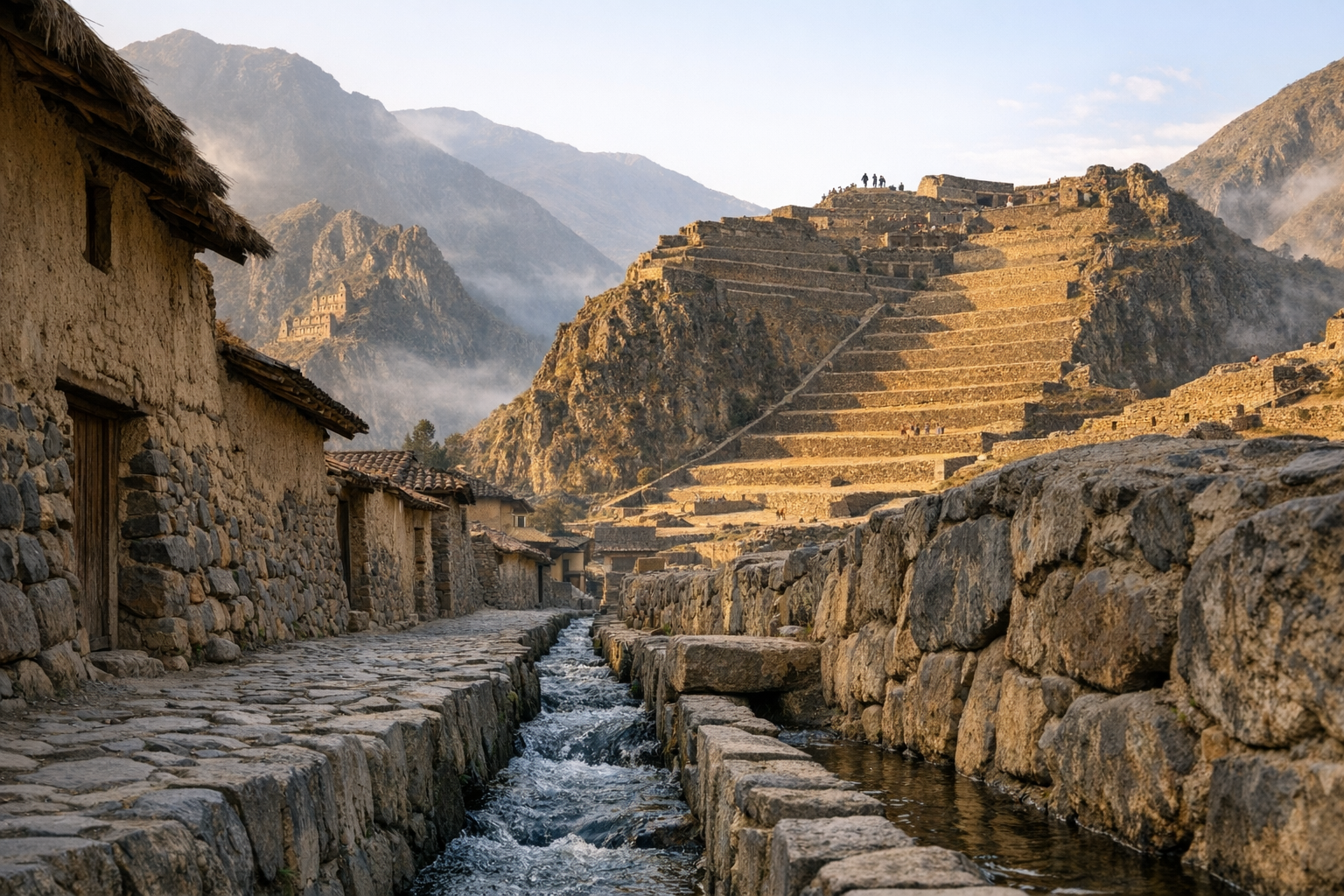
Ollantaytambo Peru Guide 2026: Inca Fortress & Sacred Valley Town
IncaVisit Ollantaytambo in Peru's Sacred Valley: explore the Inca fortress terraces, the Sun Temple, and...
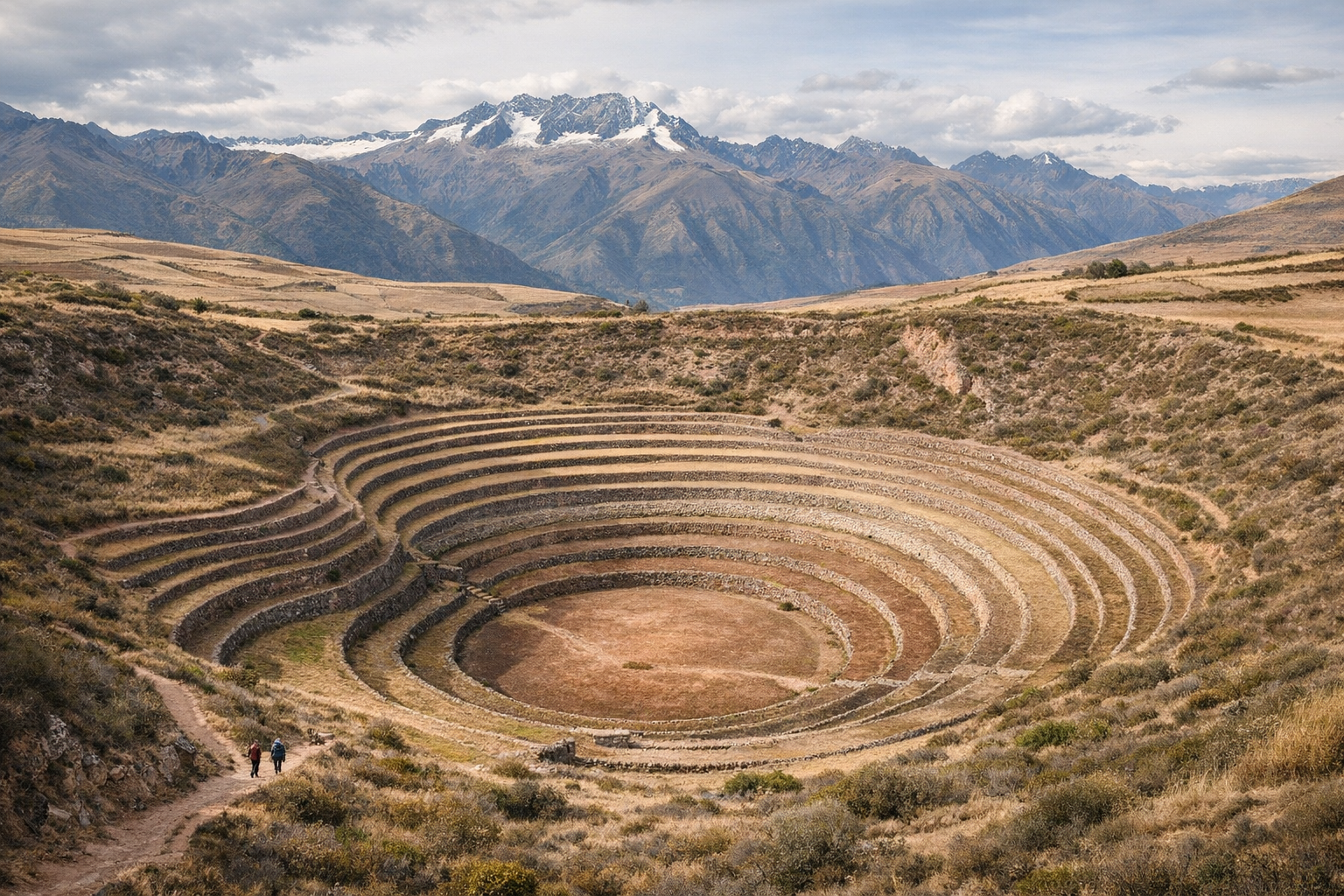
Moray Peru Guide 2026: Inca Circular Terraces & Maras Salt Mines
IncaVisit Moray's mysterious concentric circular terraces near Maras — an Inca agricultural laboratory i...
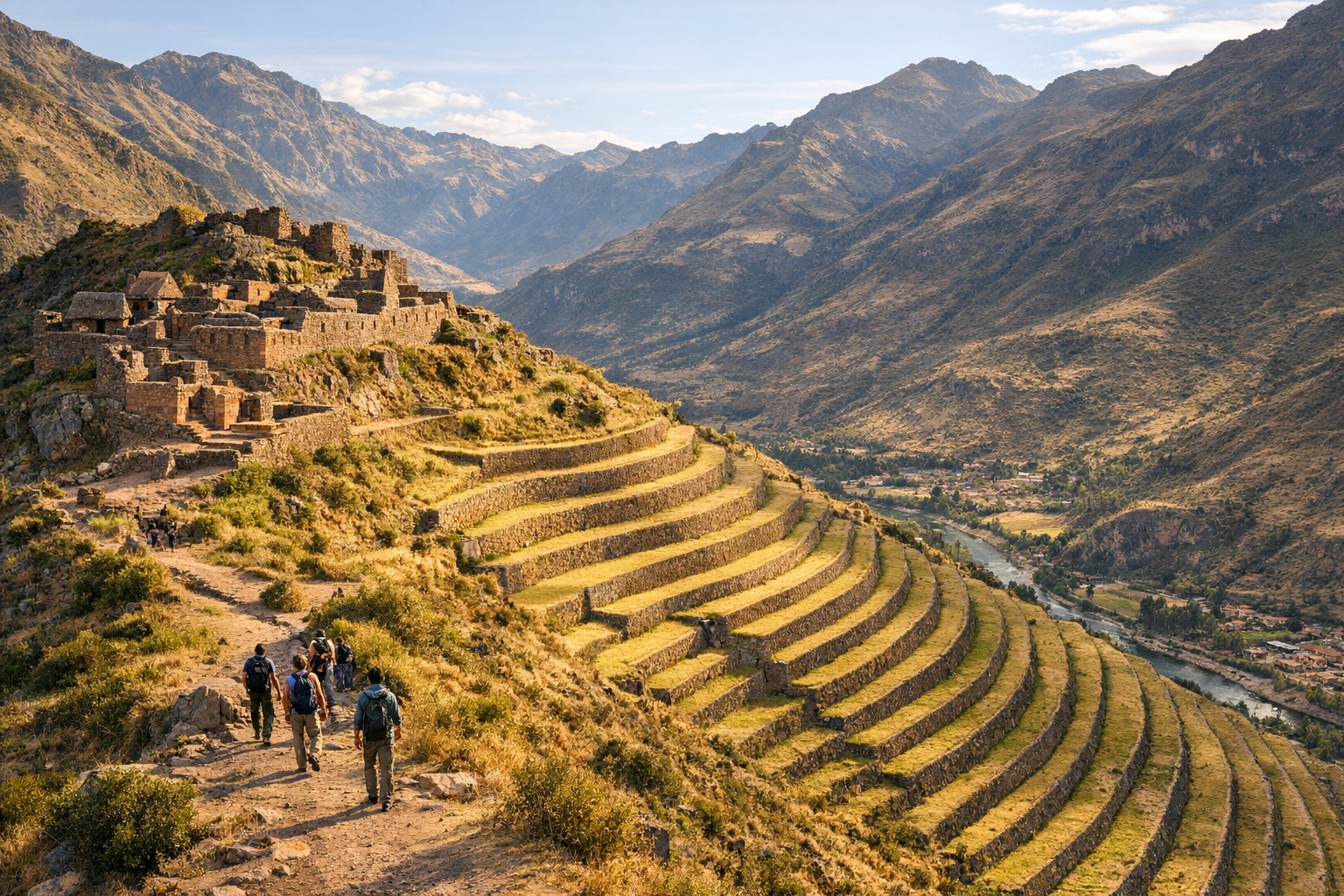
Pisac Peru Guide 2026: Inca Citadel, Market & Sacred Valley
IncaExplore Pisac in Peru's Sacred Valley: hike the Inca citadel terraces above town, visit the famous a...