Quick Info
At a glance
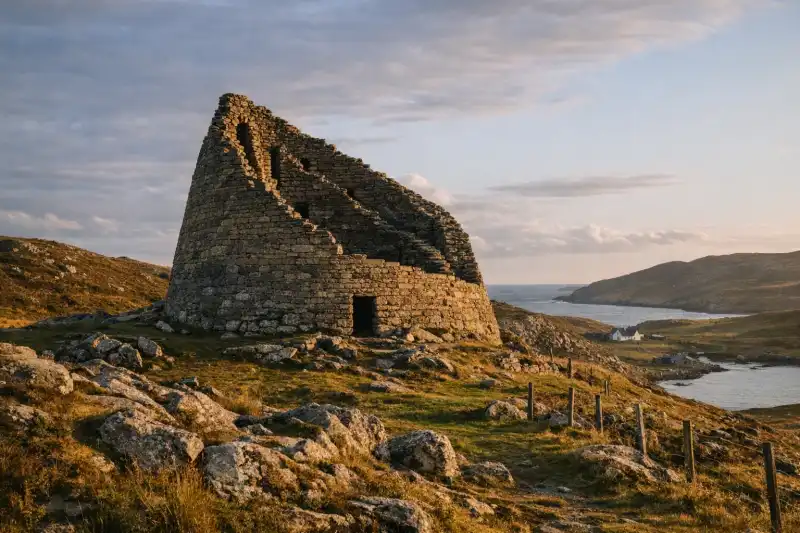
Dun Carloway Broch in the United Kingdom rises from a green slope above the west side of the Isle of Lewis, where wind, sea light, and open moorland create one of the most atmospheric archaeological landscapes in Scotland. Even before you reach it, the monument has a striking presence: a dark stone tower ruin standing against shifting Atlantic skies, at once compact and monumental. Unlike many ancient places that require a great leap of imagination, Dun Carloway still feels legible. Its thick walls, surviving height, and dramatic silhouette make it easy to picture a defended and inhabited structure that once dominated this corner of the Outer Hebrides.
The broch stands near the crofting township of Carloway, a short drive from some of Lewis’s most famous prehistoric landmarks. Yet it offers a different kind of encounter from the island’s stone circles and standing stones. Here, the story is domestic as much as ceremonial, practical as much as symbolic. Dun Carloway speaks of shelter, status, protection, and community in a rugged environment shaped by weather and distance. Visiting today is less about entering a museum space than stepping into a working landscape where ancient and modern lives still seem closely connected. Grass grows around old masonry, sheep graze nearby, and the tower remains rooted in the rhythms of the island. For travelers interested in Iron Age architecture, Scottish archaeology, or simply unforgettable settings, Dun Carloway Broch rewards slow attention.
History
Origins in the Iron Age
Dun Carloway Broch was built during the late Iron Age, most likely sometime between the 1st century BCE and the 1st century CE. Brochs are among the most distinctive ancient structures in Scotland, especially in the north and west, and they remain the subject of scholarly debate. They were circular drystone towers with hollow walls, built without mortar and often rising to considerable height. Their exact function likely varied from place to place. Some may have been defended residences for local elites, while others may also have acted as symbols of authority, communal centers, or secure refuges in times of unrest.
At Carloway, the builders chose a naturally commanding site on a rocky outcrop, giving the broch a strategic and highly visible position. The monument was constructed from local stone, carefully laid in concentric walling that created an impressive, durable shell. In its original state, the tower would have been significantly taller than it is now, perhaps rising over 10 meters, with timber floors and internal levels. The architecture reflects remarkable engineering skill. Thick walls enclosed a relatively small central court, while passages and stairways were built within the wall itself. This was not simply a crude fortification but a sophisticated stone structure designed for long-term occupation.
Occupation and Daily Life
Archaeological evidence suggests that Dun Carloway was not an isolated tower but the focal point of a wider settlement landscape. Brochs generally existed within communities engaged in mixed farming, animal husbandry, fishing, and local exchange. On Lewis, life would have been shaped by the demands of Atlantic weather, the availability of grazing land, and access to coastal resources. The people who lived at or around the broch likely kept cattle and sheep, cultivated small plots where possible, and made use of marine food and transport routes.
Within the tower, space would have been used efficiently. The central area may have included hearth activity, storage, and work areas, while upper levels could have offered additional living or sleeping space. The narrow entrance and defensive design hint at concerns for security, but the broch was also a statement of permanence and control over the surrounding land. From this vantage point, inhabitants could observe movement through the district and remain visually prominent to neighbors and visitors.
Excavation and interpretation of brochs across Scotland indicate that these structures were often reused and altered over time. Dun Carloway was likely no exception. Generations may have adapted the interior, repaired stonework, or shifted how the building was used. As broader social conditions changed in later centuries, the tower’s role may have evolved from elite residence to a more symbolic or reduced occupation site.
Medieval Memory and Later Reuse
Like many ancient monuments in the Highlands and Islands, Dun Carloway remained part of local memory long after its original builders were gone. Oral tradition associated the site with later historical events and figures, layering folklore onto archaeology. One well-known story links the broch to the Morrisons of Ness, a powerful Lewis family in medieval tradition. Although such tales cannot always be verified in detail, they show how the monument continued to matter in cultural imagination.
The broch also experienced practical reuse. Stones from ancient structures were often robbed for later building, and while Dun Carloway survives unusually well, it likely lost some material over the centuries. Even so, enough remained standing to preserve the sense of a complete tower shell. This survival is one reason it has become such an important example for understanding broch architecture.
Antiquarian Interest and Modern Preservation
From the 18th and 19th centuries onward, antiquarians, travelers, and archaeologists began recording sites like Dun Carloway with increasing care. Brochs attracted attention because they did not fit neatly into classical or medieval architectural categories familiar to early scholars. Their purpose and date were debated, but their technical accomplishment was impossible to ignore. Drawings, descriptions, and later archaeological study helped establish Dun Carloway as one of the premier broch ruins in Scotland.
Today the monument is protected as part of Scotland’s archaeological heritage. Conservation has focused on stabilizing the surviving masonry and allowing visitors to appreciate the broch in a landscape close to its historic setting. Modern interpretation places Dun Carloway within a broader Atlantic world of Iron Age communities, while also recognizing its local distinctiveness. It remains one of the clearest places to encounter the ingenuity, resilience, and social complexity of prehistoric northern Scotland.
Key Features
What makes Dun Carloway Broch so compelling is the degree to which its essential form still survives. Unlike sites where foundations alone trace a vanished building, this broch retains a substantial stretch of tower wall rising dramatically above the ground. The surviving structure leans slightly and appears weathered by centuries of Atlantic exposure, but that weathering only deepens its character. The masonry has a muscular, layered texture, each stone fitted without mortar in a technique that relied on balance, pressure, and patient craftsmanship. Seen from a distance, the broch looks almost geological, as if it had emerged from the Lewis landscape rather than being imposed upon it.
One of the most significant architectural features is the thickness of the wall. Brochs are famous for their double-wall construction, creating intramural spaces and passages inside the stone mass itself. At Dun Carloway, these details help visitors understand how advanced Iron Age building practices could be. The entrance passage is narrow and defensive in feeling, emphasizing control over access. Internal galleries and the remains of stair arrangements reveal that the broch was vertically organized, with multiple levels once supported by timber. Even in ruin, the building suggests movement upward, enclosure within, and a careful separation between outside threat and interior life.
The setting is another essential feature of the site. Dun Carloway stands on elevated ground overlooking Loch an Dùin and the surrounding district. This placement was practical, symbolic, and visually powerful. The views connect the broch to the wider environment that sustained its inhabitants: hills, water, pasture, and routes through the landscape. On clear days, the site feels expansive and open; on misty or stormy days, it becomes brooding and intensely atmospheric. That variability is part of the experience. The monument never appears static because the Hebridean light is always changing around it.
Visitors often notice how the broch combines monumentality with intimacy. It is a strong defensive form, yet not on the scale of a castle or large hillfort. Instead, it brings architecture down to the level of household and kin-group life. You can imagine people carrying fuel, tending a fire, storing provisions, or watching weather gather from the coast. The tower’s design speaks not only of status but of everyday adaptation. Thick walls would have offered insulation and protection, while elevated levels may have improved storage and surveillance. In this way, the broch becomes easier to read as a lived structure rather than merely an ancient ruin.
The surrounding landscape adds context without overwhelming the monument. There is no dense urban development, no extensive reconstructed complex, and no elaborate visitor infrastructure on the immediate site. That relative simplicity is a strength. It allows Dun Carloway to retain a sense of authenticity and isolation that is increasingly rare. The road approach, nearby crofting land, and open skies all contribute to a feeling that this is still a place embedded in a real community rather than detached from it.
Dun Carloway is also notable for how well it complements other sites on Lewis. Travelers coming from the Callanish Stones may find the broch offers a useful contrast: not ceremonial stone setting but residential tower; not broad ritual landscape alone but focused domestic architecture. Together, these monuments show the extraordinary depth of human occupation on the island across different prehistoric periods. Dun Carloway’s particular strength lies in making the Iron Age physically understandable. You do not have to rely only on labels or reconstructions. The stone itself still carries the message.
Getting There
Dun Carloway Broch is located on the Isle of Lewis in the Outer Hebrides of Scotland, and the usual base for most travelers is Stornoway. If you are arriving from mainland Scotland, the most common route is the Caledonian MacBrayne ferry from Ullapool to Stornoway. One-way foot passenger fares are often around £10 to £20, while taking a car can raise the fare significantly depending on season and vehicle size, commonly from about £40 upward. Flights from Glasgow, Edinburgh, Inverness, or Aberdeen to Stornoway are also available, with one-way fares often ranging from roughly £70 to £180 if booked in advance.
From Stornoway, Dun Carloway is about a 30 to 40-minute drive west, depending on conditions and your exact route. Hiring a car is the easiest option for exploring Lewis, with daily rental prices often starting around £45 to £80 in lower season. Taxis are possible but expensive for a return journey, often exceeding £70 to £100 from Stornoway depending on waiting time. Limited local bus services serve parts of the west side of Lewis, but schedules can be infrequent, so check current timetables carefully if traveling without a car.
Many visitors combine Dun Carloway with the Callanish Stones and nearby beaches in a single day trip. Roads are generally straightforward but narrow in places, so allow extra time and drive cautiously. Parking near the broch is usually simple and close to the site, followed by a short walk. Wear sturdy footwear, as paths can be uneven or slippery after rain. Even though access is easy by Hebridean standards, weather can make a quick stop feel more demanding than the map suggests.
When to Visit
The best time to visit Dun Carloway Broch is usually from late spring through early autumn, when days are long and travel conditions are more predictable. Between May and September, the Isle of Lewis enjoys extended daylight that gives you flexibility to combine several archaeological sites in one outing. Summer brings the greenest landscapes and often the brightest views across the lochs and moorland. It is the most convenient season for first-time visitors, especially if you are relying on ferries, flights, or self-drive touring.
That said, summer is not automatically perfect. Rain, wind, and low cloud can appear at any time in the Outer Hebrides, and midges may be present in calmer conditions. Bring waterproof layers even on seemingly clear days. If you prefer fewer visitors and a quieter atmosphere, late April, May, and September are especially rewarding. The weather can still be changeable, but the light is often beautiful and the monument feels even more solitary.
Winter visits are possible and can be memorable, particularly for travelers who enjoy dramatic skies and a strong sense of remoteness. However, ferry disruptions, shorter daylight hours, and rough weather make planning more important. The broch itself remains impressive in all seasons, but winter conditions may limit how long you want to stay outdoors. If photography is a priority, early morning or late afternoon often provides the most striking light, with low sun emphasizing the texture of the stone and the contours of the surrounding ground.
Whenever you visit, check weather forecasts and local travel updates before setting out. On Lewis, conditions can shift quickly, and flexibility is one of the keys to a good trip.
| Quick Facts | Details |
|---|---|
| Location | Carloway, Isle of Lewis, Outer Hebrides, Scotland, United Kingdom |
| Site Type | Iron Age broch |
| Date | c. 1st century BCE–1st century CE |
| Cultural Context | Late Iron Age Scotland |
| Best Known For | Exceptional preservation of a drystone broch tower |
| Nearest Town | Stornoway |
| Nearby Highlights | Callanish Stones, Calanais Visitor Centre, west Lewis coastal scenery |
| Typical Visit Length | 30–60 minutes |
| Access | Short walk from nearby parking |
| Best Season | Late spring to early autumn |
| What to Bring | Waterproofs, sturdy shoes, camera, windproof layer |
Guided tours: worth it?
Most travelers can visit Dun Carloway Broch independently. Compare a tour only if you want a tighter history-focused visit, easier logistics, or a guide who can answer questions on the spot.
Best for
- Short visits where a planned route saves time
When to go self-guided
Go independently if you prefer setting your own pace, reading as you go, and checking official hours or ticket rules directly before you arrive.
What I’d avoid
Skip paid tours that bundle unrelated stops you do not actually want. The best option should either save meaningful planning time or add historical context you would miss on your own.
Isle of Lewis archaeological sites tour
Useful when: you want to compare guided formats before deciding
Callanish Stones and Lewis heritage tour
Useful when: you want to compare guided formats before deciding
Outer Hebrides day tour from Stornoway
Useful when: transport or pickup logistics matter
Some tour links are affiliate links, which may earn Ancient Travel a small commission at no extra cost to you. I try to surface options that make practical sense for the site—not just anything bookable.
Frequently Asked Questions
What is Dun Carloway Broch?
Dun Carloway Broch is an Iron Age drystone tower, or broch, on the Isle of Lewis in Scotland. It is one of the best-preserved examples of this distinctive Atlantic Scottish building type.
Is there an admission fee to visit Dun Carloway Broch?
Dun Carloway Broch is generally accessible without a ticket, but visitors should check current Historic Environment Scotland guidance before traveling in case of temporary changes.
How long should I spend at Dun Carloway Broch?
Most visitors spend 30 minutes to 1 hour exploring the broch, taking photographs, and enjoying the surrounding views. Those combining it with nearby sites often stay longer in the area.
Can you go inside Dun Carloway Broch?
Access conditions can vary for safety and conservation reasons, but visitors can usually closely inspect the structure from the exterior and appreciate surviving architectural details.
When was Dun Carloway Broch built?
Dun Carloway Broch was likely built in the late Iron Age, probably between the 1st century BCE and the 1st century CE, though exact dating remains debated.
What other ancient sites are near Dun Carloway Broch?
The Callanish Stones and the Calanais Visitor Centre are among the best-known nearby prehistoric attractions on the Isle of Lewis, making the area ideal for a heritage-focused itinerary.
Nearby Ancient Sites
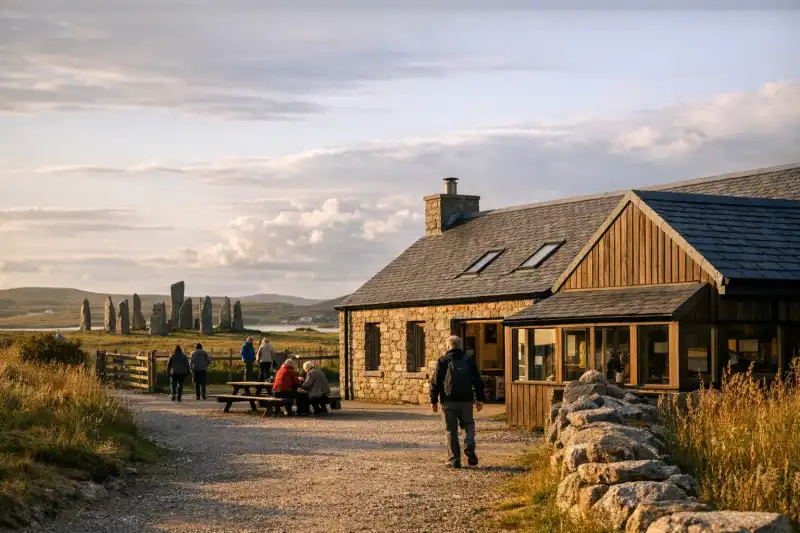
Calanais Visitor Centre
Neolithic ScotlandGateway to the famous Calanais standing stones on the Isle of Lewis in the United Kingdom.
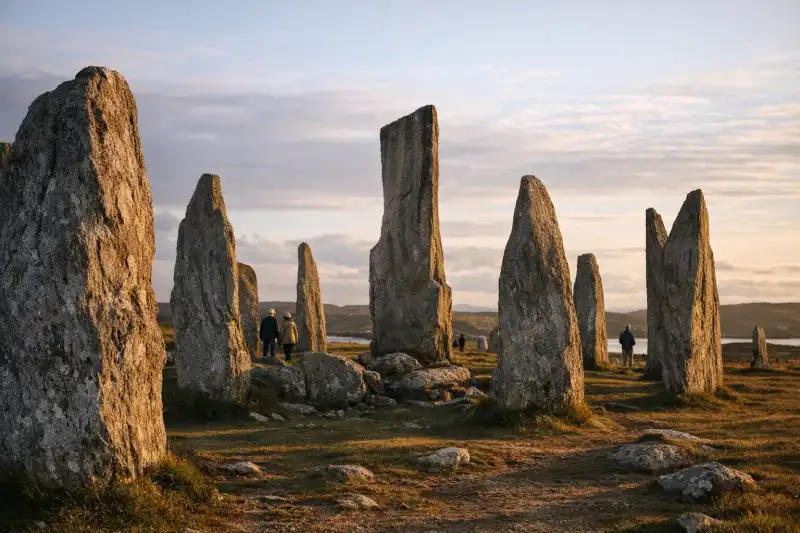
Callanish Stones
Neolithic communities of the Outer HebridesExplore the Callanish Stones, a dramatic Neolithic stone circle in the United Kingdom's Outer Hebrid...
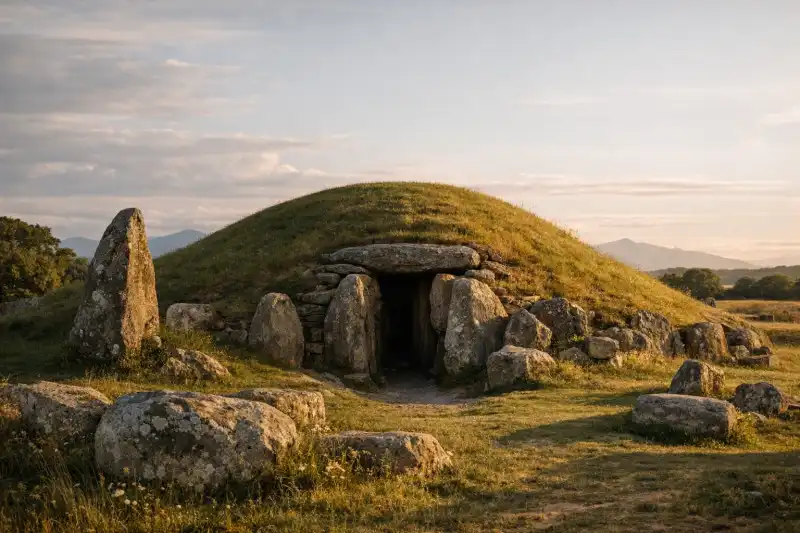
Bryn Celli Ddu
Neolithic BritainAtmospheric Neolithic burial chamber and henge on Anglesey, United Kingdom, famed for ritual alignme...