Quick Info
Curated Experiences
Edfu and Kom Ombo Nile Cruise and Tour from Aswan
Private Edfu Temple Tour from Aswan
Edfu Sunrise Tour with Breakfast
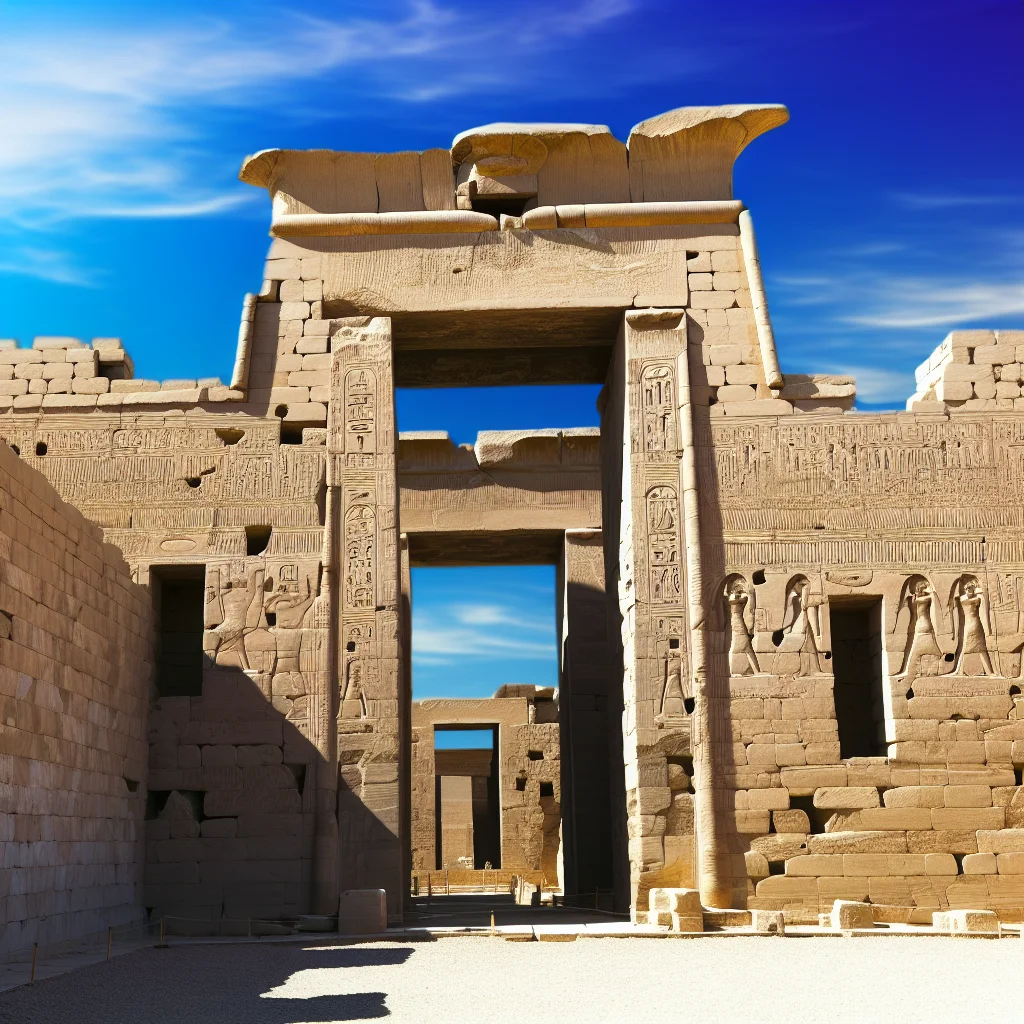
One hundred and ten kilometers north of Aswan, rising from the desert edge like a limestone fortress, stands the Temple of Horus at Edfu. This is the best-preserved ancient Egyptian temple in existence—not a ruin, but a nearly complete structure with walls, reliefs, colors, and sanctum all intact. Walk through Edfu’s monumental pylon (gateway) and you enter a visual world of Ptolemaic power and theology: massive wall reliefs show Ptolemy III smiting enemies with divine sanction, ritual scenes depict offerings to the falcon-headed god Horus, and inscriptions in Greek and hieroglyphics layer theological meaning across every surface. The scale is grand but not overwhelming; the proportions are harmonious and human. The temple was buried under sand for centuries, which preserved its details and protected its surface from weathering—a gift that makes Edfu infinitely more legible and vivid than temples exposed to open-air deterioration. From Edfu, you see how Ptolemaic priests understood ancient Egyptian religion, how they synthesized Greek and Egyptian artistic traditions, and how temples functioned as both political statements and spaces for sacred mystery. This guide covers Edfu’s architecture and theology, its battle reliefs and ritual scenes, practical logistics from Aswan and Luxor, and how to combine Edfu with nearby Kom Ombo and Philae.
History: The Falcon God’s House and Ptolemaic Synthesis
Dynastic Foundations (c. 3000–332 BCE)
Edfu was sacred to Horus, the falcon-headed god of the sky and son of Osiris in Egyptian theology. Predynastic evidence suggests worship at Edfu stretches back millennia. Older temples stood on the site during the New Kingdom, but these were demolished to make way for the Ptolemaic structure.
Ptolemaic Construction (237–57 BCE, Dynasties of Ptolemies II–XII)
The Temple of Horus you see today was begun under Ptolemy III Euergetes (r. 246–222 BCE) and completed under Ptolemy XII (r. 80–51 BCE). Construction took nearly two centuries—a vast, multi-generational project reflecting the Ptolemaic dynasty’s enduring commitment to Egyptian religious traditions. The Ptolemies, Greek-Macedonian rulers who conquered Egypt after Alexander the Great, strategically identified themselves with Egyptian pharaohs, commissioning temples in the Egyptian style while importing Hellenistic artistic sophistication. Edfu embodies this synthesis: the temple’s form, decoration, and ritual function are thoroughly Egyptian, but the proportions, the treatment of human figures, and the artistic refinement reflect Hellenistic aesthetics.
Religious Function and Ritual Life
Edfu was not merely a monument; it was a functioning temple where priests performed daily rituals maintaining the god Horus’s life and power. The temple’s interior contained a sacred boat (now lost) used in religious processions. Festival reliefs depict the annual ritual reenactment of the myth of Horus avenging his father Osiris against the god Set—a mythology that justified Ptolemaic rule by associating the pharaoh with victorious Horus.
Decline and Preservation
After Egypt fell under Roman rule (30 BCE), Edfu remained an active religious site. By the 4th and 5th centuries CE, as Christianity spread, pagan temples were gradually closed. Edfu’s decline was expedited by its burial: sand and Nile silt accumulated over the centuries, completely obscuring the temple from view. This burial, paradoxically, preserved Edfu in nearly pristine condition—sunlight, weather, and human disturbance were minimized.
Modern Rediscovery and Conservation
In 1860, French Egyptologist Auguste Mariette excavated Edfu, revealing the temple in astonishing condition. The reliefs were sharp, colors were partially visible, and the overall architectural integrity was intact. Modern conservation work has stabilized the structure and revealed additional details. Edfu remains the most complete ancient Egyptian temple and one of the most important sources for understanding Ptolemaic religion and Greek-Egyptian cultural synthesis.
The Key Monuments: What to See at Edfu Temple
The Pylon and Approach
Edfu’s monumental pylon (gateway) is 36 meters (118 feet) high—an imposing structure that communicates divine power and royal authority. The pylon’s exterior walls are carved with reliefs showing Ptolemy III executing enemies while Horus and other gods look on approvingly. These battle scenes are among Edfu’s most vivid: horses strain in their harnesses, chariot wheels crush fallen soldiers, and the pharaoh dominates the composition with spear raised. The Ptolemaic artists imbued these scenes with Hellenistic dynamism—a sense of movement and emotion absent from many New Kingdom reliefs. Photography of the pylon from the approach courtyard captures its full monumentality, especially in morning or late afternoon light.
The pylon’s imagery propagated a carefully crafted message: the pharaoh, empowered by the gods, maintained cosmic order (ma’at) through military might against chaotic forces represented by enemies. The composition places the human pharaoh in the center of a cosmic drama, flanked by falcon-headed Horus on one side and other divine figures on the other. The positioning implies that pharaonic victory over enemies was not mere political achievement but sacred obligation and divinely sanctioned duty. The Ptolemaic rulers, being Greek-Macedonian, justified their rule over Egypt by presenting themselves as heirs to pharaonic tradition and as agents of divine order. Every carved figure, every weapon, every fallen enemy was intended to communicate this essential message to both educated viewers (priests and scribes who could read the hieroglyphic captions) and illiterate observers (who could read the visual narrative of triumph).
The Hypostyle Hall
Inside, the hypostyle hall (an interior columned courtyard) is lined with columns topped by capitals adorned with lotus flowers and papyrus bundles. The columns are perfectly preserved, their proportions graceful. The walls surrounding the hypostyle hall bear reliefs of religious processions, offerings, and divine encounters. The carvings are so detailed and so sharp—preserved by the sand that covered the temple—that you can read facial expressions and distinguish individual weapons and crowns. Each column is a masterwork of Ptolemaic craftsmanship: the lotus and papyrus capitals reference Egypt’s ancient architectural vocabulary while the proportions and symmetry reflect Hellenistic ideals. The interplay of shadow and light through the columns creates an ever-changing visual experience as sun angle shifts throughout the day. Religious processions would have moved through this hall during festivals, the rhythmic movement of robed priests creating a ceremonial flow that connected profane space (the outer courtyard) to sacred space (the inner sanctuary).
The Sanctuary and Inner Chambers
Deep within the temple, the inner sanctum once housed a statue of Horus (now in the Cairo Museum). The sanctuary is small and intimate, designed for priests only. Its walls are inscribed with ritual texts and hymns to Horus, describing the god’s epithets and the daily offerings that sustained his divine life. These texts provide crucial information about Ptolemaic religious practice: they are in both Greek and hieroglyphics, reflecting the temple’s role in the Greek-Egyptian synthesis.
The Crypts and Roof Chapels
Edfu contains underground crypts (treasure chambers) and roof chapels—small sanctuaries accessed via narrow staircases. These spaces are remnants of older temples incorporated into the Ptolemaic structure. Access to crypts and roof chapels may be restricted for conservation, but viewing the exterior entrances and understanding their function adds depth to your appreciation of the temple’s complexity.
The Monumental Falcon Statues
Two limestone falcon statues, each standing over 3 meters high, flank the temple’s main entrance. These falcons represent Horus in animal form—a powerful and striking symbol of divine vigilance. The statues are among the finest examples of Ptolemaic sculpture and are among the best-preserved monumental statues in Egypt. The falcons’ eyes are rendered with startling realism—intense, focused, seemingly tracking movement. The musculature is anatomically precise: the wings are detailed with individual feathers, the talons are sharp and aggressive, and the posture conveys supreme alertness. These guardian figures would have impressed and perhaps intimidated worshippers approaching the sacred space. Their presence communicates that the temple is protected by divine power manifest in animal form—a visual and symbolic marker of sacred boundary between profane world and divine sanctuary.
Getting There: Transportation and Access
Edfu is located 110 kilometers (68 miles) north of Aswan and 240 kilometers south of Luxor. Most visitors reach Edfu from Aswan (the primary hub for southern Egyptian tourism) or via Nile cruise.
From Aswan
- Organized tour: 75–95 USD via your hotel or tour operator. Tours include transport, entry fee, and guide. Duration is 4–6 hours including transport.
- Private taxi: 200–300 EGP ($7–10 USD) round-trip with 2–3 hours of waiting time. Negotiate in advance.
- Ride-hailing: Uber/Careem operate in Aswan; fares typically run 150–250 EGP ($5–8 USD) each way.
- Nile cruise: Many 3–7 day Nile cruises between Aswan and Luxor stop at Edfu. Cruises are comfortable and romantic but expensive (1,500–5,000+ USD per person).
From Luxor
Luxor is 240 km north of Edfu, about 4–5 hours by road. Options: organized tour, private taxi (200–300 EGP), or Nile cruise. Most Luxor-based tourists visit Edfu via Nile cruise or as part of a northbound multi-site itinerary.
From Cairo
Cairo to Edfu is 870+ km. Most Cairo-based travelers fly to Aswan (2.5 hours, 60–100 USD) and then visit Edfu.
Admission and Hours
Entry fee: 300 EGP (~$10 USD) for foreign tourists. Student and local discounts apply. Payment is cash (Egyptian pounds) at the gate.
Hours: 6:00 AM to 5:00 PM year-round. Last entry is typically 30 minutes before closing.
Best time of day: Arrive by 7:00 or 8:00 AM to beat the heat and explore the pylon and courtyards in cool morning light. The interior reliefs are best viewed with soft light; midday overhead sun creates harsh shadows. Late afternoon (after 3:00 PM) provides warm, golden light for photography but limits exploration time.
What to bring: Sunscreen (SPF 50+), wide-brimmed hat, 2+ liters of water, sturdy shoes, and a flashlight for inner chambers. Edfu has limited shade; the temple’s interior provides refuge. Binoculars help view elevated reliefs on pylon and upper walls.
When to Visit: Seasonal Considerations
Spring (March–May)
Temperatures range from 25–35°C (77–95°F) with low humidity. This is pleasant for exploration; mornings are cool, afternoons warm but manageable. Crowds are moderate. Late March and April are ideal.
Summer (June–August)
Summer heat is extreme: 35–42°C (95–108°F). Midday exploration is inadvisable. Early morning visits (6:00–9:00 AM) are possible with vigilant hydration. Tourism drops; Edfu is quieter. Only heat-acclimated travelers should visit in summer.
Autumn (September–November)
Temperatures cool from 35°C in September to 20–28°C (68–82°F) by November. Late September and early October can still be warm; by late October, conditions are ideal. Autumn offers excellent weather and moderate crowds.
Winter (December–February)
Cool mornings (12–17°C / 54–63°F) and pleasant afternoons (20–26°C / 68–79°F) characterize winter. This is peak tourism season; Edfu is busier and prices are inflated. January and February are the busiest. The weather is ideal.
Ideal season: October through April, with March and April being optimal.
Combining Edfu with Kom Ombo and Philae
The most efficient day involves visiting nearby temples in sequence. Start at Edfu by 7:30 AM, spend 2.5–3 hours exploring the Temple of Horus, and depart by 10:30 AM. A 30-minute drive or boat ride takes you to Kom Ombo, where you spend 1.5–2 hours at this twin-temple dedicated to Horus and Sobek. By 1:00 PM, return to Aswan for lunch. In the late afternoon (if energy permits), take a felucca (sailboat) cruise around Philae Island and visit the Temple of Isis (entry requires additional tickets). By 6:00 PM, return to Aswan. This 10–12 hour sequence covers three of southern Egypt’s finest temples and provides context for understanding different aspects of Ptolemaic religion and Greek-Egyptian synthesis.
For travelers with limited time, Edfu alone merits a focused 3–4 hour visit, allowing an early return to Aswan by early afternoon.
Why Edfu Matters
Edfu is Egypt’s best-preserved ancient temple—a gift of time and sand that allows modern visitors to experience an ancient sanctuary in near-original condition. Architecturally, it represents the culmination of Egyptian temple design perfected over millennia. Artistically, it demonstrates the Ptolemaic synthesis of Greek and Egyptian traditions: Hellenistic proportions, perspective, and emotional dynamism applied to Egyptian religious iconography. Theologically, its texts and reliefs preserve detailed knowledge of how Ptolemaic priests understood Egyptian religion, mythology, and kingship. For Egyptologists, Edfu is invaluable; for travelers, it is simply one of the most magnificent and legible of all ancient temples. Standing before the monumental falcon statues or gazing up at the pylon reliefs, you sense the power ancient Egyptians attributed to the divine and the care they invested in creating spaces where the human and divine could meet.
Explore More Egypt
- Kom Ombo: Twin temple dedicated to Horus and Sobek, 30 km south of Edfu.
- Philae Temple: Temple of Isis on an island in the Nile, with dramatic photographic settings.
- Karnak Temple Complex: Egypt’s largest and most complex temple sanctuary.
Plan your complete Egypt archaeological journey with our Egypt Ancient Sites Guide. Discover how to explore southern Egyptian temples via Nile cruise.
Quick Facts
| Attribute | Details |
|---|---|
| Location | Aswan Governorate, 110 km north of Aswan, Egypt |
| Ancient Name | Behdet; Edfu (Ptolemaic) |
| UNESCO Status | Part of Thebes and its Necropolis (World Heritage Site) |
| Established | c. 237–57 BCE construction |
| Distance from Aswan | 110 km / 2 hours by road |
| Entry Fee | 300 EGP (~$10 USD) |
| Hours | 6:00 AM–5:00 PM daily |
| Best Time | October–April; March–April ideal |
| Suggested Stay | 2.5–3.5 hours for temple; 8–10 hours combined with Kom Ombo and Philae |
Frequently Asked Questions
How long should I spend at Edfu Temple?
Plan 2.5–3.5 hours for a thorough visit. The Temple of Horus is smaller than Karnak but richly decorated; a guide familiar with Ptolemaic theology and battle iconography enhances the experience significantly. Many organized tours allocate 3–4 hours including transport from Aswan.
Why is Edfu's preservation so exceptional?
Edfu was buried under sand and silt for centuries, which protected its reliefs and colors from weathering and vandalism. When systematic excavation began in the 19th century, the temple emerged nearly intact—walls, reliefs, inscriptions, and even some statuary survived. This makes Edfu the best-preserved ancient Egyptian temple and invaluable for understanding Ptolemaic-era religious practice and artistic standards.
What makes Edfu's battle scenes special?
Edfu's exterior wall reliefs depict Ptolemy III's military victories with theatrical dynamism. The reliefs show horses, chariots, warriors, and defeated enemies in such vivid detail that they read like cinematic sequences. The Ptolemaic artists added Hellenistic proportions and perspective, creating a hybrid style that is distinctly different from New Kingdom battle art.
Can I visit Edfu by Nile cruise?
Yes. Many 3–7 day Nile cruises between Aswan and Luxor stop at Edfu. Cruises offer comfortable accommodations, meals, and guided temple visits. Cruising is more expensive than independent visits but offers a romantic way to travel. Edfu is also easily visited independently by road from Aswan (45 minutes) or Luxor (4 hours).
How do I get to Edfu from Aswan?
Edfu is 110 km (68 miles) north of Aswan, about 2 hours by road. Options: organized tour (75–95 USD), private taxi (200–300 EGP / $7–10 USD round-trip), or Nile cruise (150–300+ USD). The road is well-maintained; self-drive is feasible. Most tourists book tours for convenience and historical context.
Is Edfu Temple safe for tourists?
Yes. Edfu is heavily visited and has standard security. The site is open and well-maintained. Women should dress respectfully; bring sun protection, water, and sturdy shoes. Arrange transport in advance. Groups are safer than solo travelers. The Aswan-Luxor corridor is generally safe for tourists.
Nearby Ancient Sites
Philae Temple Egypt Guide 2026: Temple of Isis & Island Sanctuary
Ptolemaic-RomanPhilae Temple near Aswan: Temple of Isis on island, relocated for preservation, with dramatic Nile l...
Karnak Temple Complex Egypt Travel Guide 2026: Egypt's Greatest Temple
Ancient EgyptianExplore Karnak, the world's largest ancient religious complex. Discover the Hypostyle Hall, Sacred L...