Quick Info
Curated Experiences
Huayna Picchu Mountain Ticket — 7AM Entry with Machu Picchu
Machu Picchu & Huayna Picchu Full-Day Private Tour from Cusco
Sacred Valley & Machu Picchu 2-Day Tour with Huayna Picchu Option
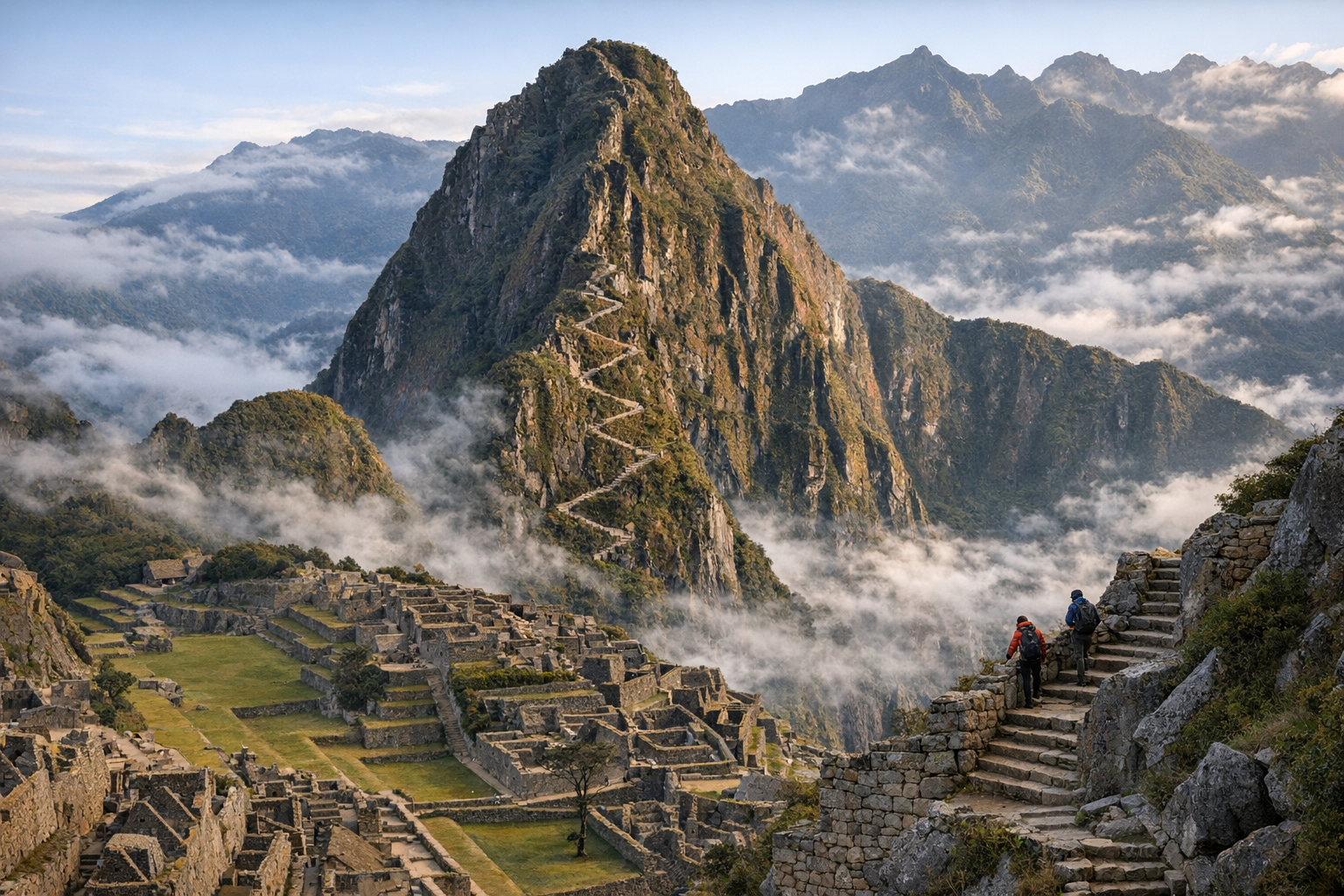
The sharp peak that punctuates the horizon in virtually every photograph of Machu Picchu is not a backdrop — it is a destination in its own right. Huayna Picchu (meaning “Young Mountain” in Quechua) rises 360 meters above the Inca citadel to a summit at 2,693 meters, from which the entire archaeological complex appears as a miniature below you, cradled by mountain ridges and wreathed in mist. The Incas did not leave this peak unoccupied; they built a temple on its summit and carved a second shrine — the Temple of the Moon — into its northern cliff face, transforming the mountain into a sacred vertical axis between the heavens, the inhabited world, and the earth below.
Climbing Huayna Picchu requires one of only 400 daily permits and genuine physical preparation for steep, exposed terrain at high altitude. It is not suitable for visitors with vertigo or mobility limitations. But for those who make the ascent, the experience transcends ordinary trekking: looking down into Machu Picchu’s terraces from a perspective the Inca priests once commanded produces a visceral understanding of the site’s geometry and sacred purpose that no amount of time in the citadel itself can replicate. This guide covers the permit system, trail conditions, the Temple of the Moon, summit logistics, and how to integrate the hike into a Machu Picchu visit.
History: The Sacred Peak
Inca Sacred Geography (c. 1450–1532 CE)
The Incas regarded individual mountains — apus — as divine beings, living presences that governed weather, agriculture, and human fate. Huayna Picchu’s prominent position directly behind the Machu Picchu citadel made it the defining apu of the entire royal estate. Inca architects built the summit temple and carved the trail into the cliff face with the same precision they brought to lowland construction — a remarkable feat given the near-vertical terrain. The mountain’s dual role as watchpoint and ceremonial space is reflected in the complexity of the Temple of the Moon shrine, which sits on the north face rather than the summit, suggesting separate ritual functions for the two locations.
The Temple of the Moon and Ritual Use
The Temple of the Moon (Templo de la Luna) is believed to have served as a huaca — a sacred site — associated with lunar ritual and the Inca underworld (Uku Pacha). Its location within a deep cave overhang, facing north away from the main citadel, aligns with Inca cosmological divisions that associated caves and shadows with the underworld realm. The elaborate masonry here — fitted stone niches, carved altars, and polished wall surfaces — indicates this was not a temporary or minor shrine but a significant ceremonial installation maintained as part of Machu Picchu’s ritual complex.
Modern Rediscovery and Access
Hiram Bingham documented Huayna Picchu’s summit structures during his 1911 expedition that brought Machu Picchu to international attention. The trail to the summit was formalized in the mid-20th century as visitor infrastructure developed. Permit restrictions were introduced progressively as visitor numbers grew and trail erosion became a concern, with the current 400-daily-permit cap implemented to preserve both the trail surface and the experience quality. Today, with Machu Picchu itself capped at 5,600 visitors per day, the Huayna Picchu permits represent the most competitive ticket in South American tourism.
The Key Monuments: What to See at Huayna Picchu
The Main Summit Trail
The summit trail begins at a checkpoint inside Machu Picchu’s archaeological zone, near the north end of the citadel’s main terrace complex. The path immediately becomes steep — stone steps cut directly into the mountain face, some requiring both hands for balance. A section known as “The Stairs of Death” features particularly narrow steps with sheer drops on one side, although fixed rope assists mark the most exposed passages. The trail is one-way (ascent and descent use the same path, with timed entry slots staggering traffic). The summit itself is a narrow platform offering 360-degree views: Machu Picchu directly below, the Urubamba River gorge far beneath on two sides, and the surrounding Andean ridges extending to the horizon in every direction.
The Temple of the Moon
A junction approximately two-thirds of the way up the main trail provides access to the Temple of the Moon via a secondary path that descends the mountain’s north face before reaching the cave shrine. The temple is built into a dramatic overhang of natural granite, with the rear wall of the cave providing the back of the structure. Inca masonry fills the space between the cave’s natural rock and the formal building — multiple rooms, niches of varying sizes (used for offerings and perhaps mummies), and a finely carved altar stone. The workmanship rivals anything in the main citadel. The detour to the Temple of the Moon and back adds 45–60 minutes to the total hike time but is strongly recommended for anyone interested in Inca religious practice beyond the standard citadel circuit.
Summit Inca Structures
The summit platform itself contains the remains of a small Inca ceremonial structure — low stone walls forming a rectangular enclosure that once housed a shrine or observation post. The scale is modest compared to the citadel below, but the location creates the impression of a sky-world separated from ordinary space. On clear mornings, the view from here looking down on Machu Picchu’s perfect terraces, plazas, and temples — the entire plan visible at once — makes tangible what a map or aerial photograph only approximates. Bring binoculars if possible to pick out architectural details in the citadel below.
Getting There: Transportation and Access
Huayna Picchu is accessible only from within the Machu Picchu archaeological zone — it cannot be approached independently from the valley.
From Aguas Calientes
The base town for all Machu Picchu and Huayna Picchu visits, Aguas Calientes (officially Machu Picchu Pueblo) is reached by train only — there is no road access.
- PeruRail and Inca Rail from Ollantaytambo: 88–240 USD round trip; journey approximately 1.5 hours.
- Bus from Aguas Calientes to Machu Picchu gate: 24 USD round trip (consettur buses); depart every 10–15 minutes from 05:30.
- Walking trail from Aguas Calientes: The steep hiking path to Machu Picchu gate takes 1.5–2 hours. Free, but exhausting before a major hike.
Huayna Picchu Trail Access
Once inside Machu Picchu, the trail entrance is near the northern end of the citadel. The checkpoint opens at your booked time slot (07:00 or 10:00). Present your Machu Picchu entry ticket and your separate Huayna Picchu permit at the checkpoint. The full circuit including summit and Temple of the Moon takes 3–4 hours from checkpoint to return.
Admission and Hours
Huayna Picchu requires a separate permit purchased in addition to the standard Machu Picchu entry ticket. Permits cost approximately 200 PEN (~$54 USD) at 2026 pricing when purchased through official channels, or slightly more through authorized resellers. The checkpoint opens at 07:00 for the first slot and 10:00 for the second. The trail closes at 13:00 (last entry), and all hikers must be back at the checkpoint by 15:00. Purchase tickets at tuboleta.cultura.gob.pe; authorized tour operators can bundle both tickets.
When to Visit: Seasonal Considerations
Spring (September–November)
Late September through November offers excellent conditions for Huayna Picchu. The rainy season is ending, trails are drying out, and visibility at the summit is generally clear through mid-morning. Temperatures at the summit run 12–18°C (54–64°F). The post-rainy-season landscape is brilliantly green against the grey granite — ideal for photography.
Summer (June–August)
Peak season brings the best weather reliability — dry, clear skies and cool temperatures (8–18°C / 46–64°F at altitude). The 7:00 AM slot offers the clearest views before afternoon clouds build. Book permits 3–4 months in advance for this period. Despite heavy overall Machu Picchu crowds, the Huayna Picchu trail itself remains uncrowded due to the permit cap.
Autumn (March–May)
April and May are transitional months — the rainy season is winding down, the vegetation is lush, and permit availability is better than peak season. Some morning fog can create atmospheric conditions at the summit. March may still see significant rain; wet stone on the steep sections demands extra caution.
Winter (December–February)
The rainy season makes Huayna Picchu challenging: wet stone steps are genuinely dangerous, and summit visibility is often zero due to cloud cover. The December–January holiday period sees elevated visitor numbers despite poor conditions. February closes the Inca Trail entirely. If visiting in the wet season, check morning weather forecasts and be prepared to abort the climb if heavy rain begins.
Combining Huayna Picchu with Machu Picchu
The most effective strategy for a Huayna Picchu day begins with the 6:00 AM entry to Machu Picchu citadel (the bus from Aguas Calientes departs from 05:30). Use the first hour to walk the upper agricultural sector and reach the Guardhouse for the classic panoramic photograph of Machu Picchu — this is best done with morning light and before the first tour groups arrive. By 07:00, move to the Huayna Picchu checkpoint for your trail entry. Allow 45–75 minutes to the summit, 30–45 minutes for the Temple of the Moon detour, and 45–60 minutes for descent, returning to the citadel by approximately 10:30–11:00. Spend the remaining time exploring the Temple of the Sun, Intihuatana stone, and Sacred Plaza before boarding the afternoon bus back down to Aguas Calientes.
For visitors with a single day, prioritize the citadel visit over the hike if you are uncertain about fitness or exposure comfort — the main Machu Picchu circuits are extraordinary in their own right. The hike adds irreplaceable perspective but demands physical readiness.
A practical pacing tip: carry at least 1.5 liters of water, move deliberately on the steep staircase segments, and schedule short pauses at wider landings rather than on narrow ledges. Trail etiquette matters here; faster hikers can pass safely when everyone stays calm and communicative. If clouds roll in heavily by late morning, consider descending early rather than waiting at the summit for visibility that may not return that day.
Why Huayna Picchu Matters
Every great sacred site has a point from which its full meaning becomes legible. For Machu Picchu, that point is the summit of Huayna Picchu. From here, the Inca architects’ intentions become transparent: the orientation of the plazas, the alignment of the temples with the surrounding mountain peaks, the relationship between the citadel’s carved terraces and the natural mountain they were built into. What from below appears as magnificent but mysterious construction reveals itself from above as a deliberate and precise inscription of cosmological order onto the landscape.
The Incas chose this mountain as a divine presence, built on its summit, and cut a trail to its face that demanded effort proportional to the significance of what waited there. Five centuries later, the trail still demands that effort. What it offers in return — a summit view that encompasses one of humanity’s most extraordinary achievements in its full landscape context — is worth every steep step.
Huayna Picchu also corrects a common misunderstanding about Machu Picchu: that the citadel was designed as an isolated architectural wonder. From above, you can see clearly that it was designed as part of a wider ritual landscape that includes river bends, ridgelines, and sacred peaks in every direction. The mountain is not an optional backdrop; it is part of the site’s meaning. That perspective changes how you read every terrace and temple below.
Archaeologically, the mountain preserves evidence of how Inca builders handled impossible terrain with disciplined stonework and route planning. Narrow stairways are cut to follow natural fractures, retaining walls hold tiny terraces in place on exposed slopes, and ritual structures occupy positions that maximize sightlines toward key apus (sacred mountains). These are not random survival features. They are deliberate design choices that show how engineering and cosmology were fused in late imperial Inca practice.
For many travelers, this climb becomes less a checklist achievement and more a quiet turning point in their Peru journey. The final ascent demands concentration, measured breathing at altitude, and acceptance of exposure. At the summit, the reward is not only the photo — it is an unusually complete sense of place, where architecture, topography, and cosmology align in one frame. If you approach it prepared, respectful of weather and trail conditions, Huayna Picchu remains one of the most profound short hikes in world archaeology.
Quick Facts
| Attribute | Details |
|---|---|
| Location | Above Machu Picchu, Cusco Region, Peru |
| Summit Elevation | 2,693 m (8,835 ft) |
| UNESCO Status | Part of Machu Picchu Historic Sanctuary (1983) |
| Daily Permit Limit | 400 total (200 per slot) |
| Permit Slots | 07:00 and 10:00 |
| Entry Fee | |
| Trail Length | ~3 km round trip (summit) |
| Best Time | May–October, 7:00 AM slot |
| Difficulty | Challenging (exposed, steep, altitude) |
| Suggested Time | 3–4 hours summit + Temple of Moon |
Explore More Peru
- Machu Picchu: The complete guide to the Inca citadel below Huayna Picchu
- Ollantaytambo: Living Inca town and fortress at the valley’s western entrance
- Pisac: Inca citadel and Sacred Valley market town
Plan your complete Machu Picchu experience with our Peru Ancient Sites Guide. For altitude preparation, see our Inca Trail planning guide.
Frequently Asked Questions
How hard is the Huayna Picchu hike?
The hike is genuinely challenging — steep, exposed, and at altitude (2,693 m summit). The trail involves narrow stone stairs with significant drop-offs and some hand-over-hand scrambling near the top. Most fit hikers complete it in 45–75 minutes each way. The descent is often harder than the ascent. Do not attempt if you have a fear of heights or are not comfortable on exposed ridgelines.
How do I book Huayna Picchu tickets?
Permits are sold exclusively through the official Peruvian government ticketing system (tuboleta.cultura.gob.pe). Only 400 permits are issued daily — 200 at the 7:00 AM slot and 200 at the 10:00 AM slot. During peak season (May–September), these sell out 2–4 months in advance. Book as early as possible and check daily for cancellation releases closer to your travel date.
What is the best slot — 7:00 AM or 10:00 AM?
The 7:00 AM slot is generally preferred: morning light is clearer before afternoon clouds roll in from the Amazon basin, the citadel below is less crowded, and you complete the descent before the strongest midday sun. The 10:00 AM slot is acceptable but may encounter cloud cover at the summit. Both require arriving at the Huayna Picchu trail entrance promptly at your booked time.
What will I see at the Temple of the Moon?
The Temple of the Moon is a cave shrine on Huayna Picchu's north face — accessible via a secondary trail that branches off the main summit route. It features elaborate Inca masonry built into natural rock overhangs, with niches, altars, and carved platforms. The site is associated with lunar and underworld ritual. The detour adds 45–60 minutes to your total hike time.
Huayna Picchu or Machu Picchu Mountain — which should I choose?
Huayna Picchu is shorter, steeper, and more dramatic — the view from the summit looks down into Machu Picchu's terraces with dizzying impact. Machu Picchu Mountain is taller (3,082 m), requires a longer hike, and offers a broader panoramic view of the entire Inca citadel and surrounding Andes from above. If permits allow, Huayna Picchu is the iconic choice; if sold out, Machu Picchu Mountain is a worthy alternative.
Is Huayna Picchu safe?
The trail is maintained with rope assists on the steepest sections. Fatalities have occurred, primarily from slips on wet stone. Never hike Huayna Picchu in heavy rain — the steps become dangerously slippery. Wear trail shoes with good grip, not flip-flops or smooth-soled sandals. Stay on the marked path; venturing off-trail risks serious injury.
Nearby Ancient Sites
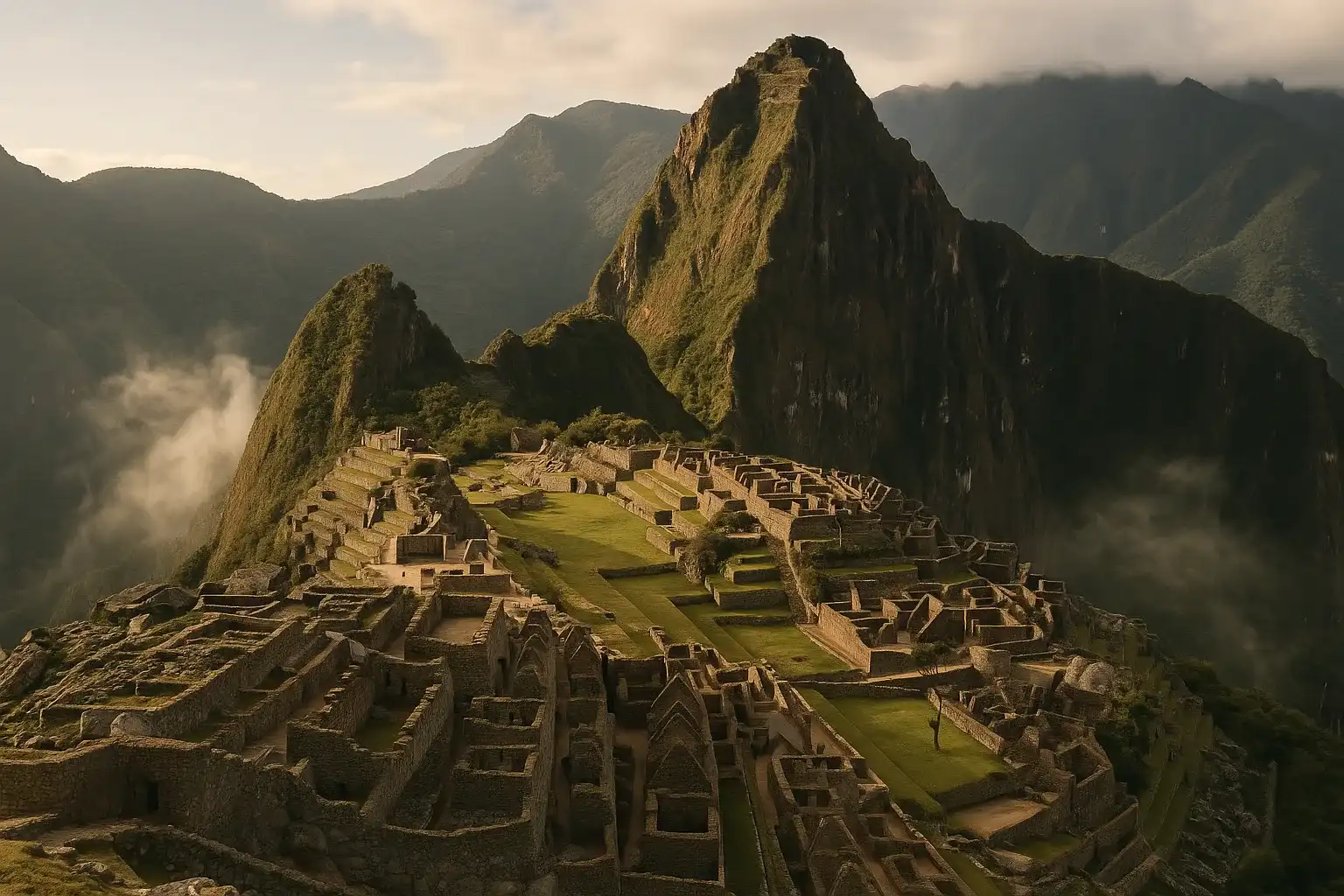
Machu Picchu Peru Travel Guide 2026: Circuits, Tickets & Entry Tips
Inca EmpireNavigate Machu Picchu's 2026 circuit system with our definitive guide. Learn how to choose your rout...
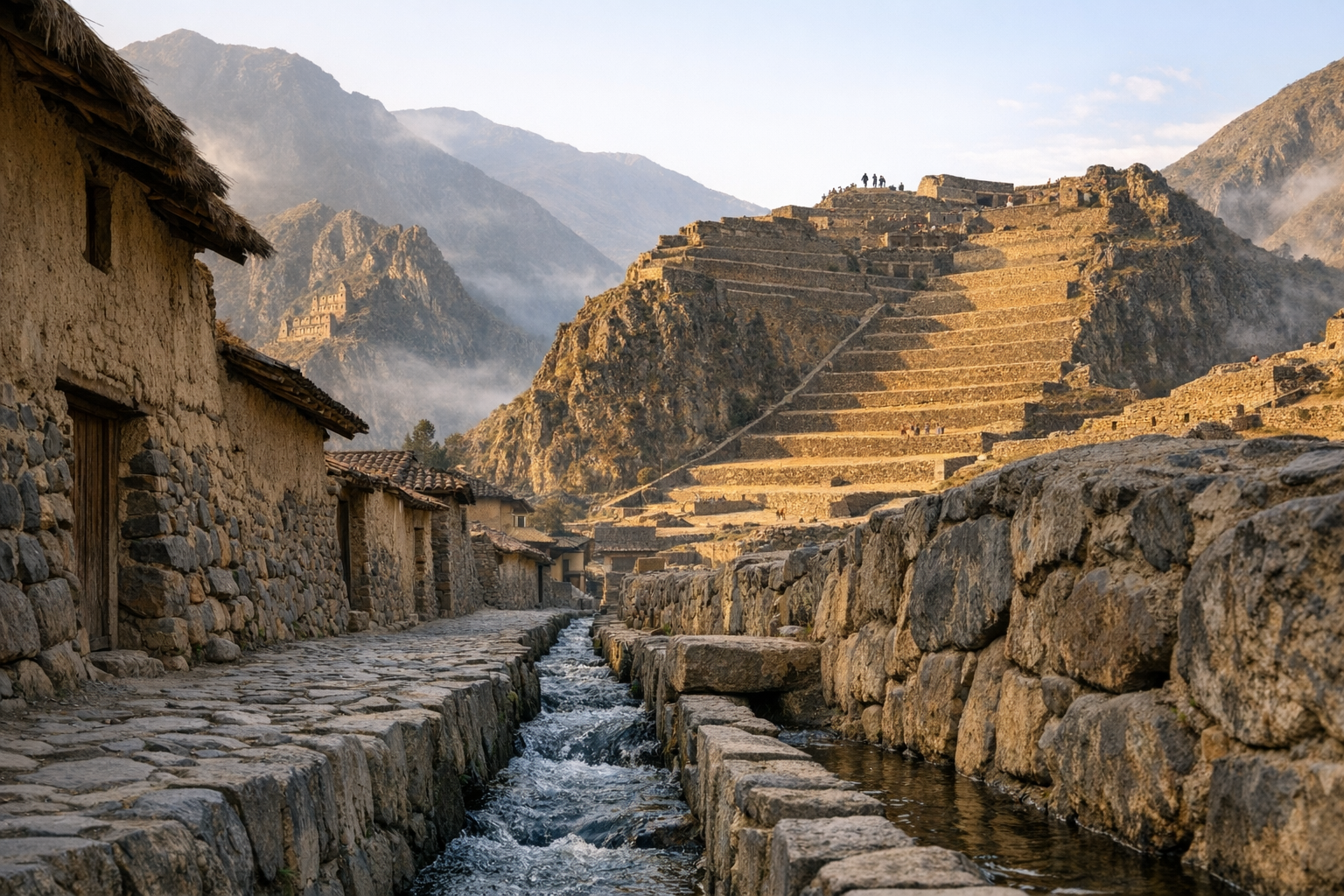
Ollantaytambo Peru Guide 2026: Inca Fortress & Sacred Valley Town
IncaVisit Ollantaytambo in Peru's Sacred Valley: explore the Inca fortress terraces, the Sun Temple, and...
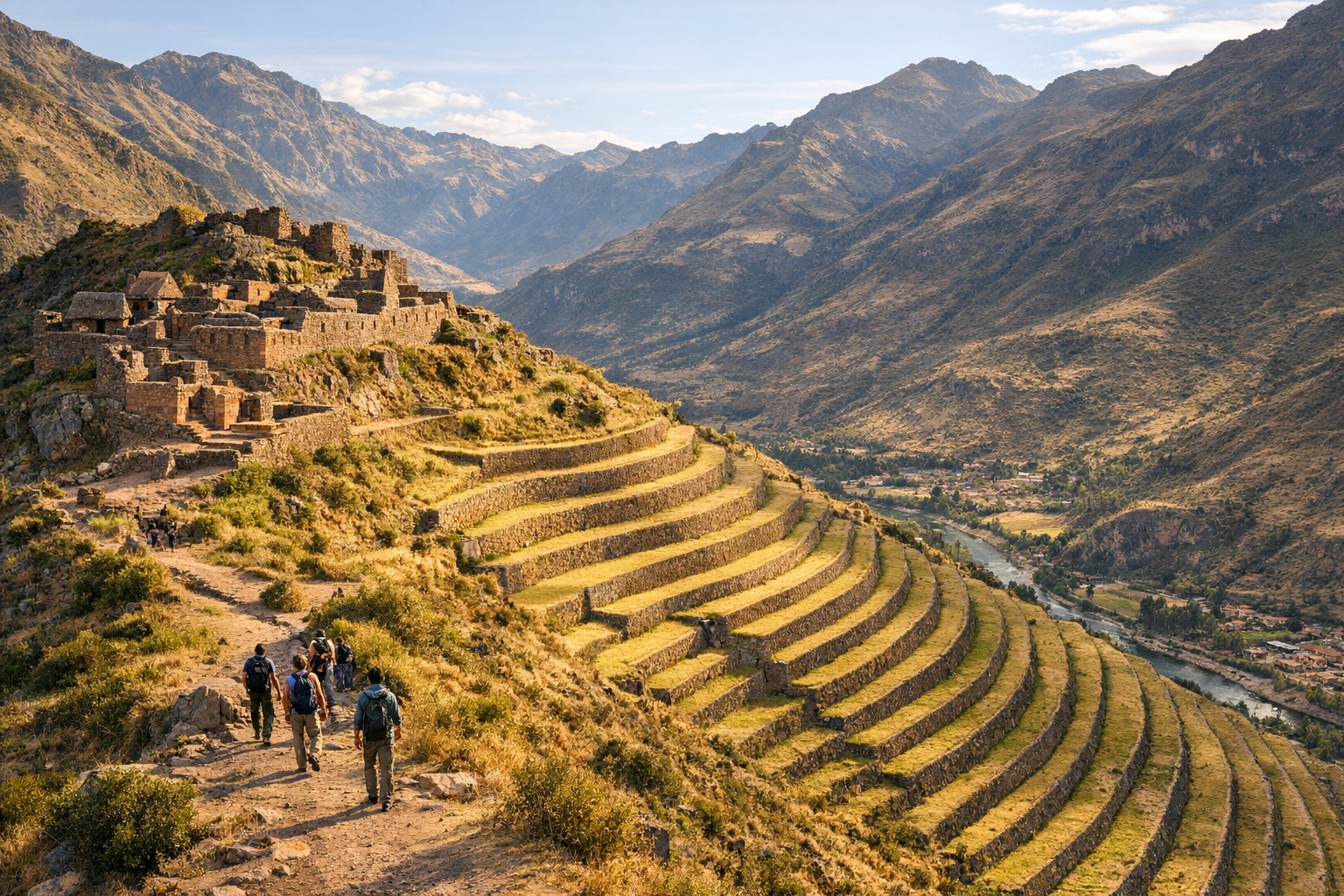
Pisac Peru Guide 2026: Inca Citadel, Market & Sacred Valley
IncaExplore Pisac in Peru's Sacred Valley: hike the Inca citadel terraces above town, visit the famous a...