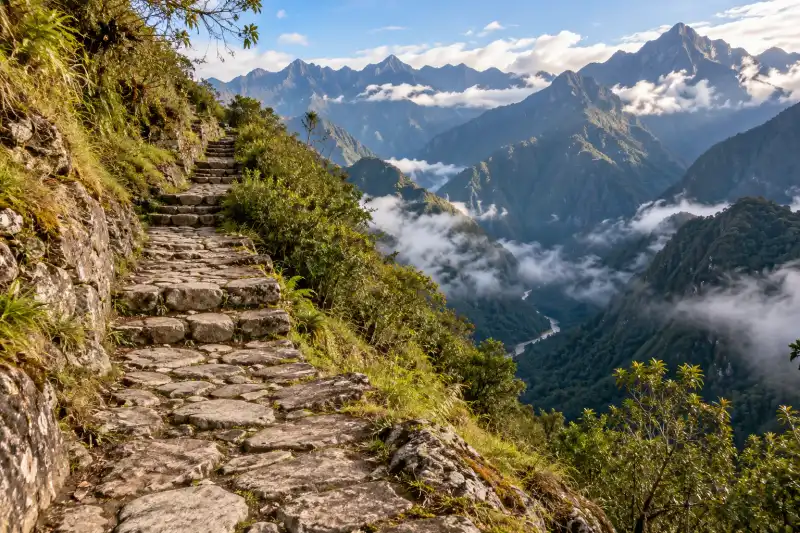
The Inca Trail is not simply a scenic route to Machu Picchu. It is a regulated highland trek with consecutive days of walking, changing weather, and a fixed relationship to the citadel’s current visitor routes. Good planning starts with the boring questions: who is authorized, what exactly is included, what elevation will you sleep at, and what happens if you become unwell?
Confirm the official arrangement before paying
Use Peru’s current cultural authority information and an authorized operator to confirm permit requirements, passenger-name rules, route, porter and guide arrangements, campsite plan, and the current Machu Picchu entry arrangement. Do not rely on a resale listing, a screenshot, or an old claim about daily quotas.
Ask the operator to state in writing:
- the trek’s start and end points;
- the exact dates and camping or lodging sequence;
- what transport, equipment, food, and emergency support are included;
- the current Machu Picchu circuit or route coordination;
- how passport-name corrections, cancellations, and weather disruptions are handled.
An “Inca Trail package” is not a standard product. Compare the actual inclusions and official documents, not only the headline itinerary.
Acclimatization comes before ambition
The trail includes high terrain and sustained exertion. Give yourself flexible days in the Cusco area or Sacred Valley before departure. Our Peru altitude acclimatization guide explains the warning signs and why fitness is not a guarantee; Sacred Valley acclimatization helps with the pre-trek sequence.
Stop ascending if you develop altitude-illness symptoms such as headache with nausea, fatigue, dizziness, or poor sleep. If symptoms worsen at the same elevation, descend and obtain medical assessment. Severe symptoms, including shortness of breath at rest, confusion, or loss of coordination, need urgent care and descent. Tell the guide early. The worst plan is hiding symptoms to protect a permit.
Treat equipment as a safety decision
Use footwear and rain layers you have already tested. Carry sun protection, warm layers for changing mountain conditions, personal water capacity, and any prescribed personal medicine arranged with your clinician. Ask the operator what it provides, what weight limits apply, and what you must carry yourself.
Do not borrow a dosing plan from a packing list or use the trek to experiment with medication. Discuss individual prevention and medical issues with a qualified clinician before travel.
Coordinate the arrival at Machu Picchu
The historic arrival is only one part of the visit. Machu Picchu’s visitor flow uses specific circuits and routes, so confirm what your trek includes and what it does not. If you want an additional mountain route or a different entry day, ask the relevant official authority and operator whether it is compatible before booking.
After the trek, protect recovery time. A same-day long bus, rail, or international flight plan leaves no room for weather, trail delays, fatigue, or a change in site access. An overnight near the rail connection or in Cusco can be the difference between a meaningful finish and a stressed exit.
The trail is worth planning slowly. Its value is the sequence of landscape, stonework, and effort, not the ability to say you pushed through a bad call.