Quick Info
Curated Experiences
Sacred Valley Full-Day Tour: Pisac, Ollantaytambo and Hidden Inca Sites
Private Sacred Valley Archaeology Tour from Cusco
Sacred Valley and Community Weaving Experience from Cusco
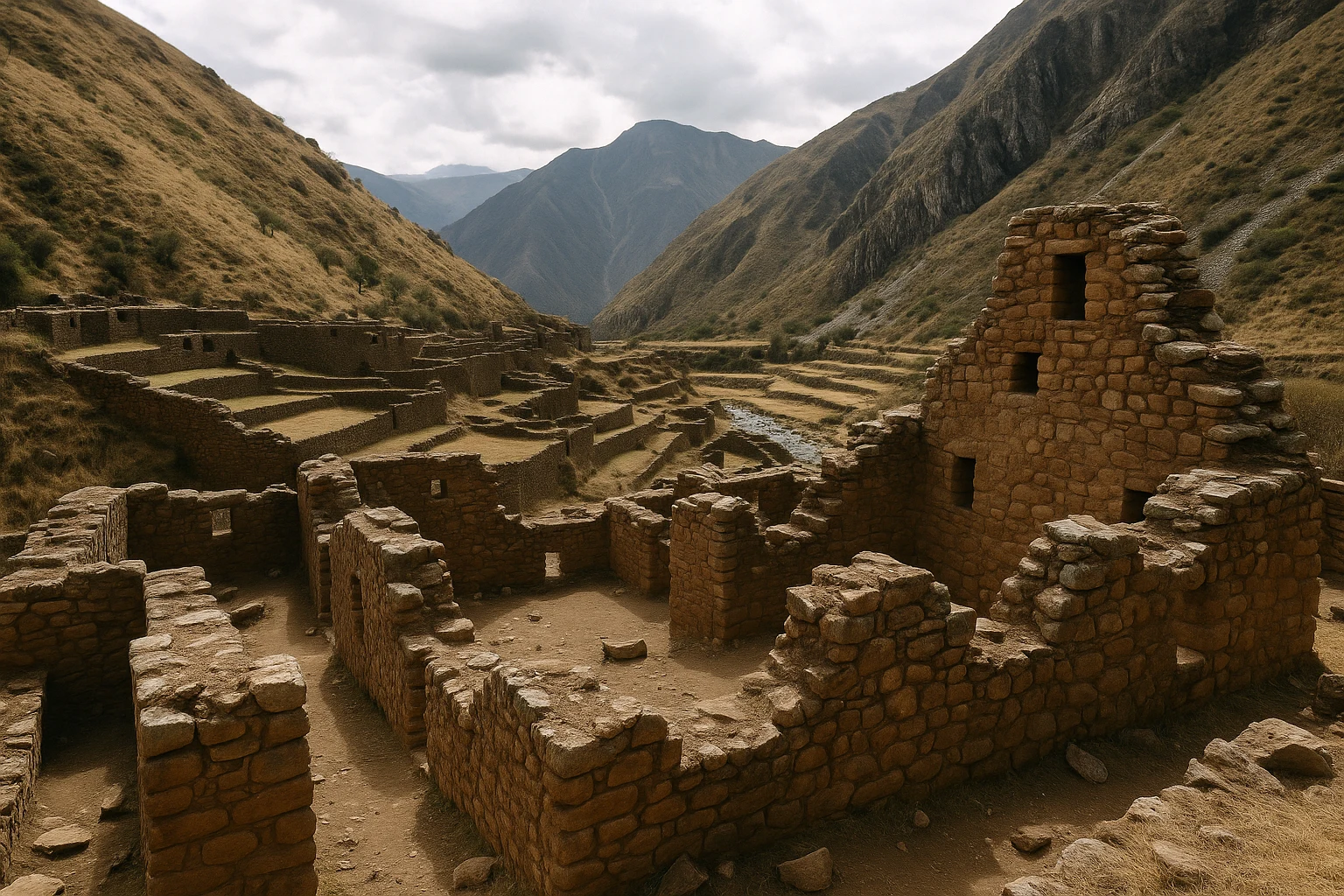
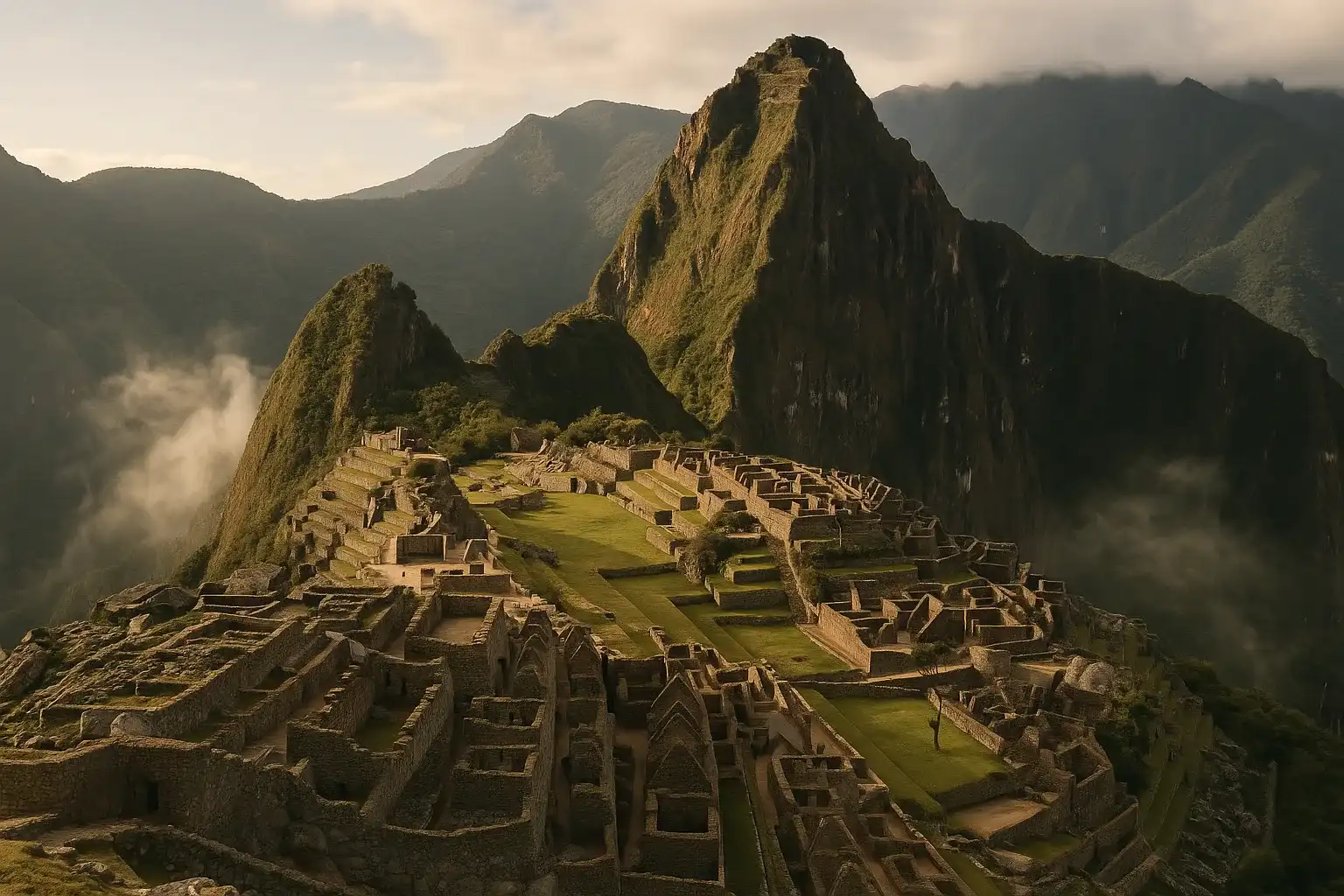
The first thing you notice at Incahuasi, Peru is not a single ruin but a pattern: terraces stepping in rhythm across a hillside, carved stone platforms catching the morning light, and mountain shadows moving like a sundial over the Sacred Valley. This is why an Incahuasi Peru travel guide matters. The site does not overwhelm you with one giant monument the way Machu Picchu does; instead, it reveals itself in layers, the way the Andes often do. You begin with practical architecture meant to feed a community, climb into ceremonial spaces meant to orient that community to the sky, and end at overlooks where politics, religion, and geography all meet in one view.
Incahuasi is often treated as a side note on larger valley itineraries, but that misses its real value. It is one of the clearest places to see how Inca planners tied agriculture, water control, ritual space, and strategic visibility into a single design. You can read the site almost like a blueprint of imperial logic. In this guide, you will find the full historical timeline, the key monuments and what to look for in each one, practical transport options from Cusco and the valley towns, admission and timing advice, season-by-season planning, and a realistic way to combine Incahuasi with nearby highlights without turning your day into a race.
History: A Hilltop Archive of Power and Ritual
Before the Incas: Local highland communities (c. 1200-1430 CE)
Long before imperial expansion, the upper Sacred Valley was occupied by Killke and other regional Andean communities that already understood how to farm steep slopes and manage water in unstable mountain terrain. Archaeological traces around Incahuasi suggest early terracing and defensive lookout use, likely tied to local settlement clusters controlling movement between highland and valley routes. These communities did not build on the monumental scale later associated with Cusco-era projects, but they established the logic that remained: terrace where the slope allows, conserve water aggressively, and use ridgelines for visibility and communication. Incahuasi’s earliest occupation, then, was less an isolated town than a practical node in a broader upland network.
Imperial redesign under the Inca state (c. 1430-1532 CE)
As the Inca Empire consolidated the Cusco basin and the Sacred Valley corridor, sites like Incahuasi were expanded and formalized. Existing terraces were enlarged and re-faced in tighter masonry, circulation paths were regularized, and ceremonial platforms were integrated into upper sectors with deliberate sightlines toward surrounding peaks. This was classic Inca statecraft: absorb local infrastructure, then scale and standardize it to serve imperial administration. At Incahuasi, architecture suggests a mixed function. It was productive enough to support labor and supply movement, symbolic enough to host ritual acts tied to agricultural cycles, and strategic enough to monitor routes between valley settlements. Inca builders did not separate economy, religion, and governance; they materialized all three in one landscape.
Conquest and adaptation (1532-1700 CE)
After the Spanish invasion, Incahuasi followed a familiar Andean pattern: partial abandonment of formal ceremonial use, selective reuse of stone in nearby colonial construction, and persistence of local agricultural activity in and around older terraces. Unlike major ceremonial capitals, smaller sites often survived through under-attention rather than protection. Oral traditions in nearby communities preserved place memory even when formal institutions did not. The colonial system redirected labor and taxation but could not erase the practical value of engineered terraces and channels. Portions of Incahuasi remained useful simply because they worked. In that sense, continuity at the site is less about intact monuments and more about enduring infrastructure and regional knowledge carried by local families.
Archaeological recognition and modern stewardship (20th century-present)
Systematic documentation of Incahuasi increased in the 20th century as Peruvian archaeology broadened beyond flagship destinations. Survey teams mapped terrace alignments, platform sectors, and water features, while regional tourism growth gradually drew independent visitors and specialist guides interested in lesser-known Inca works. Conservation remains uneven, as at many secondary sites, but local and regional stakeholders now treat Incahuasi as part of a larger Sacred Valley heritage mosaic rather than an isolated ruin. That shift matters. It reframes the site from “optional add-on” to evidence: a place where you can see how imperial planning actually functioned on ordinary terrain, not only in imperial showpieces.
The Key Monuments: What to See at Incahuasi
The lower agricultural terraces
The lower terrace bands are Incahuasi’s clearest statement of technical intent. Each retaining wall creates a stable platform from steep terrain, while layered fill behind the wall manages drainage and root depth. You can still read the geometry of planned cultivation zones, with broader, sun-facing platforms likely favored for staple crops and narrower sections adapting to slope constraints. What survives today is not decorative landscape architecture but engineered productivity at altitude. The terraces also demonstrate labor organization: this scale required coordinated workforce mobilization, quarrying, transport, and long-term maintenance. Pause halfway up and look back downslope; the repeating lines reveal why Andean terrace systems are often best understood from oblique viewpoints rather than head-on.
The ceremonial platform complex
Higher on the site, a sequence of ceremonial platforms carved and leveled into bedrock shifts the experience from agricultural utility to symbolic space. The masonry is less about enclosure and more about framing position: where a person stands, what they face, and what horizon features align at certain times of day or year. While it is tempting to over-interpret exact astronomical functions, the broader ritual logic is clear. Elevated platforms in Inca contexts commonly anchored offerings linked to rain, fertility, and seasonal transitions. At Incahuasi, the transition from terraces to platform zone feels intentional and processional, suggesting that movement through the site was itself meaningful. For photography, morning side light reveals tool marks and edge profiles on the carved surfaces far better than noon sun.
Water channels and collection points
Among the most underestimated features at Incahuasi are its stone-lined channels and water-control points. In mountain environments, political power depended on managing water variance, not just water abundance. At several points, narrow channels guide flow along terrace edges and into small collection or diversion nodes, reducing erosion while extending irrigation reach. Even where sections are fragmentary, the system’s design logic is visible: gentle gradients, controlled direction changes, and minimal wasted run-off. These elements remind you that Inca engineering excellence was as much hydrological as monumental. If you visit after seasonal rain, look for surviving moisture paths; they often expose channel routes that are less visible in dry months.
The ridge lookout and defensive sightline
Near the upper edge of Incahuasi, the ridge lookout offers the strongest evidence for strategic function. From this point, you can scan movement along valley approaches and adjacent slopes, exactly the kind of visual control important in a networked imperial landscape. The lookout is not a fortress tower in a European sense; it is subtler, integrated into topography and circulation. But its utility is obvious once you stand there. Sites in the Sacred Valley rarely served a single purpose, and Incahuasi’s lookout sector confirms that pattern. Ritual space sat near surveillance space, which sat above productive fields. You are looking at a planning language built for resilience.
The broader valley panorama
Incahuasi’s final “monument” is the view itself, because Andean sacred geography treats landscape as participant, not backdrop. Peaks, river corridors, and weather lines were part of how communities interpreted authority and seasonality. From the upper terraces, the Sacred Valley opens in layered ridges that make route control and resource distribution instantly legible. It is also where many visitors finally understand scale: not just the scale of the ruins, but the scale of coordination needed to sustain life and administration in this terrain. Arrive early, and you get clear atmosphere, low-angle light, and enough quiet to follow the site’s spatial logic without distraction.
Getting There: Transportation and Access
Reaching Incahuasi is straightforward if you plan for one transfer and early departure, and most travelers can visit independently without much friction.
From Cusco
From Cusco, the most practical approach is a morning colectivo toward the Sacred Valley, followed by a short local taxi connection to the access point.
- Colectivo + local taxi: 8-15 PEN ($2-4 USD) for colectivo plus 15-30 PEN ($4-8 USD) for the taxi segment; total travel time usually 60-90 minutes.
- Direct taxi/private driver: 120-200 PEN ($32-54 USD) round-trip depending on wait time and negotiation; approximately 70-90 minutes each way with stops.
- Organized day tour: 90-220 PEN ($24-59 USD) depending on group size and inclusions; easiest if you want site context from a guide.
From Pisac or Ollantaytambo
If you are already in the valley, Incahuasi works well as a mid-day archaeology stop between larger headline sites.
- Taxi from Pisac: 45-80 PEN ($12-22 USD), around 35-50 minutes.
- Taxi from Ollantaytambo: 70-120 PEN ($19-32 USD), around 60-80 minutes.
- Shared local transport + short taxi: Cheapest option, but timing is less predictable and can add 30-45 minutes.
Admission and Hours
Incahuasi is generally administered within the Sacred Valley ticket network tied to the Boleto Turistico del Cusco. Expect around 70 PEN ($19 USD) for the partial valley circuit or 130 PEN ($35 USD) for broader circuit coverage if you are visiting multiple zones. Typical visiting hours are 07:00-17:30, though local staffing can affect final-entry timing. Carry cash, since card acceptance may be inconsistent at smaller ticket points. The best visit window is 08:00-10:30, when temperatures are manageable, skies are often clearer, and trail surfaces are less crowded.
Practical Information
Incahuasi rewards good preparation because altitude, sun, and uneven stone paths can turn a casual walk into a tiring one if you arrive underprepared. Wear layered clothing you can adjust quickly: highland mornings feel cold, then sun intensity rises fast by late morning.
What to Bring
- Sun protection: Hat, sunglasses, and high-SPF sunscreen; UV intensity is strong even on cool days.
- Water: At least 1 liter per person for a short visit, 1.5 liters if combining sites.
- Footwear: Grippy walking shoes or light hiking boots for uneven terrace stones.
- Cash: Small PEN notes for transport, entry points, and local purchases.
- Camera or phone battery pack: You will use power quickly in bright conditions and frequent panorama stops.
Dress code and etiquette
Incahuasi is an archaeological space embedded in living Andean communities, so respectful behavior matters as much as ticket rules. Stay on marked paths and avoid climbing unstable wall sections for photos. If local residents are working fields nearby, ask before photographing people directly. Keep voice levels low in ceremonial sectors where guides may be explaining local traditions; the site feels best when treated as a cultural landscape, not just a viewpoint.
Accessibility
Mobility access at Incahuasi is limited. Some lower areas are manageable with assistance, but upper platforms require negotiating stairs, irregular gradients, and narrow passages. Travelers with knee or balance concerns can still enjoy the lower terraces and view sectors if they pace the route and avoid steep upper links. A private driver plus a local guide can help tailor a shorter, lower-impact circuit.
When to Visit: Seasonal Considerations
Spring (September-November)
Spring is often the most balanced season at Incahuasi, with greener slopes after rains and improving sky clarity through October. Typical temperatures range from 8-20°C (46-68°F). Crowds are moderate, and morning light is excellent for reading terrace lines and carved platform edges. If you want strong photos plus manageable trail conditions, late September through early November is a smart window.
Summer (June-August)
In the dry-season peak, days are usually clear and bright, with mornings around 3-8°C (37-46°F) and afternoons around 18-22°C (64-72°F). This is high tourism season in the Sacred Valley, so popular routes are busier, especially from 10:30 onward. Start early and bring a warm first layer; the combination of cold shade and intense sun surprises many visitors.
Autumn (March-May)
Autumn transitions out of the wet season, and April-May can be excellent for visitors who prefer fewer groups. Temperatures often sit around 7-19°C (45-66°F). You may still encounter occasional rain in March, so traction and light rain protection help. Landscape colors are rich, and valley haze can produce dramatic afternoon views from the upper lookout.
Winter (December-February)
This is the rainy season in the Cusco region, with more variable visibility and slippery stone underfoot. Expect roughly 6-18°C (43-64°F), with showers most likely in afternoons. Crowd levels are lower, and that quiet can make for a powerful visit if you catch a clear morning window. Bring a waterproof shell and move carefully on polished stone surfaces.
Combining Incahuasi with the Sacred Valley
Incahuasi works best as part of a paced half-day sequence rather than an exhausted end-of-day add-on. If you are based in Cusco, leave by 7:00 AM and aim to be walking the lower terraces by 8:30 AM. Spend the first hour on the agricultural bands and water channels while the light is still low and directional. By 9:45 AM, climb to the platform sector and ridge lookout, then pause long enough to orient yourself to the valley routes below. Most visitors finish the core circuit by 11:00 AM without rushing.
From there, continue to Pisac for lunch around 12:30 PM in the old town near the market lanes, where traditional Andean soups and grilled trout are easy to find. If energy and weather hold, you can add the Pisac archaeological zone in the afternoon, or keep the day lighter and return to Cusco by 4:00 PM. This version gives you depth at one secondary site plus a cultural stop, instead of checking boxes.
If you prefer a full Sacred Valley day, pair Incahuasi with Chinchero and Ollantaytambo. Start at Incahuasi for calm and context, reach Chinchero by 11:30 AM for weaving and terraces, then finish at Ollantaytambo in late-afternoon light around 3:30 PM. You get three distinct expressions of Inca planning — local node, plateau center, and fortress-town — in one coherent narrative arc.
Why Incahuasi Matters
Incahuasi matters because it shows empire at human scale. In famous destinations, you often encounter the polished face of power: grand walls, dramatic temples, iconic photos. Here, you encounter the operating system underneath that surface — the terraces that fed workers, the channels that distributed water, the platforms that organized ritual, and the lookout that protected movement through the valley. It is a quieter site, but in some ways a clearer teacher.
Standing on the upper ridge, you can see exactly why Andean civilizations built as they did: not to dominate nature in abstraction, but to negotiate with altitude, rain, slope, and distance day after day. That practical intelligence is still visible in the stone. If your journey through Peru is about more than landmarks — if you want to understand how the Inca world actually functioned — Incahuasi is one of the places where the pattern finally clicks.
Quick Facts
| Attribute | Details |
|---|---|
| Location | Sacred Valley corridor, Cusco Region, Peru |
| Ancient Name | Inka Wasi (“House of the Inca”) |
| UNESCO Status | Buffer region of the Historic Sanctuary of Cusco cultural landscape |
| Established | c. 1200 CE settlement; expanded c. 15th century CE |
| Distance from nearest hub | ~42 km from Cusco (about 70-90 minutes by road) |
| Entry Fee | BTC partial circuit: about 70 PEN (~$19 USD) |
| Hours | Typically 07:00-17:30 daily |
| Best Time | April-October, ideally 08:00-10:30 |
| Suggested Stay | 2-3 hours |
| Altitude | About 3,400 m (11,155 ft) |
Explore More Peru
- Pisac: Hilltop terraces, ceremonial sectors, and one of the Sacred Valley’s most dramatic ridgeline sites.
- Ollantaytambo: Monumental Inca fortress-town with intact street grid and major temple sectors.
- Chinchero: High-plateau Inca terraces, colonial church on Inca foundations, and living weaving traditions.
- Machu Picchu: The iconic Inca citadel where imperial planning and sacred landscape converge.
Plan your wider route with our Peru Ancient Sites Guide. For high-altitude planning, read our Sacred Valley acclimatization guide.
Frequently Asked Questions
How much time should I plan for Incahuasi?
Plan 2 to 3 hours on-site for a complete circuit, including terraces, upper ceremonial platforms, and viewpoints over the valley. If you hike slowly at altitude, allow an extra 30 to 45 minutes. Incahuasi is compact enough for a half-day trip from Cusco but rewarding enough to combine with nearby sites for a full day.
Is Incahuasi included in the Boleto Turistico del Cusco?
In most seasons, Incahuasi access is covered under the Sacred Valley circuit of the Boleto Turistico del Cusco, but local administration can change ticket point procedures. Expect to pay around 70 PEN (~$19 USD) for the partial circuit if you are only visiting valley sites. Carry cash in small bills in case local ticket windows are cash-only.
What is the best time of day to visit Incahuasi?
Early morning is best for cooler temperatures, softer light on the terraces, and fewer groups. Arriving between 08:00 and 09:00 usually gives you clear views and quieter pathways. Late afternoon can also be beautiful, but weather shifts and haze are more common.
How do I get to Incahuasi from Cusco without a tour?
You can take a colectivo toward the Sacred Valley and then continue by local taxi to the access point near the site. Combined travel time is usually 60 to 90 minutes, depending on traffic and road conditions. Hiring a private driver for the morning is the easiest independent option if you want flexible timing.
What are the main highlights at Incahuasi?
The standout features are the stone agricultural terraces, ceremonial platforms carved into bedrock, and commanding valley viewpoints that reveal how the site controlled movement across the corridor. You will also notice careful water-channel engineering and defensive sightlines, both classic signatures of Inca planning.
Is Incahuasi difficult or unsafe to visit?
For most travelers, Incahuasi is moderate rather than difficult: expect uneven stone paths, a few steeper sections, and strong sun at altitude. There are no extreme technical climbs, but good footwear and hydration are essential. As with most rural sites in Peru, basic caution with edges and weather changes is enough for a safe visit.
Nearby Ancient Sites
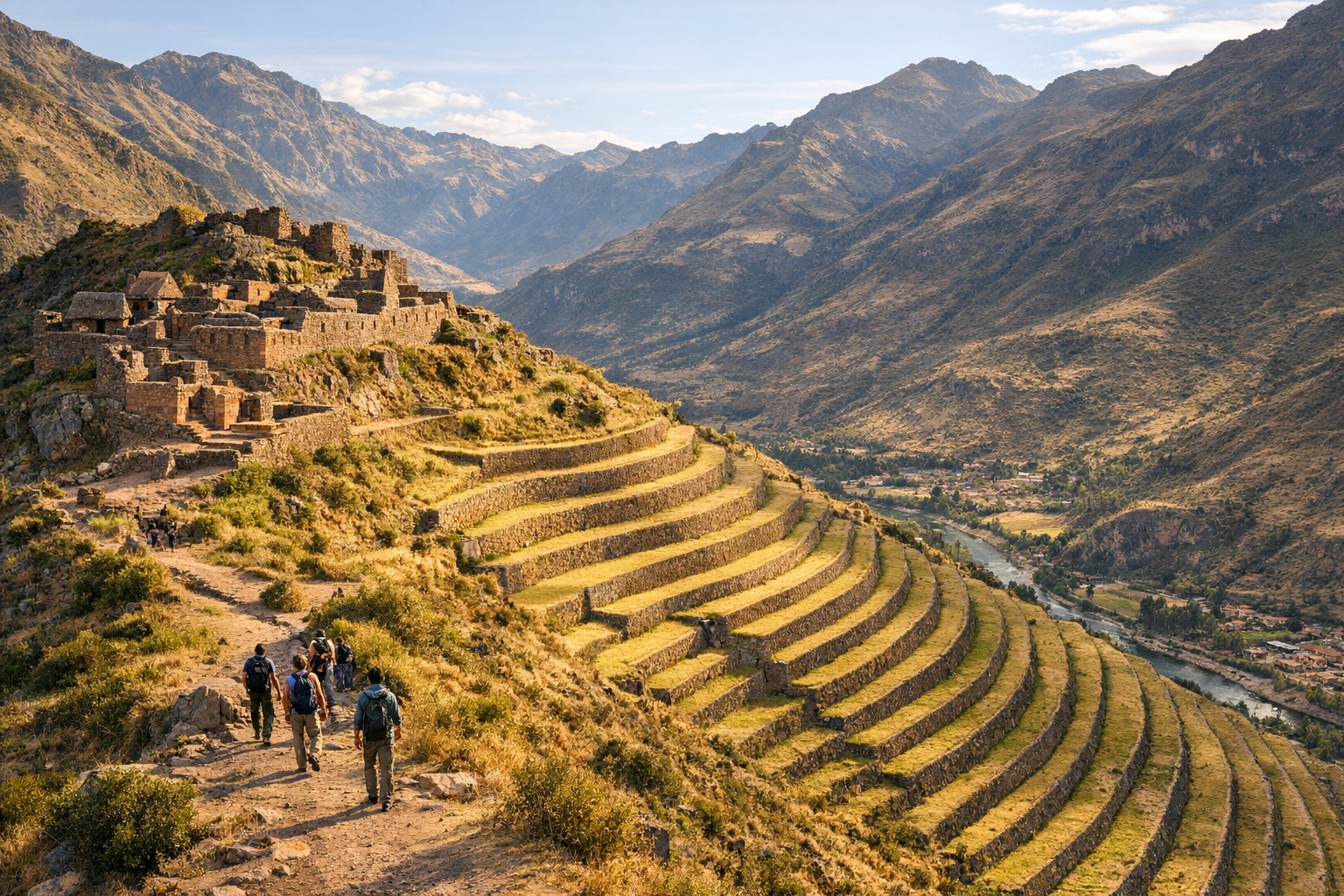
Pisac Peru Guide 2026: Inca Citadel, Market & Sacred Valley
IncaExplore Pisac in Peru's Sacred Valley: hike the Inca citadel terraces above town, visit the famous a...
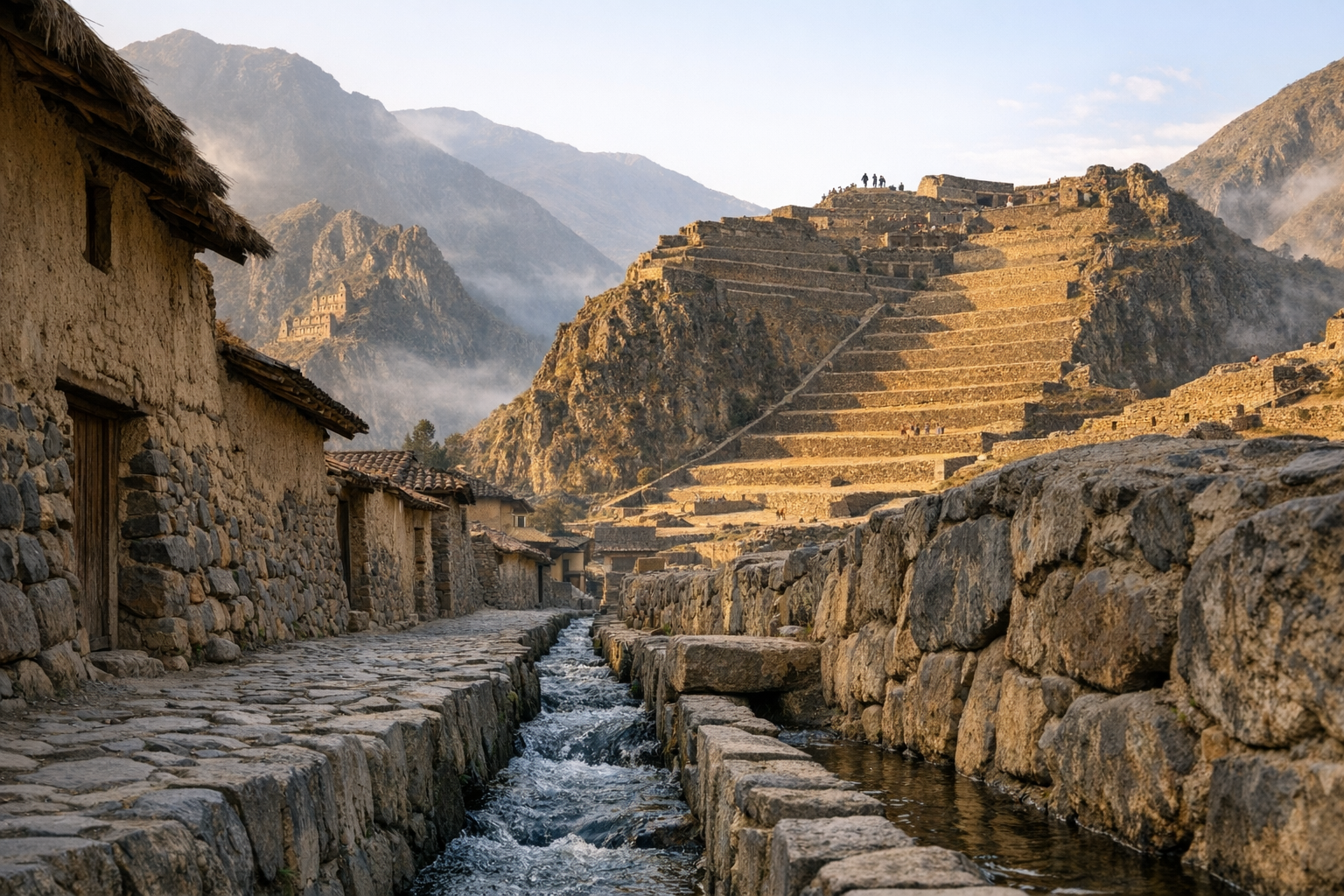
Ollantaytambo Peru Guide 2026: Inca Fortress & Sacred Valley Town
IncaVisit Ollantaytambo in Peru's Sacred Valley: explore the Inca fortress terraces, the Sun Temple, and...
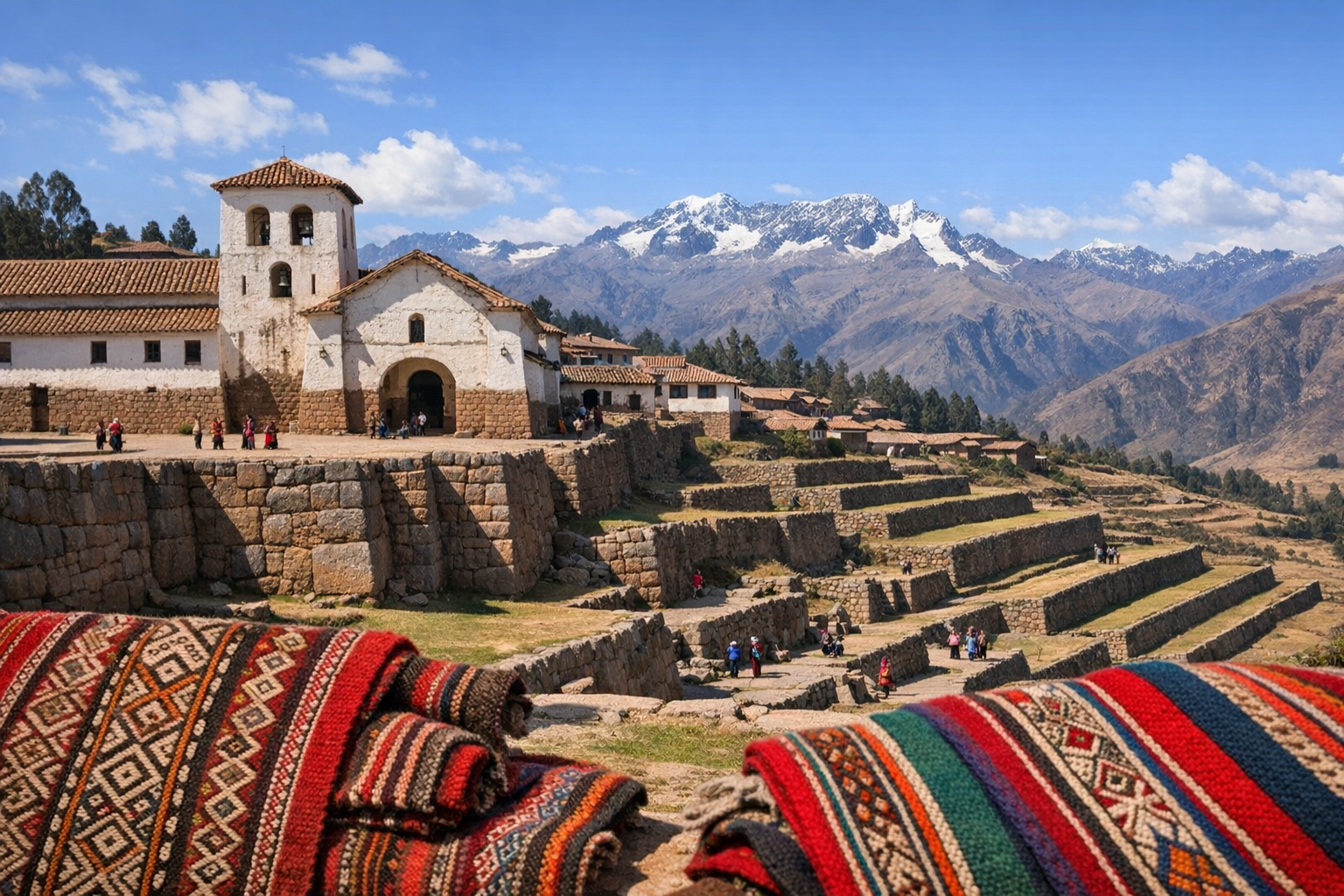
Chinchero Peru Guide 2026: Inca Terraces & Andean Weaving Village
IncaVisit Chinchero on Peru's high plateau above Cusco: Inca royal estate terraces, colonial church buil...
Machu Picchu Peru Travel Guide 2026: Circuits, Tickets & Entry Tips
Inca EmpireNavigate Machu Picchu's 2026 circuit system with our definitive guide. Learn how to choose your rout...