Quick Info
Curated Experiences
Machu Picchu Full-Day Guided Tour from Cusco by Train
Machu Picchu and Huayna Picchu Small Group Experience
Sacred Valley and Machu Picchu 2-Day Tour from Cusco
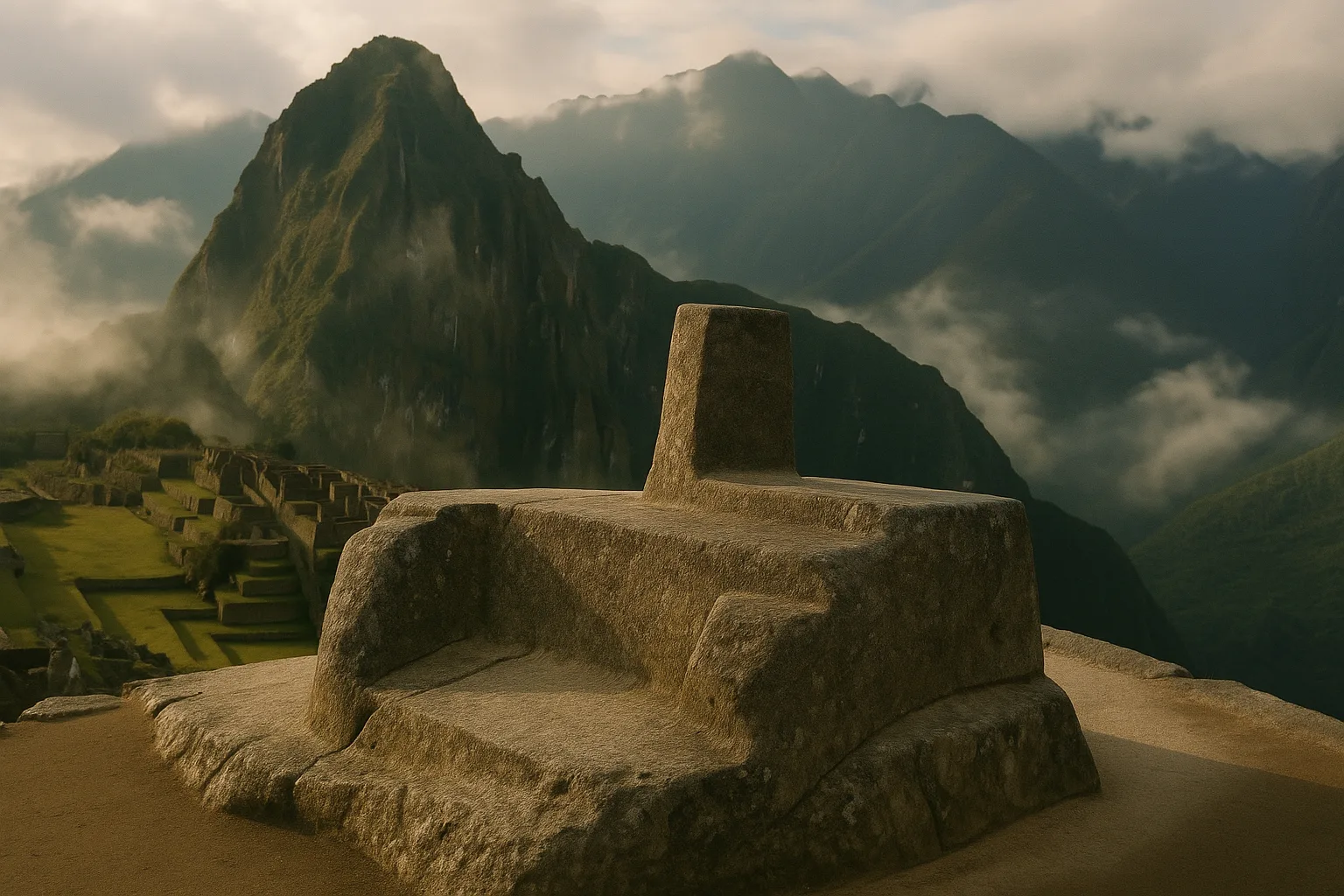
High on the ridge above Machu Picchu’s agricultural terraces, a single carved granite outcrop commands the highest point of the entire citadel. The Intihuatana—Quechua for “hitching post of the sun”—is one of the most remarkable artifacts of Inca astronomical knowledge: a precisely shaped stone pillar rising from a sculpted four-sided platform, engineered to cast minimal shadow at noon on the two equinoxes and to anchor solar observation across the ritual calendar year.
Unlike most sacred objects of the Inca world, which were melted down or destroyed during the Spanish conquest, this stone survived largely intact. Spanish colonial forces systematically shattered Intihuatana stones at other Inca sites, recognizing their ritual importance. Machu Picchu’s relative inaccessibility kept it hidden from colonial attention for nearly four centuries, which is why this example remains the only major Intihuatana stone still standing in its original form anywhere in the former Tawantinsuyu.
The stone sits within a sector of the citadel that Inca planners clearly elevated above the ordinary. The surrounding terraced platform and approach stairs position the monument as a destination in itself rather than an incidental feature of the broader urban layout. Visitors who reach it—access depends on which circuit your ticket covers—often describe the elevated position and the compressed, deliberate geometry of the carving as the single most memorable moment of their Machu Picchu visit.
This guide covers what you need to know to reach it, understand it, and fit it properly into your time at the citadel.
History: The Hitching Post of the Sun
Origins in Inca Cosmology
The Intihuatana stone was carved directly from the living granite of Machu Picchu’s highest ridge during the reign of Pachacuti Inca Yupanqui, around 1450 CE. Its Quechua name translates roughly as “place where the sun is tied” or “hitching post of the sun,” reflecting the Inca belief that the carved pillar could anchor the solar deity Inti at critical astronomical moments. This was no decorative monument — it was a functional instrument embedded in a civilization that organized agriculture, ceremony, and statecraft around celestial cycles.
Astronomical Purpose and Solar Alignment
Intihuatana’s four cardinal-facing planes correspond to the cardinal directions, and the stone’s geometry is calibrated to mark the June and December solstices and the March and September equinoxes. During the March equinox, the sun stands almost directly above the pillar at noon, casting virtually no shadow — a moment Inca priests likely used to confirm the ceremonial calendar and signal planting or harvest cycles across the empire. Whether the stone functioned as a precise gnomon or primarily as a symbolic anchor for solar ritual remains debated, but its orientation is too systematic to be coincidental.
Role in Imperial Religion
Across Tawantinsuyu, the Inca placed similar carved stones at key highland sanctuaries — what scholars call huancas or fixed sacred stones — but Intihuatana at Machu Picchu is among the best-preserved examples surviving with its pillar intact. Spanish colonial authorities systematically destroyed these stones at accessible lowland sites as part of campaigns to dismantle Inca religious infrastructure, which is partly why Machu Picchu’s relative inaccessibility and its apparent abandonment before the full force of the conquest allowed this particular stone to survive. The site itself may have functioned as a royal estate and ceremonial retreat rather than a population center, amplifying the ritual concentration of structures like Intihuatana.
Rediscovery and Modern Study
Hiram Bingham’s 1911 expedition brought Machu Picchu to international attention, and subsequent archaeological work by Peruvian and international teams has refined understanding of Intihuatana’s placement within the broader urban plan. The stone sits at the apex of a ceremonial sequence ascending through agricultural terraces and temple platforms. A 2000 film shoot accident damaged one corner of the pillar, prompting Peru’s Ministry of Culture to implement current no-contact protocols and formalize restricted circulation paths around the monument. That incident ultimately accelerated modern conservation policy for the entire citadel.
The Key Monuments: What to See at Intihuatana
The Intihuatana sector sits at the highest ceremonial point of Machu Picchu’s central ridge, reached by a steep stone stairway that filters foot traffic into a controlled approach. The stone itself is only one element in a carefully arranged spatial composition — the carved gnomon, its platform terrace, surrounding sight lines, and the enclosing architecture all function together as a single astronomical and ritual instrument. Understanding each component helps visitors read the site rather than simply photograph it.
The Intihuatana Stone Itself
The carved granite pillar rises approximately 60 centimeters from a broad, angled base that is itself shaped to a precise geometry. Four faces of the upright projection align with the cardinal directions, and the base platform incorporates subsidiary carved planes and channels whose exact ritual functions remain debated. On the equinoxes the upright casts no shadow at solar noon, a phenomenon Inca astronomers almost certainly built into the design deliberately. The name — commonly translated as “hitching post of the sun” — reflects the Andean concept of tethering the solar cycle at its southward limit to prevent permanent winter. The stone was damaged in 2000 during a film production accident; the broken corner is visible today and serves as a sobering reminder of how fragile carved stone monuments are under modern pressures.
The Summit Terrace and Platform
The flat terrace surrounding the Intihuatana stone was not simply a viewing platform — it formed a stage for priestly observation and state ritual at specific calendrical moments. The terrace is bounded by low walls and structured drops that direct movement and frame particular horizon lines. From the platform, Huayna Picchu rises directly to the north, and the Urubamba canyon frames the east and west. These sight lines were almost certainly deliberate: Inca builders consistently integrated horizon astronomy into ceremonial space, using mountain peaks and river bends as fixed solar and lunar markers.
The Approach Stairways and Enclosure Walls
The stairway ascending to the Intihuatana summit is divided into two main flights separated by a small landing. The stone steps are original Inca construction and show the characteristic tight-fitting masonry that characterizes Machu Picchu’s high-status zones. Flanking walls create a corridor effect that focuses attention upward toward the carved stone and sky. The enclosure walls on the summit terrace itself are lower than those elsewhere in the citadel, a deliberate choice that preserves unobstructed horizon views in all four directions — essential for an instrument designed to track celestial positions across the full year.
Surrounding Upper Terraces and Viewpoints
Immediately below the Intihuatana summit, a series of agricultural and residential terraces step down toward the Sacred Plaza. These terraces provide context for how the ceremonial summit was embedded within daily life rather than isolated from it. From the upper terrace edges, the full urban layout of Machu Picchu becomes legible: the agricultural zones to the south, the urban sector to the east, and the temple complexes of the Sacred Plaza directly below. Many visitors find this elevated perspective — rather than the stone itself — the most intellectually rewarding moment in the Intihuatana sector, because it reveals how completely the Inca integrated astronomy, agriculture, and ceremony into a single coherent landscape.
Getting There: Transportation and Access
Intihuatana is located within the upper ceremonial sector of Machu Picchu citadel, so reaching it means first arriving at the citadel entrance gate.
Cusco to Aguas Calientes by Train
Two rail operators serve the Cusco–Aguas Calientes route. PeruRail Expedition class starts at approximately S/. 160 (USD 43) each way; Vistadome panoramic cars run S/. 220–310 (USD 59–83). Inca Rail First Class begins around S/. 190 (USD 51). Journey time is roughly 3.5 hours from Poroy station or 1.5 hours from Ollantaytambo. Book several weeks ahead during high season (June–August).
Aguas Calientes to Machu Picchu Gate
Consettur buses depart from Avenida Hermanos Ayar continuously from 05:30. The 25-minute switchback ride costs S/. 28 (USD 7.50) one way or S/. 52 (USD 14) return. Tickets are purchased at the bus terminal kiosk; queues form early. Fit travelers can hike the steep Inca drawbridge trail in 90–120 minutes at no charge.
Machu Picchu Entrance Tickets
Citadel admission is currently S/. 152–200 (USD 41–54) depending on circuit tier and time slot. Tickets must be reserved in advance via the official Ministerio de Cultura portal; same-day availability is rare. Confirm your circuit includes the upper Intihuatana sector at the time of booking, as route access is assigned by ticket type and can vary by season.
Practical Information
Admission and Circuits: Intihuatana is accessible only as part of official Machu Picchu timed-entry tickets. Circuits rotate periodically; not every route passes directly through the Intihuatana sector. When booking, confirm your circuit includes the Agricultural Terraces and Urban Core upper sections. Ticket windows in Aguas Calientes and the online portal (cultura.gob.pe) both sell timed slots. Entry windows are staggered at 6:00, 7:00, and later hours — earlier slots reach the sector before peak crowds.
Restrictions: Physical contact with the Intihuatana stone is strictly prohibited. Barriers and signage guide visitors along defined viewing paths. Photography is permitted from these paths; flash and tripod use near the monument may draw guide intervention.
Timing Windows: Plan 15–30 minutes at the stone itself and up to 45 minutes including the surrounding upper terraces and approach stairways. Midday (10:00–13:00) sees heaviest foot traffic.
What to Bring:
- Sun protection (hat, sunscreen, UV-protective clothing)
- Rain layer — conditions shift rapidly at 2,430 m
- Trekking poles (permitted on most circuits)
- Water bottle; no food consumption near the monument
- Sturdy closed-toe footwear for uneven stone stairways
When to Visit: Seasonal Considerations
Dry Season (May–October): Peak Clarity
The austral dry season delivers the most reliable skies over Machu Picchu. Mornings often open clear, giving the Intihuatana’s carved planes sharp shadow definition that makes solar geometry legible. Crowds peak in July and August, so book timed entry and rail tickets well in advance.
Shoulder Months (April and November): Balanced Conditions
April and November sit between the weather extremes. Rainfall drops from wet-season highs while visitor numbers remain below peak. Morning mist clears earlier than in the rainy months, and afternoon light frequently illuminates the upper terrace in warm tones. These months reward flexible travelers willing to plan around variable forecasts.
Wet Season (December–March): Dramatic but Challenging
Afternoon storms roll in reliably, and cloud cover can persist through midday. That said, early entries—first slot at 6 a.m.—often catch a narrow window of clear light before rain builds. Vegetation is lush and saturation low; some travelers find the misty ambiance intensifies the site’s ceremonial atmosphere. Path surfaces become slippery, so traction footwear matters.
Solstices and Equinoxes: Astronomical Events
The June solstice and March/September equinoxes draw visitors specifically to observe whether the Intihuatana casts minimal shadow at solar noon, consistent with Inca alignment theories. Crowds at these moments are notable; arrive at the site’s opening and position yourself in the upper sector early for an unobstructed view.
How to Combine Intihuatana with Nearby Sites
The Intihuatana stone is rarely worth treating as a standalone destination — it sits inside Machu Picchu and reaches its full meaning when paired with the broader citadel and the Sacred Valley sites that share its astronomical and agricultural logic.
Start with Machu Picchu itself. The Intihuatana sector occupies the upper ceremonial ridge, so build your circuit to arrive there early, before the mid-morning crowds thicken around the Sun Gate approach. Spend time in the Agricultural Terraces and the Temple of the Sun before climbing to the carved stone; reading those spaces first makes the solar geometry at the Intihuatana far more legible.
If your ticket includes Huayna Picchu, plan carefully. Huayna Picchu entry windows are fixed at 7 a.m. or 10 a.m. and require advance booking. Most hikers who combine both recommend hitting the Intihuatana sector first, then joining the Huayna Picchu queue — the descent from the peak opens up the lower citadel from a completely different angle, giving you a second look at the ridge where the carved stone sits.
For a multi-day Sacred Valley itinerary, Ollantaytambo pairs naturally as an overnight base before the early train to Aguas Calientes. The terraced military architecture at Ollantaytambo shares the same Late Horizon engineering vocabulary as Machu Picchu’s upper sectors, and the site has its own solar alignment stones worth comparing directly.
Pisac rounds out the comparison. Its hillside agricultural terraces and carved rock outcrops demonstrate that Inca builders applied similar ritual-astronomical thinking across the entire Sacred Valley — Intihuatana was exceptional in preservation, not unique in concept.
Quick Facts
| Field | Details |
|---|---|
| Civilization | Inca |
| Period | Late Horizon (c. 1438-1533 CE) |
| Established | c. 1450 CE carved ritual-astronomical stone platform |
| Typical Visit Time | 15-30 minutes (45 with upper terraces) |
| Access Notes | Route availability depends on current Machu Picchu circuit rules |
| Best Combined With | Main Machu Picchu citadel, Huayna Picchu, Sacred Valley sites |
Explore More Ancient Sites in Peru
To place Intihuatana in broader context, continue with Machu Picchu and the ridge hike at Huayna Picchu, then compare imperial mountain planning with valley fortifications at Ollantaytambo and terraced ritual landscapes at Pisac.
Frequently Asked Questions
Can you still touch the Intihuatana stone?
No. Direct contact is prohibited to protect the carved surfaces from erosion and oils. Visitors view the monument from controlled circulation paths as part of designated Machu Picchu circuits.
Is Intihuatana included on every Machu Picchu circuit?
Not always. Circuit access can change seasonally and by ticket type. Confirm your exact route when booking, especially if Intihuatana is a priority for your visit.
What time of day is best for seeing Intihuatana?
Early morning entries usually offer thinner foot traffic and softer light for reading surface geometry. Midday can be busier, though cloud breaks sometimes create dramatic illumination on the carved planes.
How long should I plan at the Intihuatana sector?
Most travelers spend 15-30 minutes in the immediate sector, but the surrounding upper terraces and approach pathways often justify 45 minutes total in this part of the citadel.
Do I need a guide to understand Intihuatana?
A good guide substantially improves the visit by explaining solar alignment theories, ritual context, and how this carved stone relates to wider Inca cosmology across the sanctuary.
Nearby Ancient Sites
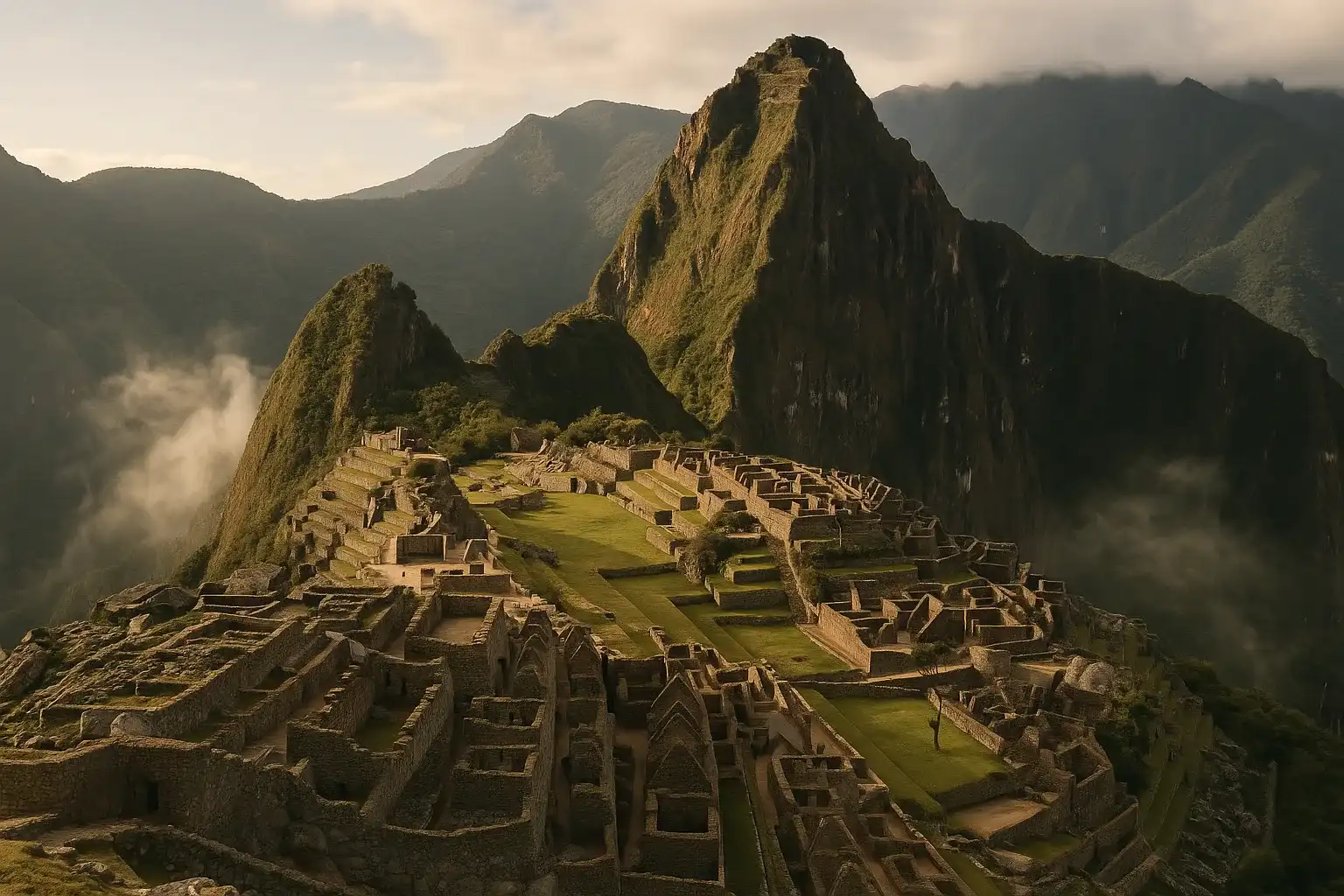
Machu Picchu Peru Travel Guide 2026: Circuits, Tickets & Entry Tips
Inca EmpireNavigate Machu Picchu's 2026 circuit system with our definitive guide. Learn how to choose your rout...
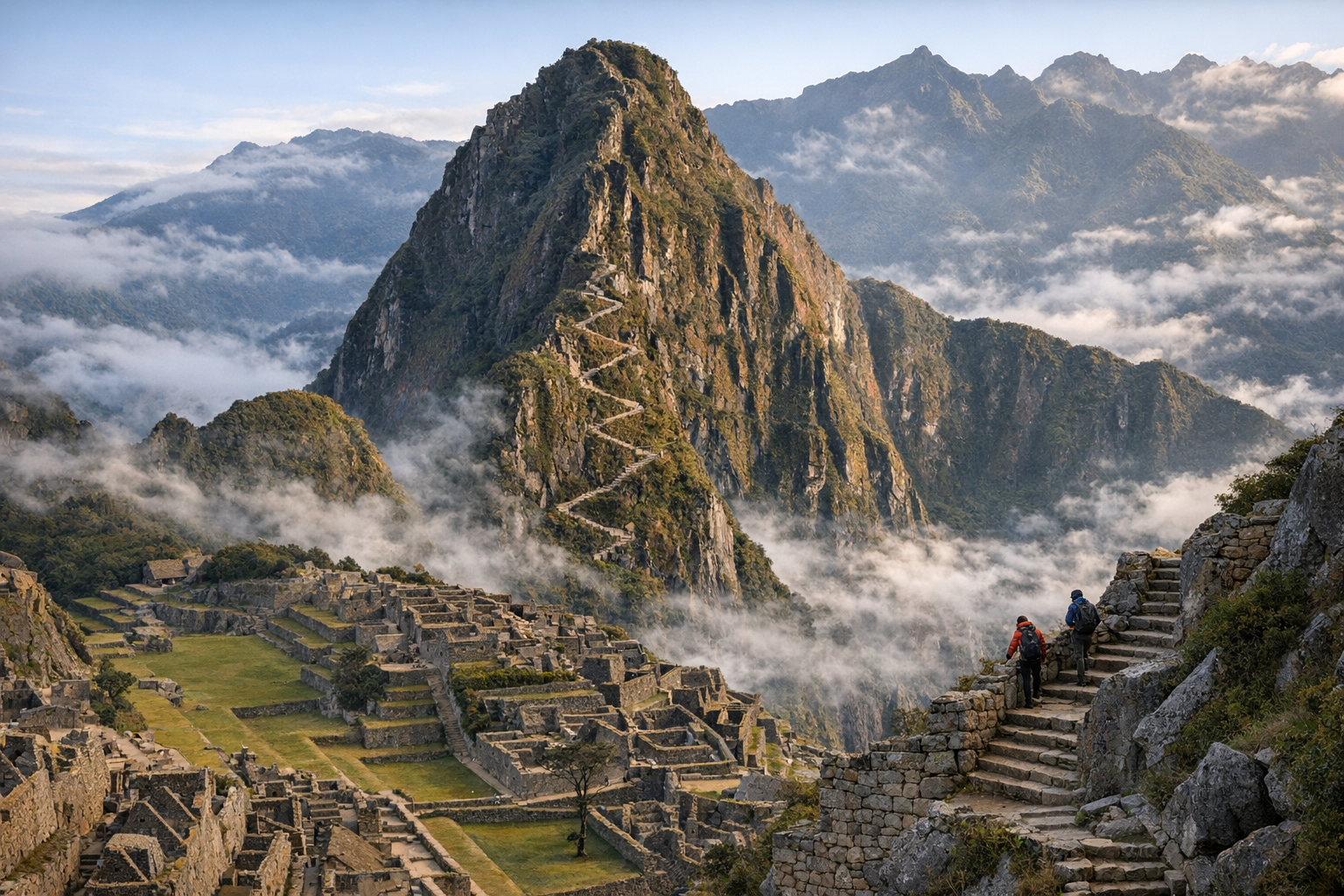
Huayna Picchu Peru Guide 2026: Hike Tickets & Summit Views
IncaClimb Huayna Picchu — the iconic peak above Machu Picchu. Essential guide to limited permits, trail ...
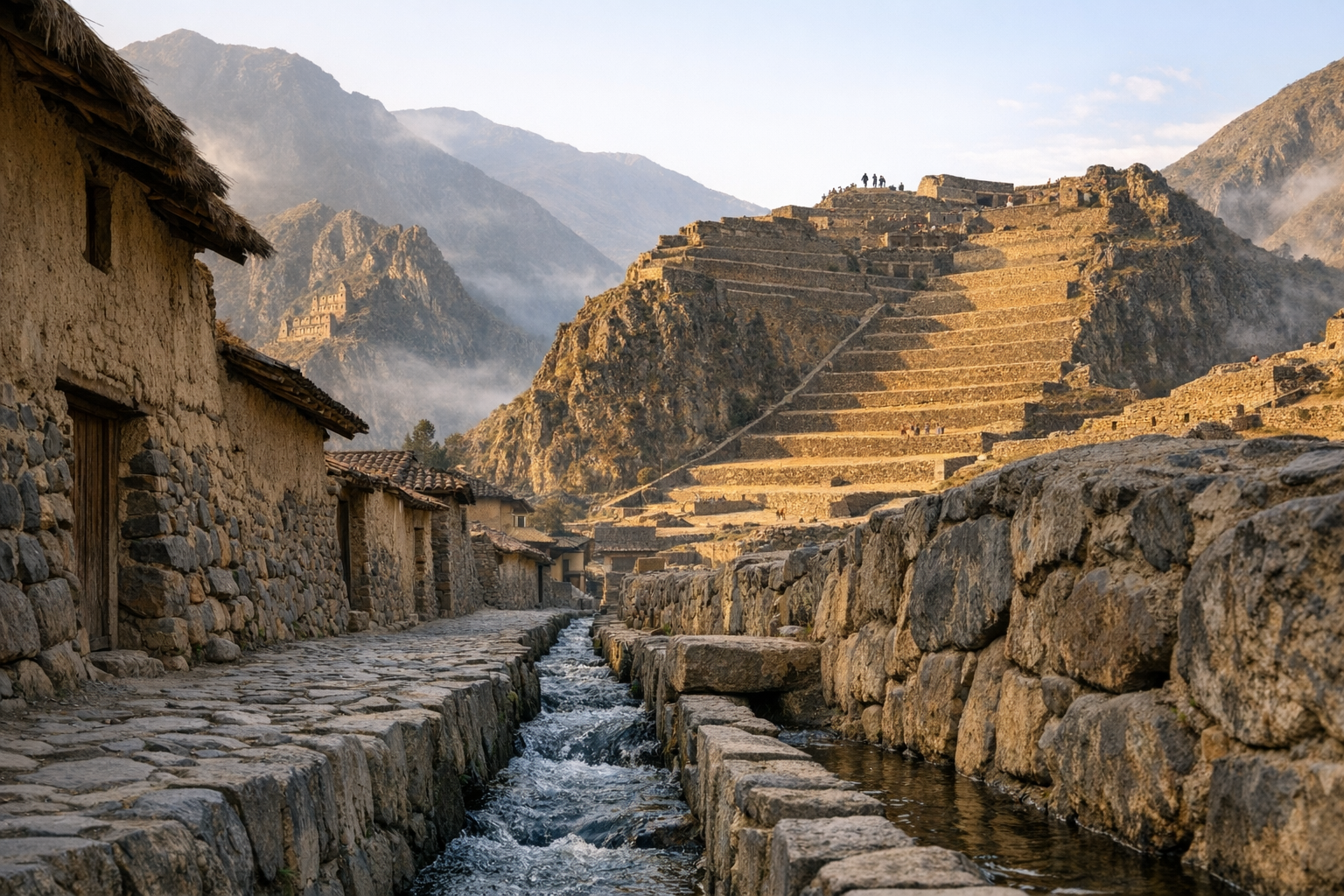
Ollantaytambo Peru Guide 2026: Inca Fortress & Sacred Valley Town
IncaVisit Ollantaytambo in Peru's Sacred Valley: explore the Inca fortress terraces, the Sun Temple, and...