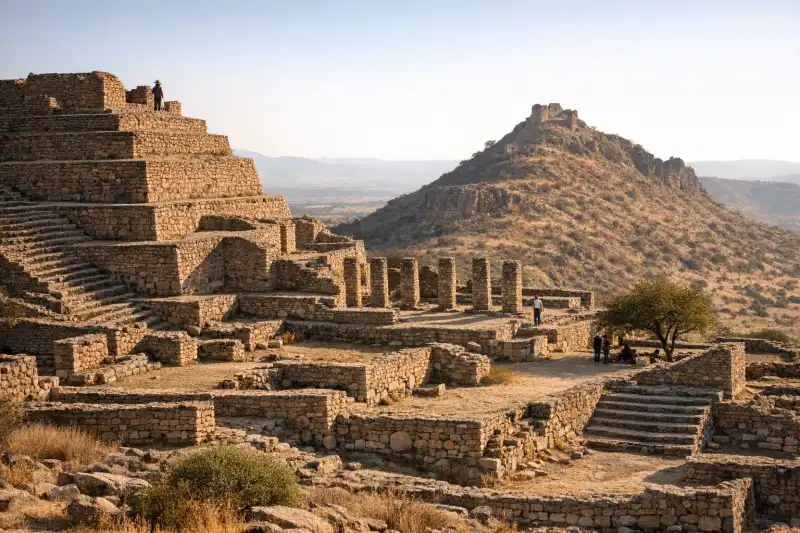
Quick Info
At a glance
La Quemada in Mexico rises from the rugged landscape of Zacatecas like a fortress from another age, a place where stone platforms, terraces, and halls seem to emerge directly from the hill itself. Long before modern roads crossed this dry plateau, the builders of La Quemada shaped an imposing ceremonial and political center overlooking the Malpaso Valley. Today, visitors arrive to find one of northern Mexico’s most intriguing archaeological sites: less famous internationally than the great Maya or central Mexican capitals, yet powerful in atmosphere and unusually dramatic in its setting.
The approach already hints at what makes the site memorable. The land around La Quemada feels broad and exposed, with open skies, scrub vegetation, and a light that changes constantly across the stone. From below, the structures appear layered into the slope, as if architecture and topography were deliberately fused. Once inside, the sense of scale becomes clearer. Causeways, terraces, plazas, and columned spaces suggest a community that was both ceremonially ambitious and carefully organized. Scholars still debate aspects of the site’s identity and role, which adds another layer of fascination: La Quemada is not simply a monument with a settled story, but a place that continues to provoke questions about trade, migration, politics, and frontier life in ancient Mexico.
For travelers interested in archaeology beyond the usual circuit, La Quemada offers something special. It combines monumental ruins, excellent valley views, and a strong feeling of discovery, all within day-trip reach of the colonial city of Zacatecas.
History
Early settlement and regional development
La Quemada developed in what is now the state of Zacatecas, in a region that linked the more urbanized societies of central and western Mexico with the drier lands farther north. Archaeologists generally date its main occupation to between about 300 and 1200 CE, although the most substantial construction appears to belong to the period from roughly 600 to 900 CE. During these centuries, north-central Mexico was not an isolated fringe but part of a network of movement and exchange. Goods, ideas, ritual practices, and perhaps migrants passed along routes that connected major cultural zones.
The first communities at La Quemada likely took advantage of a strategic position above the Malpaso Valley. Elevated terrain offered visibility and symbolic authority, while nearby agricultural land and access routes made long-term occupation possible. Over time, what may have begun as a settlement with local significance grew into a more imposing center marked by planned architecture and large public spaces.
Monumental construction and peak occupation
The height of La Quemada’s development came when its builders transformed the hillside into a complex of terraces, retaining walls, broad platforms, stairways, and ceremonial structures. This was no accidental accumulation of buildings. The architecture reflects labor coordination and social organization on a considerable scale. The site includes a large central plaza, halls with columns, a ballcourt, defensive-looking walls, and elevated sectors that may have served ceremonial or elite functions.
During this flourishing phase, La Quemada probably acted as a regional hub. It may have been involved in the control of local populations, exchange networks, and ritual gatherings. Some scholars have proposed connections with major centers farther south, including Teotihuacan or later traditions in central Mexico, though such links remain debated. Rather than imagining La Quemada as a simple outpost of another civilization, many researchers now see it as a local power center shaped by interaction with wider Mesoamerican traditions while retaining a distinct regional identity.
Its architecture contributes to this interpretation. The massive terraces and commanding viewpoints suggest both ceremonial grandeur and concerns with security or social control. The site was not merely built to be inhabited; it was built to impress.
Decline, fire, and abandonment
Like many ancient sites, La Quemada eventually entered a period of decline. By around the 9th or 10th century, major changes seem to have affected occupation patterns in the region. Environmental pressures, political fragmentation, shifting trade routes, and conflict have all been suggested as possible causes. The exact sequence remains uncertain, but the site was ultimately abandoned.
Its modern name, La Quemada, means “the burned one” or “the burned place,” a reference often linked to evidence of burning found at the ruins. Whether fire played a decisive role in the final abandonment or reflects later episodes is still part of scholarly discussion. What is clear is that the city did not survive as a continuously occupied center into the postclassic era in the way some other Mesoamerican settlements did.
After abandonment, the structures remained on the hillside, gradually weathered by time but still imposing. Their silhouette endured in local memory, and later observers were struck by the unusual monumentality of the ruins in a region often mischaracterized as peripheral.
Rediscovery and archaeological interpretation
La Quemada drew sustained scholarly attention in the modern era as archaeologists sought to understand ancient northern Mexico more fully. Excavation, mapping, and conservation have revealed the complexity of the settlement and challenged older assumptions that monumental urbanism was limited to better-known regions farther south. The site’s museum and interpretive materials now help place it in the broader story of Mesoamerica, emphasizing connections, regional diversity, and ongoing debate.
One reason La Quemada remains so compelling is that its history is not entirely settled. Was it primarily a ceremonial center, a fortified stronghold, a node on trade routes, or all of these at once? The evidence points toward a multifaceted place with political, ritual, and strategic significance. That uncertainty does not diminish the site. On the contrary, it makes walking through La Quemada feel like entering an active historical question etched into stone.
Key Features
The most striking quality of La Quemada is the way architecture climbs and occupies the hill. Instead of spreading across a flat plain, the site uses the slope itself as a framework. Massive terraces support plazas and buildings, while retaining walls create dramatic levels that draw the eye upward. This vertical arrangement gives the ruins an unusually theatrical presence. As you ascend, each new platform reveals another angle on the valley and another layer of the site’s design.
Among the best-known spaces is the Hall of Columns, where stone bases and standing supports suggest a once-roofed structure of considerable importance. Even in ruin, the repeated lines of columns create a strong architectural rhythm. It is easy to imagine this area as a place of gathering, ceremony, administration, or elite display. The surviving elements are enough to communicate order and form without needing complete reconstruction.
The site’s large plazas are equally impressive, especially because of how open they feel against the surrounding landscape. These broad spaces would have accommodated movement, assembly, and ritual performance. Their scale hints that La Quemada was meant to receive groups of people, not just serve as a small enclosed settlement. The relationship between plaza and hillside also matters: from many points, built space and natural terrain remain visually connected, reinforcing the idea that elevation was part of the site’s meaning.
La Quemada also includes a ballcourt, linking it to a ritual and social tradition found widely across Mesoamerica. Ballcourts were more than sporting venues; they were places of ceremony, symbolism, and public life. The presence of one here shows that the community participated in broader cultural practices while expressing them in a regional architectural setting. For many visitors, seeing a ballcourt in this northern landscape underscores how far-reaching Mesoamerican traditions were.
Another memorable feature is the system of defensive-looking walls, staircases, and controlled approaches. Scholars debate how military these features truly were, but they undeniably shape the experience of movement. Some passages feel designed to regulate access, marking transitions from more open areas to more elevated and possibly restricted spaces. Whether intended for defense, ceremony, status display, or a combination of all three, the effect is powerful. The architecture makes you aware that reaching the summit was meaningful.
The upper sectors of the site provide some of the finest views in Zacatecas archaeology. From these heights, the Malpaso Valley spreads out below in muted browns, greens, and golds, depending on the season. The visual command of the landscape helps explain why this hill mattered. Ancient builders did not choose the location randomly. Visibility conveyed practical and symbolic advantages, and standing there today makes that logic immediately clear.
A visit usually begins with the on-site museum, which adds important context before you climb. Ceramics, models, interpretive panels, and excavated materials help translate the stone remains into a lived settlement with chronology and cultural depth. Because La Quemada’s story is less familiar than that of sites like Chichen Itza, this introduction is especially useful. It allows visitors to appreciate not only what survives but also what archaeologists have learned—and what they continue to investigate.
Perhaps the most enduring feature of La Quemada, however, is not any single structure but its atmosphere. The combination of wind, open sky, volcanic-looking stone, and sparse vegetation gives the site a frontier quality unlike the tropical settings of many Mexican ruins. It feels austere, commanding, and slightly enigmatic. For travelers who enjoy archaeological places that retain a strong sense of landscape, La Quemada leaves a lasting impression.
Getting There
La Quemada is most easily visited from the city of Zacatecas, which is about 50 kilometers away by road. If you have a rental car, the trip typically takes around 45 minutes to an hour depending on traffic and your exact starting point. Driving is the simplest option because it gives you flexibility with arrival time and allows you to combine the ruins with other stops in the region. Fuel and toll costs are usually modest for such a short excursion, often in the range of MXN 150 to 300 total depending on route and vehicle.
Taxis or private drivers can also be arranged from Zacatecas. A round-trip taxi fare commonly falls between about MXN 900 and 1,800, depending on waiting time, season, and negotiation. For travelers who prefer not to drive, this can be a practical choice, especially if split between two or more people. Some hotels in Zacatecas can help arrange a driver, and local tour operators may offer half-day cultural excursions that include transport.
Public transport options are more limited and can require patience. Local buses or colectivos toward nearby communities may exist, but schedules are not always visitor-friendly, and you may still need a taxi for the final approach. If traveling on a tight budget, expect to pay perhaps MXN 80 to 200 in combined bus and local transport costs, but allow extra time and confirm current options locally.
Once at the site, wear sturdy shoes and carry water. Even though the ruins are accessible, the climb involves uneven surfaces, exposed stone, and uphill walking under strong sun.
When to Visit
The best time to visit La Quemada is generally during the cooler and drier months from October through March. Daytime temperatures are usually more comfortable for walking, and the clearer air often makes the views across the valley especially rewarding. Because much of the site is exposed, even a mild temperature can feel intense under direct sun, so morning visits are ideal. Arriving early also means softer light for photography and fewer visitors on the paths.
Spring, especially April and May, can be beautiful but noticeably hotter. If you travel at this time, plan for an early start, bring more water than you think you need, and wear sun protection. The stone terraces reflect heat, and there is limited shade once you begin exploring the upper levels. For travelers accustomed to dry climates, this may be manageable, but midday can feel draining.
The summer rainy season, roughly June through September, transforms the surrounding landscape with greener tones and occasionally dramatic skies. This can make the site visually striking, though afternoon showers and slippery surfaces are possible. If you don’t mind the chance of rain, summer offers a different mood and often fewer crowds. Just be prepared with good footwear and flexibility in your schedule.
Weekdays are usually quieter than weekends and holidays. If your goal is to appreciate the site’s stillness and broad views, avoiding peak local travel periods is worthwhile. No matter the season, the most comfortable formula is simple: arrive early, bring water, and give yourself enough time to explore at a steady pace rather than rushing the climb.
| Quick Facts | Details |
|---|---|
| Location | Near Villanueva, Zacatecas, Mexico |
| Distance from Zacatecas City | About 50 km south |
| Main Period | c. 300-1200 CE |
| Best Known For | Hilltop terraces, Hall of Columns, plazas, ballcourt |
| Time Needed | 2-4 hours |
| Best Season | October to March |
| Access | Car, taxi, private tour, limited public transport |
| Terrain | Uneven stone paths with uphill sections |
| Bring | Water, sun protection, sturdy walking shoes |
| Why Visit | One of northern Mexico’s most dramatic and enigmatic ancient sites |
Guided tours: worth it?
A guide can be genuinely useful at La Quemada, especially if you want help with transport, timing, tickets, or understanding a large site without losing half the day to logistics.
Best for
- First-time visitors who want context, not just photos
- Travelers who want transport, timing, or entry logistics handled
- Short visits where a planned route saves time
When to go self-guided
Go independently if you already have transport and tickets sorted, enjoy moving at your own pace, and are comfortable checking the latest official rules before you arrive.
What I’d avoid
Skip paid tours that bundle unrelated stops you do not actually want. The best option should either save meaningful planning time or add historical context you would miss on your own.
Zacatecas Archaeology Tours
Useful when: you want to compare guided formats before deciding
La Quemada Day Tours
Useful when: you want to compare guided formats before deciding
Zacatecas Cultural Tours
Useful when: you want to compare guided formats before deciding
Some tour links are affiliate links, which may earn Ancient Travel a small commission at no extra cost to you. I try to surface options that make practical sense for the site—not just anything bookable.
Frequently Asked Questions
Where is La Quemada located?
La Quemada is in the state of Zacatecas in north-central Mexico, roughly 50 kilometers south of the city of Zacatecas.
What is La Quemada known for?
The site is known for its striking hilltop setting, defensive-looking terraces, broad ceremonial spaces, stone columns, and panoramic views over the Malpaso Valley.
How much time should I spend at La Quemada?
Most visitors spend 2 to 4 hours exploring the museum, walking the main ruins, and climbing to the upper parts of the site.
Is La Quemada difficult to visit?
La Quemada is accessible for independent travelers and day-trippers from Zacatecas, but reaching the upper structures involves uphill walking on uneven stone paths.
When is the best time to visit La Quemada?
The most comfortable months are usually from October to March, when temperatures are milder and hiking around the exposed hilltop is easier.
Can I visit La Quemada from Zacatecas in one day?
Yes. La Quemada is a realistic half-day or full-day excursion from the city of Zacatecas by car, taxi, or organized tour.
Nearby Ancient Sites
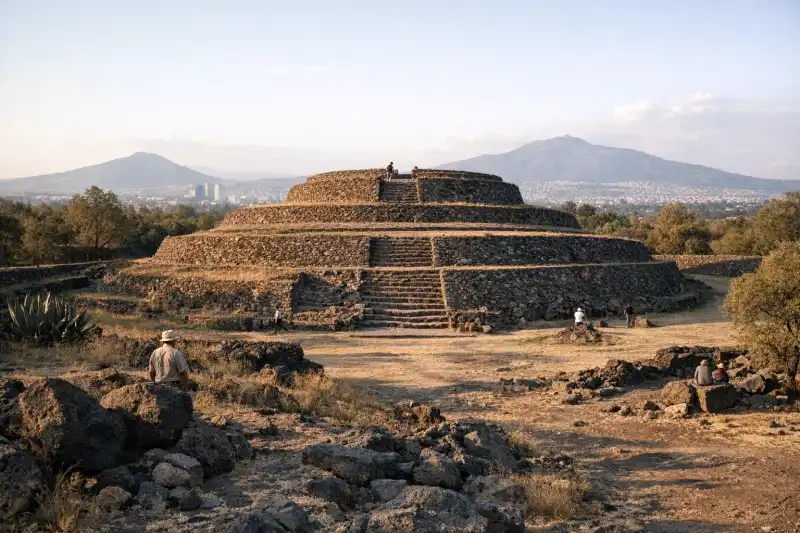
Cuicuilco
Preclassic MesoamericanExplore Cuicuilco, Mexico’s ancient circular pyramid site, a remarkable pre-Hispanic center on the s...
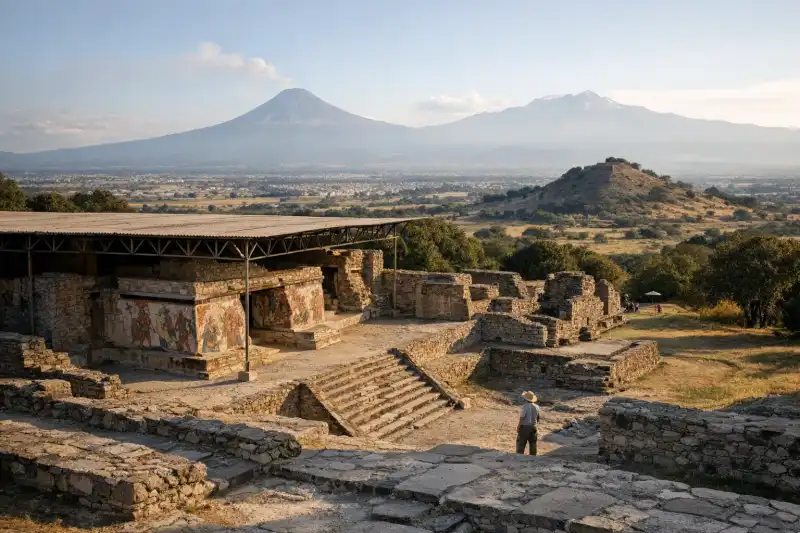
Cacaxtla
Olmeca-Xicalanca and broader Epiclassic Mesoamerican traditionsExplore Cacaxtla in Mexico, a hilltop archaeological site famed for vivid murals and Epiclassic hist...
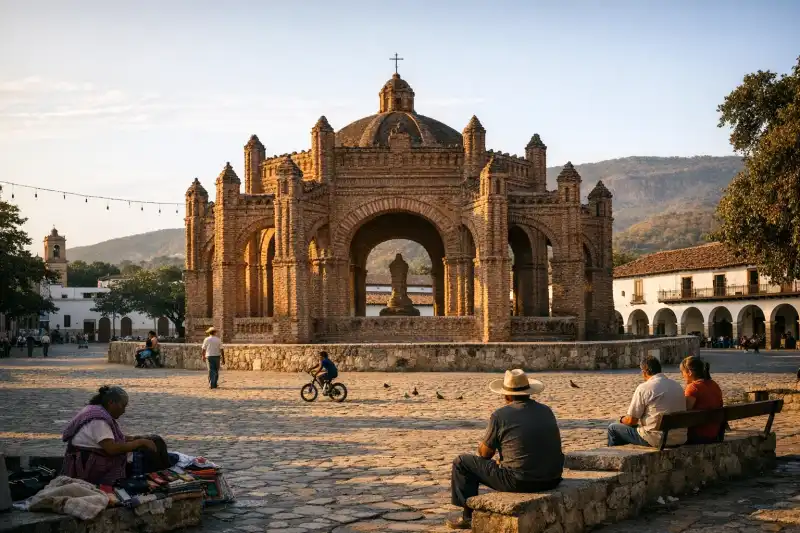
Chiapa de Corzo
Zoque and earlier Mesoamerican culturesExplore Chiapa de Corzo, Mexico, a major early Mesoamerican site beside the Grijalva River in Chiapa...