Quick Info
Curated Experiences
Full-Day Sacred Valley Tour: Pisac, Ollantaytambo & Chinchero from Cusco
Private Transfer from Cusco to Ollantaytambo
Ollantaytambo Sunrise Private Tour with Breakfast
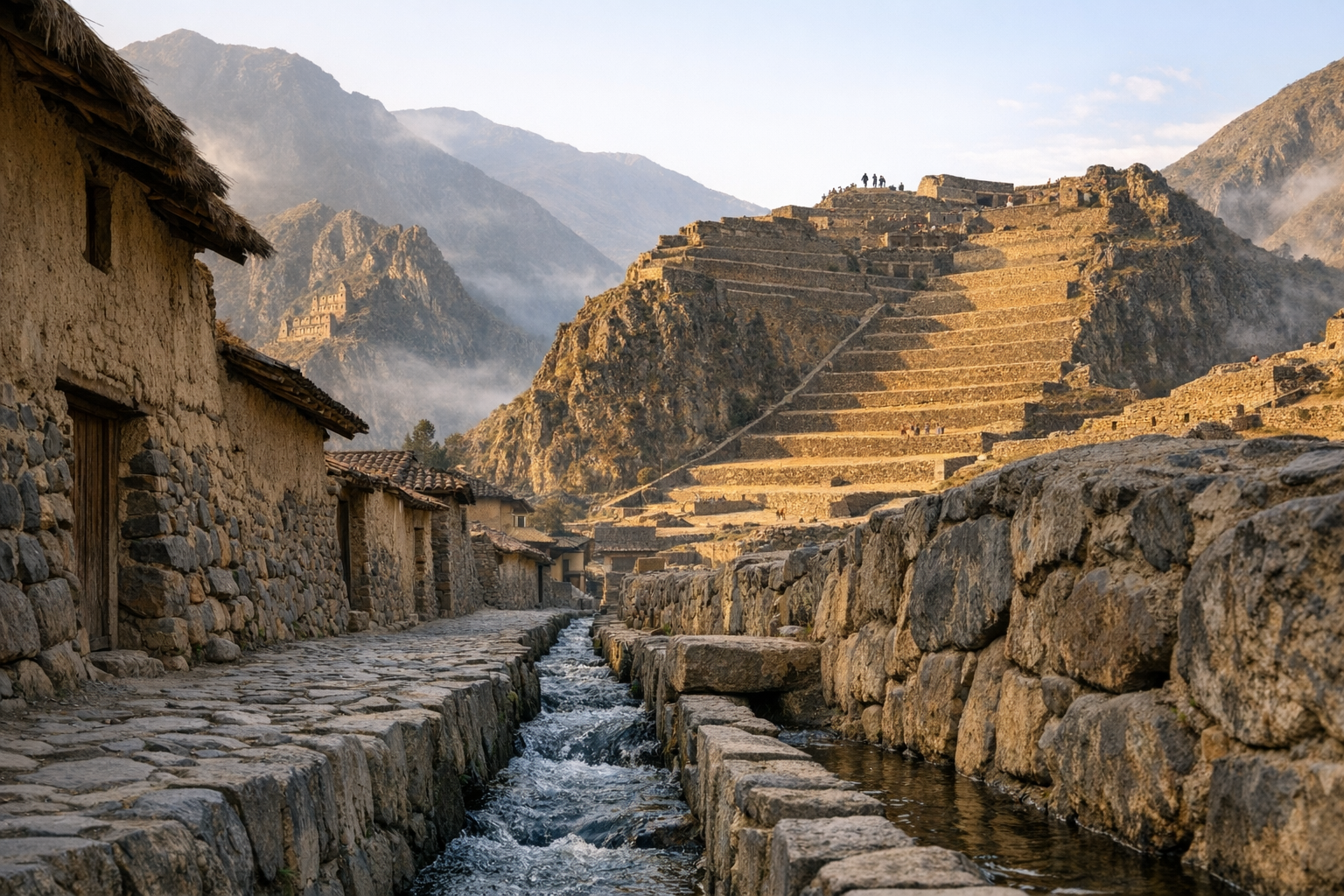
Perched at the entrance of the Sacred Valley where the Urubamba River squeezes between steep canyon walls, Ollantaytambo is one of the Inca Empire’s most dramatic surviving achievements. The massive stone terraces that cascade up the cliff face above town are visible from the valley floor kilometers away — a testament to the labor and precision that defined Inca construction at its most ambitious. At 2,792 meters elevation, this was not merely a fortress but a royal estate, a religious center, and a temple complex that commanded the gateway to the rainforest lowlands.
What makes Ollantaytambo extraordinary is that it has never been abandoned. The lower town’s grid of canals, narrow lanes, and stone walls forms the oldest continuously occupied settlement in the Americas. Families still live in houses whose foundations were laid by Inca stonemasons five centuries ago. Walking from the archaeological terraces into the living town blurs the line between museum and reality in a way that few ancient sites can achieve. This guide covers the fortress terraces, the Temple of the Sun, the Inca town layout, practical access from Cusco, and how to incorporate Ollantaytambo into a Sacred Valley or Machu Picchu itinerary.
History: Gateway of the Empire
Pre-Inca and Early Inca Settlement (Before 1440 CE)
The Urubamba Valley had been inhabited long before the Inca expansion. Local Quechua-speaking communities farmed the terraced slopes and controlled access between the highlands and the tropical lowlands for centuries. When the Inca Empire extended into the Sacred Valley in the early 15th century, Ollantaytambo’s position at the valley’s western end — commanding the route into the Amazon basin — made it strategically indispensable. Early Inca construction at the site likely began during the reign of Pachacuti (1438–1471).
The Great Building Phase (c. 1440–1471 CE)
Emperor Pachacuti is credited with transforming Ollantaytambo from a frontier post into one of the empire’s most ambitious architectural projects. He claimed the valley as a royal estate and oversaw the construction of the vast agricultural terracing system, the royal residential compound in the lower town, and the ceremonial complex atop the cliff. The famous pink granite monoliths in the Temple of the Sun were quarried from the Cachicata quarry on the opposite side of the valley — a feat of engineering requiring thousands of workers to drag stones weighing up to 50 tons across the river and up the cliff face.
The Inca Civil War and Spanish Conquest (1527–1536 CE)
The Inca civil war between Huáscar and Atahualpa (1527–1532) destabilized the empire before the Spanish arrived. After Francisco Pizarro captured and executed Atahualpa in 1533, the remaining Inca nobility retreated to Ollantaytambo under the leadership of Manco Inca Yupanqui. In 1537, Manco Inca staged a remarkable military victory here — one of the few successful Inca counterattacks against Spanish cavalry. He flooded the valley using Inca irrigation canals to bog down the horses, then rained down rocks and arrows from the terraces. The victory was short-lived; Spanish reinforcements eventually forced Manco Inca to retreat further into the jungle.
Colonial and Modern Periods (1537–Present)
Unlike most Inca sites, Ollantaytambo was never fully destroyed or buried. The lower town remained inhabited through the colonial period and beyond. Systematic archaeological study began in the 20th century, with significant work by John Rowe and Alfredo Valencia Zegarra clarifying the site’s layout and construction sequence. Today Ollantaytambo is both a UNESCO World Heritage component (as part of the Cusco Historic Area) and the primary rail gateway to Machu Picchu, receiving over 400,000 visitors annually.
The Key Monuments: What to See at Ollantaytambo
The Agricultural Terraces (Andenes)
The first thing visible from the valley floor — and the image most associated with Ollantaytambo — is the series of massive agricultural terraces (andenes) that rise in precise stone-faced steps from the town plaza to the ceremonial platform above. These are among the finest examples of Inca terrace engineering in Peru. Each terrace wall stands 3–4 meters tall, faced with carefully fitted limestone blocks, and filled with packed soil over drainage layers of sand and gravel. The terraces served both agricultural and defensive functions: the steep gradient slowed attackers while producing crops at microclimate zones that could not otherwise be farmed at this altitude. Climb early when the terraces catch the first light and the valley floor lies in shadow below — the effect is dramatic and the stone textures photograph beautifully.
The Temple of the Sun and the Six Monoliths
At the summit of the terrace staircase sits the unfinished Temple of the Sun, Ollantaytambo’s most enigmatic structure. Its most famous feature is the Wall of the Six Monoliths — six enormous pink granite slabs, each weighing 50–70 tons, fitted together with the interlocking precision characteristic of the finest Inca stonework. Between and behind the monoliths are smaller relief-cut figures interpreted as carved faces, serpents, and cosmological symbols. The temple was never completed; Spanish conquest halted construction mid-way, leaving partially worked stones still on the ramp above. The quarry site at Cachicata, visible across the valley, helps visitors appreciate the scale of the logistical challenge Pachacuti’s builders undertook.
The Inca Waterworks
Often overlooked by visitors focused on the terraces, the Inca water management system at Ollantaytambo is one of the most sophisticated in the Americas. Stone-lined canals channel water from springs above the site through the terraces and into the town below. Several fountain niches remain intact, including a ceremonial fountain near the base of the terraces that still flows. The system was precise enough that Manco Inca weaponized it against the Spanish in 1537, flooding the valley floor by releasing controlled irrigation flows. Follow the canal channels as you descend from the terraces for an appreciation of Inca hydraulic engineering.
The Living Inca Town
Below the fortress, the lower town of Ollantaytambo preserves the original Inca urban plan almost intact — something virtually unique in the Americas. The streets form a grid of narrow lanes (callejones) following the classic Inca canchas pattern: rectangular compounds with a single entrance gate opening onto an interior courtyard, with residential buildings arranged around the perimeter. Mañay Raqay (near the main plaza) and the Inca Qhata residential compound are the best-preserved examples. The town’s residents still live in houses whose stone lower walls are original Inca construction. Exploring these lanes after visiting the terraces provides essential context for understanding how the Inca actually lived.
Getting There: Transportation and Access
Ollantaytambo sits 72 kilometers northwest of Cusco along the Urubamba Valley — easily reached by road and the essential stopover for all rail services to Machu Picchu.
From Cusco
The most economical option from Cusco is the shared colectivo van service departing from Calle Pavitos (near the terminal terrestre area).
- Colectivo: 3–5 PEN ($0.80–1.40 USD), approximately 1.5–2 hours. Vans depart when full throughout the morning.
- Private taxi: 80–120 PEN ($22–33 USD) door-to-door, 1.5 hours. Negotiate before departure; hotel-arranged taxis charge more.
- Organized tour: Most Sacred Valley day tours include Ollantaytambo as a key stop with guide and transport from Cusco (typically 100–180 PEN / $28–49 USD all-inclusive).
From the Train Station
Ollantaytambo’s train station is the primary departure point for PeruRail and Inca Rail services to Aguas Calientes (the gateway town for Machu Picchu). The station is a 15-minute walk from the archaeological site and 10 minutes from the main plaza.
- PeruRail Vistadome to Aguas Calientes: 88–240 USD round trip depending on class and season. Book at least 2–4 weeks in advance.
- Inca Rail: Comparable pricing, with a slightly more modern fleet. Both operate from Ollantaytambo to Aguas Calientes in approximately 1.5 hours.
Admission and Hours
The Ollantaytambo archaeological zone is covered by the Boleto Turístico del Cusco (BTC). The partial BTC (Circuit II) covering Ollantaytambo and 9 other Sacred Valley sites costs 70 PEN (~$19 USD) and is valid for 2 days from first use. The full BTC (130 PEN / ~$35 USD) covers all 16 sites including Cusco city attractions and is valid for 10 days.
Tickets cannot be purchased at the site entrance — buy them at the BTC offices in Cusco (Avenida del Sol 103) or at designated offices in Pisac and Ollantaytambo town. Hours are generally 07:00–18:00 daily. The terraces are fully exposed with minimal shade; bring sun protection and water.
When to Visit: Seasonal Considerations
Spring (September–November)
September and October are ideal months for Ollantaytambo. Temperatures run 12–20°C (54–68°F) at the site level, the Andes vegetation is lush from the rainy season just ending, and crowds thin noticeably after the peak summer season. The light quality in October is particularly fine — crisp Andean air and reliable afternoon sun for photography.
Summer (June–August)
The dry season peak brings the most reliable weather but also the largest crowds. Temperatures range 8–22°C (46–72°F) with cold mornings. The terraces are spectacular in the clear dry-season light, but tour buses arrive from Cusco by 9:00 AM. Book any train connections well in advance — June through August sees near-capacity rail traffic.
Autumn (March–May)
April and May offer an excellent balance of green landscapes and receding rainy-season crowds. March can still see significant afternoon rainfall, but April is generally stable. The terraces retain their lushest vegetation, and the Urubamba runs full and powerful. Early morning visits (opening at 07:00) allow a peaceful circuit before tour groups arrive.
Winter (December–February)
The austral summer brings the wet season to the Andes. Rain falls frequently, often in heavy afternoon showers. The terraces can be slippery, and cloud cover frequently obscures the peaks above the site. However, visitor numbers drop substantially, prices are lower, and the Urubamba Valley is dramatically green. February sees the Inca Trail closed for maintenance, pushing more visitors to the Ollantaytambo rail route.
Combining Ollantaytambo with the Sacred Valley
Ollantaytambo anchors the western end of the Sacred Valley day-trip circuit from Cusco, and the ideal sequence builds westward through the valley.
Begin the day at Pisac by 8:00 AM, arriving early for the Inca citadel above the town before the market crowds gather in the plaza below. By 11:00 AM, the 35-kilometer drive along the valley floor reaches Urubamba town — a logical lunch stop with several solid restaurants near the main plaza. Continue to Ollantaytambo by 13:00, giving 2.5 hours to climb the terraces and explore the Sun Temple before the late-afternoon light turns golden across the stonework. At 15:30, descend into the living Inca town for a final 45 minutes of wandering the callejones. Return to Cusco by 17:30–18:00, arriving in time for dinner in the historic center.
For visitors continuing to Machu Picchu, the evening departure from Ollantaytambo station (PeruRail’s Expedition train departs around 18:00 in high season, arriving Aguas Calientes ~19:30) allows you to combine a full afternoon at the Ollantaytambo fortress with a smooth same-evening connection to the Machu Picchu gateway town. Stay overnight in Aguas Calientes and enter Machu Picchu at first opening the following morning.
Why Ollantaytambo Matters
Ollantaytambo occupies a unique position in the story of the Inca Empire: it is simultaneously the finest surviving example of Inca town planning, one of the most sophisticated examples of Inca terraced construction, and one of the last places where Inca resistance held against Spanish conquest. To stand at the top of the terraces and look down at a grid of streets still inhabited by Andean families — streets laid out by Inca urban planners in the 15th century — is to experience an unbroken thread of civilization that most archaeological sites cannot offer.
The unfinished Temple of the Sun carries its own particular power. The six monoliths stand exactly as Inca builders left them when the conquest interrupted construction. No later civilization completed the building, no earthquake toppled the blocks, no colonial demolition cleared the site. What you see is precisely what Pachacuti’s architects envisioned and workers partially achieved — frozen in perpetual mid-creation. In a world where ancient sites are often reconstructed, restored, and reinterpreted, Ollantaytambo’s frozen incompleteness is a form of authenticity more affecting than any finished monument. It is one of the rare places where architectural ambition, military history, and living urban continuity can all be experienced in a single afternoon.
Quick Facts
| Attribute | Details |
|---|---|
| Location | Sacred Valley, Cusco Region, Peru |
| UNESCO Status | Part of Cusco Historic Area (1983) |
| Established | c. 1440 CE (Inca royal estate) |
| Civilization | Inca Empire |
| Distance from Cusco | 72 km / ~1.5 hrs by road |
| Entry Fee | Boleto Turístico Parcial: 70 PEN (~$19 USD) |
| Hours | 07:00–18:00 daily |
| Best Time | May–October dry season; arrive by 08:00 |
| Altitude | 2,792 m (9,160 ft) |
| Suggested Stay | 2.5–3 hours at site |
Explore More Peru
- Machu Picchu: The Lost City of the Incas — the ultimate Sacred Valley destination
- Pisac: Inca citadel and famous artisan market at the valley’s eastern entrance
- Chinchero: Inca royal estate with intact terraces and a living weaving tradition
- Moray: The mysterious circular Inca agricultural laboratory in the highlands
Plan your complete Sacred Valley journey with our Peru Ancient Sites Guide. For altitude preparation and logistics, see our Inca Trail planning guide.
Frequently Asked Questions
How much time should I plan for Ollantaytambo?
Allow 2–3 hours to climb and explore the terraces and Temple of the Sun, plus another 30–60 minutes to wander the living Inca town below. Combine with the train to Aguas Calientes if continuing to Machu Picchu.
What is the best time to visit Ollantaytambo?
May through September (dry season) offers clear skies and reliable conditions for climbing the terraces. Arrive before 9:00 AM to beat tour groups from Cusco, which typically arrive mid-morning.
Do I need the Boleto Turístico for Ollantaytambo?
Yes. Ollantaytambo is included on the Boleto Turístico del Cusco (BTC), which covers 16 sites around Cusco and the Sacred Valley. The partial circuit ticket (70 PEN / ~$19 USD) covers Ollantaytambo plus 9 other Valley sites and is the best value for most visitors.
How do I get from Cusco to Ollantaytambo?
Shared colectivos depart from Calle Pavitos in Cusco (2–3 PEN / ~$0.60 USD, 1.5 hours). Private taxis cost around 80–120 PEN ($22–33 USD). Most Sacred Valley day tours include Ollantaytambo. The train station is the departure point for all rail services to Aguas Calientes and Machu Picchu.
What are the main things to see at Ollantaytambo?
Key highlights include the massive agricultural terraces (Andenes), the Temple of the Sun with its monolithic pink granite slabs, the Inca waterworks, the Wall of the Six Monoliths, and the well-preserved grid of streets in the lower town — one of the few living Inca town layouts still occupied today.
Is Ollantaytambo safe for tourists?
Yes. Ollantaytambo is one of Peru's safest tourist destinations. Exercise normal precautions with valuables, stay on the archaeological trails, and be prepared for altitude (2,792 meters / 9,160 feet). Acclimatize in Cusco for 1–2 days before strenuous climbing.
Nearby Ancient Sites
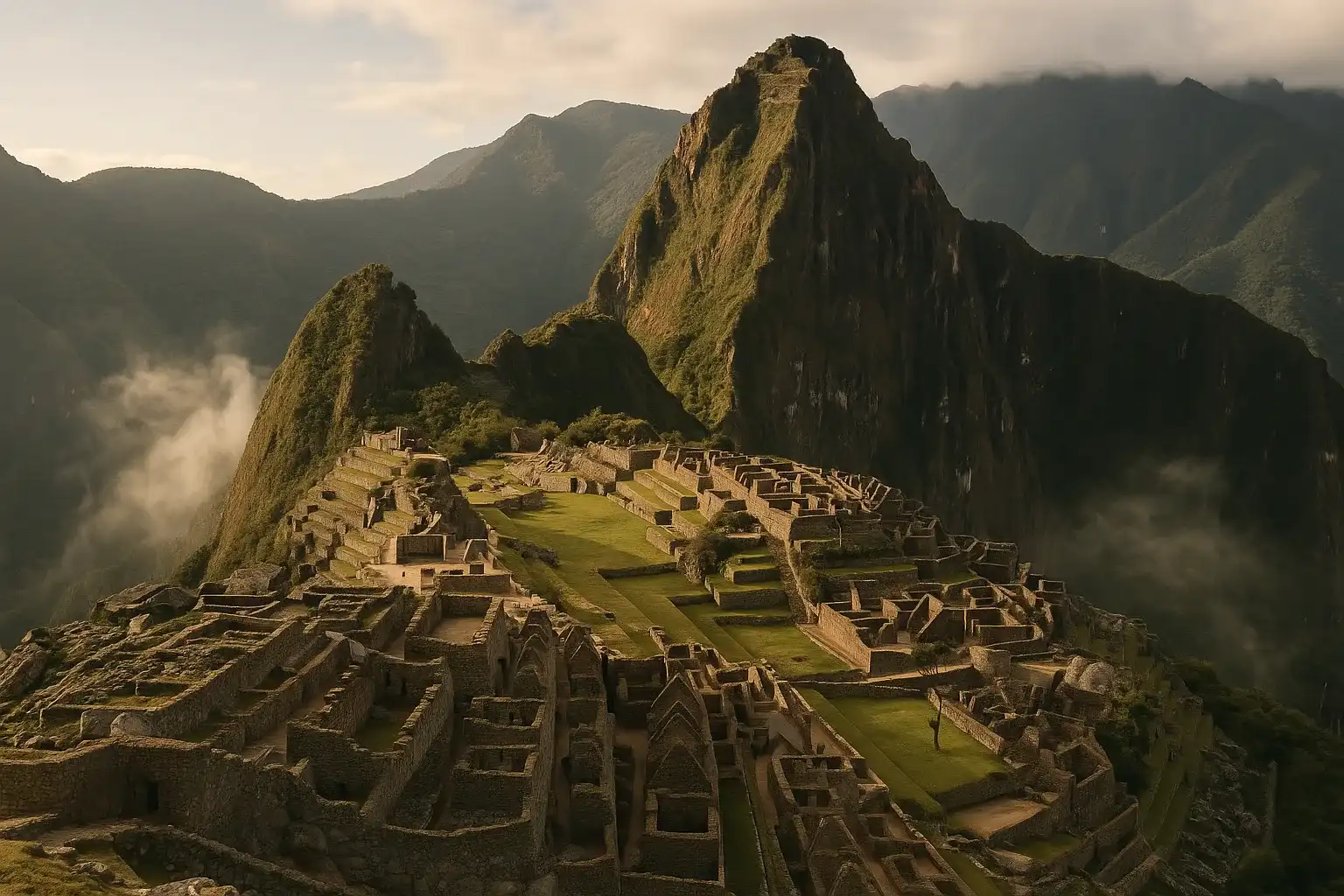
Machu Picchu Peru Travel Guide 2026: Circuits, Tickets & Entry Tips
Inca EmpireNavigate Machu Picchu's 2026 circuit system with our definitive guide. Learn how to choose your rout...
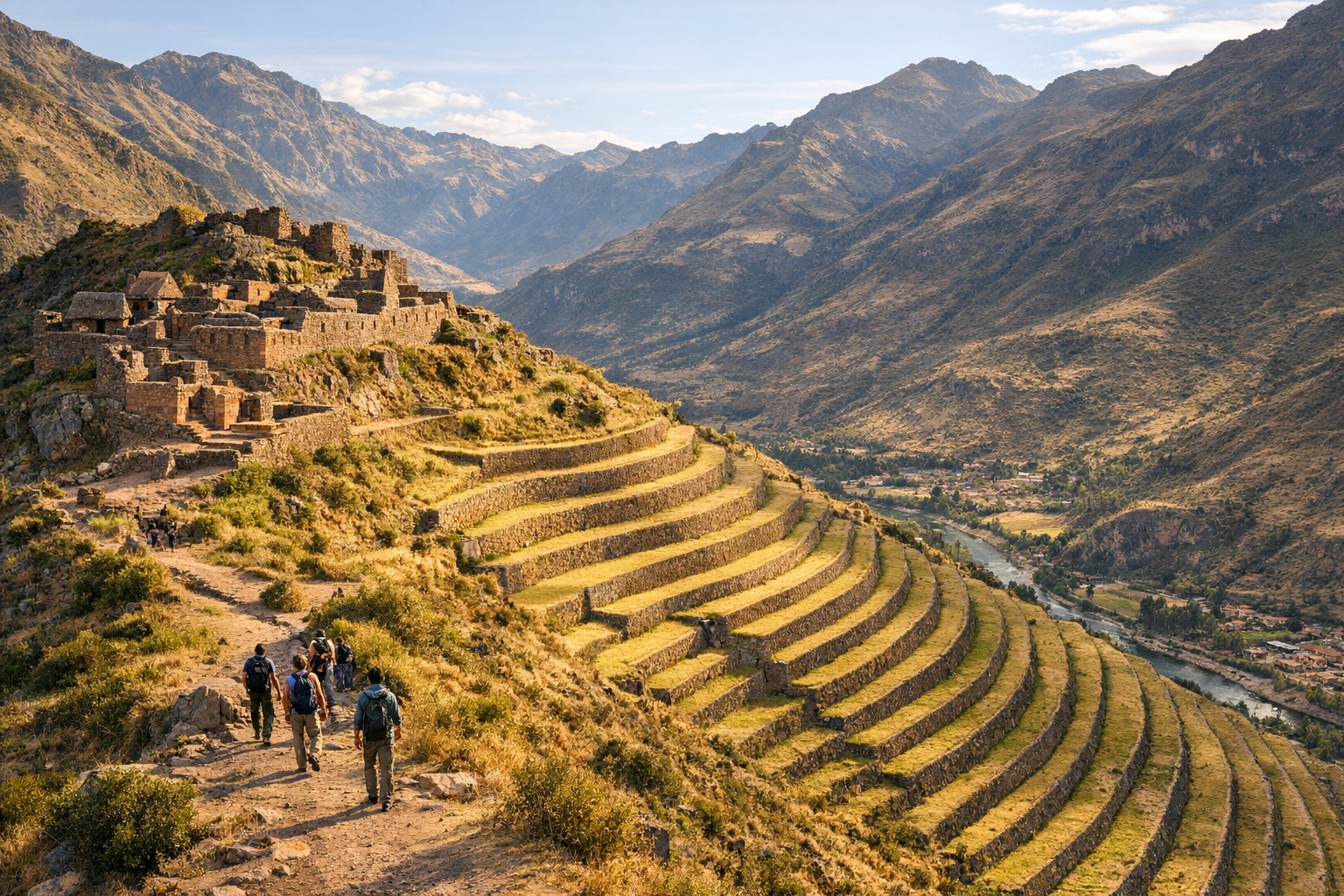
Pisac Peru Guide 2026: Inca Citadel, Market & Sacred Valley
IncaExplore Pisac in Peru's Sacred Valley: hike the Inca citadel terraces above town, visit the famous a...
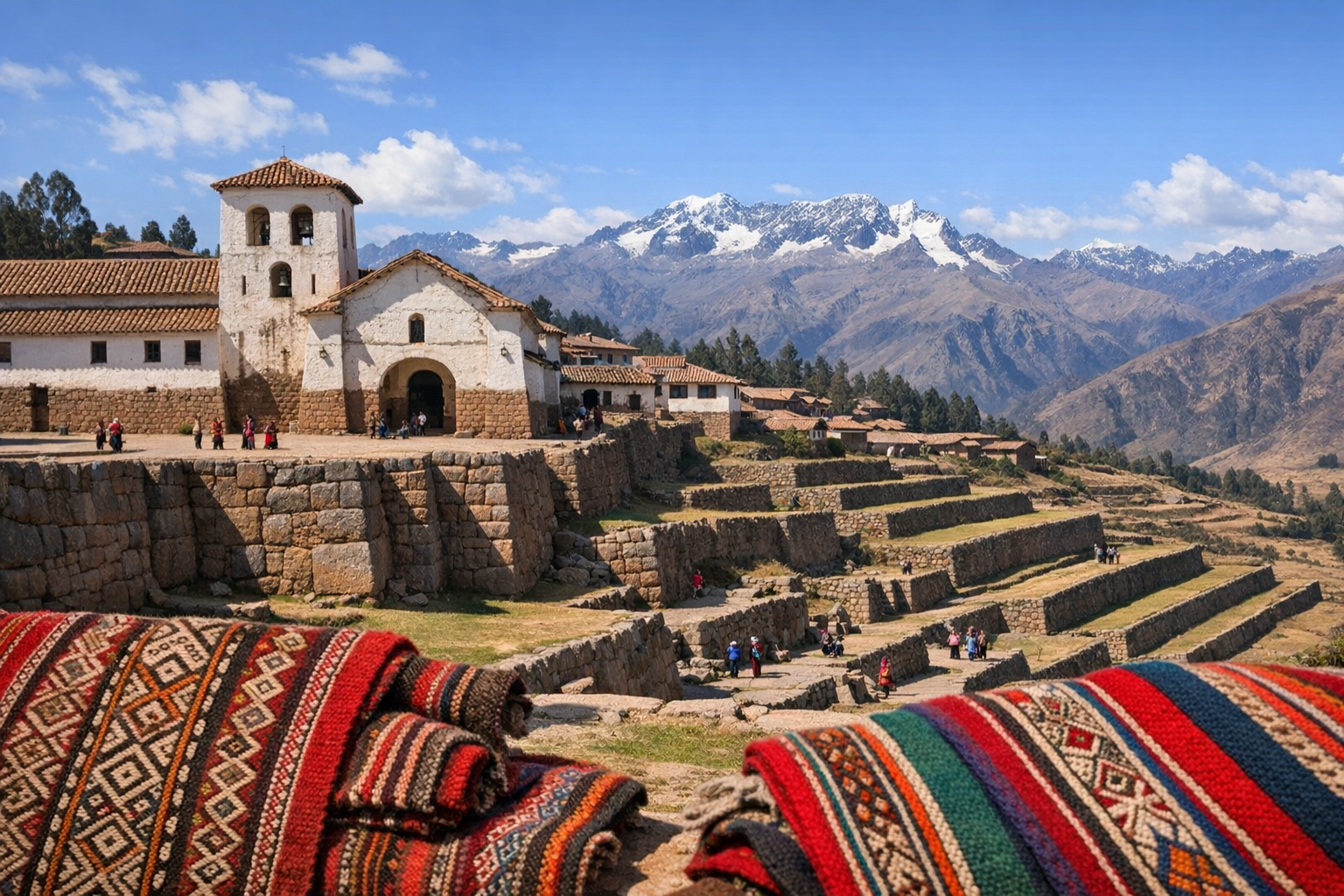
Chinchero Peru Guide 2026: Inca Terraces & Andean Weaving Village
IncaVisit Chinchero on Peru's high plateau above Cusco: Inca royal estate terraces, colonial church buil...
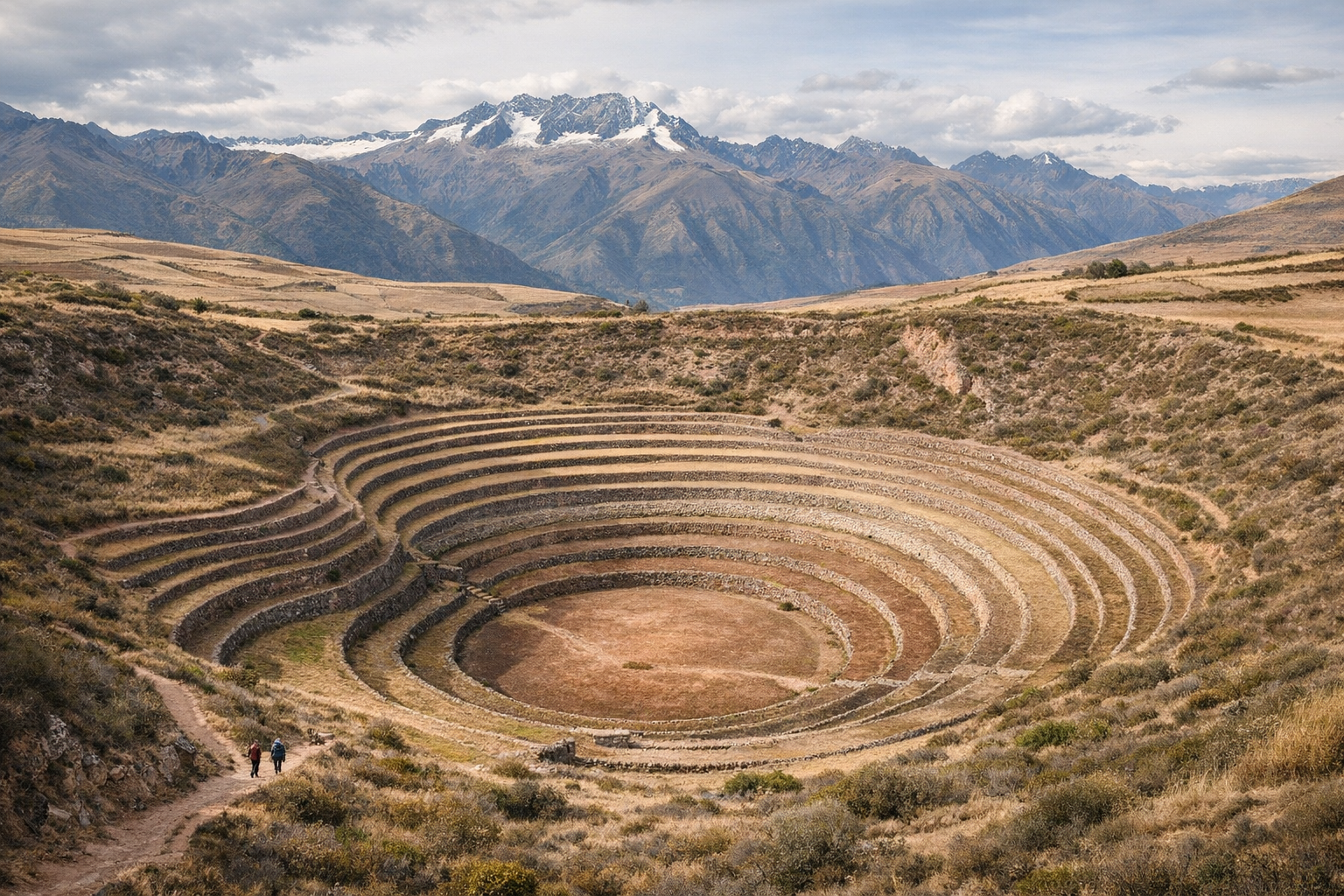
Moray Peru Guide 2026: Inca Circular Terraces & Maras Salt Mines
IncaVisit Moray's mysterious concentric circular terraces near Maras — an Inca agricultural laboratory i...