Quick Info
Curated Experiences
Ancient Olympia Site and Museum Guided Tour
The light in the western Peloponnese has a quality unlike anywhere else in Greece. It is softer here, filtered through the pines that shade the Alpheios and Kladeos river valleys, and it falls across the ruins of Olympia with a warmth that feels almost deliberate. You round the corner past the entrance gate and the site opens before you: toppled column drums from one of the largest temples in the Greek world, the grassed oval of the original Olympic stadium, workshop foundations where one of the Seven Wonders was assembled. The scale is hard to process at first. This was not a city. It was a sanctuary — a place people traveled to from across the Mediterranean for over a thousand years.
What makes Olympia exceptional is its layered purpose. The Olympic Games are the headline, but the site functioned simultaneously as a religious center dedicated to Zeus, a diplomatic stage where city-states announced truces and signed treaties, and a colossal open-air gallery of votive offerings that tracked the wealth and ambitions of the entire Greek world. The ruins you walk through today preserve all of those functions in readable form, and the adjacent Archaeological Museum holds some of the finest Classical sculpture outside of Athens.
The valley floor setting means Olympia lacks the dramatic hilltop profile of the Acropolis or the clifftop sweep of Delphi. That modesty works in its favor. Crowds thin out by mid-afternoon, the shaded paths feel genuinely peaceful, and you can stand in the stadium at the ancient starting blocks with nobody else in sight. Give Olympia a full half-day and it rewards you with a depth that Greece’s island-hopping itineraries almost never provide.
Historical Context
The origins of the sanctuary at Olympia are buried in myth. Ancient Greeks attributed its founding to various heroes — Pelops, Heracles, and Zeus himself all featured in competing foundation stories. Archaeological evidence places the earliest cult activity in the 10th or 11th century BCE, when the sacred grove of the Altis — a walled precinct at the site’s heart — began receiving votive offerings. Simple terracotta figurines and bronze tripods from this period suggest a regional religious center that had not yet acquired its later Panhellenic significance.
By tradition, the first Olympic Games were held in 776 BCE, a date that became a fixed reference point in Greek chronology. From that moment forward, every four years, heralds fanned out across the Greek world to announce a sacred truce — the ekecheiria — that guaranteed safe passage for athletes and spectators traveling to and from the Games. The truce was not a call for peace. It was a pragmatic arrangement that allowed the festival to function in a world of endemic warfare, and its enforcement relied on the religious authority of Zeus rather than any military power.
The Games grew in prestige across the Archaic and Classical periods. Victors became celebrities whose fame rivaled that of generals and statesmen. The poet Pindar composed elaborate odes for Olympic champions, and city-states competed not just through athletes but through monumental dedications — treasuries, statues, and offerings that lined the Altis like an open-air museum of interstate rivalry.
The Temple of Zeus, completed around 457 BCE, became the sanctuary’s architectural centerpiece. The temple was among the largest in the Greek world: 64 meters long, 28 meters wide, with columns over 10 meters tall. The colossal gold-and-ivory statue of Zeus created by Pheidias inside it — seated on an elaborately decorated throne, its head nearly touching the ceiling of the inner chamber — was recognized as one of the Seven Wonders of the Ancient World.
Roman rule brought changes but not decline. Roman emperors participated in and patronized the Games, and Nero notoriously entered the chariot race in 67 CE, declaring himself the winner despite falling from his chariot during the competition. The sanctuary continued to function until 393 CE, when the emperor Theodosius I banned pagan festivals across the empire.
Earthquakes, floods, and silt from the Alpheios River gradually buried the site over the following centuries. The river itself shifted course and washed over portions of the sanctuary. By the Middle Ages, Olympia was forgotten, its ruins hidden beneath meters of alluvial soil. Modern excavation began under German archaeologists in 1875 and has continued in phases ever since. The site was inscribed as a UNESCO World Heritage Site in 1989.
What to See
The Stadium and Krypte Entrance
The krypte — a vaulted stone tunnel that served as the athletes’ entrance to the stadium — is one of the most atmospheric moments at any Greek site. The passage is surprisingly intact, narrow and dark, its stone walls closing in around you. Walking through it deposits you into the open stadium with a jolt that mirrors what ancient athletes must have felt as they emerged before tens of thousands of spectators.
The stadium itself is a simple grass track flanked by earthen embankments that once held 45,000 spectators. There are no stone seats — Olympia reserved those for judges and officials only, with the general audience sitting on the grassy slopes. The stone starting blocks are still in place at both ends, grooved for the runners’ toes. Stand at the starting line and sight down the 192-meter track: the scale of what happened here becomes immediate in a way that no photograph conveys.
A stone water channel runs along the edge of the track, fed by a series of small basins. This was the spectators’ drinking water supply during the games — a practical detail that brings the human reality of the ancient festival into sharp focus.
Practical tip: visit the stadium first thing in the morning or late in the afternoon. Midday heat makes the exposed track uncomfortable, and tour groups tend to cluster here between 10 a.m. and 1 p.m.
Temple of Zeus Foundations
The Temple of Zeus was one of the largest Doric temples in Greece, measuring roughly 64 by 28 meters at its base. What remains are the foundation platform and an enormous scatter of column drums — each one taller than a person — toppled by earthquakes and lying where they fell. The visual effect is striking: these are not neatly arranged ruins but a landscape of collapsed architectural power that conveys the temple’s original scale more vividly than a partial reconstruction could.
The drums are limestone, not the marble that most people associate with Greek temples. Each is composed of a single cylindrical block, and their sheer mass — several tons apiece — makes the engineering achievement of raising them into columns almost incomprehensible at this remove.
Nearby, the confirmed Workshop of Pheidias is one of the most important single buildings in the history of archaeology. Excavators identified it by tools, molds for the gold drapery, and a drinking cup inscribed “I belong to Pheidias” — the kind of direct personal evidence that ancient sites almost never yield. The workshop was later converted into a Byzantine church, its foundations still visible and its original use confirmed beyond scholarly doubt.
Practical tip: use the museum’s scale model of the temple (in the main hall) to orient yourself before visiting the ruins. It transforms how you read the foundation grid.
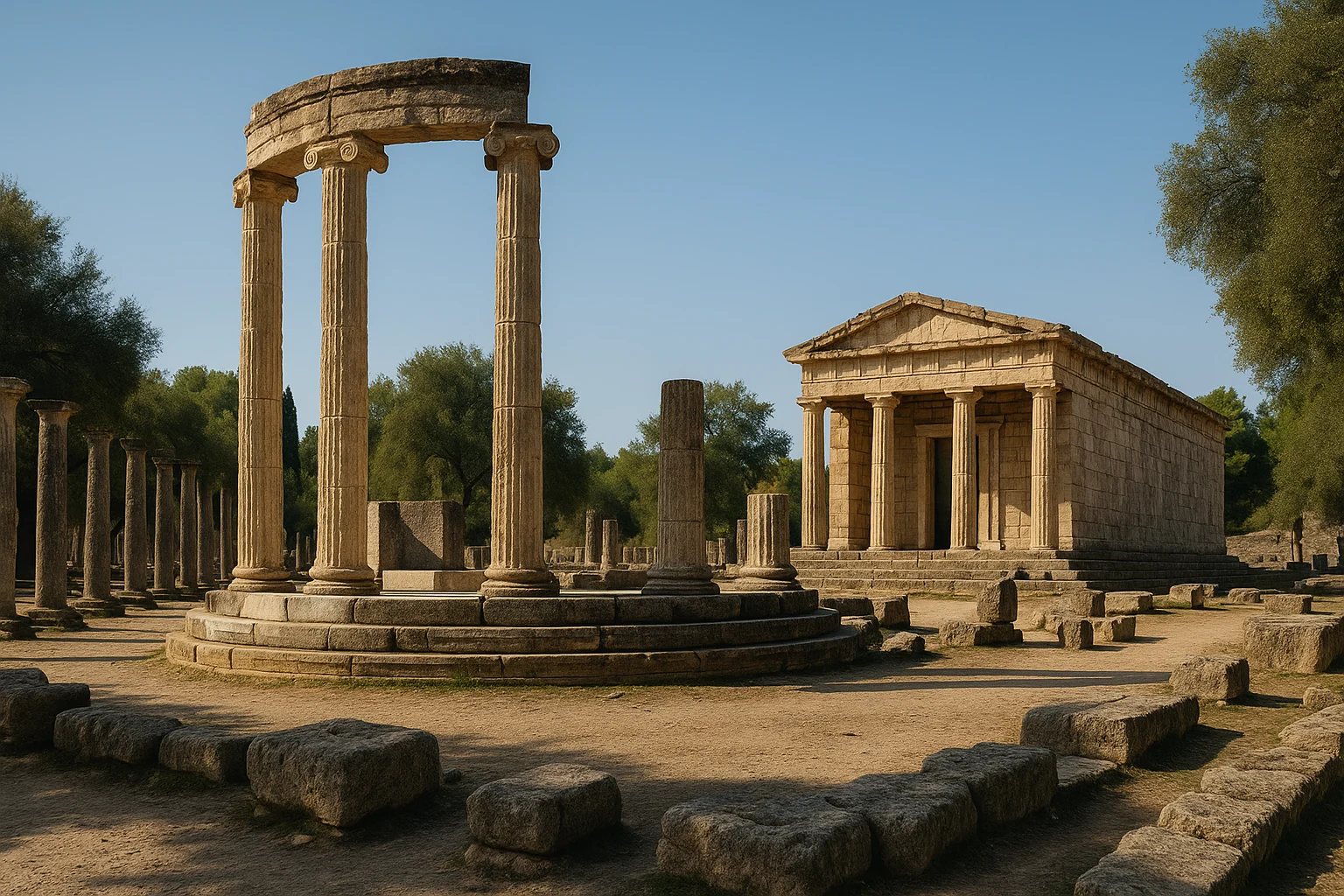
The Philippeion
This circular memorial building, begun by Philip II of Macedon after his victory at the Battle of Chaeronea in 338 BCE and completed by his son Alexander the Great, is one of the most politically charged structures at Olympia. It is the only building inside the Altis that honored mortals rather than gods — a deliberate statement by the Macedonian royal family that they belonged among the divine.
The surviving lower courses and partial column reconstruction give you a sense of the building’s unusual tholos (circular) form. Inside, gold-and-ivory portrait statues of Philip, Alexander, and their family members once stood on a semicircular pedestal. The message was unmistakable: the Macedonians had not merely won the Games but had inserted themselves into the sacred geography of the Altis itself.
Practical tip: the Philippeion is easy to walk past if you do not know what you are looking at. Pick up the site map at the entrance or use an audio guide to locate it within the western Altis.
The Archaeological Museum
Do not treat the museum as optional. It holds the original pediment sculptures from the Temple of Zeus — the east pediment depicting the chariot race of Pelops (the mythological founder of the Games), the west showing the battle of Lapiths and Centaurs at a wedding feast gone wrong. These are among the finest surviving examples of Early Classical Greek sculpture, carved around 460 BCE, and they display a transition from the rigidity of Archaic art to the naturalism of the Classical period that you can literally see in the progression of figures.
The Hermes of Praxiteles, discovered in the Temple of Hera in 1877, is displayed in its own room. It is one of the few original works by a named Greek master sculptor to survive (most known masterpieces exist only as Roman copies), and its surface finish — the soft modeling of flesh, the slight contrapposto of the pose — justifies the dedicated gallery.
The Nike of Paionios, a marble victory figure that once stood on a nine-meter triangular column, remains remarkably dynamic despite significant damage. The figure appears to be descending from the sky, her drapery swept back by the wind, and even in its fragmentary state it captures movement with an energy that anticipates the Hellenistic style by a century.
Plan at least 90 minutes here. The collection is not overwhelming in size, but the individual works demand slow viewing. The bronze collection, including helmets, shields, and small votive figures, fills out the picture of what people actually brought to Olympia and why.
Practical tip: on hot days, start with the museum while the morning is cool, then move to the outdoor site once you have the visual context to read it.
The Palaestra and Gymnasium
The palaestra (wrestling school) and adjacent gymnasium form an L-shaped complex where athletes trained before competing. The palaestra’s colonnaded courtyard is partially reconstructed, its columns framing a central open-air space that would have served for wrestling, boxing, and the pankration (a combination combat sport). Rooms along the colonnade housed changing areas, bathing facilities, and spaces where athletes oiled and scraped their skin before training.
The gymnasium’s 200-meter running track, covered by a long colonnade, allowed athletes to practice sprints regardless of weather. The complex helps explain the physical infrastructure that supported the Games — Olympia was not just a competition venue but a fully equipped athletic campus.
Practical tip: these structures are at the western edge of the site and often overlooked by rushed visitors. They are worth the extra ten minutes, particularly for anyone interested in the practical reality of ancient athletics.
The Treasuries Terrace
A row of small temple-like buildings along the northern edge of the Altis, the Treasuries were built by individual city-states to house their most prestigious offerings to Zeus. Each treasury was a miniature architectural statement — a way for cities like Sicyon, Megara, and the Greek colonies in Sicily to project their identity at the Panhellenic level.
Most survive only as foundations, but the row conveys the competitive energy that defined Olympia. These were not communal offerings. They were displays of individual city-state wealth and piety, positioned where every visitor to the sanctuary would see them.
Practical tip: the terrace offers an elevated view over the Altis that helps you visualize the spatial relationships between the major buildings. Use it as a vantage point before descending to the temple zone.
Timing and Seasons
The best months to visit Olympia are April, May, September, and October. Spring brings wildflowers to the site, comfortable walking temperatures of 65-80°F (18-27°C), and manageable crowds. The pine-shaded paths are at their most pleasant in spring, with dappled light and birdsong that complement the setting. Autumn is similarly pleasant, with slightly warmer afternoons and thinning visitor numbers after the summer peak.
Summer (June through August) brings temperatures that regularly hit 95°F (35°C) or higher. The site is partially shaded by pines, which helps, but the stadium and temple zones are fully exposed. If visiting in summer, arrive at 8 a.m. when the site opens and plan to finish the outdoor ruins by noon, reserving the air-conditioned museum for the heat of the day.
The worst crowding coincides with cruise ship arrivals at Katakolon, about 30 kilometers away. Tour buses descend on the site between 10 a.m. and 1 p.m. on ship days, and the stadium in particular can feel congested. If your schedule is flexible, checking the Katakolon port schedule in advance and avoiding those windows improves the experience noticeably.
Winter visits are possible and dramatically uncrowded. Temperatures from December through February run 45-55°F (7-13°C) with occasional rain. The site closes earlier (5 p.m. versus 8 p.m. in summer), but you may have the ruins nearly to yourself. Rain can make the unpaved paths muddy, so waterproof shoes are advisable.
The single best time of day is early morning, from opening until about 10 a.m. The light is warm, the air is cool, and the pine-shaded paths feel meditative. Late afternoon (after 4 p.m.) is the second-best window, with golden light on the column drums and emptying crowds.
Tickets, Logistics, and Getting There
Admission to the archaeological site and museum is covered by a combined ticket priced at approximately 12 euros ($13 USD). During summer, a full-price ticket applies; winter pricing may be reduced to 6 euros. EU students under 25 and children under 18 enter free with valid ID. The site opens daily at 8 a.m. Closing time is 8 p.m. from April through October and 5 p.m. from November through March. Ticket lines are rarely long, but purchasing online through the Greek Culture Ministry website avoids any wait.
Olympia sits in the western Peloponnese, roughly 4.5 to 5 hours by car from Athens via the A7 motorway and regional roads through Tripoli and Pyrgos. The drive is scenic but long, passing through the mountainous central Peloponnese before descending into the agricultural lowlands around Pyrgos. Plan for fuel and rest stops; the route has limited services in some stretches.
KTEL buses run from Athens’ Kifissos terminal to Pyrgos (about 4 hours), with a connection from Pyrgos to the village of Ancient Olympia (20 minutes). The bus option is economical but time-consuming. If arriving by cruise ship at Katakolon, the site is a 30-kilometer drive, and tour buses or taxis handle the trip in about 30 minutes. Expect to pay 40-50 euros for a taxi each way from the port.
Renting a car gives you the most flexibility, especially if combining Olympia with other Peloponnese sites like Mycenae, Epidaurus, or Ancient Corinth. The roads in the western Peloponnese are well-maintained and uncrowded.
The village of Ancient Olympia, immediately adjacent to the site, has a handful of small hotels (60-120 euros per night), tavernas, and cafes. Staying overnight allows for a relaxed morning visit without the time pressure of a same-day return to Athens, and the village itself has a pleasant, unhurried atmosphere that suits the site’s character.
Practical Tips
- Wear sturdy, closed-toe shoes with good grip. The site paths are uneven stone, packed earth, and exposed roots, especially in the Altis area.
- Bring at least one liter of water per person, more in summer. There is a cafe near the entrance but nothing inside the archaeological zone.
- Sun protection is essential from April through October. The museum and pine shade offer breaks, but the stadium and temple areas are fully exposed.
- An audio guide or a good printed guide (the Blue Guide Greece or the site’s own guidebook, available at the museum shop) dramatically improves the experience. Without context, the foundation grids can feel abstract.
- Restrooms are located near the site entrance and inside the museum.
- The site is partially accessible for visitors with mobility limitations. The main paths through the Altis are relatively flat, but some areas involve uneven terrain and steps.
- The nearby Museum of the History of the Olympic Games in Antiquity (separate building, included in the combined ticket) is worth a 30-minute visit for context on how the Games actually functioned — events, rules, and the social world that surrounded competition.
- Mosquitoes can be present in the river valley during summer evenings. If visiting late in the day, insect repellent is helpful.
Suggested Itinerary
Start at the Archaeological Museum (8 a.m. opening). Spend 90 minutes with the pediment sculptures, Hermes, and Nike, using the scale models to orient yourself for the outdoor visit. Exit the museum and enter the archaeological site through the main gate.
Walk directly to the krypte tunnel and stadium (20 minutes). Spend time at the starting blocks and the judges’ stone seats. From the stadium, loop back through the Treasuries Terrace for the elevated view, then descend to the Temple of Zeus foundations and Workshop of Pheidias (30 minutes).
Cross to the Philippeion and the Temple of Hera, where the Olympic flame is still lit for the modern Games using a parabolic mirror and sunlight (15 minutes). Continue to the palaestra and gymnasium complex at the western edge (15 minutes). Return through the Altis, pausing at any structures you want to revisit.
Total time: 3.5 to 4.5 hours including the museum. Allow an additional 30 minutes if visiting the Museum of the History of the Olympic Games.
If arriving from Katakolon port with a fixed return time, prioritize the museum and the stadium-temple loop. The palaestra and gymnasium can be dropped if time is short.
Nearby Sites
Olympia fits naturally into a Peloponnese driving loop or a broader mainland Greece itinerary. The Acropolis in Athens, roughly 4.5 hours east by car, is the natural bookend — Olympia shows you how the Greek world gathered across city-state lines, while the Acropolis shows what a single city-state built at its architectural peak. The drive between them passes through beautiful mountain scenery in the central Peloponnese.
The Ancient Agora of Athens, just below the Acropolis, offers a complementary look at daily civic and commercial life that Olympia’s sanctuary focus does not provide. Budget a full day for both Athenian sites combined.
Ancient Corinth lies roughly 2.5 hours northeast and makes a logical stop on the route between Olympia and Athens. Its Greek-to-Roman layering, commanding position at the Isthmus, and massive hilltop fortress of Acrocorinth fill in the commercial and strategic dimensions of the classical world that Olympia’s religious focus leaves aside.
For travelers continuing south in the Peloponnese, the fortified citadel of Mycenae and the healing sanctuary of Epidaurus are each within 3 hours of Olympia. Mycenae extends the chronological range back into the Bronze Age, while Epidaurus’s perfectly preserved theater and Asclepion healing center connect to the sanctuary traditions that Olympia represents.
Final Take
Olympia is not the most photogenic site in Greece. It has no columns silhouetted against the sea, no dramatic hilltop profile. What it has instead is depth — a thousand years of athletic, religious, and political history layered into a single river valley, with a museum collection that rivals any in the country.
The stadium’s starting blocks, the Temple of Zeus’s fallen drums, and the pediment sculptures in the museum form a sequence that builds understanding rather than just collecting sights. You begin to see how the Games functioned not as an isolated sporting event but as the connective tissue of a civilization — the one institution that brought competing city-states into the same physical space, under the same rules, in the name of the same god.
Visit Olympia with patience, with a good guide or guidebook, and with enough time to let the landscape speak. It is one of the essential stops in Greece, and it earns that status through substance rather than spectacle.
Discover More Ancient Wonders
- Acropolis, Athens — the architectural summit of Classical Greece
- Ancient Agora of Athens — civic life, philosophy, and commerce in the ancient world
- Ancient Corinth — trade, power, and Greek-to-Roman transformation at the Isthmus
- Explore more Peloponnese archaeology with our Greece Ancient Sites Guide
- Plan your route with our beginner’s guide to archaeological sites
Quick Facts
| Attribute | Details |
|---|---|
| Location | Pyrgos, Western Greece, Greece |
| Country | Greece |
| Region | Western Greece |
| Civilization | Classical Greek |
| Historical Period | 8th century BCE-4th century CE |
| Established | c. 8th century BCE |
| UNESCO Status | World Heritage Site (1989) |
| Coordinates | 37.6379, 21.6300 |
Frequently Asked Questions
How long should I spend at Ancient Olympia?
Most travelers need 2 to 3 hours for the archaeological zone plus 1 to 1.5 hours for the museum.
Is the Olympia museum worth it?
Yes. The museum is essential for context and includes key sculpture finds that make the open-air ruins more readable.
Can Olympia be done as a day trip?
Yes, but total travel time depends heavily on your starting city. Build extra buffer into your schedule.
Nearby Ancient Sites
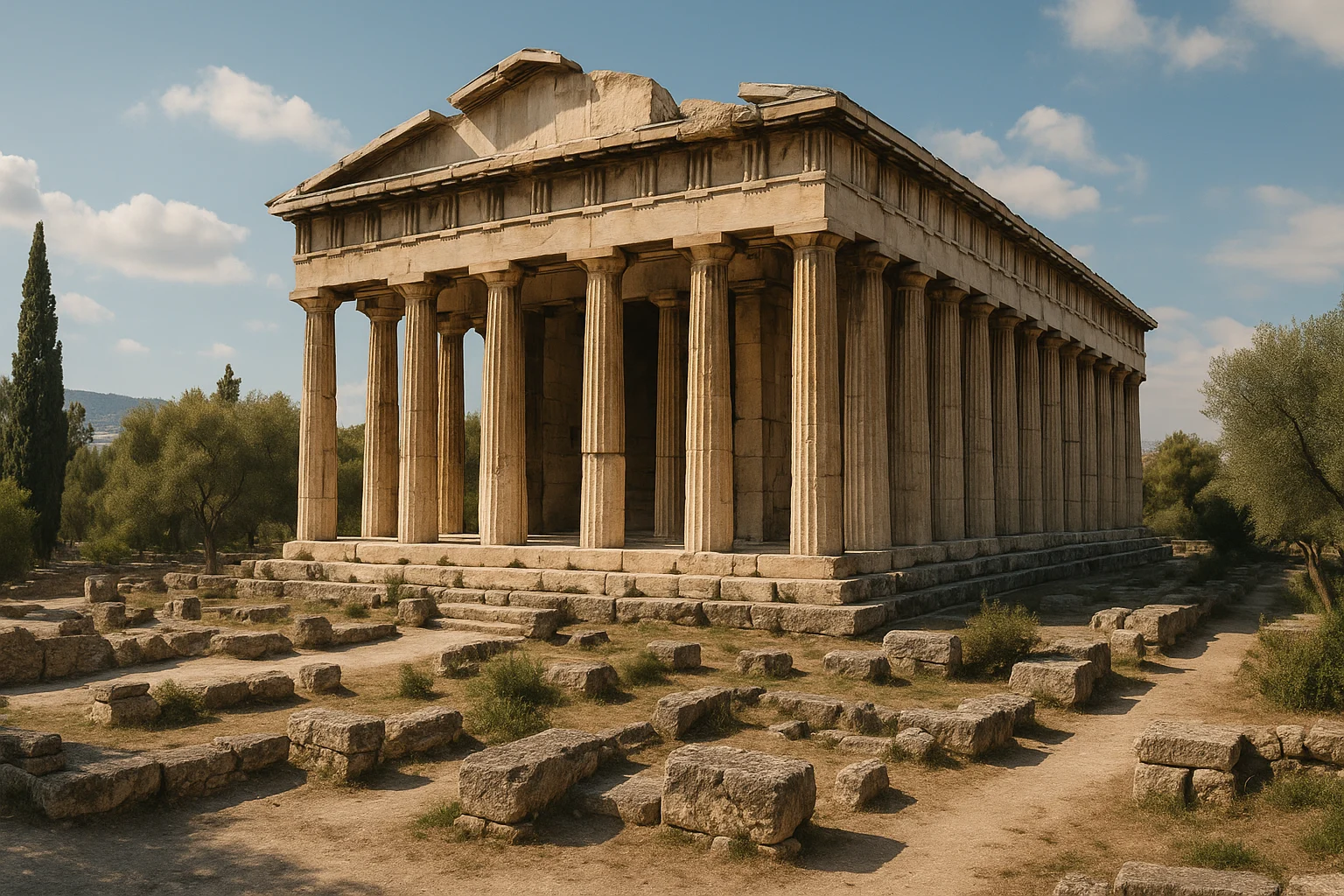
Ancient Agora of Athens Travel Guide 2026: Route, Tickets, and Context
Classical GreekPlan a better Ancient Agora visit with practical timing, monument priorities, and clear historical c...
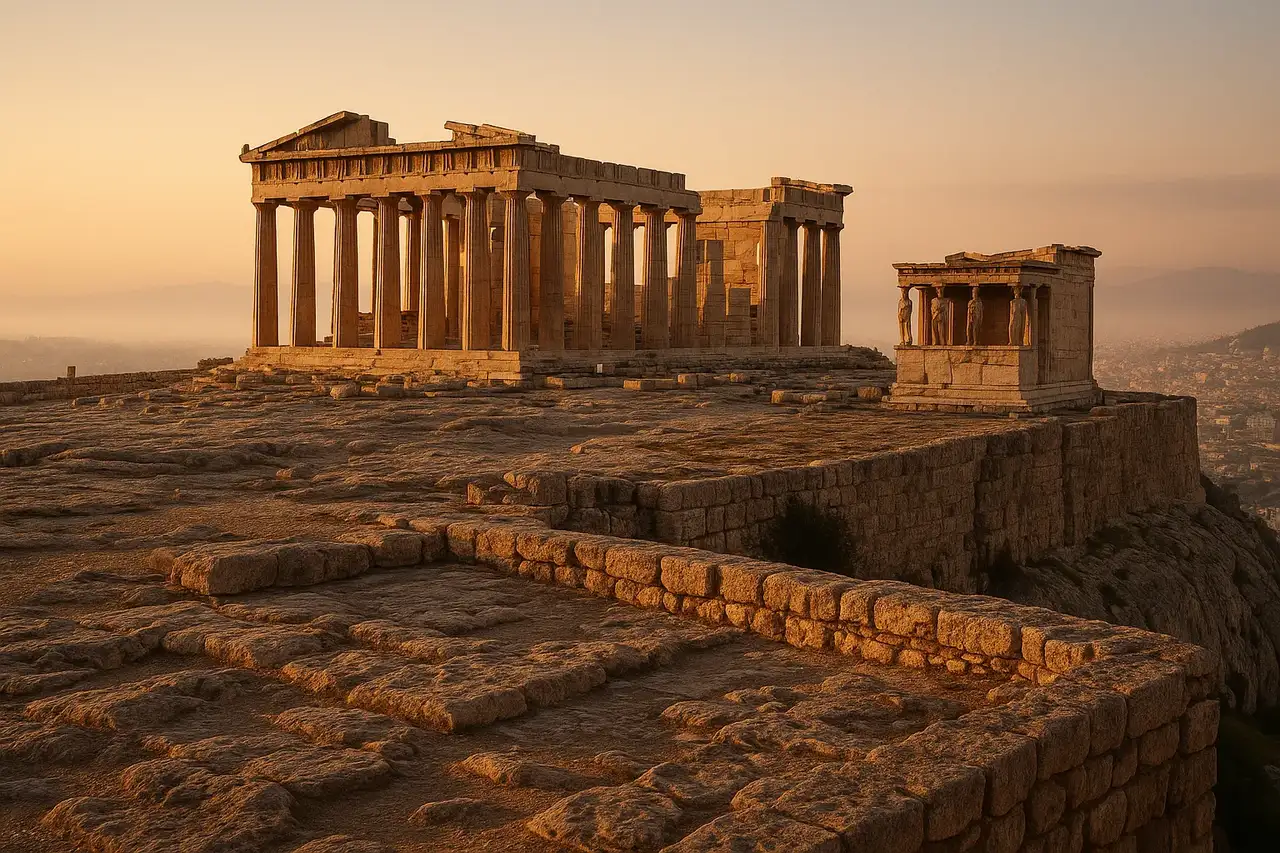
Acropolis Travel Guide 2026: Parthenon, Tickets, and Best Time
Ancient GreecePlan an efficient Acropolis visit with practical ticket timing, key monuments, and museum pairing ti...
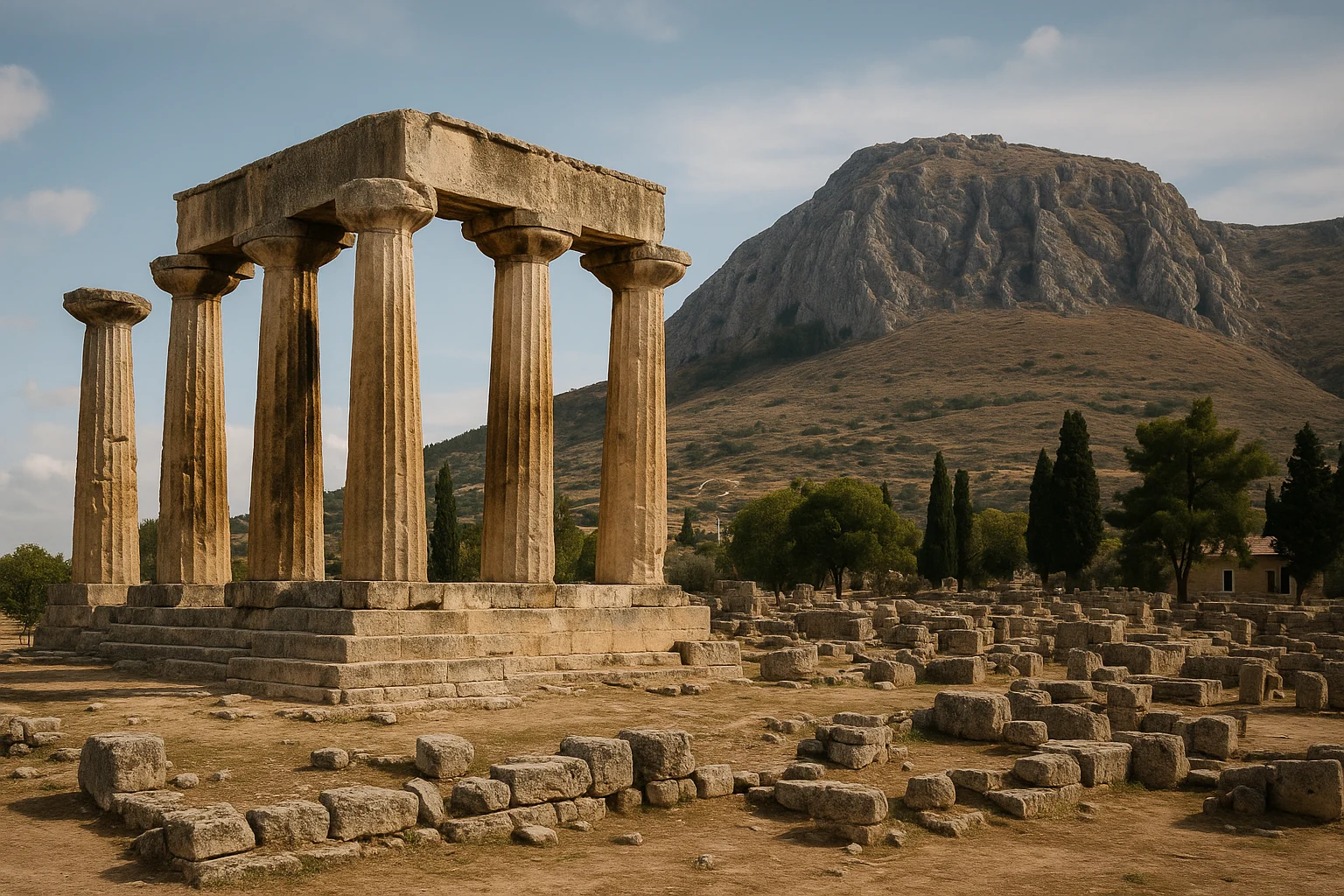
Ancient Corinth Travel Guide 2026: Ruins, Museum, and Visit Strategy
Classical GreekPlan a focused Ancient Corinth visit with practical timing, monument priorities, and route context f...