Quick Info
Curated Experiences
Pantheon, Piazza Navona & Historic Center 3-Hour Walking Tour
Pantheon Express: Guided Entry with Audio
Ancient Rome Pantheon and Colosseum Combo Tour
The Pantheon is one of the few places in Rome where ancient engineering does not feel abstract. You do not have to imagine fragments or reconstruct missing walls in your head. You step inside, look up, and the argument is already made: the building still works.
Nearly two thousand years after Hadrian’s reconstruction, the dome remains the largest unreinforced concrete dome from antiquity. Light still enters through the oculus. Rain still drains through the subtly sloped floor. The space still delivers the same controlled shock Roman architects intended.
For travelers, that combination of preservation and atmosphere is rare. The Pantheon is not just important on paper. It is physically convincing.
Why the Pantheon Matters
Rome has many famous ruins, but the Pantheon offers something different: continuity of use. It survived because it was adapted rather than abandoned, first as an imperial monument and later as a church. That continuity protected both structure and meaning.
It also compresses multiple narratives into one compact site:
- Roman imperial engineering at peak confidence
- Religious transformation from pagan temple to Christian church
- Renaissance and modern memory through tombs and civic symbolism
In short, the Pantheon is a building where technical ambition, political messaging, and cultural afterlife can all be read in one visit.
Historical Timeline in Plain Terms
Agrippa’s original Pantheon
The first Pantheon is linked to Marcus Agrippa in the late first century BCE, during Rome’s early imperial transition.
Destruction and rebuilding
Fires damaged earlier versions. The surviving building is generally dated to Hadrian’s reign in the second century CE.
Hadrianic reinvention
The current plan fuses a classical temple porch with a massive circular rotunda and dome. That spatial jump is deliberate theater.
Christian conversion
Conversion to a church in late antiquity/early medieval Rome helped preserve the structure during periods when many ancient monuments were dismantled.
Renaissance to modern period
Artists, architects, rulers, and visitors treated the Pantheon as both active sacred space and model of structural intelligence.
Reading the Exterior
Portico and columns
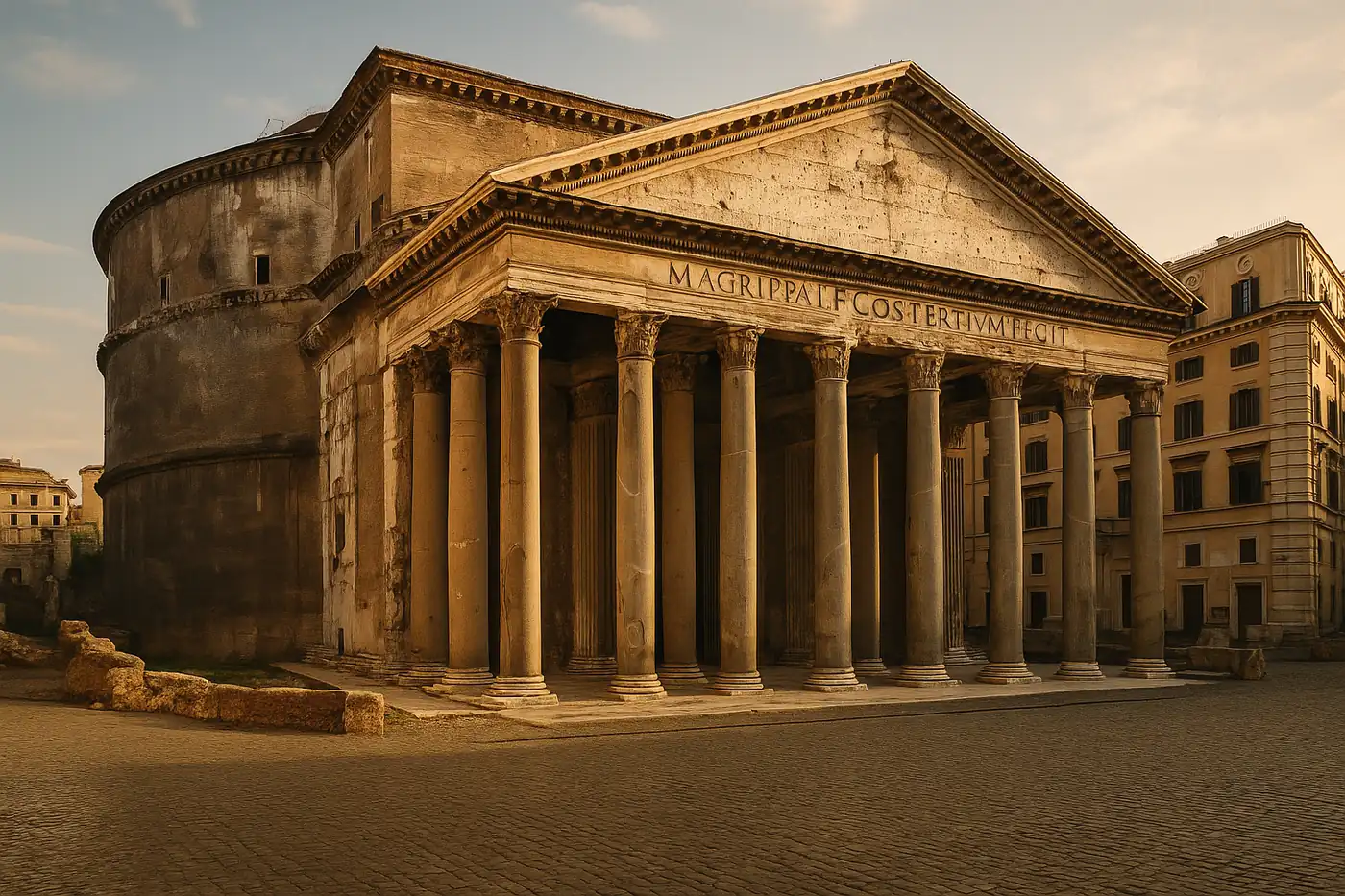
The front portico frames arrival with familiar classical language: giant columns, deep porch shadow, and controlled approach from a dense urban piazza.
The inscription
Agrippa’s name appears in the inscription, even though the current structure is Hadrianic. That choice reflects Roman political memory as much as authorship.
Urban setting
Unlike isolated archaeological parks, the Pantheon sits inside a living neighborhood. The contrast between narrow streets and immense interior volume is part of the experience.
Engineering the Dome: What to Notice
Geometry
The rotunda’s diameter and interior height are roughly equivalent, creating a near-perfect volumetric logic. The space feels balanced even before you analyze it.
Material strategy
Roman builders varied concrete composition by height, using lighter aggregate higher up to reduce load.
Coffering
The recessed coffers reduce visual and structural weight while guiding your eye upward.
Oculus
The central opening is both symbolic and practical. It admits moving light, reduces mass at the crown, and anchors the building’s environmental behavior.
Drainage
Rain enters through the oculus and exits through floor drainage designed into the original system. This is not a flaw; it is engineered acceptance.
Interior Experience: How to Visit with Intent
Pause before moving
When you enter, stop. Let your eyes adjust and read the light cone. Many visitors rush and miss the spatial choreography.
Walk the perimeter slowly
The niches, altars, and memorial elements show how later eras inserted meaning without erasing Roman structure.
Study the floor
The geometry and slope are easy to overlook, but they are central to how the building handles water and circulation.
Re-check the dome from multiple positions
The interior shifts depending on where you stand. Center, perimeter, and threshold each reveal different proportional effects.
Tombs and Cultural Memory
The Pantheon also serves as a national and artistic memory site. Raphael’s tomb and royal burials connect ancient architecture to later identity-making.
Even if tomb culture is not your main interest, these layers explain why the building stayed relevant long after imperial Rome.
Practical Visit Planning (2026)
- Visit window: Arrive early when possible
- Crowd strategy: First opening slot or quieter weather days generally feel better
- Time needed: 30-60 minutes for a focused visit; longer if you want repeated light studies
- Etiquette: It’s an active religious site, so behavior and dress should reflect that context
- Photography: Usually allowed, but avoid blocking circulation and check current restrictions
As with all major Rome sites, confirm latest access procedures before arrival.
Best Pairings Nearby
Pantheon + Piazza Navona + historic core
This gives a strong architecture-and-urbanism sequence from antiquity into later Rome.
Pantheon + Vatican day
Logistically feasible with a cross-river walk, but pace carefully to avoid fatigue.
Pantheon + Ancient Rome cluster
Use transit or a purposeful walking route if combining with Forum/Colosseum sectors.
Getting There and Access Notes
The Pantheon sits in the historic center, so most visitors arrive on foot between stops rather than by direct metro.
- From Piazza Navona: about 5-7 minutes on foot
- From Trevi Fountain: about 10 minutes on foot
- From Campo de’ Fiori: about 10-12 minutes on foot
- Closest major transit hubs: Largo di Torre Argentina bus corridors and Barberini/Spagna metro with a longer walk
If mobility is a factor, plan your route for smoother paving where possible. Streets around the core can be uneven, and crowd density spikes quickly around lunch and late afternoon.
Common Mistakes to Avoid
- Treating it as a quick checkmark stop
- Visiting only at peak midday crowd without timing strategy
- Ignoring the floor and drainage logic
- Looking up once and leaving
Why the Pantheon Endures
Many monuments are famous because they are old. The Pantheon is famous because it is old and still structurally persuasive. It does not need special pleading. Its engineering, light behavior, and continued civic life make the case directly.
If you give it one intentional hour, it becomes one of the most meaningful architectural visits in Rome.
Quick Facts
| Detail | Info |
|---|---|
| Current structure date | c. 126 CE (Hadrianic period) |
| Type | Temple-turned-church |
| Signature element | Unreinforced concrete dome with central oculus |
| Interior diameter | About 43.3 m |
| Entry planning | Timed-access systems may apply; check official channels |
| Typical visit time | 30-60 minutes |
| Best first stop time | Early opening window |
Quick Facts
| Attribute | Details |
|---|---|
| Location | Rome, Lazio, Italy |
| Country | Italy |
| Region | Lazio |
| Civilization | Roman Empire |
| Historical Period | 27 BCE - 126 CE |
| Established | 126 CE (current structure) |
| Coordinates | 41.8986, 12.4769 |
Explore More Ancient Wonders
Frequently Asked Questions
Is entry to the Pantheon free?
Basic entry is free, but a €5 timed-entry reservation is now required during peak hours (8:30 AM - 7:15 PM) to manage crowds. Book online to skip queues.
What's the best time to visit the Pantheon?
Early morning (8:30 AM opening) for fewer crowds and beautiful light through the oculus. Avoid midday when sunlight creates harsh contrasts and tour groups peak.
How does the Pantheon dome work?
The 43.3-meter concrete dome uses unprecedented engineering: lighter aggregates toward the top, coffers for weight reduction, and a central oculus for light and stress relief.
Can I visit the Pantheon from the Vatican?
Yes, it's a 25-minute walk across the Tiber. Many bundle Vatican + Pantheon in one day, starting early at Vatican Museums then walking to Pantheon for lunch.
Is photography allowed inside?
Yes, photography is permitted without flash or tripod. The best shots are from the entry doors framing the dome or under the oculus during sunny weather.
Nearby Ancient Sites
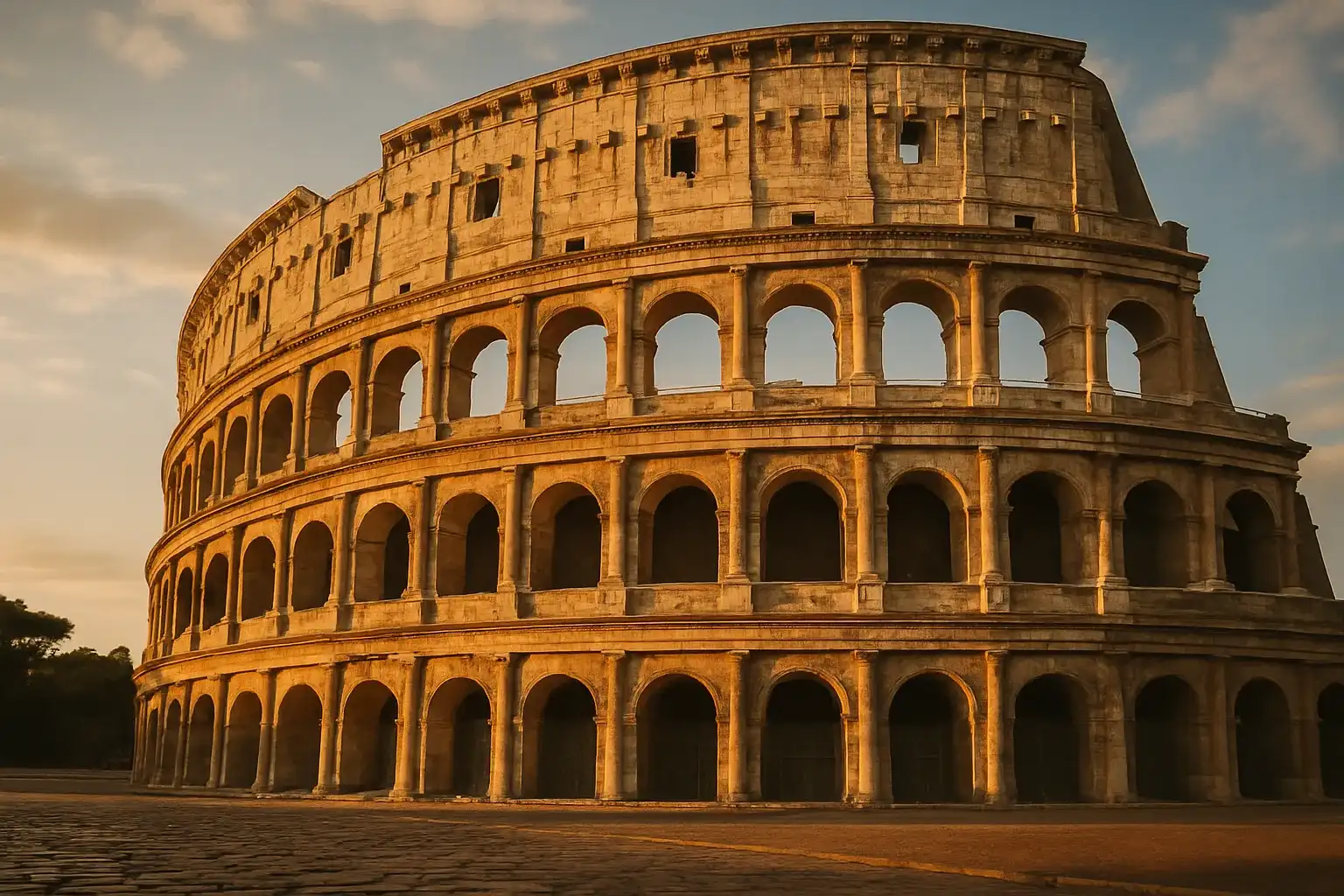
Colosseum Rome: Complete 2026 Guide to Arena Floor, Tickets, and Timing
Roman EmpirePlan the perfect Colosseum visit with timed-entry strategy, Arena Floor and underground access tips,...
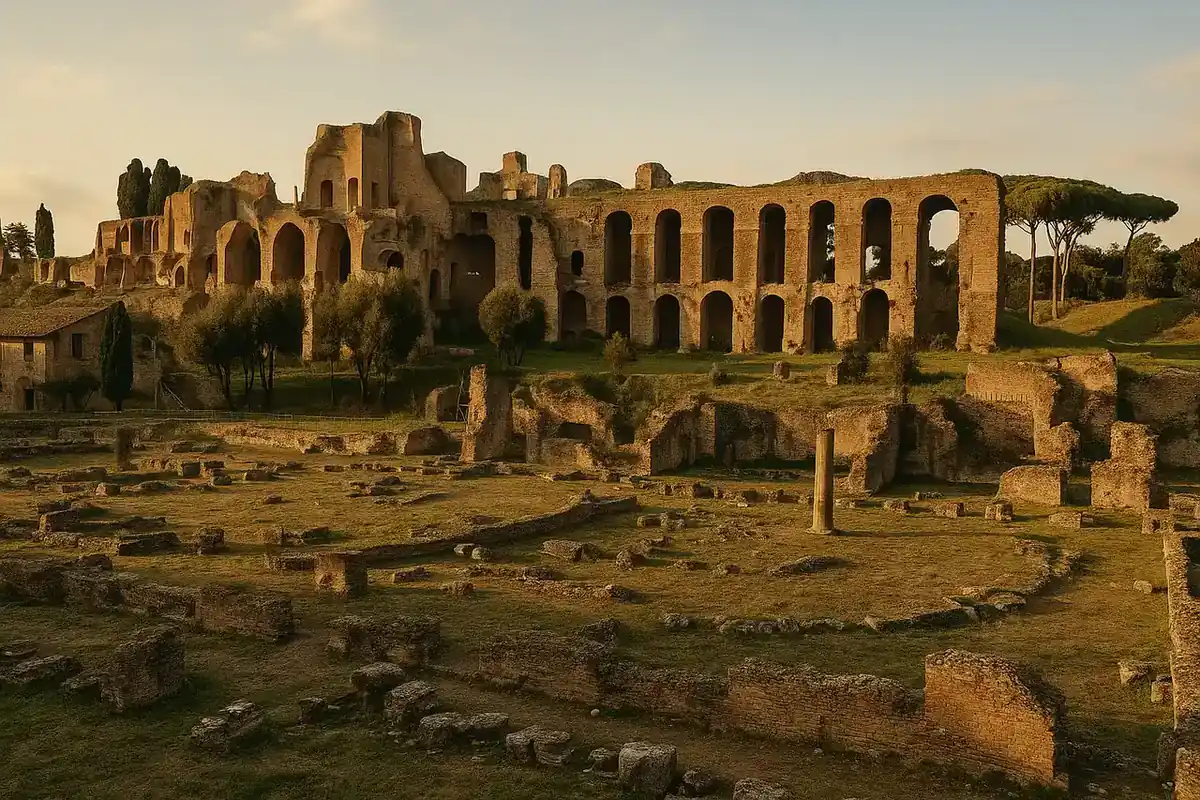
Palatine Hill Rome: Emperors' Palaces & Birthplace of Rome Guide
Roman EmpireExplore Palatine Hill, Rome's oldest neighborhood and imperial palace complex. Complete 2026 guide t...
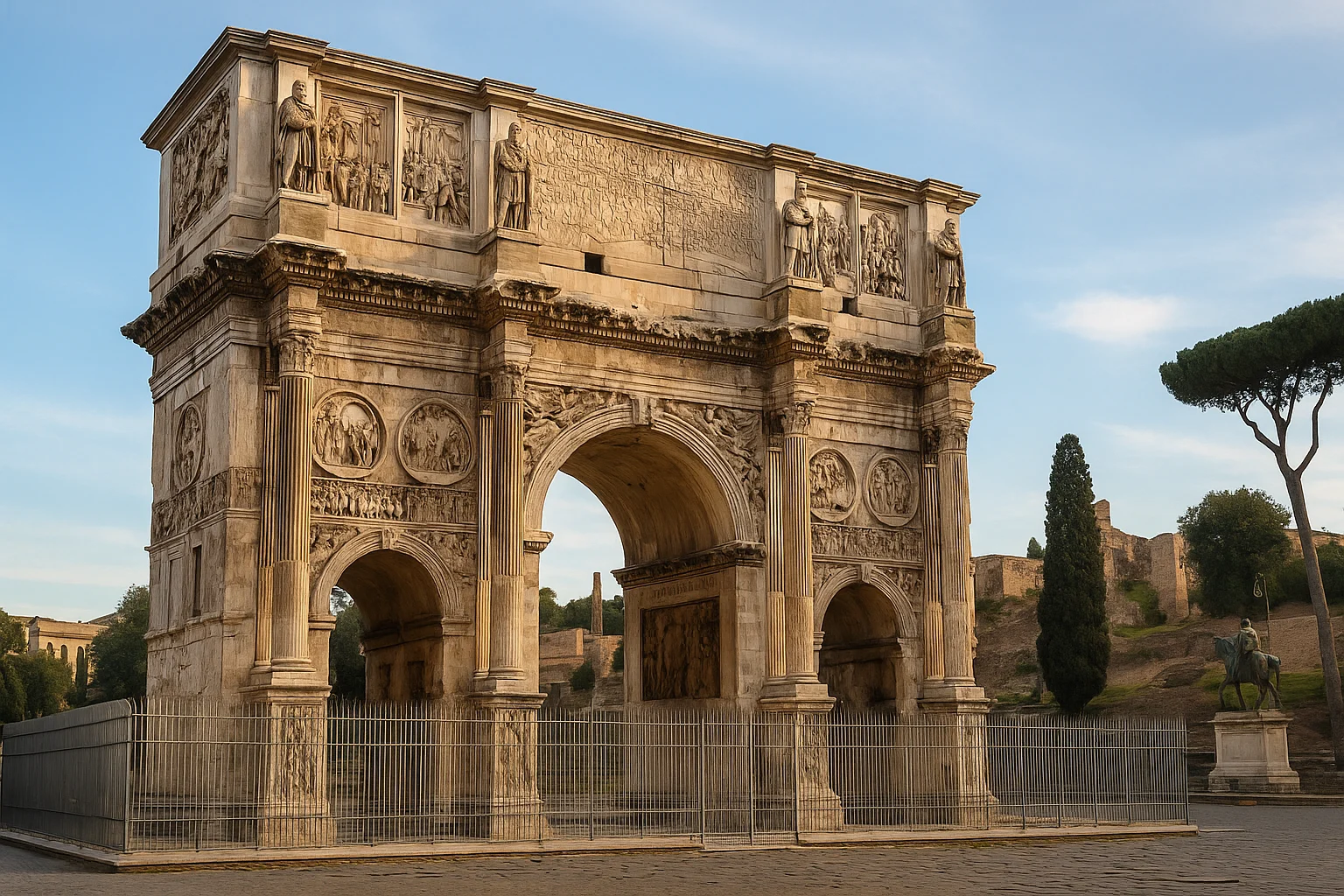
Arch of Constantine Rome: Triumph Over Maxentius Guide
Roman EmpireThe Arch of Constantine commemorates Constantine's 312 CE victory. Spolia details, best photo angles...
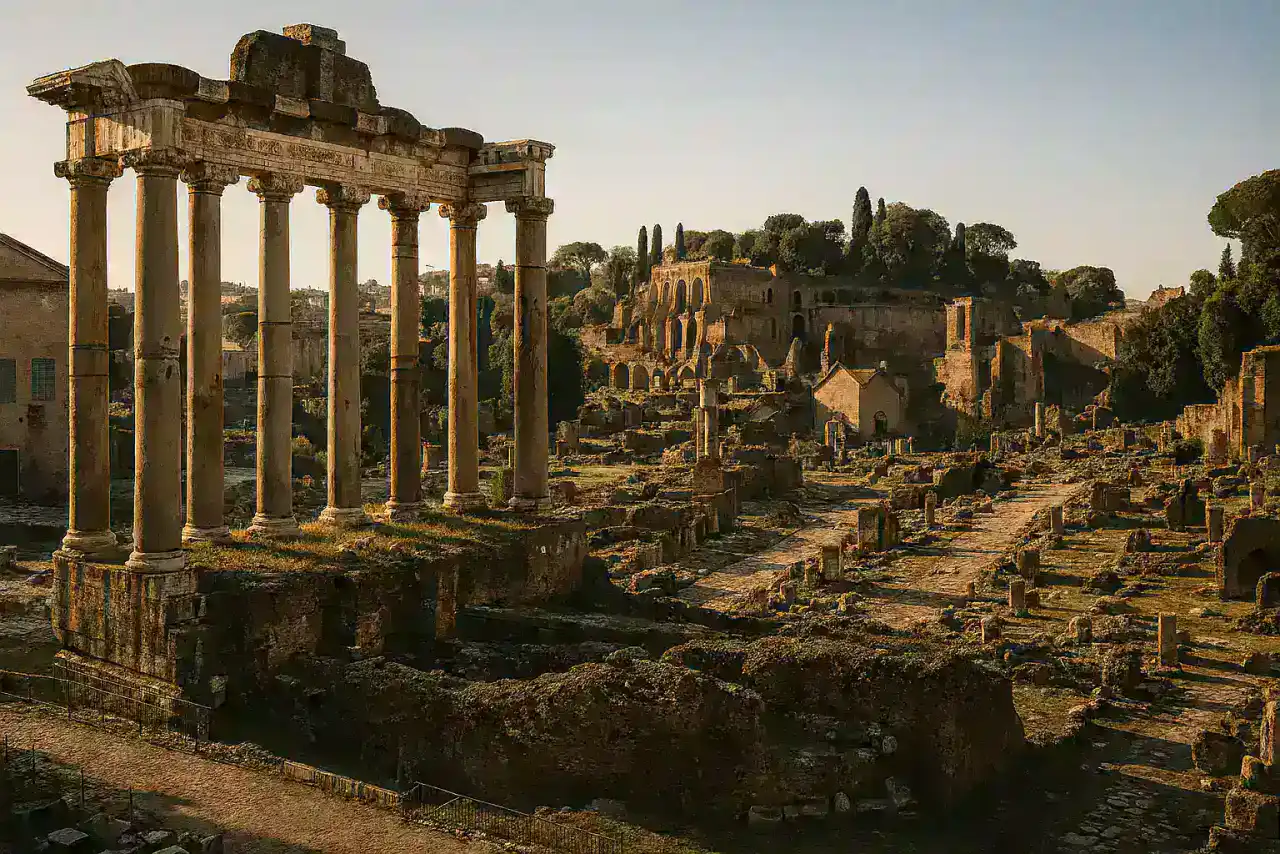
Roman Forum Rome: Heart of Ancient Republic Guide
Roman Republic/EmpireNavigate the Roman Forum's temples, basilicas, triumphal arches. Complete layout, highlights, Palati...