Quick Info
Curated Experiences
Caral and Paramonga Fortress Full-Day Tour from Lima
Archaeological Route to Caral, Bandurria and Paramonga
Private North Coast Heritage Tour: Caral and Paramonga
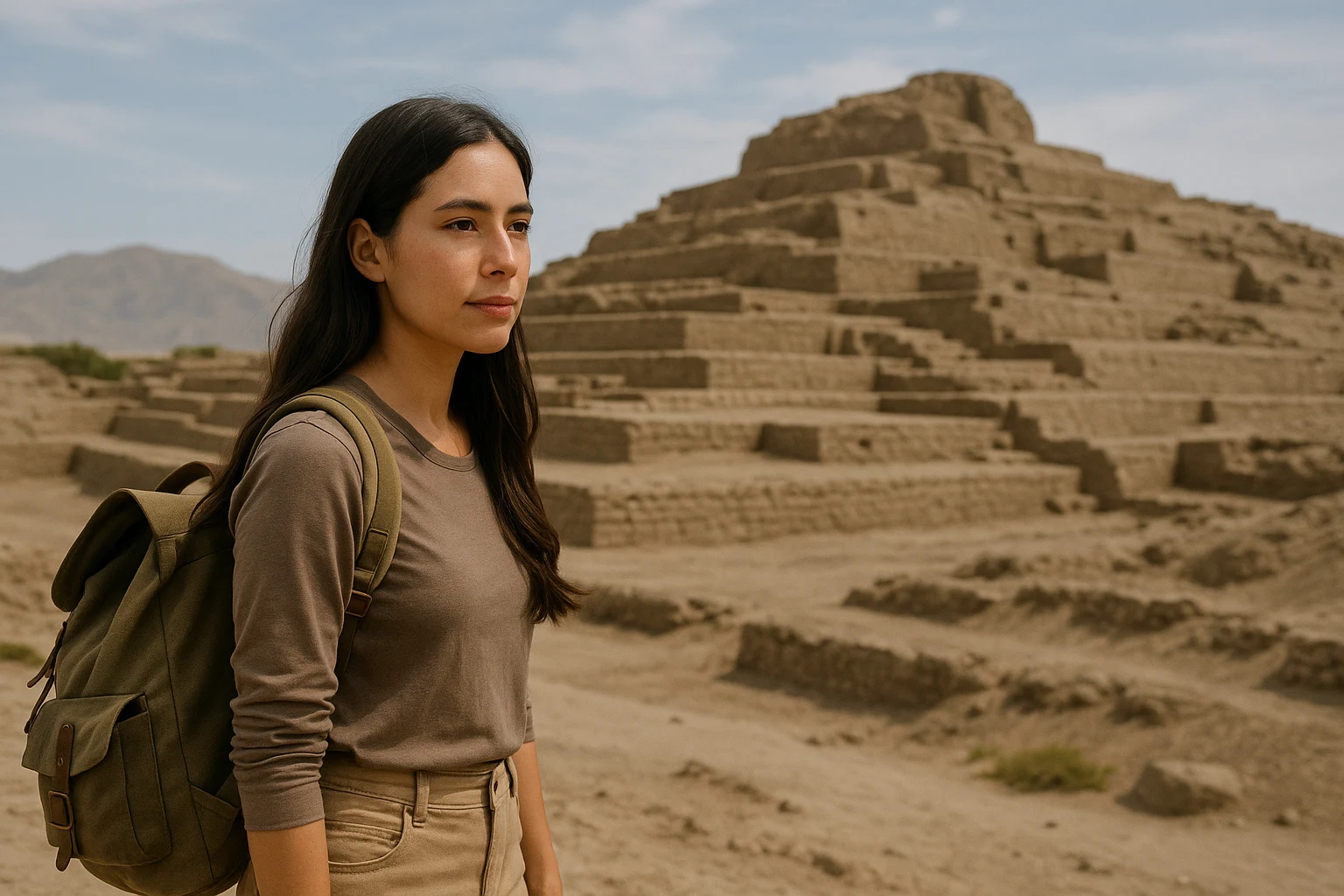
North of Lima, where the coastal desert opens into fertile river valleys and sugarcane fields, Paramonga Fortress rises like a terraced ship made of earth. The first impression is geometric and abrupt: thick adobe walls, sloping faces, stacked levels, and a summit line that still reads as defensive architecture from a great distance. This is not the polished stone drama of the high Andes. Paramonga is coastal, practical, and strategic, a place built to control movement through the Pativilca corridor and to project power at the edge of competing worlds. For anyone building a Paramonga Peru travel guide into a broader itinerary, that setting is exactly the point.
What makes Paramonga memorable is the layering. The fortress is usually associated with the Chimu sphere, then tied to Inca expansion on the coast, and later pulled into colonial-era landscapes that transformed the valley economy. You feel those transitions in the site itself: military logic, administrative planning, and the unfinished conversation between regional autonomy and imperial control. Ancient Travels recommends Paramonga as one of Peru’s most underrated north-coast stops, especially when paired with Caral or Barranca. This guide covers the site’s history, key architectural features, transport and admission logistics, seasonal timing, and the smartest way to combine Paramonga with nearby destinations.
History: A Fortress on the Coastal Frontier
Early valley settlements before the fortress (before c. 1200 CE)
Long before the visible fortress was built, the valleys of Peru’s north-central coast were densely occupied by farming communities connected through irrigation, exchange, and shifting political alliances. The nearby Supe Valley had already produced one of the oldest urban traditions in the Americas at Caral, and later centuries saw new regional polities spread along the coast. By the late first millennium CE, control of water channels and valley routes mattered as much as ceremonial prestige. Paramonga’s location near a key transit axis made it ideal for a fortified center. Even if the current walls are later, the landscape itself had strategic value for many generations before monumental construction began.
Chimu expansion and fortress construction (c. 1200–1470 CE)
Most scholars place Paramonga’s major building phases in the Late Intermediate Period, when the Chimu Kingdom expanded influence southward from its core around Chan Chan. The Chimu were master builders in adobe, and Paramonga shares broad architectural traits with coastal fortified compounds: battered walls, modular terraces, and enclosed internal spaces that could support defense and storage. Rather than a purely ceremonial temple, Paramonga appears to have functioned as a mixed military-administrative complex tied to taxation, labor oversight, and route surveillance. Its design emphasizes control of approach lines and elevated observation points over decorative monumentality. In practical terms, this was a fortress meant to be seen, understood, and respected by anyone moving through the valley.
Inca incorporation of the coast (c. 1470–1532 CE)
When the Inca Empire expanded into north-central coastal Peru in the late 15th century, sites like Paramonga were rarely erased wholesale. More often, they were absorbed, repurposed, and integrated into imperial administration. Archaeologists debate the exact extent of Inca remodeling at Paramonga, but the broader pattern is clear: existing power centers were adapted into the Inca logistical network and linked to road systems that moved officials, goods, and labor between valleys. Paramonga’s strategic position would have made it too useful to ignore. In this period, the fortress likely shifted from a primarily regional stronghold to a node inside a much larger imperial geography, where military visibility and administrative continuity were equally important.
Colonial transition and changing land use (1532 CE onward)
Spanish conquest disrupted the political systems that gave Paramonga its core function. As colonial authorities reorganized settlement, labor, and agricultural production, the fortress gradually lost administrative relevance. Unlike major sacred centers repeatedly rebuilt under Spanish institutions, Paramonga entered a slower cycle of abandonment, reuse of surrounding lands, and periodic local memory. The valley itself remained economically significant, eventually becoming deeply tied to plantation agriculture and sugar production. That long economic continuity around the ruins is part of Paramonga’s modern character: an ancient defensive monument now standing above industrial and agricultural landscapes that transformed the same terrain for different empires.
Archaeology, conservation, and modern interpretation (20th century to present)
Systematic archaeological attention increased in the 20th century as Peruvian scholars and cultural authorities mapped coastal fortified sites more rigorously. Paramonga has received conservation interventions focused on stabilizing adobe surfaces, controlling erosion, and managing visitor circulation across fragile ramps and upper levels. Adobe architecture on the coast is always vulnerable to moisture, wind abrasion, and informal traffic, so preservation is an ongoing process, not a finished project. Today, the site is recognized as a crucial reference point for understanding late pre-Hispanic fortification on Peru’s coast. It may not have the global name recognition of Machu Picchu, but in architectural and historical terms, Paramonga is one of the clearest surviving expressions of frontier power in the region.
The Key Monuments: What to See at Paramonga Fortress
The outer defensive walls
The first major feature you encounter is the ring of outer defensive walls, built in thick adobe masses that still convey substantial scale. Their sloped profiles, often called battered walls, improve stability while making ascent difficult for attackers. Even in weathered condition, these lines define controlled entry points and compress movement into predictable channels. This is architecture of deterrence: broad visual dominance from afar and constrained access up close. From a visitor perspective, walking the perimeter helps decode the fortress before entering deeper levels. You begin to see how topography, wall angle, and gate position were coordinated as one system. In soft morning light, the wall faces show subtle tonal bands in the earth, making the geometry particularly photogenic.
The terraced core and access ramps
Inside, Paramonga’s most distinctive element is its stacked terraced core, linked by long sloping ramps rather than narrow staircases. These ramps are practical and symbolic at the same time. Practically, they ease movement of goods and personnel between levels. Symbolically, they stage ascent through controlled thresholds, reinforcing hierarchy as you climb. The terraces are not symmetrical in a monumental, ceremonial way; instead, they read as a flexible compound that balanced defensive logic with everyday administrative use. As you move upward, the plan becomes clearer: enclosed platforms, partial walls, and sight lines that connect interior courtyards to the valley beyond. For photography, late afternoon side light accentuates ramp edges and creates strong depth across the stacked planes.
Interior patios and enclosed compounds
Paramonga includes a series of interior patios and enclosed spaces that likely served mixed functions: storage, temporary occupation by officials or guards, and controlled gathering areas. While much of the superstructure is eroded, the surviving wall footprints preserve circulation logic. You can still trace where movement narrowed, where spaces opened, and where access was restricted. These interior compounds are often overlooked by visitors who focus on summit views, but they are key to understanding the fortress as a working complex rather than a single monument. The organization suggests that Paramonga managed people as much as it resisted attack, with architecture directing labor and authority through layered internal zones.
The upper lookout platform
Near the highest accessible levels, the upper lookout platform delivers the fortress’s strategic thesis in one view. From here, the Pativilca Valley spreads out in agricultural grids, roads, and settlement clusters, while desert hills frame the corridor toward the coast and inland routes. It becomes obvious why this location mattered across political transitions: visibility, communication, and control of movement. On clear days, the contrast between green fields and ochre ruin walls is dramatic. This is the best point for wide-angle images and for understanding Paramonga in landscape context, not just as isolated ruins. Arrive early if possible; midday haze can flatten the valley details.
The site as an engineered landscape
Perhaps the most important “monument” at Paramonga is the whole engineered composition: walls, terraces, ramps, and valley orientation acting together. Unlike sites defined by a single temple or sculptural icon, Paramonga’s significance lies in systems thinking. You are looking at a designed machine for surveillance, administration, and deterrence that evolved across changing regimes. The absence of ornate stone carving sometimes leads travelers to underestimate the site, but that would miss its real strength. Paramonga is one of Peru’s best places to study how power was built into movement, elevation, and enclosure on the coast. If you walk it slowly, the architecture reads with surprising clarity.
Getting There: Transportation and Access
Paramonga is straightforward to reach from Lima’s northbound highway corridor, but the trip is long enough that planning your return options in advance is essential.
From Lima
Lima is the main gateway for most international travelers, and the overland route to Barranca-Paramonga is common among domestic weekend visitors.
- Intercity bus to Barranca + local transfer: Long-distance buses from Lima to Barranca usually take 3.5-4.5 hours, with fares around 25-55 PEN ($7-15 USD) depending on company and comfort class. From Barranca, take a taxi or colectivo to Paramonga in about 20-30 minutes for roughly 8-20 PEN ($2-5 USD).
- Direct taxi/private car: A private car from Lima to Paramonga generally takes 3.5-4.5 hours depending on traffic leaving the city, especially early morning. Full-day private transport commonly ranges from 450-750 PEN ($120-200 USD).
- Organized tour: Full-day archaeological tours that include Paramonga (often paired with Caral) usually depart very early and return late. Expect 95-185 USD depending on group size and whether the service is shared or private.
From Barranca and Supe
If you sleep in Barranca or Supe, Paramonga becomes an easy half-day excursion and gives you flexibility for better light and lower heat.
- Taxi: From Barranca, typical fares are 15-30 PEN ($4-8 USD) one way, with a 20-30 minute drive.
- Colectivo/minibus: Budget options run frequently on the corridor and are inexpensive, usually 3-8 PEN ($1-2 USD), but schedules can be irregular in off-peak hours.
- Rental car: Renting in Lima and self-driving north is practical on the Panamericana. Parking near the site is generally informal but available.
Admission and Hours
Paramonga is typically open daily during daylight, commonly around 08:00-17:00, though local schedules can shift on holidays or maintenance days. Entry is generally 5-10 PEN ($1.35-2.70 USD), paid in cash at the site. Bring small bills and water, as on-site services are limited. Morning visits are best for cooler temperatures and cleaner light on adobe surfaces. Midday heat can be intense, especially from December through March, and shaded rest areas are minimal.
When to Visit: Seasonal Considerations
Spring (September-November)
Spring is one of the best times to visit Paramonga. Daytime temperatures are often 19-27°C (66-81°F), skies are clearer than in peak winter coastal fog, and the fortress walls photograph beautifully in angled light. Crowds stay moderate even on weekends. If you are pairing the site with Caral, this season offers comfortable conditions for both open-air locations.
Summer (December-March)
Summer is hotter and brighter, with temperatures commonly reaching 24-32°C (75-90°F) around midday. Valley heat reflects strongly off adobe and dusty ground, so start early and carry extra water. Tourism volume rises on the coast, but Paramonga itself rarely feels overcrowded. For comfort, aim to finish your upper-level walk before noon.
Autumn (April-May)
Autumn brings a useful balance: warm but more manageable weather, often around 20-28°C (68-82°F), with thinner crowds after summer travel peaks. Light remains good for landscape views, and road travel is generally smooth. For travelers who want a relaxed pace and fewer people in photos, this is an excellent shoulder season.
Winter (June-August)
Winter on Peru’s coast can bring overcast conditions and garúa moisture, especially in mornings closer to the ocean. Temperatures at Paramonga typically sit around 16-23°C (61-73°F), comfortable for walking but sometimes flatter for photography. Crowd levels are usually low, and midday can still provide clear visibility. Bring a light wind layer even when the forecast looks mild.
Combining Paramonga with Barranca and the Supe Valley
Paramonga works best when treated as part of a north-coast archaeology day rather than an isolated stop. The most rewarding sequence begins with an early departure from Lima, arriving at Caral by 8:30 AM to explore Peru’s preceramic urban origins before the strongest sun. Spend about two hours with the pyramidal sectors and visitor interpretation circuit, then break for lunch around 11:30 AM in Supe or Barranca. A simple coastal lunch of ceviche or sudado de pescado near Barranca’s center keeps the schedule efficient without sacrificing local flavor.
By 1:30 PM, continue north toward Paramonga and enter the fortress in the softer part of afternoon light. The adobe geometry tends to photograph better after midday when wall textures pick up contrast. Plan roughly 90 minutes to two hours for a full circuit, including time at the upper lookout. By 4:00 PM, you can either return to Lima the same day or stay in Barranca for a quieter evening and less rushed travel.
If you have an extra morning, add the coastal town of Puerto Supe or a short stop at Bandurria near Huacho on the drive south, creating a narrative arc from early urbanism to late fortified power along the same coastline. In practical terms, the full experience is a long but coherent 12- to 14-hour day from Lima, or a far more comfortable 1.5-day itinerary with one overnight in Barranca. Either way, Paramonga gains meaning when seen as one chapter in a longer story of how societies organized coast, valley, and empire in ancient Peru.
Practical Information
What to Bring
- Sun protection: Hat, sunscreen, and sunglasses are essential; shade is limited on upper terraces.
- Water: Carry at least 1 liter per person, more in summer.
- Footwear: Closed shoes with good grip help on dusty ramps and uneven adobe surfaces.
- Cash: Bring small PEN notes for entry, transport, and local snacks.
- Camera: A wide lens is useful for capturing the fortress geometry and valley panoramas.
Dress Code and Etiquette
There is no formal dress code, but practical clothing matters because the site is exposed and dusty. Avoid climbing on fragile wall edges or stepping onto clearly restricted surfaces; adobe deterioration accelerates quickly with foot traffic. If local guides or caretakers are present, follow route instructions, especially near upper levels where erosion can make edges unstable.
Accessibility
Paramonga is only partially accessible. The lower areas may be manageable for some visitors with limited mobility, but ramps and higher terraces are uneven and can be difficult for wheelchairs or anyone needing smooth surfaces. There are few handrails and minimal formal accessibility infrastructure. Travelers with mobility concerns should plan for a viewpoint-focused visit rather than a full ascent.
Why Paramonga Matters
Paramonga matters because it corrects a common travel illusion: that ancient Peru is only high mountains, stone citadels, and postcard peaks. On this coast, power looked different. It was made of earth, engineered into terraces, and positioned to watch roads, fields, and river corridors where people, tribute, and authority moved. The fortress is austere, but not empty. Its walls still communicate intent with remarkable precision.
Standing on the upper levels, you can see why rulers fought to control this landscape across centuries. The valley is productive, connected, and exposed, a place where administration and defense were inseparable. Paramonga also reminds you that historical transitions were rarely clean breaks. Chimu, Inca, and colonial worlds overlap here in the same ground plan, each inheriting and reshaping what came before.
For travelers willing to go beyond Peru’s most famous icons, Paramonga offers something rare: a site where architecture explains politics without needing spectacle. You leave with dust on your shoes, wind in your ears, and a clearer sense of how empires were held together at their edges.
Quick Facts
| Attribute | Details |
|---|---|
| Location | Paramonga District, Barranca Province, Lima Region, Peru |
| Ancient Name | Commonly known as Fortaleza de Paramonga |
| UNESCO Status | Not individually UNESCO-listed |
| Established | c. 1200 CE fortified complex |
| Distance from nearest hub | ~15 km from Barranca (20-30 min) |
| Entry Fee | 5-10 PEN ($1.35-2.70 USD) |
| Hours | Typically 08:00-17:00 daily |
| Best Time | Spring and autumn mornings |
| Suggested Stay | 1.5-2 hours |
Explore More Peru
- Caral-Supe: Visit one of the oldest urban centers in the Americas, a natural pairing with Paramonga.
- Pachacamac: Explore Lima’s great pilgrimage sanctuary for deeper context on coastal sacred landscapes.
- Huaca Pucllana: See pre-Hispanic adobe architecture inside modern Lima before or after your northbound route.
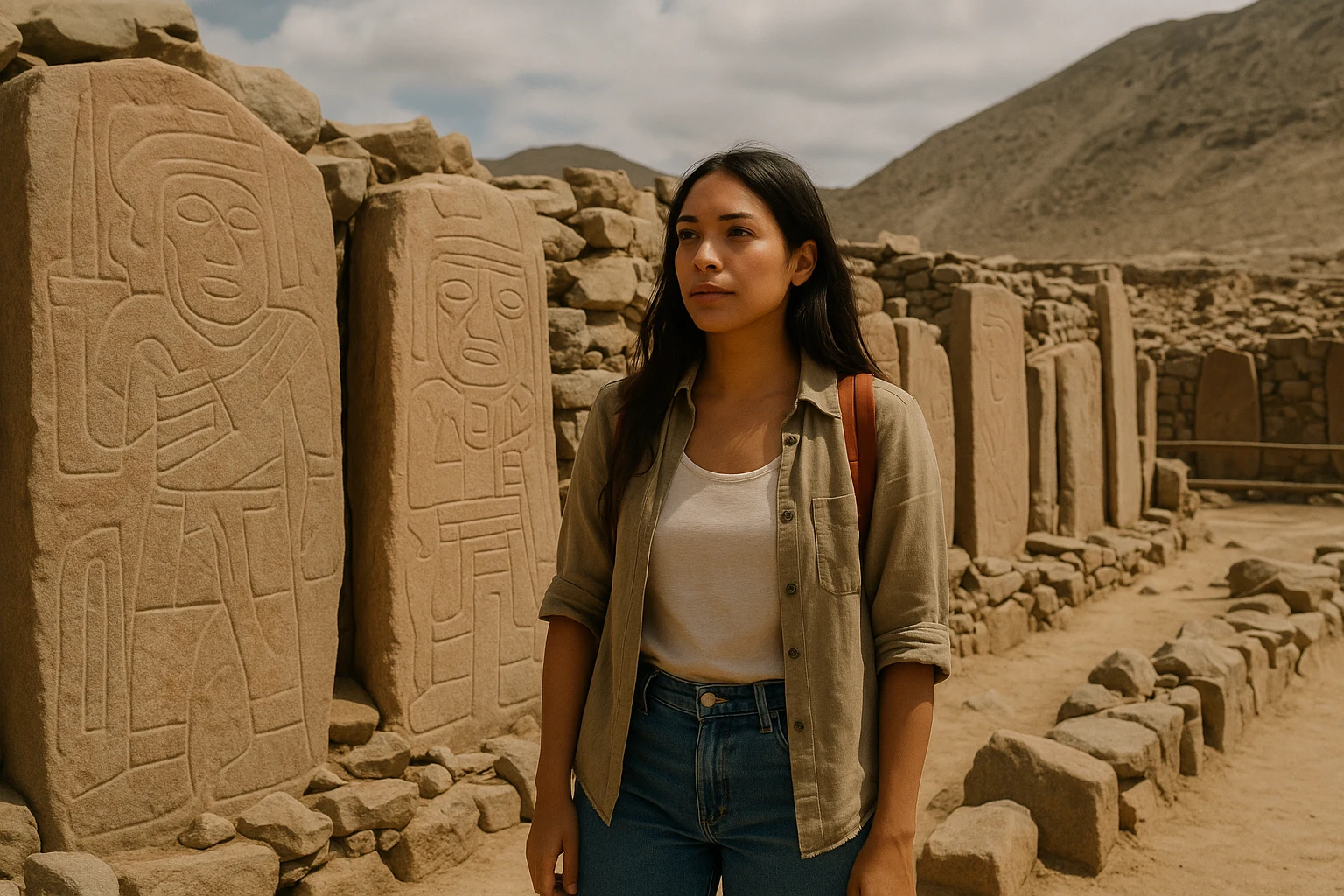
- Cerro Sechin: Continue into Ancash for monumental relief carving and a very different coastal highland transition zone.
Plan your complete Peru archaeology route with our Peru Ancient Sites Guide. Learn how to organize transport and timing with our Peru Overland Travel Guide.
Frequently Asked Questions
How much time should I plan for Paramonga Fortress?
Plan 1.5 to 2 hours on site for a complete circuit, including the lower terraces, ramps, and upper lookout levels. Add transfer time if you are coming from Barranca or Supe. If you pair Paramonga with Caral in one day, expect a full-day schedule of 10 to 14 hours from Lima.
Is Paramonga better visited as a day trip from Lima or as an overnight in Barranca?
Both work, but an overnight in Barranca gives you a more relaxed visit and better morning light for photography. A same-day Lima trip is possible, though long, and usually works best with private transport or an organized tour. Staying locally also makes it easier to combine Paramonga with Caral.
How do I get to Paramonga using public transportation?
Take a northbound bus from Lima to Barranca (about 3.5 to 4.5 hours), then continue by local colectivo or taxi to Paramonga in roughly 20 to 30 minutes. Public options are frequent between Lima and Barranca, but last-mile schedules can be irregular, so keep buffer time for your return.
What is the entry fee and are guides available at Paramonga?
Entry is usually low-cost, generally in the range of 5 to 10 PEN (about $1.35 to $2.70 USD), though rates can change. Local guides are often available at or near the entrance for a small additional fee. Bring cash in small bills, since card payment is uncommon.
What will I actually see at Paramonga?
You will see a large adobe fortress with stepped terraces, broad defensive walls, interior patios, and sloped access ramps rather than steep stairs. From the higher levels, you get wide views over the Pativilca Valley and nearby sugarcane fields. The site is especially valuable for understanding late pre-Hispanic military and administrative architecture on Peru's coast.
Is Paramonga safe and suitable for independent travelers?
Yes, Paramonga is generally suitable for independent travelers during daylight hours, especially if you use straightforward transport and standard precautions. Surfaces are uneven and dusty, so sturdy shoes are essential. As with most archaeological sites, avoid isolated visits at dusk and keep valuables discreet.
Nearby Ancient Sites
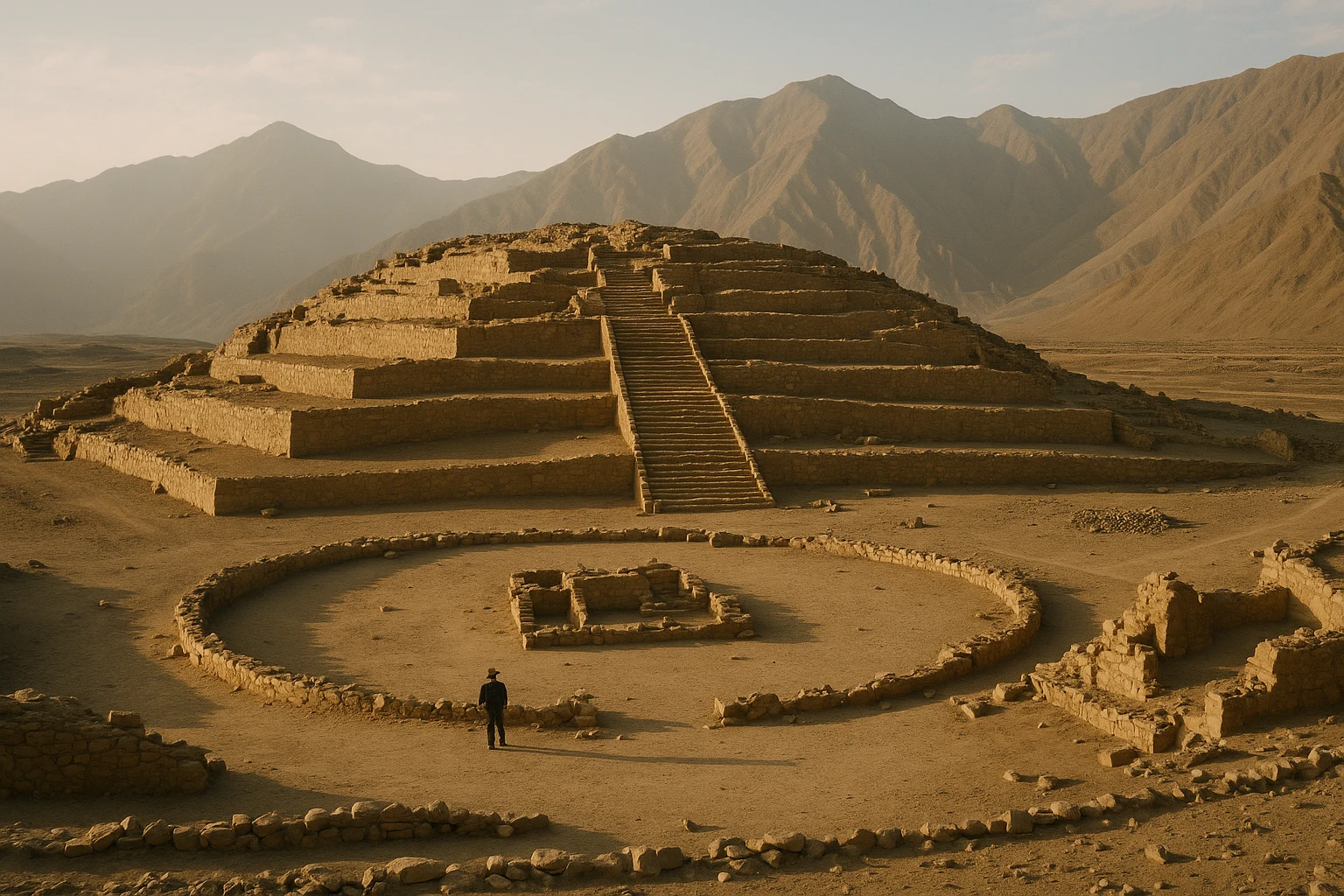
Caral-Supe Peru Guide 2026: Sacred Pyramids & the First Andean City
Norte-Chico-CaralVisit Caral-Supe in Peru, the oldest known city in the Americas, with practical transport from Lima,...
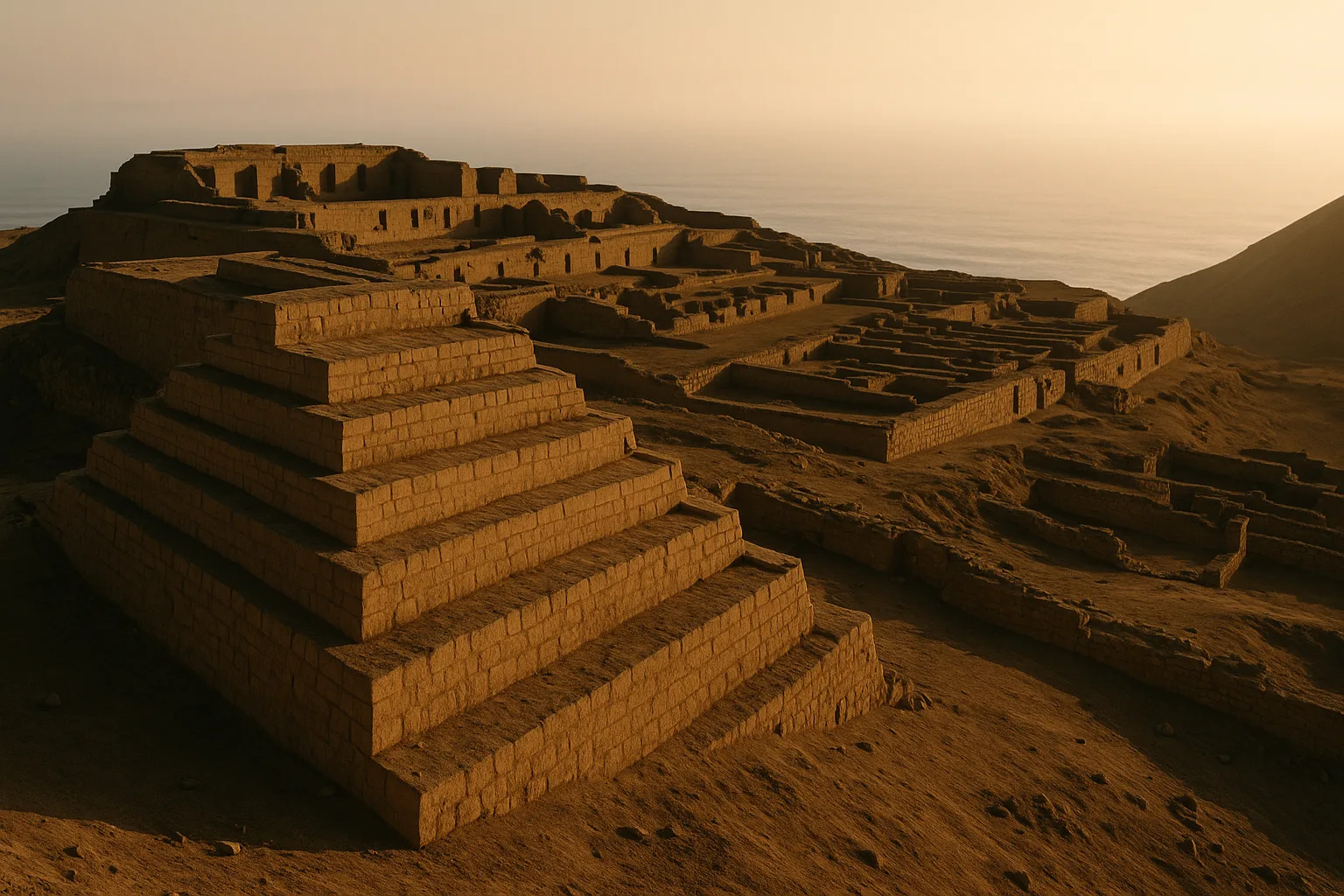
Pachacamac Peru Guide 2026: Oracle Temple, Pilgrimage Roads & Lima Coast
Lima-Wari-Ychsma-IncaExplore Pachacamac near Lima: ancient oracle temples, multi-civilization coastal history, practical ...
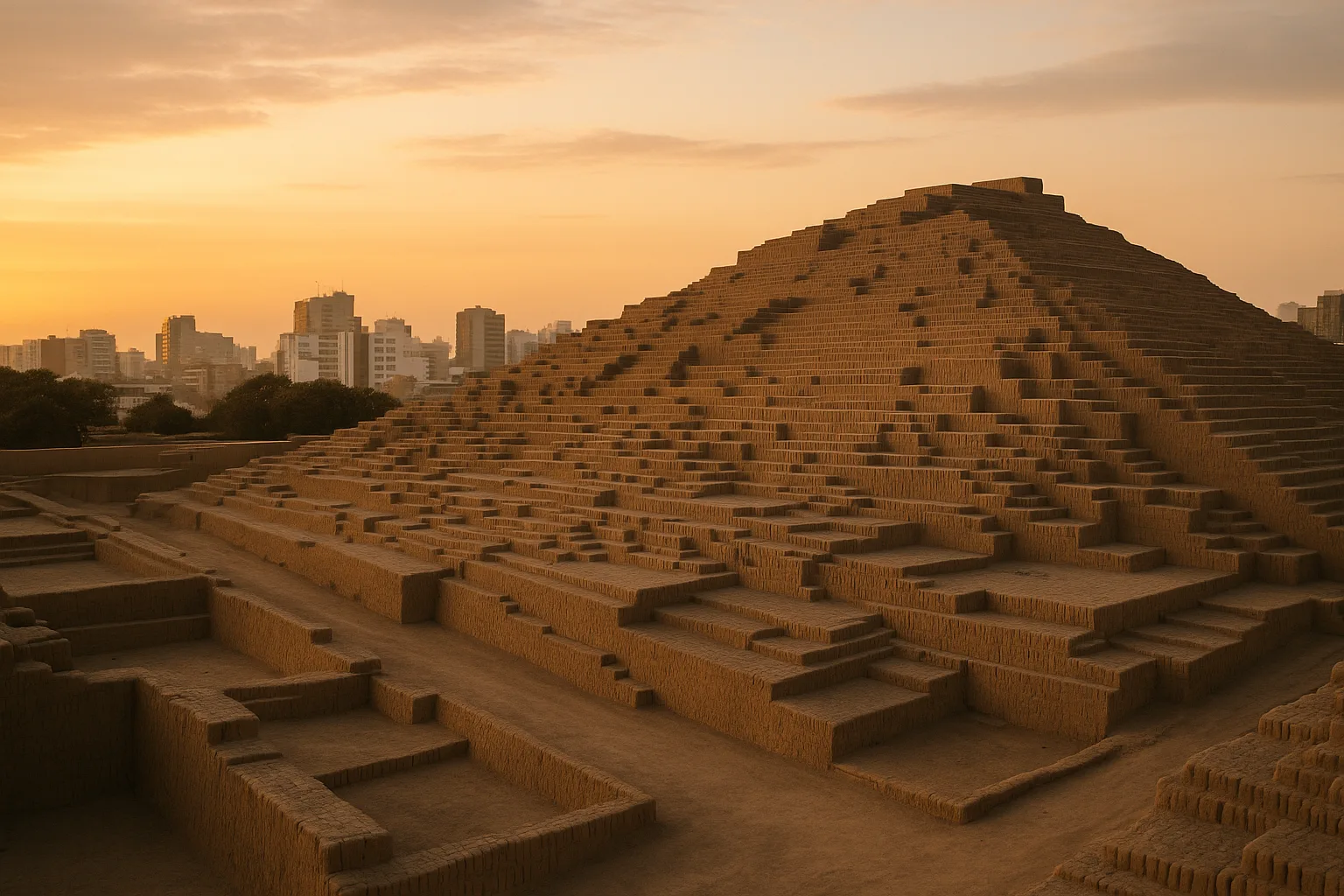
Huaca Pucllana Peru Guide 2026: Lima Adobe Pyramid & Lima Culture
Lima-Ychsma-IncaExplore Huaca Pucllana in Lima: pre-Inca adobe pyramid architecture, museum circuit, practical entry...
Cerro Sechín Peru Guide 2026: Relief Monoliths & Casma Valley
Sechin-Casma-initial-AndeanPlan your visit to Cerro Sechín in Peru with history, carved monolith highlights, transport from Cas...