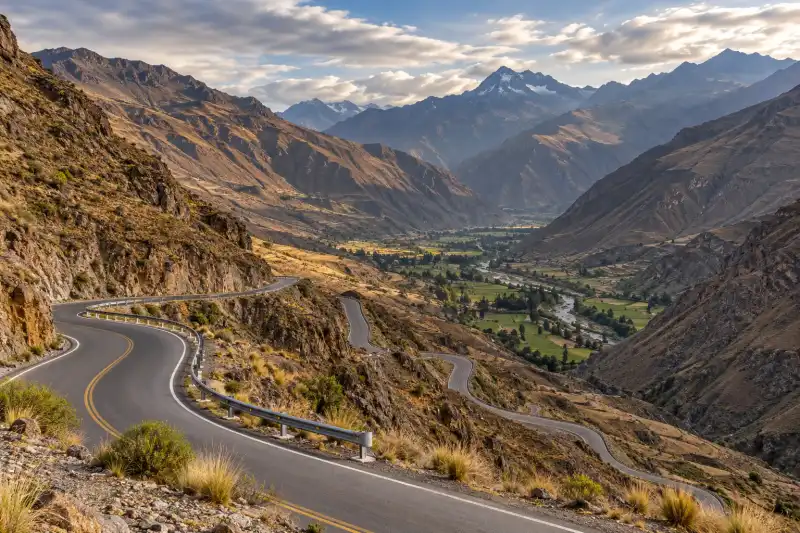
Overland travel in Peru is a geography lesson with luggage. The coast runs long and dry, the Andes rise quickly, and routes that look like neat diagonals on a screen can take much longer once roads, altitude, towns, and actual rest stops get involved. Build the trip around corridors, not mileage fantasies.
The south coast corridor
The route south from Lima can create a coherent archaeology sequence because the landscape changes gradually: coastal city, desert, Paracas, Nazca. Paracas and the Nazca Lines are not identical stops, but they make narrative sense together when you give the road time to work.
Use daylight for unfamiliar coastal roads and avoid planning an immovable visit immediately after a long bus arrival. If you are carrying onward airline or rail commitments, keep a buffer night. The road is not merely the empty space between content. It is what determines whether a site day remains a site day.
The Andes are a separate travel problem
The Cusco region should not be bolted onto an exhausted road itinerary as if altitude were just scenery. Official travel advice flags altitude illness as a serious risk in places including Cusco and Puno. Arrive with a gentle first day, drink and eat normally, avoid stacking a major hike on arrival, and seek medical advice if symptoms are severe or worsening.
Once based in the region, build short, purposeful arcs: Cusco and its nearby ruins; the Sacred Valley; Ollantaytambo and the rail approach to Machu Picchu. Pisac, Ollantaytambo, and Sacsayhuaman each deserve more than a windshield view. See our Peru highlands planning guide for an altitude-aware arrival structure.
Treat distances as planning inputs, not promises
Before you book, identify the actual start terminal, likely rest stop, arrival terminal, hotel, and final site gate. A published kilometer figure cannot tell you how long baggage collection, city traffic, weather, road conditions, or a slow mountain segment will take. Use current carrier information for schedules and road-travel advice, then leave margin instead of converting the most optimistic estimate into a reservation chain.
For longer legs, consider an overnight in a place that is useful on its own. The goal is to break the route where it improves the trip, not merely where a map produces equal-sized lines.
An archaeology-first overland rhythm
Give the south coast at least two or three nights beyond Lima if you want Paracas and Nazca without constant packing. Give Cusco and the Sacred Valley several nights rather than treating them as a single dawn-to-dark circuit. If you connect the two regions, regard the connection as its own day unless a verified current flight or carefully planned transport chain says otherwise.
Book the next location only after deciding what you are willing to miss if a transfer slips. A flexible museum afternoon is a better post-arrival plan than a timed remote-site entry. Recheck official sources for current disruption notices, road conditions, and service policies shortly before travel.
This guide intentionally does not publish live road times, bus schedules, fares, closures, or availability. For choosing the mode, read Peru transportation. For reservation order and transfer handoffs, read Peru transport planning.