Peru is a country where a route that looks short on a map can cross a coast, climb into the Andes, and become a different kind of day entirely. Transportation is not an afterthought to the ruins. It determines whether you arrive ready for Machu Picchu or arrive late, breathless, and furious at a mountain for existing.
Flights: use them to protect the itinerary
Flights are most useful when a long overland leg would consume the only day you have for a region. Peru’s official tourism site notes that many flights to Cusco connect through Lima. Build the connection as a real travel day, particularly if you are then continuing to high altitude. A short flight time does not erase airport transfers, baggage rules, weather disruption, or the body’s need to adapt after arrival.
Use flights to bridge distant regions. Do not use one simply because a road journey sounds less glamorous. On a compact archaeology route, the better choice may be the transfer that preserves a night in the right base and a morning at the right site.
Buses: the workhorse, not a generic category
Buses connect cities and towns that air routes do not serve, and they can be the practical choice for an overland corridor. They also vary enormously in departure location, stops, baggage handling, and comfort. Compare the exact operator and terminal, not “bus travel in Peru” as an abstract idea.
For long rides, prefer daylight when the view and road conditions matter to you, and avoid stacking an ambitious site visit immediately after arrival. Official foreign-travel guidance notes that disruptions can affect parts of Peru, including southern rail services. Recheck the current situation and keep a backup day where a connection is mission-critical.
Trains: a specific tool for a specific corridor
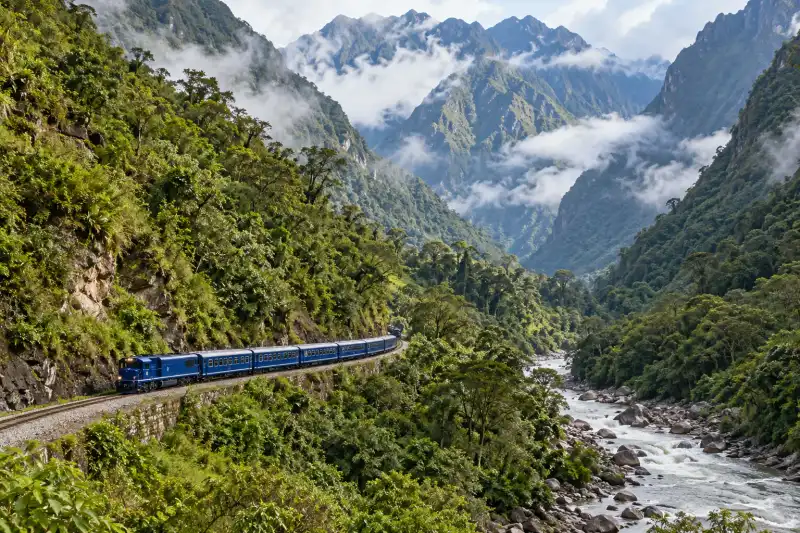
Rail is not a nationwide substitute for roads. Peru Travel identifies the Ollantaytambo to Machupicchu route and names PeruRail and Inca Rail as its operators. That makes rail central to one famous approach, not a blanket recommendation for the country. Coordinate the train with your exact entry plan at Machu Picchu, your lodging, and your transfer at the other end.
The Ollantaytambo area is worth attention on its own. Do not make it merely a platform with a coffee queue attached.
Taxis and local transfers: book the handoffs
Airport pickups, hotel-to-station runs, and site transfers are where a tidy national plan often frays. Peru Travel advises using secure taxi companies, whether called or booked through an app. Confirm the pickup point, luggage capacity, payment method, and destination spelling before departure. For a remote site, confirm the return plan too. A one-way ride to archaeology is a very old-fashioned problem, but it remains stubbornly modern.
Choose by trip shape
For a Lima-Cusco-Sacred Valley journey, a flight plus pre-arranged local transfers can minimize dead time, while allowing a gradual first day at altitude. For a south-coast route around Nazca or Paracas, overland transport may create a more coherent sequence. For northern sites such as Chan Chan, compare the gateway city and onward ground leg before choosing a national flight.
Do not publish your itinerary around a cached timetable. Check official carriers and site operators shortly before travel for the current schedule, booking terms, luggage rules, and disruption notices. This guide deliberately does not state live fares, seats, service frequency, or availability.
For route distances and day-by-day road logic, read our Peru overland travel guide. For sequencing reservations, see Peru transport planning, and account for acclimatization with our Peru altitude guide.