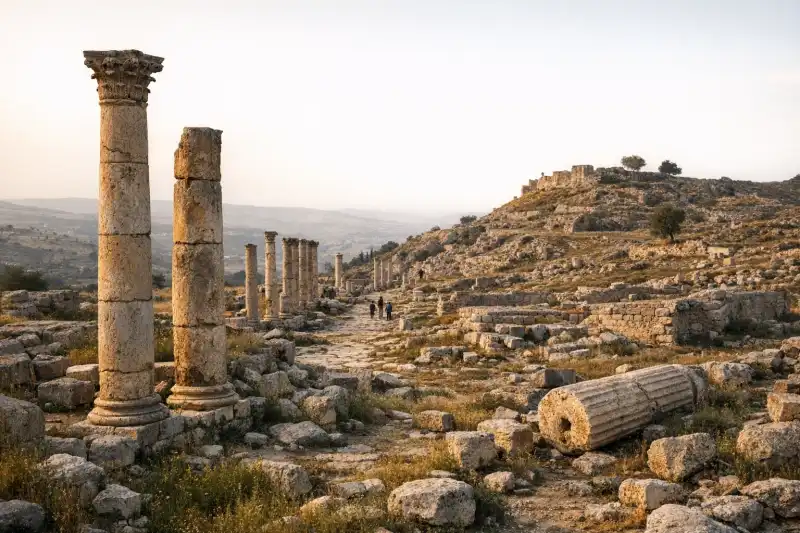
Quick Info
At a glance
Quweilbeh (Abila) in Jordan sits quietly among the green hills of the country’s north, far from the headline monuments that dominate most itineraries. Yet for travelers who care about landscapes layered with memory, this is one of the most rewarding ancient sites in Jordan. The ruins spread across a broad valley setting and low ridges near modern settlement, where cut stone, collapsed walls, church remains, and scattered architectural fragments still hint at the importance of the ancient city once known as Abila. Often identified as one of the Decapolis cities or closely connected to that world of Greco-Roman urban culture in the Levant, Quweilbeh preserves the atmosphere of a place shaped over centuries rather than by a single dramatic moment.
That is part of its appeal. Quweilbeh is not a site of one giant temple or one perfectly restored monument. Instead, it invites a slower kind of visit. You notice how the terrain determined the placement of roads and buildings. You see how Roman civic life gave way to Byzantine religious architecture. You begin to understand why northern Jordan was such a crossroads between inland Syria, the Jordan Valley, and the routes leading toward the Mediterranean. For visitors willing to look beyond the obvious, Quweilbeh offers a richly textured encounter with ancient urban life, agriculture, faith, and survival in a changing region.
History
Hellenistic beginnings
The roots of ancient Abila likely reach back before the Roman period, into the Hellenistic age that followed the campaigns of Alexander the Great. Northern Jordan, like much of the southern Levant, became part of a wider world in which Greek political forms, language, and urban planning influenced older local traditions. Settlements that occupied strategic valleys or road networks often developed into regional centers, and Abila was well placed to benefit from that environment. Fertile land, access to water, and routes connecting the interior to neighboring districts helped sustain a community here long before monumental Roman building began.
Although archaeology continues to refine the story, the Hellenistic phase seems to have established the city’s role as a local hub. This was a period when older Semitic traditions and incoming Greek cultural patterns mixed rather than simply replacing each other. In cities across the region, that blend shaped administration, architecture, religion, and daily life. Abila appears to have shared in that transformation.
Roman prosperity and the Decapolis world
Under Roman influence, Abila entered its best-documented and most prosperous phase. It is commonly associated with the Decapolis, the loose group of eastern cities linked by Greco-Roman civic identity, trade, and regional prestige. Membership and status within that network could shift over time, and ancient references are not always simple, but Abila clearly belonged to the cultural and economic orbit of that world. Roman rule brought relative stability, stronger long-distance trade, and investment in urban infrastructure.
During this era, the city expanded and acquired the features expected of an important provincial center. Roads connected it to neighboring settlements, while public architecture expressed civic ambition. Columns, paved spaces, and carefully cut masonry fragments found on the site point to the built character of Roman Abila. Water management was especially important. In this landscape, springs, cisterns, and channels could support both urban population and agriculture, and the survival of a city depended as much on hydraulic skill as on military protection.
The surrounding countryside also mattered. Roman cities in this part of the Levant were not isolated islands of stone; they were the center of productive rural zones. Grain, olives, grapes, and livestock from the hinterland supported urban life and tied local farmers to regional markets. Abila’s position in a fertile northern district gave it a solid economic basis.
Byzantine transformation
By the Byzantine period, Abila remained inhabited and significant, but the city’s identity changed. Like many urban centers in the eastern Mediterranean, it became increasingly marked by Christian institutions. Churches were constructed, older buildings were repurposed, and the rhythms of urban life adjusted to a society in which bishops, monasteries, and pilgrimage networks carried growing influence. The archaeological remains at Quweilbeh include church structures and religious architecture that testify to this transformation.
This was not simply a story of replacement. Roman street plans and civic spaces often persisted, even as Christian communities adapted them. Stones from earlier monuments might be reused in church walls; public areas might gain new meanings. The result was a layered city rather than a wholly new one. Abila’s Byzantine remains speak to both continuity and change, preserving evidence of a settlement that remained active and integrated into the wider Christian world of late antiquity.
Early Islamic continuity and decline
The arrival of Islamic rule in the seventh century did not immediately erase the city. Across Jordan and the Levant, many communities continued with surprising continuity after the early conquests. Trade routes remained active, farming continued, and local populations adapted to new political realities. Abila likely experienced this process in a gradual way, with habitation and economic activity continuing even as administrative systems shifted.
Over time, however, the city declined. Several factors may have contributed: changing trade patterns, regional political reorganization, earthquakes, and the gradual movement of population toward other centers. As with many ancient sites in Jordan, decline was not always sudden abandonment. Instead, there may have been phases of contraction, reuse, and reduced urban scale before the area settled into a more rural pattern.
What survives today is therefore the residue of many centuries: Hellenistic foundations, Roman urban confidence, Byzantine religious life, and the quieter afterlife of an ancient city whose stones remained part of the landscape long after its prominence had faded.
Key Features
One of the most appealing aspects of Quweilbeh is the breadth of the archaeological landscape. This is not a single fenced monument but a dispersed ancient city environment. As you move through the site, you encounter cut blocks, wall lines, architectural fragments, and topographical clues that reveal how the settlement once occupied the valley and adjoining rises. The sense of discovery is strong because the ruins still feel embedded in their terrain. You are not looking at an isolated exhibit; you are walking through the physical footprint of a city.
Among the most significant remains are the churches from the Byzantine era. Their plans, mosaic traces where preserved, apses, and fallen masonry help illustrate the Christian life of late antique Abila. Even when the buildings are fragmentary, the orientation and surviving architectural elements make their purpose clear. These churches show how the city continued to matter after the height of Roman civic culture, and they are often the most evocative evidence for Abila’s long occupation.
Visitors will also notice Roman-era architectural fragments scattered across the area, including columns, capitals, and dressed stone. These remains hint at colonnaded streets, public structures, and residential quarters that once gave the city an urban dignity suited to its place in the Decapolis world. Much of the grandeur has collapsed, but the quality of masonry still communicates a history of investment and planning. In some places, the site rewards close attention more than distant viewing: a carved block, a threshold, or a reused stone can tell its own story.
Rock-cut tombs and burial areas are another important feature. These funerary remains broaden the picture beyond public buildings and reveal how communities in and around Abila commemorated the dead. Tomb architecture can preserve details of social rank, belief, and local custom, while the placement of burial zones helps define the ancient city’s edges. For travelers interested in the full structure of ancient life, these spaces are as informative as temples or churches.
The water system deserves special attention. Northern Jordan receives more rainfall than much of the country, but reliable water management was still essential. Springs, channels, cisterns, and collection systems underpinned the city’s survival and agricultural prosperity. At Quweilbeh, the relationship between settlement and water is visible in the shape of the land and in the traces of engineered features. This practical side of the city may be less visually dramatic than a monumental facade, but it explains far more about why a city flourished here in the first place.
The surrounding scenery is itself one of Quweilbeh’s defining features. Northern Jordan can be unexpectedly green, especially in late winter and spring, and the rolling hills create a softer, more agricultural setting than the desert imagery many visitors associate with the country. That landscape helps you understand Abila as a lived place, connected to farms, orchards, movement, and daily labor. It also makes the site particularly appealing for photographers and travelers who enjoy combining archaeology with a sense of open countryside.
Finally, Quweilbeh stands out for its relative quiet. Compared with Jordan’s most famous attractions, it receives fewer visitors. That means you often experience the ruins in near silence, with time to notice details and imagine the city’s changing phases. For some travelers, this atmosphere is the greatest feature of all. The site feels less curated and more conversational, asking you to piece together its history from stones, contours, and fragments.
Getting There
Quweilbeh (Abila) is most easily reached from Irbid, the main urban center of northern Jordan. By car, the trip usually takes around 20 to 30 minutes depending on your starting point and local road conditions. A taxi from central Irbid may cost roughly 10 to 20 Jordanian dinars one way, with return waiting time or a round-trip arrangement increasing the fare. It is wise to agree on the price before setting out if the meter is not used.
From Amman, the journey by private car generally takes around 1.5 to 2 hours. A private transfer or hired driver from the capital can cost anywhere from 50 to 90 Jordanian dinars for a day trip depending on vehicle type, waiting time, and whether additional northern sites are included. Many travelers combine Quweilbeh with Ajloun, Umm Qais, or stops in the Irbid region to make the most of the route.
Public transport is possible but less convenient. Buses and service taxis run between Amman and Irbid, often for about 2 to 4 Jordanian dinars, after which you will likely need a local taxi to reach the site itself. This can be affordable, but schedules may be irregular and signage limited. For independent travelers who are comfortable navigating local transport, it is manageable; for most visitors, a rental car is the simplest option.
Roads in northern Jordan are generally good, but having offline maps is helpful. Bring water, especially if arriving by taxi, as there may not always be reliable services immediately beside the ruins.
When to Visit
The best time to visit Quweilbeh is in spring, especially from March to May, when northern Jordan is at its most attractive. Hillsides are greener, temperatures are mild, and the countryside around the ruins can feel surprisingly lush. This is the season when walking the site is most enjoyable, particularly if you want time to explore beyond the most obvious remains. Spring light also works well for photography, bringing out the texture of limestone and the contours of the landscape.
Autumn, from late September through November, is another strong option. The heat has eased after summer, skies are often clear, and conditions are comfortable for longer visits. While the vegetation is usually less vivid than in spring, the atmosphere can be calm and spacious, and the site remains pleasant for walking.
Summer is possible, but midday heat can become tiring, particularly where shade is limited. If you visit between June and August, aim for early morning or late afternoon. Carry more water than you think you need, wear a hat, and expect the stone surfaces to reflect heat. The quieter roads and longer daylight can be useful, but comfort is lower.
Winter has advantages as well. Northern Jordan can be cool, windy, and occasionally rainy, but winter visits often offer beautiful dramatic skies and very few other visitors. On clear days, the landscape feels crisp and open. The main concern is wet or slippery ground after rain, so sturdy shoes are important. Overall, spring offers the best combination of scenery, weather, and walking conditions, but autumn runs a close second for travelers seeking comfort and fewer seasonal variables.
| Quick Facts | Details |
|---|---|
| Location | Near Quweilbeh village, Irbid Governorate, northern Jordan |
| Ancient Name | Abila |
| Cultural Context | Hellenistic, Roman, Byzantine, Early Islamic |
| Best Known For | Decapolis association, Byzantine churches, broad archaeological landscape |
| Nearest Major City | Irbid |
| Ideal Visit Length | 1.5 to 3 hours |
| Best Season | Spring and autumn |
| Access | Best by rental car, taxi, or private driver |
| Terrain | Uneven ground with open areas and scattered ruins |
| What to Bring | Water, sun protection, sturdy shoes, offline maps |
Quweilbeh is one of those places that rewards curiosity more than checklist tourism. Its ruins do not overwhelm you with scale, but they steadily reveal a rich and durable past. Here, the appeal lies in accumulation: a church apse here, a Roman fragment there, the line of a street, the memory of water, the agricultural basin that made urban life possible. Together, those elements reconstruct the story of a city that mattered for centuries in northern Jordan.
For travelers interested in the ancient Levant beyond the most famous names, Quweilbeh offers something rare: a chance to encounter history in a form that still feels close to the ground. It is a place where the Hellenistic, Roman, Byzantine, and early Islamic worlds meet in one landscape. Visit patiently, walk slowly, and let the terrain explain the city.
Guided tours: worth it?
Self-guided works here, but a guide can add real value if you want the ruins explained as a living place rather than just a sequence of monuments.
Best for
- First-time visitors who want context, not just photos
- Short visits where a planned route saves time
When to go self-guided
Go independently if you prefer setting your own pace, reading as you go, and checking official hours or ticket rules directly before you arrive.
What I’d avoid
Skip paid tours that bundle unrelated stops you do not actually want. The best option should either save meaningful planning time or add historical context you would miss on your own.
Northern Jordan Archaeology Tours
Useful when: you want to compare guided formats before deciding
Irbid and Umm Qais Day Tours
Useful when: you want to compare guided formats before deciding
Jordan Decapolis Historical Tours
Useful when: you want to compare guided formats before deciding
Some tour links are affiliate links, which may earn Ancient Travel a small commission at no extra cost to you. I try to surface options that make practical sense for the site—not just anything bookable.
Frequently Asked Questions
What is Quweilbeh (Abila)?
Quweilbeh is the modern village area associated with ancient Abila, one of the cities linked to the Decapolis in northern Jordan. The site preserves Roman, Byzantine, and early Islamic remains.
Where is Quweilbeh (Abila) located?
Quweilbeh (Abila) is in northern Jordan in Irbid Governorate, west of Irbid city and not far from the Yarmouk valley region.
How much time should I allow for a visit?
Most visitors can explore the main ruins in 1.5 to 3 hours, though archaeology enthusiasts may want longer to walk the wider landscape and study architectural details.
Is Quweilbeh (Abila) easy to visit independently?
Yes, but it is easier with a rental car or hired driver. Public transport in the area can be limited and may require combining buses with taxis.
What can I see at the site?
Visitors can see remains of churches, tombs, Roman-era structures, colonnaded elements, water systems, and architectural fragments scattered across a broad archaeological zone.
What should I bring when visiting Quweilbeh (Abila)?
Bring water, sun protection, sturdy walking shoes, and cash for local transport. Shade can be limited, especially in warmer months.
Nearby Ancient Sites
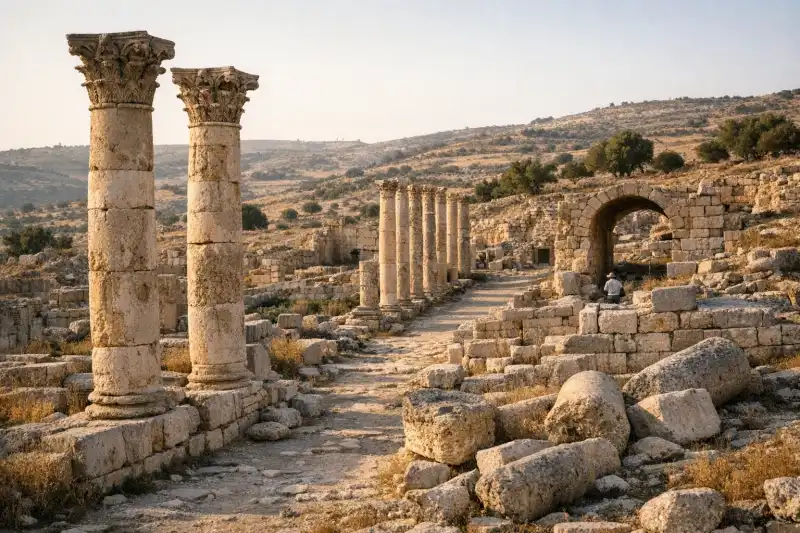
Abila
Hellenistic, Roman, Byzantine, Early IslamicExplore Abila, a Decapolis city in northern Jordan known for Roman ruins, Byzantine churches, and gr...
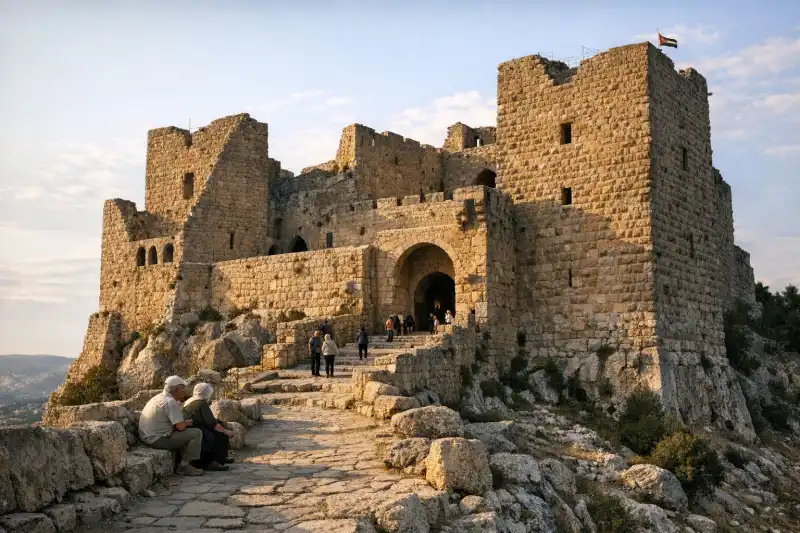
Ajloun Castle
Ajloun Castle in Jordan is a 12th-century Muslim fortress renowned for its strategic hilltop locatio...
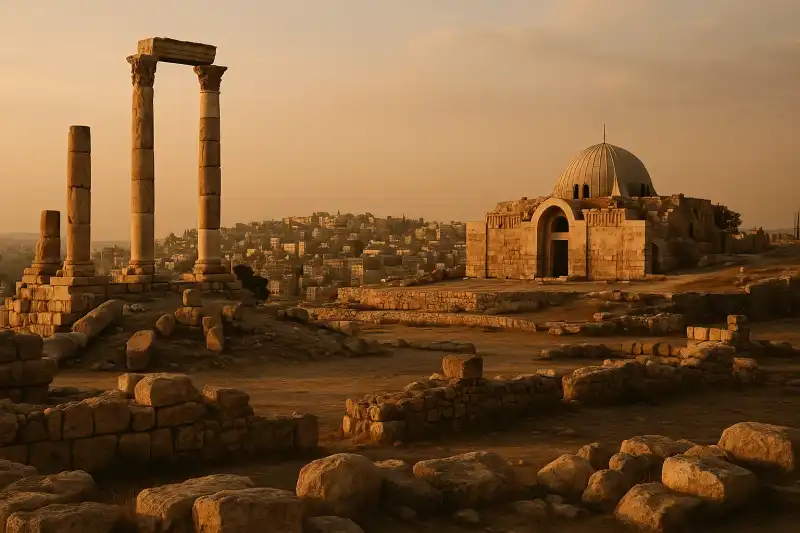
Amman Citadel Jordan Guide 2026: Temple of Hercules & Ancient Rabbah
Ammonite-Roman-UmayyadExplore Jordan's ancient citadel overlooking modern Amman. Discover the Temple of Hercules, Umayyad ...
Deir Alla
Canaanite, Israelite-era, and regional Levantine culturesExplore Deir Alla in Jordan, an important Jordan Valley archaeological mound linked to Bronze and Ir...