Quick Info
At a glance
Rujm al-Malfouf in Jordan is one of those archaeological places that can easily be overlooked in a city better known for its hilltop citadel, Roman theater, and busy modern streets. Yet that is precisely part of its appeal. Instead of grand colonnades or vast temple precincts, visitors encounter a compact, weathered stone tower whose importance lies in its survival, its setting, and the long story it suggests about the landscapes around ancient Amman. Seen today amid the expanding urban fabric of the Jordanian capital, Rujm al-Malfouf feels both modest and surprisingly powerful: a reminder that before Amman became a modern metropolis, this upland zone was a patchwork of routes, lookout points, agricultural margins, and fortified spaces.
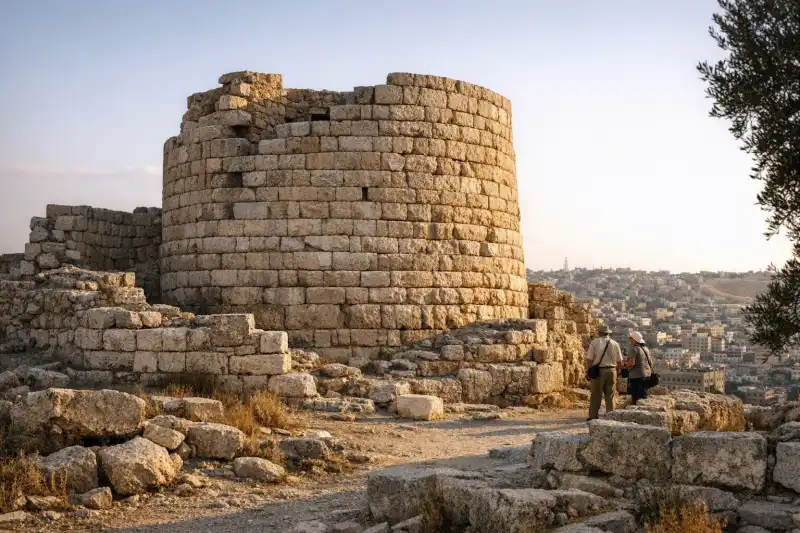
The monument is usually identified as an Iron Age tower, built from local stone in a circular form that immediately sets it apart from many later structures in the region. It is not a site that overwhelms through scale. Instead, it invites careful attention. The masonry, the elevated position, and the relationship between the ruin and the surrounding terrain all hint at practical purposes—surveillance, signaling, protection, and control of movement. For travelers interested in archaeology, Rujm al-Malfouf offers a rewarding stop because it broadens the story of Jordan beyond the headline sites. It reveals the ancient highlands as a lived-in, defended environment, where even a single tower can illuminate questions of settlement, security, and regional identity over thousands of years.
History
Early settlement landscapes around Amman
To understand Rujm al-Malfouf, it helps to begin with the much older human story of the Amman plateau. Central Jordan has been inhabited for millennia, and the wider region around modern Amman preserves traces of prehistoric and early settled life, including major sites such as Ain Ghazal. Long before the tower itself was built, these uplands were already part of a well-established pattern of movement, cultivation, and local interaction. Springs, arable land, and ridges that commanded views over the surrounding countryside made the area attractive for repeated occupation.
By the early 1st millennium BCE, the Jordanian highlands were home to emerging kingdoms and local communities that depended on agriculture, seasonal herding, and control of routes linking the interior to other parts of the Levant. In such a setting, visibility mattered. Hills, ridges, and outcrops became useful locations for monitoring nearby land and guarding access corridors. Rujm al-Malfouf belongs to this larger tradition of landscape use, where architecture was often practical, strategic, and closely tied to terrain.
Iron Age construction and function
Most scholars associate Rujm al-Malfouf with the Iron Age, probably within the period when the kingdom of Ammon flourished in the region around present-day Amman. Ancient Amman was known as Rabbath-Ammon, and it served as a political and cultural center in the highlands east of the Jordan River. During this era, communities in the region developed fortifications, administrative centers, and rural installations that reflected both local needs and wider regional pressures.
The circular tower at Rujm al-Malfouf is generally interpreted as either a watchtower, a defensive outpost, or part of a more extensive system of guarding territory around the ancient city. Its thick stone walls and elevated position support such readings. In the Iron Age, control was not exercised only through monumental capitals. It also depended on smaller structures that extended visibility and authority into the surrounding countryside. Towers like this could have helped observe movement, protect agricultural zones, or communicate with other lookout points. Even if some details remain debated, the broad logic is clear: this was architecture made for watching and securing a strategic landscape.
Later eras and changing urban priorities
As the centuries passed, the region changed hands and identities. The Persian, Hellenistic, Roman, Byzantine, and Islamic periods all left their mark on Amman and the surrounding territory. Larger urban centers shifted, roads were reorganized, and monumental building styles evolved. In this long sequence of change, smaller Iron Age installations often lost their original function. Some were reused, others dismantled for stone, and many simply weathered into the ground as later settlements expanded in different directions.
Rujm al-Malfouf survived because enough of its core structure endured, even as the city around it transformed dramatically. Unlike the Amman Citadel, which remained a focus of repeated major occupation and rebuilding, this tower seems to have become more of a residual monument in the landscape. That residual quality is valuable. It allows archaeologists to identify an older layer of settlement organization that was not erased entirely by later urban phases.
Modern archaeology and preservation
In the modern period, as archaeological interest in Jordan intensified, lesser-known structures around Amman began attracting scholarly attention alongside the capital’s more famous remains. Rujm al-Malfouf became significant as a surviving example of Iron Age architecture connected to the Ammonite sphere. Its form and construction offered a tangible way to discuss ancient defense strategies beyond city walls and palace complexes.
Urban growth in Amman has created both opportunities and challenges for preservation. On one hand, the site’s location within the city makes it accessible and potentially easier to incorporate into educational narratives about local heritage. On the other, development pressure, traffic, and limited visitor infrastructure can make smaller monuments seem marginal. Production-ready heritage interpretation increasingly treats places like Rujm al-Malfouf not as isolated curiosities but as essential components of a broader archaeological map of Jordan’s capital. In that sense, the tower’s history continues: once a practical structure in an Iron Age landscape, it is now a point of historical memory in a modern city still built on ancient ground.
Key Features
What makes Rujm al-Malfouf memorable is not lavish decoration or monumental scale, but the clarity of its form. The most striking feature is the tower itself, a circular stone structure built from rough local blocks. Circular towers are relatively uncommon enough to catch the eye, especially in a region where many later ruins visitors encounter are rectilinear. The shape gives the monument a compact, almost sculptural presence. Even in ruin, the surviving wall line suggests deliberate engineering, with thickness and curvature designed to create a sturdy defensive shell.
The masonry rewards close observation. The stones are practical rather than ornamental, but their arrangement conveys the seriousness of the original construction. Visitors can see that this was not an improvised pile of rock but a planned building intended to endure. The surviving course of walling offers clues about internal space, circulation, and how the tower may once have risen above the surrounding ground level. Though the upper parts are lost, the remaining lower structure still communicates strength and enclosure.
Equally important is the tower’s relationship to its landscape. Rujm al-Malfouf was almost certainly placed where visibility mattered. Even with modern buildings nearby, the monument’s location helps explain its historical role. Ancient watchtowers worked because they stood in dialogue with topography: ridges, valleys, cultivated zones, and routeways. Looking out from the site, or simply imagining the more open terrain of the Iron Age, visitors can understand why a community would invest labor in constructing such a post. This is a site best appreciated not only by staring at the walls but by thinking outward from them.
Another notable feature is the way Rujm al-Malfouf expands the story of Amman beyond the usual tourist circuit. Many travelers know the city through the Citadel, with its monumental Temple of Hercules, Umayyad remains, and panoramic views. Rujm al-Malfouf offers a different register of antiquity: smaller, earlier in character, and more directly tied to everyday strategic concerns. It represents ancient infrastructure rather than ancient spectacle. For historically minded visitors, that difference is exactly what makes it valuable.
The site’s scale also works in its favor. Because it is compact, the monument can be grasped quickly and physically. You can walk around it, study its curvature, and get a sense of the building as a whole without needing hours on site. This makes it ideal for travelers who enjoy layering major attractions with shorter archaeological stops that add texture to a journey. Rather than demanding an entire day, Rujm al-Malfouf asks for attention, curiosity, and some imagination.
There is also a strong interpretive appeal in its ambiguity. Archaeology does not always provide neat answers, and Rujm al-Malfouf is a good example of a place where function is inferred through architecture and setting. Was it purely military? Did it also support agricultural oversight, storage, signaling, or local administration? The surviving evidence does not permit every question to be settled definitively. But this uncertainty is productive. It encourages visitors to think about how ancient landscapes operated through networks of small structures as well as through urban centers.
Finally, the contrast between ruin and metropolis is one of Rujm al-Malfouf’s most compelling features. Ancient Jordan often appears in travel imagery as desert, wilderness, or isolated ruin. Here, instead, the archaeological past persists within a living capital. The effect can be surprisingly moving. The tower becomes a time marker embedded in modern Amman, showing how cities are not simply built once and finished, but layered over centuries by different communities with different needs. In a short visit, Rujm al-Malfouf can therefore convey one of Jordan’s biggest historical themes: continuity of place across dramatic change.
Getting There
Rujm al-Malfouf is located in Amman, so the easiest base for visiting is the Jordanian capital itself. If you are already staying in central or western Amman, the site is best reached by taxi or ride-hailing app. Short city rides typically cost around 3 to 7 Jordanian dinars depending on distance, traffic, and time of day. Apps such as Careem or Uber can make pricing more predictable and are often the simplest option for visitors who do not speak much Arabic.
Public transportation in Amman is inexpensive but less intuitive for first-time travelers. City buses and service taxis can bring you into the broader area for well under 1 dinar to around 1.5 dinars, but routes may change and stops are not always visitor-friendly. Unless you are already comfortable navigating the city, public transit works best when combined with local advice from your hotel or host.
Many travelers visit Rujm al-Malfouf as part of a wider archaeology-focused day in Amman. A practical route is to pair it with the Amman Citadel and, if time allows, the Roman Theater or the Ain Ghazal museum context. Hiring a private driver for several hours may cost roughly 25 to 50 dinars depending on the itinerary. This can be worthwhile if you want efficient movement between several historical sites.
If you are driving yourself, allow extra time for city traffic and parking. As with many urban archaeological places, access can feel less formalized than at major ticketed attractions. Wear sturdy shoes, carry water, and confirm current site conditions locally before setting out.
When to Visit
The best times to visit Rujm al-Malfouf are spring and autumn, when Amman’s weather is mild and walking outdoors is comfortable. In spring, usually from March to May, the light is excellent for photography and temperatures often range from about 15°C to 25°C. The city can be fresh in the morning and pleasantly warm later in the day, making this an ideal season to combine the tower with longer explorations of Amman’s other historic districts.
Autumn, especially from late September through November, offers similar advantages. Summer heat begins to ease, skies are often clear, and visibility across the city can be especially good. These months are well suited to visitors who want to appreciate the site’s strategic setting without the fatigue that stronger midday heat can cause.
Summer visits are possible, but Amman can become hot and bright, particularly in exposed locations with little shade. If you travel between June and August, aim for early morning or late afternoon. Winter brings cooler temperatures, occasional rain, and gray skies; while the site remains visitable, wet stone and wind can make the experience less comfortable.
Because Rujm al-Malfouf is a smaller and more atmospheric stop than a full-scale museum complex, timing matters. Early morning tends to offer quieter surroundings, softer light, and a stronger sense of the tower’s silhouette against the city. Late afternoon can also be rewarding, especially for photography. Whenever you go, avoid rushing. Even a brief visit becomes richer when the weather allows you to pause and read the landscape.
| Quick Facts | Details |
|---|---|
| Site Name | Rujm al-Malfouf |
| Location | Amman, Amman Governorate, Jordan |
| Historical Period | Iron Age |
| Associated Culture | Ammonite / Iron Age Levantine |
| Main Feature | Circular stone watchtower or defensive outpost |
| Best Base | Amman |
| Typical Visit Length | 20–45 minutes |
| Best Seasons | Spring and autumn |
| Access Style | Urban archaeological stop, usually combined with other Amman sites |
| Nearby Ancient Sites | Amman Citadel, Ain Ghazal, Deir Alla, Abila |
Rujm al-Malfouf is not the kind of place that competes with Jordan’s blockbuster destinations on spectacle, but that is exactly why it deserves attention. It preserves a more intimate scale of antiquity, one linked to watching, defending, and organizing the landscape around ancient Rabbath-Ammon. For travelers willing to look beyond the obvious, the tower offers something special: a chance to see how a great historical city was supported by smaller, purposeful structures that once turned ridgelines into systems of control and communication. In modern Amman, where traffic and neighborhoods now cover much of the old terrain, this quiet Iron Age survivor still holds its ground.
Guided tours: worth it?
Most travelers can visit Rujm al-Malfouf independently. Compare a tour only if you want a tighter history-focused visit, easier logistics, or a guide who can answer questions on the spot.
Best for
- Short visits where a planned route saves time
When to go self-guided
Go independently if you prefer setting your own pace, reading as you go, and checking official hours or ticket rules directly before you arrive.
What I’d avoid
Skip paid tours that bundle unrelated stops you do not actually want. The best option should either save meaningful planning time or add historical context you would miss on your own.
Amman Archaeology and City Highlights Tours
Useful when: you want to compare guided formats before deciding
Amman Citadel and Ancient Jordan Day Tours
Useful when: you want to compare guided formats before deciding
Jordan History and Cultural Tours from Amman
Useful when: transport or pickup logistics matter
Some tour links are affiliate links, which may earn Ancient Travel a small commission at no extra cost to you. I try to surface options that make practical sense for the site—not just anything bookable.
Frequently Asked Questions
What is Rujm al-Malfouf?
Rujm al-Malfouf is an ancient circular stone tower in Amman, Jordan, usually dated to the Iron Age and interpreted as part of the region's early defensive or watchtower landscape.
Where is Rujm al-Malfouf located?
The site stands in modern Amman in the Amman Governorate, making it one of the city's lesser-known archaeological remains beyond the better-known Citadel.
Can you go inside Rujm al-Malfouf?
Access conditions can vary, and the monument is best approached as an exterior visit. Travelers should check current local access rules and respect any barriers or preservation measures.
How much time do you need to visit Rujm al-Malfouf?
Most visitors need around 20 to 45 minutes to view the tower, take photographs, and understand its setting, though history enthusiasts may wish to combine it with other archaeological stops in Amman.
Is Rujm al-Malfouf worth visiting?
Yes, especially if you enjoy lesser-known archaeology. It offers a compact but evocative look at Iron Age Jordan and helps place Amman's famous sites within a broader ancient landscape.
What other ancient sites are near Rujm al-Malfouf?
Nearby archaeological places include the Amman Citadel, Ain Ghazal, Deir Alla, and Abila, all of which help contextualize long-term settlement in north-central Jordan.
Nearby Ancient Sites
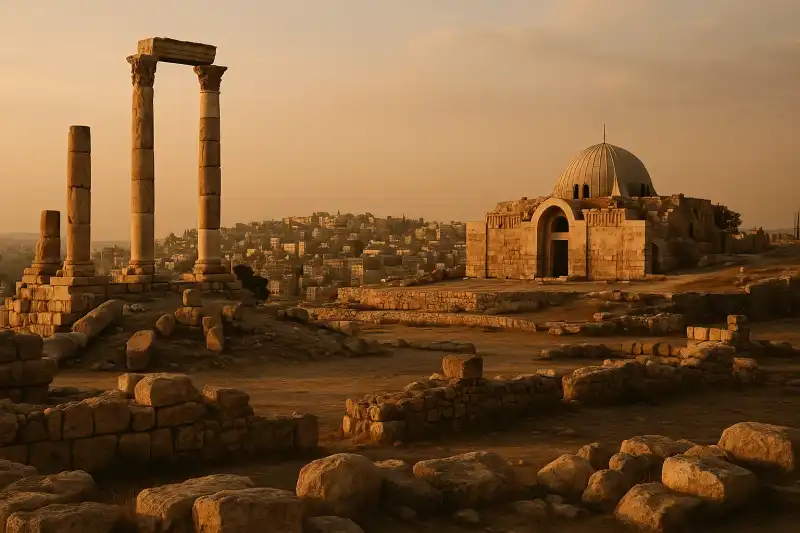
Amman Citadel Jordan Guide 2026: Temple of Hercules & Ancient Rabbah
Ammonite-Roman-UmayyadExplore Jordan's ancient citadel overlooking modern Amman. Discover the Temple of Hercules, Umayyad ...
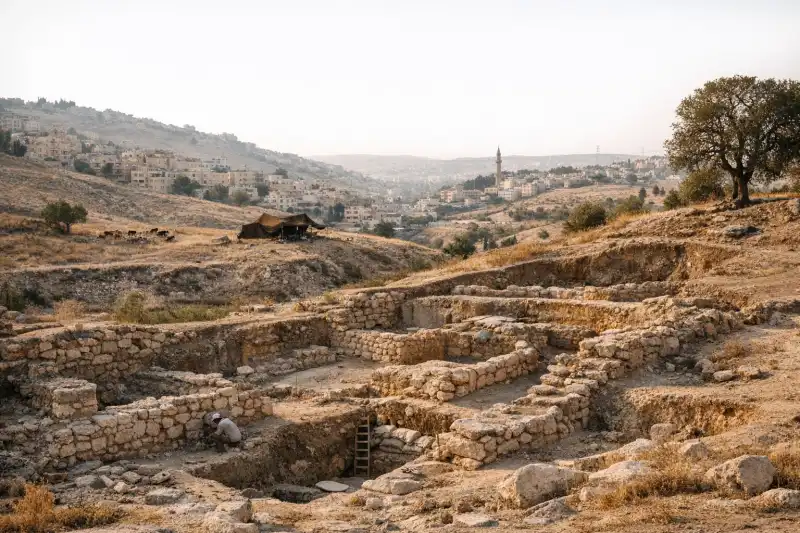
Ain Ghazal
Pre-Pottery Neolithic communities of the LevantDiscover Ain Ghazal, Jordan’s remarkable Neolithic settlement famed for its ancient plaster statues ...
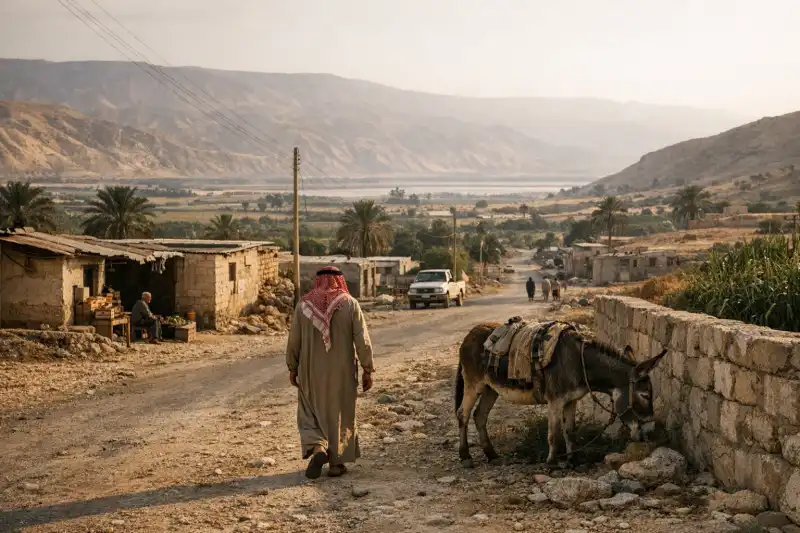
Deir Alla
Canaanite, Israelite-era, and regional Levantine culturesExplore Deir Alla in Jordan, an important Jordan Valley archaeological mound linked to Bronze and Ir...
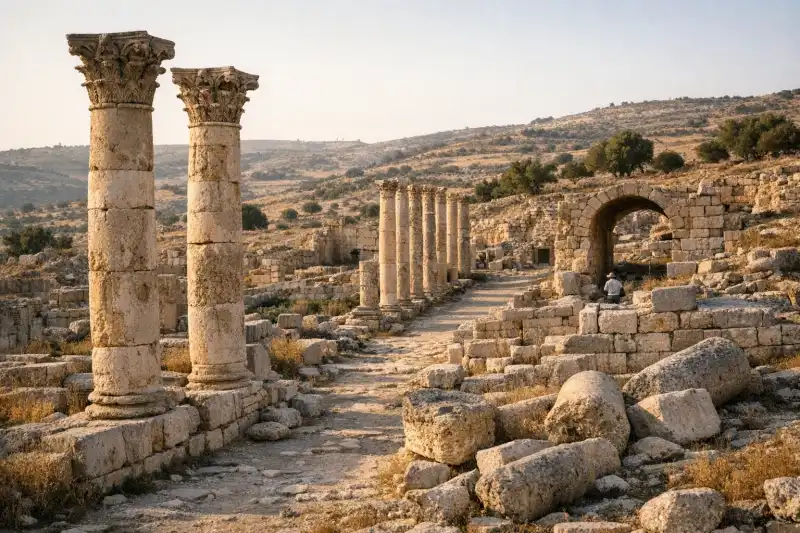
Abila
Hellenistic, Roman, Byzantine, Early IslamicExplore Abila, a Decapolis city in northern Jordan known for Roman ruins, Byzantine churches, and gr...