Quick Info
At a glance
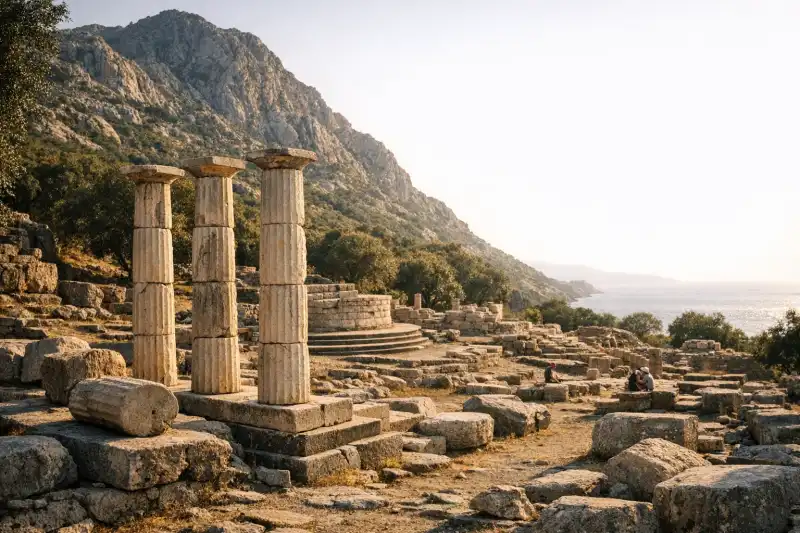
Samothrace Sanctuary in Greece sits on the northern slopes of a rugged Aegean island, where steep green mountains descend toward the sea and ancient ritual once unfolded in a setting that still feels charged with meaning. Officially known as the Sanctuary of the Great Gods, this archaeological site is far less famous than the Acropolis of Athens, yet for many travelers it delivers something rarer: a strong sense of place, mystery, and continuity between landscape and belief. The sanctuary lies near ancient Paleopolis on Samothrace, an island better known today for waterfalls, hiking trails, and wild beauty than for mass tourism, which gives the ruins an unusually contemplative atmosphere.
To walk here is to enter one of the most important religious centers of the ancient Greek world. Pilgrims once came from across the Aegean, Macedonia, and beyond to be initiated into secret rites promising protection and divine favor. Kings, generals, sailors, and ordinary visitors all passed through the same sacred precinct. Monumental terraces, stoas, votive buildings, theaters, and ceremonial paths were set among ravines and wooded slopes, creating a sanctuary that unfolded as a dramatic ritual landscape rather than a single temple platform. Even now, with many structures surviving only in foundations and scattered blocks, Samothrace Sanctuary remains one of the most evocative ancient sites in Greece, especially for travelers drawn to places where archaeology, myth, and nature remain tightly intertwined.
History
Early sacred beginnings
The religious importance of Samothrace likely predates the large stone monuments visible today. The island’s mountainous terrain and relative isolation seem to have encouraged the development of a distinctive local cult centered on deities known collectively as the Great Gods. Their exact identities were intentionally veiled in secrecy, and ancient writers themselves often struggled to define them clearly. That ambiguity was part of the sanctuary’s power. By the 7th century BCE, the site had already become a recognized place of worship, with ritual activity taking shape in the valley and terraces below the mountain slopes.
Unlike the better-documented Olympian cults of mainland Greece, the rites here were initiatory and deeply personal. Participants sought admission into mysteries believed to offer safety, especially at sea, as well as spiritual benefits. The sanctuary’s position in the northern Aegean made it especially attractive to sailors and merchants navigating difficult waters. Over time, local cult practice evolved into a sanctuary of pan-Hellenic importance, drawing pilgrims from many regions.
Classical growth and wider fame
During the 5th and 4th centuries BCE, Samothrace Sanctuary expanded in prestige. The island stood at a crossroads between the Greek mainland, Thrace, and Anatolia, and its cult became increasingly known among elites. Initiation at Samothrace did not require advanced social status, which helped broaden the sanctuary’s appeal. Ancient sources suggest that both men and women, Greeks and non-Greeks, could be initiated, making the cult comparatively open by ancient standards.
Architectural development accelerated as the sanctuary gained patrons. Pathways, retaining walls, ceremonial spaces, and early monumental structures began to formalize the sacred landscape. Rather than imposing strict geometric order over the terrain, builders worked with the natural contours of the hillside. This produced a sanctuary that visitors experienced as a sequence of movement, ascent, revelation, and transition—an ideal setting for mystery rites whose meaning depended on controlled access, symbolic progression, and emotional effect.
The political transformations of the late Classical period also shaped the sanctuary’s development. As Macedonian power rose under Philip II and Alexander the Great, Samothrace became increasingly tied to wider Hellenic and dynastic networks. The site’s fame spread accordingly.
Hellenistic patronage and monumental building
The Hellenistic period marked the sanctuary’s grandest phase. Following Alexander’s conquests, rulers and aristocrats across the eastern Mediterranean competed through gifts, monuments, and building projects at major sacred sites, and Samothrace benefited from this atmosphere of royal patronage. Several of the sanctuary’s most important surviving remains date to the 3rd and 2nd centuries BCE.
Among the notable additions were the Arsinoe Rotunda, one of the largest round buildings in the Greek world, and monumental stoas that framed ceremonial areas. The theater, hall complexes, and terraces all contributed to a more elaborate ritual environment. Donations by Macedonian and other Hellenistic dynasties underscored the sanctuary’s political as well as religious importance. To sponsor a building here was to associate oneself with an ancient and prestigious cult known across the Mediterranean.
The most famous artistic offering connected to the site is the Winged Victory of Samothrace, dedicated around the early 2nd century BCE. Though the original statue now stands in the Louvre, its setting at the sanctuary remains one of archaeology’s most celebrated combinations of sculpture and architecture. Placed upon a ship-shaped base near a fountain or basin, the monument created an image of divine triumph arriving in motion. Even in absence, it shapes how visitors understand the sanctuary’s former splendor.
Roman continuity and later decline
Samothrace Sanctuary did not disappear with the end of Hellenistic independence. Under Roman rule, the cult continued to attract visitors, and the site retained its aura of antiquity and prestige. Roman elites respected Greek sanctuaries both for their religious significance and for their cultural authority. Initiation into the Samothracian mysteries remained meaningful well into the Roman period, though the broader religious world of the empire became increasingly diverse.
Over time, however, changing political priorities, economic shifts, natural wear, and the gradual spread of Christianity reduced the sanctuary’s centrality. By late antiquity, many traditional cult centers were in decline. Structures fell out of use, earthquakes and weather damaged buildings, and architectural elements were eventually buried, reused, or scattered.
Modern archaeological interest revived the site from the 19th century onward. Excavations by international teams revealed the sanctuary’s complex layout and recovered sculptures, inscriptions, and architectural fragments that transformed scholarly understanding of mystery cults. Today, Samothrace Sanctuary is recognized as one of Greece’s most important archaeological landscapes, not because it preserves a single iconic temple, but because it offers a rare window into the spatial experience of ancient initiation, devotion, and sacred movement.
Key Features
What makes Samothrace Sanctuary so striking is not one ruin in isolation but the way architecture and terrain work together. The site unfolds along a sloping valley, and visitors encounter it as ancient initiates once did: through movement. Paths rise and curve. Terraces appear unexpectedly. Walls emerge from vegetation. Instead of the symmetrical certainty of some classical sanctuaries, Samothrace offers something more atmospheric and cinematic. The mountain behind it is always present, turning the entire setting into a natural backdrop for ritual drama.
One of the most important surviving monuments is the Arsinoe Rotunda, commissioned in the Hellenistic period and named for Queen Arsinoe II. Though only partial remains survive, its scale is still impressive. The circular plan would have stood out even in antiquity, and its unusual form hints at the architectural experimentation possible in a wealthy, cosmopolitan sanctuary. It likely served ceremonial or dedicatory purposes rather than functioning as a standard temple, reflecting the distinctive needs of the mystery cult.
Another major feature is the Hieron, a large hall associated with initiation rites. This is one of the clearest reminders that the sanctuary’s central purpose was experiential rather than simply visual. Ancient participants did not come only to admire buildings or make offerings in public view; they came to pass through stages of sacred knowledge. The architecture of the Hieron, with its enclosed character and formal dignity, suggests a space designed to contain ritual action and heightened emotion. Even in ruin, it helps visitors imagine the ceremonial life that once animated the site.
The theater and surrounding terraces reveal the sanctuary’s public side. Here, gatherings, announcements, performances, or collective ritual elements could take place against a natural hillside setting. The juxtaposition of intimate mystery spaces with more open civic or ceremonial architecture shows how Samothrace balanced secrecy with visibility. A sanctuary could be both exclusive and widely renowned; the mysteries remained hidden, but the prestige of initiation was very public.
The site is also inseparable from the memory of the Winged Victory of Samothrace. Although the statue itself is no longer on the island, the location of its monument remains one of the most compelling interpretive points for visitors. Set upon a stone prow-like base, the sculpture once dramatized movement, victory, and divine presence in relation to water and the approach to the sanctuary. Knowing the original context changes how one sees the famous artwork. In the museum, the statue is an isolated masterpiece; on Samothrace, it becomes part of a carefully staged sacred environment.
The on-site archaeological museum is therefore an essential part of the visit. It preserves architectural fragments, inscriptions, sculptural reconstructions, and explanatory displays that make sense of the ruins outside. Because many structures at the sanctuary survive at foundation level or in partial elevation, the museum provides the context needed to read the landscape properly. It also helps visitors understand the cult’s broad Mediterranean connections, from Macedonian royal patrons to ordinary initiates.
Finally, the natural surroundings are themselves a key feature. Samothrace is lush by Aegean standards, and depending on the season, the sanctuary is framed by dense greenery, birdsong, and flowing watercourses. The mountain of Saos towers above the island, and the play of light across the slopes can make the ruins feel alternately serene and dramatic. This environment is not incidental. Ancient sanctuaries often drew strength from their setting, and here the island’s topography seems to amplify the sense of distance from ordinary life. The result is an archaeological site that rewards slow walking, attention, and imagination more than checklist sightseeing.
Getting There
Reaching Samothrace Sanctuary takes more effort than visiting major mainland sites, but that is part of its appeal. Most travelers first make their way to Alexandroupoli in northeastern Greece, which is connected by domestic flights from Athens and by intercity buses and trains from other parts of northern Greece. From Alexandroupoli, ferries run to Kamariotissa, the main port of Samothrace. A one-way ferry ticket typically costs about €15 to €20 per adult, though prices can vary slightly by season and operator. The crossing usually takes around 1 hour 45 minutes to 2 hours.
From Kamariotissa, the sanctuary lies near Paleopolis on the island’s northern side. If you have a rental car, the drive usually takes about 15 to 20 minutes and is the easiest option for combining the site with beaches, villages, and hiking areas. Car rental prices on or near the island often start around €40 to €60 per day in the warmer months. Taxis are available at the port, and a one-way ride to the sanctuary area may cost roughly €20 to €30 depending on time of day and luggage. In summer, limited local bus service may connect Kamariotissa with major villages and archaeological points, with fares often in the €2 to €5 range, but schedules can be infrequent.
The sanctuary is best visited with sturdy shoes, water, and some flexibility. Ferry timetables can shift with weather, and island transport is not as frequent as on Greece’s more tourist-heavy routes. If you are arriving for only a day trip, check both outbound and return ferry times carefully. Many visitors find that an overnight stay on Samothrace allows for a calmer, more rewarding visit.
When to Visit
Late spring and early autumn are the best times to visit Samothrace Sanctuary. In May, June, September, and early October, temperatures are usually pleasant for walking, the island’s vegetation is still vivid, and the sanctuary’s mountain setting looks especially beautiful. These months also tend to bring fewer visitors than the high season, which means a quieter experience that suits the site’s reflective character. Daytime temperatures commonly range from about 20°C to 28°C, ideal for combining archaeological exploration with island travel.
July and August are the busiest months. Even then, Samothrace remains far less crowded than Greece’s headline islands, but midday heat can make walking the sanctuary less comfortable, especially on exposed sections of the path. Expect temperatures frequently above 30°C. If visiting in peak summer, plan to arrive early in the morning or later in the afternoon, bring sun protection, and carry plenty of water. The upside of summer is more frequent ferry service and fuller availability of accommodation, tavernas, and local transport.
Spring has a special appeal because the island is greener and often dotted with wildflowers. Streams and shady areas around the sanctuary can make the whole landscape feel particularly alive. Winter visits are possible in principle, but ferry schedules may be reduced, weather can be windy or wet, and some tourist services may be limited. The archaeological site can also feel more remote in off-season conditions.
If your main goal is photography, shoulder season offers the best light and atmosphere. If your priority is convenience and transport frequency, high summer is easier. For most travelers, though, the ideal balance comes in late spring or early autumn, when Samothrace Sanctuary feels both accessible and true to its ancient mood.
| Quick Facts | Details |
|---|---|
| Location | Near Paleopolis, Samothrace Island, Greece |
| Region | East Macedonia and Thrace |
| Ancient Name | Sanctuary of the Great Gods |
| Best Known For | Mystery cult initiation rites |
| Main Periods | Archaic, Classical, Hellenistic, Roman |
| Famous Associated Artwork | Winged Victory of Samothrace |
| Closest Port | Kamariotissa |
| Typical Visit Length | 2–3 hours |
| Best Season | May–June and September–October |
| Terrain | Sloping archaeological landscape on a wooded hillside |
Samothrace Sanctuary is one of those places that reveals itself slowly. It does not overwhelm with sheer monumentality, and it does not offer the instant recognizability of Greece’s most photographed ruins. Instead, it invites visitors into a rarer kind of encounter: one shaped by silence, uneven ground, distant sea views, and the awareness that this was once a place where people came seeking transformation. Its stones belong not only to architecture but to ritual movement, and that gives the site an unusual emotional depth.
For travelers willing to go beyond the standard ancient itinerary, Samothrace offers a memorable combination of archaeology and atmosphere. The sanctuary’s ruined halls, terraces, and votive spaces preserve the outline of a religious world built around secrecy and revelation. Its museum restores detail; its landscape restores mood. Together, they make the site essential not just for specialists in ancient religion, but for anyone interested in how the Greeks understood sacred space.
A visit here is also a reminder that some of the ancient world’s most important places were never meant to dominate a skyline from afar. They were meant to be approached, entered, and experienced step by step. Samothrace Sanctuary still works that way today, rewarding patience and attention with one of the most haunting archaeological experiences in Greece.
Guided tours: worth it?
Most travelers can visit Samothrace Sanctuary independently. Compare a tour only if you want a tighter history-focused visit, easier logistics, or a guide who can answer questions on the spot.
Best for
- Short visits where a planned route saves time
When to go self-guided
Go independently if you prefer setting your own pace, reading as you go, and checking official hours or ticket rules directly before you arrive.
What I’d avoid
Skip paid tours that bundle unrelated stops you do not actually want. The best option should either save meaningful planning time or add historical context you would miss on your own.
Samothrace archaeological tours
Useful when: you want to compare guided formats before deciding
Northern Greece history tours
Useful when: you want to compare guided formats before deciding
Alexandroupoli to Samothrace excursions
Useful when: you want to compare guided formats before deciding
Some tour links are affiliate links, which may earn Ancient Travel a small commission at no extra cost to you. I try to surface options that make practical sense for the site—not just anything bookable.
Frequently Asked Questions
What is Samothrace Sanctuary best known for?
Samothrace Sanctuary is best known as the center of the ancient Mysteries of the Great Gods, a major religious cult that attracted initiates from across the Greek and Hellenistic world.
Is the Sanctuary of the Great Gods on Samothrace worth visiting?
Yes. The site combines dramatic mountain scenery, important Hellenistic and Roman ruins, and deep religious history, making it one of Greece's most atmospheric archaeological destinations.
How do you get to Samothrace Sanctuary?
Most visitors reach Samothrace by ferry from Alexandroupoli to the island port of Kamariotissa, then continue by car, taxi, or local bus toward Paleopolis and the sanctuary.
How much time do you need at Samothrace Sanctuary?
Plan at least two to three hours to see the sanctuary ruins and museum comfortably, though history enthusiasts often spend half a day exploring the site and surrounding landscape.
Can you see the Winged Victory of Samothrace at the sanctuary?
No. The famous original statue is in the Louvre Museum in Paris, but the sanctuary preserves the monument's setting and context, which helps explain its significance.
When is the best time to visit Samothrace Sanctuary?
Late spring and early autumn are ideal, with mild weather, greener scenery, and fewer crowds than the peak summer months.
Nearby Ancient Sites
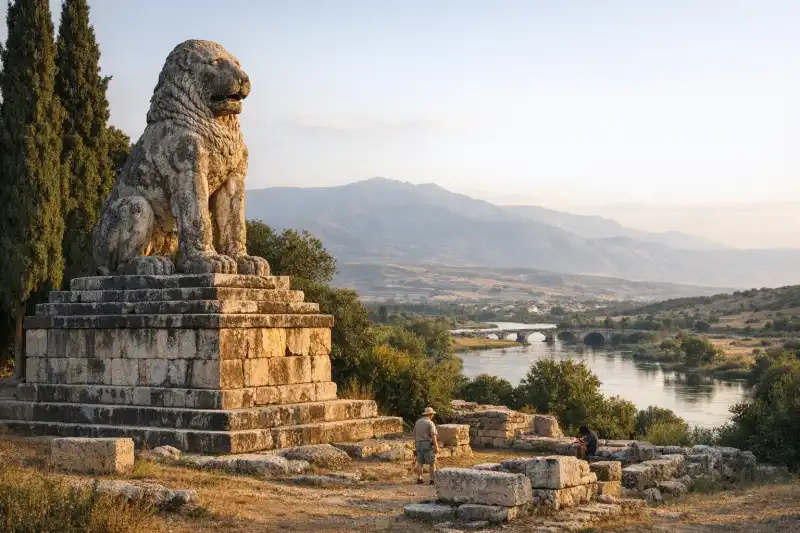
Amphipolis
Ancient Greek, Macedonian, Roman, ByzantineExplore Amphipolis in Greece, an important ancient Macedonian city famed for its walls, lion monumen...
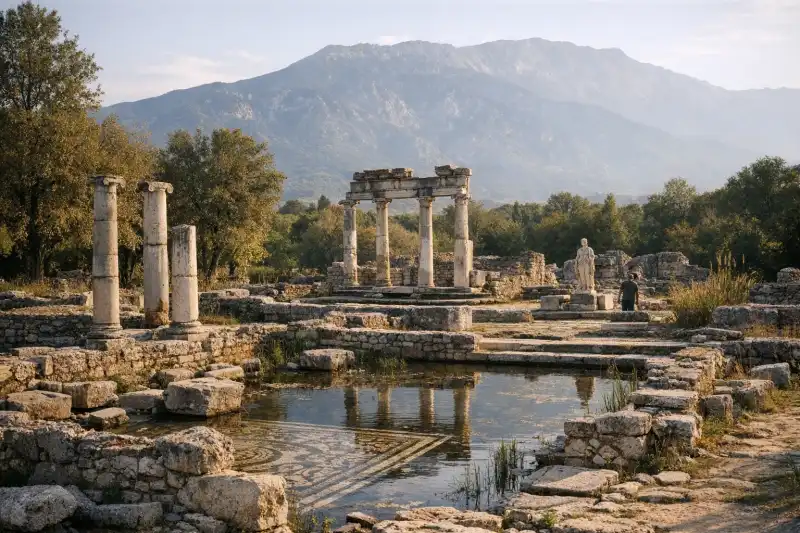
Ancient Dion
Macedonian, Hellenistic Greek, and RomanExplore Ancient Dion in Greece, a sacred Macedonian city at Mount Olympus with temples, theaters, ba...
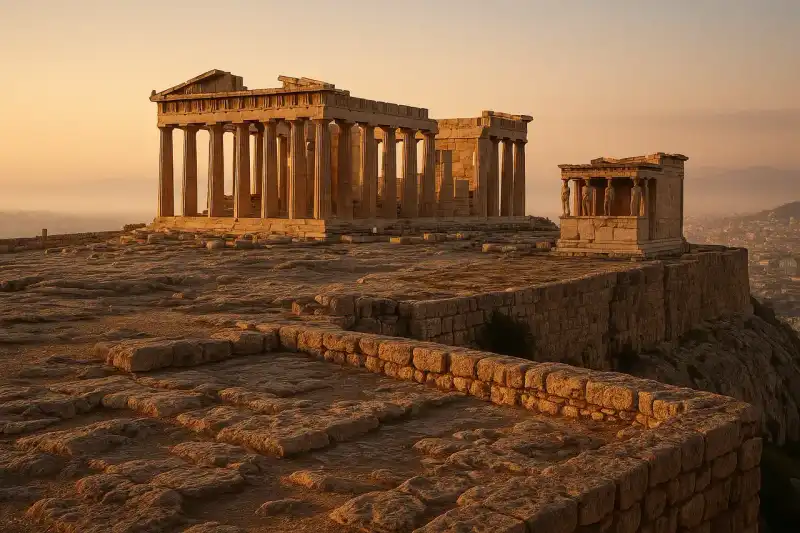
Acropolis Travel Guide 2026: Parthenon, Tickets, and Best Time
Ancient GreecePlan an efficient Acropolis visit with practical ticket timing, key monuments, and museum pairing ti...