Quick Info
Curated Experiences
Half-Day Tour to Sillustani from Puno with Pickup
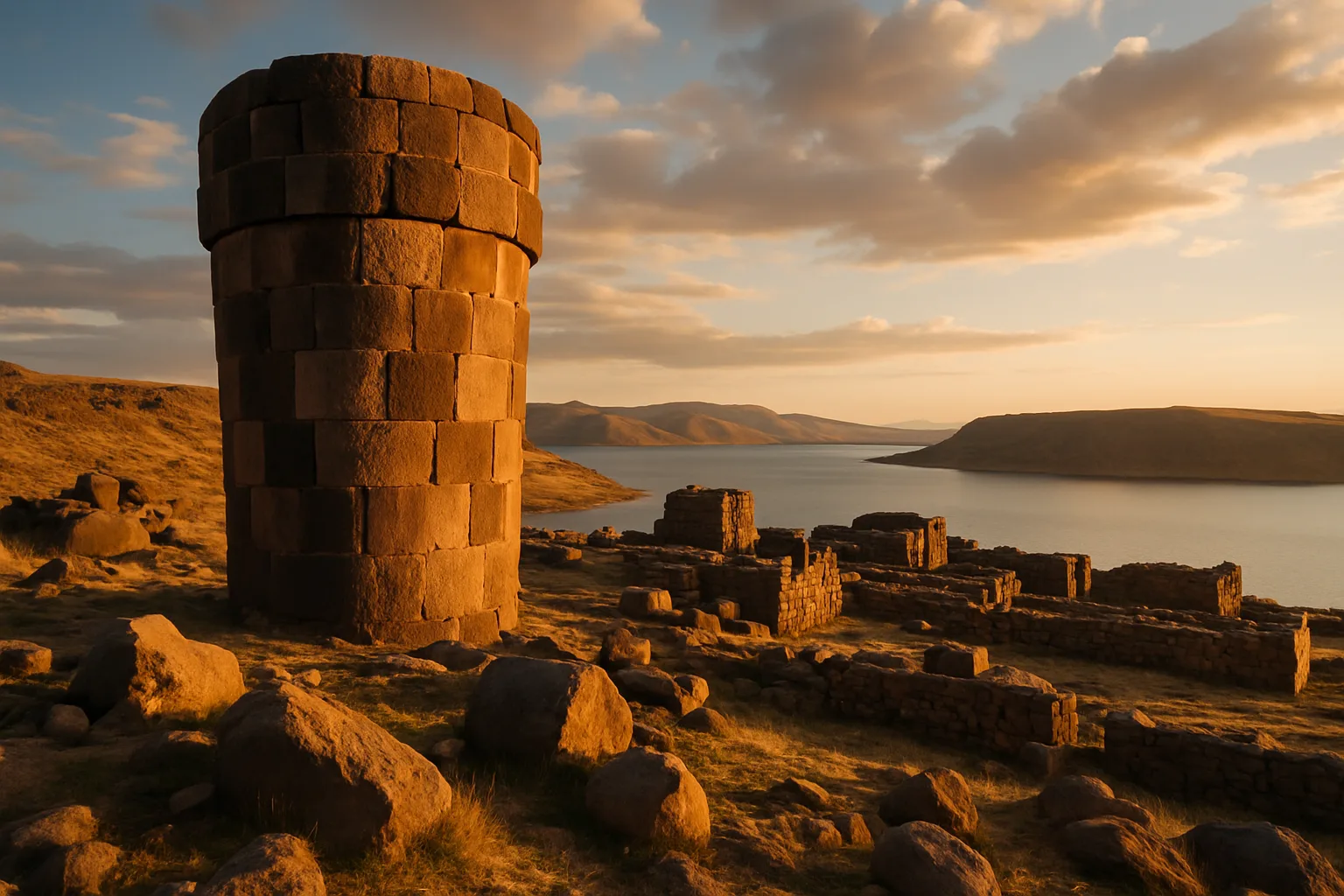
On a rocky peninsula jutting into the steel-blue waters of Lake Umayo, the cylindrical stone towers of Sillustani rise against the Andean sky like sentinels that have refused to fall. Some stand nearly twelve meters tall, their perfectly coursed stonework tapering slightly toward the summit; others have partially collapsed, their cut blocks scattered across the hillside as though a giant simply set them down and walked away. This is Sillustani, one of the most dramatic and least-visited pre-Columbian sites in southern Peru, where the Colla people of the altiplano constructed elaborate funerary towers for their elite dead at least four centuries before the Inca Empire arrived to add towers of their own.
Located 35 kilometers northwest of Puno on the shores of Lake Umayo — a shallow highland lake entirely separate from the vast expanse of Lake Titicaca to the south — Sillustani rewards visitors who come expecting something genuinely different from Peru’s more famous ruins. There are no temples here, no agricultural terraces, no carved doorways. What survives are the chullpas: cylindrical or conical burial towers built to house the mummified remains of Colla nobility, sealed with grave goods and oriented to face the rising sun. They are among the most technically ambitious stone structures produced anywhere in the pre-Columbian Andes. This guide covers the site’s layered history, its major towers, practical access from Puno, and how to combine the visit with a broader Lake Titicaca itinerary.
History: Towers for the Dead
The Colla Kingdom (c. 900–1450 CE)
The Colla were an Aymara-speaking people who dominated the Titicaca Basin from roughly the 9th century CE onward, one of the most powerful of the altiplano kingdoms that flourished in the centuries after the collapse of Tiwanaku culture. Their territory centered on the western shore of Lake Titicaca and extended inland across the high grasslands of what is now the Puno region. Unlike the earlier Tiwanaku civilization, which expressed power through monumental civic and religious architecture, Colla elites channeled their most ambitious building programs into funerary architecture — and no expression of that tradition survives more impressively than the chullpa field at Sillustani. The site’s peninsula location, surrounded on three sides by Lake Umayo’s waters, suggests deliberate selection of a place that occupied a liminal position between the world of the living and the sacred Andean landscape of water, sky, and mountain.
Construction and Symbolism (c. 1100–1450 CE)
The chullpas were not tombs in the conventional sense but rather houses for the dead, built to maintain the deceased’s presence and status in the community. Colla mummies were placed in a fetal position inside the base of the tower, accompanied by ceramics, textiles, food offerings, and personal objects. The entrance — a small square opening facing east, toward the sunrise — was sealed after burial and could theoretically be reopened for subsequent ritual access. The cylindrical form itself may echo the round dwellings of the altiplano, translating domestic architecture into monumental stone. The towers grew taller and more technically refined over time; the most sophisticated examples, some exceeding ten meters, required corbeling techniques that produced a slightly battered exterior face — wider at the top than the base — a construction challenge that modern engineers recognize as demanding considerable skill without the use of mortar.
Inca Incorporation (c. 1450–1532 CE)
When the Inca Empire expanded into the Titicaca Basin under Pachacuti and his successors in the mid-15th century, the Colla were absorbed rather than displaced. The Inca recognized Sillustani’s significance and added their own chullpas to the complex, constructed in the distinctly different Inca masonry style: precisely fitted polygonal blocks with subtly beveled edges and almost no visible joints. Several of these Inca-period towers stand alongside older Colla examples, and at least one remains unfinished — its upper courses still rough, its final form never achieved. Scholars debate whether the unfinished chullpa reflects the disruption caused by the Spanish invasion of 1532 or an earlier interruption; the half-completed state offers an accidental gift to visitors, exposing the internal ramp and scaffolding logic that the builders used during construction.
Modern Rediscovery
Systematic archaeological investigation at Sillustani began in the 20th century, with Peruvian and international teams mapping the peninsula’s approximately ninety chullpas and documenting the site’s stratigraphy. The Peruvian Ministry of Culture now administers the site. While no comprehensive excavation has been published in decades, ongoing conservation work stabilizes at-risk towers and resets displaced stones. The site remains underrepresented in international archaeological literature relative to its scale and preservation, making it one of the Andes’ more compelling research frontiers.
The Key Monuments: What to See at Sillustani
The Lizard Tower (Chullpa del Lagarto)
The most photographed structure at Sillustani is the Lizard Tower, named for the carved lizard bas-relief visible on its east-facing surface. The lizard — a creature associated with the sun in Andean symbolic traditions — is rendered in shallow relief across one of the lower courses of stonework, the only significant figurative carving surviving at the site. The tower itself stands approximately seven meters tall and represents an intermediate phase of construction, its lower courses showing the Colla tradition of rounded fieldstone and its upper courses transitioning toward the more refined cut-block work of later phases. Arrive early in the morning when low-angle sunlight rakes across the carved surface and makes the relief legible from a distance — by midday, the figure nearly disappears in flat overhead light.
The Great Chullpa
The tallest and most structurally impressive tower at Sillustani is known informally as the Great Chullpa, rising to nearly twelve meters and demonstrating the full technical ambition of late Colla construction. The exterior face displays a subtle outward taper from base to crown — the result of corbeled courses each offset slightly outward from the one below — producing an elegantly battered silhouette that distinguishes the finest Sillustani towers from cruder chullpa traditions elsewhere on the altiplano. The stonework is dry-laid, meaning no mortar binds the courses together; the structure’s stability depends entirely on the precision of the cutting and the weight of the overlying stones. That this tower has survived nearly a thousand years of seismic activity, seasonal freeze-thaw cycles at altitude, and centuries of neglect is a testament to the builders’ understanding of load distribution. Stand directly below and look upward through the narrowing shaft for the most dramatic perspective the site offers.
The Unfinished Inca Chullpa
Among the most instructive monuments at any ancient site in the Americas, the unfinished Inca chullpa preserves the construction process in mid-execution. The lower courses are complete in the Inca style — fitted polygonal blocks with characteristic beveled faces — but the upper portion was never finished. The interior ramp that workers used to raise blocks to higher courses remains partially intact, and the rough-cut stones intended for the upper walls lie scattered nearby. Whether work stopped because of the Spanish conquest, an earlier political disruption, or some other cause remains unknown. What the unfinished tower communicates unambiguously is the contrast between Inca and Colla construction philosophies: where Colla builders stacked relatively undressed rounded stones relying on corbeling geometry for stability, Inca masons cut each block individually to interlock with its neighbors, producing a structurally distinct and architecturally more refined result. Side by side, the two traditions tell the story of an imperial takeover expressed in stone.
The Peninsula Circuit and Lake Views
The site path follows a loop around the peninsula’s ridgeline, passing most of the major towers while offering continuous views across Lake Umayo. Unlike the vast, choppy expanse of Lake Titicaca visible on the horizon to the south, Umayo is intimate in scale — shallow enough to see its reedy shallows in the foreground, calm enough on most mornings to mirror the towers and sky in a flat grey surface. Flamingos feed in the shallows seasonally, and the altiplano grassland on the slopes below the path supports small herds of alpacas grazing among scattered collapsed chullpa blocks. The combination of ancient stonework, Andean grassland, lake reflections, and snowcapped cordillera on the southern horizon makes the peninsula circuit one of the most scenic walks in the Puno region. A full circuit takes about 45 minutes at a relaxed pace; allow extra time to photograph the towers from multiple angles.
Getting There: Transportation and Access
Sillustani is a straightforward 35-kilometer drive northwest of Puno, accessible by private taxi, organized tour, or rental vehicle — there is no public bus service that reaches the site directly.
From downtown Puno
The most hassle-free approach is a guided half-day tour, which includes hotel pickup and drop-off, a bilingual guide, and in some cases the entry fee. Tours typically depart at 9:00 AM and return by 1:00 PM, leaving afternoons free for Lake Titicaca island excursions.
- Organized tour: 35–60 USD per person, includes pickup and guide; book through your hotel or directly via Viator
- Private taxi: 60–80 PEN ($16–21 USD) round-trip, negotiated in advance including wait time; arrange at Puno’s taxi stands on Jirón Moquegua or ask your hotel reception
- Shared colectivo: Infrequent minibuses toward Juliaca occasionally pass the Sillustani turnoff; not recommended unless you have flexible timing and local Spanish
From Juliaca Airport
Juliaca’s Inca Manco Cápac International Airport is the nearest commercial airport, approximately 45 kilometers from Sillustani and 44 kilometers from central Puno.
- Airport taxi to Puno: 30–40 PEN ($8–11 USD), 45 minutes; arrange onward Sillustani transport from Puno
- Private transfer direct to Sillustani: 80–120 PEN ($21–32 USD), arrange with airport transfer companies or your hotel in advance
Admission and Hours
The site opens daily at 8:00 AM and closes at 5:00 PM. Entry costs approximately 15 PEN ($4 USD) per person, payable in cash only at the gate — bring soles, as no card reader is available. No multi-site pass currently covers Sillustani. The entrance area has a small snack stand with bottled water and basic food; stock up here before beginning the peninsula walk. Visit in the morning (8:00–11:00 AM) for the best light and calmest lake conditions; afternoon wind picks up on the exposed peninsula, and rain is common by early afternoon during the wet season months of December through March.
When to Visit: Seasonal Considerations
Spring (September–November)
Temperatures range from 5–15°C (41–59°F) during the day with cold nights at altitude. This transitional period follows the dry season and offers clear skies, low crowds, and the altiplano grasslands still carrying their wet-season green. Wildflowers dot the slopes in September and October, and the lake surface tends to be calm and reflective. An excellent time to visit with comfortable walking temperatures and strong photographic conditions.
Summer (December–February)
The wet season brings daily afternoon rain, typically arriving between 1:00 and 3:00 PM. Morning visits from 8:00 to 11:00 AM are often clear and bright, with dramatic clouds building over the cordillera by midday. Temperatures sit at 8–17°C (46–63°F), but rain gear and waterproof layers are essential. The lake surface is at its highest and the grasslands are lush and deeply green. If visiting during the wet season, time your departure from Puno to arrive at Sillustani before 10:00 AM.
Autumn (March–May)
March still sees some rain, but April and May offer outstanding overall conditions — dry, clear, and with noticeably warmer daytime temperatures reaching 18°C (64°F). Crowds remain light and accommodation in Puno is readily available at reasonable prices. May is the single best month to visit, combining reliable dry weather, comfortable temperatures, and the soft post-wet-season light that makes the stone towers photograph exceptionally against their lake backdrop.
Winter (June–August)
The dry season peak brings the coldest temperatures, with overnight lows plunging to -5°C (23°F) or below and daytime highs reaching only 12–14°C (54–57°F). Days are consistently clear and sunny — the best photographic conditions of the year — but wind on the Sillustani peninsula can be biting. Layer generously: a down jacket, wool hat, and gloves are practical necessities for a morning visit. This is also Peru’s peak tourist season, though Sillustani never becomes crowded by major-site standards.
Combining Sillustani with Puno and Lake Titicaca
Sillustani fits naturally into a half-day excursion paired with an afternoon Lake Titicaca outing, making a satisfying full day from Puno that covers both the altiplano’s ancient funerary culture and its living indigenous communities.
The ideal sequence begins at the chullpa field itself, departing Puno by 9:00 AM to arrive at Sillustani when the morning light hits the towers from the east. Allow two hours on the peninsula — a circuit past the major chullpas, time with the Lizard Tower and the unfinished Inca structure, and a long pause at the lake-facing viewpoint — before returning to Puno by 12:30 PM. From there, a late-afternoon boat excursion to the Uros Floating Islands departs regularly from the Puno dock, a 10-minute taxi from central Puno. The Uros community hosts guided tours of their totora-reed islands and demonstrates traditional fishing and weaving, providing a direct encounter with the living Aymara cultural world that the chullpa builders belonged to. By 6:00 PM, you can be back in Puno in time for dinner at one of the lakefront restaurants along Avenida El Puerto, where alpaca dishes and quinoa soup complete the altiplano experience.
For visitors with a second day, the Taquile Island boat trip extends the Lake Titicaca experience significantly — Taquile sits three hours out on the lake and its terraced hillsides, pre-Inca agricultural platforms, and renowned weaving cooperative represent a deeper immersion in the region’s indigenous heritage. Sillustani and Taquile together form the essential Puno itinerary for travelers with two days in the region.
Why Sillustani Matters
The chullpas of Sillustani are a reminder that the Inca were not the only civilization to build with ambition in the pre-Columbian Andes. The Colla people who raised these towers across several centuries before Inca expansion developed a mortuary architecture unmatched anywhere in South America for its scale, technical refinement, and dramatic placement. They chose this peninsula not for convenience but for meaning — the water surrounding the dead on three sides, the sun entering through east-facing doorways each morning, the high altiplano sky arching overhead as though the towers were meant to be read from above as much as from the ground.
Standing at the base of the Great Chullpa and looking up at stones laid without mortar that have outlasted the empire that eventually conquered the people who built them, it is difficult not to feel the weight of that continuity. The Inca came, recognized what the Colla had made, and added their own towers in a different stone vocabulary — an acknowledgment that this was sacred ground worth inheriting rather than erasing. The mummies placed inside have long since been removed or dispersed, but the towers remain, turning slowly in the wind above Lake Umayo, their east-facing doorways still catching the first light of each Andean morning. Few sites in Peru offer this quality of solitude combined with this density of meaning.
Quick Facts
| Attribute | Details |
|---|---|
| Location | Lampa Province, Puno Region, Peru |
| Ancient Name | Sillustani (Aymara) |
| UNESCO Status | Not listed |
| Established | c. 1100 CE funerary complex |
| Distance from Puno | 35 km, approximately 45 minutes by car |
| Entry Fee | 15 PEN (~$4 USD), cash only |
| Hours | Daily 8:00 AM – 5:00 PM |
| Best Time | May–September; mornings preferred |
| Altitude | 3,860 m (12,664 ft) |
| Suggested Stay | 2–3 hours on site |
Explore More Peru
- Machu Picchu: The iconic Inca citadel in the cloud forest above Aguas Calientes
- Ollantaytambo: Living Inca town with massive terraced fortifications in the Sacred Valley
- Nazca Lines: Mysterious geoglyphs etched across the southern Peruvian desert
Plan your complete Peruvian archaeological journey with our Peru Ancient Sites Guide. Learn how to combine Lake Titicaca with Cusco and the Sacred Valley in our Southern Peru Itinerary Guide.
Frequently Asked Questions
How much time should I plan at Sillustani?
Allow 2 to 3 hours at the site itself, which is enough to walk the peninsula circuit and examine all the major chullpas. Most visitors combine this with a half-day tour from Puno, departing mid-morning and returning in time for lunch.
What is the best time to visit Sillustani?
The dry season, May through September, offers the clearest skies and the calmest lake surface — ideal conditions for photography. Morning light from the east illuminates the towers beautifully before noon. Avoid the afternoon rainy-season downpours common from December through March.
How do I get to Sillustani from Puno?
The site is approximately 35 km northwest of Puno, around 45 minutes by car. The easiest option is a guided half-day tour with hotel pickup, or you can hire a taxi from Puno for roughly 60–80 PEN ($16–21 USD) round-trip including wait time.
What is the entry fee for Sillustani?
Entry costs approximately 15 PEN ($4 USD), paid in cash at the gate. There is no multi-site pass that covers Sillustani, so bring local currency. The fee includes access to the full peninsula circuit and all visible chullpa towers.
What will I see at Sillustani?
Key highlights include the massive cylindrical chullpas rising up to 12 meters above the Lake Umayo shoreline, the famous Lizard Tower with its carved lizard bas-relief, an unfinished Inca-period chullpa showing original construction techniques, and sweeping views across the lake's reed-fringed waters.
Is altitude a concern at Sillustani?
Yes. Sillustani sits at approximately 3,860 meters (12,664 feet) above sea level, slightly higher than Puno itself. If you are arriving directly from a lower altitude, allow at least one full day in Puno to acclimatize before visiting. Walk the peninsula slowly, drink plenty of water, and carry altitude sickness medication if prescribed.
Nearby Ancient Sites
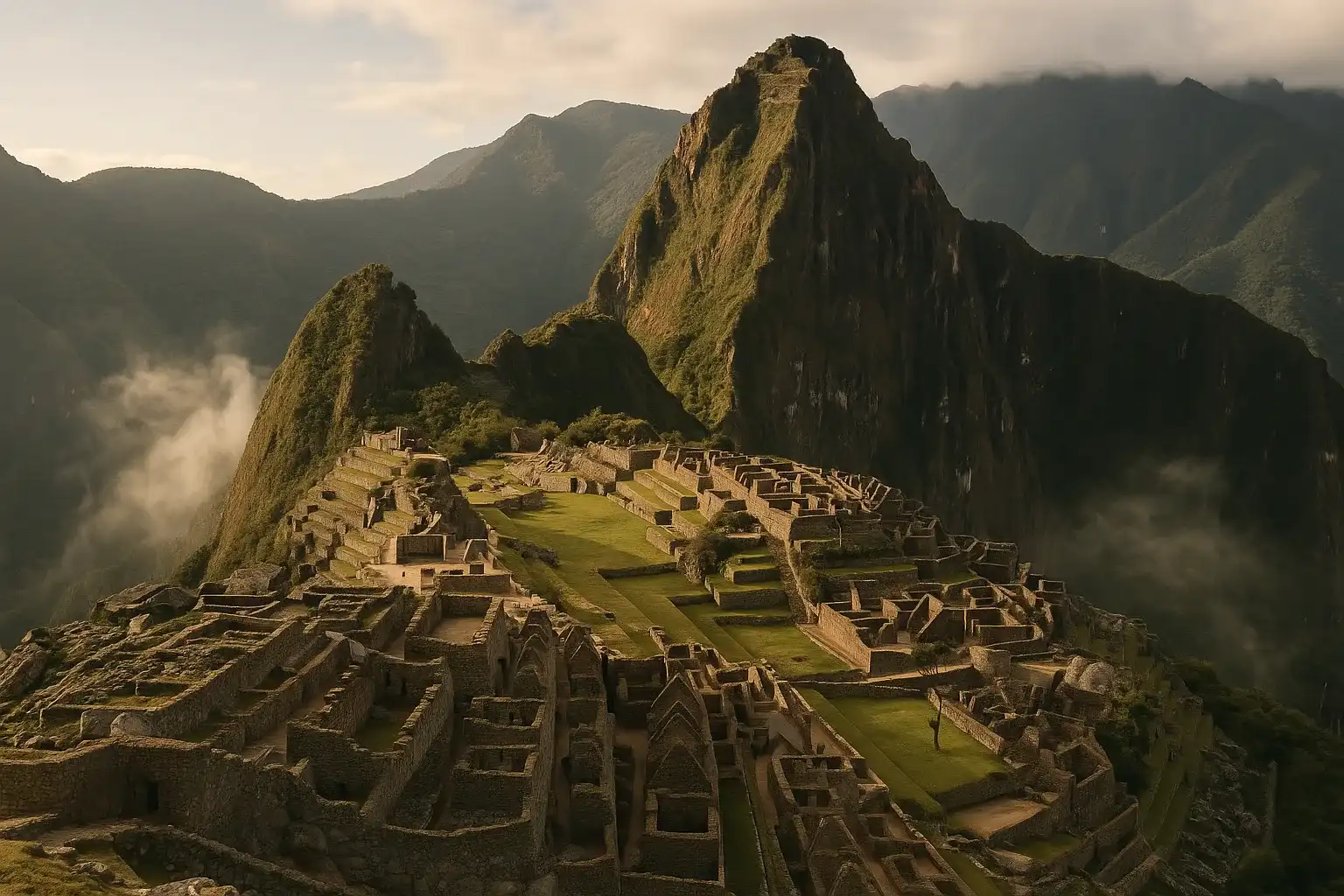
Machu Picchu Peru Travel Guide 2026: Circuits, Tickets & Entry Tips
Inca EmpireNavigate Machu Picchu's 2026 circuit system with our definitive guide. Learn how to choose your rout...
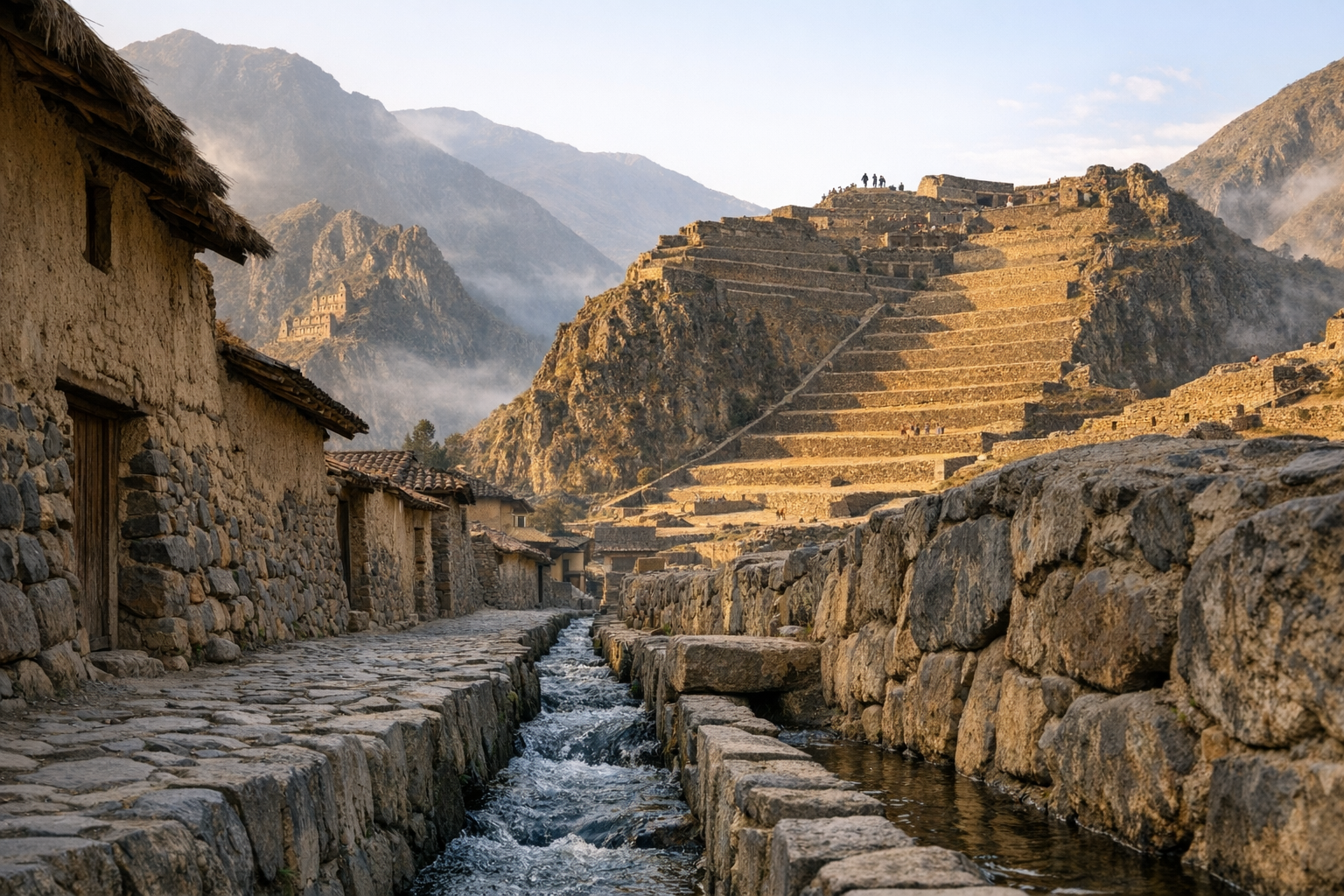
Ollantaytambo Peru Guide 2026: Inca Fortress & Sacred Valley Town
IncaVisit Ollantaytambo in Peru's Sacred Valley: explore the Inca fortress terraces, the Sun Temple, and...
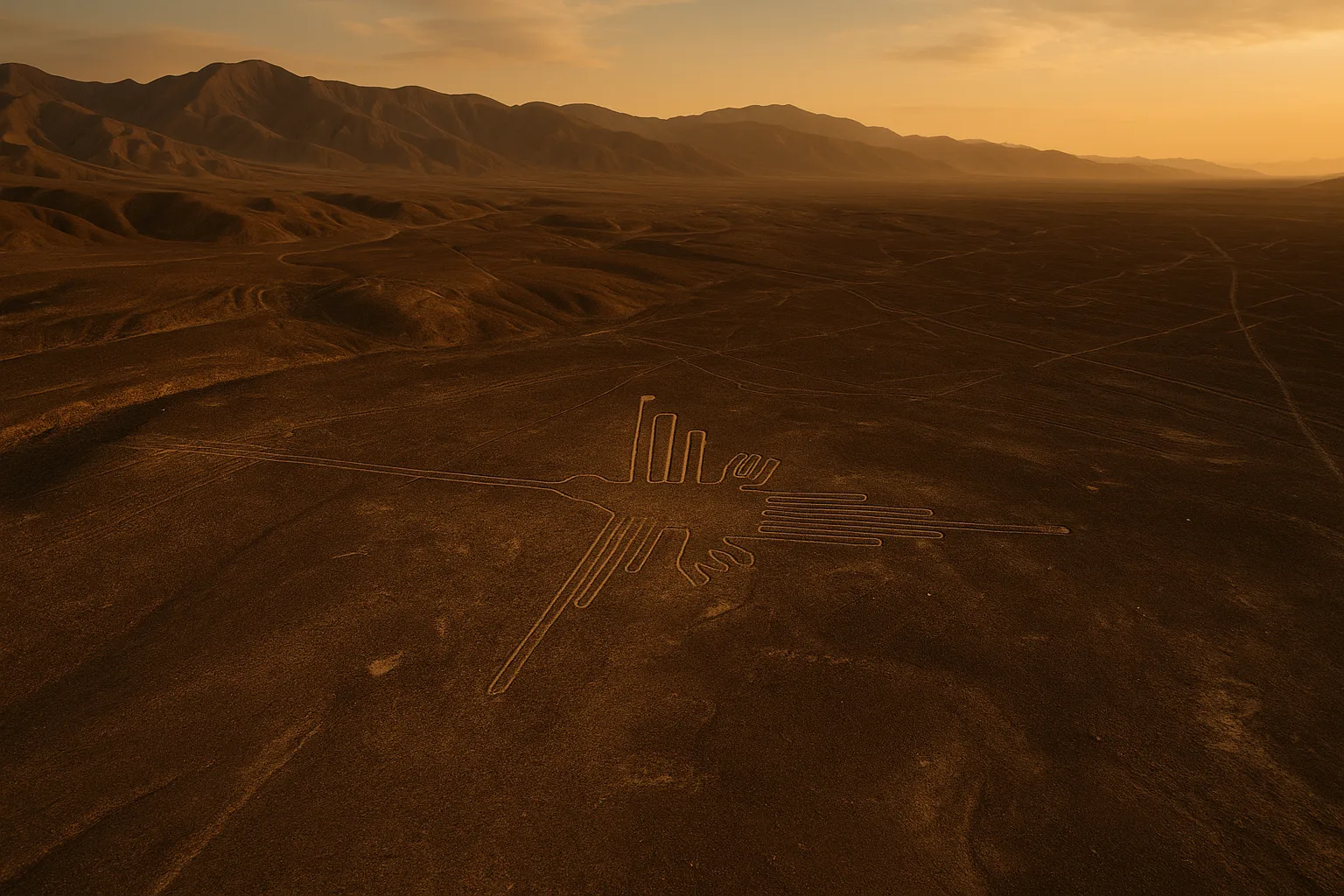
Nazca Lines Peru Guide 2026: Geoglyphs & Desert Mystery
NazcaExplore Peru's Nazca Lines: ancient geoglyphs etched in desert sand. Plan your overflight or land to...