Quick Info
Curated Experiences
Suffolk Heritage Day: Sutton Hoo and Woodbridge
Private Anglo-Saxon England Excursion from London
East of England Castles and Archaeology Route
Sutton Hoo is one of the most important archaeological sites in the United Kingdom and among the most revealing windows into early medieval Britain anywhere in the world. Sitting above the River Deben in rural Suffolk, the burial mounds here contained a ship burial so rich and unexpected that it forced historians to rethink centuries of assumptions about post-Roman England. For travelers interested in how power, craft, and ritual operated in the so-called “Dark Ages,” Sutton Hoo is the single best place in Britain to start.
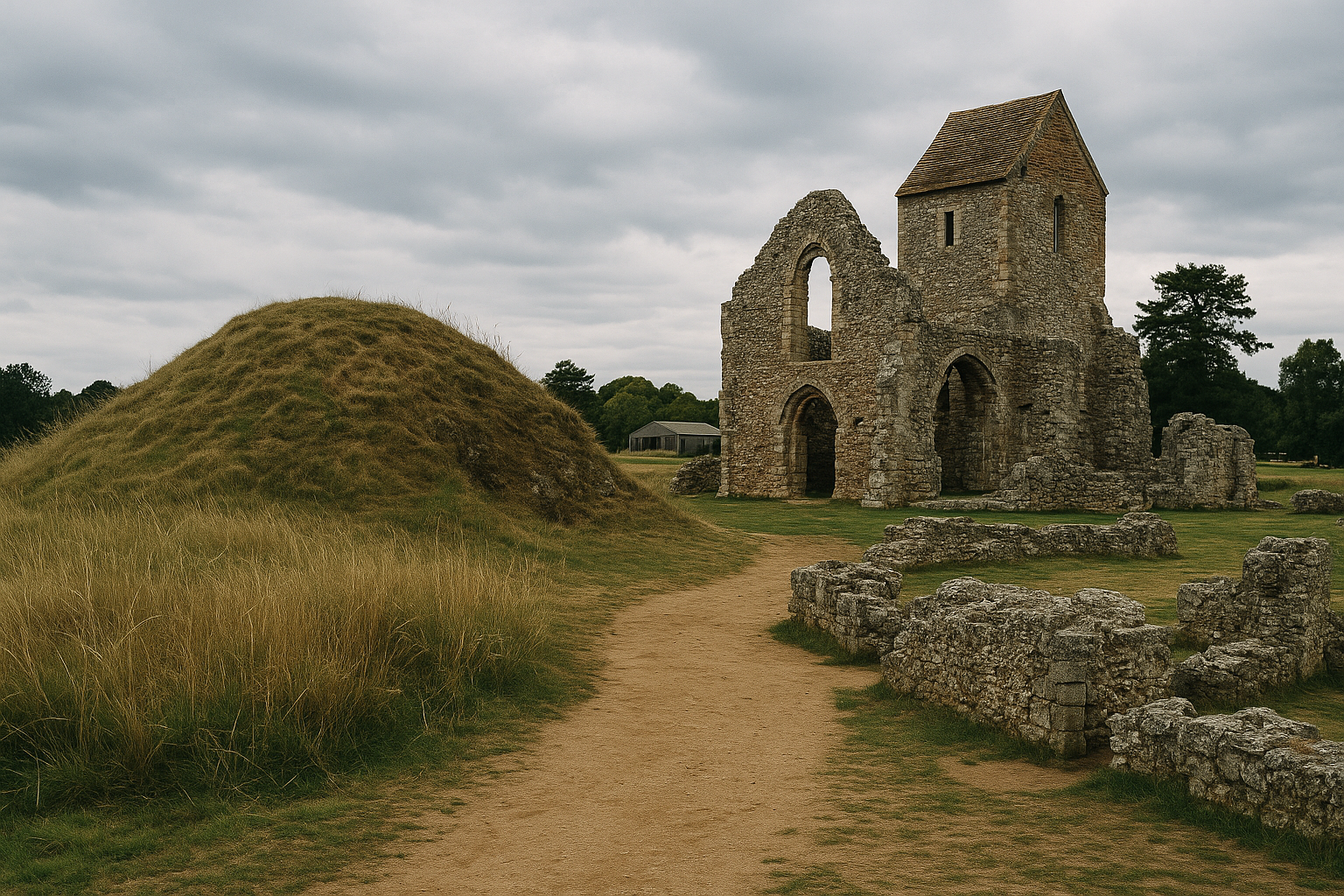
This is not a monumental stone ruin or a towering cathedral. It is a quiet landscape of grassy mounds, a carefully curated exhibition hall, and a story that connects Suffolk farmland to the royal courts of seventh-century East Anglia. What it lacks in visual drama it more than compensates for in historical weight.
Why Sutton Hoo Matters
Before the 1939 excavation led by Basil Brown, the early medieval period in England was widely treated as a historical gap, a stretch of centuries between Roman withdrawal and the later Anglo-Saxon kingdoms where not much of consequence happened. Sutton Hoo shattered that assumption. The ship burial in Mound 1 produced one of the richest archaeological finds ever made on British soil: a full-length clinker-built ship containing gold and garnet fittings, Byzantine silverware, Merovingian coins, weapons, feasting gear, and the now-iconic helmet that has become a symbol of Anglo-Saxon England.
These objects proved that sixth- and seventh-century East Anglia maintained sophisticated trade networks stretching to Scandinavia, the Frankish kingdoms, and the eastern Mediterranean. The burial itself demonstrated a level of political organization and ritual complexity that no one had expected. Sutton Hoo did not just add a footnote to British history. It rewrote the chapter.
Historical Context
The Kingdom of East Anglia
The burial is most commonly associated with Raedwald, king of the East Angles, who died around 624 CE. Raedwald was powerful enough to be recognized as a bretwalda (a kind of overlord among the Anglo-Saxon kingdoms), and his court sat at the intersection of pagan tradition and the newly arriving Christian faith. The ship burial reflects that tension: lavish grave goods in the pagan style, but with Christian-associated objects among them.
The Ship Burial Tradition
Ship burials were not unique to Sutton Hoo. The practice has parallels in Scandinavia, notably at Oseberg and Gokstad in Norway. But the Sutton Hoo burial is exceptional for its scale, the quality of its contents, and the fact that it survived largely intact until professional excavation. The ship itself was about 27 meters long. No body was found (likely dissolved in the acidic soil), but the arrangement of objects left no doubt this was a royal or near-royal interment.
Excavation and Legacy
Basil Brown, a self-taught local archaeologist, carried out the initial dig in 1939 under the direction of landowner Edith Pretty. The finds were handed over to the British Museum, where the helmet, gold buckle, and other treasures remain on permanent display. The National Trust now manages the Sutton Hoo estate, and ongoing research continues to reveal new details about the wider burial ground, which contains at least 18 mounds and numerous secondary graves.
What to Prioritize Onsite
The Exhibition Hall
Start here. The National Trust exhibition provides high-quality reproductions of the key finds (the originals are in London at the British Museum), along with detailed interpretation of the burial, the excavation story, and the broader Anglo-Saxon world. Walking the mounds without this context is possible but far less rewarding.
The Burial Mounds
The mound field is a short walk from the exhibition hall. Mound 1, the ship burial site, is the focal point, but spend time reading the interpretation panels for the surrounding mounds as well. Several contained other burials, some of them showing signs of execution or sacrifice. The landscape view across the Deben estuary helps explain why this ridge was chosen as a place of power and memory.
Edith Pretty’s House and Grounds
The estate house and gardens are open to visitors and add a secondary layer to the story. Edith Pretty’s role in the excavation and her decision to donate the finds to the nation are part of what makes Sutton Hoo’s modern history as compelling as its ancient past.
Woodland and River Walks
If time allows, the estate trails offer pleasant walking through mixed woodland down toward the river. These are not essential for the archaeological visit, but they make Sutton Hoo work well as a half-day stop rather than a rushed hour.
Practical Visit Strategy
Timing
The site is open year-round but hours vary seasonally. Late spring through early autumn gives the best conditions for walking the mound field and enjoying the river views. Weekday mornings outside school holidays are the quietest windows. Summer weekends and bank holidays draw families and can make the exhibition hall feel crowded.
Getting There
Sutton Hoo is about two hours northeast of London by car. The nearest town is Woodbridge, which has a train station on the East Suffolk line from Ipswich. From Woodbridge station, the site is roughly two miles by taxi or a manageable walk. Parking on-site is free for National Trust members.
What to Bring
Wear sturdy shoes with grip. The mound field is grass over uneven ground, and it gets muddy after rain. Bring layers regardless of season; the ridge above the river catches wind that can drop the felt temperature noticeably. A rain jacket is wise even in summer. Binoculars are useful for scanning the estuary landscape.
Time Needed
Plan at least two to three hours. One hour for the exhibition, one for the mounds and grounds, and extra time for the woodland walk if the weather cooperates. Families with children should budget more; the estate runs activity trails and events during school holidays.
Tickets and Membership
National Trust members enter free. Non-members pay a standard admission fee (check the National Trust website for current pricing). Timed entry may be required during peak periods, so booking ahead is recommended in summer.
Route Pairing and Nearby Sites
Sutton Hoo fits naturally into several UK heritage itineraries. For a deep timeline of ritual landscapes, combine it with Stonehenge and West Kennet Long Barrow to cover Neolithic, Bronze Age, and early medieval burial traditions in a single trip.
If your route includes London, pairing Sutton Hoo with a visit to the British Museum is close to mandatory. The original finds (the helmet, the gold buckle, the shoulder clasps) are displayed there, and seeing both the landscape and the objects completes the picture in a way that neither can alone. The Tower of London adds a later medieval power center and makes for a strong one-day London heritage stop.
For travelers heading further into East Anglia, the medieval wool churches of Suffolk (Long Melford, Lavenham) and the Roman fort at Burgh Castle near Great Yarmouth offer additional layers of regional history. Hadrian’s Wall is a longer drive north but connects the Roman-to-post-Roman transition that gives Sutton Hoo its context.
Final Take
Sutton Hoo is not a site that overwhelms with scale. There are no towering columns or carved temple walls. What it offers instead is something rarer: a place where landscape, objects, and narrative combine to overturn assumptions about an entire period of history. The mound field is quiet and unassuming, and that is precisely what makes the story it holds so striking. For any traveler who cares about understanding Britain beyond the familiar Roman and medieval highlights, Sutton Hoo is essential. Give it time, start with the exhibition, walk the mounds slowly, and let the place do its work.
Quick Facts
| Attribute | Details |
|---|---|
| Location | Woodbridge, Suffolk, United Kingdom |
| Country | United Kingdom |
| Region | Suffolk |
| Civilization | Anglo-Saxon Kingdom of East Anglia |
| Historical Period | Early Medieval (6th-7th century CE) |
| Key Figure | Raedwald, King of East Anglia (d. c. 624 CE) |
| Managed By | National Trust |
| Original Finds | British Museum, London |
| Coordinates | 52.0893, 1.3381 |
Frequently Asked Questions
Is Sutton Hoo suitable for children?
Yes. The museum displays and outdoor trails are family-friendly, and the story of the ship burial is engaging for older children and teens.
How much time do you need at Sutton Hoo?
Most visitors should plan 2 to 3 hours to see the exhibition, walk the mound landscape, and browse the visitor facilities.
Can you see the original Sutton Hoo treasures on site?
Some interpretation and replicas are on site, but many of the most famous finds, including the helmet, are held at the British Museum in London.
Nearby Ancient Sites
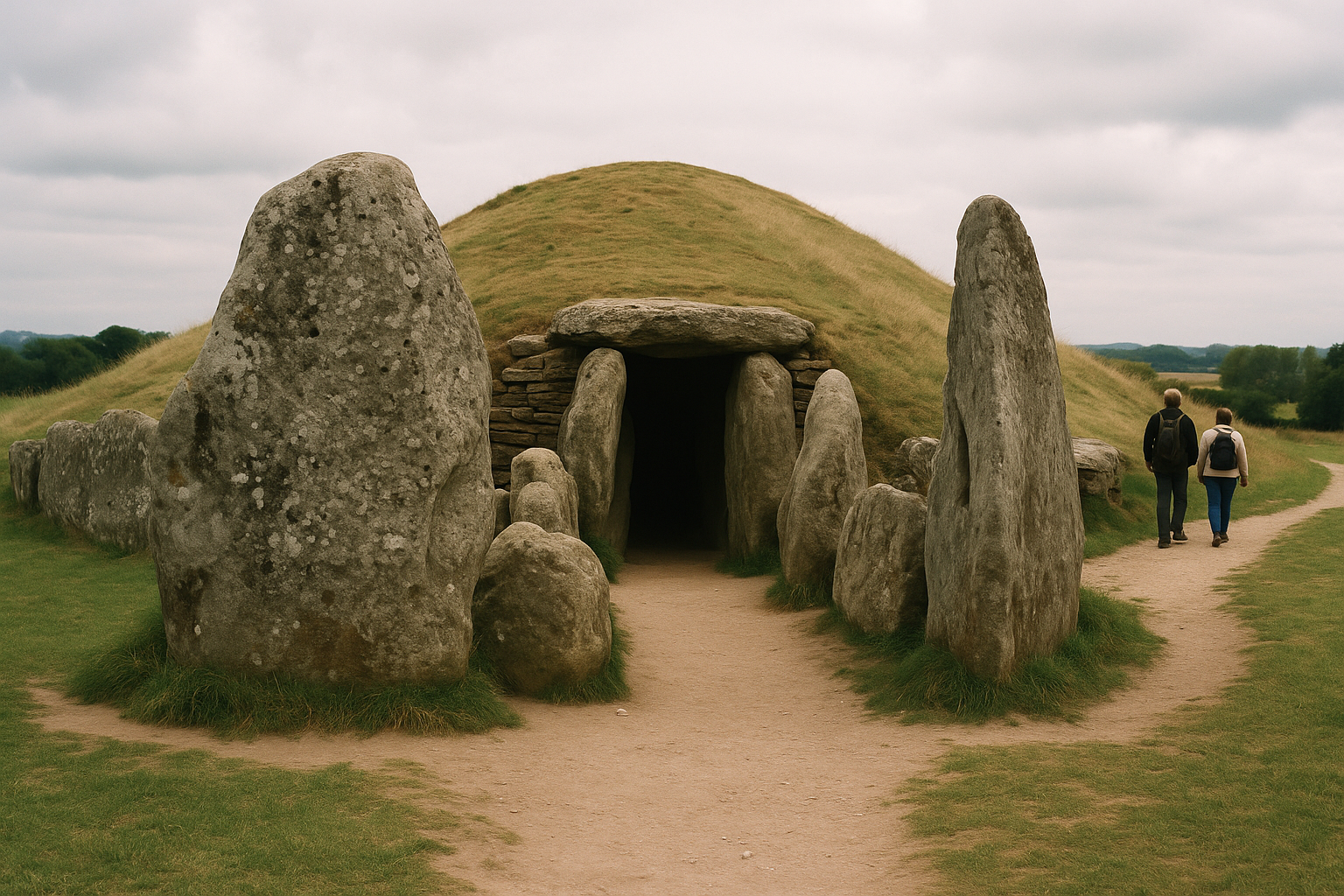
West Kennet Long Barrow Travel Guide 2026: Neolithic Tomb Access, Context, and Wiltshire Itinerary Tips
Neolithic BritainPlan your West Kennet Long Barrow visit with practical walking advice, chamber access expectations, ...
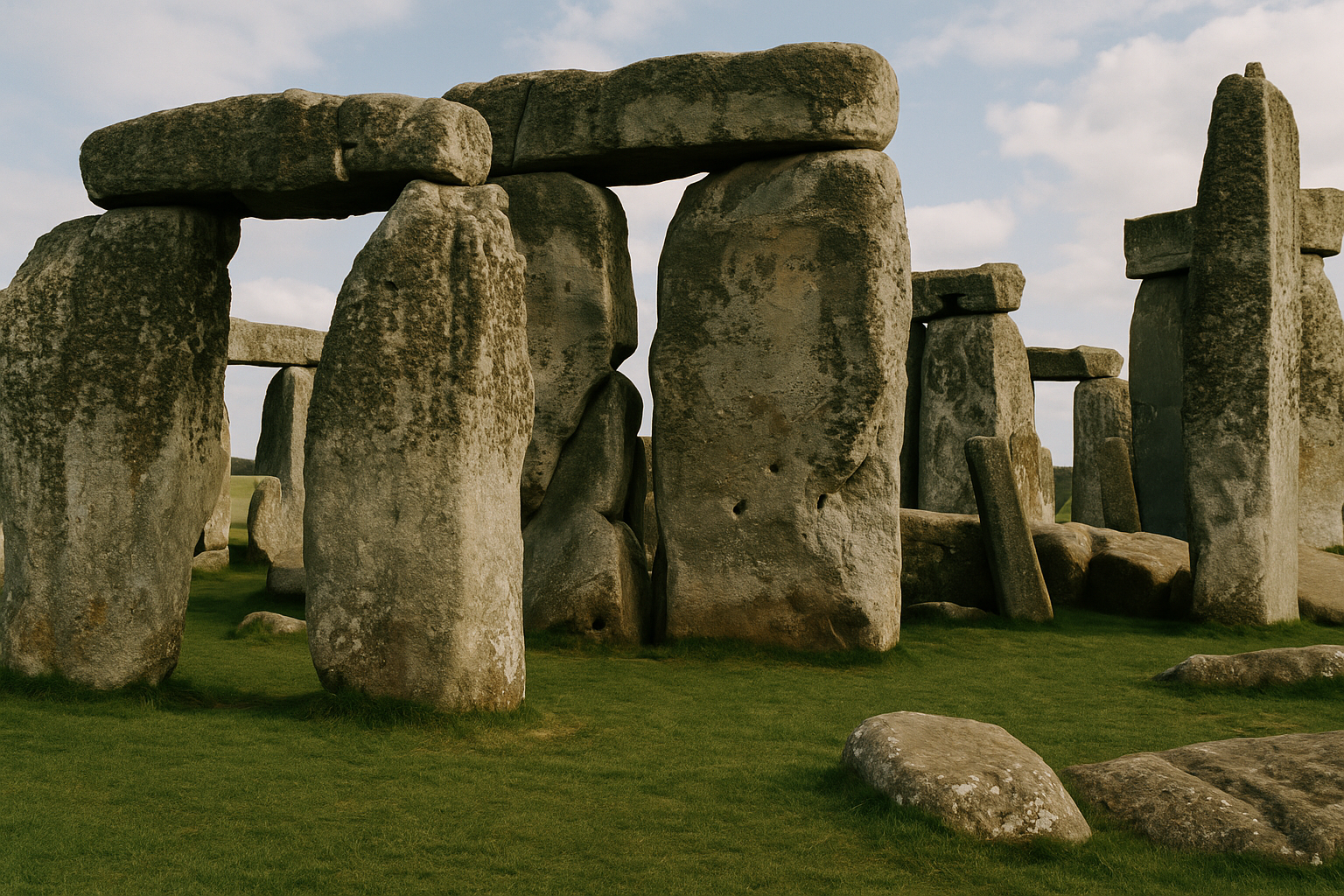
Stonehenge Travel Guide 2026: Solstice History, Tickets, and Day-Trip Planning
Neolithic and Bronze Age BritainPlan a smooth visit to Stonehenge with practical ticket timing, transport options from London and Ba...

Tower of London Travel Guide 2026: Crown Jewels, History, and Visit Strategy
Norman and Medieval EnglishPlan a smart visit to the Tower of London with practical timing tips, must-see highlights, ticket st...