Quick Info
Curated Experiences
Ancient Rome Walking Tour: Largo Argentina and Campus Martius
Roman Republic and Julius Caesar History Tour
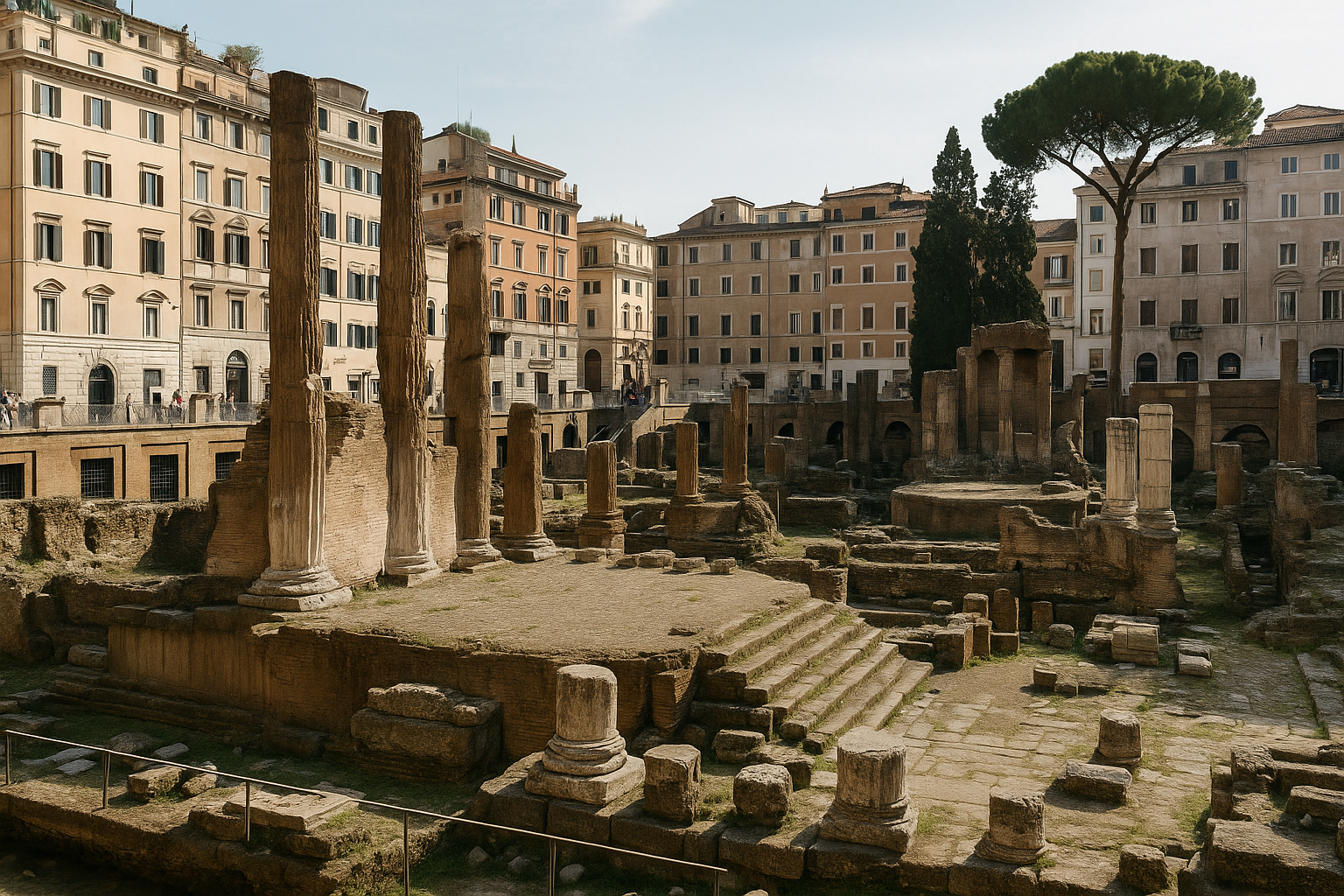
The buses roar past at eye level, tourists stream toward the Pantheon three blocks away, and six meters below the modern street surface, four Roman temples sit in silence — roofless, colonless in places, but still holding the outlines of a sacred district that was already ancient when Julius Caesar bled to death a few steps from where you are standing. Largo di Torre Argentina is the strangest archaeological site in Rome because it exists in a state of permanent interruption. In 1929, construction workers demolishing a medieval neighborhood to build Mussolini’s new piazza discovered the temples by accident. The demolition stopped. The temples stayed. The city adapted around them, and now one of Rome’s busiest traffic intersections wraps around a sunken rectangle of Republican ruins that most passersby barely glance at.
That indifference is a mistake. Largo Argentina contains four of the oldest known temples in Rome, dating from the 4th to the 2nd century BCE — a period when the Republic was transforming from a regional Italian power into a Mediterranean empire. These temples were built with the spoils of Rome’s earliest foreign conquests, and their sequential construction tells the story of that expansion in stone. Nothing else in the city brings you this close to Republican Rome’s sacred landscape.
The site also holds an accidental celebrity. The remains of the Curia of Pompey — the assembly hall where the Roman Senate was meeting on March 15, 44 BCE, and where Caesar was assassinated by Brutus, Cassius, and their co-conspirators — lie adjacent to the temple precinct, beneath the modern street. You cannot stand in the exact spot, but you can stand within meters of it, looking at a landscape that witnessed the event that ended the Roman Republic.
Historical Context
The four temples at Largo Argentina are conventionally labeled A, B, C, and D because their exact identifications remain debated. What is clear from archaeological evidence and construction techniques is their approximate chronology: Temple C is the oldest, dating to the late 4th or early 3rd century BCE; Temple A dates to the mid-3rd century BCE; Temple D is from the late 3rd or early 2nd century BCE; and Temple B — the only circular temple in the group — was built in the early 1st century BCE. Together, they span roughly two centuries of Republican temple construction.
The sequential building pattern is directly connected to Roman military expansion. Republican generals who won significant victories were expected to fulfill vows to the gods by constructing temples with their war spoils. Each temple at Largo Argentina likely commemorated a specific military campaign and was dedicated to the deity invoked before battle. Temple A may be the Temple of Juturna, vowed during the First Punic War; Temple C has been tentatively linked to the Italian wars of the early 3rd century. The identifications are scholarly reconstructions, not certainties, but the pattern is consistent: conquest generated wealth, and wealth built temples.
The temples were situated in the southern Campus Martius, an area that was transforming during the mid-Republic from a military training ground and gathering space into a zone of monumental public architecture. By the late Republic, the surrounding district included the Theatre of Pompey — Rome’s first permanent stone theatre, built by Gnaeus Pompeius Magnus in 55 BCE — and its associated portico and meeting halls, including the Curia of Pompey where the Senate occasionally convened.
It was in this Curia, on the Ides of March in 44 BCE, that Gaius Julius Caesar was stabbed twenty-three times during a Senate meeting. Ancient sources place the event in the hall attached to Pompey’s portico, adjacent to (and possibly overlapping with) the archaeological zone now exposed at Largo Argentina. Excavations have revealed a large concrete structure beneath the modern Via di Torre Argentina that may be the foundation of the Curia, and in 2012, archaeologists announced the identification of the specific spot where Caesar fell — though this claim remains subject to scholarly discussion.
After the assassination, the Senate sealed the Curia as a place of ill omen, and the site’s sacred character shifted. Over subsequent centuries, the temple precinct was gradually buried beneath rising ground levels as Rome rebuilt itself layer upon layer. Medieval construction completely covered the temples until their accidental rediscovery in 1929.
Today the exposed sacred area also hosts one of Rome’s most famous cat colonies. The cats are managed by a volunteer organization (Torre Argentina Cat Sanctuary) that operates from the ancient ruins. The sanctuary is a Roman institution in its own right and adds an unexpected layer of living history to the archaeological site.
What to See
Temple C (The Oldest Temple)
Dating to the late 4th or early 3rd century BCE, Temple C is the earliest structure in the precinct and one of the oldest known temples in Rome. Its raised podium and the traces of its original floor (a mosaic in black and white, partially visible) establish the baseline from which you can read the site’s chronological progression. The temple’s construction in tufa (the soft volcanic stone that was Rome’s primary early building material) distinguishes it from the later temples that incorporated travertine and concrete.
Practical tip: Temple C is in the rear of the site and harder to see clearly from the street-level railings. The on-site walkway (opened in 2023) brings you closer. Look for the surviving floor mosaic fragment, which is one of the oldest in Rome.
Temple B (The Round Temple)
The circular Temple B, with its surviving column stumps arranged in a ring around a central cella (inner chamber), is the most visually distinctive structure in the precinct. Built around 100 BCE, it is attributed to Quintus Lutatius Catulus and may have been dedicated to Fortuna Huiusce Diei (Fortune of This Day) in commemoration of a military victory. The circular plan is relatively rare in Roman temple architecture and reflects Hellenistic Greek influence on late-Republican building design.
Practical tip: Temple B is the easiest temple to identify from both street level and the on-site walkway. Use it as your orientation anchor for understanding the spatial relationships between all four temples.
Temple A and Temple D
Temple A, roughly mid-3rd century BCE, shows evidence of multiple rebuilding phases and later modifications including the addition of a small early medieval church within its ruins — a common Roman pattern of sacred-space continuity across religious transitions. Temple D is the largest of the four and extends partly beneath the modern street on the western side of the excavated area. Only a portion of its podium is exposed, but its scale suggests it was the dominant structure in the precinct during the late Republican period.
Practical tip: Temple D’s partial burial beneath the street is itself a useful lesson: what you see at Largo Argentina is only what a 1929 construction project happened to expose. The ancient sacred district was larger than the current excavation reveals.
The Assassination Zone
The Curia of Pompey, where Caesar was killed, is not directly visible within the excavated temple area. Its foundations lie beneath the adjacent street and modern buildings. However, interpretive materials at the site mark the approximate location, and standing at the eastern edge of the sacred precinct puts you within the immediate vicinity of one of the most consequential political events in Western history. The spatial relationship between the temples, the Theatre of Pompey (whose curved footprint is preserved in the arc of the buildings along Via di Grotta Pinta, a 5-minute walk away), and the assassination site helps you understand how Republican Rome’s religious, cultural, and political infrastructure overlapped in a remarkably compact area.
Practical tip: Walk to Via di Grotta Pinta after visiting Largo Argentina to see how Pompey’s Theatre curved — the medieval buildings follow the original semicircular line exactly, preserving the theatre’s plan in the modern street grid.
The Cat Sanctuary
The Torre Argentina Cat Sanctuary occupies a space within the excavated area and cares for a colony of approximately 100-150 cats that live among the temple ruins. The sanctuary operates as a volunteer-run nonprofit and accepts visitors and donations. Whether you find the cats charming or incongruous, they are part of the site’s identity and have been protected by city ordinance since 2001. The sanctuary entrance is at the southern end of the piazza, below street level.
Practical tip: The sanctuary is open daily (typically 12:00-6:00 PM, but check current hours). Visiting takes 10-15 minutes and is free, though donations are welcome. It provides one of the few ways to descend to the ruin level and see the temples from ground height rather than from the elevated street.
Timing and Seasons
Best months: The site is open-air and in central Rome, making it visitable year-round. October through May is most comfortable for extended time at the railings and walkways. Spring (March-May) and autumn (September-November) offer the best light for photography at temperatures of 55-75°F (13-24°C).
Summer (June-August): Hot (85-95°F / 30-35°C), but the visit is short enough that heat is manageable. Morning or late afternoon is preferable. The piazza itself has no shade.
Winter (December-February): Cool (40-55°F / 5-13°C) and atmospheric. The low winter sun penetrates the sunken excavation at steep angles, creating dramatic shadows on the temple podiums. Tourist density drops significantly.
Best time of day: Early morning (before 9:00 AM) for photographs without traffic congestion and glare. Late afternoon produces warm golden light on the temple stone. Midday is the least photogenic time due to flat overhead light and maximum street noise.
Tickets, Logistics and Getting There
Admission: The site was opened to visitors at close range in 2023, with an on-site walkway that allows descent to the ruin level. Entry is approximately 5 EUR ($5.50 USD). The street-level views from the perimeter railings remain free and accessible 24 hours a day.
Hours: The walkway typically operates from 9:30 AM to 7:00 PM (seasonal variations apply). Confirm current hours before visiting.
Getting there: Largo di Torre Argentina is in the heart of Rome’s historic center, roughly equidistant between the Pantheon (5 minutes on foot) and Piazza Navona (7 minutes). Multiple bus lines stop at the piazza, including tram 8 from Trastevere. The nearest metro station is Barberini (Line A, approximately 15 minutes on foot) or Colosseo (Line B, approximately 20 minutes on foot). Most visitors reach the site on foot as part of a central Rome walking route.
Advance booking: Not usually necessary, but may be required for peak-season weekends. Check the official Roma Capitale or Soprintendenza channels for current booking information.
Practical Tips
- The on-site walkway is the best way to see the temples up close, but the free street-level views from the perimeter railings are sufficient for a quick orientation.
- Bring a basic Roman Republic timeline (printout or phone) to help place the temples in historical context. The site’s interpretive material is improving but still limited.
- The piazza is noisy and traffic-heavy. Noise-canceling headphones or simply choosing early morning hours significantly improve the contemplative quality of the visit.
- Photography from the northwest corner of the piazza captures all four temples in a single frame, with the best angle occurring in late-afternoon light.
- Pickpocket risk at Largo Argentina is elevated due to the dense foot traffic. Keep valuables secure, especially while leaning over the railings with a camera.
- The cat sanctuary is a popular stop with families and animal lovers. If traveling with children, factor in a 15-minute visit to maintain engagement.
- No food or water is available at the site. The surrounding streets are packed with cafes, gelaterie, and restaurants. Roscioli Caffe, a 3-minute walk on Via dei Giubbonari, is an excellent pre- or post-visit stop.
Suggested Itinerary
9:30 AM — Arrive at Largo di Torre Argentina. Begin with a full circuit of the piazza at street level, using the perimeter railings to identify each temple and orient the site.
9:45 AM — Descend to the on-site walkway for close-range study of the temples. Spend 20-30 minutes examining construction details, the surviving mosaic in Temple C, and the spatial relationships between the four structures.
10:15 AM — Visit the cat sanctuary at the southern end of the excavation (10-15 minutes).
10:30 AM — Walk to Via di Grotta Pinta (5 minutes) to see the curved medieval buildings that preserve the footprint of Pompey’s Theatre. Consider the spatial relationship between the theatre, the Curia where Caesar was killed, and the temple precinct you just visited.
10:45 AM — Walk to the Pantheon (5 minutes north), shifting your timeline from Republican to Imperial. The Pantheon opens at 9:00 AM on most days, and mid-morning arrival avoids the worst of the queues.
11:30 AM — Continue east to Piazza Venezia and Via dei Fori Imperiali for the Roman Forum, Trajan’s Market, or the Colosseum district.
Total Largo Argentina time: 45-75 minutes including the cat sanctuary and Pompey’s Theatre walk.
Nearby Sites
Pantheon — Five minutes on foot to the north. The shift from Largo Argentina’s Republican temples to the Pantheon’s Imperial concrete dome is one of the most instructive architectural transitions in Rome. The buildings are separated by three centuries and represent fundamentally different approaches to sacred space.
Roman Forum — Fifteen minutes on foot to the southeast. Pair Largo Argentina with the Forum for a chronological journey from Republican sacred precinct to Imperial civic center. The Forum’s Republican-era temples (Temple of Saturn, Temple of Castor and Pollux) provide direct parallels to the Largo Argentina group.
Trajan’s Market — Twenty minutes on foot via Via dei Fori Imperiali. If Largo Argentina shows you Republican religious architecture, Trajan’s Market shows you Imperial administrative architecture. The two sites bracket three centuries of Roman building evolution.
Piazza Navona — Seven minutes on foot to the northwest. The piazza preserves the exact footprint of Domitian’s Stadium (1st century CE), creating another instance of ancient urban form surviving in the modern street grid, just as Pompey’s Theatre curve survives near Largo Argentina.
Final Take
Largo di Torre Argentina is not a site that demands hours of your time. It demands minutes, but the right kind of minutes — attentive ones. Stand at the railing, look down at the temple podiums, and let the chronology settle. These are among the oldest surviving buildings in Rome, and they were built with the profits of conquest in a republic that believed military victory required divine repayment. That transaction between war and religion, between politics and piety, is the foundation story of Roman civilization, and it is written in tufa and travertine six meters below the bus stop where you are standing.
Then walk to the Pantheon, five minutes away, and see what happened to Roman sacred architecture after three centuries of imperial refinement turned modest Republican temples into the most sophisticated concrete dome in the ancient world. The distance between Largo Argentina and the Pantheon is three city blocks and three hundred years. Both are worth crossing.
Discover More Ancient Wonders
- Pantheon — The best-preserved Roman building, five minutes from Largo Argentina
- Roman Forum — The political and ceremonial heart of ancient Rome
- Trajan’s Market — Multi-level Imperial administration complex with museum galleries
- Appian Way — The queen of Roman roads, connecting the city center to its southern suburbs
- Explore our full Italy Ancient Sites Guide for complete planning resources
Quick Facts
| Attribute | Details |
|---|---|
| Location | Rome, Lazio, Italy |
| Country | Italy |
| Region | Lazio |
| Civilization | Roman |
| Historical Period | Roman Republic |
| Established | 3rd-2nd centuries BCE (temple phases) |
| Entry Fee | ~5 EUR ($5.50 USD) for walkway; street-level views free |
| Hours | Walkway 9:30 AM to 7:00 PM (seasonal); perimeter 24/7 |
| Best Time | Early morning or late afternoon for photography |
| Coordinates | 41.8955, 12.4768 |
Frequently Asked Questions
What are the Temples of Largo Argentina?
They are a group of Republican-era temple remains in central Rome, preserved in a lowered archaeological area now known as the Sacred Area of Largo Argentina.
Is this where Julius Caesar was assassinated?
The assassination is associated with the nearby Curia of Pompey in the Theatre of Pompey complex, adjacent to the Largo Argentina zone rather than inside a surviving senate hall.
How long should I spend at Largo Argentina?
Plan 30 to 60 minutes for a focused stop, or 90 minutes if you want to study the temple chronology and pair it with nearby Campus Martius landmarks.
Can I visit Largo Argentina with kids or casual travelers?
Yes. It works well as a short, high-impact stop because the ruins are central and easy to combine with other Rome highlights.
What should I pair with Largo Argentina on the same day?
The site pairs naturally with the Pantheon, Roman Forum, and Trajan's Market for a coherent Republican-to-Imperial timeline.
Nearby Ancient Sites
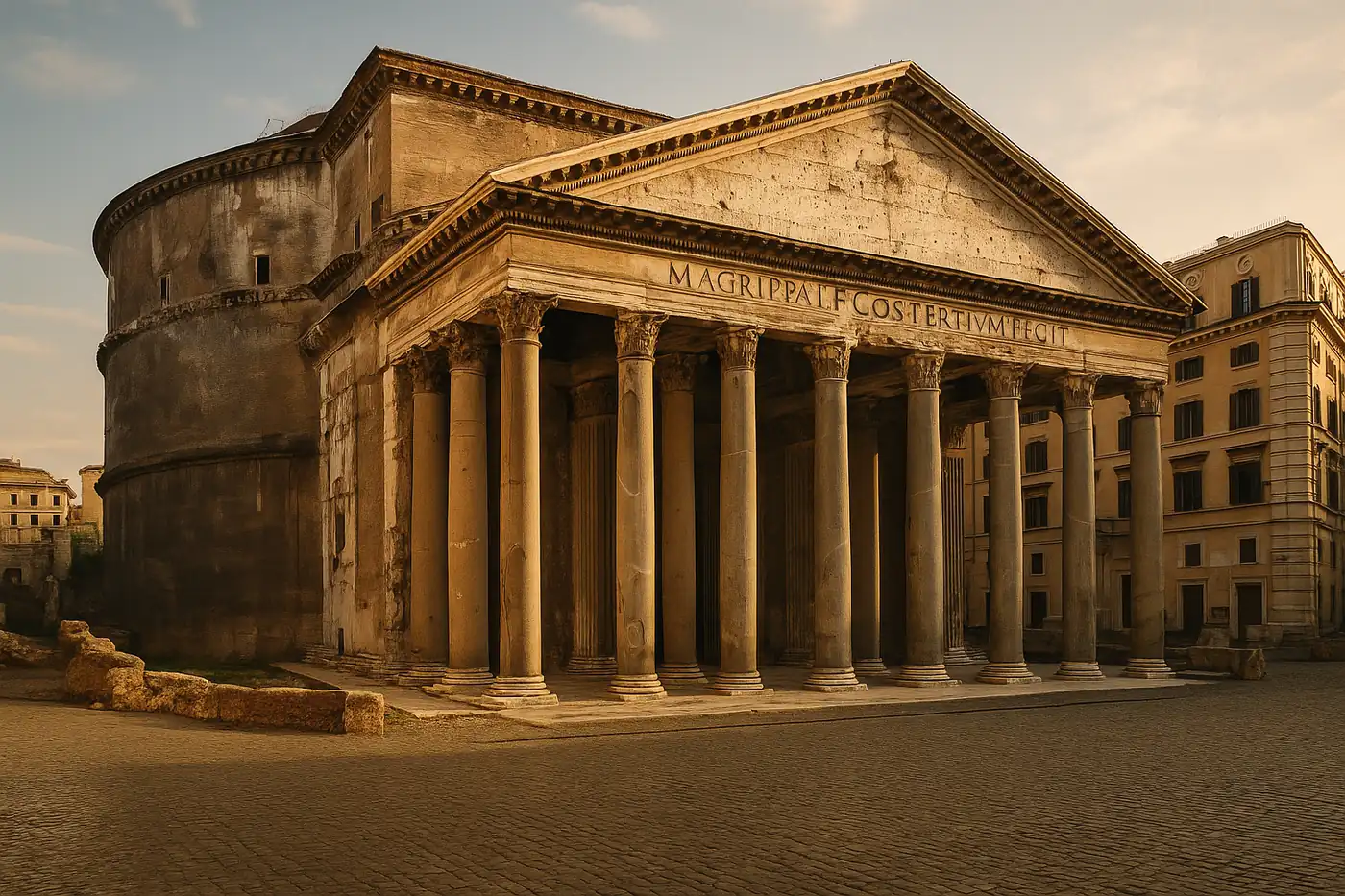
Pantheon Rome: Ultimate Guide to Rome's Best-Preserved Ancient Temple
Roman EmpireMaster your Pantheon visit with history, dome engineering secrets, visiting tips, skip-the-line opti...
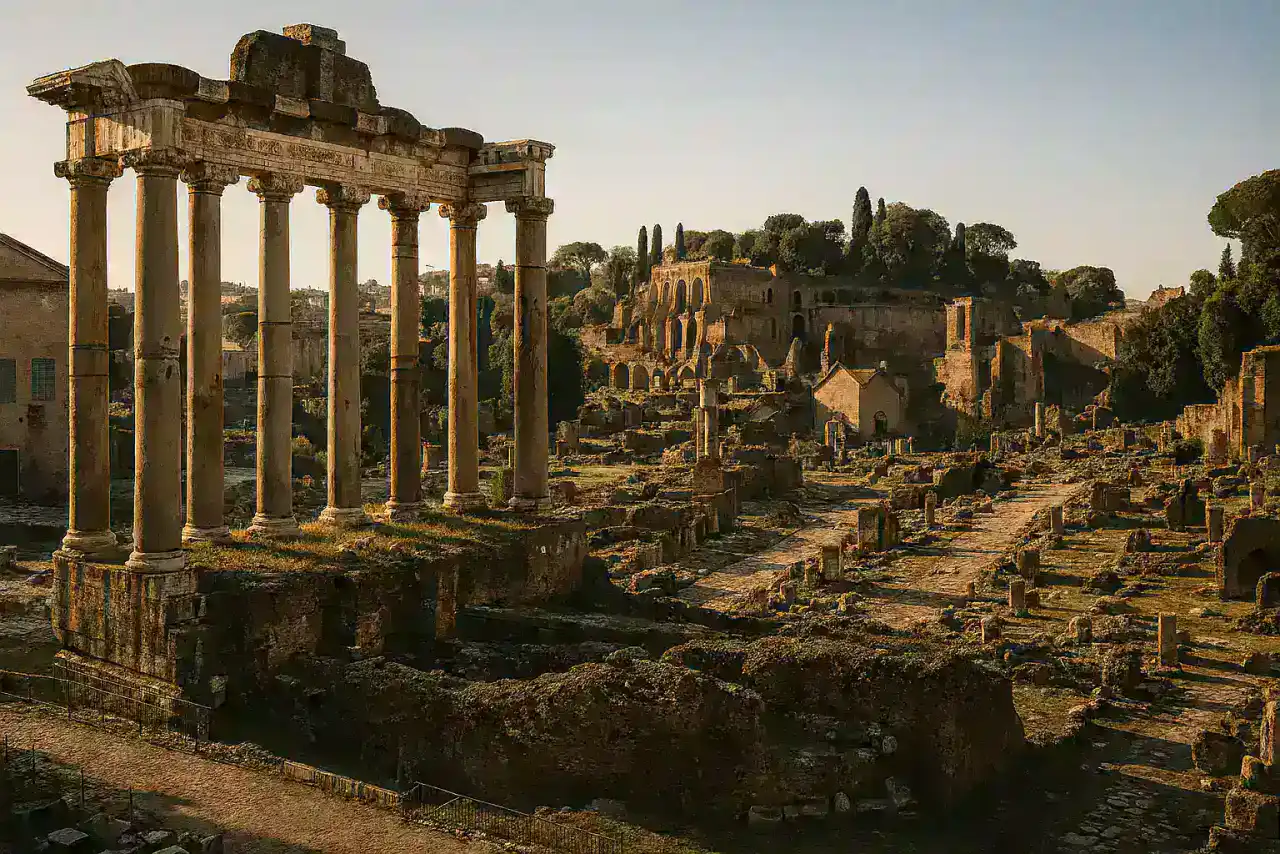
Roman Forum Rome: Heart of Ancient Republic Guide
Roman Republic/EmpireNavigate the Roman Forum's temples, basilicas, triumphal arches. Complete layout, highlights, Palati...
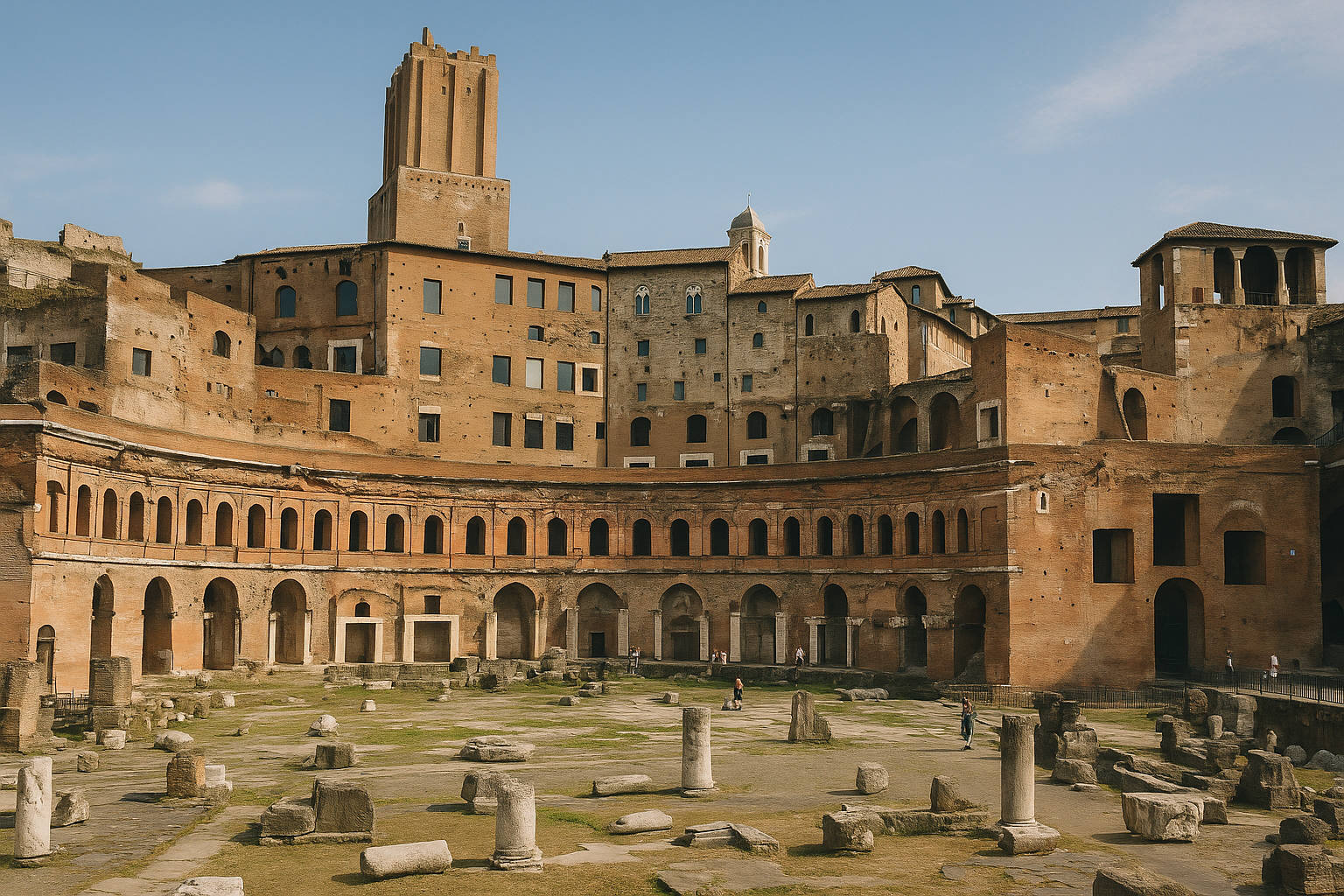
Trajan's Market Guide 2026: Visiting Rome's Multi-Level Imperial Complex
RomanPlan a smart visit to Trajan's Market in Rome with practical route strategy, what to prioritize in t...
Baths of Caracalla Rome Guide 2026
RomanPlan your visit to the Baths of Caracalla with practical route advice, history context, timing, and ...
Appian Way Rome Guide 2026
RomanPlan a smart visit to the Appian Way with route choices, catacomb logistics, bike-vs-walk strategy, ...