Quick Info
Curated Experiences
North Cornwall and Tintagel Castle Day Tour
Private Tintagel and Boscastle Coastal Heritage Tour
Cornwall Legends Route: Tintagel and Atlantic Coast
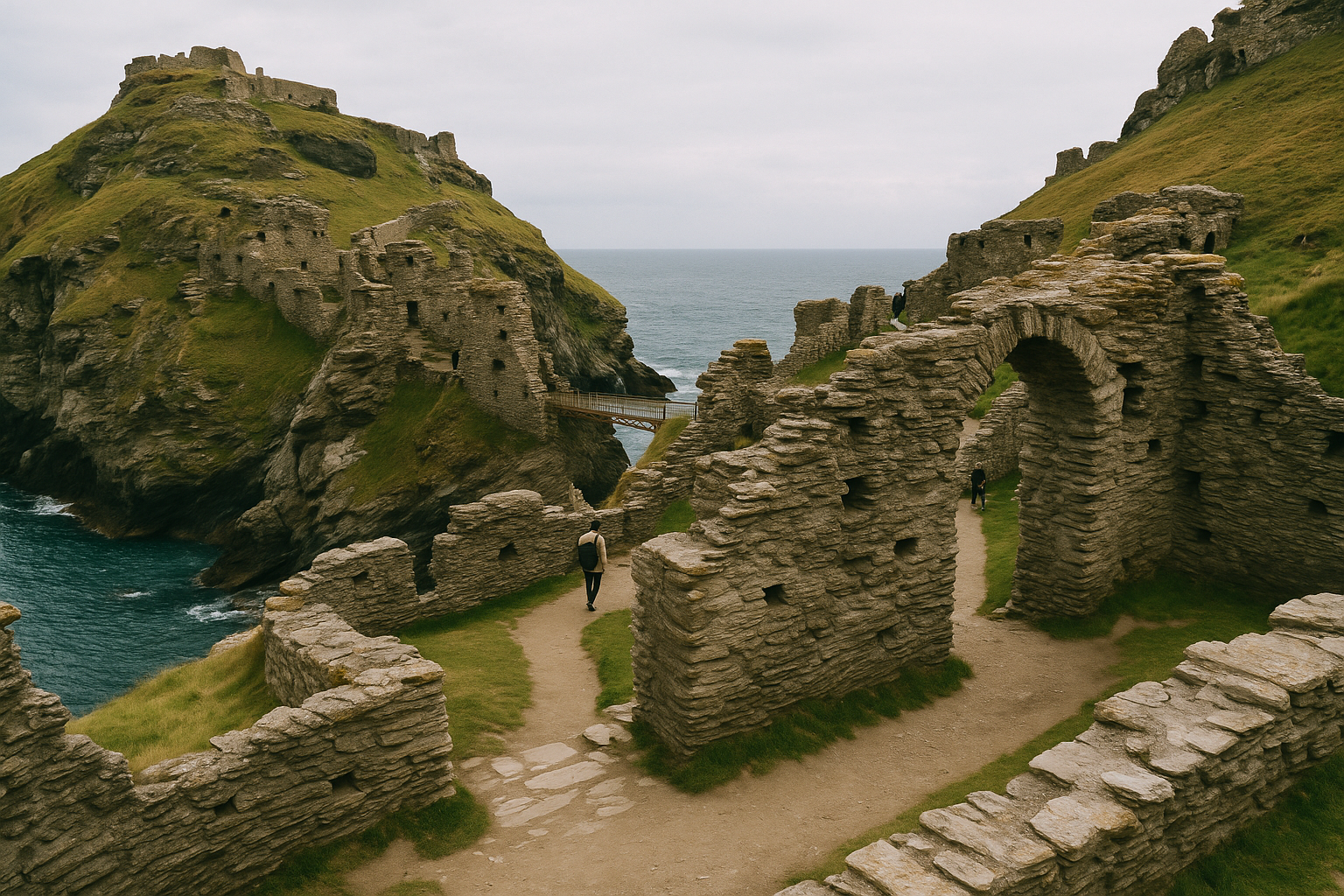
Tintagel Castle clings to a fractured headland on Cornwall’s north Atlantic coast, split between mainland cliffs and a near-island connected by a modern footbridge that echoes the narrow land-bridge medieval builders once relied on. The ruins are not grand in the way a cathedral or palatial fortress might be — they are windswept, skeletal, and exposed. That is precisely the point. Few heritage sites in Britain deliver such a visceral sense of time, geology, and myth converging in one place.
Most visitors arrive because of King Arthur. What keeps the site lodged in memory is something harder to name: the scale of the cliffs, the sound of the Atlantic below, and the knowledge that people chose this improbable perch for settlement more than 1,500 years ago. The Arthurian legend is the marketing. The archaeology and the landscape are the substance.
Stand on the island plateau on a windy morning, with the ruins at your feet and the ocean stretching to the horizon, and you understand why Geoffrey of Monmouth placed Arthur’s conception here. Some places feel like they belong to myth, and Tintagel is one of them.
Historical Context
Tintagel occupies a rare position at the intersection of confirmed archaeology and deep national mythology. Geoffrey of Monmouth’s 12th-century Historia Regum Britanniae placed Arthur’s conception here, and that literary claim has shaped the site’s identity ever since. But strip the legend away and you still have one of the most significant early medieval coastal sites in the British Isles.
Excavations have revealed that the headland hosted a substantial settlement during the 5th to 7th centuries CE. Imported pottery from the eastern Mediterranean and North Africa — amphorae that once carried wine and oil — confirms this was no ordinary fishing village. The volume and range of imported goods suggest a high-status settlement, possibly connected to the rulers of the post-Roman kingdom of Dumnonia. Whether any historical figure behind the Arthur legend had a connection here remains unproven, but the settlement’s wealth and long-distance trading networks are not in dispute. Recent excavations in the 2010s also uncovered an inscribed slate with Latin and possibly sub-Roman British text, adding further evidence of a literate, connected community.
Richard, Earl of Cornwall and brother to Henry III, constructed the stone castle around 1233. The location made little military sense — the headland was already eroding, the approach was difficult, and Cornwall faced no serious defensive threat requiring a clifftop fortress. Historians generally read the castle as a prestige project: a deliberate claim on Arthurian heritage at a time when Geoffrey of Monmouth’s stories had made Tintagel famous across literate Europe. The castle saw limited use and was already falling into ruin by the late 14th century. What survives today are fragmentary walls on both the mainland and island sides, connected by the interpretation of the site’s dual nature.
Victorian enthusiasm for Arthurian legend revived Tintagel’s profile in the 19th century. Tennyson visited and drew inspiration for his Idylls of the King. Tourism followed steadily, and the site passed to what is now English Heritage. A dramatic footbridge opened in 2019, replacing the older path system and restoring the sense of crossing between mainland and island that medieval visitors would have experienced. The bridge is an architectural statement in its own right — two cantilevered halves that do not quite meet in the middle, leaving a symbolic gap that visitors step across.
What to See
The Footbridge Crossing
The 2019 bridge is worth attention as an engineering piece and as an experience. Two cantilevered steel and slate sections reach toward each other from mainland and island, leaving a narrow gap in the center that you step across. The symbolism is intentional — a reference to the lost land-bridge — and the views down to the cove and along the coast are among the best at any UK heritage site. Cross slowly and stop at the midpoint. The perspective on both the ruins and the geology is extraordinary.
The Island Plateau
Once across, climb to the upper plateau where the early medieval settlement stood. Foundations are marked out, and interpretation panels explain the pottery finds, the site layout, and the evidence for long-distance trade. This is where the real archaeological weight of Tintagel sits, and many visitors rush through it to chase the castle walls. Resist that impulse. The 5th-to-7th-century settlement is what makes Tintagel archaeologically significant, not the 13th-century castle. Spend time reading the panels and imagining a community trading wine and oil with the Mediterranean from this Atlantic cliff edge.
The Mainland Castle Remains
The inner ward and great hall ruins on the mainland side give the clearest sense of Richard of Cornwall’s 13th-century construction. The walls frame the sea in ways that feel almost theatrical — which was likely the intent. This was a castle designed to impress, not to defend, and the placement of the great hall looking out over the cove exploits the dramatic landscape for maximum visual effect. Interpretive panels provide context on the castle’s brief functional life and rapid decline.
Merlin’s Cave
At beach level below the headland, a sea cave passes entirely through the rock base, accessible at low tide from the cove. The Arthurian naming is modern, but the cave itself is genuinely dramatic — dark, echoing, and large enough to walk through when tide conditions permit. Check tide times at the visitor center before attempting the descent, and be aware that the beach path involves steep steps.
The Gallos Statue
A bronze figure by Rubin Eynon stands on the headland, referencing the site’s legendary connections. Opinions on it vary, but it makes a useful orientation landmark and photographs well against the sky. The name means “power” in Cornish, and the figure’s wind-swept posture captures something of the headland’s character.
Timing and Seasons
Late spring through early autumn (May to September) gives the best combination of daylight hours and manageable weather, with temperatures ranging from 54-65°F (12-18°C). Within that window, weekday mornings outside school holidays are noticeably quieter. Late afternoon light, roughly 4:00 to 6:00 PM in summer, produces the strongest cliff and sea contrast for photography and the most atmospheric conditions on the headland.
July and August bring the heaviest crowds, and timed-entry tickets may sell out by midday on peak summer weekends. School holiday weeks (late July through August) are the busiest period.
Cornwall’s Atlantic coast changes weather fast. A clear morning can turn to driving rain within an hour. Even in summer, wind on the headland is a constant factor, and exposed paths feel significantly colder than sheltered village streets. Spring and autumn visits, at 48-58°F (9-14°C), are rewarding for lighter crowds and dramatic storm-light conditions, though shorter daylight limits the visit window.
Winter visits are possible but exposed. The castle grounds remain open, though some paths may close during storms. Temperatures sit around 42-50°F (6-10°C), and the headland in winter wind is genuinely harsh.
Tickets, Logistics, and Getting There
Tintagel Castle is managed by English Heritage. Adult admission is approximately $20 (GBP 16), with discounts for children and concessions. English Heritage members enter free. Advance booking online is recommended during peak season (July and August), when timed-entry slots may apply. Tickets are available through the English Heritage website.
The site is open daily from 10:00 AM, with closing times varying seasonally from 4:00 PM (winter) to 6:00 PM (summer). Last admission is typically 30 to 45 minutes before closing.
Tintagel village is located on Cornwall’s north coast, roughly 20 miles southwest of Launceston and 45 miles northeast of Newquay. The nearest train station is Bodmin Parkway, about 30 miles south, from which you would need a bus or taxi. Driving is the most practical approach for independent visitors. A large car park operates in Tintagel village with a pay-and-display fee. From the car park, it is about a 15-minute walk downhill to the castle entrance (and a steeper walk back up).
A Land Rover shuttle runs between the village and the base of the castle steps for visitors who need assistance with the approach path. The shuttle does not eliminate stair climbing once on site.
Practical Tips
- Grippy, closed-toe footwear is essential. The paths include steep stone steps — over 100 on some sections — and surfaces get slick in rain. Hiking boots or sturdy walking shoes are the right choice.
- Bring a waterproof jacket even on sunny days. Wind and rain arrive without warning on the Cornish coast, and the headland offers no shelter.
- Carry water and sun protection. There is no shade on the island plateau, and on clear summer days the exposed rock reflects heat.
- Walking poles help on the steeper stair sections if you use them. The descent from the island can be harder on the knees than the climb.
- Check tide times at the visitor center if you want to visit Merlin’s Cave. Access is only possible at low tide, and the beach path is steep.
- Allow at least 2.5 to 3 hours for a thorough visit, including the walk from the car park, bridge crossing, island exploration, mainland castle remains, and return.
- The King Arthur’s Great Halls exhibition in Tintagel village is a separate (privately operated) attraction with stained glass and Arthurian tableaux. It is kitschy but enjoyable if you are in the mood.
Suggested Itinerary
Walk from the village car park to the castle entrance (15 minutes downhill). Cross the footbridge to the island, pausing at the midpoint for views (10 minutes). Climb to the island plateau and explore the early medieval settlement foundations and interpretation panels (30 to 40 minutes). Descend to the mainland side and walk the inner ward and great hall ruins (20 minutes).
If tide conditions permit, descend to the beach and walk through Merlin’s Cave (20 to 30 minutes round trip). Return via the coastal path to the entrance, stopping at the Gallos statue for photographs (10 minutes). Walk back up to the village car park (20 minutes uphill).
Total visit time: 2.5 to 3.5 hours. If combining with nearby sites, drive to Boscastle (15 minutes north) for its dramatic harbor and Museum of Witchcraft, or south to Padstow (30 minutes) for lunch.
Nearby Sites
Glastonbury Tor is the natural companion for anyone interested in the geography of the Arthur legend. Another site where Arthurian tradition and early medieval history overlap, Glastonbury is roughly 2 hours east across Somerset. Together, the two sites frame the range of the Arthur story in southwest England, from Atlantic headland to Somerset wetland.
Sutton Hoo in Suffolk offers the Anglo-Saxon counterpart to Tintagel’s post-Roman British world. The contrast between a coastal cliff settlement and an inland royal burial ground illuminates how different early medieval cultures operated on the same island. Sutton Hoo is roughly 5 hours east — a multi-day pairing rather than a same-day trip.
Within Cornwall itself, Bodmin Moor is under 30 minutes away and holds prehistoric stone circles (including the Hurlers and Trethevy Quoit) and medieval field systems that extend the regional timeline. The coast path in either direction from Tintagel village rewards walkers with further cliff scenery and smaller historic sites. Boscastle, 15 minutes north, has a photogenic harbor and the Museum of Witchcraft and Magic.
Tower of London provides the contrast of a castle built to function as a military and administrative center rather than a symbolic statement — the opposite of Richard of Cornwall’s approach at Tintagel.
Discover More Ancient Wonders
- Glastonbury Tor — Arthurian legend and early medieval hilltop in Somerset
- Avebury Stone Circle — Massive Neolithic henge complex in Wiltshire
- Stonehenge — Britain’s most iconic prehistoric monument
- Hadrian’s Wall — Roman frontier architecture across northern England
- Our complete guide to medieval castles in the British Isles
Final Take
Tintagel Castle earns its reputation not through architectural grandeur but through the accumulated force of place, story, and geology. The ruins are fragmentary. The paths are steep. The weather is unreliable. None of that diminishes the visit — it defines it. This is a site where you feel the age of the landscape and the ambition of the people who built on it, from unnamed post-Roman traders to a medieval earl leveraging a legend for political gain.
Approach it as a coastal walk with deep historical layering, leave flexibility in your schedule for weather, and give the early medieval archaeology as much attention as the castle walls. The Arthurian legend brought you here. The real Tintagel — the trading settlement, the prestige castle, the eroding headland — is what will stay with you after you leave.
Quick Facts
| Attribute | Details |
|---|---|
| Location | Tintagel, Cornwall, United Kingdom |
| Country | United Kingdom |
| Region | Cornwall |
| Civilization | Early Medieval Britain / Medieval England |
| Historical Period | 5th-13th century CE |
| Established | c. 5th-6th century CE settlement; castle built c. 1233 |
| Managed By | English Heritage |
| Admission | ~$20 (GBP 16) adults; EH members free |
| Opening Hours | 10:00 AM daily; closing varies seasonally |
| Time Needed | 2.5-3.5 hours |
| Coordinates | 50.6676, -4.7570 |
Frequently Asked Questions
Is Tintagel Castle suitable for visitors with limited mobility?
Some areas involve steep paths and steps. Check current access options before visiting, including shuttle support and path conditions managed by the site operator.
How long should I plan at Tintagel Castle?
Most travelers should plan 2 to 3 hours for pathways, viewpoints, bridge crossing, and interpretation panels.
When is the best time to visit Tintagel Castle?
Shoulder season mornings are often best for manageable crowds, clearer photography, and safer pacing on exposed coastal paths.
Nearby Ancient Sites
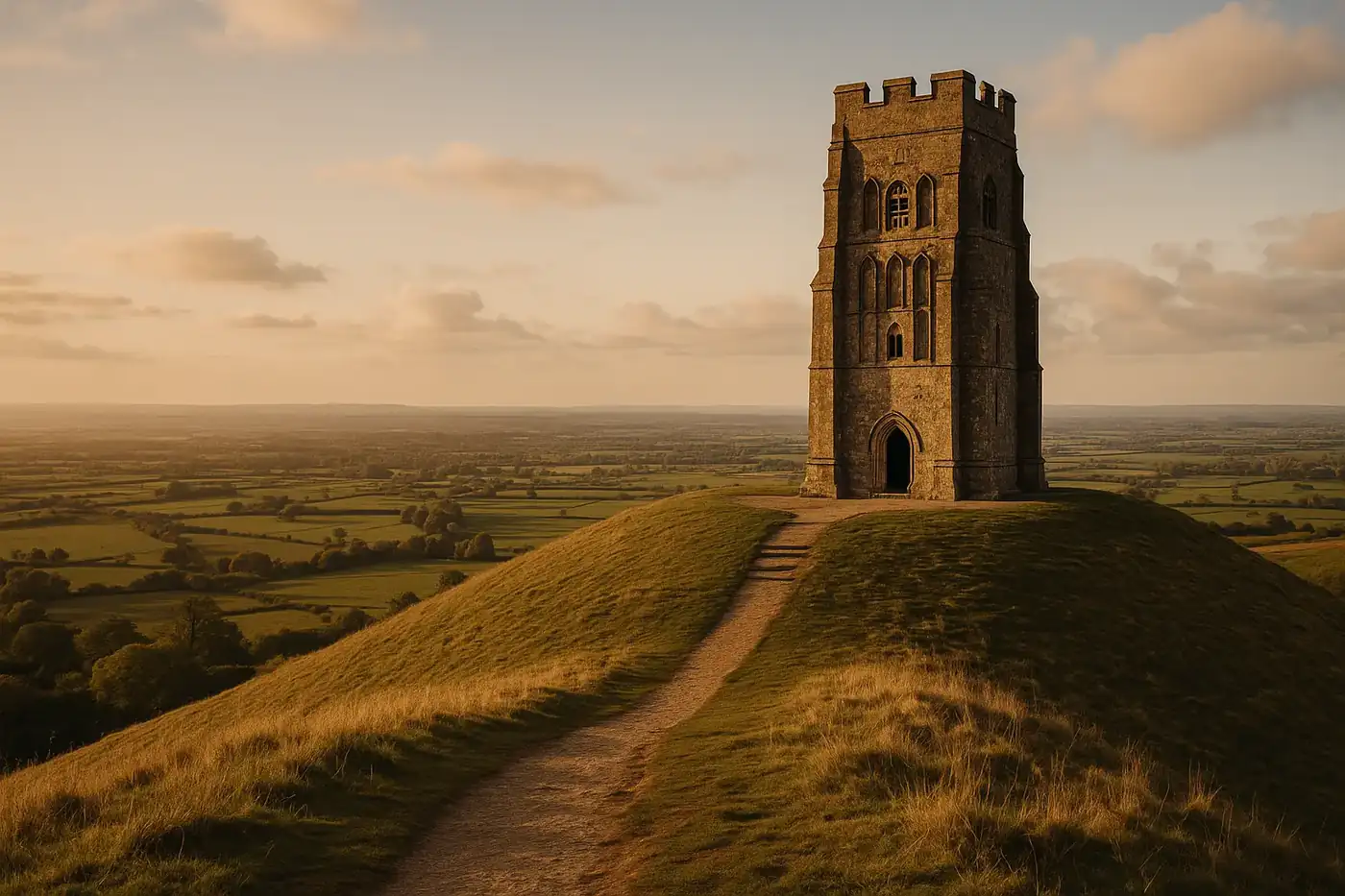
Glastonbury Tor Travel Guide 2026: Best Walk Times, History, and Visit Planning
Early Medieval EnglandPlan a smarter visit to Glastonbury Tor with practical climb timing, weather tips, and context on wh...
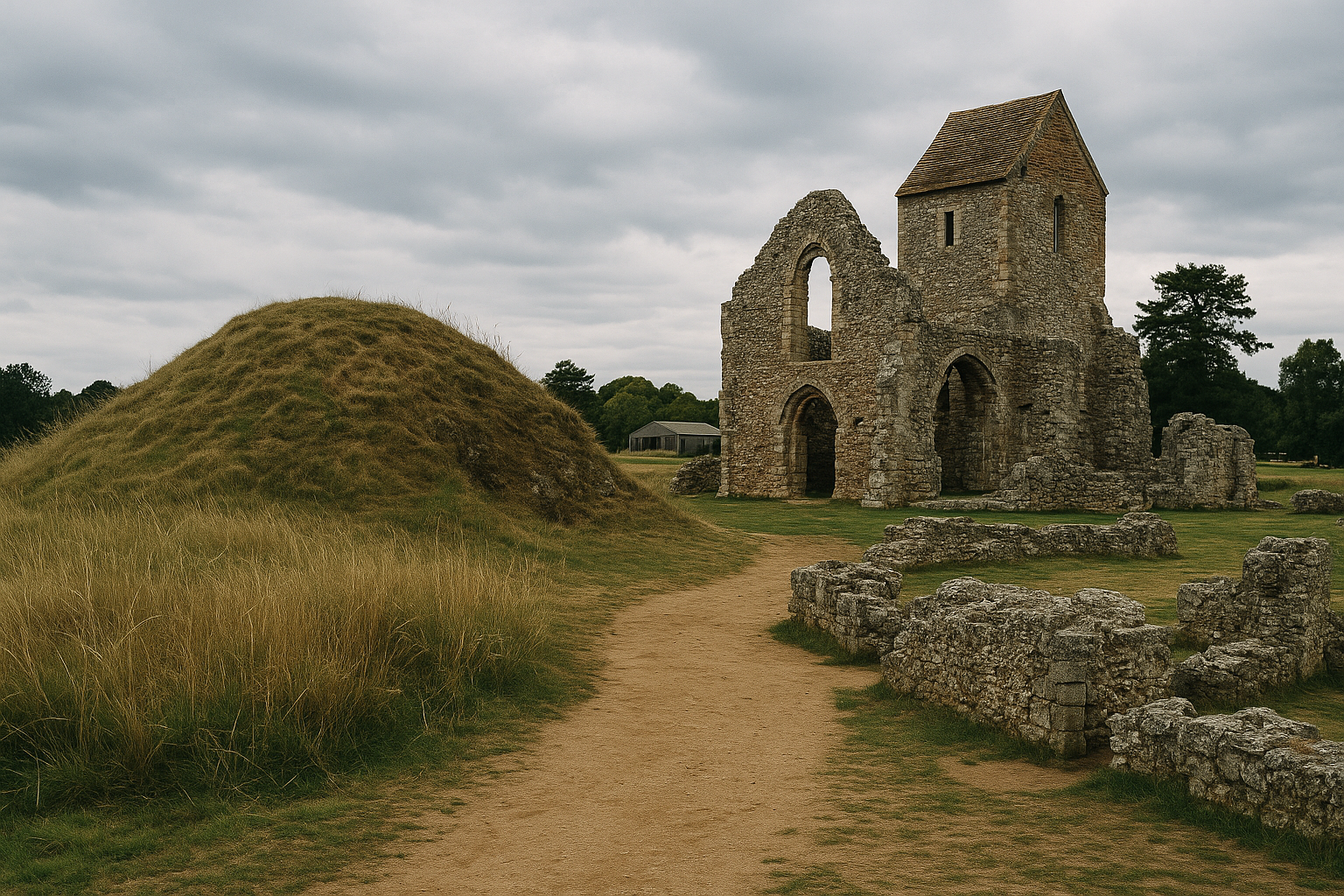
Sutton Hoo Travel Guide 2026: Anglo-Saxon Burial Site, Museum Highlights, and Suffolk Planning Tips
Anglo-Saxon Kingdom of East AngliaPlan your Sutton Hoo visit with practical museum advice, burial mound context, and itinerary tips fo...
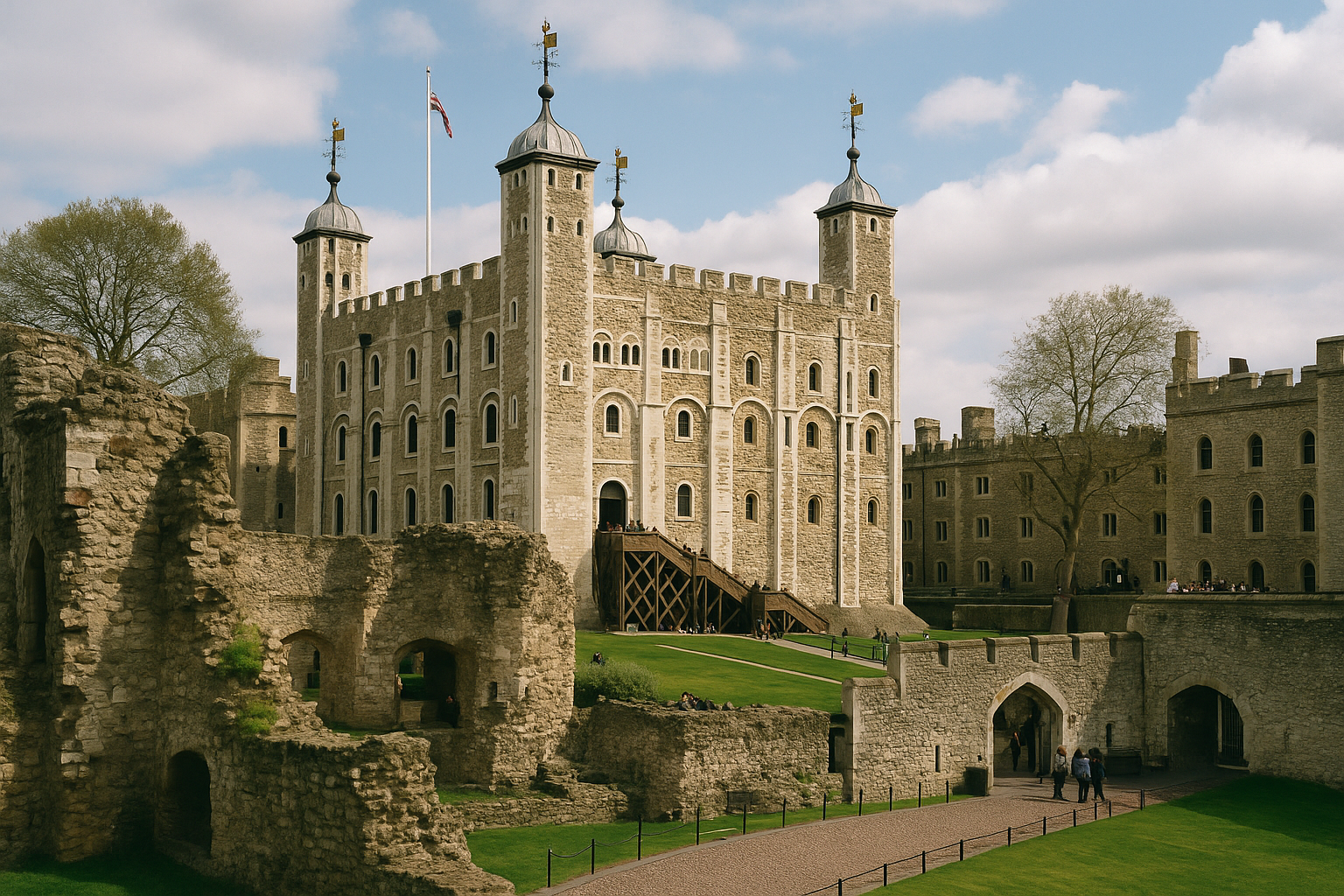
Tower of London Travel Guide 2026: Crown Jewels, History, and Visit Strategy
Norman and Medieval EnglishPlan a smart visit to the Tower of London with practical timing tips, must-see highlights, ticket st...