Quick Info
Curated Experiences
Trajan's Market and Imperial Fora Walking Tour
Ancient Rome Small-Group Tour: Forum, Markets, and Capitoline Area
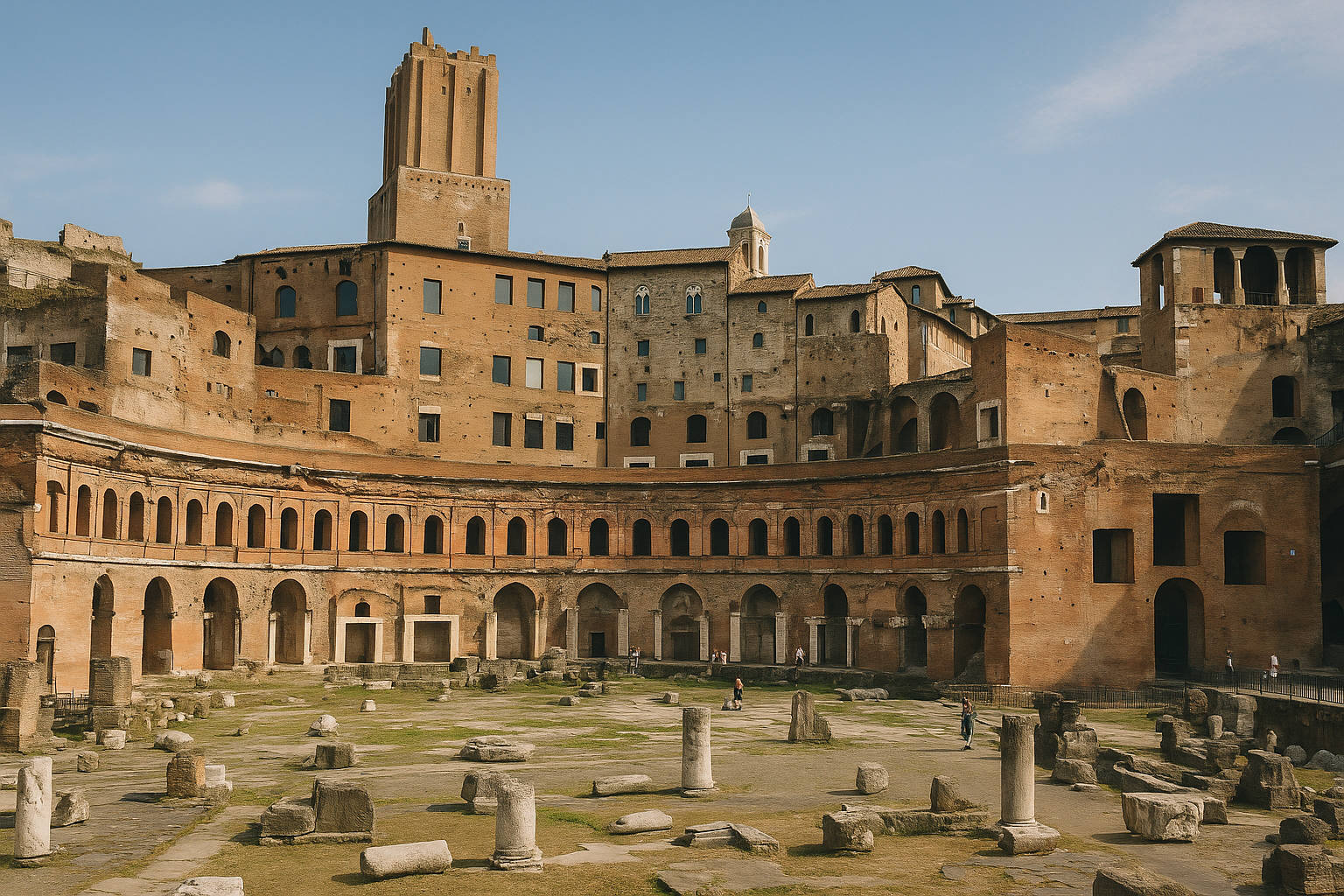
You come around the corner on Via IV Novembre and the street drops away to reveal a curving wall of brick arcades rising six stories above the Via dei Fori Imperiali. The scale is startling because it arrives without warning — no ticket queue, no roped approach path, just a sudden encounter with a Roman building that looks, from this angle, like it could still be in use. The arched openings are intact, the brickwork courses are crisp, and the hemicycle curves into the Quirinal hillside with the confidence of an architect who understood that topography was not an obstacle but a design opportunity.
This is Trajan’s Market, and the first thing to know about it is that calling it a “market” undersells what you are looking at. The complex was part of an enormous urban-renewal project commissioned by Emperor Trajan and designed (almost certainly) by his architect Apollodorus of Damascus. It was built between approximately 100 and 112 CE, and it included commercial spaces, administrative offices, archive halls, distribution points, and multi-level circulation infrastructure engineered into the steep slope of the Quirinal Hill. If Rome’s Forum was the empire’s stage, Trajan’s Market was its backstage — the place where the machinery of urban administration actually ran.
For visitors who find the Roman Forum impressive but confusing — all those flattened foundations and missing columns — Trajan’s Market offers something the Forum cannot: intact three-dimensional space. You walk through vaulted corridors, climb ancient staircases, and stand on terraces where the spatial logic of imperial Rome clicks into focus in a way that ground-level ruins rarely achieve.
Historical Context
Trajan’s Market was constructed as an integral component of Trajan’s Forum, the last and most lavish of Rome’s Imperial Fora. The forum project involved a colossal feat of earthmoving: engineers cut away an entire spur of the Quirinal Hill to create a level forum space, then used the exposed hillside as the foundation for the multi-level market complex. Trajan’s Column, which still stands in the forum below, records its own height of 100 Roman feet (approximately 38 meters) — the approximate depth of earth removed to build the forum. The column was both a monument and a surveyor’s benchmark, a permanent record of the engineering labor that preceded the architectural display.
The architect behind the project was almost certainly Apollodorus of Damascus, one of the ancient world’s most accomplished builders and a figure whose career illustrates the empire’s ability to deploy talent across vast distances. Apollodorus was Syrian by origin and had already engineered Trajan’s bridge across the Danube (the longest arch bridge for over a thousand years) and likely designed Trajan’s Baths on the Oppian Hill. At the market complex, he faced the challenge of building usable civic space into a steep slope, and his solution — a series of terraced levels stepping up the hillside, connected by internal staircases and vaulted corridors — represented the state of the art in Roman concrete-and-brick construction.
The complex contained approximately 150 individual units arranged across six levels. The lowest level, closest to the forum floor, featured tabernae (shop-like spaces) opening directly onto the forum colonnades. Higher levels contained larger halls and rooms that scholars believe served administrative, archival, and possibly judicial functions. The “shopping mall” label that guidebooks love is not entirely wrong — some spaces clearly had commercial use — but it flattens a more complex reality. This was a multi-function civic infrastructure complex, not a retail center.
The great hemicycle — the curving facade visible from the street — housed a semicircular arrangement of tabernae on two levels, with a covered arcade above. The curve was not decorative. It followed the curved exedra of Trajan’s Forum below, creating an architecturally integrated relationship between the forum floor and the hillside support structure. Every element of the complex was designed in reference to the forum it served.
The complex continued to function in modified form well into the late Roman period and was subsequently absorbed into medieval Rome’s built environment. Churches, houses, and defensive fortifications were constructed within and atop the ancient structures, which paradoxically helped preserve them by keeping the Roman fabric in continuous use rather than allowing it to be quarried for building material. The Torre delle Milizie, a massive medieval tower that still rises above the complex, was built directly on Roman foundations in the early 13th century.
Modern excavation and restoration began in the early 20th century under the Fascist-era clearances that created the Via dei Fori Imperiali. The archaeological work exposed the hemicycle and much of the internal structure, and the complex was eventually converted into the Museum of the Imperial Fora (Museo dei Fori Imperiali), which opened to the public in its current form in 2007. The museum interpretation uses the ancient spaces themselves as exhibit galleries, creating one of Rome’s most effective integrations of archaeology and museum design.
What to See
The Great Hemicycle
The curving facade of tabernae is the most photographed element of the complex and the best place to start your visit. Two levels of arched openings follow the semicircular line of the ancient forum exedra below, creating a rhythmic brick surface that demonstrates how Roman builders used repetition and proportion to unify large-scale facades. Walk along the hemicycle at ground level to study the individual tabernae spaces — each was a self-contained unit with a doorway, a mezzanine loft accessible by an internal staircase for storage or sleeping, and a barrel-vaulted ceiling. The regularity of the design suggests standardized commercial or service functions.
The hemicycle also shows the quality of Roman brickwork at its most refined. The thin, flat bricks (bipedales and sesquipedales) are laid in precise courses with thin mortar joints, creating a surface that has withstood nearly two thousand years of weather, earthquakes, and reuse. The consistency of the craftsmanship is itself a statement about the labor organization required for an imperial building project of this scale.
Practical tip: The exterior hemicycle is partially visible from the Via dei Fori Imperiali for free, but entering the complex gives you access to the interior of the tabernae and the upper levels. The best photographs of the full hemicycle curve come from the upper terrace, looking down. Morning light catches the eastern-facing facade most directly.
The Great Hall (Aula)
On the upper levels, a large vaulted hall with a soaring ceiling of concrete cross-vaults represents the architectural high point of the complex. This space — sometimes called the Great Hall or Market Hall — features six bays of groin vaults supported on travertine piers, with light entering through large windows in the upper walls. The proportions are impressive enough to silence the room even when it is full of visitors. The vault construction technique on display here is directly related to the methods used in the Basilica of Maxentius, the Baths of Caracalla, and the Pantheon dome — this is Roman concrete engineering at its most confident.
The Great Hall likely served a function beyond simple commerce. Its scale and finish suggest a reception space, a hearing hall, or a distribution point for the grain dole (the annona). Whatever its specific use, it was designed to impress, and it still does.
Practical tip: Stand in the center of the hall and look up at the vault intersections where the groin lines meet. The geometry is clearest from directly below. Then walk to the side walls and examine the pier construction, where you can see the Roman concrete aggregate exposed by weathering — the caementa of tufa and brick fragments set in lime mortar that gave Roman concrete its extraordinary durability.
The Upper Terraces and Via Biberatica
A series of terraces stepping up the Quirinal slope connects the different levels of the complex and provides panoramic views over the forum district, Trajan’s Column, and the modern city stretching toward the Alban Hills. The ancient street known as Via Biberatica — its name possibly derived from the Latin bibere (to drink), suggesting the presence of taverns or drink vendors — runs along one of these upper levels and preserves an intact Roman street surface flanked by shop doorways on both sides.
Walking Via Biberatica is one of the most spatially immersive experiences available in Roman archaeology: you are moving through a functioning urban space, not looking down at foundations. The street is narrow, paved, and enclosed by walls that rise to two or three stories in places, creating an ancient streetscape that is more legible than anything in the Forum below.
Practical tip: The view from the upper terrace directly over Trajan’s Column is the single best vantage point in Rome for reading the column’s spiral relief, which depicts Trajan’s two Dacian Wars (101-106 CE) in 155 continuous carved scenes wrapping around the shaft. Bring binoculars or a zoom lens to study individual scenes on the upper registers.
Museum of the Imperial Fora Exhibits
The museum galleries are integrated into the ancient rooms of the market complex, displaying architectural fragments, sculptural pieces, and interpretive material from all of Rome’s Imperial Fora (not just Trajan’s). Highlights include colossal marble heads from the Forum of Augustus, ornate column capitals from the Temple of Mars Ultor, frieze fragments with battle and triumph scenes, and scale reconstructive models that help you visualize the fora as they appeared when intact and clad in gleaming marble.
The exhibits are well-labeled in Italian and English and are designed to be experienced as you move through the ancient structure, so the architecture and the artifacts illuminate each other continuously. The temporary exhibitions rotate and are often excellent, focusing on themes like urban development, construction technology, or the political ideology expressed through forum architecture.
Practical tip: Do not rush the museum galleries to get to the terraces. The reconstructive models, especially the scale model of the entire Imperial Fora district, are essential for understanding the spatial relationships between the different forum complexes visible from the terraces above. Without these models, the forum area from above is a confusing patchwork of foundations.
Trajan’s Column (Exterior View)
While technically part of Trajan’s Forum rather than the market complex, the column is inseparable from any visit here and visible from multiple points within the site. The 38-meter marble column is carved with a continuous spiral relief depicting the two Dacian Wars in 155 scenes containing over 2,500 individual figures, making it one of the most important narrative artworks of the ancient world and an invaluable documentary source for Roman military equipment, tactics, and provincial encounters.
The column was topped in antiquity by a gilded statue of Trajan; the current statue of St. Peter was placed there in 1587. An internal spiral staircase (185 steps, not open to visitors) runs through the column’s core to the viewing platform at the top. The base originally served as Trajan’s tomb, housing a golden urn containing his ashes — an extraordinary honor, since burial within the pomerium (sacred city boundary) was normally prohibited.
Practical tip: The lower scenes of the column were designed to be read from ground level; the upper scenes were meant to be visible from the surrounding forum buildings, including the market terraces where you now stand. Use the terraces as the ancient architects intended — as viewing platforms for the column. The best views are from the terrace directly west of the column.
Timing and Seasons
Best months: October through November and March through May. Temperatures range from 55-75°F (13-24°C), and the light quality for both interior photography and terrace views is at its best during these shoulder seasons. April and October are ideal.
Summer (June-August): Hot (85-95°F / 30-35°C), though much of the market complex is shaded by vaulted interiors, making it one of the more comfortable Rome archaeology visits in the heat. The terraces and upper levels are exposed, so plan your visit sequence to end indoors. Start with the terraces early, finish with the museum galleries.
Winter (December-February): Cool (40-55°F / 5-13°C) and quiet. The interior spaces are comfortable in cool weather, and the low winter sun creates dramatic shadows through the vault openings and across the hemicycle facade. Visitor numbers drop significantly, especially on weekdays.
Best time of day: Morning (9:30-11:00 AM) for the calmest circulation and the best natural light through the vaulted interiors. Late afternoon (3:00-5:00 PM) is also excellent, especially for the terrace views when the western sun angles across Trajan’s Column and the forum ruins below.
Crowd patterns: Trajan’s Market sees a fraction of the visitors that the Colosseum or Roman Forum receive. Even in peak season, you can typically move through the galleries and terraces without congestion. This is one of Rome’s most undervisited major archaeological sites, which is both a traveler’s advantage and an argument for visiting before the inevitable increase in popularity.
Tickets, Logistics and Getting There
Admission: Approximately 13-16 EUR ($14-18 USD) for adults, depending on current temporary exhibitions. Reduced rates for EU residents aged 18-25 (approximately 11-13 EUR). Free for under-18s and over-65s from EU countries. The MIC Roma card (48-hour or 72-hour versions) includes Trajan’s Market and is worth considering if you plan to visit multiple Rome municipal museums.
Hours: Tuesday through Sunday, typically 9:30 AM to 7:30 PM (last entry 6:30 PM). Closed Mondays. Hours may vary for special exhibitions and holidays — confirm on the official Museo dei Fori Imperiali website before your visit.
Getting there: The site entrance is on Via IV Novembre, a 5-minute walk from Piazza Venezia and the massive Vittoriano monument. The nearest metro station is Colosseo (Line B), roughly a 10-minute walk. Bus routes along Via dei Fori Imperiali stop within 2 minutes of the entrance. If coming from the Roman Forum, simply walk north along Via dei Fori Imperiali for 10 minutes. If coming from the Pantheon area, walk east through Piazza Venezia (15 minutes).
Advance booking: Not strictly necessary for most visits, but recommended during major temporary exhibitions and peak spring/summer weekends. Tickets can be purchased online through the official Musei in Comune Roma portal (museiincomuneroma.it).
Practical Tips
- Wear comfortable shoes with grip. The complex involves frequent level changes, ancient staircases, and some uneven stone surfaces. The internal stairs are original Roman construction in places — impressive but not designed for modern safety standards.
- The site includes both indoor and outdoor sections. Bring sun protection for the terraces and a light layer for the cooler vaulted interiors, which can feel notably cooler than the outdoor temperature.
- Photography is permitted throughout. A wide-angle lens is useful for the Great Hall vaults and hemicycle, and a zoom lens helps for reading Trajan’s Column from the terraces.
- The audioguide (approximately 5 EUR) is worth the investment, especially on a first visit. The complex’s spatial logic is easier to follow with narrated guidance that connects individual rooms to the larger urban context.
- There is a small bookshop near the entrance with architectural and archaeological publications, including scholarly monographs on the market complex that are difficult to find elsewhere.
- No food or drink is available inside the complex. The surrounding streets have numerous cafes and restaurants. Ai Tre Scalini, near Piazza della Suburra (5 minutes from the exit), is a reliable neighborhood trattoria for lunch after your visit. The Monti neighborhood, also nearby, is one of Rome’s best eating districts.
- The complex is partially accessible for visitors with mobility challenges. Elevators serve some levels, but not all sections of the multi-level structure are reachable without stairs. Contact the museum in advance for specific accessibility information.
Suggested Itinerary
9:30 AM — Arrive at the entrance on Via IV Novembre. Purchase tickets and pick up the audioguide.
9:40 AM — Begin at the hemicycle level. Walk the ground-floor tabernae, studying the vaulted interiors and the standardized unit design. Allow 20 minutes.
10:00 AM — Climb to the Great Hall. Spend 15-20 minutes examining the vault construction, travertine piers, and the quality of the Roman concrete aggregate.
10:20 AM — Move through the museum galleries on the intermediate levels. Examine the architectural fragments, reconstructive models, and Imperial Fora interpretive displays. Allow 30-40 minutes, paying particular attention to the scale model of the entire fora district.
11:00 AM — Ascend to the upper terraces and Via Biberatica. Walk the ancient street surface, study the panoramic views over Trajan’s Column and the forum ruins, and take photographs. Allow 20-25 minutes.
11:25 AM — Return through any sections you want to revisit or photograph in different light. Exit by 11:30 AM.
11:30 AM — Walk south along Via dei Fori Imperiali toward the Roman Forum entrance (10 minutes), pausing to view the excavated remains of the Forum of Augustus and Forum of Nerva visible from the street. Continue to the Colosseum (15 minutes from the Forum entrance) if building a full-day itinerary.
Total time: 1.5 to 2 hours for a thorough visit, or up to 2.5 hours if you engage deeply with the museum exhibits and temporary exhibitions.
Nearby Sites
Roman Forum — A 10-minute walk south along Via dei Fori Imperiali. The Forum is the essential companion site: Trajan’s Market shows you how Roman urban administration functioned in three-dimensional space, and the Forum shows you where Roman political life was publicly staged. Together, they create a coherent picture of imperial Rome’s civic center that neither achieves alone.
Palatine Hill — Accessible through the Roman Forum or from its own entrance on Via di San Gregorio. Adding the Palatine extends your day into the residential and ceremonial dimension of imperial power. The sequence of Market, Forum, and Palatine creates a complete top-to-bottom reading of Roman governance: administration, politics, and palace.
Colosseum — Fifteen minutes south on foot from Trajan’s Market. If you do the Market first, you arrive at the Colosseum with stronger context for understanding how Roman state architecture served different functions — administration versus spectacle — at comparable scales of ambition.
Pantheon — A 15-minute walk west through the historic center via Piazza Venezia. The Pantheon’s unreinforced concrete dome is the culmination of the same engineering tradition visible in Trajan’s Market vaults. Seeing both in one day makes the development of Roman concrete construction tangible and helps you appreciate what Apollodorus and his contemporaries made possible.
Final Take
Trajan’s Market does not have the name recognition of the Colosseum or the emotional weight of the Forum’s ruined temples. What it has instead is clarity. The three-dimensional survival of vaulted halls, intact staircases, and terraced levels makes it one of the only places in Rome where you can experience ancient urban architecture as space rather than as footprint. You are not imagining what was here. You are standing inside it, walking through it, looking out from its upper terraces at the city the Romans built below.
This is the connective tissue of imperial Rome. If the Forum is the empire’s stage and the Colosseum its arena, Trajan’s Market is its office — the place where the mundane, essential work of running a city of a million people actually happened. For travelers who want to understand Rome as a functioning system rather than a collection of monuments, there is no better starting point.
Discover More Ancient Wonders
- Roman Forum — The political and ceremonial core of ancient Rome, 10 minutes on foot
- Colosseum — The definitive monument of Roman imperial spectacle
- Palatine Hill — Imperial residences and panoramic views over the Forum valley
- Pantheon — The best-preserved Roman building, showcasing concrete dome engineering
- Explore our full Italy Ancient Sites Guide for complete planning resources
Quick Facts
| Attribute | Details |
|---|---|
| Location | Rome, Lazio, Italy |
| Country | Italy |
| Region | Lazio |
| Civilization | Roman |
| Historical Period | Early 2nd century CE |
| Established | c. 100-112 CE |
| Entry Fee | ~13-16 EUR ($14-18 USD) |
| Hours | Tues-Sun 9:30 AM to 7:30 PM; closed Mondays |
| Best Time | Weekday mornings, Oct-Nov or Mar-May |
| Coordinates | 41.8957, 12.4866 |
Frequently Asked Questions
Is Trajan's Market actually an ancient shopping mall?
That shorthand is common but incomplete. The complex includes tabernae-like units and circulation corridors, yet it also functioned as a major administrative and infrastructural component tied to the Imperial Fora.
How long should I plan for Trajan's Market?
Most visitors need 1.5 to 2 hours for the core complex and museum interpretation. If you read exhibits closely and stop often for photography, plan closer to 2.5 hours.
Can I combine Trajan's Market with the Roman Forum in one day?
Yes. It is one of the best same-day pairings in Rome because both sites illuminate imperial statecraft, architecture, and urban organization from complementary angles.
Is Trajan's Market suitable for families or casual travelers?
Yes, especially for travelers who like layered architecture and elevated viewpoints. The site is compact compared with larger archaeological parks, so it can fit varied pacing styles.
When is the best time to visit Trajan's Market?
Morning and late afternoon generally offer the best light and more comfortable flow through corridors and terraces. Spring and autumn are usually the easiest seasons for longer Rome walking itineraries.
Nearby Ancient Sites
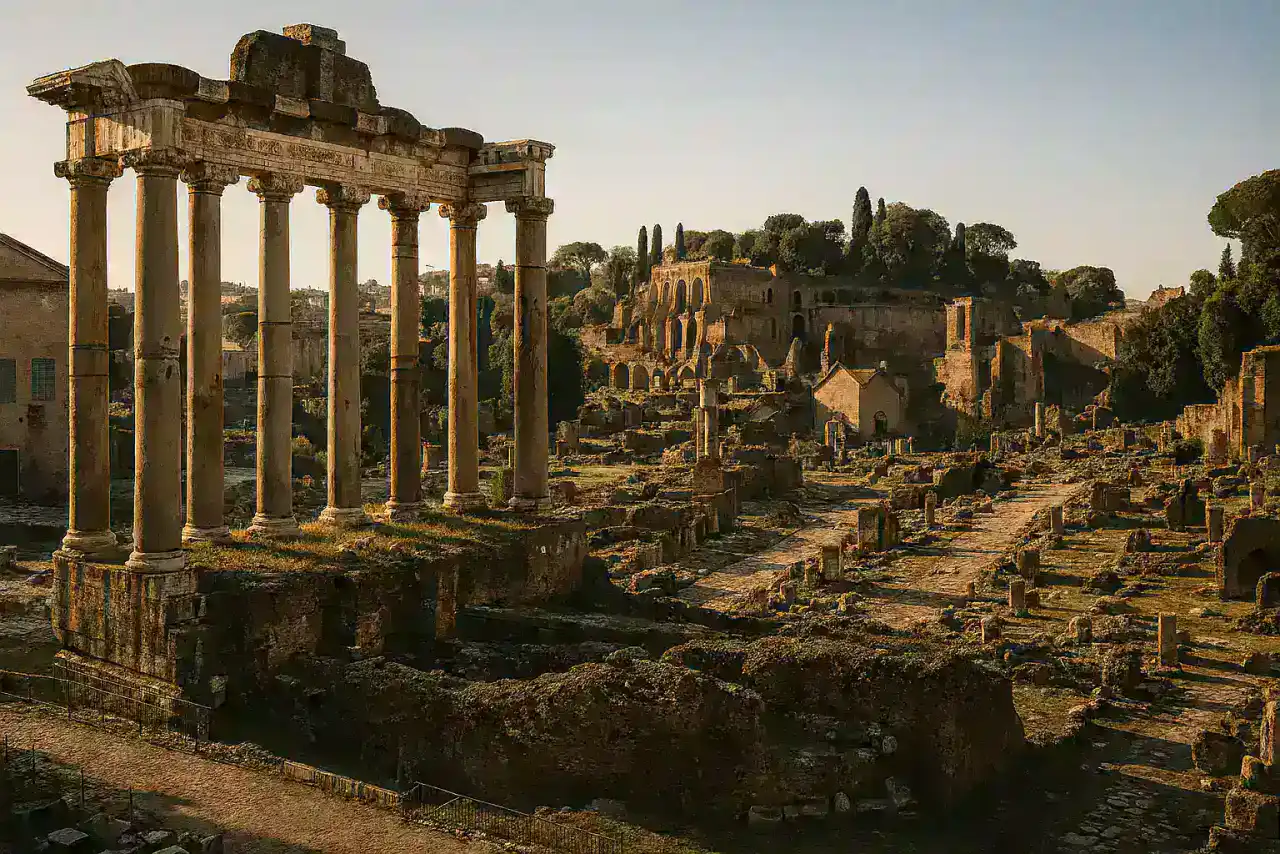
Roman Forum Rome: Heart of Ancient Republic Guide
Roman Republic/EmpireNavigate the Roman Forum's temples, basilicas, triumphal arches. Complete layout, highlights, Palati...
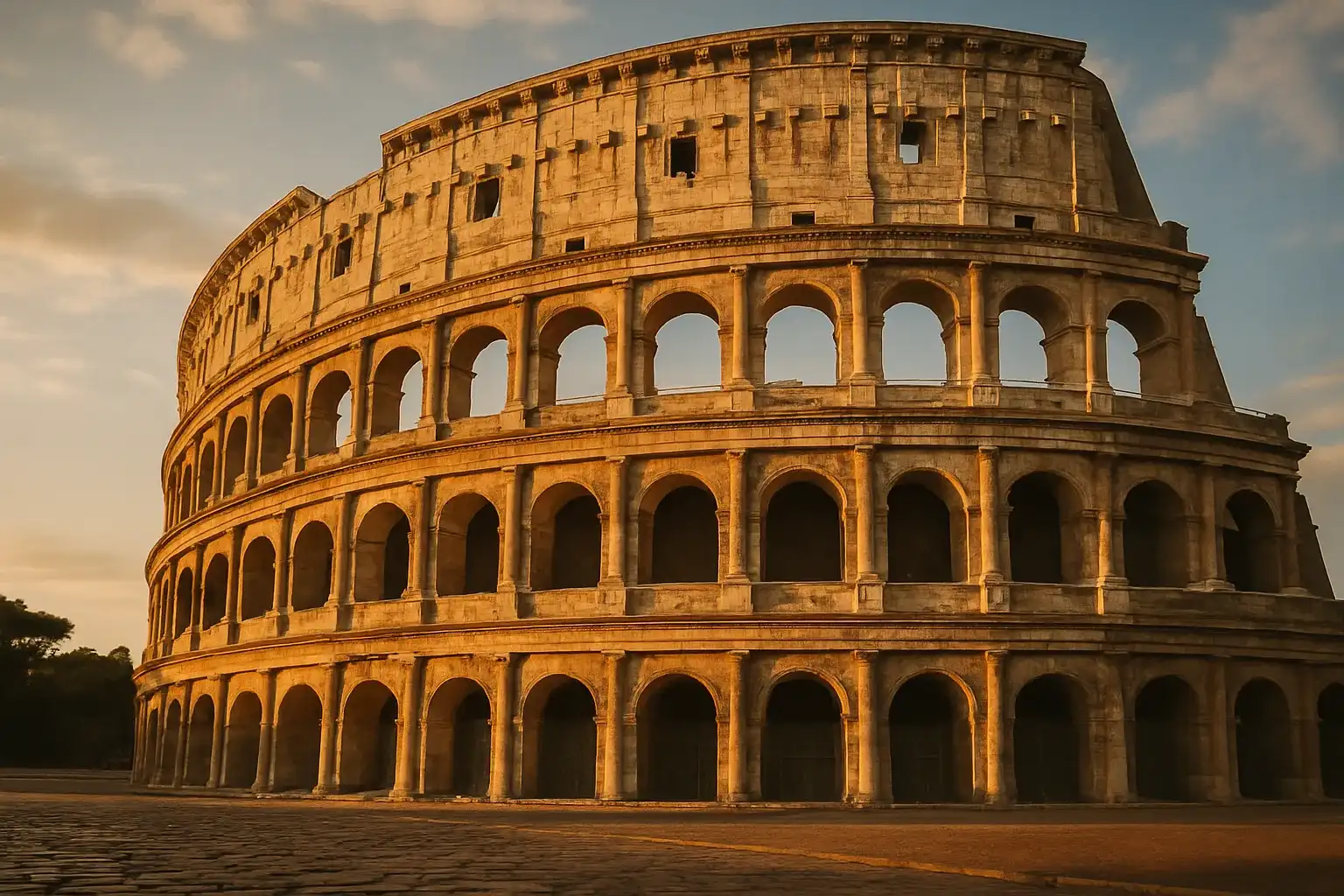
Colosseum Rome: Complete 2026 Guide to Arena Floor, Tickets, and Timing
Roman EmpirePlan the perfect Colosseum visit with timed-entry strategy, Arena Floor and underground access tips,...
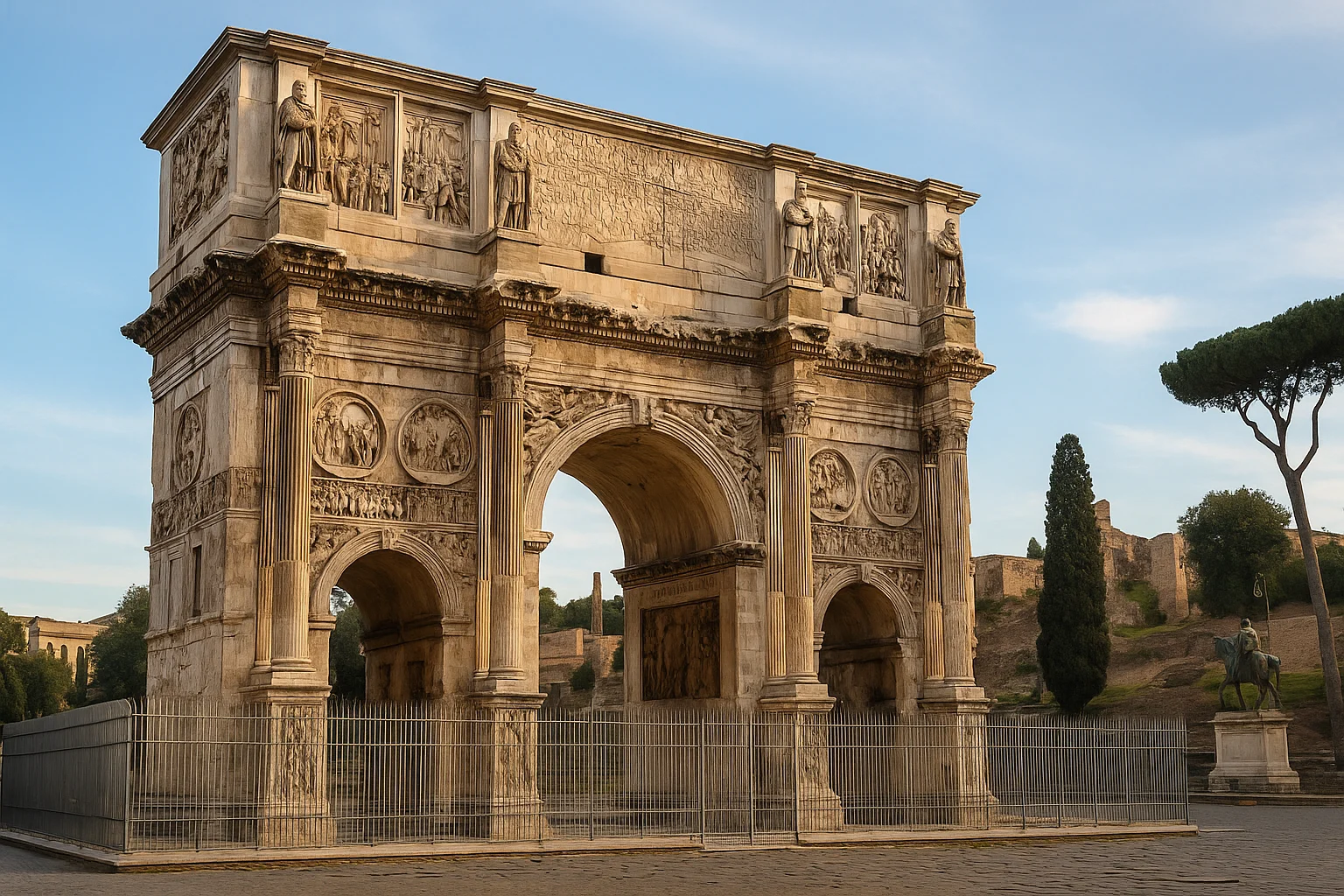
Arch of Constantine Rome: Triumph Over Maxentius Guide
Roman EmpireThe Arch of Constantine commemorates Constantine's 312 CE victory. Spolia details, best photo angles...
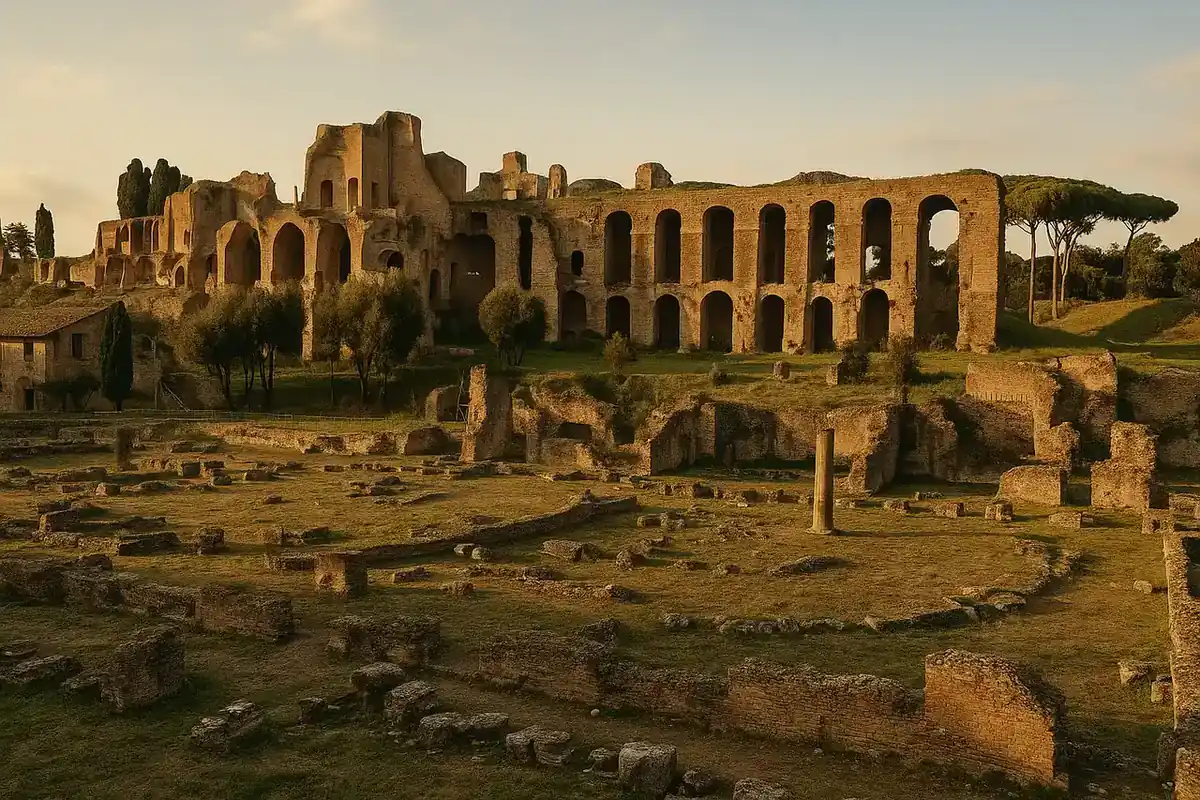
Palatine Hill Rome: Emperors' Palaces & Birthplace of Rome Guide
Roman EmpireExplore Palatine Hill, Rome's oldest neighborhood and imperial palace complex. Complete 2026 guide t...
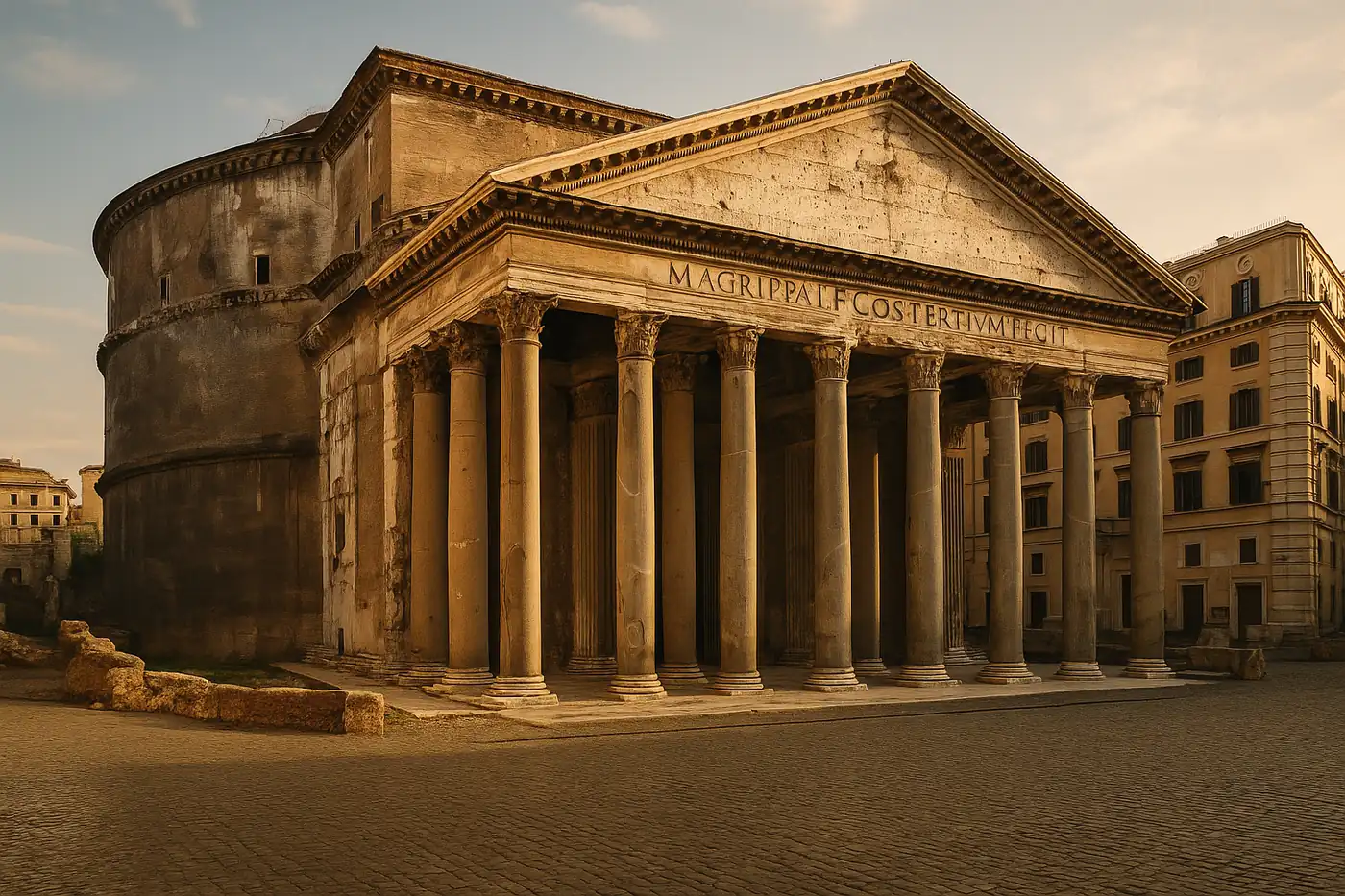
Pantheon Rome: Ultimate Guide to Rome's Best-Preserved Ancient Temple
Roman EmpireMaster your Pantheon visit with history, dome engineering secrets, visiting tips, skip-the-line opti...
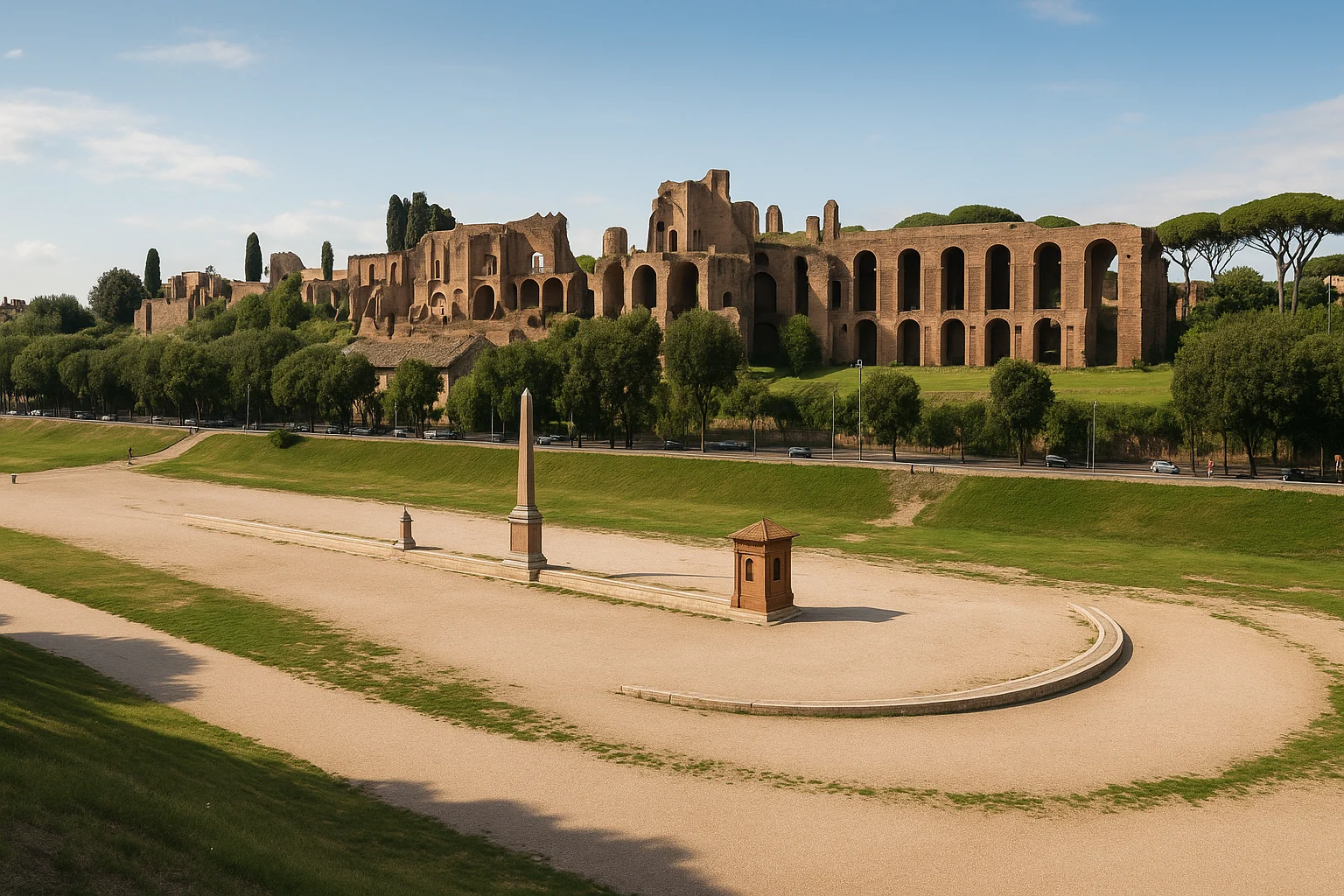
Circus Maximus Rome: Ancient Chariot Racing Arena & Modern Park Guide
Roman Republic/EmpireExperience Circus Maximus, Rome's massive chariot racetrack turned public park. History, dimensions,...