Quick Info
Curated Experiences
Yamanaka Castle Ruins and Hakone Full-Day Historical Tour
Mt. Fuji National Park and Samurai Castle Walk
Private Guided Tour: Sengoku Castles of Shizuoka
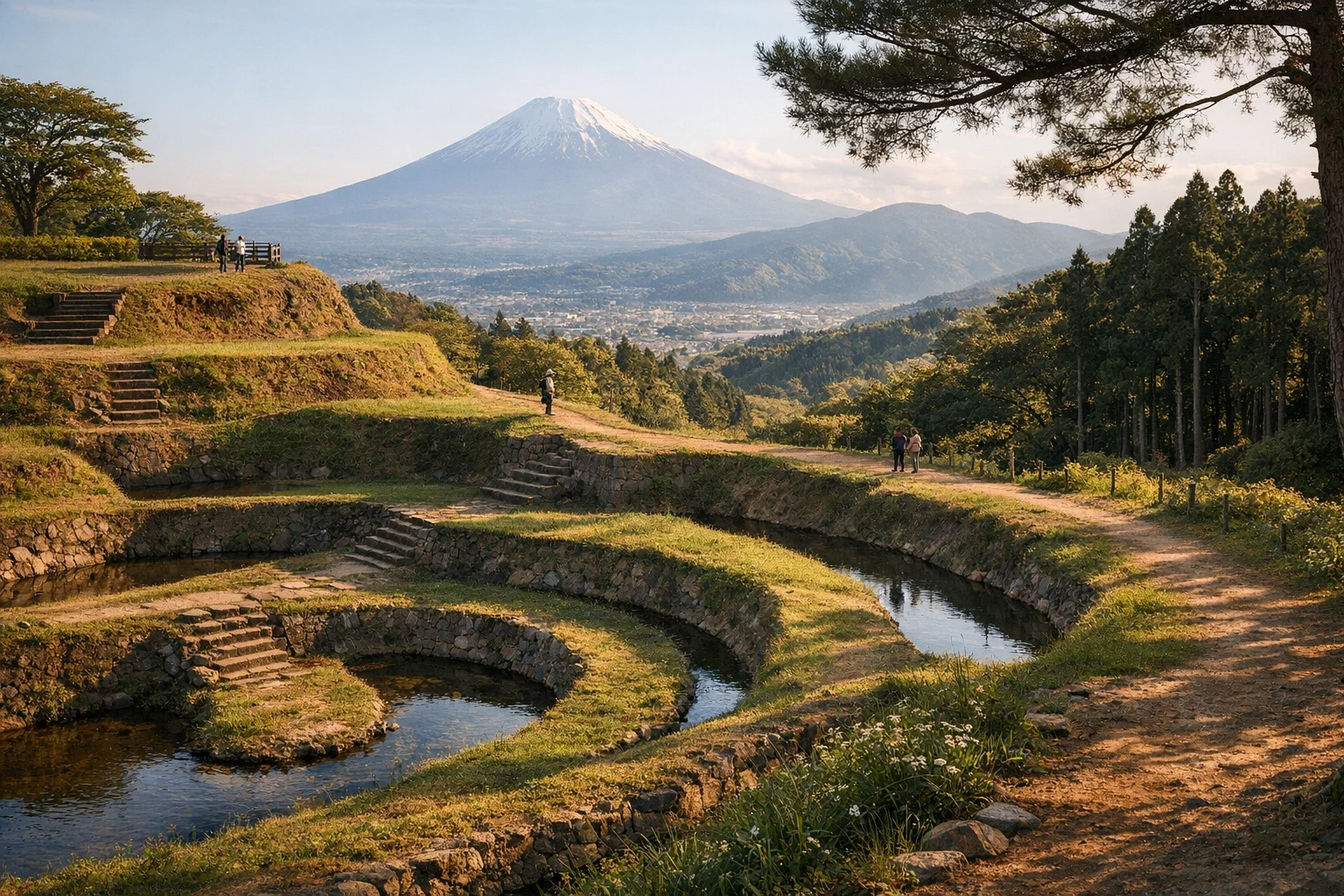
Nestled on the slopes of the Hakone Mountains in Shizuoka Prefecture, Japan, the Yamanaka Castle Ruins offer a sweeping vista into the country’s tumultuous samurai past. Overlooking the historic Tōkaidō Road—the vital artery connecting the ancient capitals of Kyoto and Edo (modern-day Tokyo)—the ruins whisper stories of sieges, strategy, and sacrifice. Visitors stepping onto this tranquil plateau today encounter remains of elaborate earthworks, quiet moats entwined with wildflowers, and, on clear days, breathtaking views of Mount Fuji rising above the horizon. Though the stone keeps and wooden towers of old are long vanished, the spirit of Sengoku-era Japan lingers among these vestiges, inviting exploration and contemplation against the backdrop of open sky and rolling green hills.
Yamanaka Castle Ruins present more than just archaeological fascination; they embody a bold chapter of 16th-century Japanese history. Amid soaring cypress and pine, the site’s contoured earth mounds evoke the fierce ingenuity of the late Hojo clan, who sought to forge a strategic shield for their expanding domain. Unlike surviving castles crowned with tiled turrets, Yamanaka’s identity endures through its clever, labyrinthine defenses: a physical memory of the clash between old powers and the relentless ambition of Toyotomi Hideyoshi’s quest for national unification. Yet, even as shadows of battle recede, the site’s main reward for today’s visitor is peace: sweeping scenery, birdsong, and the quiet legacy etched into each footpath. A visit here is not just a step back in time—it is an immersion in the unfolding tapestry of Japanese history and landscape.
History
Strategic Foundations in the Sengoku Era
The conception of Yamanaka Castle dates to the ascent of the Hojo clan, one of the most formidable powers during Japan’s fractious Sengoku period (mid-15th to early 17th century). Unlike castles built to overawe, Yamanaka was purposely constructed as a defensive installation at a crucial chokepoint along the Tōkaidō Road. In the late 1560s, under Hojo Ujimasa’s directive, skilled military architects and laborers shaped a fortress that would deter incursions from rival warlords encroaching from the west, particularly those of the ambitious Oda and Toyotomi clans.
The site was chosen for its natural advantages—perched on a ridge, with steep slopes offering a commanding position over the main thoroughfare leading to the Hojo’s heartland in Odawara. Instead of the typical stone ramparts favored further west, the Hojo clan’s engineering genius lay in erratic earthworks, deep moats, and angled banks known as “maru.” These innovative defenses discouraged direct assaults and redirected attackers into a maze of traps and enfilades, maximizing the defenders’ advantage while using local materials.
Siege of 1590: The Castle’s Climactic Battle
Yamanaka Castle’s fate turned dramatically during the 1590 national campaign of Toyotomi Hideyoshi. Hideyoshi, poised to unite Japan under his rule, unleashed a formidable army against the remaining Hojo strongholds east of Kyoto. Yamanaka Castle, the gateway to the Hojo’s Odawara base, became a bulwark under intense siege.
Despite fierce resistance—records estimate 4,000 Hojo defenders holding against a force nearly tenfold their size—Hideyoshi’s innovative deployment of matchlock guns and massive manpower breached the elaborate defenses in mere hours. The lightly fortified earthen walls, while ingenious, succumbed to the overwhelming artillery and organized assault, culminating in the castle’s dramatic fall and the harrying demise of most of its defenders.
The quick loss of Yamanaka Castle underscored the shifting nature of warfare in Japan: from decentralized, clan-based skirmishes to the rise of centralized power wielded by military innovators like Hideyoshi. In the aftermath, the victorious Toyotomi forces razed the castle, ensuring it would never again serve as a regional obstruction. The defeat marked the curtain call for the Hojo clan and signaled the unification of Japan under a new, more centralized shogunate.
Rediscovery and Preservation
Centuries slipped by as nature slowly reclaimed the battle-scarred hillside. For generations, the memory of Yamanaka faded, overshadowed by the restoration and glory of grander castles that survived into modernity. It was not until the 20th century, amid renewed interest in preserving Japan’s historical landscapes, that archaeologists and local historians began a careful study of the surviving earthworks and foundation stones. Preservation efforts recognized the site’s unique engineering, and in 1959, Yamanaka Castle Ruins were formally designated as a National Historic Site of Japan.
Today, visitors encounter a thoughtfully maintained park, where signage and reconstructed sections help bring the castle’s intricate defenses and storied past into vivid clarity. The legacy of innovation, conflict, and resilience now anchors Yamanaka Castle Ruins not just as a battlefield relic but as a vital cultural and educational resource within Japan’s living heritage.
Key Features
Unlike many Japanese castles renowned for their grand keeps and ornate architecture, Yamanaka Castle’s lasting mark lies in its landscape—the subtle, skillful manipulation of terrain that made it a masterpiece of Sengoku-era defensive design. Cresting the ridge above Mishima, the first impression is of an expansive, open airspace edged by the undulating lines and unexpected contours of ancient fortification.
The site’s most iconic features are its earthwork ramparts and interconnected dry moats, or “horikiri.” These are not simply trenches but a complex labyrinth, carved into the natural slope in sweeping curves and abrupt switches. The broad, U-shaped moats encircle key enclosures, some of which are several meters deep and wide enough to confound cavalry charges and funnel enemy troops into carefully controlled killing grounds. Where the moats converge, narrow earthen “bridges” provided choke points for defenders to withstand and repel attackers—a facet of the castle’s highly tactical design philosophy.
Wandering these meandering paths, you’ll notice the multiple layers of smaller, subsidiary enclosures—kurawa and maru—each part of a fractal-like defensive system. These serve as reminders of the era’s relentless focus on resilience over aesthetics. Interspersed among the earthworks are remnants of wooden palisades and scattered stone foundations, hinting at the presence of watchtowers, barracks, and gates that once guarded each approach. Where the main keep (“honmaru”) may have stood, the ground offers panoramic views across the Suruga Bay and, on fine days, to the distant silhouette of Mount Fuji—a reward the defenders themselves would have cherished.
For present-day visitors, Yamanaka Castle Park also includes reconstructed elements: sections of bamboo palisades, demonstration models of defensive trenches, and a small on-site museum. The museum houses recovered pottery shards, arrowheads, and illustrated battle scrolls, adding depth and tangible context to the windswept site outside. Thoughtful interpretive signs in Japanese and English further elucidate the castle’s battle history, strategic significance, and everyday life of its garrison.
Perhaps most striking is the harmony between nature and history at Yamanaka. In spring, wild cherries and azaleas bloom along the fortress ridges, while summer ushers in a lush, emerald cover. Autumn cloaks the earthworks in fiery hues, and winter mornings, when the grass frosts, lend the ruins a somber, ethereal beauty. The preserved moats fill with bamboo grass, and birdsong echoes in the cradles left by ancient trenches—an atmosphere unlike any stone citadel or crowded museum. Here, centuries-old scars have softened into a meditative landscape, inviting both reflection and discovery.
Getting There
Accessing Yamanaka Castle Ruins is straightforward for both domestic and international travelers, thanks to its proximity to the city of Mishima in Shizuoka Prefecture and well-developed regional transport links. Most visitors begin their journey from Tokyo or Osaka, taking advantage of Japan’s extensive railway network.
From Tokyo, board the Tokaido Shinkansen (Kodama or Hikari) bound for Mishima Station—a swift journey of about 1 hour, with fares starting around ¥4,000 one way for unreserved seats. Travelers from Osaka or Kyoto can also use the Tokaido Shinkansen, reaching Mishima in roughly 2 to 2.5 hours, and fares begin at ¥10,000, depending on class and region.
Once at Mishima Station, transfer to the Izu Hakone Bus bound for Moto-Hakone or Hakone-en and alight at the Yamanaka Castle Ruins-mae stop. The bus ride takes approximately 30–35 minutes and costs around ¥700. Buses run frequently throughout the day, but schedules may be less regular on weekends or public holidays. For those preferring greater flexibility, taxis are available at Mishima Station and offer a more direct route to the site in about 20–25 minutes for an estimated fare of ¥4,000–¥5,000—convenient for groups or those with limited time.
Car rental is another option, especially for travelers planning to explore the broader Hakone and Izu region. The castle site offers free parking, though spaces can fill quickly during peak visiting seasons. Cyclists and hikers heading from the Hakone area can also access the castle along well-marked trails; the approach from Hakone Yumoto is especially scenic, taking roughly 90 minutes on foot, though it includes steep grades.
Though the site itself is free to enter, travelers should prepare for modest expenditures on transport, snacks, and the small but informative museum, which may request a nominal donation for entry.
When to Visit
Yamanaka Castle Ruins can be visited year-round, each season lending a distinct atmosphere to the earthworks and surrounding countryside. However, timing your trip can enhance both the comfort of your experience and the spectacle of the natural setting.
Spring (March to May) is among the most popular times to visit, as cherry blossoms and fresh foliage bring splashes of color to the landscape. The castle park is adorned with wildflowers and offers pleasant, mild temperatures—ideal for walking or picnicking. Expect higher visitor numbers during sakura season, particularly on weekends, when local families and photographers flock to the ruins.
Summer (June to August) ushers in lush greenery, with thriving bamboo grass filling the moats and shady pines providing respite from the sun. While daytime temperatures can rise into the high twenties (Celsius) and humidity levels climb, the highland setting of Yamanaka offers a degree of relief compared to the cities below. Brief afternoon showers are typical during the rainy season, so light rain gear is advisable.
Autumn (September to November) is arguably the most picturesque season at Yamanaka Castle Ruins. Maple and ginkgo trees blaze with crimson, gold, and orange hues, providing an evocative contrast to the soft earth mounds—a favorite for landscape and historical enthusiasts alike. The air is fresh but rarely cold, making for comfortable, unhurried exploration. Autumn weekends do see more visitors, so consider a weekday trip for tranquility.
Winter (December to February) brings clear, crisp air and some of the year’s best views of Mount Fuji, unobstructed by haze. While vegetation retreats and the palette shifts to browns and grays, the outlines of the fortifications emerge with greater clarity. Visitor numbers decrease during this period, offering solitude and a contemplative atmosphere perfect for those interested in quiet reflection or photography. Dress warmly, as winds across the ridge can be brisk.
No matter the season, comfortable walking shoes and layered clothing are recommended, as the site covers a broad area with uneven, sometimes slippery paths. Water and snacks should also be brought, especially outside spring and autumn when on-site options are limited.
Quick Facts
| Attribute | Details |
|---|---|
| Country | Japan |
| Region | Shizuoka Prefecture |
| Period | Sengoku period (Late 16th century) |
| Civilization | Late Hojo clan |
| Established | c. 1570 |
| Main Material | Earthworks, wooden palisades, limited stone foundations |
| Admission Fee | Free |
| Accessibility | Moderate—unpaved, uneven paths; some steep sections |
| Nearest City | Mishima |
| Famous For | Labyrinthine earthwork defenses, panoramic views of Mount Fuji |
| UNESCO World Heritage | No |
| Guided Tours Available | Yes (advance booking recommended) |
| Other Facilities | Visitor center, restrooms, vending machines, small museum |
| Distance from Tokyo | ~120 km (by train: 1 hour to Mishima, then 30 min bus/taxi) |
| Best Time to Visit | Spring (cherry blossoms), autumn (fall colors), clear winter days for Fuji views |
Frequently Asked Questions
What is the best way to reach Yamanaka Castle Ruins from Tokyo?
Take the Tokaido Shinkansen to Mishima Station (about 1 hour), then transfer to a local bus bound for the castle site, which takes roughly 30 minutes.
Is there an admission fee to enter Yamanaka Castle Ruins?
Entrance to Yamanaka Castle Ruins is free, making it an accessible historic site for all visitors.
How long should I plan for visiting the Yamanaka Castle Ruins?
Allocate about 1.5 to 2.5 hours to explore the grounds, enjoy the views, and visit the nearby museum.
Are the ruins suitable for children and elderly visitors?
The paths are mostly unpaved and can be steep in places; sturdy shoes are recommended. Some areas may be challenging for limited mobility.
What facilities are available at the castle site?
There are public restrooms, a small visitor center, and vending machines; however, dining options are limited, so bring snacks and water.
Nearby Ancient Sites
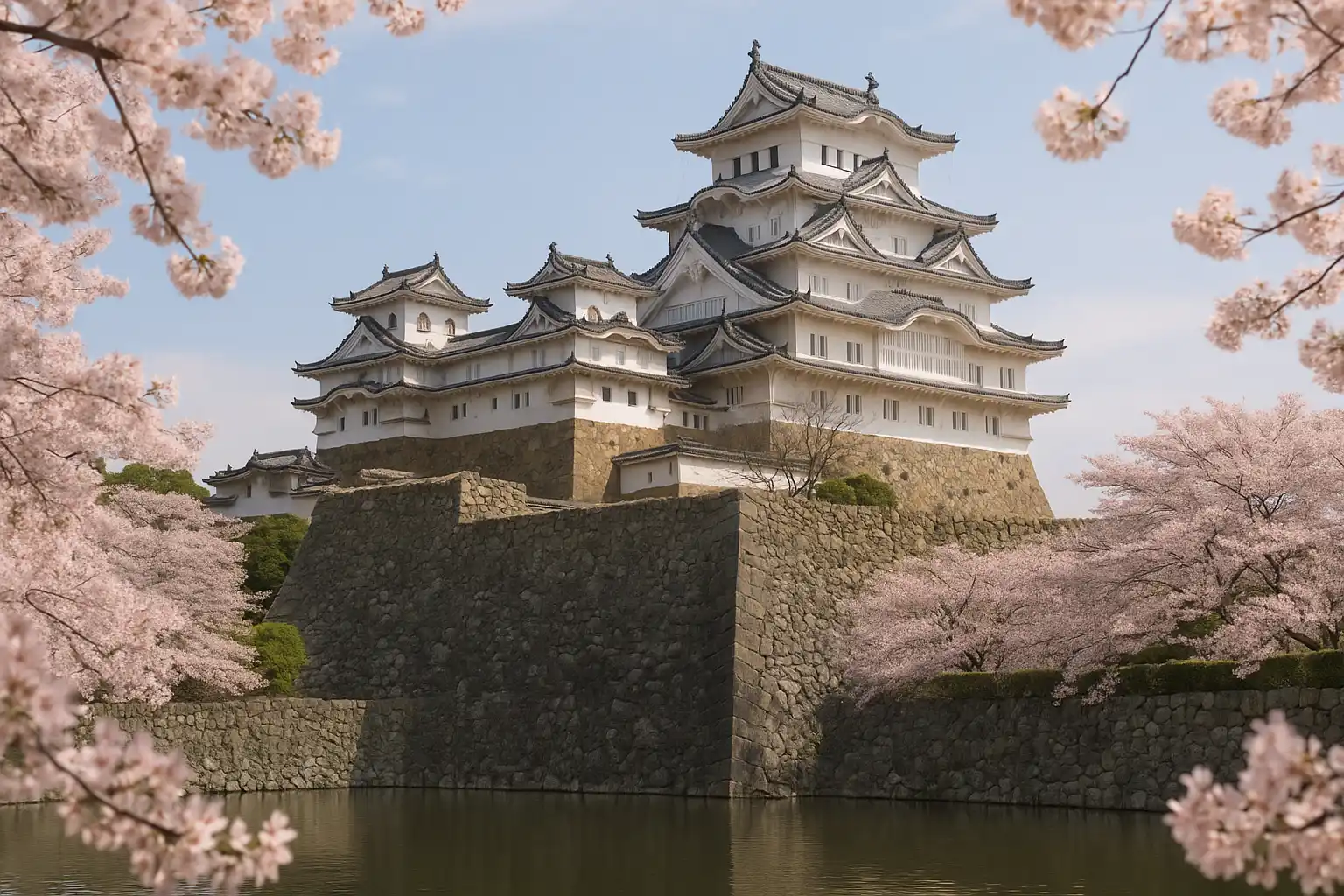
Himeji Castle Japan Travel Guide 2026: The White Heron Castle
Japanese FeudalVisit Himeji Castle, Japan's most beautiful original castle. Explore the White Heron keep, defensive...
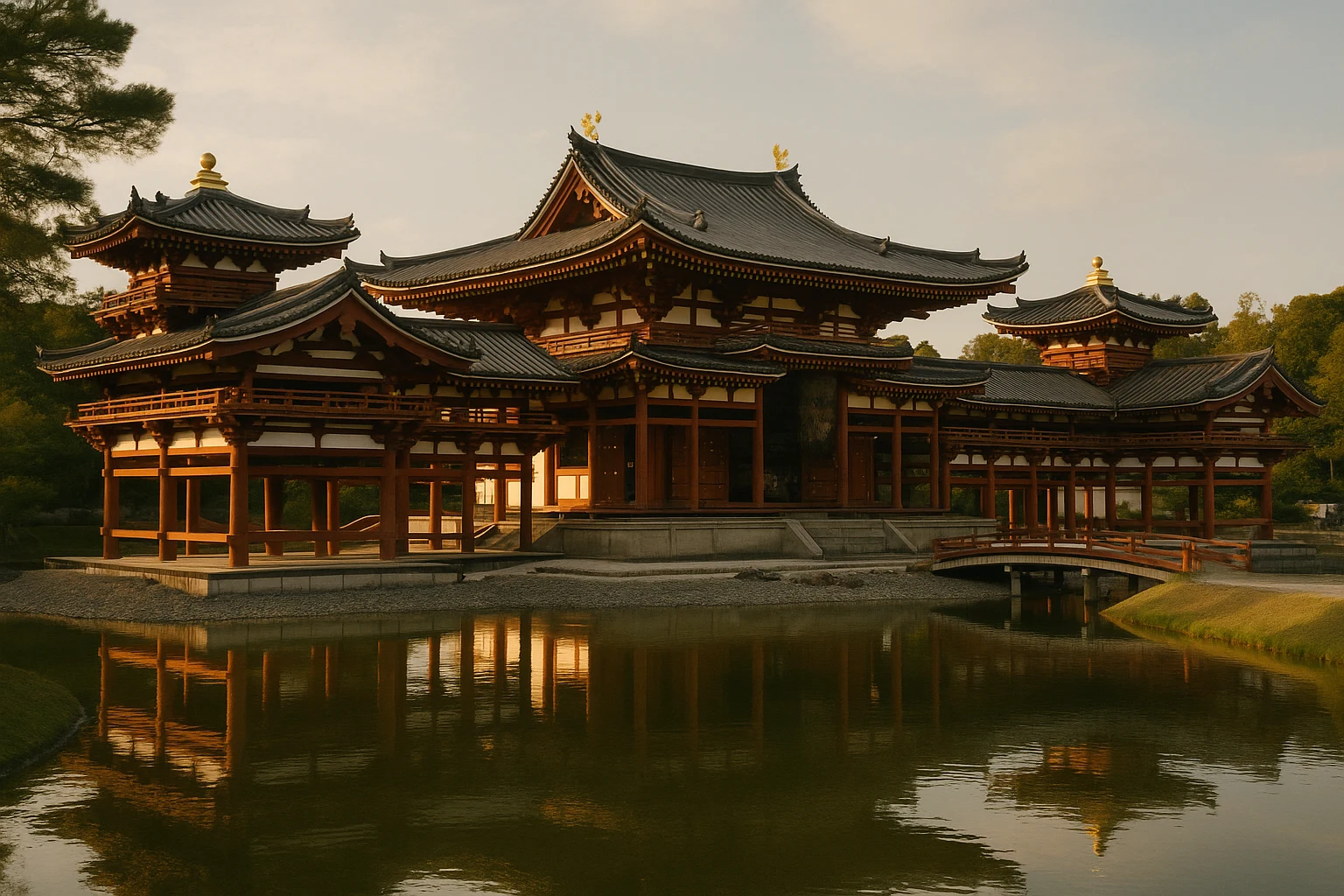
Byodoin Temple
Heian JapanA UNESCO-listed Heian-era masterpiece in Uji, Japan, renowned for its iconic Phoenix Hall reflected ...
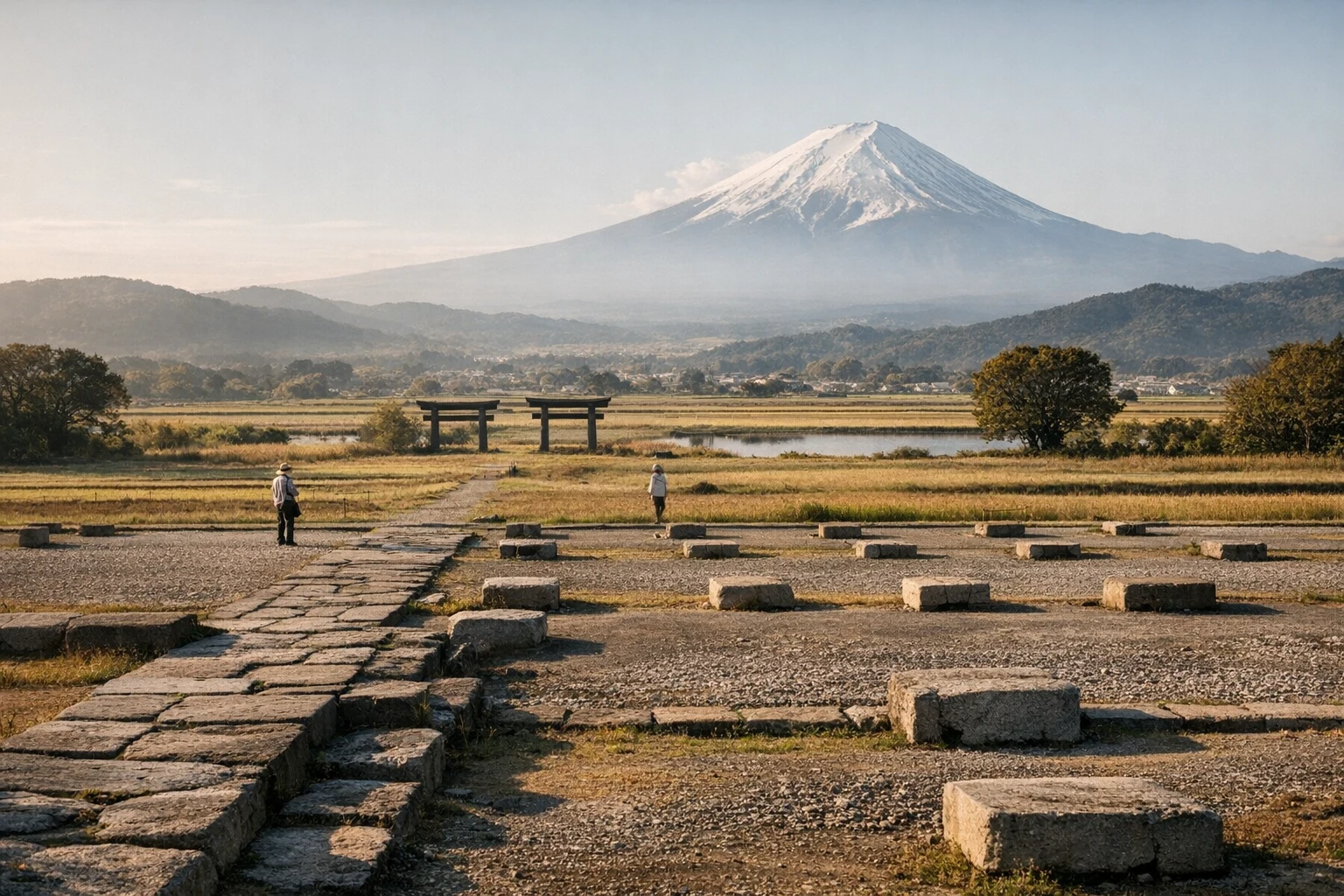
Fujiwara Palace Ruins
Early Japanese imperial stateDiscover Japan’s Fujiwara Palace Ruins, the vast remains of the first fully planned imperial capital...