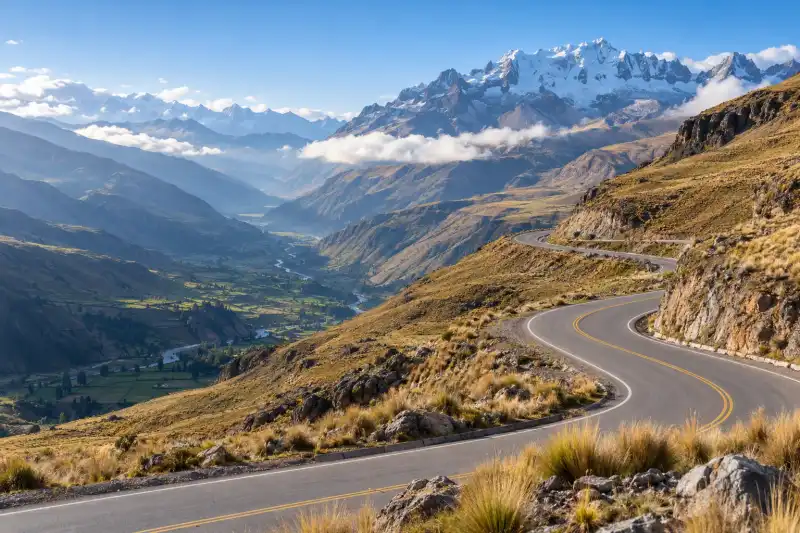
The Andes are not one altitude experience. A route can begin in a low city, cross a pass in a vehicle, sleep at a high lodge, descend to a valley, and then ask for a dawn trek the next day. The useful planning question is not “Can I handle altitude?” It is: “How quickly am I gaining sleeping elevation, and what happens if I do not feel well?”
This page gives a region-wide gradual-ascent framework. It is not a substitute for country-specific information, local forecasts, or clinical advice. For a Peru itinerary, use Peru altitude acclimatization and Peru highlands travel planning.
Plan sleeping elevations, not just scenic stops
A high pass seen from a vehicle is different from a high overnight camp. Write down each planned sleeping location and the travel time between them. Then identify where the plan asks you to ascend again before you have had time to observe how you feel.
Build an option to remain at the same elevation or go lower. That can mean a cancellable lodge night, a driver who can reverse the route, or an extra night before a trek. It is less glamorous than a perfect itinerary grid, but it is the part that keeps a headache from becoming a dangerous commitment.
What gradual ascent looks like in practice
- Start with a low-demand day after a major gain in elevation.
- Increase effort and sleeping elevation progressively rather than stacking both together.
- Keep high passes, summit attempts, and remote hikes optional until you are there.
- Plan transit that lets a traveler descend if symptoms worsen.
- Tell guides and companions that health concerns outrank a prepaid activity.
Do not use exact ascent rates from a generic online rule as a personal clearance. A clinician can help translate your health history and route into individualized advice.
Stop ascent when symptoms start
Altitude illness may appear as headache with nausea, fatigue, dizziness, or disturbed sleep. Stop ascending. If symptoms worsen while staying at the same elevation, descend and seek medical advice. Confusion, loss of coordination, shortness of breath at rest, or other severe worsening signs require urgent care and descent.
No amount of endurance training makes those warning signs negotiable. Altitude affects healthy, fit travelers too. Avoid personal medication dosing advice in group chats or guidebooks; medical prevention and treatment decisions belong with a qualified clinician.
Separate altitude from ordinary trip fatigue
Jet lag, dehydration, a viral illness, alcohol, and an exhausting transfer can resemble or compound altitude symptoms. That ambiguity is another reason to avoid racing higher. Make early days simple enough that you can rest, eat, hydrate normally, and notice changes without having to decide whether to forfeit a multi-day trek.
Use the framework in Peru
In southern Peru, a route may pair Cusco, the Sacred Valley, Ollantaytambo, and Machu Picchu. Those places should not be treated as a single elevation. The Sacred Valley can be a useful sequencing choice, but it is not risk-free. An Inca Trail itinerary adds sustained exertion and higher terrain, so it needs its own conservative planning.
The Andes reward patience better than bravado. Give yourself a route with exits, and you are far more likely to remember the archaeology than the headache.