Quick route summary
This 3-day route uses Kyoto as a single base and treats Nara as the historical anchor. You spend the first day around Todaiji Temple, Kofukuji Temple, and Kasuga Taisha Shrine, then return to Nara for the open grounds of Heijo Palace Site. The final day stays in Kyoto, with Kiyomizudera Temple, Ginkakuji Temple, and Kinkakuji Temple.
The pace is full but workable. The mistake is trying to treat Nara as a quick deer-and-Buddha stop before rushing back to Kyoto. Give Nara two days if you care about early Japan. The city was not a side note. It was where imperial planning, court Buddhism, clan power, and shrine patronage all became visible in wood, bronze, stone, and ritual space.
Who this itinerary is for
This itinerary is for travelers who want ancient Japan without changing hotels every night. It works well for a first Kyoto trip if you are willing to spend serious time in Nara, not just use it as a half-day excursion.
It is not ideal for travelers who want a slow Kyoto-only temple circuit, a shopping-heavy trip, or a route packed with every famous shrine in the region. This plan cuts hard. It keeps the focus on Nara’s 8th-century capital and Kyoto’s temple landscapes rather than trying to cover all of Kansai.
Route at a glance
- Day 1: Overnight in Kyoto. Train to Nara for Todaiji, Kofukuji, Kasuga Taisha, and the Nara Park area, mostly on foot with short bus or taxi options.
- Day 2: Overnight in Kyoto. Return to Nara for Heijo Palace Site and a slower look at the old capital grid, using trains and local transport.
- Day 3: Overnight in Kyoto. Visit Kiyomizudera, Ginkakuji, and Kinkakuji with a practical mix of walking, buses, and taxis across the city.
Practical logistics before you go
Kyoto is the simplest base for this route. It has better rail connections, more evening food options, and easier onward travel. Nara is close enough by train that you can day trip twice without making the itinerary feel absurd.
For Nara, wear shoes you can actually walk in. The main Day 1 sites look close on a map, but temple precincts, shrine approaches, museum detours, and crowds add up. Day 2 at Heijo Palace Site is physically easier in some ways, but the site is broad and exposed. Bring sun protection or rain gear depending on the season.
A guide makes the most sense on Day 1, when the historical context is dense and the sites are linked by more than geography. A Nara day tour from Kyoto covering Todaiji and Kasuga Taisha can be useful if you want one clean transfer and better context for the Nara period. Independent travel is also easy if you are comfortable with Japanese trains.
Kyoto transport needs patience. Buses can be slow, taxis can save energy, and walking routes are often more pleasant than the transit map suggests. Do not stack too many temple districts into Day 3. Kyoto punishes people who confuse a short line on a map with a short day.
Day 1: Nara Park, Todaiji, Kofukuji, and Kasuga Taisha
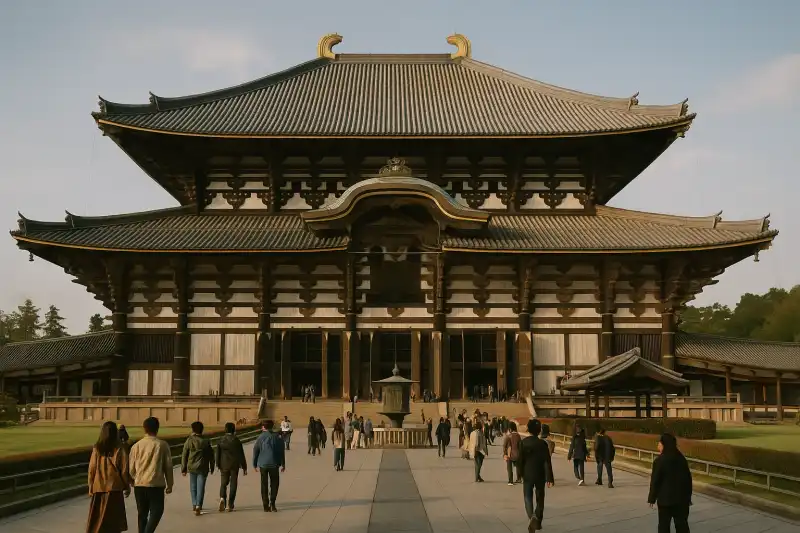
Take an early train from Kyoto to Nara and start with Todaiji Temple. The Great Buddha Hall still feels oversized in the best possible way, even after centuries of rebuilding and repair. The bronze Vairocana Buddha was first consecrated in 752 CE, when Emperor Shomu used state Buddhism as both spiritual protection and political architecture.
Give Todaiji more time than the standard photo stop. The scale matters, but so does the setting. The temple was part of a national Buddhist network, with provincial temples meant to bind the country through ritual and administration. This is where religion and government sit very close together.
Walk toward Kofukuji Temple next. Kofukuji was tied to the powerful Fujiwara clan, which makes it a useful counterweight to Todaiji. The five-story pagoda draws the eye, but the more interesting story is political: aristocratic families did not just sponsor temples for beauty. Patronage built prestige, influence, and memory.
Save the later part of the day for Kasuga Taisha Shrine. The shrine dates to the 8th century and is closely associated with the Fujiwara. Its stone and bronze lanterns change the mood of the day after Todaiji’s mass and Kofukuji’s pagoda. The walk through the shrine approach is not wasted time. It is part of the experience.
This is a long walking day. Keep lunch simple and resist adding western Nara afterward. If you still have energy, linger in Nara Park or visit a museum. If you are tired, go back to Kyoto. The point is to understand Nara, not to collect every nearby marker before dinner.
Day 2: Heijo Palace Site and western Nara
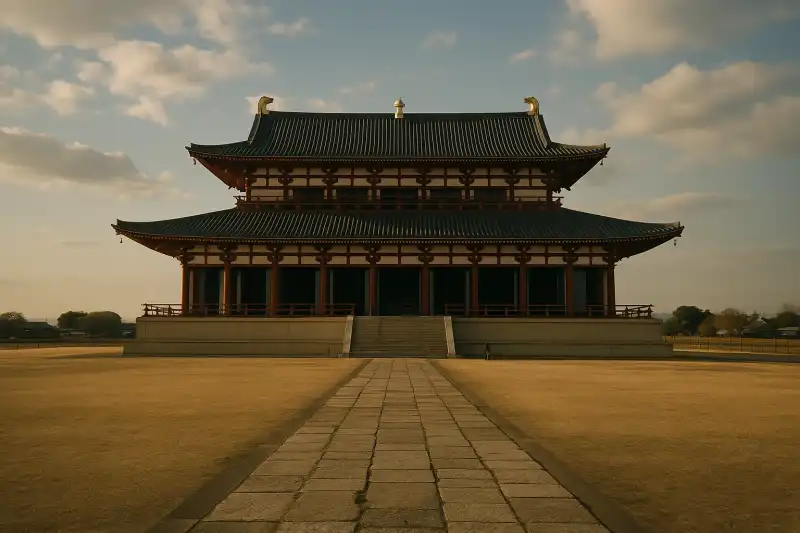
Return to Nara for Heijo Palace Site, the former palace zone of Heijo-kyo, Japan’s 8th-century capital. This day looks lighter on paper, but it asks for a different kind of attention. The palace site is broad, open, and less visually dense than Nara Park. That is exactly why it matters.
Heijo-kyo was modeled in part on Chinese capital planning, especially the grid logic associated with Tang Chang’an. The palace district sat at the northern end of the city, turning urban layout into a statement about order. The reconstructed gates and halls help, but the best part is sensing the scale of the court landscape.
Do not expect the compact drama of a temple hall. Heijo Palace Site is about absence, reconstruction, and space. You are looking at the footprint of government: audience halls, administrative compounds, processional axes, and the machinery behind court ceremony. The stones are quiet now, but the political ambition here was not subtle.
Use trains and local buses or taxis depending on your start point. Build in time for the museum areas if they are open during your visit. They help translate the open field into a real capital, with roof tiles, wooden tablets, and archaeological finds that show how officials tracked taxes, orders, and movement.
If you want one extra Nara stop today, choose carefully. Yakushiji Temple pairs well with the early capital story, but adding it makes the day more tiring. Do not try to fold in Asuka on this 3-day route. Asuka Historical Sites deserve their own day, and the logistics are better suited to a longer itinerary.
Day 3: Kyoto temple hills from Kiyomizudera to the Silver Pavilion
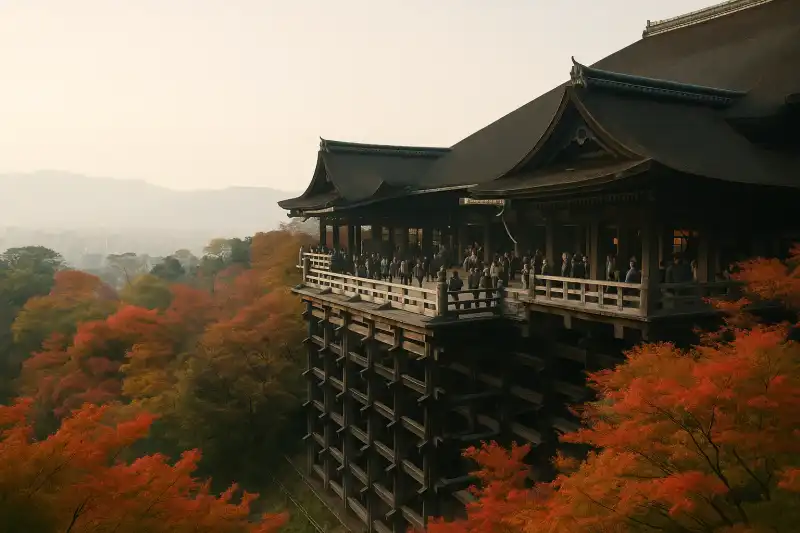
Stay in Kyoto today and start early at Kiyomizudera Temple. The hillside approach through Higashiyama can be crowded, but the temple is worth seeing before the lanes fill completely. Its famous wooden stage was built without nails, projecting from the slope with a confidence that still feels slightly improbable.
Kiyomizudera’s name comes from the Otowa Waterfall, and the site has long been tied to Kannon worship. It is a good reminder that Kyoto’s ancient sites are not only court monuments. They are living religious places, rebuilt, repaired, visited, commercialized, loved, and crowded across many centuries.
From here, do not zigzag across Kyoto too aggressively. If you want a more coherent walking day, move north through Higashiyama and the Philosopher’s Path area toward Ginkakuji Temple. Ginkakuji, the Silver Pavilion, is not covered in silver. That almost makes it better. Ashikaga Yoshimasa’s retirement villa became a Zen temple, and its dry sand garden and mossy slopes show a quieter kind of authority than Nara’s huge halls.
End with Kinkakuji Temple only if you have the energy and can handle the cross-city transfer. The Golden Pavilion is visually direct in a way Ginkakuji is not, with gold leaf reflected across the pond and a history tied to Ashikaga shogunal culture. It is crowded for a reason, but it is also the stop most likely to tip the day into temple fatigue.
Use taxis for one cross-town leg if your budget allows. Kyoto buses are useful, but they can turn a good day into a long one when traffic and crowds pile up. If you need to cut one site, cut Kinkakuji and keep the eastern Kyoto rhythm intact.
The historical thread: court capitals, temple power, and sacred geography
Nara and Kyoto belong together because they show early Japanese power becoming architectural. Nara gives you the 8th-century court at close range: Todaiji’s state Buddhism, Kofukuji’s clan patronage, Kasuga Taisha’s shrine landscape, and Heijo-kyo’s planned palace district. Kyoto then shifts the story into later temple culture, shogunal taste, and religious sites woven into hillsides and neighborhoods.
The route also makes a useful correction. Ancient Japan is often flattened into a few famous temple images. Seeing Nara before Kyoto helps restore the sequence. The Great Buddha, the Fujiwara shrine world, and the palace grid make Kyoto’s later elegance feel less isolated. Kyoto did not appear from nowhere. It inherited, adapted, and argued with earlier forms of power.
Transportation notes
Use Kyoto as your base unless you strongly prefer quiet evenings in Nara. Staying in one hotel saves time and keeps the route simple.
Kyoto to Nara is straightforward by train, but check whether your best station is Kyoto Station, Kintetsu Kyoto, JR Nara, or Kintetsu Nara. Kintetsu Nara is often more convenient for Nara Park. JR can be better depending on passes and where you are staying.
For Day 1, plan to walk a lot. Taxis can help at the edges, but the core Nara Park route is best understood on foot. For Day 2, use local transport for Heijo Palace Site because the distances are less charming. For Day 3, combine walking, buses, and taxis in Kyoto. A taxi is not a failure here. It can be the difference between enjoying Ginkakuji and arriving there already done.
Do not compress this into one Kyoto day plus one Nara day unless you are comfortable skipping Heijo Palace Site. The route works because it lets the old capital breathe.
Optional add-ons and swaps
If you want a Kyoto-area add-on, use Byodoin Temple in Uji. It fits well as a half-day from Kyoto and adds a Heian-era aristocratic layer through Phoenix Hall and its pond setting. To make room, remove Kinkakuji from Day 3 or add a fourth day.
Nijo Castle is a strong swap if you want later political history in Kyoto. It moves the story forward to Tokugawa power, nightingale floors, and palace display. Swap it for Kinkakuji if your interest leans more toward government and elite architecture than temple gardens.
For a deeper ancient route, add Yakushiji Temple or the Asuka Historical Sites. Yakushiji can fit with western Nara if you start early. Asuka is better as a separate day because its tombs, early Buddhist sites, and stone monuments are spread across a rural landscape.
If you have less energy, remove Kinkakuji and keep Day 3 to Kiyomizudera, eastern Kyoto, and Ginkakuji. That version is calmer and more coherent.
Shorter and longer itinerary options
For a shorter trip, make it two days: one full Nara Park day for Todaiji, Kofukuji, and Kasuga Taisha, then one Kyoto temple day focused on Kiyomizudera and Ginkakuji. You will lose Heijo Palace Site, which is the clearest window into the planned capital.
For a longer trip, add one day for Uji and Byodoin or one day for Yakushiji and western Nara. With five days, the route can expand properly to Asuka and the Fujiwara Palace area instead of treating them as rushed side trips.
Related ancient sites
- Byodoin Temple
- Nijo Castle
- Yakushiji Temple
- Asuka Historical Sites
- Fujiwara Palace Ruins
- Heijo Palace Site
- Kiyomizudera Temple
- Ginkakuji Temple
FAQ
The most common planning questions for this route are answered below.