Quick route summary
This 5-day route starts in Kyoto, ends in Nara, and uses two bases: Kyoto for the first half, Nara for the second. The route style is a practical regional loop by train, local bus, walking, and occasional taxi. It is best for travelers who want ancient Japan through temples, palace sites, court politics, and early Buddhist landscapes rather than a fast highlights-only circuit.
The pace is full but reasonable. You begin with Kiyomizudera Temple in old Kyoto, cross the city for Kinkakuji Temple, Ginkakuji Temple, and Nijo Castle, then shift south through Byodoin Temple and Heijo Palace Site. The final two days are for Nara’s great Buddhist sites and the older Asuka-Fujiwara heartland.
Do not try to make this a Kyoto day-trip itinerary from one hotel for all five nights. It works, but it adds dead time. Nara is a calmer base, and Asuka needs an early start.
Who this itinerary is for
Use this route if you want a historically coherent Kansai trip that links Kyoto’s refined temple culture with Nara’s older imperial and Buddhist centers. It suits travelers who are happy with trains, walking days, and a few taxi hops where public transport gets clumsy.
It is not ideal if you want a slow Kyoto-only trip, nightlife-heavy evenings, or a route built around food districts and shopping. It is also not the best plan for travelers who dislike temple repetition. The sites are varied, but many of the best moments involve gates, halls, pagodas, shrine approaches, and quiet palace traces that reward patience.
Route at a glance
- Day 1: Overnight in Kyoto. Arrive, settle in, and visit Kiyomizudera with time for Higashiyama on foot.
- Day 2: Overnight in Kyoto. Cross the city for Kinkakuji, Ginkakuji, and Nijo Castle, using buses, taxis, or a guided route to avoid wasting the day in transit.
- Day 3: Overnight in Nara. Travel by train to Uji for Byodoin, then continue to Nara and visit Heijo Palace if your arrival timing works.
- Day 4: Overnight in Nara. Walk the Nara park circuit, focusing on Todaiji, Kofukuji, and Kasuga Taisha without pretending it is a light day.
- Day 5: Overnight in Nara or depart late. Use Kintetsu trains toward Asuka, then explore Asuka and Fujiwara with a bicycle, taxi, or driver.
Practical logistics before you go
Kyoto and Nara are close on the map, but the route works better when you switch bases. Spend two nights in Kyoto and three in Nara. Kyoto is better for Days 1 and 2 because the temples are spread across the city. Nara is better for Days 4 and 5 because you can walk to the park sites and reach Asuka without backtracking through Kyoto.
Japan’s trains make the main transfers straightforward. The awkward parts are not the city-to-city moves. They are the cross-town Kyoto temple day and the scattered Asuka sites. On Day 2, either accept a bus-and-taxi day or book a guide with transport. On Day 5, do not assume every Asuka stop sits next to a station. The historical landscape is wide, rural, and better when you move slowly.
Book major temple visits early in the day when possible. Kyoto crowds build quickly, especially around Kiyomizudera and Kinkakuji. Nara’s park area also gets busy, but the crowds thin if you start at opening time and do not linger too long near the deer-feeding zones.
Guided tours make the most sense on the Kyoto cross-town day or the Asuka day. A Kyoto temples and Nijo Castle private tour can save time if you want one driver and a cleaner route across the city. In Asuka, a Nara and Asuka private day tour is useful because the ancient capital sites are spread across fields, lanes, and low hills.
Day 1: Kiyomizudera and old Kyoto
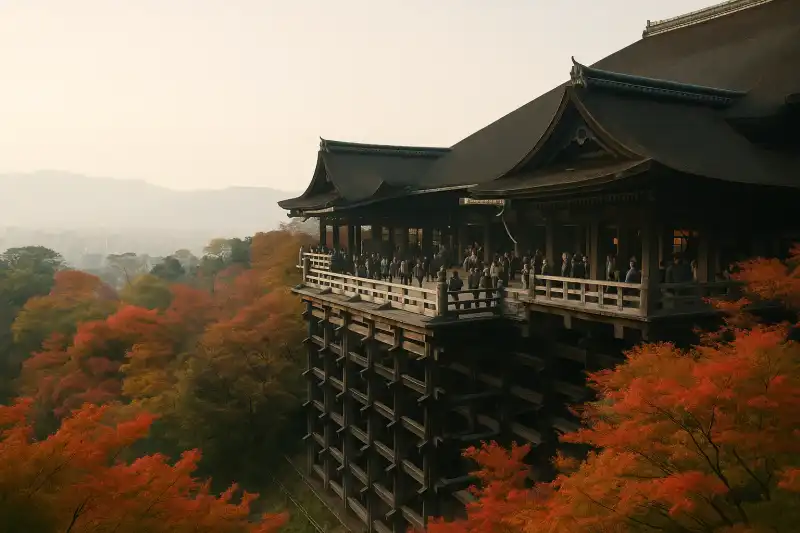
Start in eastern Kyoto with Kiyomizudera Temple. The famous wooden stage is the obvious draw, but the building technique is the part worth slowing down for. The main hall projects from the hillside on a lattice of wooden supports, built without nails in the traditional style. It is not just a viewpoint. It is architecture negotiating with a steep slope.
This is a good first day because the logistics stay contained. Reach the temple by bus or taxi, then walk the surrounding Higashiyama lanes if you have energy. Do the temple first, before the souvenir streets become shoulder-to-shoulder. If you arrive in Kyoto late, reverse the mood rather than the schedule: check in, eat, and save Kiyomizudera for the next morning. It deserves more than a rushed sunset dash.
Historically, Kiyomizudera also gives you the right opening note. Kyoto’s sacred geography is not only about single buildings. It is about hills, water, processional approaches, and temple precincts attached to the old capital’s eastern edge. The Otowa waterfall below the hall preserves the water association behind the temple’s name, and the site has long been tied to Kannon devotion.
Keep the rest of the day light. If you try to add three more famous temples after arrival, you will spend the afternoon in transit and crowds. This route gets denser later. Let Day 1 be your Kyoto landing day.
Day 2: Kinkakuji, Ginkakuji, and Nijo Castle
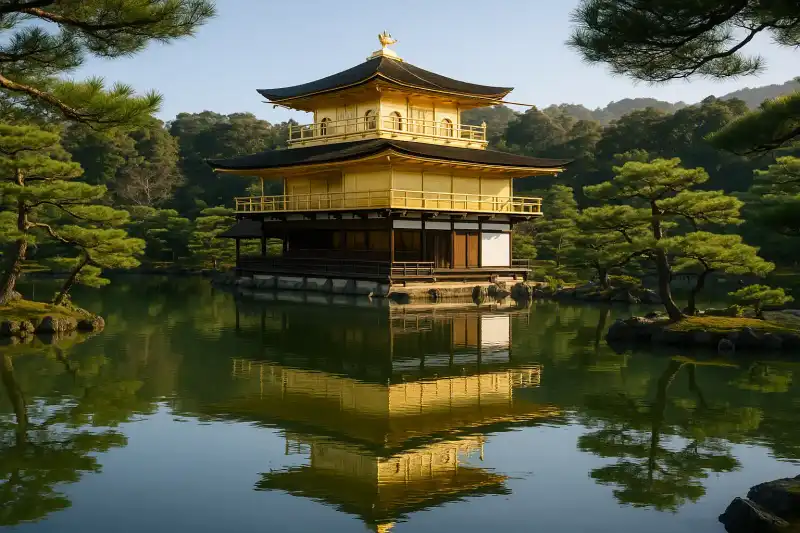
Today is beautiful but logistically annoying. Kinkakuji Temple, Ginkakuji Temple, and Nijo Castle do not line up neatly on one transit spine. Use a taxi for at least one leg, start early, and do not add extra stops unless you are very comfortable with Kyoto buses.
Begin at Kinkakuji if you want the cleanest morning view. The gold-leaf pavilion is a reconstruction, but the visual language still speaks loudly: elite retirement villa, Zen temple setting, pond garden, and theatrical reflection. It is polished power dressed as serenity. Give it enough time to walk the circuit, then leave before the densest crowds arrive.
Ginkakuji is the better counterweight. The Silver Pavilion was never covered in silver, which is part of its charm. Ashikaga Yoshimasa’s retreat became associated with a more restrained aesthetic: moss, weathered wood, raked sand, and carefully framed hillside views. The contrast with Kinkakuji is useful. One glitters. The other teaches your eye to lower its voice.
Finish with Nijo Castle if timing allows. It shifts the day from temple taste to shogunal power. The Tokugawa built Nijo in Kyoto as a statement of authority in an imperial city that they did not fully trust. The nightingale floors are famous because they chirp underfoot, but the more interesting detail is political: the palace interiors choreograph rank, waiting, access, and display.
This is a tiring day because it crosses Kyoto rather than because any one site is difficult. Keep lunch simple, carry cash for buses or taxis, and resist the urge to bolt on another major temple. Three substantial sites are enough.
Day 3: Uji and Nara arrival
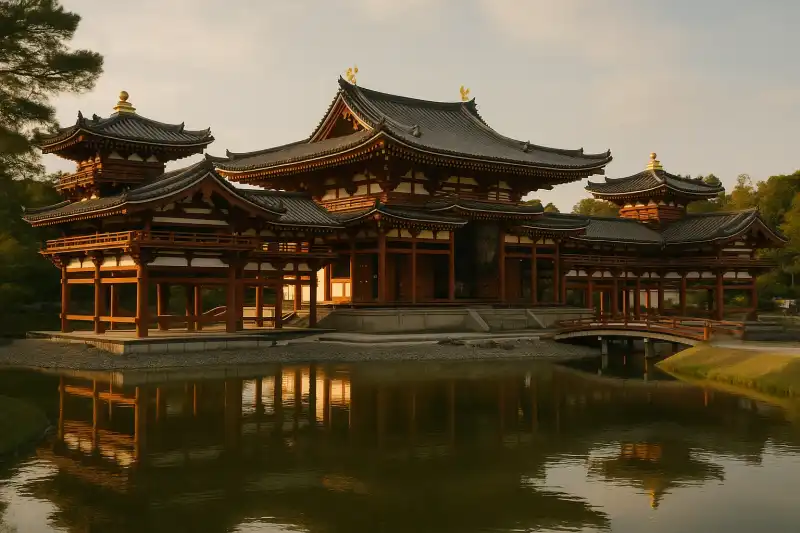
Leave Kyoto in the morning and stop in Uji for Byodoin Temple. This is one of the cleanest historical bridges between Kyoto and Nara because it belongs to the aristocratic world of the Heian period but sits on the route south. Store luggage if needed, or forward larger bags to Nara and travel light.
Byodoin’s Phoenix Hall dates to the 11th century and was converted from a Fujiwara villa into a temple hall. The building presents an image of Amida’s Pure Land across water, which means the pond is not decorative fluff. It is part of the religious staging. The hall also appears on Japan’s 10-yen coin, but do not let that make it feel too familiar. In person, the composition is more delicate than the small coin image suggests.
After Uji, continue by train to Nara. If you arrive with enough daylight and energy, go to Heijo Palace Site. This was the political center of Heijo-kyo, Japan’s 8th-century capital, laid out with strong influence from Chinese planning models. The site is vast, open, and a little strange because reconstructed gates and halls stand amid modern rail lines, grass, and broad archaeological space.
Heijo is not a ruins site that delivers instant drama. Give it context. The Nara court was experimenting with permanent capital planning, centralized bureaucracy, Buddhism as statecraft, and continental models of urban order. The emptiness today is part of the lesson: early Japanese state power needed space, ritual axes, offices, gates, and ceremony.
Overnight in Nara. This move pays off tomorrow, when you can walk into the main park area instead of commuting from Kyoto with everyone else.
Day 4: Todaiji, Kofukuji, and Kasuga Taisha
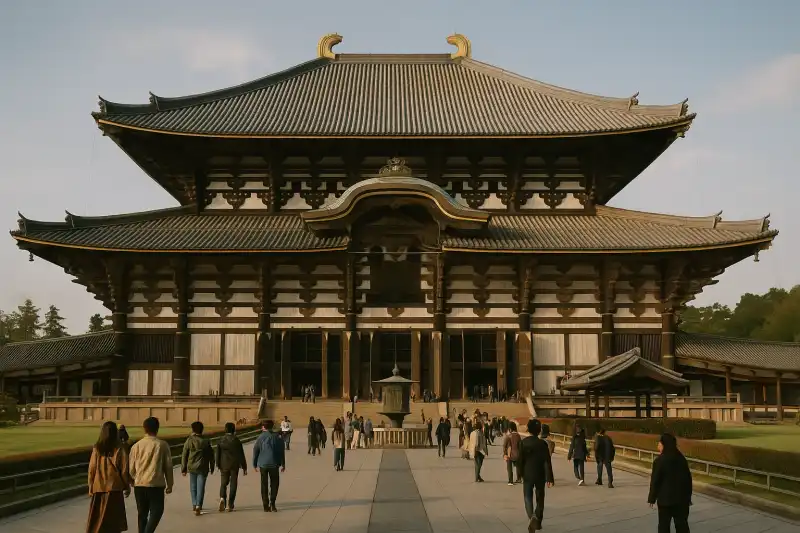
Start early at Todaiji Temple. The Great Buddha Hall is often described by size, but the better point is ambition. Emperor Shomu ordered the Great Buddha in the 8th century as part of a state Buddhist project meant to protect and unify the realm. Bronze, labor, ritual authority, and court politics all met in one enormous seated Vairocana Buddha.
The present hall is smaller than the original, which is a useful fact to keep in mind as you stand in front of it. Nara’s ancient monuments have burned, been rebuilt, shifted, and survived in altered form. That does not make them less historical. It makes them more honest about Japan’s long relationship with wood, fire, faith, and restoration.
Continue to Kofukuji Temple, once tied to the powerful Fujiwara clan. Its five-story pagoda is one of Nara’s great vertical markers, but the temple’s political story matters just as much. Kofukuji was not a quiet little religious site. It was part of a network of family power, Buddhist authority, and court influence that shaped Nara and later Kyoto politics.
End with Kasuga Taisha Shrine. The lantern-lined approach changes the rhythm of the day. Kasuga was also connected to the Fujiwara, and its thousands of stone and bronze lanterns make devotion feel cumulative rather than monumental. If Todaiji is state Buddhism at full volume, Kasuga works through repetition, path, forest, and ritual atmosphere.
This day is mostly walkable, but do not underestimate it. The distances inside Nara Park add up, and crowds around the deer can slow everything down. Wear shoes for stone paths and uneven surfaces, start with Todaiji before tour groups thicken, and give yourself permission to skip a minor museum if the day starts feeling heavy.
Day 5: Asuka and Fujiwara Palace
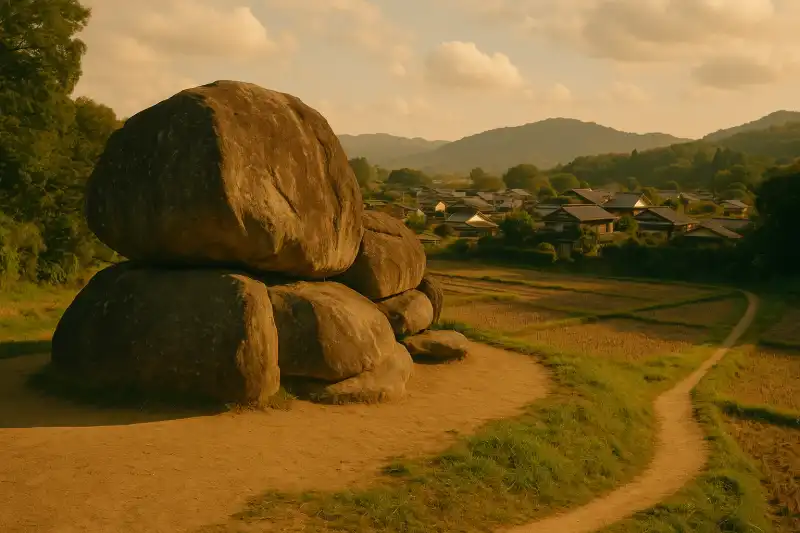
Asuka is the day where ancient Japan feels less polished and more archaeological. Take Kintetsu trains from Nara toward the Asuka area, then use a rental bicycle, taxis, or a private driver. The sites are scattered. That is not a flaw in the route. It is the point. You are moving through the landscape of early capitals, tombs, temple foundations, and stone monuments rather than a single enclosed attraction.
Use Asuka Historical Sites as the anchor. The Asuka period, roughly the late 6th to early 8th centuries, saw Buddhism, writing, law codes, continental diplomacy, and court institutions reshape elite life in Japan. The stones are quiet now, but the political ambition here was not subtle. This is where the country was learning how to look and act like a centralized state.
Pair Asuka with Fujiwara Palace Ruins if your transport plan is solid. Fujiwara-kyo was Japan’s first fully planned imperial capital, used around the turn of the 8th century before the court moved to Nara. Today, the palace remains are low and open, so you need imagination. The reward is seeing the step between the earlier Asuka courts and the more formal capital planning at Heijo.
If you want one more stop and the timing works, add Yakushiji Temple on the way back toward Nara. Its East Pagoda, dating to the early 8th century, is one of the great survivors of Nara-period architecture. But do not force it if Asuka is running long. Yakushiji deserves a clear head, not a tired final-hour glance.
Day 5 is the easiest day to mishandle. Check train times, decide in advance whether you are cycling or using taxis, and avoid packing every named Asuka site into one loop. The historical payoff is real, but only if you leave enough space to connect the dots.
The historical thread: capitals, Buddhism, and court power before Kyoto
This route works because it runs backward and sideways through Japan’s early centers of power. Kyoto shows the refined afterlife of court culture, temple patronage, warrior authority, and carefully managed aesthetics. Nara takes you closer to the 8th-century state, when Buddhism became a public instrument of rule and temple complexes could carry national meaning. Asuka and Fujiwara take you earlier still, to the experimental world of court formation before the capital settled into grander plans.
The most interesting thread is not simply “old temples.” It is the gradual hardening of authority into space. Villas become temples. Shrines bind aristocratic families to sacred landscapes. Palaces organize officials, ceremonies, and gates. Buddhist halls make political order feel cosmic. By the time you stand in the open fields of Fujiwara or the broad grounds of Heijo, Kyoto’s elegance starts to look like the later chapter of a much older argument.
Transportation notes
Use trains for the big moves: Kyoto to Uji, Uji to Nara, and Nara toward Asuka. Japan’s rail system is the backbone of this itinerary, and it is reliable enough that you do not need a car for the whole route.
Kyoto is the exception. The temples on Day 2 sit far enough apart that buses can eat your day. A taxi between one or two legs is often worth the cost, especially if you are traveling with two or more people. Do not self-drive in Kyoto unless you already know the city and have parking arranged.
Nara Park is best handled on foot, with short buses or taxis only if your hotel is far from the park. Asuka is different. Cycling is pleasant in good weather, but it is not ideal in heavy rain, summer heat, or if you are uncomfortable navigating rural roads. In those cases, use taxis or book a driver.
Do not compress Kyoto, Nara, and Asuka into three days unless you are willing to cut hard. The route distances are manageable, but the historical sites are slow by nature. Rushing them turns the trip into station-hopping.
Optional add-ons and swaps
If you want more Nara-period architecture, add Yakushiji Temple as a stronger Day 5 stop and remove one smaller Asuka site from your route. This is the best swap for travelers who care about early Buddhist architecture more than scattered rural archaeology.
If you want a quieter archaeological stop, add Iseki-koen Archaeological Park and cut either Ginkakuji or Nijo Castle from Day 2. That changes the route away from Kyoto’s later elite culture and toward deeper settlement history, so it is better for archaeology-focused travelers than first-time Kyoto visitors.
If you want a castle extension after the route, add Himeji Castle as a separate day from Kyoto or Osaka. Do not wedge it into these five days. It deserves its own day, and adding it here would weaken the Kyoto-Nara-Asuka story.
If you are flying through Osaka and want a feudal-era contrast, add Osaka Castle before or after this route. Remove nothing from the core five days unless you are comfortable making the itinerary less focused on ancient and early court history.
Shorter and longer itinerary options
For a shorter trip, make it a 3-day Kyoto and Nara route: one day for eastern Kyoto, one day for Todaiji and the Nara park sites, and one day split between Heijo Palace and either Byodoin or Yakushiji. Cut Asuka first if you do not have time for the rural logistics.
For a longer trip, turn this into a 7-day Kansai ancient-sites route by adding Osaka and the Mozu-Furuichi tomb landscape. That longer version would connect early capitals with Mozu-Furuichi Tumulus Clusters and Osaka Castle, but it should not be squeezed into the 5-day plan.
For a 10-day Japan route, split the country by region rather than pretending Kansai, Hokkaido Jomon sites, and Okinawa castles form an easy single loop. They can make a fascinating national itinerary, but only with flights and honest recovery time.
Related ancient sites
- Byodoin Temple
- Ginkakuji Temple
- Heijo Palace Site
- Kasuga Taisha Shrine
- Kofukuji Temple
- Yakushiji Temple
- Fujiwara Palace Ruins
- Asuka Historical Sites
- Mozu-Furuichi Tumulus Clusters
- Osaka Castle
FAQ
The most common planning questions for this route are answered below.