Quick route summary
This 5-day route starts in Antalya and moves west through the ancient cities of Pamphylia and Lycia. It begins with Perge and Aspendos, adds the harbor city of Side, climbs into the mountains for Termessos, then follows the coast toward Myra, Patara, and Xanthos and Letoon.
The pace is active, but it is not a race if you use Antalya, Demre, and Fethiye as bases. The route works best for travelers who are comfortable driving or hiring a driver. Public transport can cover parts of the coast, but the ancient sites are not arranged for neat bus-to-gate travel.
Who this itinerary is for
This itinerary is for travelers who want southern Turkey’s ancient cities without turning the trip into a beach holiday. It suits people who like Roman theaters, Lycian tombs, mountain ruins, and the slightly odd political geography of ancient Anatolia, where local identities kept showing through even under Greek and Roman rule.
It is not ideal if you want one relaxed base for five nights. It is also not the best choice if you dislike driving days, uphill paths, or hot exposed ruins. In July and August, the same plan needs earlier starts and more restraint. The stones are not going anywhere, but your patience in the heat might.
Route at a glance
- Day 1: Overnight in Antalya. Visit Perge and Aspendos, using a car, driver, or day tour to handle the spread-out Pamphylian sites.
- Day 2: Overnight in Antalya. Go east to Side for a coastal ancient city day with theater ruins, temples, and harbor walking.
- Day 3: Overnight in Antalya. Visit Termessos in the mountains, with a slower afternoon after the climb.
- Day 4: Overnight in Demre. Transfer west along the coast and visit Myra, with time for Lycian tombs and the Roman theater.
- Day 5: Overnight in Fethiye. Continue through Patara, Xanthos, and Letoon, then finish near Fethiye.
Practical logistics before you go
Antalya is the practical starting base. It has the airport, the widest choice of hotels, and the easiest access to Perge, Aspendos, Side, and Termessos. Do not change hotels during the first three nights unless you enjoy packing more than ruins.
A rental car is the simplest tool for this route. A private driver is easier if you do not want Turkish road stress, especially on the Demre to Fethiye leg. Regional buses can help between towns, but they do not solve the last-mile problem for Termessos, Xanthos, Letoon, or Patara.
Guided tours make the most sense on Day 1 from Antalya and Day 4 around Demre. A Perge, Aspendos, and Side day tour from Antalya can be useful if you want the Pamphylian sites in one efficient loop. Around Demre, a Demre, Myra, and Kekova tour helps if you want to add the coast without handling boat logistics yourself.
Buy tickets on site unless a current local pass or museum card makes sense for your wider Turkey trip. Start early in warm months. Many of these ruins are open, bright, and low on shade. Termessos in particular is cooler than the coast but more physical than the map suggests.
Day 1: Perge and Aspendos from Antalya
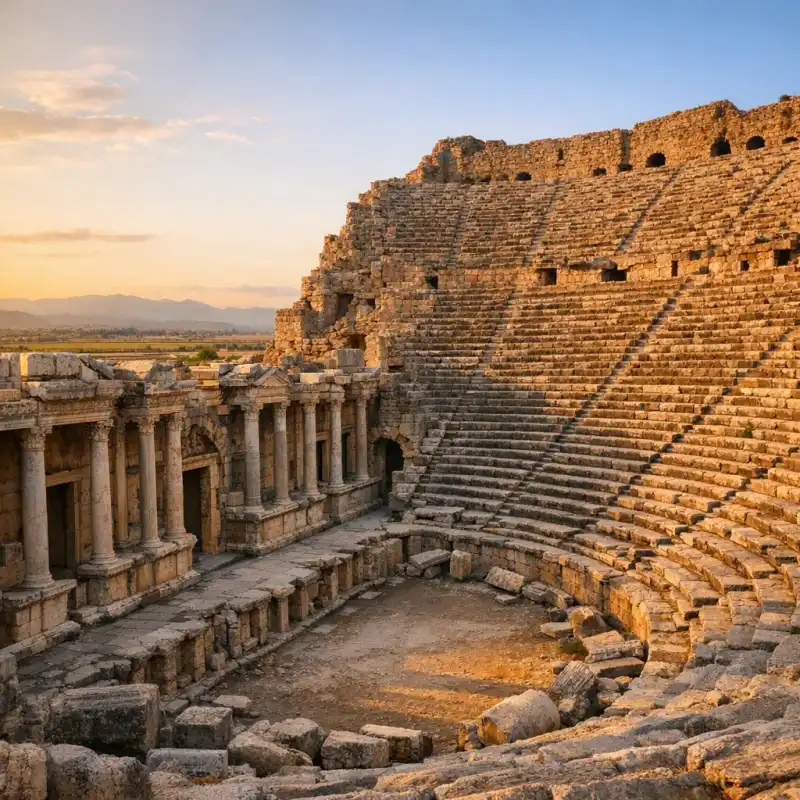
Start with Perge while the day is still manageable. The site was one of Pamphylia’s major cities, and it rewards slow walking more than a quick theater stop. Look for the broad colonnaded street, baths, gates, and stadium area. Perge’s urban plan makes Roman civic life feel unusually legible: water channels, public gathering spaces, exercise culture, spectacle, and status all sit close together.
The city also had a long pre-Roman life. Pamphylia was not simply a Roman coastal strip waiting to be organized. Greek, Anatolian, Persian, Hellenistic, and Roman layers all shaped the region. That mixture is part of what makes this route interesting. The labels on the map get tidy, but the history does not.
Continue to Aspendos for the theater. It is famous for a reason, but do not treat it as a single-photo stop. The 2nd-century CE theater, often connected with the architect Zenon, is one of the clearest surviving examples of how Roman performance architecture could dominate a city’s public identity. The stage building still gives the cavea a sense of enclosure that many ruined theaters have lost.
Leave time for the aqueduct remains if your transport allows it. They are less photogenic than the theater, but they tell the practical story behind the city: water, engineering, and money. Cities did not survive on marble seats alone.
Return to Antalya for the night. If you are driving yourself, avoid adding Side today unless you are starting very early and are comfortable with a long circuit. This is a better route when Perge and Aspendos get proper attention.
Day 2: Side and the Pamphylian coast
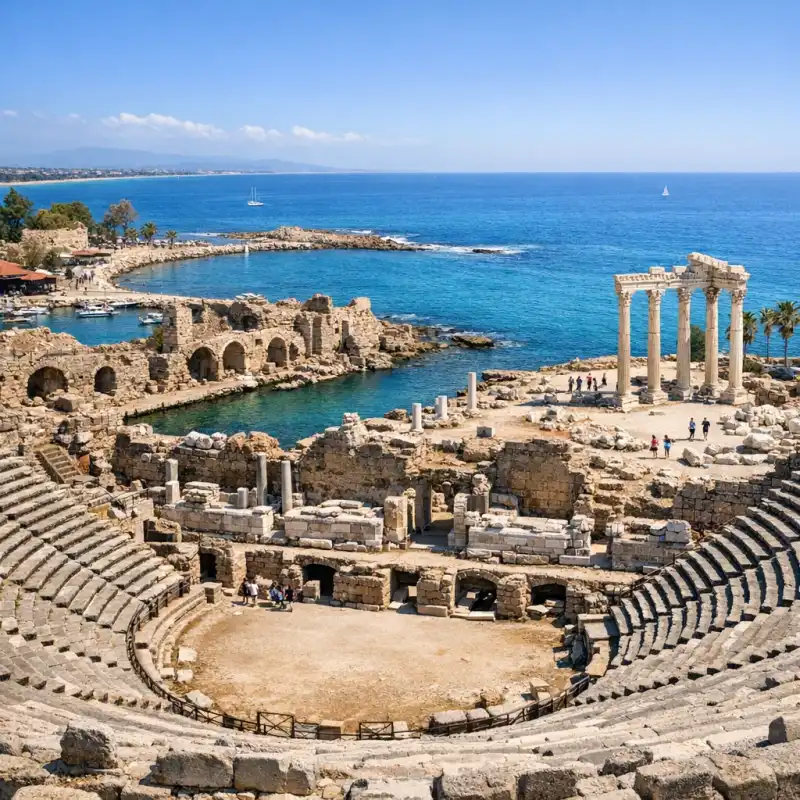
Use today for Side, the ancient harbor city east of Antalya. The setting is gentler than Termessos and more urban than Aspendos. You are walking a peninsula where ruins, modern shops, beach traffic, and sea views all overlap, which can be either charming or distracting depending on the hour.
Side was a Pamphylian port with a long life under Hellenistic and Roman rule. Its theater is unusually large for the feel of the modern town around it, and the harbor temples remind you that coastal sanctuaries were not just pretty silhouettes. They were part of how cities performed identity to sailors, merchants, pilgrims, and rivals arriving by sea.
Give yourself time to wander beyond the most obvious ruins. The city’s position mattered. This was a maritime place, tied into trade and movement along the southern Anatolian coast. Seeing it after Perge and Aspendos helps the Pamphylian pattern settle in: inland civic monumentality at Perge, theatrical grandeur at Aspendos, and coastal display at Side.
Logistics are straightforward by car from Antalya, but traffic and parking can still eat time. Public transport can work if you are patient, though it makes the day less flexible. Return to Antalya for a second full night. Do not schedule Termessos afterward. That mountain deserves fresh legs.
Day 3: Termessos in the mountains
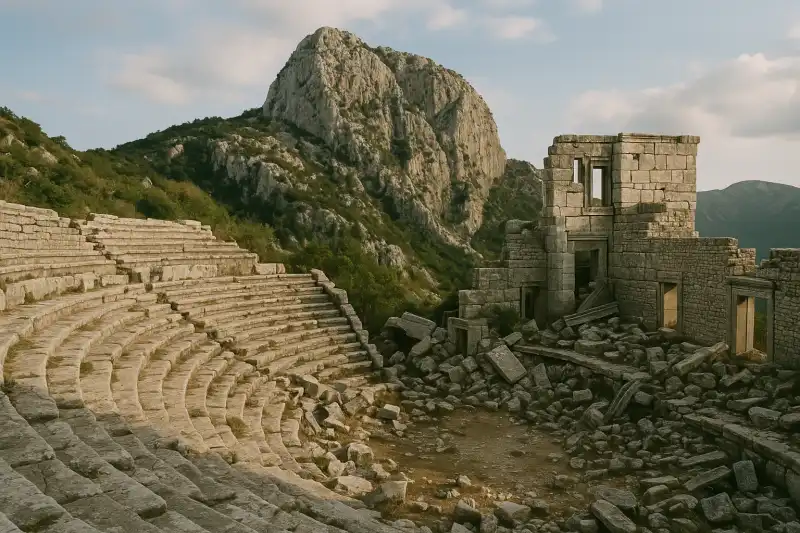
Termessos changes the mood of the route. After the planned spaces of Perge and the coastal theater of Side, this Pisidian mountain city feels deliberately difficult. It sits high above the Antalya plain, and the visit involves real walking on uneven ground.
This is the day for shoes, water, and an early start. A car or private driver is the practical choice. The site is inside a national park area, and you still need to walk up from the access point to reach the main ruins. Do not underestimate the climb just because the distance looks short.
Historically, Termessos is a good reminder that not every ancient city was easy to absorb into larger empires. Ancient sources describe Alexander the Great bypassing the city in 333 BCE rather than taking it by force, which tells you something about the terrain even if you treat the story with caution. Later, under Roman influence, the city still kept a strong local identity.
The theater is the emotional center of the visit, with mountain views that make the city’s defensive logic obvious. But the tombs, agoras, and scattered remains are just as important. Termessos is not polished. It asks you to piece the city together from stone, slope, and stubbornness.
Return to Antalya and keep the afternoon light. If heat, knees, or time are an issue, this is the day to swap for Phaselis or Olympos. You lose the mountain drama, but you gain easier coastal logistics.
Day 4: Myra and the Demre coast
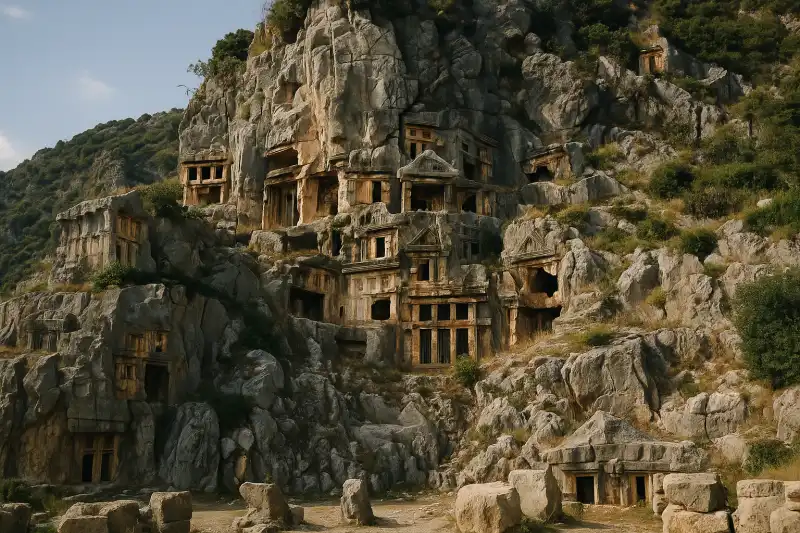
Leave Antalya and begin the westward move toward Lycia. The drive to Demre takes longer than a quick glance at the coast suggests, so resist the temptation to stack too much into the morning. The target today is Myra, one of the route’s clearest meetings of Lycian tomb culture and Roman public architecture.
The rock-cut tombs above the theater are the sight most people remember. Lycian tombs often imitate wooden house forms in stone, as if the dead were being given permanent cliffside homes. At Myra, the tombs rise directly behind the Roman theater, so the city’s different historical layers stare at each other across one compact space.
The theater is worth more than a quick look. Its scale shows Myra’s prosperity under Roman rule, while the tombs keep pulling the eye back to older Lycian habits of memory and status. This is a good day for people who like their ruins a little untidy. The overlap is the point.
If you want to add the coast, Demre is also the common gateway for Kekova trips. That can work, but only if you accept a busier day. A boat trip toward Kekova or Simena changes the focus from city ruins to maritime landscapes, sunken remains, and castle views. If you add it, do not also try to push onward to Patara the same evening.
Sleep in Demre or nearby. This one-night stop saves you from a punishing Antalya to Fethiye day with too many ruins squeezed into the middle.
Day 5: Patara, Xanthos, and Letoon toward Fethiye
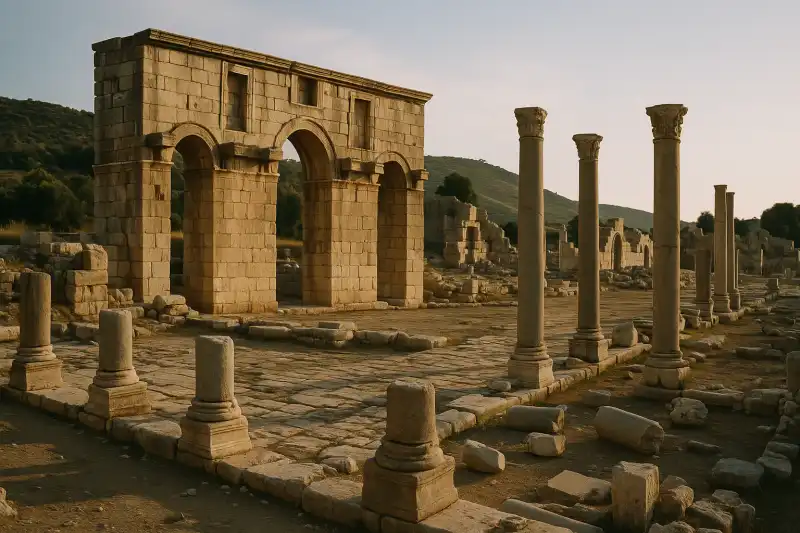
This is the most ambitious day, so start early and keep the plan disciplined. Drive west from Demre toward Patara, then continue to Xanthos and Letoon before finishing in Fethiye. A car or driver matters today. The sites are not hard individually, but they do not line up neatly for public transport.
Begin at Patara if beach traffic or heat is likely to build later. Patara was an important Lycian city and later a Roman port, although the coastline has shifted and silted over enough that the ancient harbor story takes some imagination. The theater, council building, and streets give the site a civic texture that pairs well with the tomb-heavy feel of Myra.
Then continue to Xanthos and Letoon. Xanthos was a major Lycian center, remembered in ancient sources for fierce resistance and tragic episodes of siege and destruction. The surviving tombs and inscriptions point to a city that negotiated Greek, Persian, Lycian, and Roman pressures without becoming culturally bland.
Letoon is the quieter religious counterpart. It was a sanctuary of Leto, Artemis, and Apollo, and it helps explain why this area mattered beyond city walls. If Xanthos shows political memory, Letoon shows sacred geography. The famous trilingual inscription from Letoon, written in Lycian, Greek, and Aramaic, is one of those details that makes the region’s mixed world suddenly concrete.
Finish in Fethiye rather than backtracking to Antalya. If the day feels too full, cut Patara or Letoon, not Xanthos. Patara is easier to enjoy with extra time, and Letoon is best when you are not already exhausted.
The historical thread: Lycian identity under bigger empires
This route works because Lycia and Pamphylia were never just a backdrop for Greek and Roman monuments. Perge, Aspendos, and Side show how Pamphylian cities used Roman forms: theaters, streets, baths, aqueducts, and temples. They were plugged into imperial systems, but they still belonged to a southern Anatolian coast with its own habits and geography.
Lycia adds a different texture. At Myra, Patara, Xanthos, and Letoon, tombs, sanctuaries, inscriptions, and civic buildings show local identity surviving inside larger political worlds. Lycian elites used Greek and Roman forms, but they also kept older ways of marking status, honoring the dead, and tying cities to sacred places.
Termessos complicates the route in the best way. It is not coastal, smooth, or easy. Its mountain setting reminds you that ancient Anatolia was full of communities that could resist, bargain, adapt, and endure because geography gave them leverage. The route’s real pleasure is seeing that variety in five days, not pretending all ancient cities tell the same story.
Transportation notes
Use Antalya for the first three nights. It saves time and gives you the best transport options. Perge, Aspendos, Side, and Termessos can all be reached from there, although Termessos is far easier with a car or driver than with public transport.
For the final two days, move west rather than returning to Antalya. Sleep in Demre after Myra, then finish in Fethiye after Patara, Xanthos, and Letoon. This keeps the route linear and avoids the classic mistake of turning every ancient site into a long round trip.
Self-driving is realistic for confident drivers, but mountain roads, summer traffic, parking, and Turkish driving habits can add stress. A private driver is a sensible upgrade for Day 5. Guided group tours are easiest from Antalya for the Pamphylian sites and from Demre or Kaş for Myra and Kekova combinations.
Do not compress this into three days unless you are comfortable dropping sites. The distances are not huge on paper, but the heat, walking, and transfers add up.
Optional add-ons and swaps
Add Phaselis if you want an easier coastal ruin day with harbor remains and beach time. Swap it for Termessos if the weather is too hot or your group does not want uphill walking.
Add Olympos if you want a greener river-valley site between Antalya and Demre. Swap it for Side or use it as a slower stop on the transfer day, but do not combine it with a full Myra and Kekova plan unless you are rushing.
Add Kekova and Simena from Demre if maritime Lycia interests you. Remove Patara from Day 5 or add an extra night near Kaş so the route does not turn into a checklist.
Add Arykanda if you want another mountain city with terraces and views. Swap it for Side or use it as an extra day between Antalya and Demre.
Add Tlos from Fethiye if you have one more day after the route. It pairs well with the Lycian tomb theme, but do not force it into Day 5 unless you remove Letoon and shorten Patara.
Shorter and longer itinerary options
For a shorter 3-day version, stay in Antalya and focus on Perge, Aspendos, Side, and Termessos. You will miss the Lycian tomb landscapes farther west, but the logistics are cleaner.
For a slower 7-day version, add one night near Kaş or Demre and one night in Fethiye. Use the extra time for Kekova, Simena, Patara at a calmer pace, and Tlos.
For a broader 10-day Turkey ancient-sites route, combine this Lycian section with the Aegean sites around Ephesus, Priene, Miletus, Didyma, Aphrodisias, Pergamon, or Troy. That becomes a different trip, with more driving or a domestic flight, but it gives a stronger view of western Anatolia’s ancient variety.
Related ancient sites
FAQ
The most common planning questions for this Lycian and Pamphylian ancient cities route are answered below.