Quick route summary
This 7-day northern Peru route starts in Trujillo and ends in Huaraz, with bases in Trujillo, Chiclayo, Chachapoyas, and Huaraz. It links the adobe cities and pyramids of Peru’s north coast with the cloud-forest world of Kuelap and the highland ceremonial center of Chavín de Huántar.
The route begins with Huaca del Sol and Luna and Chan Chan, then moves north through El Brujo Complex, Huaca Prieta, and the Sipán Royal Tombs. After that, it turns inland toward Amazonas for Kuelap, then finishes in Ancash with Chavín.
The pace is ambitious. Not impossible, not gentle. Northern Peru rewards travelers who like archaeology enough to tolerate long transfers, dry coastal heat, mountain roads, and days where the logistics are part of the story.
Who this itinerary is for
This itinerary is for travelers who already know Peru is more than Lima, Cusco, and Machu Picchu. It is especially good if you want Moche murals, Chimu city planning, elite tombs, Chachapoyas stonework, and the older religious world of Chavín in one route.
It is not the best fit if you want a single comfortable base, short daily drives, or lots of cafe time. It also is not a first Peru itinerary for everyone. The distances are real, the road days can be tiring, and the best sites are not lined up neatly for a casual loop.
If that sounds like a warning, it is. It is also why the route works. The historical payoff comes from seeing how different northern Peru feels from region to region.
Route at a glance
- Day 1: Overnight in Trujillo. Arrive, then visit Huaca del Sol and Luna by taxi or guide.
- Day 2: Overnight in Trujillo. Spend the main part of the day at Chan Chan, with a possible Huanchaco stop if energy allows.
- Day 3: Overnight in Chiclayo. Travel north from Trujillo, stopping at El Brujo and Huaca Prieta before continuing to Chiclayo.
- Day 4: Overnight in Chiclayo. Visit Sipán and the Lambayeque museum circuit by taxi, driver, or guided tour.
- Day 5: Overnight in Chachapoyas. Make the long transfer from the coast toward Amazonas and keep the day light.
- Day 6: Overnight in Chachapoyas. Visit Kuelap from Chachapoyas via Nuevo Tingo and the cable car if it is operating.
- Day 7: Overnight in Huaraz. Visit Chavín de Huántar as a long mountain day trip from Huaraz.
Practical logistics before you go
The cleanest base sequence is Trujillo, Chiclayo, Chachapoyas, then Huaraz. That sounds simple on paper. On the ground, it means several long travel days and at least one awkward transfer. Do not treat this as a casual beach-and-ruins loop.
For Trujillo and Chiclayo, taxis, private drivers, and guided day tours are the easiest tools. The sites are not hard to understand independently, but the transport can eat time. A Trujillo tour combining Chan Chan and the Moche temples makes sense if you want context and one clean pickup.
The Amazonas section needs more planning. Kuelap access depends on the route from Chachapoyas to Nuevo Tingo and the cable car status. Check conditions before building your whole day around a tight schedule. If the cable car is not operating, access can become slower and more tiring.
For Chavín, Huaraz is the practical base. The road crosses high mountain terrain, and altitude matters. If you are arriving from sea level, do not plan a huge night out before the Chavín day.
This route intentionally skips Lima, Cusco, Machu Picchu, Nazca, and most southern Peru archaeology. It also skips some excellent northern sites, including Túcume Pyramids, Ventarrón, Gocta Falls, and Leymebamba, unless you extend the trip. Trying to add all of them to seven days would turn a good route into a punishment.
Day 1: Trujillo arrival and Huacas del Sol y la Luna
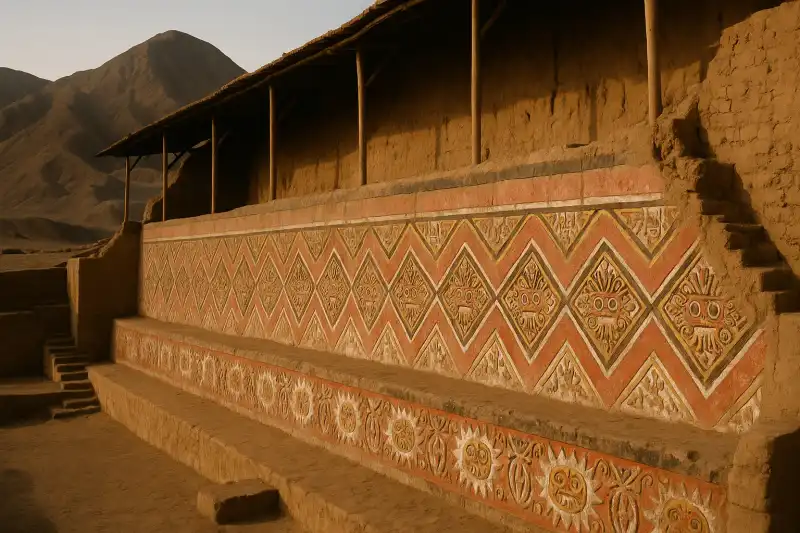
Start in Trujillo and keep the arrival day focused. If your flight or bus arrives early enough, go straight to Huaca del Sol and Luna with a taxi, driver, or guided visit. If you arrive late, move this to the next morning and do not force it. The site deserves a clear head.
The two huacas sit in the Moche Valley, close to modern Trujillo but mentally far from the colonial city center. Huaca del Sol was the larger administrative and monumental mound, while Huaca de la Luna preserves some of the most memorable Moche mural work, including painted friezes tied to ritual, sacrifice, and elite display.
This is a good first stop because it gives the north coast its own voice immediately. Before the Chimu built Chan Chan, the Moche were creating adobe temple landscapes, organizing labor, and making religious imagery that could be both precise and unsettling. The famous fanged deity often called Ai Apaec is not just decoration. It is a visual argument about power, fear, fertility, and control.
Logistically, this is a half-day visit. Do not pair it with Chan Chan unless you arrived very early and are comfortable with a rushed day. Better to give the Moche temples a few unrushed hours, return to Trujillo, and save the Chimu capital for Day 2.
Day 2: Chan Chan and the Pacific edge of the Chimu world
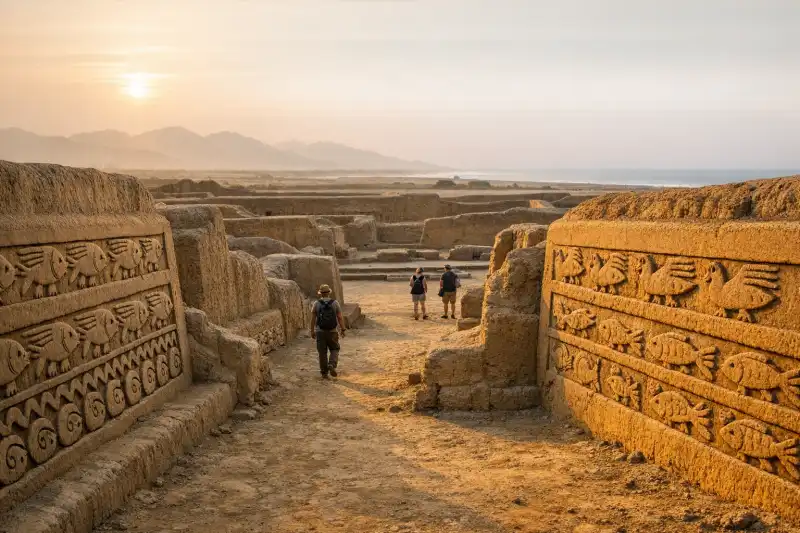
Give Chan Chan the center of the day. It was the capital of the Chimu kingdom and one of the largest adobe cities ever built. That matters because adobe can look visually modest at first, especially in a dry coastal landscape where everything seems to be the color of dust. Stay with it. The scale starts to register once you move through the walled compounds.
Chan Chan is a city of controlled movement. High walls, ceremonial courtyards, storage areas, burial spaces, and carved marine motifs point to a society that managed water, food, labor, and ceremony with serious administrative confidence. The fish, nets, waves, and seabirds in the reliefs are not cute coastal trim. They tie the city to the Pacific economy that helped sustain it.
Use a guide if you want the site to make sense quickly. You can also visit independently by taxi from Trujillo, but bring patience and sun protection. Shade is limited, and the city’s scale can feel repetitive without context.
If you want an easy add-on, continue to Huanchaco afterward for the coastal setting and the reed boats often associated with north coast fishing traditions. Keep it optional. Chan Chan is the point of the day, and it is more interesting when you are not rushing toward lunch photos.
A guided day can be useful here, especially if it combines the Chimu and Moche worlds without making you negotiate every transfer yourself. The Trujillo Chan Chan and Moche temples tour options are worth comparing if you did not visit the huacas on Day 1.
Day 3: El Brujo, Huaca Prieta, and the road to Chiclayo
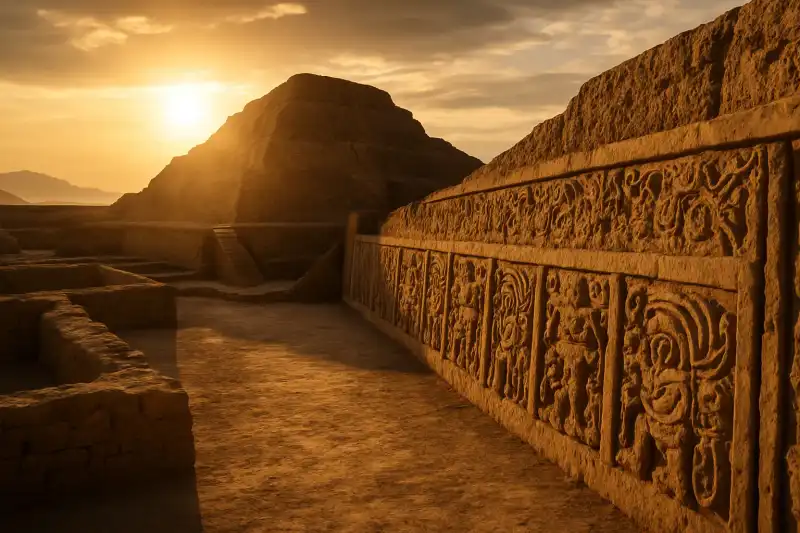
Today moves you from Trujillo toward Chiclayo, but the road north has enough archaeology to make the transfer matter. Start early and visit El Brujo Complex if transport lines up. This is the site tied to the Lady of Cao, a high-status Moche woman whose burial changed a lot of casual assumptions about gender and authority on the north coast.
The murals at Huaca Cao Viejo are part of the draw, but the bigger value is how the site complicates a simple Moche story. El Brujo gives you monumental architecture, burial ritual, painted surfaces, and elite identity in one place. The Lady of Cao was buried with regalia and symbols of status, which makes the site feel personal in a way large palace compounds sometimes do not.
If time and access allow, add nearby Huaca Prieta. It reaches much farther back than the Moche, into the preceramic world of early mound building, cotton textiles, and coastal lifeways. That time depth is easy to miss if you only chase the more photogenic pyramids.
This is a driver day, not a public-transport puzzle day. You are trying to visit sites, manage luggage, and still reach Chiclayo without arriving wrecked. If the logistics are too tight, cut Huaca Prieta first. Do not cut the overnight move, because Chiclayo is the right base for Sipán.
Day 4: Sipán and Lambayeque museum treasures
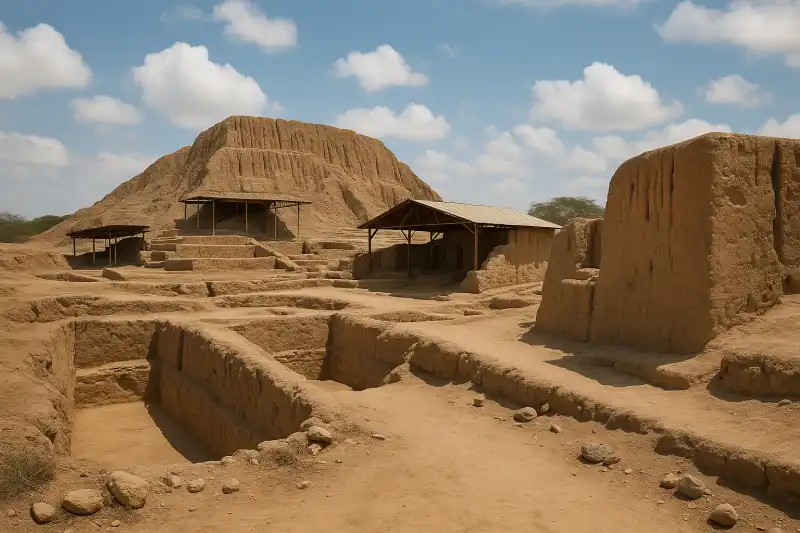
Use Chiclayo as your base for the Sipán Royal Tombs. The archaeological zone and museum circuit work best with a taxi, private driver, or guided tour, partly because the value of the day is split between the burial site and the objects recovered from it.
Sipán is one of the great Moche stories because the tombs were found with extraordinary elite regalia: gold, copper, shell, ornaments, weapons, and attendants arranged in a burial program that was political as much as funerary. The Lord of Sipán was not buried as a private person. He was buried as a staged statement of rank.
The museum experience matters here. Objects that might look merely dazzling in photos become more interesting when you notice repeated symbols, body placement, and how Moche authority was performed through costume. The metalwork is beautiful, but the choreography of power is the real subject.
This is a strong day for a guide. A Chiclayo tour to Sipán and the Lambayeque museums can save time and help connect the tomb archaeology with the broader north coast sequence.
Do not overload the afternoon. Túcume Pyramids and Ventarrón are tempting, but both are better as add-ons with an extra day. For this 7-day route, Day 4 already carries enough historical weight.
Day 5: Chiclayo to Chachapoyas transfer
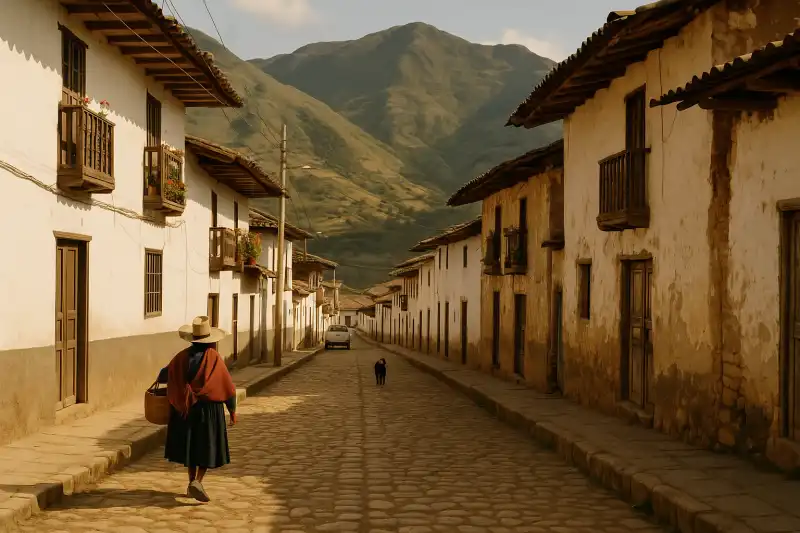
Day 5 is mostly about moving from the coast toward Amazonas. There is no elegant way to pretend otherwise. You are leaving the dry adobe world of the Moche, Chimu, and Lambayeque valleys and heading toward the cloud-forest and highland landscapes associated with Kuelap and the Chachapoyas.
Depending on schedules, you may travel overland by bus or private transfer, or use flights via Jaén and continue by road to Chachapoyas. Check current timings carefully, because missed connections can damage the whole route. If you are using buses, build in slack. If you are flying, remember that the road portion still takes time.
The routeStop site for this day is Leymebamba, but treat it as a contextual marker rather than a required same-day visit. The Leymebamba museum and its Chachapoyas mummies are excellent, but they sit better in an extended Amazonas stay. On a 7-day itinerary, the smart move is to reach Chachapoyas, eat, sleep, and protect Day 6.
Historically, this transfer is not dead space. It is the hinge between two very different Perus. The north coast sites you have seen were tied to irrigation, desert valleys, maritime resources, and adobe architecture. Amazonas asks a different question: what did power look like in steep, wet, highland terrain where stone, cliffs, and defended settlements mattered more?
If you hate long travel days, this is where the itinerary will test you. The reward is that Kuelap will not feel like just another ruin after Chan Chan. It belongs to another world.
Day 6: Kuelap and the Chachapoyas cloud fortress
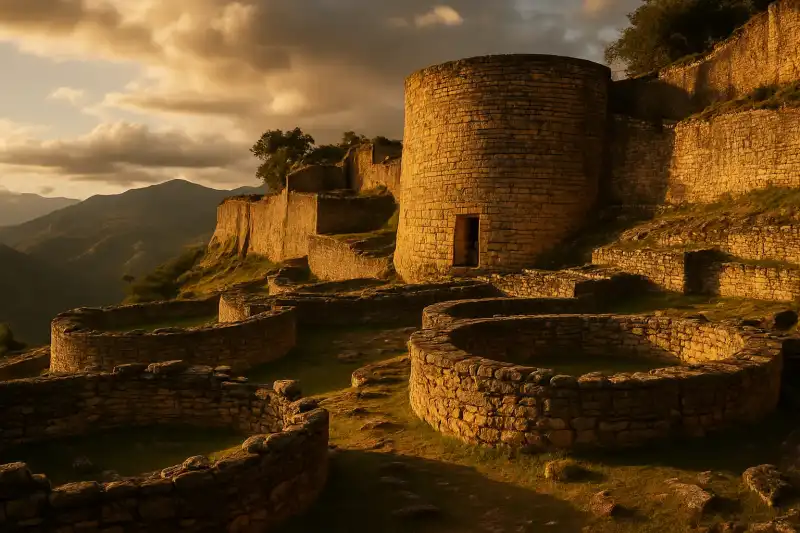
Visit Kuelap from Chachapoyas. The usual route runs toward Nuevo Tingo, then up by cable car if it is operating, followed by the final approach to the site. Confirm access locally before you go, because maintenance, weather, and route changes can affect the day.
Kuelap is often described as a fortress, and the walls certainly encourage that reading. But give the site more room than the label allows. The high enclosing walls, narrow entrances, round structures, and mountain setting point to defense, status, ritual, and community life all tangled together. The Chachapoyas were not simply hiding in the clouds. They were building a monumental place that controlled approach, sightlines, and memory.
One detail worth watching for is the difference in architectural language after several days on the coast. At Chan Chan, power was adobe walls and controlled courtyards in a dry plain. At Kuelap, it is stone mass and elevation. The change is almost physical. Your eyes have to adjust.
This is not a day to rush back for another major attraction. Use a Chachapoyas day tour to Kuelap if you want transport handled cleanly, especially if you do not want to coordinate taxis, cable car timing, and entry logistics on your own.
If you have extra energy, spend the evening in Chachapoyas quietly. If you are extending the route, this is where Gocta Falls or Leymebamba can fit. In seven days, resist the urge unless you are willing to drop Chavín.
Day 7: Chavín de Huántar from Huaraz
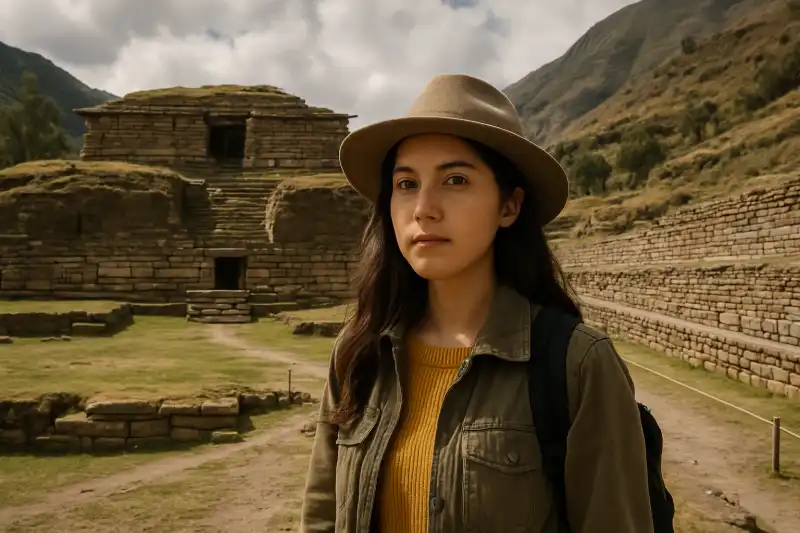
This final day assumes you have transferred to Huaraz before the visit, either with an overnight bus, a flight-and-road combination, or a route adjustment that gives you enough rest. If that sounds tight, it is. Chavín is the hardest piece of this 7-day version, but it also gives the itinerary its deepest time layer.
Visit Chavín de Huántar as a long day trip from Huaraz. The road crosses high Andean terrain, and the mountain setting is part of the experience. Do not underestimate altitude, curves, or weather. Bring layers, water, and patience.
Chavín flourished long before the Moche, Chimu, and Chachapoyas worlds you have been tracing. Its galleries, plazas, stone carvings, and the Lanzón monolith belong to a ceremonial system that drew people, symbols, and authority across the Andes. The site feels inward compared with Chan Chan and Kuelap. Much of its power is in passages, sound, controlled movement, and the strange intensity of carved beings that mix human, feline, serpent, and raptor traits.
This is a fitting finish because it refuses to let northern Peru become a simple coastline-to-fortress story. Chavín pulls the route back into older pan-Andean religious networks, where pilgrimage and ceremony mattered as much as palaces or defensive walls.
If you are tired, consider replacing Chavín with a lighter Huaraz-area visit to Wilkawain. That is a different historical period and a much easier day. But if you came for the big arc, Chavín is the one to keep.
The historical thread: coast, cloud forest, and the making of northern Peru
This route works because northern Peru does not tell one neat story. It moves from Moche ritual centers to Chimu urban planning, from elite tombs at Sipán to Chachapoyas mountain architecture, then back in time to Chavín’s ceremonial core.
The north coast days show societies that learned to make dry valleys productive through irrigation, labor organization, and religious authority. Huaca de la Luna makes power theatrical and painted. Chan Chan makes it administrative and urban. Sipán makes it personal, dressing one ruler’s body in the symbols of a whole political world.
Kuelap changes the terrain and the mood. Stone walls replace adobe compounds. Cloud forest replaces desert coast. The site reminds you that ancient Peru was never only an Inca or coastal story.
Chavín then pushes the timeline deeper. By ending there, the route stops being a checklist of famous ruins and becomes a rough cross-section through Andean history: ceremony, water, burial, city planning, mountain defense, and the long habit of making landscape do political work.
Transportation notes
Do not self-drive this full route unless you are experienced with Peruvian roads, mountain transfers, and long-distance planning. It is much easier to combine taxis, private drivers, buses, selective flights, and guided tours.
Trujillo and Chiclayo are straightforward compared with the rest of the trip. Use taxis or drivers for Huaca del Sol and Luna, Chan Chan, El Brujo, Huaca Prieta, and Sipán. Public transport may exist for pieces of the route, but it is rarely the best use of limited days.
Chiclayo to Chachapoyas is the first serious transfer. Check bus times, flight options via Jaén, and onward road connections before you commit. Build a buffer if you can. A delay here can steal Kuelap from the itinerary.
Chachapoyas to Huaraz is the compression point. In a perfect world, you would add a day between Kuelap and Chavín. If you keep the 7-day structure, protect sleep, avoid late-night improvisation, and be honest about fatigue.
Huaraz to Chavín is a long mountain day. Hire a driver or use a reputable day tour if you do not want to manage the road yourself. Weather and altitude can change the feel of the day quickly.
Optional add-ons and swaps
Add Túcume Pyramids if you have one extra day in Chiclayo. It pairs well with Sipán because it keeps you in the Lambayeque Valley and shows a later adobe pyramid landscape. Remove the direct rush to Chachapoyas, or add an eighth day.
Add Ventarrón if you are especially interested in early temple murals near Chiclayo. It is a good specialist stop, but do not squeeze it into Day 4 unless your transport is private and your museum plan is short. Remove a museum stop or extend Chiclayo by a night.
Add Gocta Falls if you want a nature day from Chachapoyas. It is not an ancient site in the same sense as Kuelap, but it helps explain why Amazonas travel feels so different from the coast. Remove Chavín if you only have seven days, or add a day in Chachapoyas.
Add Wilkawain near Huaraz if Chavín feels too long or altitude is catching up with you. It gives you a Wari-era stone mausoleum site close to town. Remove Chavín only if you need a lighter finish, because the historical arc is stronger with Chavín included.
Add Leymebamba if you can spend two more nights in Amazonas. The museum’s mummy collection gives the Chachapoyas section more depth. Remove nothing if possible. This is an extension, not a clean swap.
Shorter and longer itinerary options
For a shorter northern Peru route, spend three to four days between Trujillo and Chiclayo: Huaca del Sol and Luna, Chan Chan, El Brujo, and Sipán. That version cuts Kuelap and Chavín, but it makes a strong north coast archaeology trip.
For a broader Peru route, use 10 Days in Ancient Peru: Sacred Valley, Nazca, and the North Coast if you want the classic first-visit arc instead of the northern deep cut.
For a longer version, the planned 10 Days in Ancient Peru: Sacred Valley, Nazca, and the North Coast is the better shape. It gives more room for transfer days and reduces the pressure to force Kuelap and Chavín into the same week.
If you want to keep this exact route but make it healthier, add one rest night in Chachapoyas and one in Huaraz. Those two nights will make the itinerary feel like travel instead of logistics management.
Related ancient sites
- Túcume Pyramids
- Ventarrón
- Leymebamba
- Gocta Falls
- Wilkawain
- Cerro Sechín
- Chankillo
- Sechin Alto
- Marcahuamachuco
FAQ
The most common planning questions for this northern Peru ancient sites route are answered below.