Quick route summary
This 10-day ancient Peru route starts in Lima and ends in Chiclayo, with bases in Lima, Cusco, Ollantaytambo, Aguas Calientes, Nazca, Trujillo, and Chiclayo. It links coastal temples, Inca highland sites, desert geoglyphs, and the north coast cultures that shaped Peru long before the Spanish arrived.
The route is built for travelers who want range more than rest. You visit Huaca Pucllana and Pachacamac in Lima, move through Sacsayhuaman, Pisac, Ollantaytambo, and Machu Picchu in the Cusco region, then continue to the Nazca Lines, Chan Chan, Huaca del Sol and Luna, and the Sipán Royal Tombs.
The pace is ambitious, but not reckless if you use flights well and accept that some days are mostly about movement. Do not add extra regions casually. Peru looks tidy on a route map and then reminds you that deserts, mountains, traffic, altitude, and flight schedules all get a vote.
Who this itinerary is for
This itinerary is for travelers who want a broad archaeology-first Peru trip, not just the classic Lima, Cusco, and Machu Picchu loop. It suits people who can handle early starts, domestic flights, long road transfers, and a mix of famous sites with less polished ones.
It is especially good if you are curious about the long Andean sequence: Lima culture adobe pyramids, Wari and Ychsma coastal traces, Inca royal landscapes, Nazca desert markings, Moche murals, Chimu cities, and Lambayeque elite tombs.
It is not ideal if you want a relaxed Sacred Valley vacation, a trekking-heavy trip, or several buffer days for food and museums. If altitude worries you, add an extra night in Cusco or the Sacred Valley and remove Nazca or one north coast day. That trade is sensible.
Route at a glance
- Day 1: Overnight in Lima. Arrive, settle in Miraflores or Barranco, and visit Huaca Pucllana by taxi or on foot if nearby.
- Day 2: Overnight in Lima. Visit Pachacamac and possibly Puruchuco with a driver or guided tour across the southern and eastern edges of the city.
- Day 3: Overnight in Cusco. Fly to Cusco, keep the altitude day light, and visit Sacsayhuaman plus Tambomachay by taxi.
- Day 4: Overnight in Ollantaytambo. Drive through the Sacred Valley, visiting Pisac before continuing to Ollantaytambo.
- Day 5: Overnight in Aguas Calientes. Visit Moray and Chinchero with a driver, then take the train from Ollantaytambo.
- Day 6: Overnight in Cusco. Visit Machu Picchu on a timed circuit, add Intihuatana or Huayna Picchu only if your permit allows, then return to Cusco.
- Day 7: Overnight in Nazca. Fly from Cusco to Lima, then transfer south toward Nazca, with Tambo Colorado or Paracas Necropolis only if the timing is realistic.
- Day 8: Overnight in Lima. Take an early Nazca Lines overflight or land route, then return north for a Lima overnight.
- Day 9: Overnight in Trujillo. Fly to Trujillo and visit Chan Chan plus Huaca de la Luna by taxi, driver, or tour.
- Day 10: Overnight in Chiclayo. Drive north via El Brujo if time allows, then finish with Sipán and the Lambayeque valley sites near Chiclayo.
Practical logistics before you go
The best bases are Lima, Cusco, Ollantaytambo, Aguas Calientes, Nazca, Trujillo, and Chiclayo. That sounds like a lot because it is. The route works only if you treat some bases as practical overnight stops, not as places to unpack and linger.
Use domestic flights for Lima to Cusco, Cusco to Lima, and Lima to Trujillo. Use trains for Ollantaytambo to Aguas Calientes and back. Use drivers, taxis, or guided tours for the Sacred Valley, Lima archaeology, Nazca transfers, and the north coast sites. Long-distance buses can work on the coast, but they cost time and energy.
Guided tours make the most sense at Pachacamac, the Sacred Valley, Machu Picchu, Nazca, Chan Chan, and Huaca de la Luna. These are places where context changes the visit. A wall, plaza, or mound can look plain until someone explains what was buried, painted, aligned, rebuilt, or politically staged there.
Book Machu Picchu tickets and train seats early, especially if you want Huayna Picchu. Circuit rules matter. Do not assume you can wander freely once inside the sanctuary. For Nazca, morning flights are usually better for wind and visibility, but small aircraft can be rough. If you get motion sick, prepare for it.
The main warning is simple: do not overpack this route. Adding Caral, Chavin, Kuelap, Arequipa, Lake Titicaca, and the Amazon would make a great two-month wish list, not a better 10-day itinerary.
Day 1: Lima arrival and Huaca Pucllana
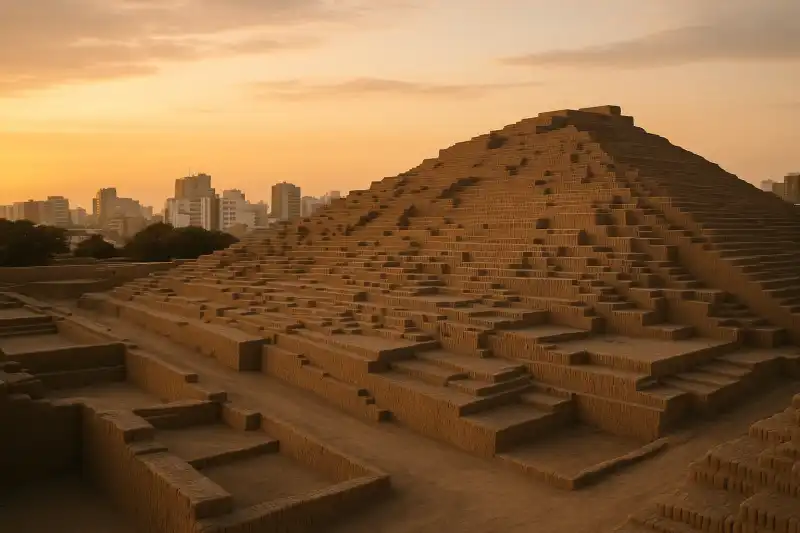
Start in Lima and keep the first day close. If you stay in Miraflores, Huaca Pucllana is the ideal first site because it sits inside the modern city rather than beyond it. The contrast is useful: apartment blocks, traffic, restaurants, and then an adobe pyramid built by the Lima culture more than a thousand years ago.
Huaca Pucllana is made from small vertical adobe bricks, often described as a bookshelf-style technique. That construction detail matters in Lima, where earthquakes are part of the architectural story. The site also helps correct the common mistake of treating ancient Peru as only Inca. By the time the Inca reached the coast, Lima already had older sacred landscapes, cemeteries, and local powers.
Logistics should be easy today. Use a taxi or rideshare if you are not staying nearby, and do not schedule a major cross-city outing after an international arrival. Lima traffic can make a short distance feel like a negotiation.
If you arrive early and have energy, add a museum or coastal walk. If not, stop after Huaca Pucllana. This itinerary gets much harder soon, so the first evening is not the place to prove anything.
Day 2: Pachacamac and coastal Lima archaeology
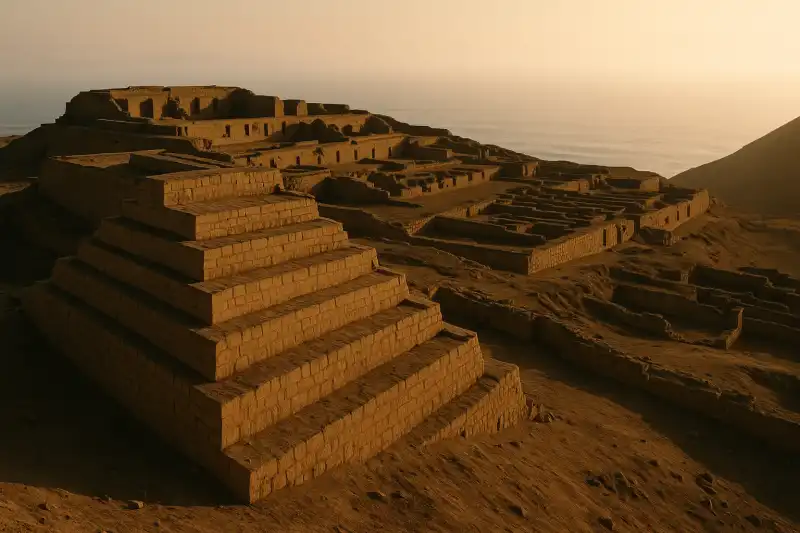
Make this your deeper Lima archaeology day. Pachacamac sits south of the city near the Lurín Valley, and it was not just a local shrine. It became one of the great oracle centers of the Andean coast, visited and reused by multiple cultures before and during Inca rule.
The site is spread across desert ground, with temple platforms, pilgrimage routes, painted sacred architecture, and views toward the Pacific. The Inca did not erase Pachacamac when they took control. They inserted themselves into an already powerful religious place, which is often how empire works when it is being practical.
If you want a second Lima site, consider Puruchuco on the eastern side of the city, but only if you have a driver and a realistic traffic plan. Puruchuco preserves an Inca administrative palace connected with local rule, storage, and the machinery of governing a conquered landscape.
A guided Lima archaeology tour to Pachacamac is useful here because it solves transport and gives the oracle site enough explanation. Independent travelers can do it by taxi or hired driver, but public transit is not a good fit for a tight 10-day route.
Day 3: Fly to Cusco and adjust slowly at Sacsayhuaman
Fly from Lima to Cusco and take altitude seriously. Cusco sits around 3,400 meters, and the first day should be deliberately light. Drop bags, eat simply, drink water, and save the ambitious walking for later.
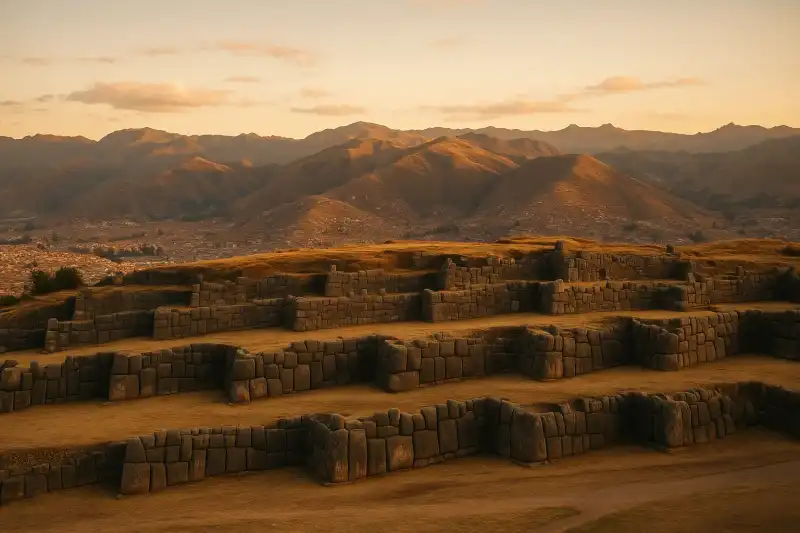
If you feel well, take a taxi up to Sacsayhuaman and walk downhill rather than forcing a steep climb from the city. The site’s zigzagging walls are famous for their huge fitted stones, but the better detail is political: this was ceremonial architecture overlooking the Inca capital, not just a defensive pile of boulders.
Add Tambomachay only if your body is cooperating. Its water channels and stonework show a quieter side of Inca engineering, with ritual water architecture rather than giant walls. Pairing the two sites gives a useful first lesson in Cusco: Inca power was expressed through stone, water, roads, terraces, and the careful shaping of terrain.
Use taxis rather than trying to optimize the day with buses and long walks. Altitude turns small inefficiencies into bad ideas.
Day 4: Pisac and the Sacred Valley
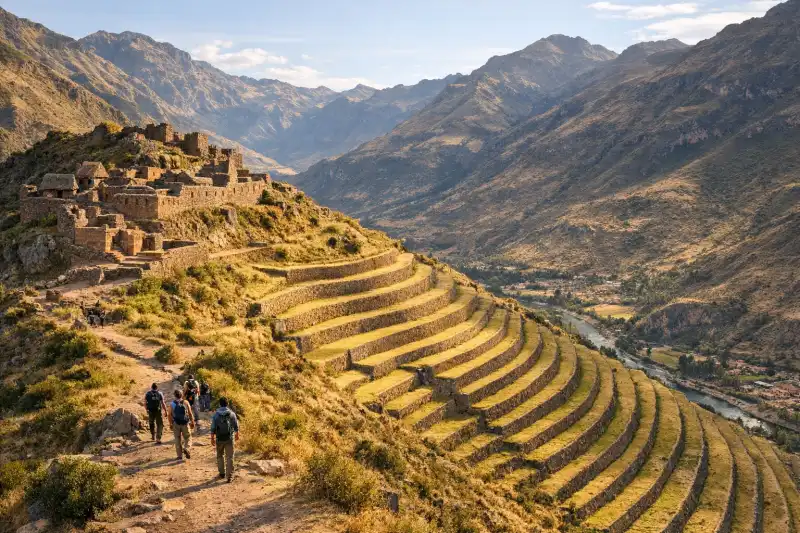
Leave Cusco for the Sacred Valley and aim for Pisac first. The ruins above town stretch across ridges and terraces, with residential areas, ceremonial sectors, and agricultural slopes that show how the Inca made steep land productive and legible.
Do not treat Pisac as only a market stop. The archaeological site deserves real time, especially if you like ruins that make you work a little for the view. The terraces are not decorative. They managed erosion, microclimates, crops, and the visual drama of a valley controlled from above.
Continue to Ollantaytambo and sleep there rather than returning to Cusco. This saves time for the train later and gives you a rare chance to stay inside a town that still follows much of its Inca street plan. Ollantaytambo’s fortress terraces climb above the settlement, while water channels still run through the old grid below.
A Sacred Valley tour from Cusco to Pisac and Ollantaytambo is practical if it ends in Ollantaytambo or lets you arrange luggage. Standard round trips back to Cusco are less useful for this route.
Day 5: Moray, Chinchero, and the train to Aguas Calientes
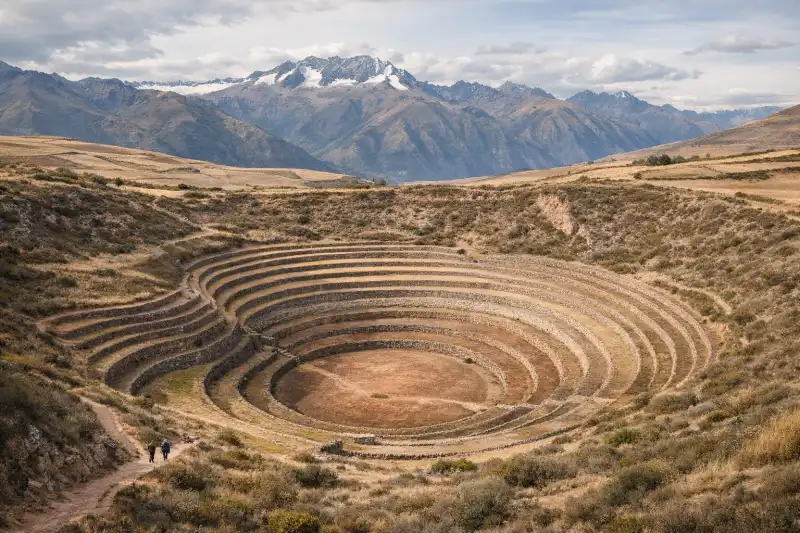
Use a driver for the highland Sacred Valley circuit. Moray is the anchor, with circular terraces dropping into bowl-like depressions. The usual interpretation links the site to agricultural experimentation because the terraces create different temperature and moisture conditions. Even if the details are debated, the engineering is wonderfully deliberate.
Continue to Chinchero if timing allows. The site combines Inca terraces, palace foundations, and a colonial church built over older structures. That layering is blunt and instructive. In Peru, many sacred places were not abandoned cleanly. They were reused, claimed, argued over, and rebuilt.
Return to Ollantaytambo for the train to Aguas Calientes. Do not cut the train too close. Sacred Valley roads can be slow, and missing the train turns a good archaeology day into a logistical mess.
Sleep in Aguas Calientes so Machu Picchu starts early the next morning. The town is functional rather than graceful, but that is fine. Its job is to put you close to the shuttle buses.
Day 6: Machu Picchu and Intihuatana
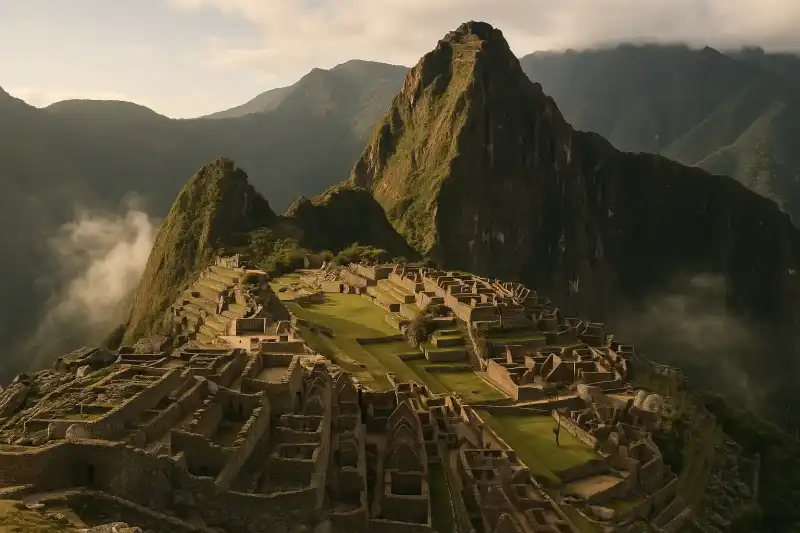
Take the shuttle bus from Aguas Calientes and follow the circuit printed on your ticket. Machu Picchu is tightly managed now, so plan around your entry time instead of imagining a loose all-day wander.
The site rewards patience despite the rules. Look at how terraces, stairways, temples, plazas, and sightlines bind the ridge together. Machu Picchu was not the largest Inca site, but its setting makes Inca landscape design unusually easy to feel. Stone and mountain are in conversation here, sometimes politely, sometimes with great confidence.
If your circuit includes the Intihuatana, give it more than a passing glance. The carved stone is tied to solar observation and ritual authority, and it belongs to a wider Inca habit of marking the sky through earthbound forms. If you have a separate permit for Huayna Picchu, be honest about your knees, fear of heights, and schedule. The climb is not a casual add-on.
Return to Cusco by train and road. This is already a full day. Do not plan a serious evening activity unless you enjoy turning travel into endurance theater.
Day 7: Fly to Lima and travel toward Nazca
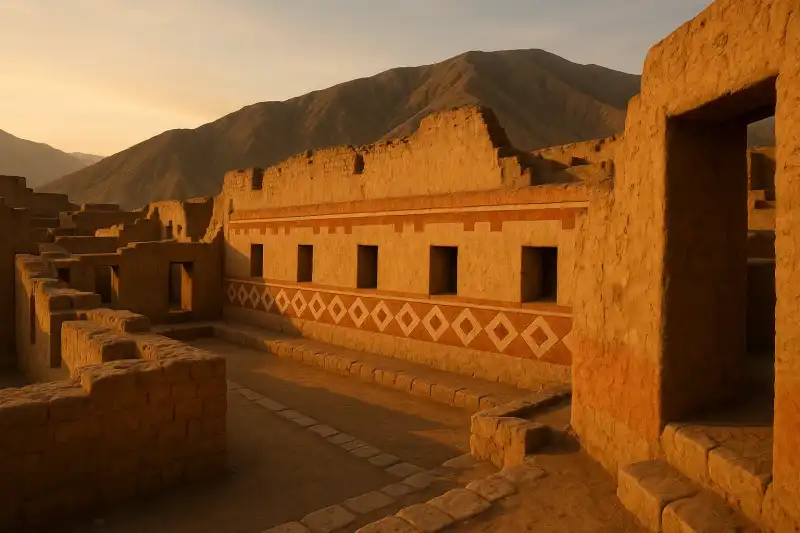
This is the awkward day, so protect it. Fly from Cusco to Lima as early as reasonable, then continue south by private transfer or bus toward Nazca. If timing is smooth, add Tambo Colorado near Pisco. If timing is not smooth, skip it without guilt.
Tambo Colorado is worth knowing because it preserves painted Inca coastal architecture better than many travelers expect. The Inca are often imagined in gray highland stone, but this palace complex reminds you that imperial architecture could also be adobe, painted, administrative, and adapted to the coast.
Another possible stop is the Paracas Necropolis, especially if you are interested in elite textiles and mummy bundles. The Paracas material shows a different kind of ancient power: not walls and roads, but burial display, cloth, color, and the long social life of the dead.
Do not try to do both stops unless you have a private driver, a very early flight, and a high tolerance for long days. Sleep in Nazca or nearby so the next morning can start early.
Day 8: Nazca Lines and the desert south
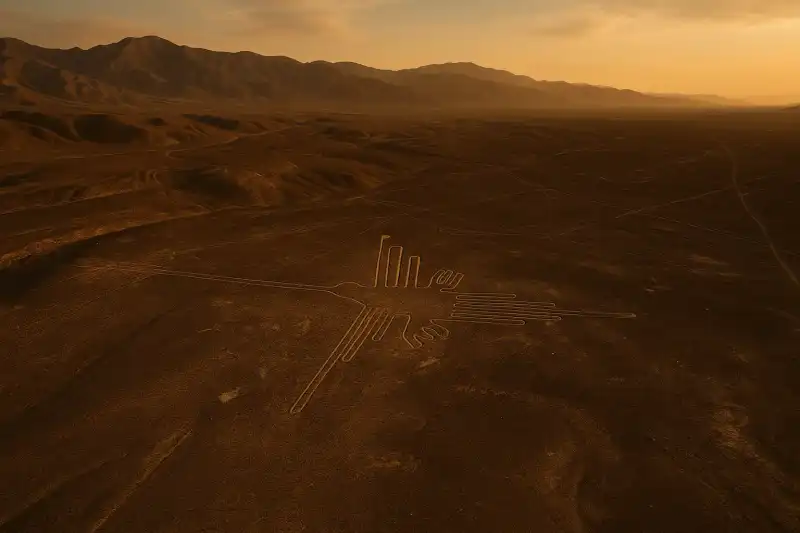
The Nazca Lines are best planned as a morning activity. If you choose an overflight, book early and expect possible delays from weather, wind, or aircraft rotation. If you prefer not to fly, use the viewing towers and nearby land sites, but understand that the famous animal figures are harder to appreciate from the ground.
The geoglyphs were made by removing dark surface stones to expose lighter desert soil beneath. That simple technique created lines, trapezoids, and figures that survived because the desert is so dry. Their meaning is still debated, with proposals involving ritual pathways, water, astronomy, and social performance. The uncertainty is part of the visit, not a failure of it.
A Nazca Lines overflight solves the main viewing problem, but it does not solve motion sickness. Eat lightly, listen to the safety briefing, and do not schedule a tight connection right afterward.
Return toward Lima after the flight or land circuit. This is a long travel day, but sleeping in Lima sets up the flight north. If that sounds miserable, add one extra night on the coast and shorten the north coast section.
Day 9: Fly to Trujillo for Chan Chan and Moche pyramids
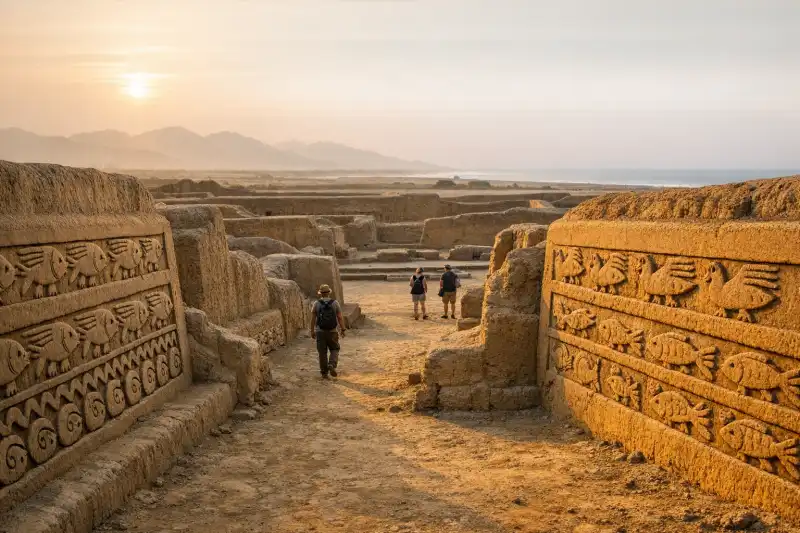
Fly from Lima to Trujillo and spend the day with the two great north coast contrasts: Chimu urban scale and Moche ritual art. Start with Chan Chan, the huge adobe capital of the Chimu kingdom. It was one of the largest pre-Columbian cities in the Americas, but its power now reads through walls, compounds, corridors, water symbolism, and sandy silence.
Chan Chan needs context because adobe cities weather badly and can feel repetitive if you arrive cold. Look for the fish, nets, seabirds, and wave motifs in the reliefs. The Chimu ruled a coastal world where irrigation, marine resources, and administrative control mattered as much as monumental display.
Then visit Huaca del Sol and Luna, especially Huaca de la Luna. The Moche murals are the opposite of subtle: fanged faces, ritual scenes, painted walls, and repeated supernatural figures. This is a good day for people who like their ruins political and a little unsettling.
A Trujillo Chan Chan and Huaca de la Luna tour is one of the better uses of a guide on the whole route. It keeps transport simple and helps the Chimu and Moche sequences stay distinct.
Day 10: El Brujo, Sipán, and the Lambayeque finish
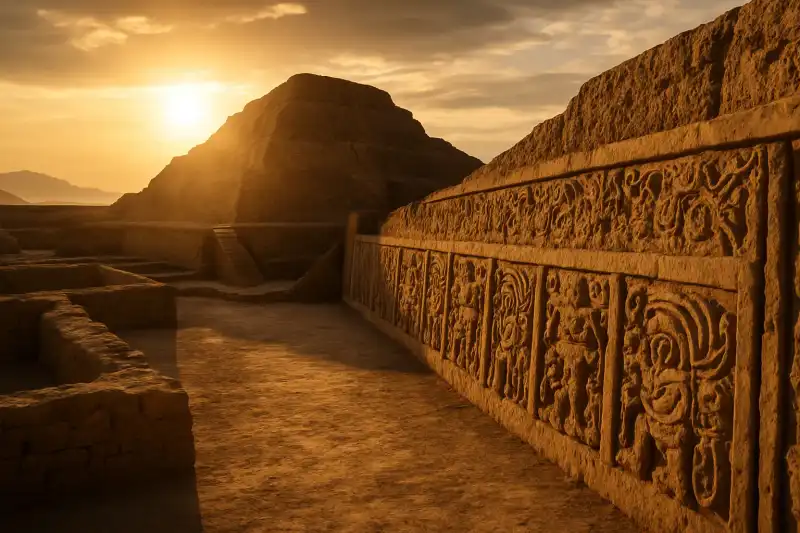
Leave Trujillo early and drive north. If you have a private transfer, stop at the El Brujo Complex, where Huaca Cao Viejo and the Lady of Cao changed how many travelers understand Moche power. The elite burial of a tattooed woman with regalia, weapons, and ritual objects made it harder to tell simple stories about authority belonging only to men.
Continue toward Chiclayo for the Sipán Royal Tombs. The Lord of Sipán burial is one of the great archaeological finds of the Americas, with gold, ornaments, retainers, and careful tomb arrangement showing Moche elite display at its most intense. If you visit the museum at Lambayeque, give it proper time. This is not a quick final stop if you care about the objects.
If time allows, add the Tucume Pyramids before or after Sipán, depending on opening hours and your route. Tucume’s adobe huacas belong to the Lambayeque, Chimu, and Inca sequence, which makes it a fitting end to a trip that keeps showing cultures inheriting and reworking older landscapes.
End in Chiclayo. From here you can fly back to Lima or continue north, but do not book a late same-day international connection unless the schedule is very forgiving.
The historical thread: coast, empire, desert, and north coast power
This route works because it refuses to make ancient Peru into a single Inca story. The Inca section is wonderful, but it sits inside a much longer Andean and coastal sequence. Lima’s adobe pyramids and oracle landscapes came before Inca rule. The Sacred Valley shows how the Inca turned terrain into politics. Machu Picchu gives that imperial imagination its most famous mountain setting.
Nazca then shifts the route into a different register: marks on desert ground, large enough to require distance, patience, and uncertainty. The north coast adds another correction. Moche, Chimu, and Lambayeque sites show states built around irrigation, warfare, ritual display, craft production, and coastal administration.
By the end, Peru should feel less like one ancient civilization and more like a set of brilliant regional experiments. Some used stone. Some used adobe. Some painted gods on temple walls. Some cut lines into desert pavement. The variety is the point.
Transportation notes
Use flights for the big jumps: Lima to Cusco, Cusco to Lima, and Lima to Trujillo. Overland travel between all these regions is possible, but it would eat the itinerary. Ten days is not enough for a slow all-bus version unless you remove major sections.
In the Sacred Valley, hire a driver or use guided tours that allow point-to-point travel. Round trips back to Cusco waste time when you need to sleep in Ollantaytambo for the train. For Machu Picchu, book trains and shuttle timing around your entry permit.
For Nazca, choose between bus and private transfer based on budget and stamina. The south coast is a real travel commitment. Do not underestimate the return to Lima before flying north.
On the north coast, a driver makes Day 10 much easier. Trujillo to Chiclayo with El Brujo, Sipán, and Tucume is too much to improvise by local buses in one day. If you are self-driving, be cautious with desert highways, urban traffic, and night driving. A hired driver is usually the calmer option.
The route compression warning is serious: if any flight gets delayed, cut a site rather than pushing the whole chain harder. The easiest cuts are Puruchuco, Tambo Colorado, Paracas Necropolis, Tucume, or El Brujo. The hardest cuts are Machu Picchu, Nazca, Chan Chan, and Sipán.
Optional add-ons and swaps
If you want an older coastal civilization near Lima, add Caral-Supe as a full-day trip from Lima. Remove Day 2’s Pachacamac and Puruchuco plan, or add an extra day. Caral belongs to the Norte Chico world and pushes the story far earlier than the Inca, but it is not a quick side stop.
If you want a deeper north coast route, add Huaca Prieta near El Brujo or Ventarron near Chiclayo. Remove Nazca or shorten the Sacred Valley highland day. Huaca Prieta is especially interesting for early cotton textiles and preceramic occupation, but it fits better for travelers who already love archaeological context.
If you want highland archaeology, add Chavin de Huantar from Huaraz. Do not wedge it into this exact 10-day route. Replace Nazca and one Lima day, then build a separate central Andes section. The mountain travel is slow and deserves respect.
If you want cloud forest archaeology, add Kuelap after Chiclayo as a separate extension. Remove Nazca and possibly the Lima coastal day if you must keep the trip near 10 days. Kuelap is not near the rest of this itinerary, no matter how tempting it looks on a national map.
Shorter and longer itinerary options
For a shorter Cusco-focused route, use the planned 3 Days in Cusco and the Sacred Valley Ancient Sites. That version should stay in one region and avoid the coast-to-coast jumping.
For a classic first-time Peru route, use the planned 5 Days Cusco, Sacred Valley, and Machu Picchu Itinerary. It is better if Machu Picchu is your main reason for traveling and you do not want domestic flights every few days.
For a shorter classic route without the north coast, use 5 Days Cusco, Sacred Valley, and Machu Picchu. That is the better choice for most travelers with limited vacation time.
For a north-focused version, use the planned 7 Days in Northern Peru Ancient Sites: Chan Chan, Sipán, Kuelap, and Chavín. It should give the north more breathing room than this national 10-day sampler can.
Related ancient sites
- Moray
- Chinchero
- Tambomachay
- Pikillacta
- Tipon
- Tambo Colorado
- Paracas Necropolis
- El Brujo Complex
- Huaca Prieta
- Tucume Pyramids
- Ventarron
- Caral-Supe
- Chavin de Huantar
- Kuelap
FAQ
The most common planning questions for this route are answered below.