Quick route summary
This 5-day route starts and ends in Cusco, but it does not treat Cusco as the only base. You begin gently at Sacsayhuaman above the city, use Day 2 for Pisac, move through Chinchero and Moray on the way to Ollantaytambo, then continue by train toward Machu Picchu.
The best version uses three bases: Cusco, Ollantaytambo, and Aguas Calientes. That may sound like extra movement, but it prevents the classic mistake of trying to reach Machu Picchu from Cusco before dawn while also pretending the Sacred Valley is a quick side trip. The pace is active, with altitude and train logistics doing more work than the map suggests.
Who this itinerary is for
This itinerary is for travelers who want an Inca-focused first trip to the Cusco region, with enough time to understand the Sacred Valley before reaching Machu Picchu. It works well if you are comfortable changing hotels twice and prefer early starts to rushed afternoons.
It is not ideal for travelers who want one relaxed base, long restaurant evenings in Cusco, or serious trekking. It also asks you to respect altitude. Cusco sits around 3,400 meters, and the first 24 hours should not become a test of ego. The ruins will still be there tomorrow.
Route at a glance
- Day 1: Overnight in Cusco. Arrive, acclimate, and visit Sacsayhuaman and nearby highland ruins only if you feel steady.
- Day 2: Overnight in Cusco. Visit Pisac’s terraces and upper citadel, with time for the valley town below.
- Day 3: Overnight in Ollantaytambo. Drive through Chinchero and Moray, then settle near the train line.
- Day 4: Overnight in Aguas Calientes. Visit Ollantaytambo fortress, then take the train toward Machu Picchu.
- Day 5: Overnight in Cusco. Tour Machu Picchu, watch your circuit timing closely, then return by train and road transfer.
Practical logistics before you go
Book Machu Picchu tickets before arranging the rest of the route. The circuit you choose controls what you can see, how long you can linger, and whether specific places such as the Intihuatana are realistic. Do not assume you can decide this at the gate.
Cusco is the natural first base, but Ollantaytambo is the smarter base before the train. Aguas Calientes is not charming in the way travelers hope, but sleeping there gives you the easiest Machu Picchu morning. That trade is usually worth it.
Use taxis, a private driver, or a guided Sacred Valley tour for Days 2 and 3. Public buses and colectivos can work for experienced independent travelers with Spanish and patience, but they are not the cleanest tool for a short 5-day ancient-sites route. A Sacred Valley day tour from Cusco can be useful if you want Pisac, Moray, and Ollantaytambo logistics handled, though this itinerary is better when you slow the valley into two days.
Expect sun, cold wind, steep paths, and uneven stone. The Sacred Valley is not a museum corridor. It is a working Andean region layered with Inca estates, colonial towns, farm terraces, and train schedules that do not care how tired you are.
Day 1: Cusco acclimation and Sacsayhuaman
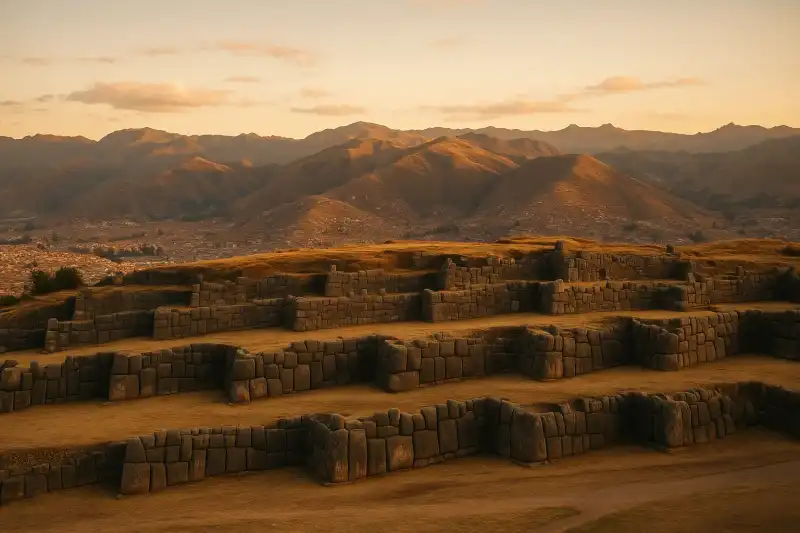
Start in Cusco, but do not start aggressively. If you arrive from Lima or another low-altitude city, use the morning or early afternoon to check into your hotel, eat lightly, and see how your body handles the altitude. This is not wasted time. It is trip insurance.
If you feel well, take a taxi up to Sacsayhuaman and walk down toward Cusco afterward. The site’s huge zigzag walls are often described only as a fortress, but that label is too narrow. It also worked as a ceremonial complex tied to Cusco’s sacred geography. The stones are cut with such close joins that the walls feel less built than fitted into agreement.
Keep the visit focused. Sacsayhuaman is the main event today. If you have extra energy, continue to Tambomachay, where Inca water channels and finely worked stone suggest ritual attention to springs and flow. If your head hurts or your breathing feels off, skip it. A slower first day makes the rest of the route much better.
Use taxis rather than trying to solve the outer Cusco circuit on foot. The distances are not huge, but the altitude makes small climbs feel oddly personal. Sleep in Cusco and avoid a big evening.
Day 2: Pisac citadel and Sacred Valley descent
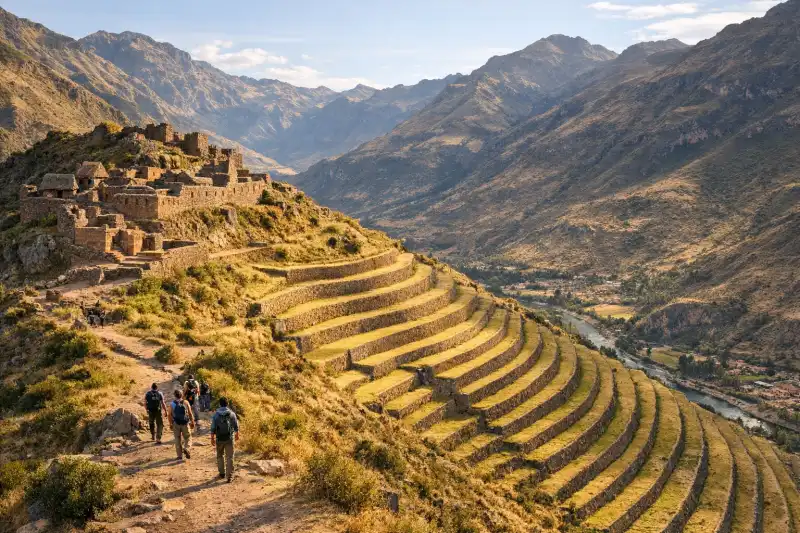
Spend the day at Pisac, one of the best places in the Sacred Valley to understand how Inca architecture shaped both farming and authority. The terraces sweep down the mountain in long curves, holding soil, managing water, and turning a steep slope into a productive royal landscape.
Start early from Cusco by driver, taxi arrangement, or guided tour. The upper archaeological zone is the reason to come. Give yourself time to walk between terrace viewpoints, residential sectors, and ceremonial areas instead of treating the site as a quick lookout. Pisac rewards slow looking. The town market below is pleasant, but it should not eat the whole day if ancient sites are the point.
One useful detail: Pisac’s position controlled a valley route as much as it decorated a mountain. The citadel watches movement through the Sacred Valley, and that mix of agriculture, defense, storage, and ritual is very Inca. Power here was not just palaces. It was food, roads, labor, and sightlines.
Return to Cusco for the night. Changing hotels today is possible, but it makes the route fussier than it needs to be. You will move into the valley tomorrow with a cleaner westward line.
Day 3: Chinchero, Moray, and the road to Ollantaytambo
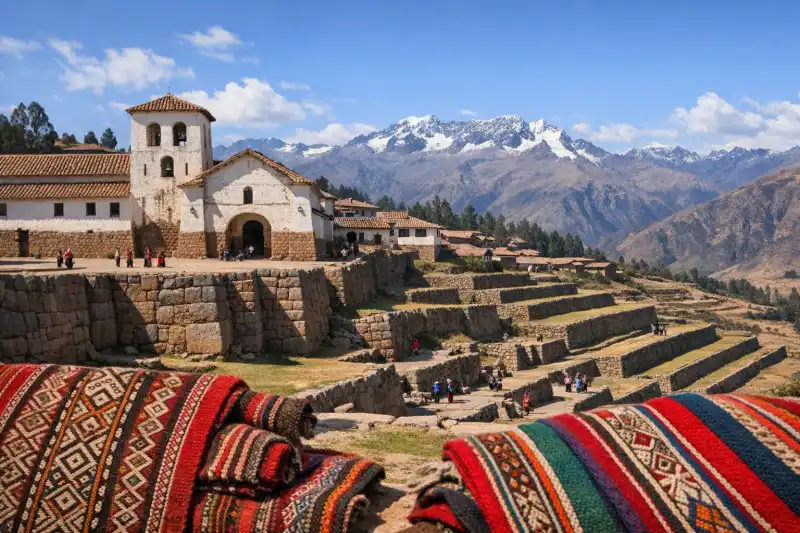
This is the best day for a private driver. Leave Cusco after breakfast and cross the high plateau toward Chinchero, a place where Inca and colonial power sit almost on top of each other. The terraces belonged to an Inca royal estate, while the later church rose over Inca foundations. The layering is plain, which is exactly why the stop is worth making.
Continue to Moray. Its circular terraces are often explained as an agricultural laboratory, and while the details are still debated, the form is strange enough to justify the attention. The rings create small changes in temperature and exposure. Standing above them, you can see why people connect the site with experimentation, crop management, and the Inca habit of making landscape do administrative work.
Do not overload this day with every possible Sacred Valley stop. Maras salt pans are a common add-on, but if you include them, keep lunch simple and accept that Ollantaytambo will become more of an evening arrival than a settled visit. For this itinerary, the cleaner plan is Chinchero, Moray, then Ollantaytambo before dark.
Sleep in Ollantaytambo. This is one of the best logistical decisions in the whole route. You are now near both a major Inca site and the train corridor to Machu Picchu.
Day 4: Ollantaytambo fortress and train to Aguas Calientes
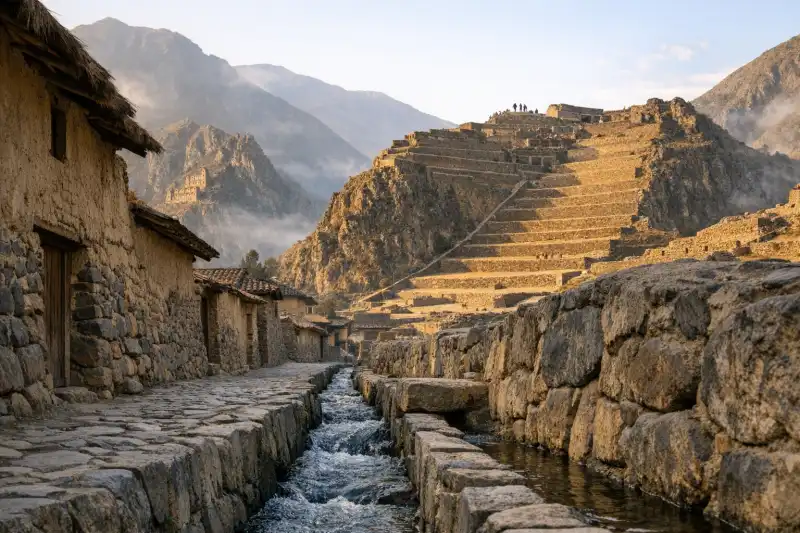
Visit Ollantaytambo in the morning before the day-trippers fully arrive from Cusco. The terraces rise sharply above town, and the climb is honest enough that you should not schedule it five minutes before a train. Give the site a proper half day if you can.
Ollantaytambo matters because it is both ruin and living town. The Inca street grid still shapes parts of the settlement below, while the fortress terraces and unfinished temple stones point to imperial ambition interrupted by conquest. The site also became a stronghold for Manco Inca during resistance against the Spanish in the 1530s. The stones are quiet now, but the political nerve here was not subtle.
After lunch, take the train to Aguas Calientes. Book this segment in advance, especially in busy season. Sit on the left or right and you will still get a good dose of river, canyon, and green slopes, because the railway follows terrain that road travel does not handle easily.
Overnight in Aguas Calientes. It is a functional base, not the emotional center of the trip. That is fine. Its job is to put you close to the buses for Machu Picchu.
Day 5: Machu Picchu and the return to Cusco
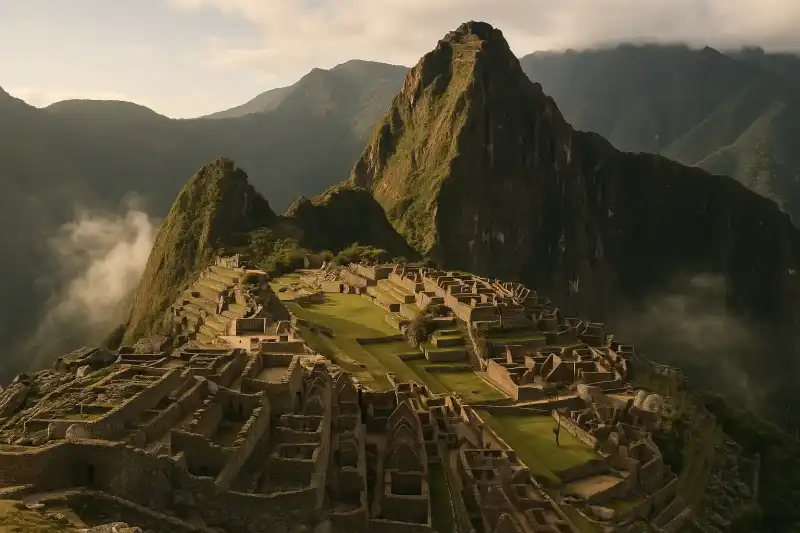
Take an early bus from Aguas Calientes to Machu Picchu, but match your morning to the entry time and circuit printed on your ticket. The modern circuit system is not a suggestion. It determines your route through the site, and backtracking can be limited.
If your ticket allows it, pay attention to the Intihuatana, the carved ritual stone often linked with solar observation and sacred orientation. Access varies by circuit and preservation rules, so check before you build expectations around it. Machu Picchu is not one single viewpoint. It is terraces, water channels, temples, residences, quarry areas, and carefully managed movement through a mountain saddle.
A guide is useful here. A Machu Picchu guided tour from Aguas Calientes can help if you want the circuit, entry rules, and historical context handled in one package. The site is crowded enough that context gets lost quickly if you are only chasing the postcard angle.
Return by bus to Aguas Calientes, then train back toward Ollantaytambo and onward by road to Cusco. This is a long travel tail after an early start, so do not book an ambitious Cusco dinner or a same-day flight. End in Cusco and let the route land.
The historical thread: Inca power along roads, terraces, and sacred mountains
This route works because it follows the logic of the Inca heartland. Cusco was the imperial center. Sacsayhuaman guarded and ceremonialized the high ground above it. Pisac, Chinchero, Moray, and Ollantaytambo show how the Sacred Valley became a managed landscape of terraces, estates, roads, storage, ritual, and control.
Machu Picchu then changes the mood. It is not simply the grand finale because it is famous. It sits in a different kind of landscape, where royal retreat, sacred geography, water engineering, and mountain visibility all meet. After four days in Cusco and the valley, Machu Picchu feels less isolated and more like part of a larger Inca way of organizing terrain.
The route also keeps one useful correction in view: Inca history is not only stone walls. It is labor, roads, crops, lineages, ritual specialists, conquered peoples, and administrators moving through difficult country with remarkable confidence.
Transportation notes
Use Cusco as your arrival and final base, but do not force every night there. Sleeping in Ollantaytambo before the train and Aguas Calientes before Machu Picchu saves early-morning strain.
For Sacred Valley travel, private drivers are the smoothest option. They let you connect Pisac, Chinchero, Moray, and Ollantaytambo without losing time to multiple transfers. Colectivos are cheaper and useful for flexible travelers, but they work best when you already know the route and are not carrying much luggage.
Do not self-drive this itinerary unless you are comfortable with Andean roads, local driving habits, parking uncertainty, and navigation in small towns. Hiring a driver is usually less stressful and often better value once you count time.
Train tickets between Ollantaytambo and Aguas Calientes should be booked early. Machu Picchu entry should be booked earlier still. If your preferred circuit is sold out, adjust the itinerary around the ticket you can actually get rather than pretending all entries offer the same visit.
Optional add-ons and swaps
Add Huayna Picchu only if you can get the permit and you are comfortable with steep exposure. Remove extra time in Aguas Calientes or keep Day 5 focused entirely on Machu Picchu. Do not add Huayna Picchu if you already feel strained by altitude or early starts.
Add Huchuy Cusco if you want a quieter Inca site with a trekking element. To make room, remove Pisac or turn Day 2 into a guided hike day. This is a better swap for walkers than for travelers who want the classic Sacred Valley sequence.
Add Pikillacta if you want pre-Inca context near Cusco. It belongs to the Wari world, with a grid-like urban plan that feels very different from Inca stonework. To include it, use an extra day or replace the Chinchero and Moray day. Do not try to squeeze it into the Machu Picchu transfer sequence.
If you need to cut one site, cut Tambomachay first. If you need to cut a full day, remove Chinchero and Moray, then travel directly from Cusco to Ollantaytambo with a fortress visit.
Shorter and longer itinerary options
For a tighter version, use the planned 3 Days in Cusco and the Sacred Valley Ancient Sites route and save Machu Picchu for a separate trip. That works better than pretending Machu Picchu is a casual half-day from Cusco.
For a broader Peru trip, 10 Days in Ancient Peru: Sacred Valley, Nazca, and the North Coast adds Lima’s coastal archaeology and gives the Cusco region more breathing room.
For a deeper country route, the 10 Days in Ancient Peru: Sacred Valley, Nazca, and the North Coast version shifts from Inca heartland to a wider Andean and coastal story. That is the better choice if you want Peru’s ancient history beyond Cusco.
Related ancient sites
FAQ
The most common planning questions for this route are answered below.