Quick route summary
This 3-day route starts and ends in Cusco, with one useful overnight in Ollantaytambo to reduce backtracking through the Sacred Valley. The first day stays close to Cusco at Sacsayhuamán, then the route drops into the valley for Pisac, Ollantaytambo, and Moray.
The pace is active, but sane. The mistake is trying to treat the Sacred Valley as one long checklist. Altitude, winding roads, steep terraces, and ticket logistics all take energy. Give each site enough time to make sense as part of an Inca landscape, not just as a viewpoint.
Who this itinerary is for
This itinerary is for travelers who want a short ancient-sites route around Cusco without adding Machu Picchu yet. It works well before a longer Peru trip, after arriving in Cusco, or as a compact Sacred Valley plan for people who care about Inca engineering, terraces, and political geography.
It is not ideal if you want a very slow acclimatization plan, a trekking-heavy trip, or a single-base vacation with no hotel move. If altitude hits you hard, cut Moray or move it to an extra day. The sites are close on a map, but the elevation makes bravado a bad planning tool.
Route at a glance
- Day 1: Overnight in Cusco. Acclimatize, then visit Sacsayhuamán above the city by taxi, guided walk, or a careful uphill route.
- Day 2: Overnight in Ollantaytambo. Travel from Cusco to Pisac, explore the citadel and terraces, then continue through the Sacred Valley.
- Day 3: Overnight in Cusco. Visit Ollantaytambo early, add Moray by driver, then return to Cusco over the highland road.
Practical logistics before you go
Cusco is the best starting base, but do not plan a punishing first day if you are arriving from sea level. The city sits around 3,400 meters above sea level, and Sacsayhuamán is higher again. Drink water, eat lightly, and let the first morning breathe.
The Boleto Turístico is the main ticket reality for this route. It usually covers major Cusco-area archaeological sites, including Sacsayhuamán, Pisac, Ollantaytambo, and Moray, but ticket rules can change. Check current options before you start, because buying single entries at every stop is often not how the system works.
A driver or guided Sacred Valley tour makes the most sense on Day 2 or Day 3, especially if you want to connect Pisac, Ollantaytambo, Moray, and the return to Cusco without negotiating vans and taxis in pieces. A Sacred Valley day tour from Cusco can be useful if you are short on time, but check that the route does not rush Pisac or skip meaningful time at Ollantaytambo.
Pack layers. Cusco mornings can be cold, valley afternoons can feel sharp in the sun, and Moray sits in open highland country with little shade. This is not a route for brand-new shoes.
Day 1: Cusco acclimatization and Sacsayhuamán
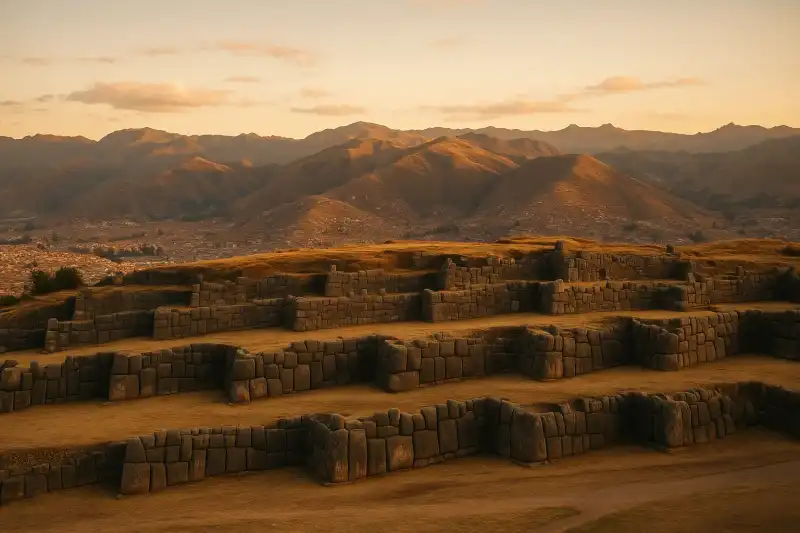
Start gently in Cusco, then go up to Sacsayhuamán when you know how the altitude is treating you. The site sits above the historic center, close enough to feel like part of the city, but high enough that the walk can be a rude little lesson in Andean elevation.
The walls are the reason to come. Sacsayhuamán’s largest stones are fitted with such precision that the masonry can feel almost too neat to be real, but this was not decorative neatness. Cusco was the Inca capital, and the ridge above it mattered. The site has been described as a fortress, ceremonial complex, and royal power statement, and it probably carried more than one meaning at once.
Give yourself time to look at the shape of the stones, not just their size. Inca builders worked with irregular blocks and made them lock together visually and structurally. The result is quieter than a pyramid, but the political ambition was not subtle.
Logistically, you can take a taxi up and walk down, take a guided walking tour, or hike both directions if you are already acclimatized. For most travelers on Day 1, taxi up and walk down is the kinder choice. Do not stack Pisac onto this same day unless your flight arrived earlier and you already know you handle altitude well.
Day 2: Pisac terraces and Sacred Valley descent
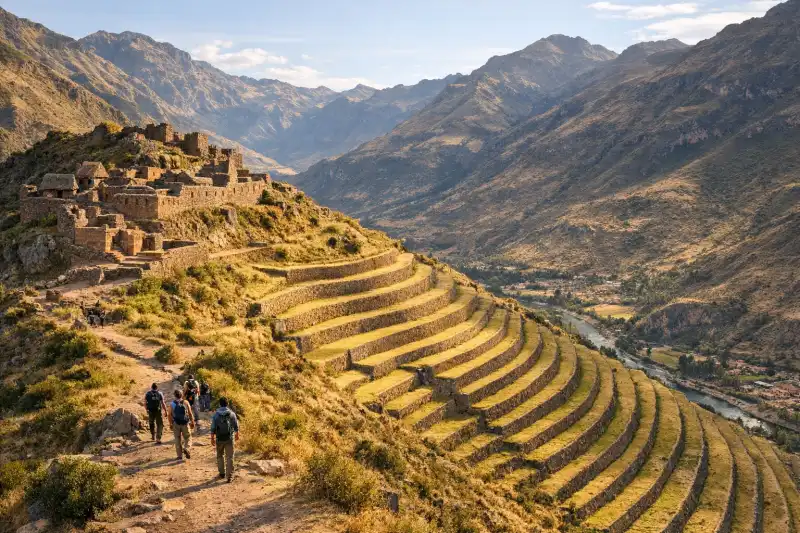
Leave Cusco early for Pisac. The road drops from the high plateau toward the Sacred Valley, and the change matters. This is not just a scenic transfer. You are moving from the capital’s ceremonial ridge into one of the agricultural corridors that helped feed and connect the Inca world.
Pisac rewards time. The citadel spreads across the mountain above the modern town, with terraces, gateways, tomb areas, and ceremonial spaces arranged along the slope. The terraces are not background scenery. They turned steep land into controlled growing space, stabilized the hillside, and made the mountain itself part of the built environment.
A good plan is to drive or taxi up toward the archaeological entrance, explore the upper sectors, then descend partway on foot if conditions are good and your knees are cooperative. The full walk down to town can be beautiful, but it is exposed and harder than some people expect. If altitude or heat is catching up with you, stay higher, visit the main sectors, and save energy for the next day.
After Pisac, continue along the valley toward Ollantaytambo. Sleeping there tonight is the practical move. It cuts out a late return to Cusco, gives you a quieter evening, and lets you see the fortress before the heaviest day-trip traffic arrives. The modern town still preserves an Inca street grid in places, with water channels and tight stone lanes that make the overnight feel connected to the site rather than just convenient.
Day 3: Ollantaytambo fortress, Moray, and return to Cusco
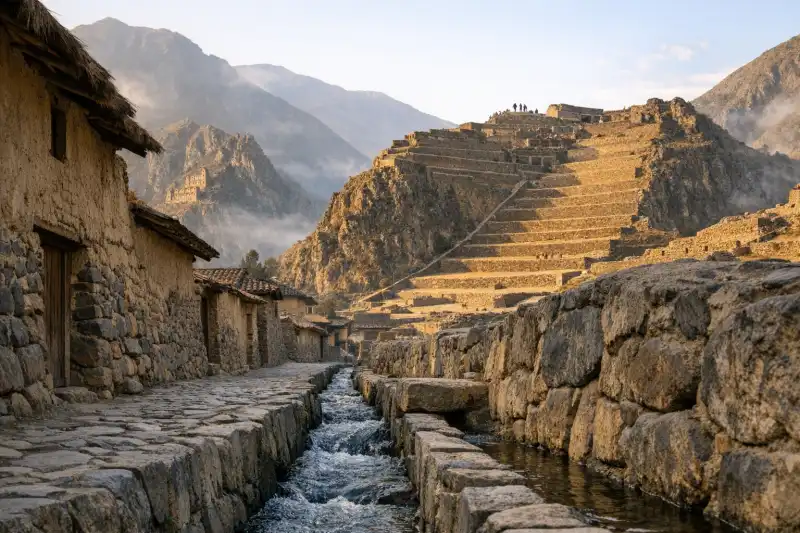
Start early at Ollantaytambo. The terraces rise directly above town, and the climb is part of the experience. Take it slowly. The site is famous as a fortress, partly because Spanish forces faced Inca resistance here in the 1530s, but it was also a royal estate, ceremonial space, and engineered mountain settlement.
Look closely at the upper stonework near the unfinished temple sector. Some of the largest blocks were quarried across the valley and moved up to the site, which is exactly the sort of logistical fact that makes Inca construction more interesting, not less. The terraces below are not just stairs for tourists. They shaped movement, agriculture, defense, and display all at once.
After Ollantaytambo, use a driver for Moray rather than trying to stitch the afternoon together with scattered public transport. Moray’s circular terraces sit in open country near Maras, and they feel different from the valley sites. The depressions create small changes in temperature and exposure, which is why Moray is often interpreted as an Inca agricultural testing ground. That interpretation should be treated with care, but the design clearly shows a serious interest in controlling growing conditions.
End the day by returning to Cusco. This is the one day where the itinerary asks a lot: a major climb, a highland drive, and another archaeological stop. If you are tired, cut Moray and spend more time in Ollantaytambo. A route that leaves you able to notice details is better than one that technically checks every box.
The historical thread: Inca power between capital, valley, and highland fields
This route works because it shows three different faces of Inca power in a short distance. Sacsayhuamán looks back toward Cusco, the imperial capital and ceremonial heart. Pisac shows how slopes, terraces, and settlement could turn a mountain into a managed sacred and agricultural landscape. Ollantaytambo adds royal estate planning, military history, and living urban continuity. Moray then shifts the story to highland experimentation and the control of food production.
The Inca state did not rely on one kind of monument. It shaped ridges, roads, terraces, water, towns, and fields. The stones are impressive, but the better story is how much planning sits behind them.
Transportation notes
Use Cusco as your main base, but spend one night in Ollantaytambo if you can. That single hotel move saves time and makes Day 3 much better.
For Sacsayhuamán, taxi up and walk down is the easiest independent plan. For Pisac, you can use a shared van from Cusco to town and then hire local transport up to the ruins, but a driver is smoother if you are carrying luggage onward to Ollantaytambo. For Ollantaytambo and Moray in one day, a driver is strongly recommended.
Do not self-drive this route unless you are comfortable with mountain roads, local traffic habits, and navigation outside the main towns. The roads are not impossible, but driving adds stress to days that already involve altitude and walking.
If you are connecting onward to Machu Picchu, Ollantaytambo is also the main rail gateway. In that case, do not return to Cusco on Day 3. Visit Moray earlier or skip it, then take the train from Ollantaytambo toward Aguas Calientes.
Optional add-ons and swaps
Add Chinchero if you want a highland village stop with Inca terraces, a colonial church built over Inca foundations, and weaving traditions that are still part of daily cultural life. To make room, remove Moray or make Day 3 a driver-led Chinchero and Moray route back to Cusco.
Add Tambomachay if you want to expand Day 1 into the nearby Cusco ruins circuit. It pairs well with Sacsayhuamán if you have already acclimatized. If you add it on arrival day, keep the rest of the evening empty.
If you want a less crowded archaeological swap, consider Pikillacta as a South Valley day from Cusco. It belongs to the Wari period before the Inca expansion, so it changes the historical frame completely. Do it as an extra day, not as a replacement for Pisac or Ollantaytambo on a first Sacred Valley route.
Shorter and longer itinerary options
For a two-day version, visit Sacsayhuamán on Day 1 and combine Pisac with Ollantaytambo on Day 2. It works, but it is rushed and Moray should be the cut.
For a longer Sacred Valley and Machu Picchu route, use the planned 5 Days Cusco, Sacred Valley, and Machu Picchu Itinerary. That version should keep Ollantaytambo as a rail base and give Machu Picchu the time it needs.
For a broader country route, 10 Days in Ancient Peru: Sacred Valley, Nazca, and the North Coast adds coastal and highland context instead of treating Cusco as the whole story.
Related ancient sites
FAQ
The most common planning questions for this Cusco and Sacred Valley route are answered below.